Changing the Electricity Account Holder: Which Documents You Need and
When a New YDE Certificate Is Required
Moving to a new home or renting a business space always brings with it a
series of bureaucratic obligations. One of the most critical — and often
misunderstood — procedures is changing the name (representation) on the
electricity bill.
Many tenants make the mistake of leaving the electricity in the owner's
(or previous tenant's) name to save on paperwork. This is a practice
that carries huge legal and financial risks for both sides. In 2026,
thanks to digitization (gov.gr), the process of signing a new
electricity supply contract is easier than ever.
Below is a step-by-step guide to the documents your supplier will ask
for, how the process protects you from previous occupants' debt issues,
and how an expired YDE certificate can block the transfer.
1. Why You Should Change the Electricity Account Holder
The electricity bill is not just a receipt of consumption; it is a
legal contract.
If you are the new tenant
Having the electricity in your name, you get the right to choose the
provider and the tariff (fixed, variable, night) that suits you. In
addition, the electricity bill in your name is the number one proof
of residence for banks, benefits (e.g. heating) and public services.
If you are the owner (or the one leaving)
As long as the electricity is in your name, you are fully liable. If
the new tenant stops paying, the debts (which can reach thousands of
euros) will be confirmed to your VAT number and your tax office,
regardless of what the lease says!
2. The Necessary Documents (The 2026 List)
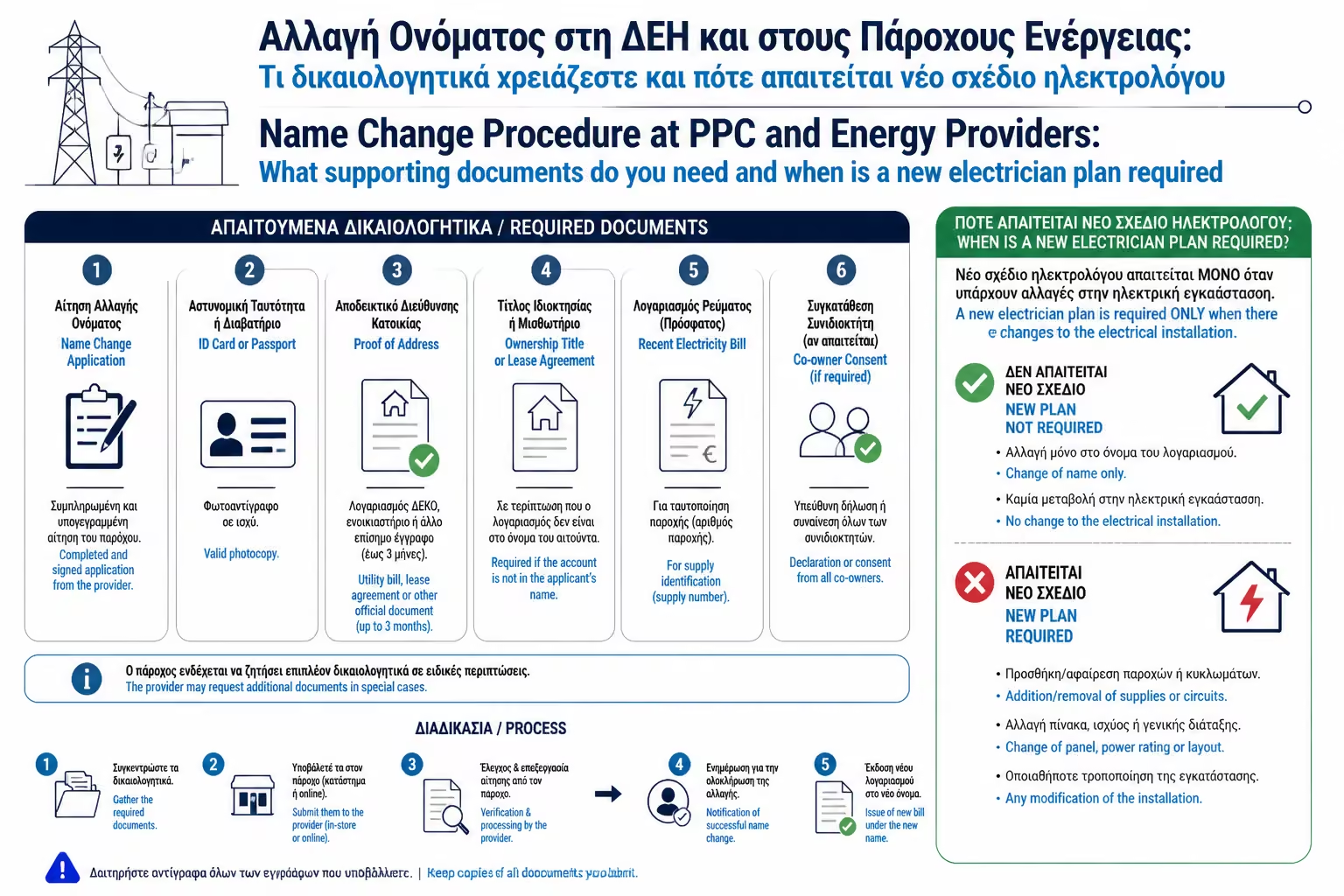
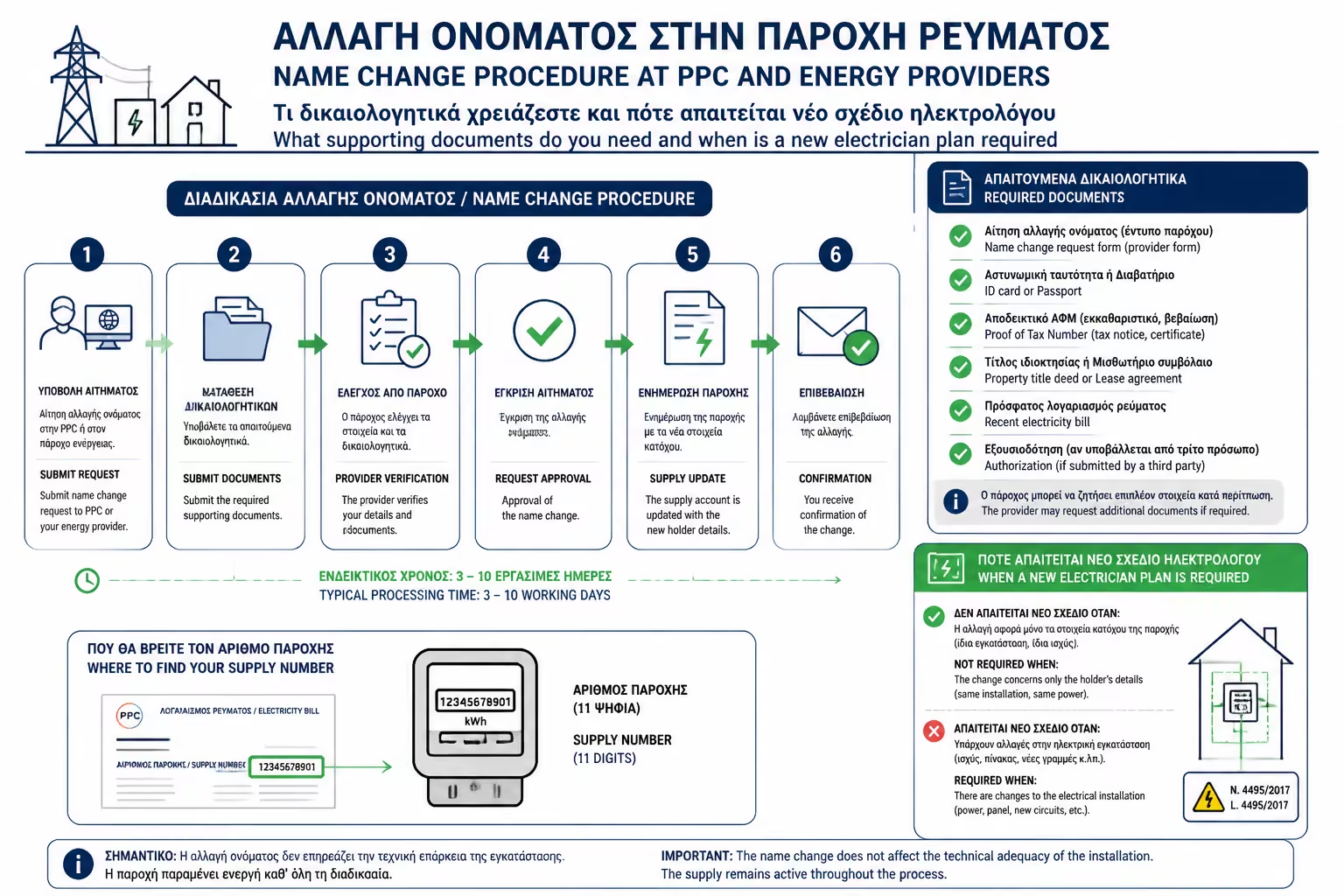
To sign a new supply agreement and put the electricity account in your
name, providers now ask for a standard set of documents. Whether you
apply in-store or online, you will usually need:
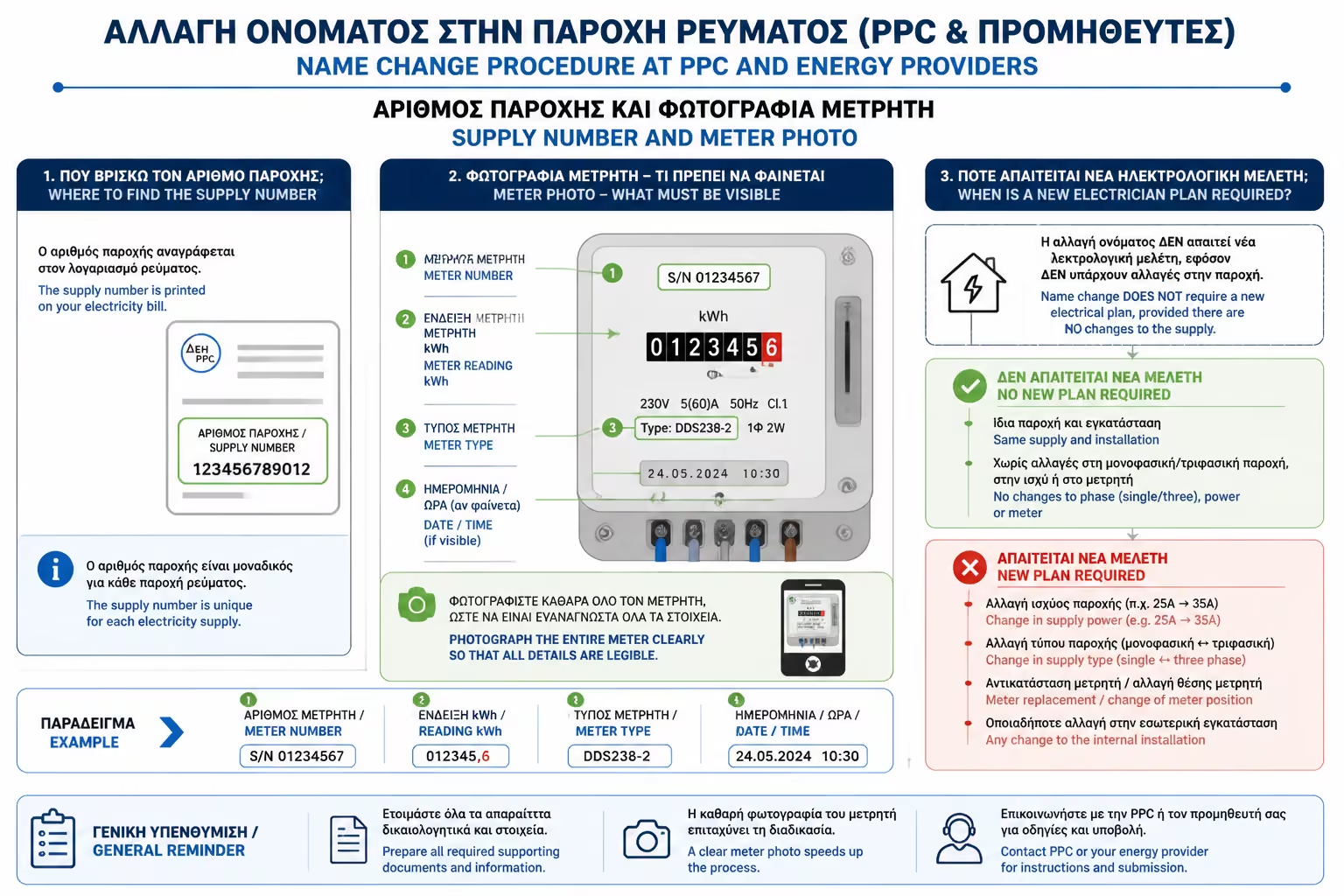
1. ID card or passport for identification. 2. Proof of your
relationship to the property: usually the electronic lease if you are
a tenant, or E9 / title deeds if you are the owner. 3. The supply
number from a previous electricity bill or from the meter plate. 4. A
current meter reading, often submitted as a clear photo. 5. An IBAN if
you want direct debit, which may also help you avoid a supplier
guarantee deposit.
3. Previous Debts: What if the old one owes?
This is the biggest concern for many new occupants. Suppose the
previous tenant left an unpaid electricity bill of EUR 800. Who is
responsible for it?
The answer is clear: YOU PAY NOTHING. Electricity debt follows the
person (VAT), not the property (unlike water bills, where
municipalities often charge the property). When you "Change
User" and present your lease, the provider sees that you moved
into the house on, for example, September 15th. Any debt incurred
prior to this date will be legally sought by the previous owner (or
owner). You start with a clean slate.
4. The Big Obstacle: When the change "gets stuck" due to YDE
You submit your documents, the supplier files the request, and then
you get the message: "Request rejected by HEDNO. A new YDE
certificate is required."
Our previous article is linked here. When the name on the account
changes, the new provider sends an electronic request to HEDNO (the
network operator). The HEDNO system automatically checks its database.
If the existing YDE has expired, the system blocks the
account-holder change until the installation is inspected again.
The next step is to call a licensed electrician, complete the
measurements, issue the new YDE certificate, and submit it digitally
to HEDNO. Once the database is updated, the transfer can proceed.
Who pays the YDE in rent? By law, the Responsible Installer's
Declaration (as a property safety certificate) is the responsibility
of the property owner/lessor, not the tenant. You must arrange with
him to call and pay that electrician, as the document concerns his
property.
5. The Ways of Completion (How to avoid queues)
In the past, a name change meant missing time off work and waiting hours
at a counter. Today, you have 3 modern roads:
Digital (e-Contract / Web): Go to the site of the provider you want.
You upload your files in PDF or photos, identify yourself via gov.gr,
and sign the contract electronically with an OTP (One-Time Password)
that comes to your mobile phone.
By phone: You call customer service. The representative takes down
your details, the call is recorded as an "audio signature",
and they send you the final contract to your email.
Physical Stores: If you prefer personal contact to resolve questions
about invoices, all the above supporting documents are accepted in
print at the stores of all providers.
Summarizing
Changing the electricity account holder is part of making your move
official. Keep the lease details, supply number, and meter photo ready,
and check in advance whether the property's YDE certificate is still
valid. It is not just paperwork; it is the legal boundary that separates
your liability from the previous occupant's.