
Legalising Unauthorised Electrical Extensions: How Older Alterations Are Incorporated into a New YDE Certificate

You buy or rent a 30-year-old home and everything seems normal until the electrician comes to issue the new mandatory YDE certificate for an account-holder change.

The electrician opens the panel, compares it with the drawings on file, and says: "We have a problem. There are circuits here that do not appear on the plans." This is common in older Greek properties, where improvised additions were often made without design updates or licensed supervision. The question is how those hidden alterations are checked, corrected, and formally brought into compliance.

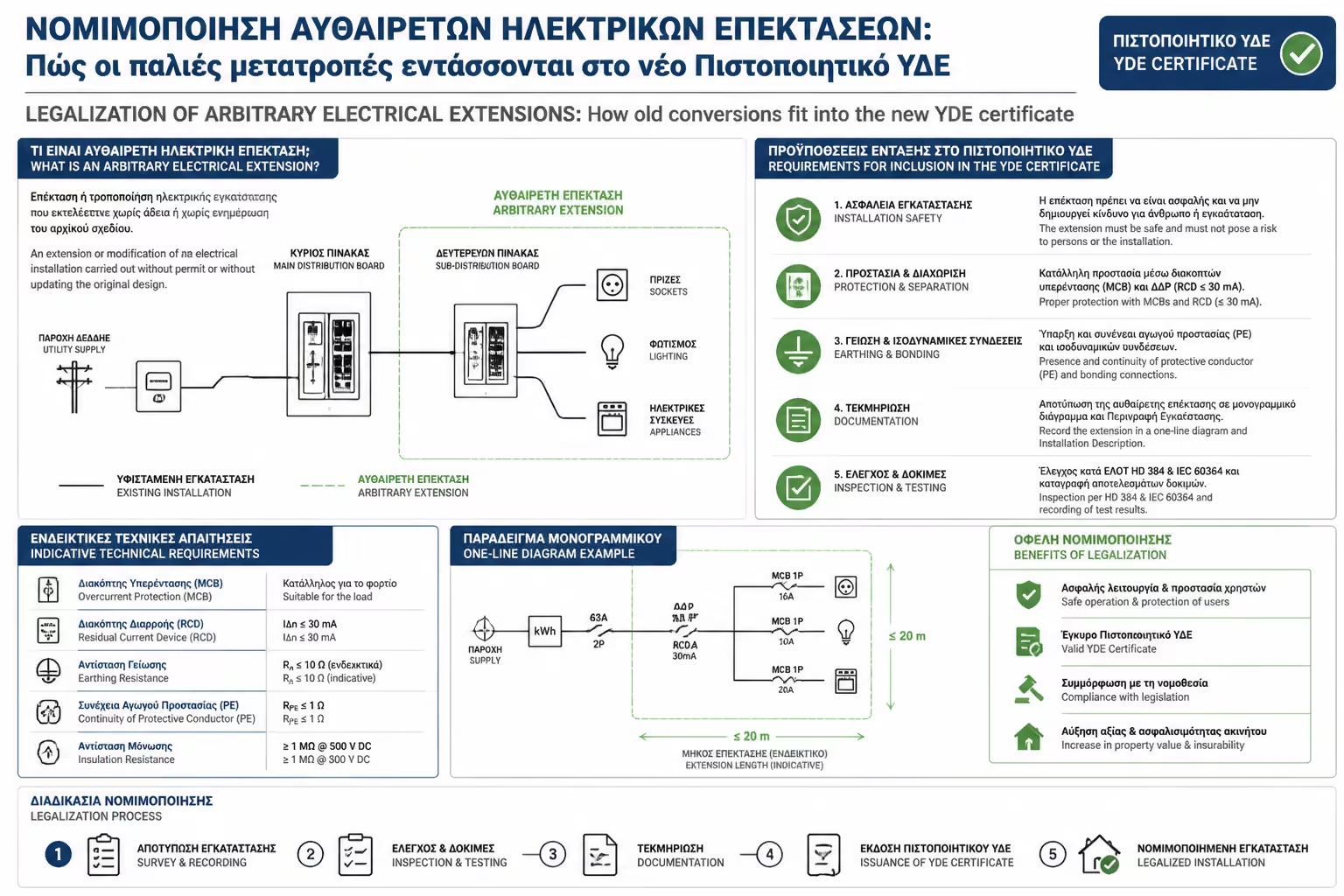
1. What is considered "Arbitrary" Electrical Extension?

We're not talking about adding a power strip. We are talking about permanent structural interventions in the wiring of the house that were done without study, without permission and without updating the electrical plan.

The 3 most common "patent" scenarios:

  1. Closure of Semi-Outdoor / Balconies: The owner closed the balcony to enlarge the living room. To put lights and sockets in the new space, he drilled a hole in the wall and got electricity by "stealing" from the outside socket on the balcony.
  2. "Bridges" in the Table: Added an energy-consuming air conditioner to the room. Instead of drawing a new line from the panel, the "handyman" made a bridge from the fuse of the water heater or furnace.
  3. Outside Wiring: A NYM cable (the classic gray plastic) tacked to the skirting board, running across the house to power a new washing machine on the balcony.
Illustration for 1. What is considered "Arbitrary" Electrical Extension?

2. Why can't the electrician just "paint" them?

Illustration for 2. Why can't the electrician just "paint" them?

Many customers say to the electrician, "Come on, kid, put these on the floor plan and we'll be done."

As engineers, we must make it clear that an electrician is not a painter. He signs and assumes criminal responsibility for the safety of those he designs. Arbitrary extensions hide deadly risks:

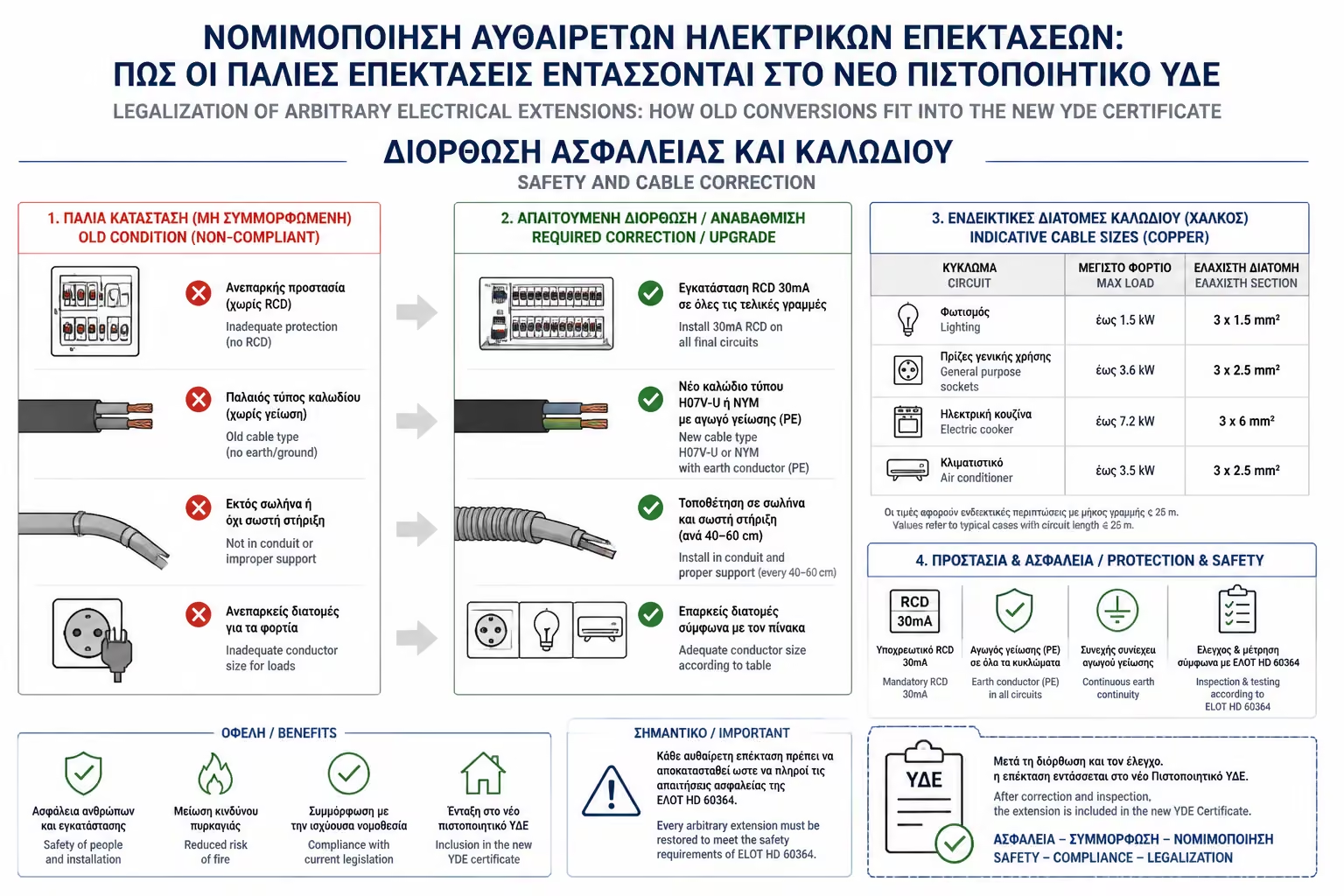
Wrong Cross Sections (Thickness) of Cables

Often the extension is done with a thin lighting cable (1.5mm²), but it is connected to a socket fuse (16 Amperes). If you put a heater in that random outlet, the thin wire will melt and catch fire, without the fuse in the panel "dropping" because the fuse thinks the wire is holding!
Absence of Grounding

Many rough extensions are made with bipolar cables (phase and neutral only) for convenience, leaving new metal devices completely unearthed.

3. The "Legalization" Process (Check & Fix)

For these lines to be legally included in the new YDE, the process is not bureaucratic, it is deeply technical. The licensed installer follows 3 steps:

Illustration for 3. The "Legalization" Process (Check & Fix)

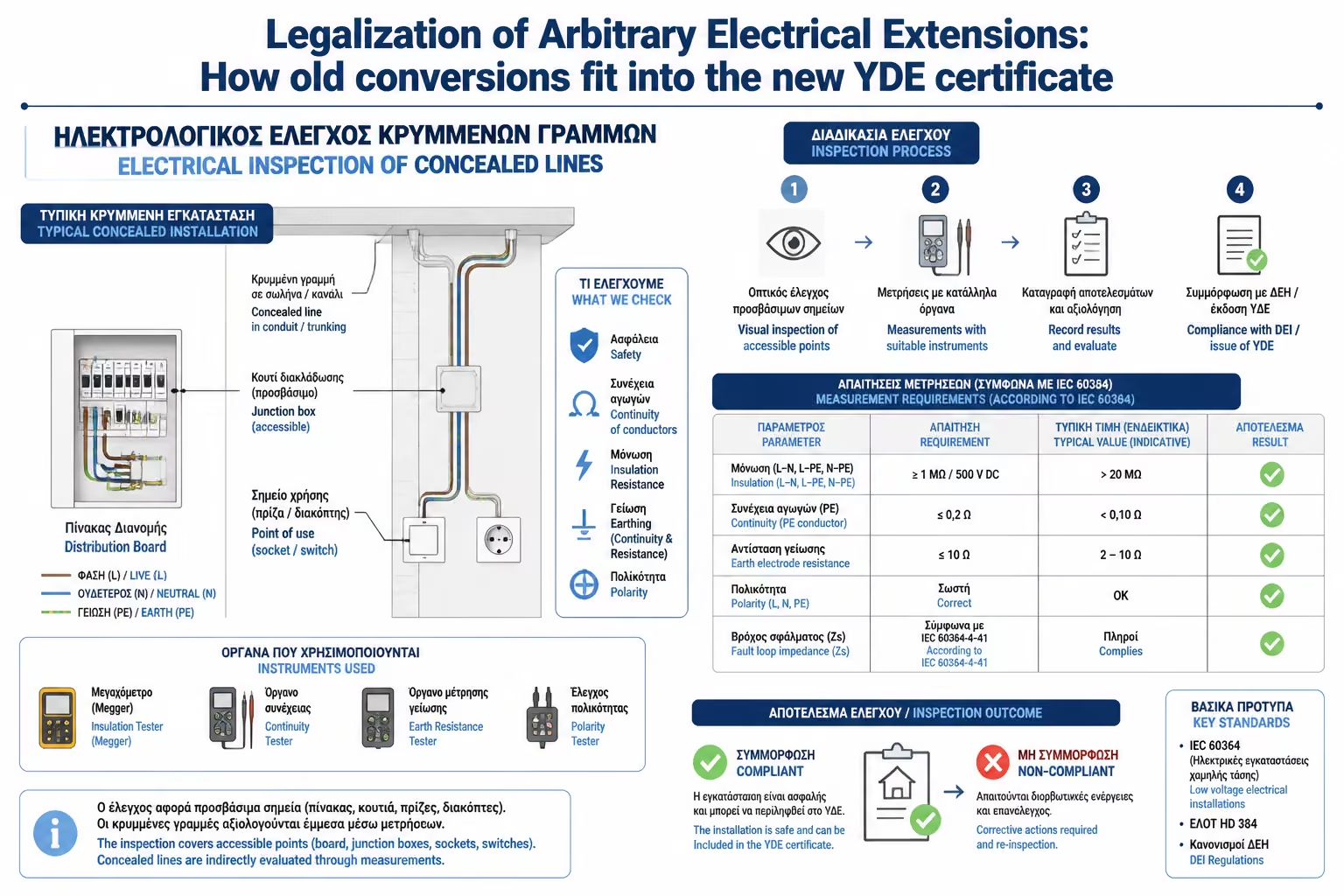
Step 1: Capture and Track

The electrician uses special tone generators (Cable Trackers) to find where each "hidden" cable of the patent inside the wall comes from and ends.

Step 2: The Security Check (The Critical Crossroad)

Then he checks the cross-section (thickness) of the extension cord, measures its insulation with the Megger (maybe it is damaged) and confirms the existence of a ground. If the extension was done correctly (qualitatively): Then it just prints it in the new one-line drawing of the panel and in the floor plans. The line was legalized. If the extension is dangerous: Here the electrician must refuse to include it in the YDE as it is.

Step 3: Technical Compliance (Fixing the mess)

If the extension is wrong, there are two ways to fix it before the paper comes out: 1. Fuse Change (Downgrade): If a thin wire is found in a 16A fuse, the electrician changes the fuse in the panel with a smaller one (eg 10A). So the cable is now protected (although you won't be able to plug heavy appliances into that socket). 2. Cable Replacement / Removal: If the cable is completely unsuitable, a new correct cable is run (even through an external plastic channel) or the arbitrary line is completely removed (cut) from the panel so as not to kill anyone.

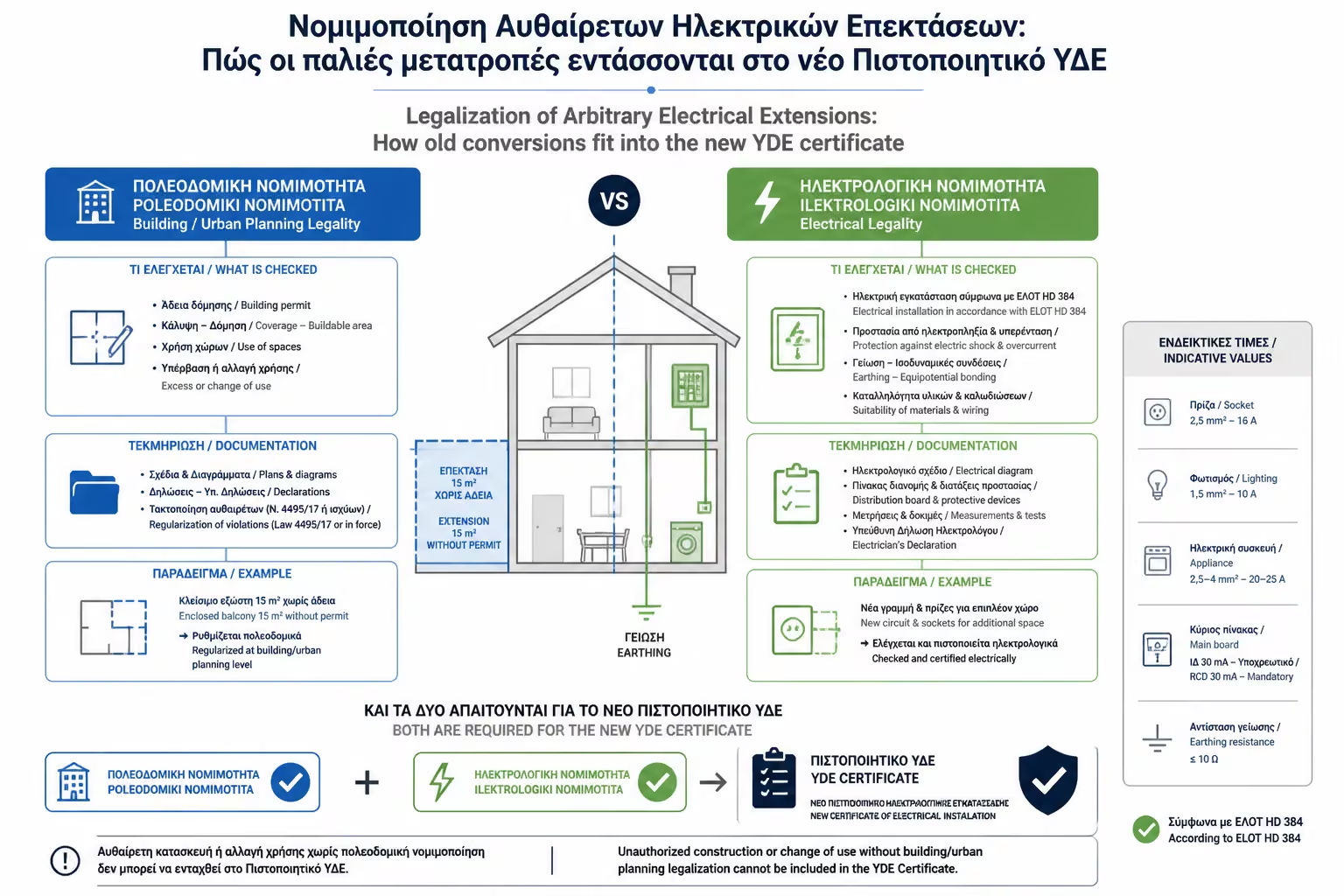
4. Urban planning vs. Electrical Legality

Illustration for 4. Urban planning vs. Electrical Legality

There is a major misunderstanding here. Many owners ask: "If the electrician includes the rooftop room in the new YDE, does that also legalise the space from a planning-law perspective?"

No. HEDNO and the electrician are checking the safety of the electrical installation, not structural legality or planning compliance. A YDE confirms that the wiring in the area is technically safe; it does not legalise an unauthorised room under planning law. For that, a civil engineer and the relevant legal regularisation process are still required.

Summarizing

When you buy or renovate an older property, hidden circuits added by previous owners can become real safety hazards. Issuing a new YDE is the right moment to expose those undocumented alterations, map them correctly, and correct them where necessary. Bringing an electrical extension into compliance is not just paperwork; it is a matter of life safety and property protection.

Related Articles

Preview