The Power
This charger typically draws 10 Amperes (ie 2,300 Watts).
Buying an Electric Vehicle (EV) is an exciting time. But reading articles about "three-phase upgrades", "power boosts" and red tape with DEDDIE, many prospective buyers are disappointed.
The most common question we get is, "I don't want to mess with panel changes. Can I just plug it into my garage outlet like my cell phone?"
As engineers, the answer we give you is: Yes, it does. But physics does not play nice. Charging an electric car in a typical 8 kVA (8,000W) single-phase home requires compromises in speed and strict safety rules. Let's take a realistic look at how you can live with your EV without flipping the master switch every night.
All electric cars come with (or offer as an accessory) a portable charger that plugs into a simple, household wall outlet (the one we call Schuko). In EV slang, this is fondly called "Granny Cable" because it's... very slow.
The Hidden Danger (SOS): Ordinary household wall outlets are NOT designed to pass 10 Amperes continuously for 15 hours. Their plastics can overheat and melt. If you choose this solution, you must call an electrician to run a new, dedicated line (with its own panel fuse and thick wire) to the garage and put in a reinforced industrial outlet.
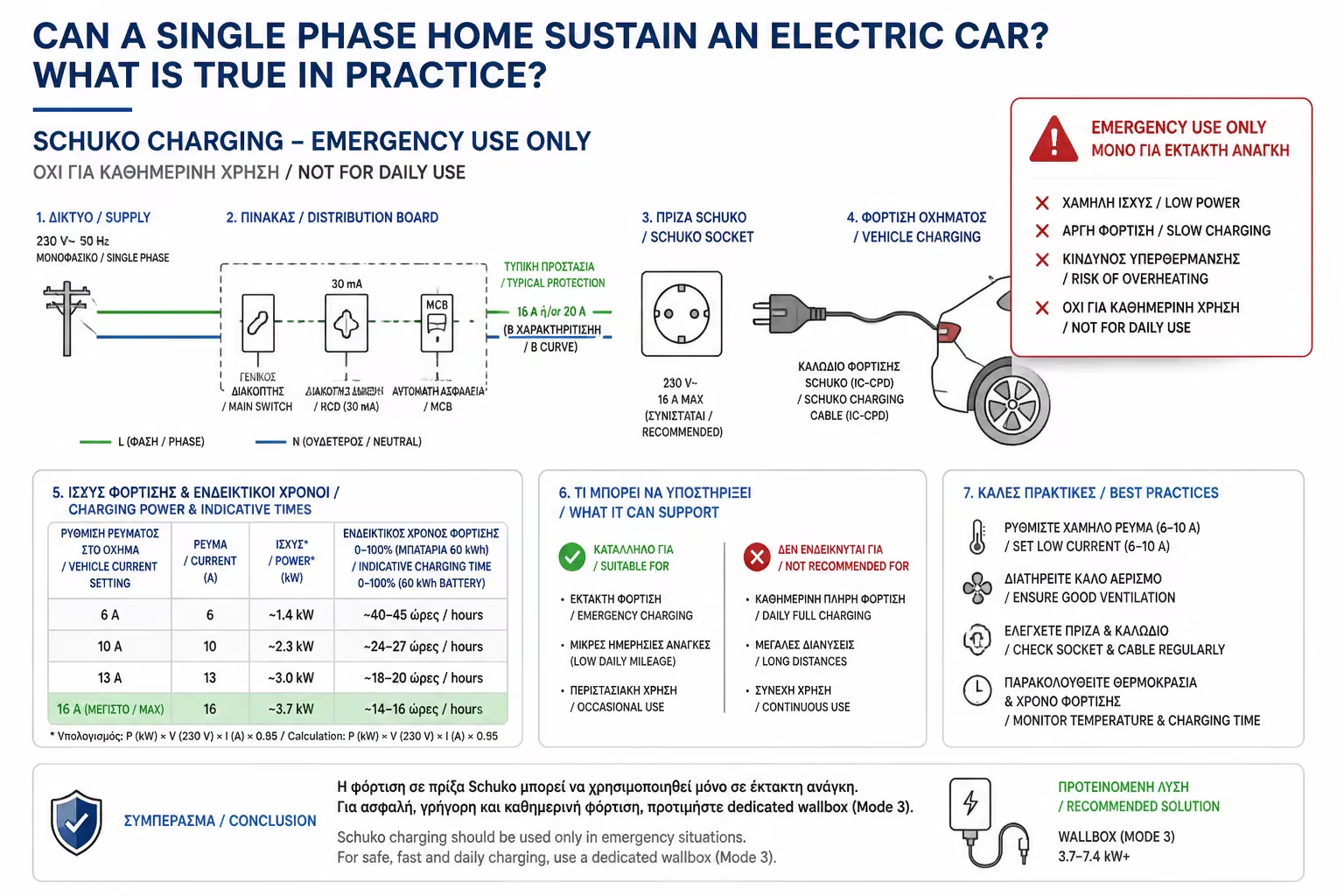
This charger typically draws 10 Amperes (ie 2,300 Watts).
In one hour, it will give you about 12 to 15 kilometers of range. To fill a typical battery (eg 60 kWh) from 0% to 100%, it will take more than 26 hours!
It is completely manageable. Of the 8,000W of the house, the car uses 2,300W. You have 5,700W left, so you can comfortably turn on the water heater or the oven at the same time.
If 15 km/h seems a little to you, the next solution is to install a wall charger (Wallbox).
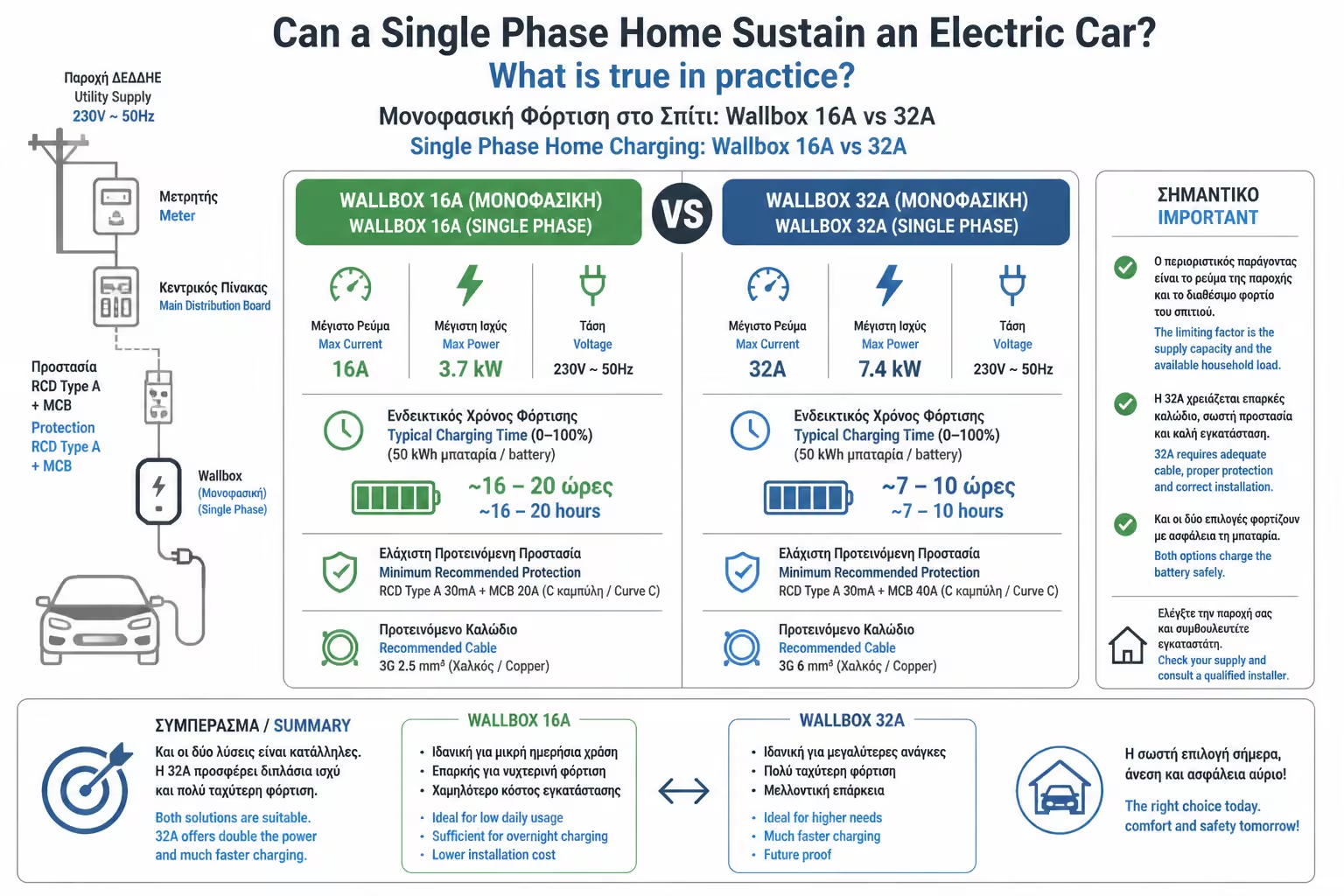
A single-phase Wallbox can give a maximum of 32 Amperes (7,400 Watts / 7.4 kW). But here the problems begin. If you set the Wallbox to "full" (at 7.4 kW), the car will "suck" all the electricity in the house. As soon as the refrigerator is turned on or you turn on the hair dryer, the central fuse of the DEDDIE will fall.
The solution we recommend to single-phase house owners is to ask the installer to "lock" (limit) the Wallbox to 16 Amperes (3,700 Watts / 3.7 kW).
In one hour, you will gain about 25 kilometers of range.
If you get home at 21:00 at night and plug the car in until 07:00 in the morning, it will charge for 10 hours. This means that it will get 37 kWh, which is about 250 kilometers of fresh range every night.
For 95% of drivers (who do 30-50 km a day for their work), this speed is more than enough! The car will always be full in the morning.
You have 4,300W left. During the night hours, when you are not cooking and do not have the water heater on, this current is comfortably enough for the air conditioners and refrigerators.
What if you don't want to compromise? If you want to charge quickly (at 7.4 kW) but the general does not drop when you turn on the oven?
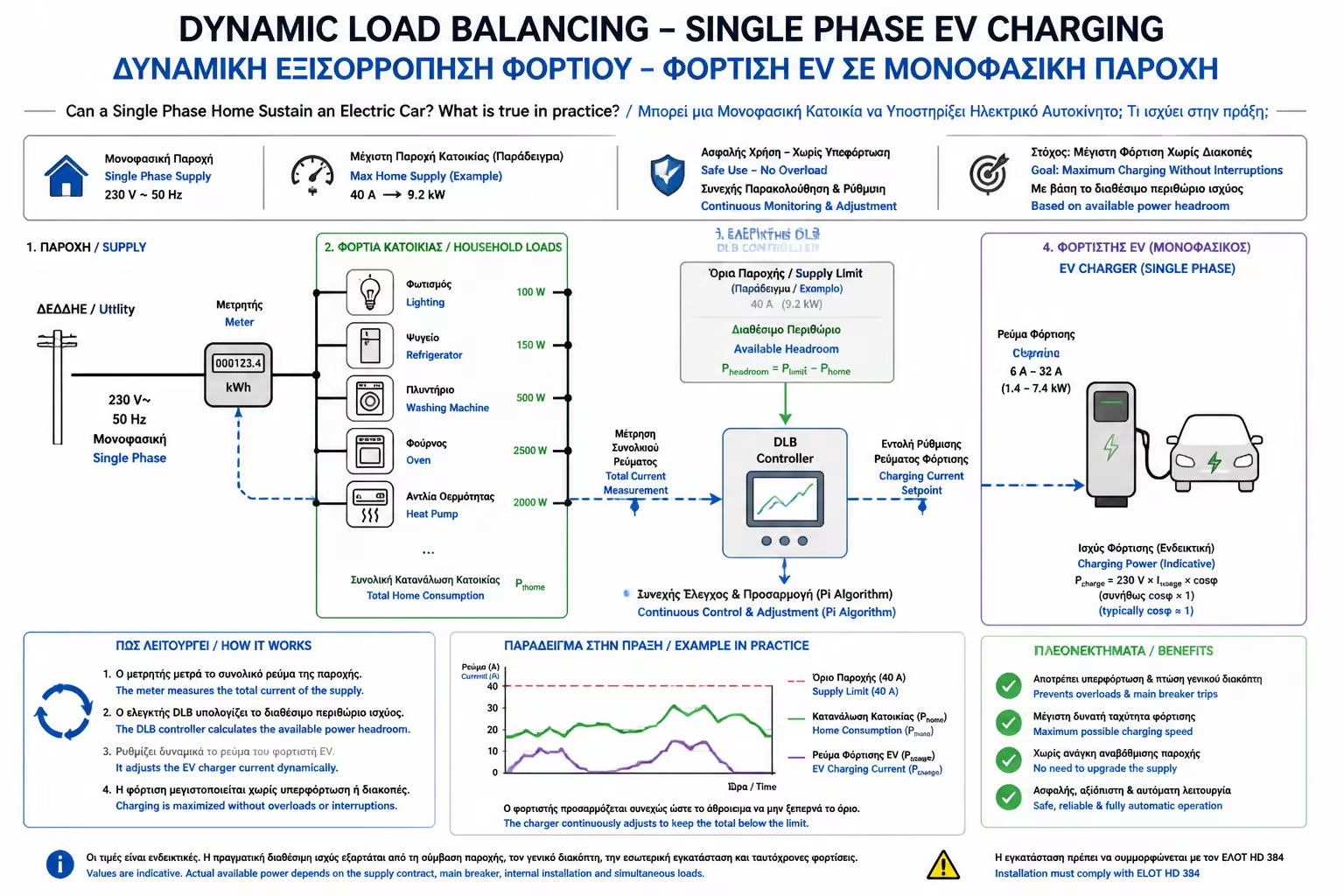
As we mentioned in a previous chapter, the solution is DLB (Dynamic Load Balancing). The electrician puts a meter on the panel that checks how much electricity the house is burning. Is it 03:00 in the morning and everyone is asleep? The charger gives all the power (7.4 kW) to the car. Do you wake up at 06:30 and turn on the water heater (4 kW)? The charger understands this, immediately drops the car charge to 3.5 kW, and the house continues to operate without tripping the fuse. Once the water heater is turned off, the charging speed picks up again.
This is the ideal solution to take advantage of 100% of a single-phase supply, with absolute safety.
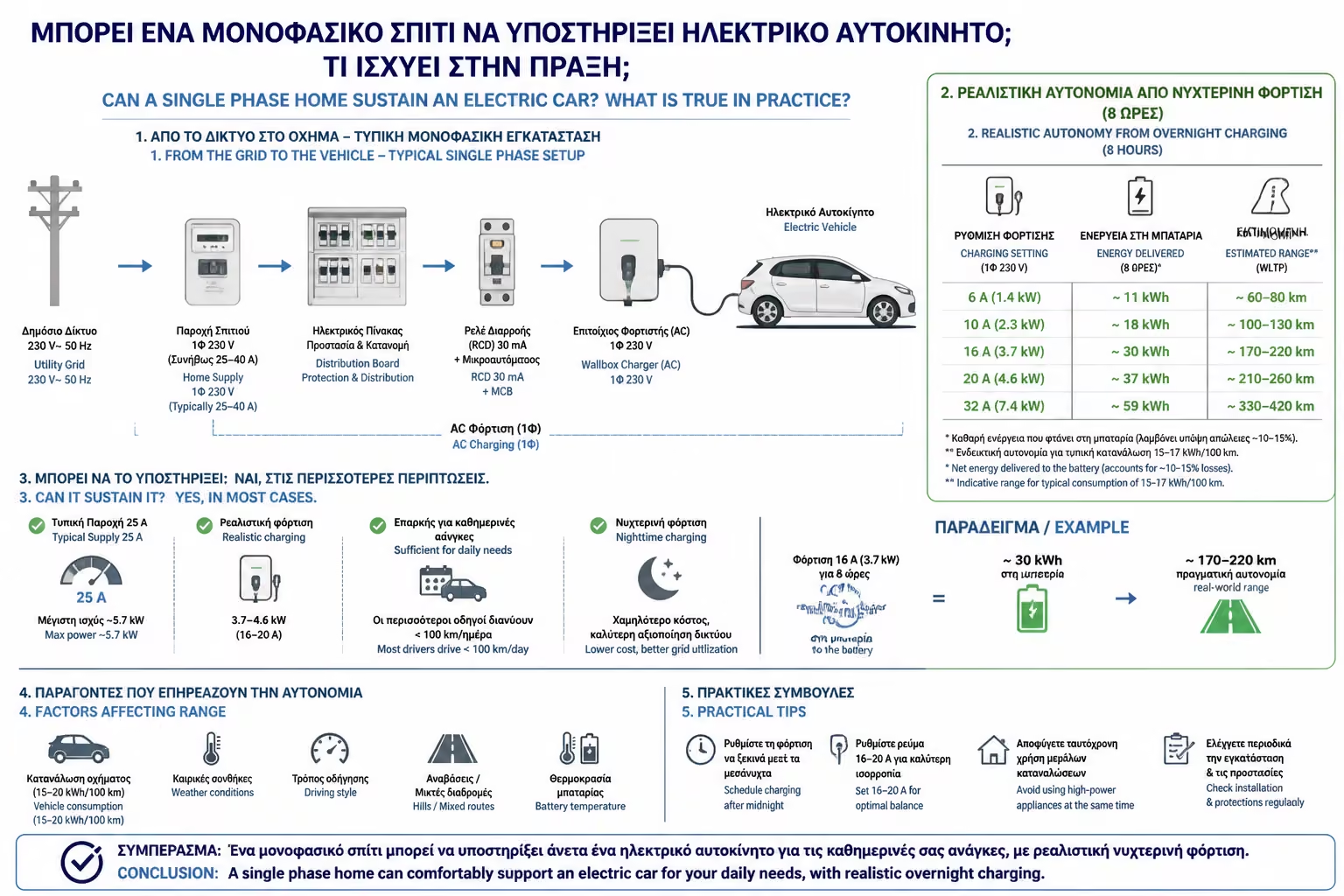
It is not mandatory to put in three-phase current to have an electric car. If your daily commute is reasonable (under 100-150 km) and you can charge at home every night, a single phase system (properly set to 16A or 20A, or with DLB mode) will cover you perfectly. Forget the stress of three-phase upgrading and just... plug it in.
Next Step: So far we've been talking about how to get more power. But is there a case where someone has a three-phase and wants to get rid of it? Continue to our guide: Downgrading from Three-Phase to Single-Phase: When it's worth doing to save on fixed costs (and when it's a no-go).
Return to category.
Go to categoryReturn to the central guide.
Go to guide