Technically
From the PPC pole, 2 main cables come to your house: One Phase (the cable that brings the current) and one Neutral (the return cable). The voltage is 230 Volts.
When you rent a new apartment, renovate your old house or build from scratch, one of the first questions your electrician (or power supplier) will ask you is: "Should we put in single phase or three phase?".
To most people, these terms sound like an unknown language. There is a myth that three-phase current "burns more" or that it is "only for factories". Still others believe that single-phase is "weak".
As engineers, we're going to clear up the landscape in simple terms, dispelling the myths. What's the real difference between them, and which one suits your needs (and your wallet)?
Think of single-phase current as a country road with a single lane of traffic. All cars (the stream) must pass through this one lane.
How much does he lift at once? You can comfortably have the lights on, the fridge, the TV, a washing machine and turn on either the water heater (4,000W) or the electric oven (2,500W). If you light them all together, the "one lane" will be congested and the master switch will fall.
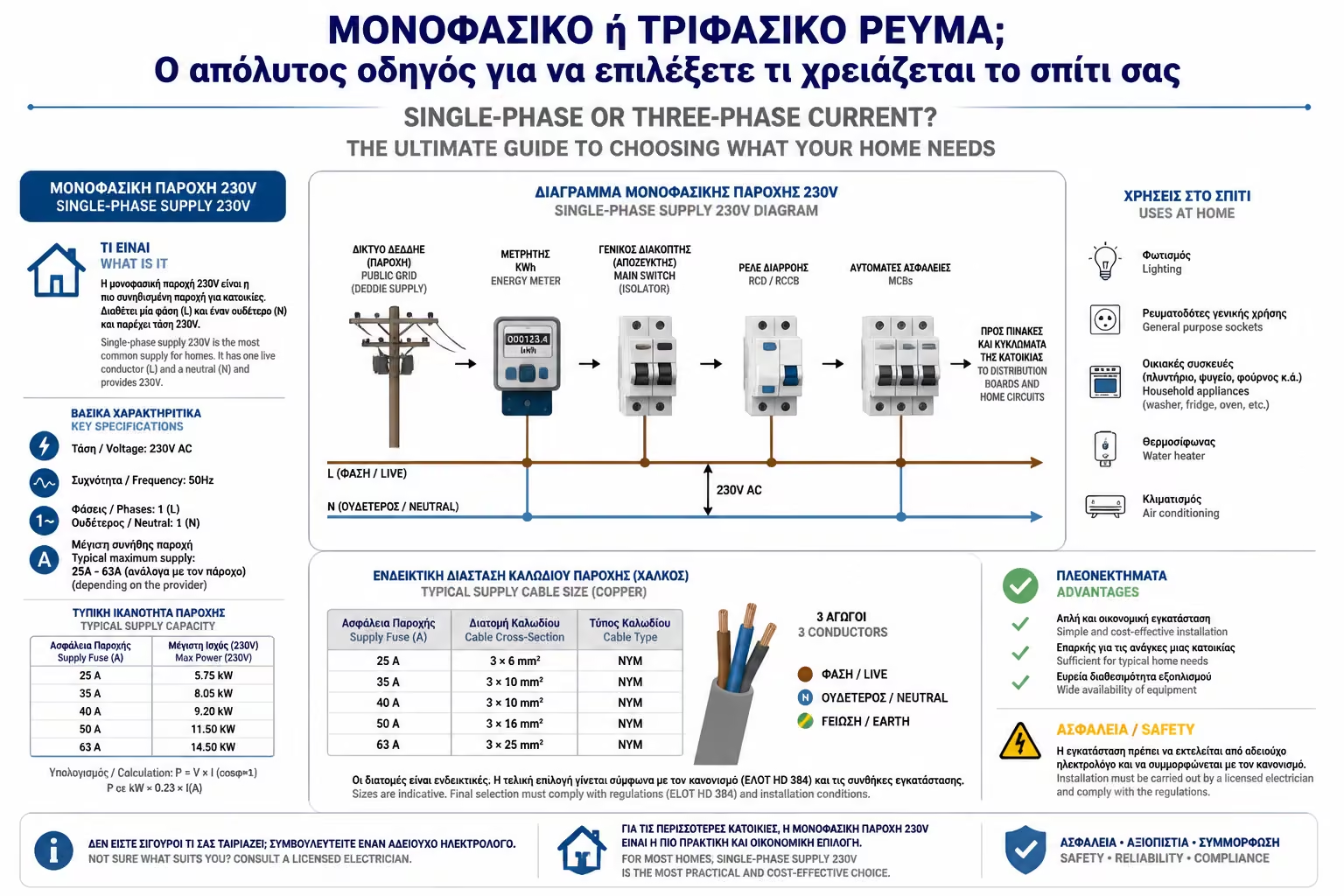
From the PPC pole, 2 main cables come to your house: One Phase (the cable that brings the current) and one Neutral (the return cable). The voltage is 230 Volts.
In Greece, a typical single-phase supply (Supply #1 or 2) usually gives you 8 kVA (about 8,000 Watts) of simultaneous consumption, with a general fuse of 35A or 40A.
Apartments and houses up to 80-100 sq.m., without extreme energy requirements.
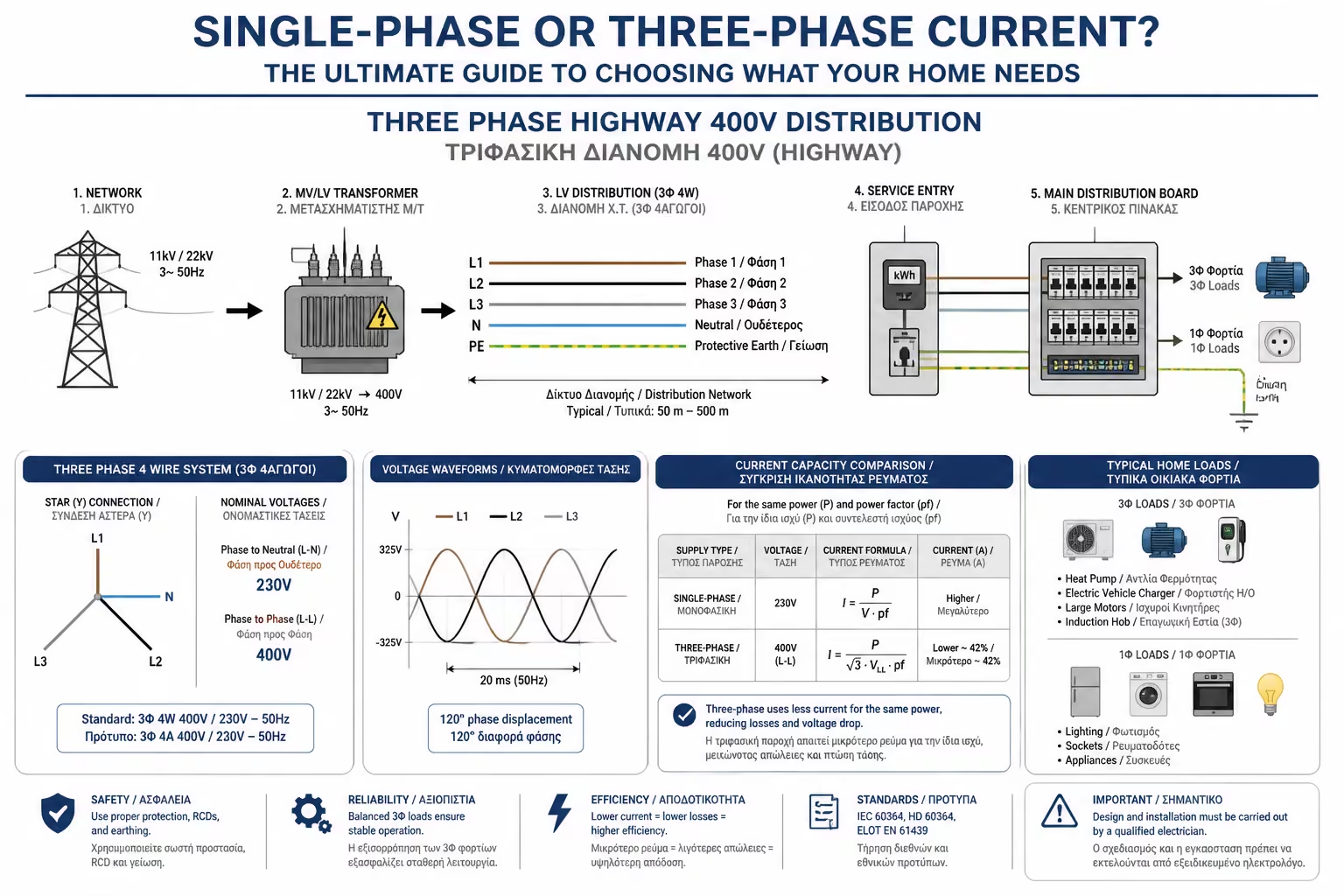
Three-phase current is like a giant highway with three separate lanes of traffic.
How much does he lift at once? Practically everything. You can cook in the oven (Phase 1), take a bath with the water heater on (Phase 2) and simultaneously run 3 air conditioners and the washing machine (Phase 3), without anything ever "falling".
4 cables come to your house: Three Phases (L1, L2, L3) and a Neutral. The voltage between the phases is 400 Volts, but each phase alone (to the neutral) gives your socket the classic 230 Volts. Your devices are not going to "burn"!
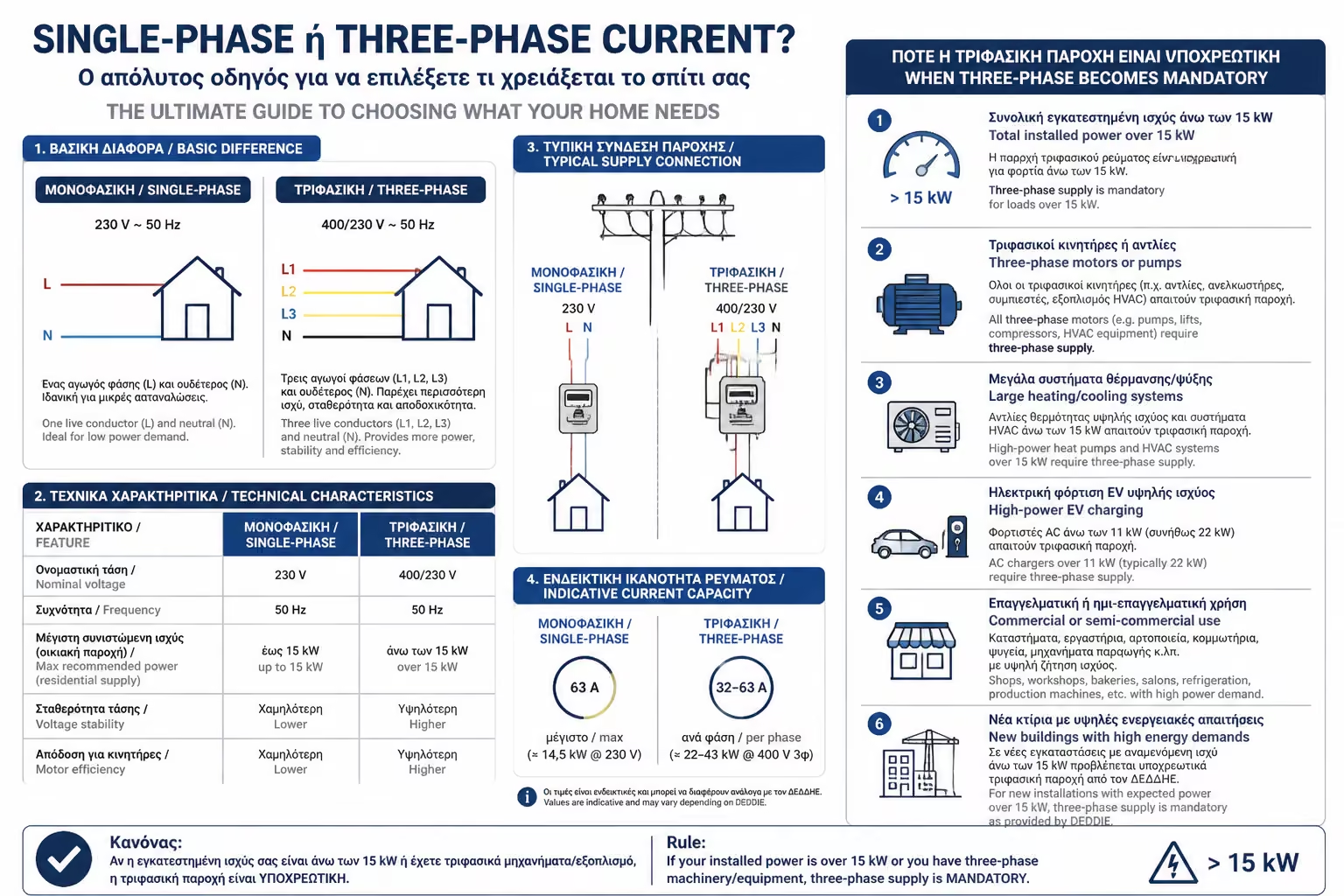
A typical household three-phase supply (Supply #3) starts at 25 kVA (about 25,000 Watts). It gives you 3 35A general purpose fuses. You literally have more than three times the power at your disposal!
Maisonettes, detached houses, large apartments (over 100 sq.m.) and houses with modern, energy-efficient equipment.
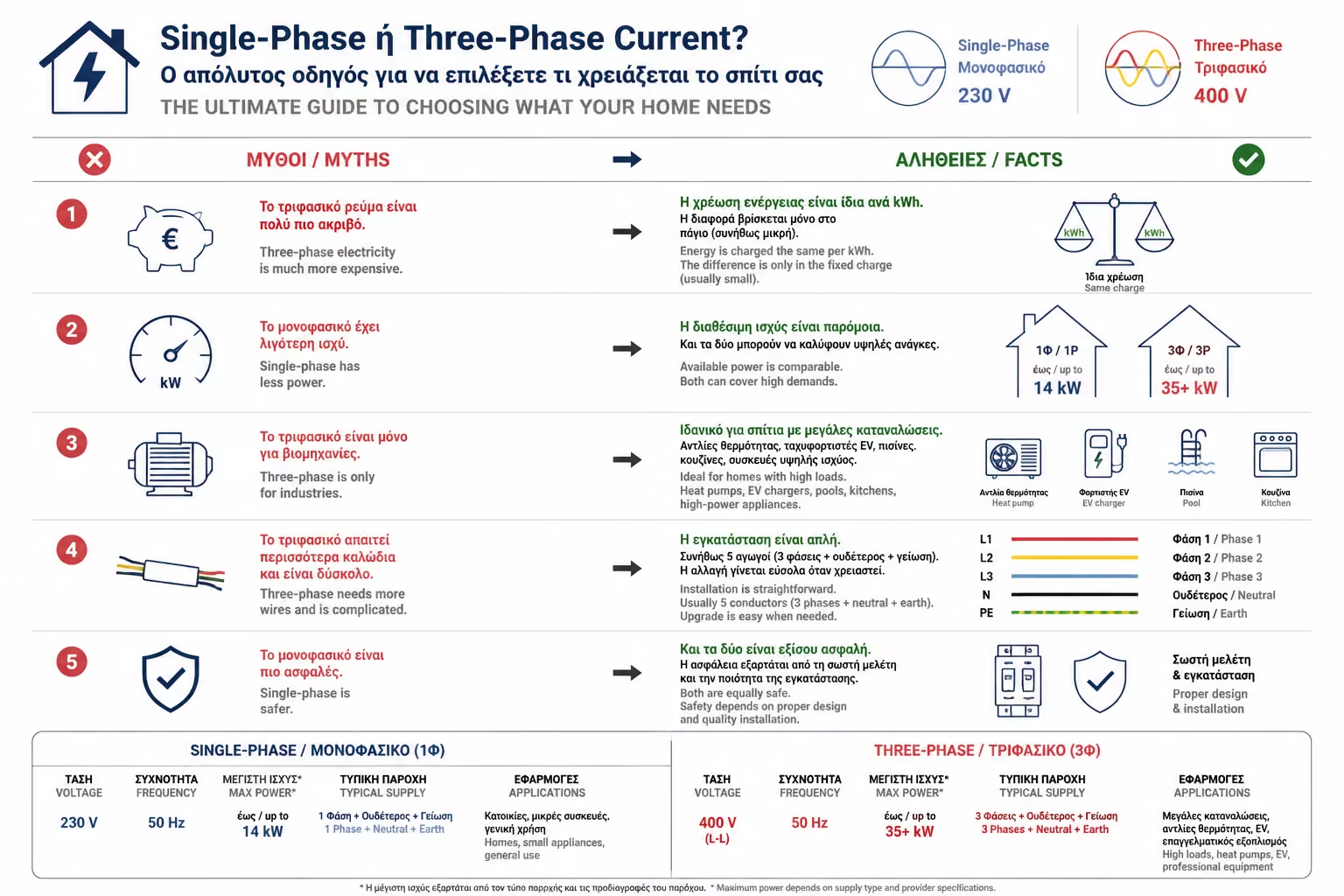
ERROR. Power consumption is measured in Kilowatt hours (kWh). If an oven consumes 2000W, it will burn exactly the same current (and you will pay exactly the same money in KWh) whether you connect it to a single-phase or a three-phase panel. The power that the grid provides you does not mean that you must necessarily consume it.
ERROR. There are purely "3-phase appliances" (such as large industrial motors, huge pool pumps, or commercial bakery ovens) that need all 3 phases at once to operate. In 99% of homes, we don't have such devices. The electrician simply divides the house into three "single-phase" pieces so that the installation is not difficult.
If three-phase is so perfect, why don't we put it everywhere? The answer is purely financial. 1. Installation Cost: Three-phase panel, three-phase leakage relays and thick five-pole cables cost significantly more than single-phase. 2. DEDDIE Fixed Assets: Electricity bills have "Adjustable Charges" (calculated based on kVA). Because your three-phase "reserves" more capacity than the PPC network, you pay higher fixed connection fees every month, regardless of whether you burn electricity or not.
There are 3 situations in which even the best electrician cannot "save" you with single phase: 1. Heat Pump (High Power): If you give up oil for a large pump (eg 14kW - 16kW) to heat a 120+ sq m house, the manufacturers require a three phase supply. 2. Electric Car (Fast Charging): If you want to charge your EV fast (with 11kW or 22kW Wallbox), three-phase is mandatory. With single-phase you are limited to slow charging (up to 7.4kW, and that's marginal). 3. Induction Hobs & Heaters: Huge modern bathroom heaters (which heat water instantly) draw 18kW-21kW. A single-phase house has a total of... 8kW.
The equation is simple: Choose SINGLE PHASE: If you have a typical apartment or cottage, heat with natural gas/oil (not exclusively with electricity), have the classic solar/electric water heater and don't plan to buy an electric car. You will save money on installation and fixed assets. Choose THREE-PHASE: If you are building a new house, if you have a villa/maisonette, if you are thinking of installing a Heat Pump in the future or if your house hosts more than 4 people who are used to turning on ovens, water heaters and hair dryers at the same time.
Next Step: Three-phase may sound like a must for the future, but what if your budget is tight? We delve into a very specific question that thousands of new EV buyers have: When to Upgrade to Three-Phase Supply: Heat Pumps, Wallboxes and "heavy" loads.
Return to category.
Go to categoryReturn to the central guide.
Go to guide