
When to Upgrade to Three-Phase Supply: Heat Pumps, Wallboxes and "heavy" consumptions

Gone are the days when a house only needed electricity for lights, a refrigerator and a TV. We live in the era of electrification. We replace oil boilers with heat pumps, do away with gas for induction hobs and park electric cars in the garage.

All these modern conveniences have one thing in common: they are extremely "hungry" for energy. The result is that the classic, old single-phase home supply reaches its limits, with the main switch constantly "dropping". As engineers, every day we see homeowners buying expensive equipment, unaware that their home does not have the capacity to power it.

When, then, does upgrading from single-phase to three-phase power cease to be a "luxury" and become an absolute, technical necessity? Let's look at the 3+1 cases where you have no choice.

The Mathematics of Single-Phase: Why Does It "Terminate"?

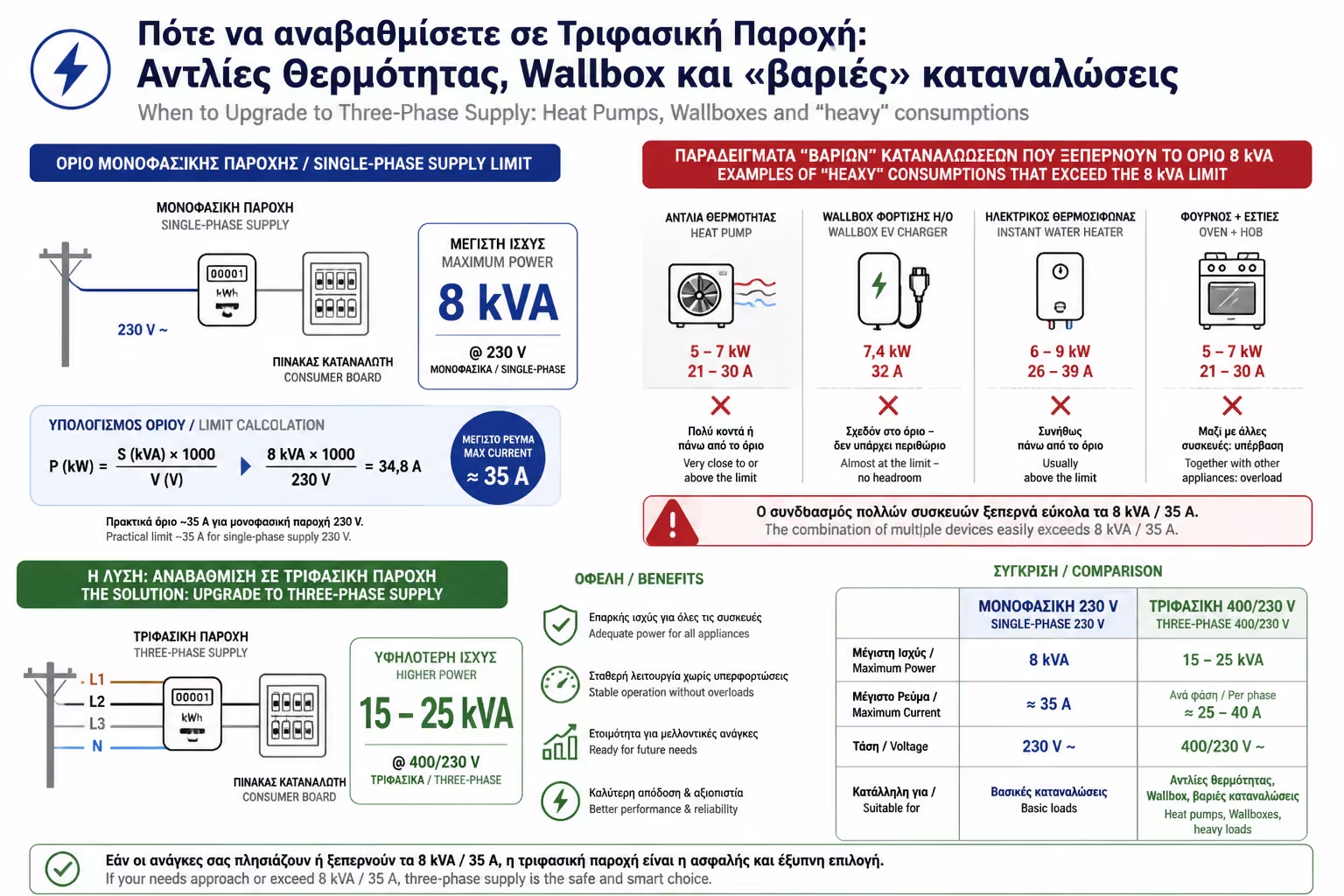
To understand the problem, we need to know the limits. The standard, reinforced single-phase supply (No. 2) that 90% of Greek apartments have, yields a maximum of 8,000 Watts (8 kVA) of simultaneous power.

See how easily this "basket" fills up on a winter's night: Turn on the electric water heater: 4,000 Watts Turn on the oven for cooking: 2,500 Watts * A large air conditioner is running in the living room: 1,500 Watts

Total: 8,000 Watts. The basket is full! If you turn on the hair dryer (2,000W) or the kettle, the main switch will drop instantly to protect the wires from overheating. To this already marginal system, we are called upon to add the new, "heavy" loads of the decade.

Illustration for The Mathematics of Single-Phase: Why Does It "Terminate"?

The 3 "Giants" that Require Three-Phase

Illustration for The 3 "Giants" that Require Three-Phase

If you intend to install any of the following devices, visiting the electrician and applying to DEDDIE is a one-way street:

1. Instant water heaters (Whole House)

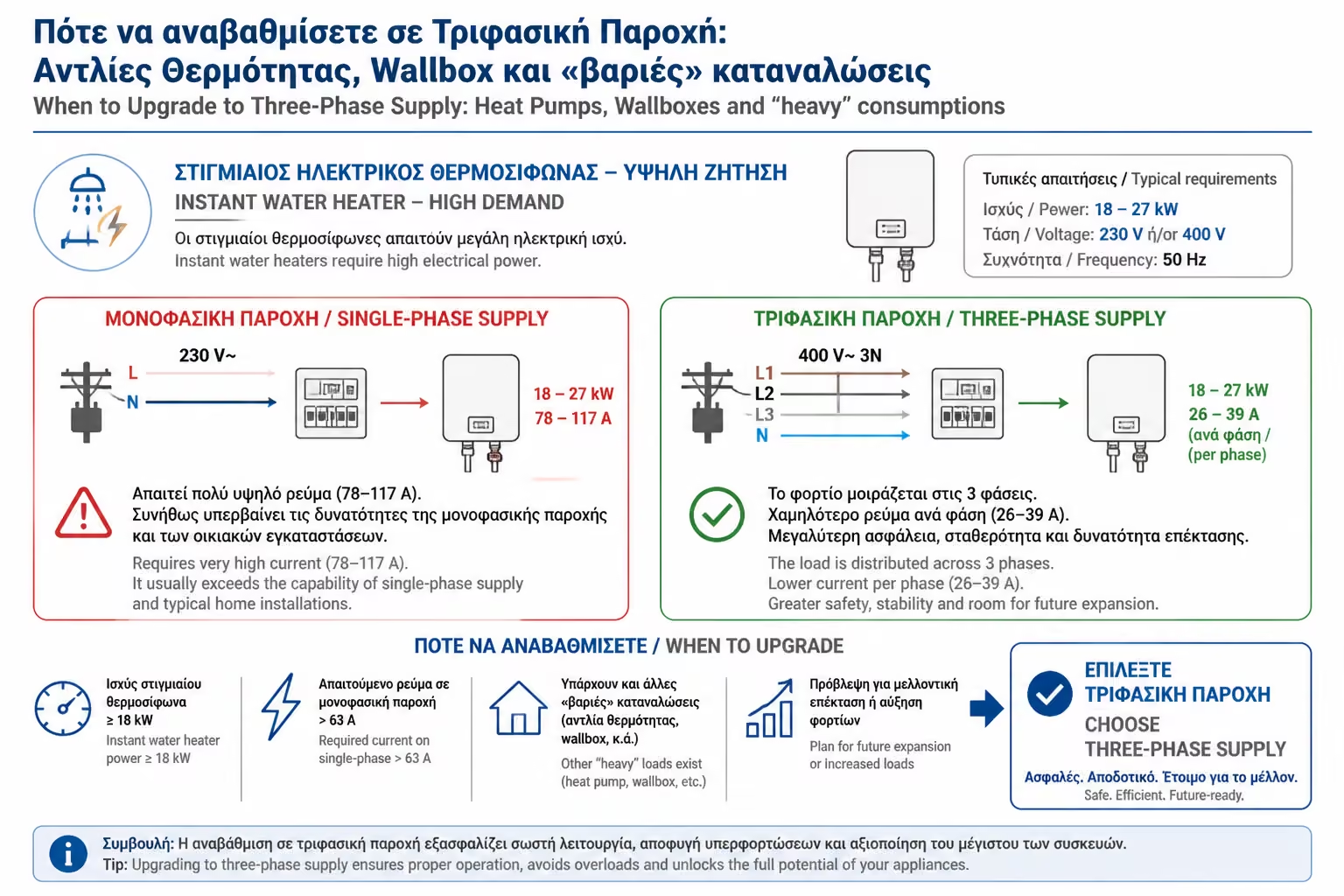
Instantaneous water heaters do not store hot water. They heat it up momentarily as it passes through them. To heat the freezing winter water fast enough for you to take a comfortable shower, they have huge electrical resistances. A small water heater (for the sink only) needs 3.5kW to 5kW and goes into single phase. A central water heater (for a bathroom) requires from 18kW to 24kW! It is inherently impossible to operate in a single-phase 8kW house. It requires strictly three-phase supply.
2. Heat Pumps (Large Houses)

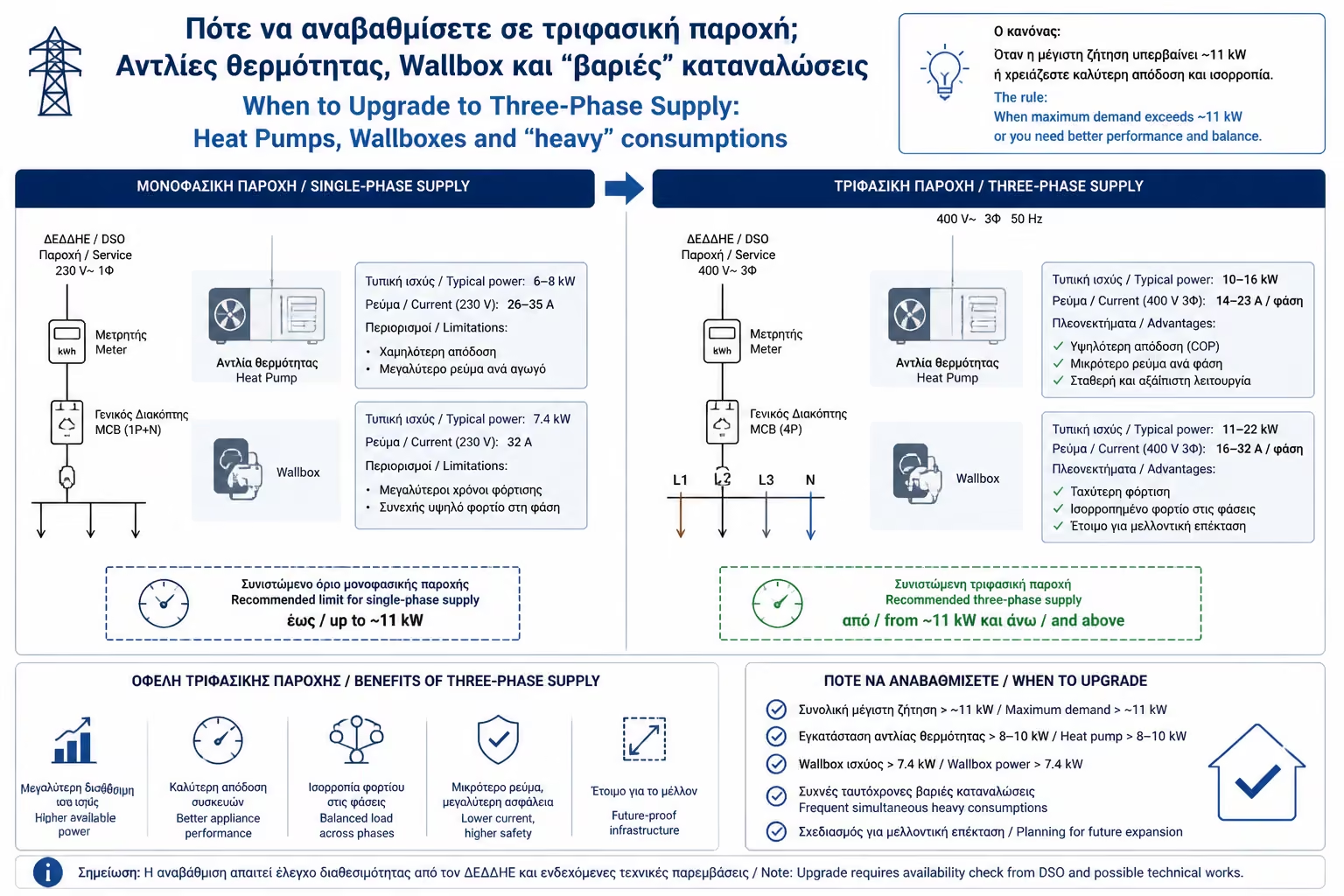
If you have a small, well-insulated apartment of 70 m2, a small single-phase heat pump (eg 6-8kW of thermal power, which consumes about 2-2.5kW of electricity) will work just fine. However, if you have a detached house of 120+ sq.m. with poor insulation and old radiators, you need a 14kW or 16kW (high temperature) pump. These machines, in extreme cold, activate their built-in backup resistors. Their demand can skyrocket to 6kW - 9kW. If you connect it to single-phase, you practically won't be able to turn on a light bulb in the rest of the house when the heating is running.

3. Electric Car Chargers (Wallbox 11kW / 22kW)

The car has a huge battery (eg 60-80 kWh). A single-phase charger can theoretically deliver up to 7.4kW (drawing 32 Amperes). If you do this, you're consuming 90% of the house's electricity just for the car for 8 hours straight! To charge quickly and safely (as recommended by all manufacturers), you must install a Three-Phase Wallbox at 11kW or 22kW. It charges the car in half the time and distributes the weight evenly across all 3 mains cables, leaving plenty of power for the home.

The 4th Case: Induction Hobs & "Full Electric" Kitchens

A classic kitchen (oven + hob) draws about 6,000W if you turn them all on. Modern Induction Hobs are incredibly fast, but to achieve this, their power is "scary". A good induction cooktop (if you turn on all 4 Boost "eyes" at the same time) can claim 7,400 Watts (7.4 kW) alone! Add to that the electric oven that bakes in parallel, and you've already exceeded 10,000W. "Full Electric" houses, where natural gas is absent, are the most classic candidates for an immediate three-phase upgrade.

Illustration for The 4th Case: Induction Hobs & "Full Electric" Kitchens

Is there a solution if I can NOT install a three-phase?

Illustration for Is there a solution if I can NOT install a three-phase?

Sometimes, the upgrade is impossible. Maybe the owner doesn't allow it if you rent, maybe the cost seems prohibitive, or maybe DEDDIE itself doesn't have a three-phase network available in the particular neighborhood.

If you get stuck on single-phase, the technology offers two "lifesavers":

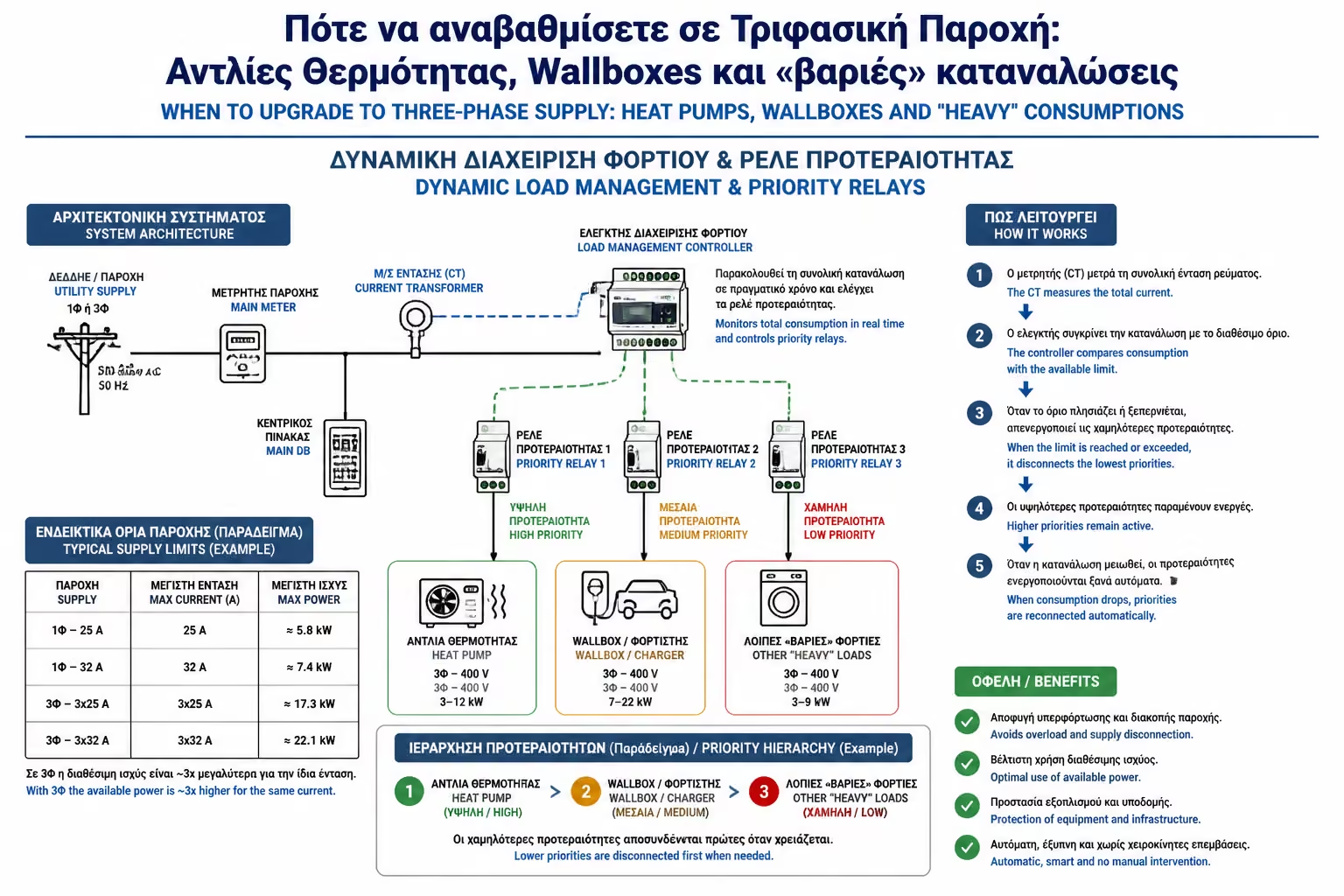
Dynamic Load Management (DLB)

Mainly applied to car chargers. The charger understands when you turn on the oven at home and, instead of turning off the mains, automatically reduces (or cuts off) the car's charge until you're done cooking.

Load Shed Relay

Special components in the electrical panel. You can set them up so that when the heat pump is running and you go to turn on the water heater, the relay temporarily "cuts" power to the pump, giving priority to the hot water.

Summarizing

Upgrading to three-phase supply is no longer a requirement exclusively for huge villas. If the design of your home includes electric propulsion, rapid heaters or a high-demand heat pump, three-phase current is the only technical solution that will ensure you a daily life without the stress of... "the fuse has fallen again".

Next Step: We've seen when you need it. But what is the process? Where do you apply, how much will the State charge you and how long will you be without power? We answer everything in the next practical guide: Power Extension (DEDDIE): The process, supporting documents and costs step by step (Guide 2026).

Related Articles

Preview