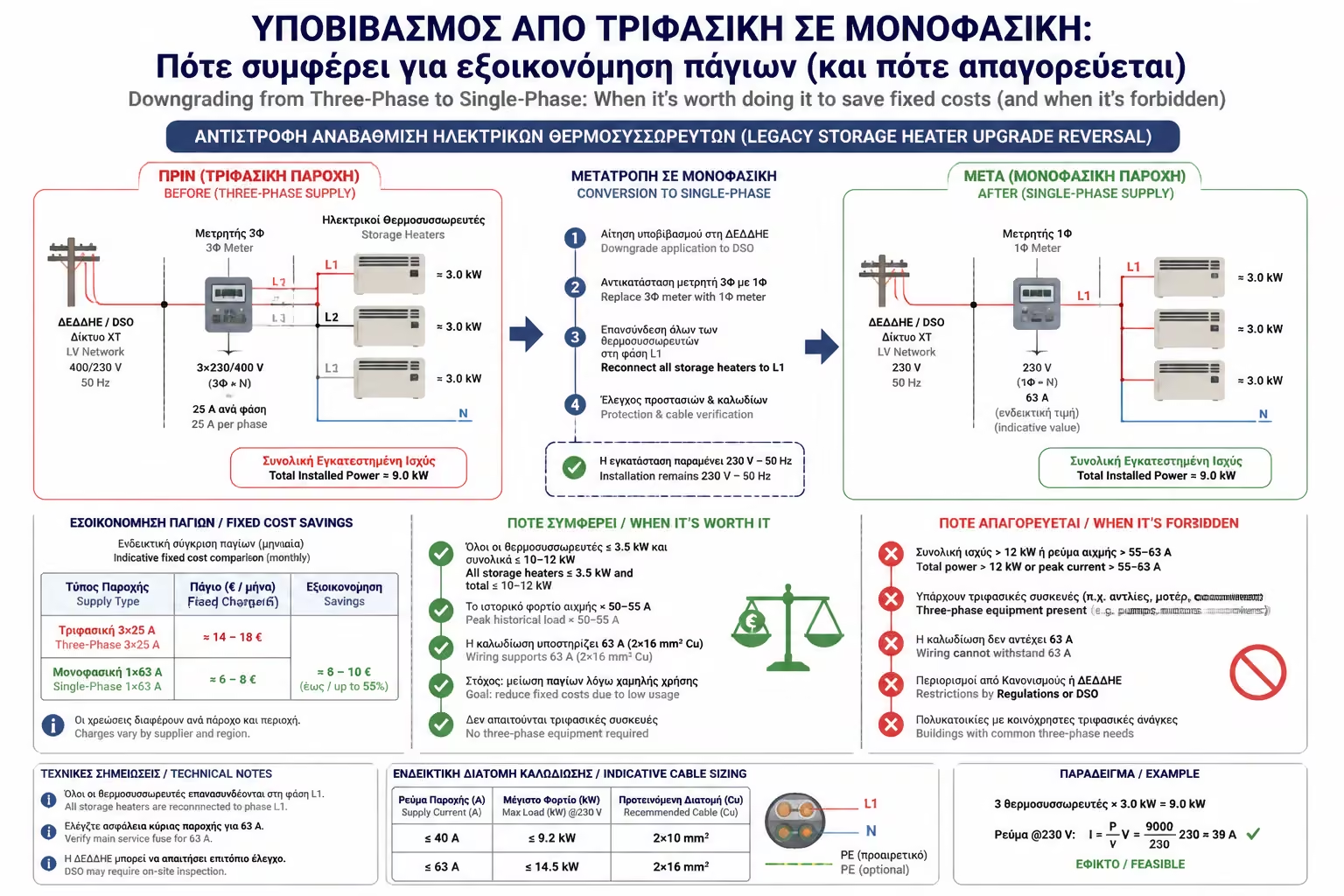
Single phase (8 kVA)
You pay a very small fixed power charge to the network.
Throughout this guide, we're constantly talking about upgrades. How are we going to get more current, how are we going to put in longer cables, how are we going to charge the car. The modern trend is clearly to increase power.
But there is a class of owners who are moving in exactly the opposite direction. It's the people who ask, "I have three-phase power, but I don't need it. Can I make it single-phase again?"
"Downgrading" (or technically, ADR) is a move that sounds paradoxical, but has a huge financial incentive behind it. As engineers, we often see cases where 3-phase current is not only unnecessary, but is a "black hole" that sucks money every month. Let's take a look at when it's worth making the switch, how much it will cost you, and when technology prohibits it.
The only reason to downgrade your provision is for financial gain.
When you get your electricity bill, in addition to the electricity you actually used (Supply Charges), you also pay Regulated Charges. This is the money that goes to DEDDIE (for the cables) and ADMIE (for the pillars). A large part of these charges are calculated based on the kVA (the capacity) you have reserved from the grid, regardless of whether you are burning electricity or the house is closed!
This means that in a three-phase house that sits closed (or is inhabited by an elderly person with minimal consumption), you could be paying €100 to €150 more every year in "air" fixed, without having burned a kilowatt hour more!
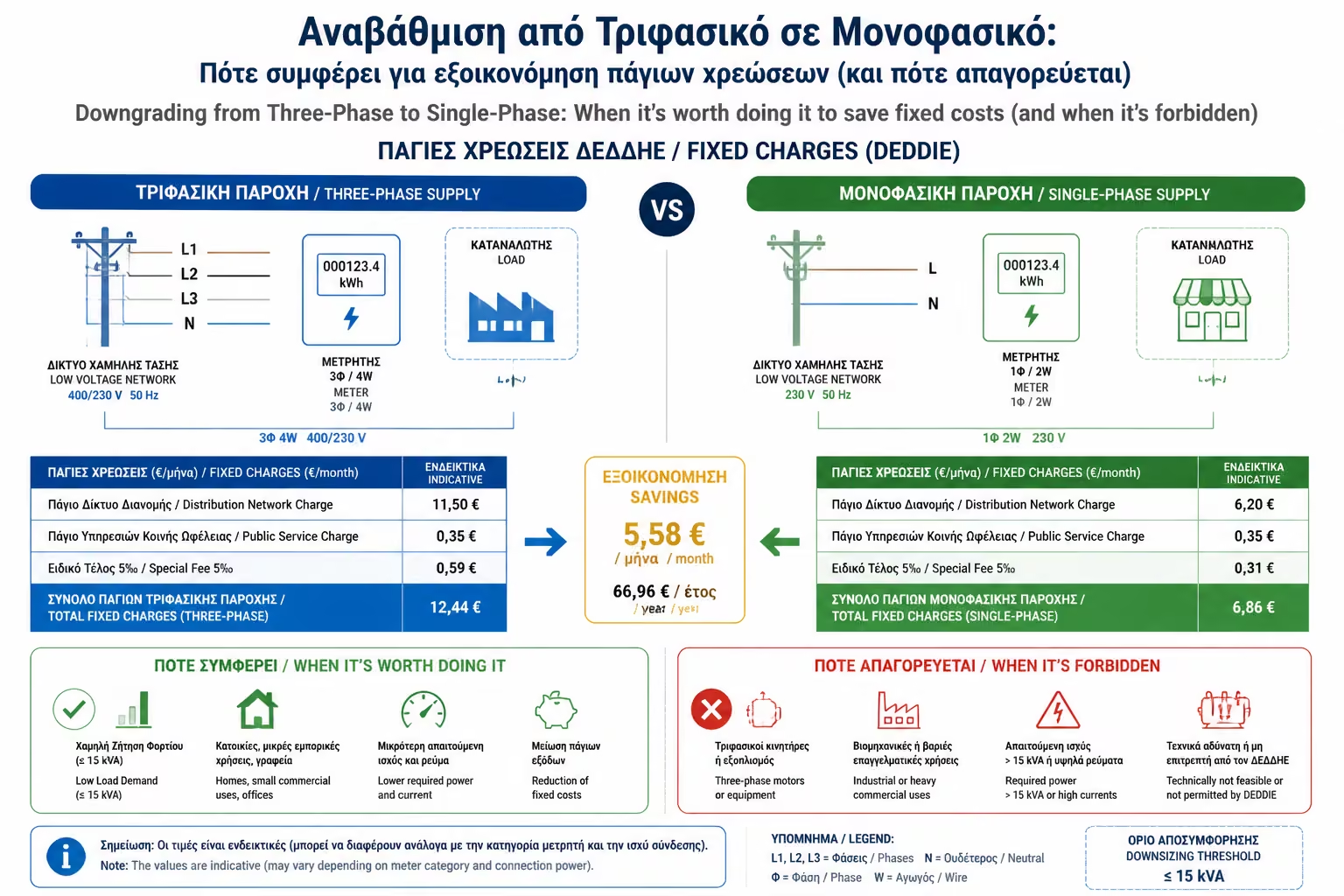
You pay a very small fixed power charge to the network.
Because you reserve 3 times more space in the network, the fixed charge imposed by DEDDIE is multiple times.
Switching to single-phase is an ideal investment in the following 3 cases:
In the 1980s and 1990s, many apartments installed three-phase current exclusively to run the huge electric heaters on the night current. Today, these have been removed and the house is heated with natural gas or a simple air conditioner or two. The three-phase was left "amanati" for no reason.
A vacation home that you visit 20 days a year doesn't need three-phase (unless it has a huge pool). The reduction in power will bring the winter clearing bills to almost zero.
You rented out a former business space (eg an old sewing shop or three-phase oven) and turned it into a simple, small Airbnb apartment.
Do not rush to call the electrician. The three-phase cannot be removed if there are specific "commitments" in the building:
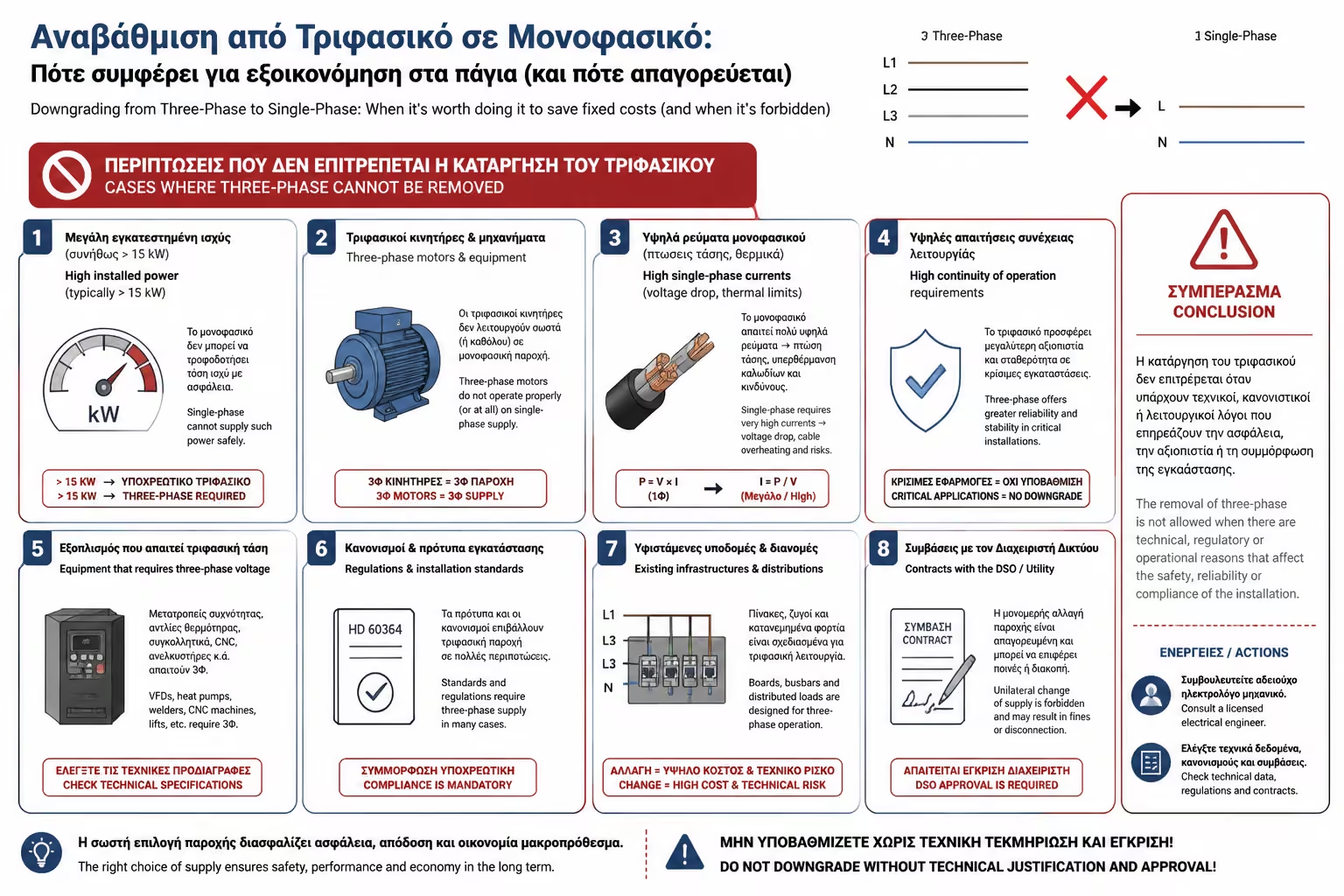
If you have an old lift (elevator) whose motor works exclusively with three-phase (without a modern inverter), if you have industrial machinery, or a three-phase central air conditioner (ducted). If you cut them 2 out of 3 phases, the motors just won't turn.
If you have a "Full Electric" house with induction hobs, electric water heaters and a heat pump (as we saw in the previous chapter). The 8 kVA single phase will collapse in the first minute.
If your panel is already three-phase, all house lines end there. To make the house single-phase, the electrician must "bridge" all these lines onto a single phase. This requires the board to be up-to-date and organized. If the painting is ancient, degradation may require its complete replacement.
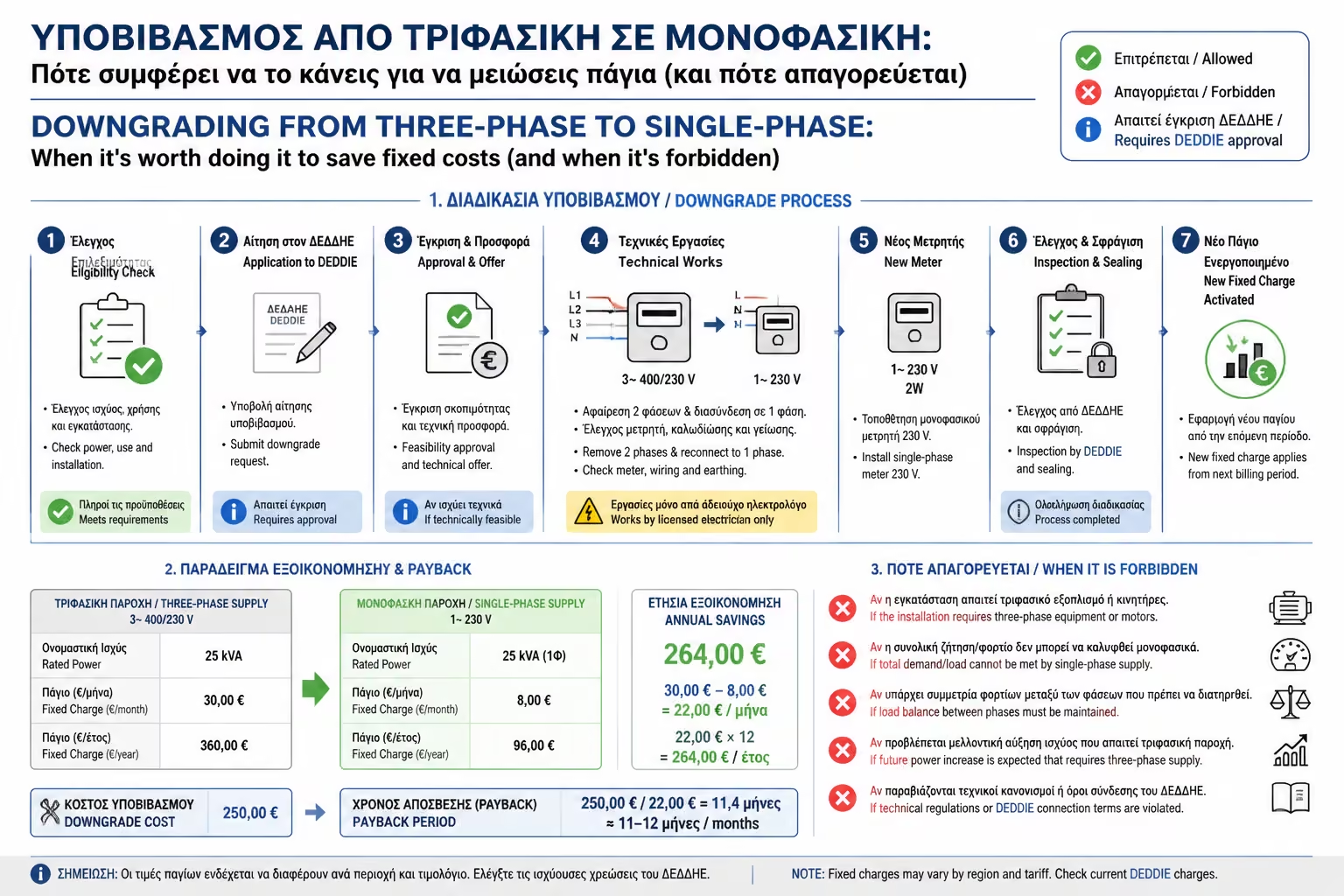
The process is similar to augmentation, but usually cheaper:
The Payback (ROI): If you pay a total of €200 for the whole process (Electrician + DEDDIE) and you save €100/year from fixed assets, in 2 years you will have fully paid for yourself! From the third year onwards, you just earn money.
As your supply changes (even down), a new installer certificate is required. The electrician will come, make the necessary "bridges" (conversions) in your panel so that it works safely on a single-phase network, and will issue the YDE. (Cost: ~€100 - €150).
Apply online for "Power Reduction".
Unlike the increase (where you pay the extra kVA), in the decrease you only pay the employment costs of the DEDDIE workshop to remove the three-phase meter and install the small single-phase one. This usually costs around €50 - €80.
Power reduction is not "backtracking". It is the smart management of your wealth. If you live in a natural gas house, cook normally, and your electrical requirements are "normal", three-phase power is an unnecessary luxury that just enriches the Network Manager.
Next Step: We talk about single-phase and three-phase houses all the time, but if you move into a new apartment tomorrow, how will you know what it has? Continue to our handy, visual guide: How to Check if Your Home Has a Single or Three Phase Panel: A quick visual check for beginners to identify at a glance without being a techie.
Return to category.
Go to categoryReturn to the central guide.
Go to guide