Red Sockets / Plug
It means Three Phase Current (400V). They usually have 5 pins inside (Phase 1, Phase 2, Phase 3, Neutral and a thicker pin for Earth). It is the classic choice for large motors and Wallboxes.
When we think of powering a device, our mind automatically goes to the classic white plug that goes into the wall socket (the Schuko socket). But what happens when you buy a professional machine, a large welding machine or a portable three-phase charger for your electric car?
Instead of the classic plug, you will find at the end of the cable a bulky, plastic, usually crimson plug with multiple metal prongs (teeth).
These are the so-called Industrial Plugs and Sockets (IEC 60309 / CEE standard). Although the word "industrial" conjures up factories, these days they make their way into garages and home storage in droves. As engineers, we get to decipher the colors, sizes, and strict rules that govern these "heavies" of electrical engineering.
The classic household socket (Schuko) is great for a TV or a vacuum cleaner, but it has two huge limitations: 1. It cannot withstand stress: Its limit is 16 Amperes (about 3,600W). Even so, if you run 16 Amperes continuously for hours, her plastics will melt. 2. It has only 3 contacts: It carries only one phase, one neutral and the ground.
When a machine needs Three-Phase Current (400 Volts), it must take all three phases at the same time. That's why CEE plugs were made.
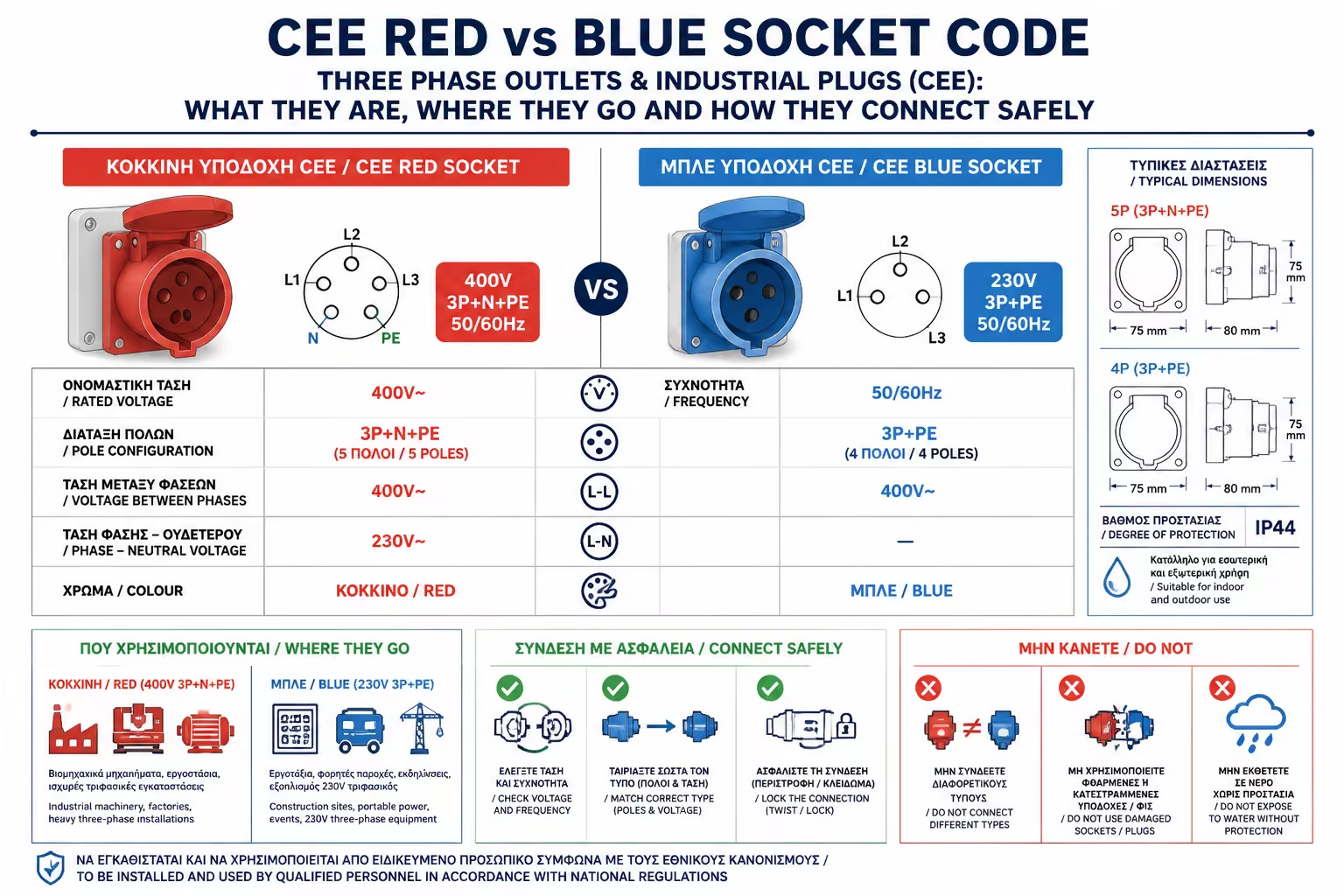
The international standard uses colors to prevent you from making a catastrophic mistake. The color of the plastic casing indicates the Voltage:
It means Three Phase Current (400V). They usually have 5 pins inside (Phase 1, Phase 2, Phase 3, Neutral and a thicker pin for Earth). It is the classic choice for large motors and Wallboxes.
It means Single Phase Current (230V). They have 3 pins (Phase, Neutral, Ground). Although they are single-phase, they are a class above household sockets because they withstand huge, continuous loads and are often waterproof. They are widely used in campsites (for caravans) and marinas (for boats).
(There is also the Yellow socket for 110V, mainly on construction sites in countries such as England, but rarely in Greece).
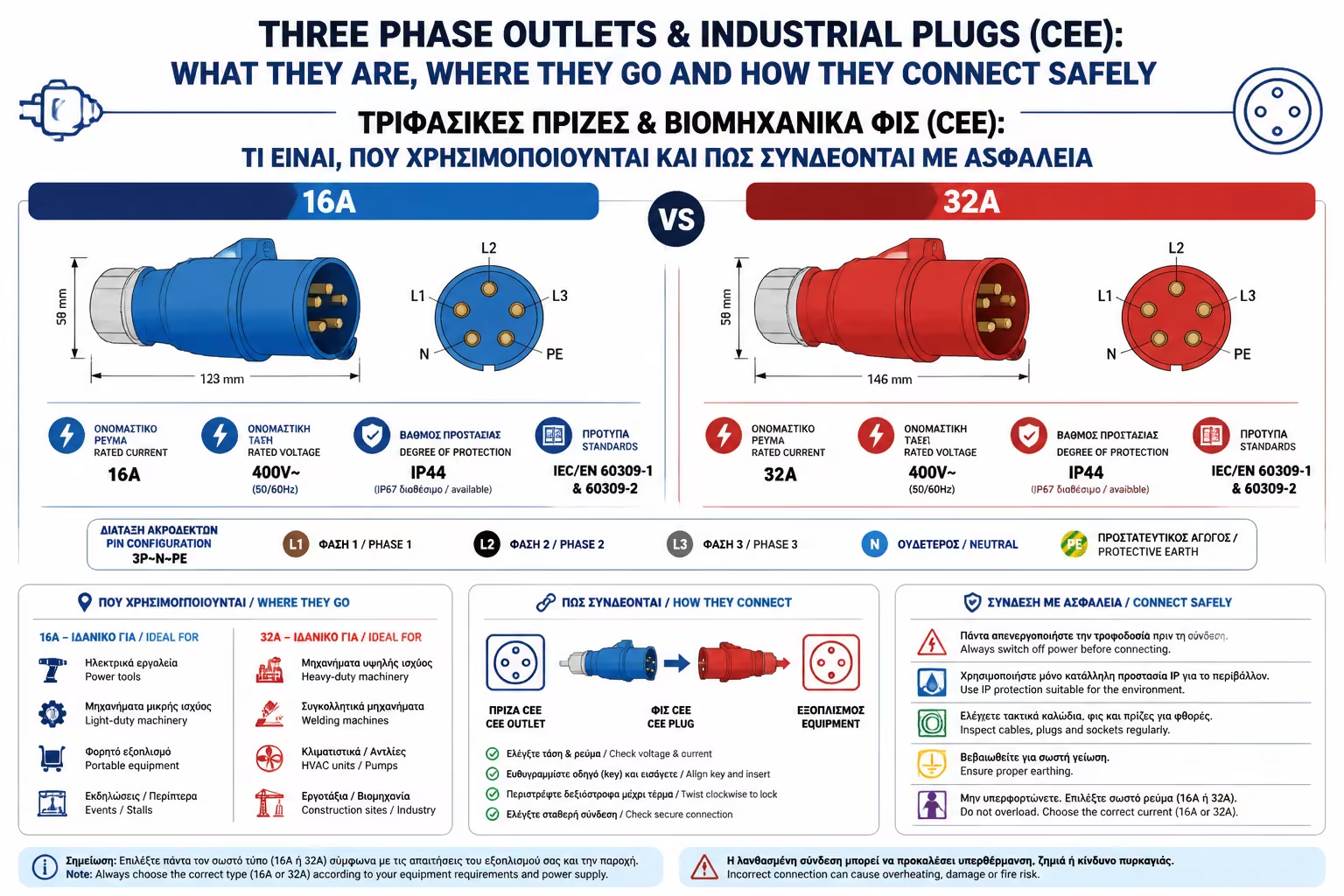
Another smart safeguard is physical size. CEE sockets come in different sizes (diameters) depending on the Amperes they withstand.
Withstands up to 11 kW in total. It is most common for home garages and small workshops.
Withstands up to 22 kW. The plug is noticeably thicker and longer. You cannot put a 16 pin plug into a 32 pin socket (and vice versa). The holes do not match, preventing overloading of the line.
There are also larger sizes (63A and 125A), but these are strictly for heavy industry and construction sites.
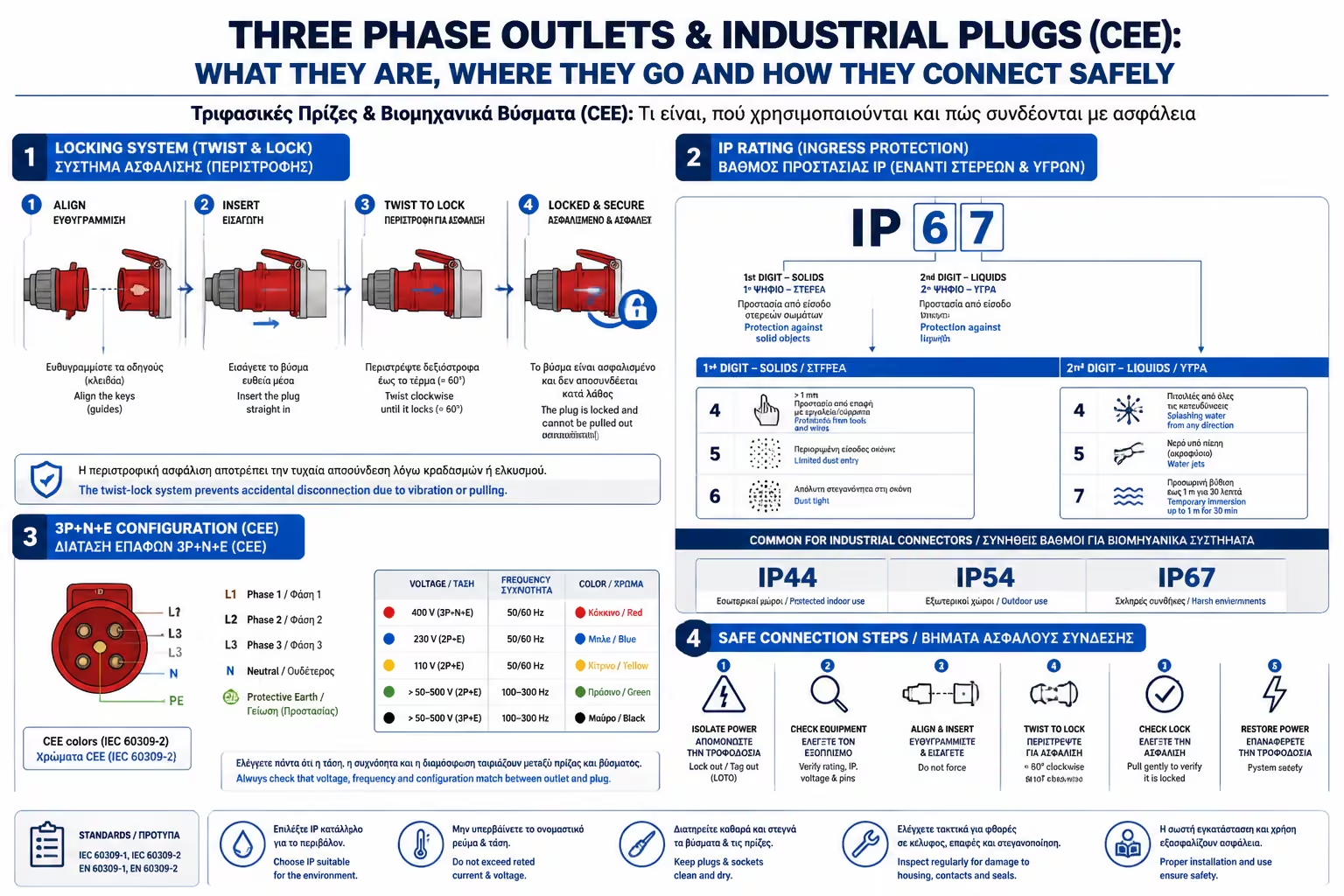
Industrial sockets are designed to survive harsh environments:
The socket has a spring-loaded cap. When you insert the plug, the cap "hooks" onto a protrusion on the plug. It is impossible for the cable to come out if someone accidentally pulls on it or trips over it, preventing an electric arc (spark).
Most have an IP44 protection index (resistant to water splashes). The more expensive ones (IP67) have a ring that screws in, making the joint 100% waterproof, even if dropped in a puddle of water.
They can give their maximum current for days without melting.
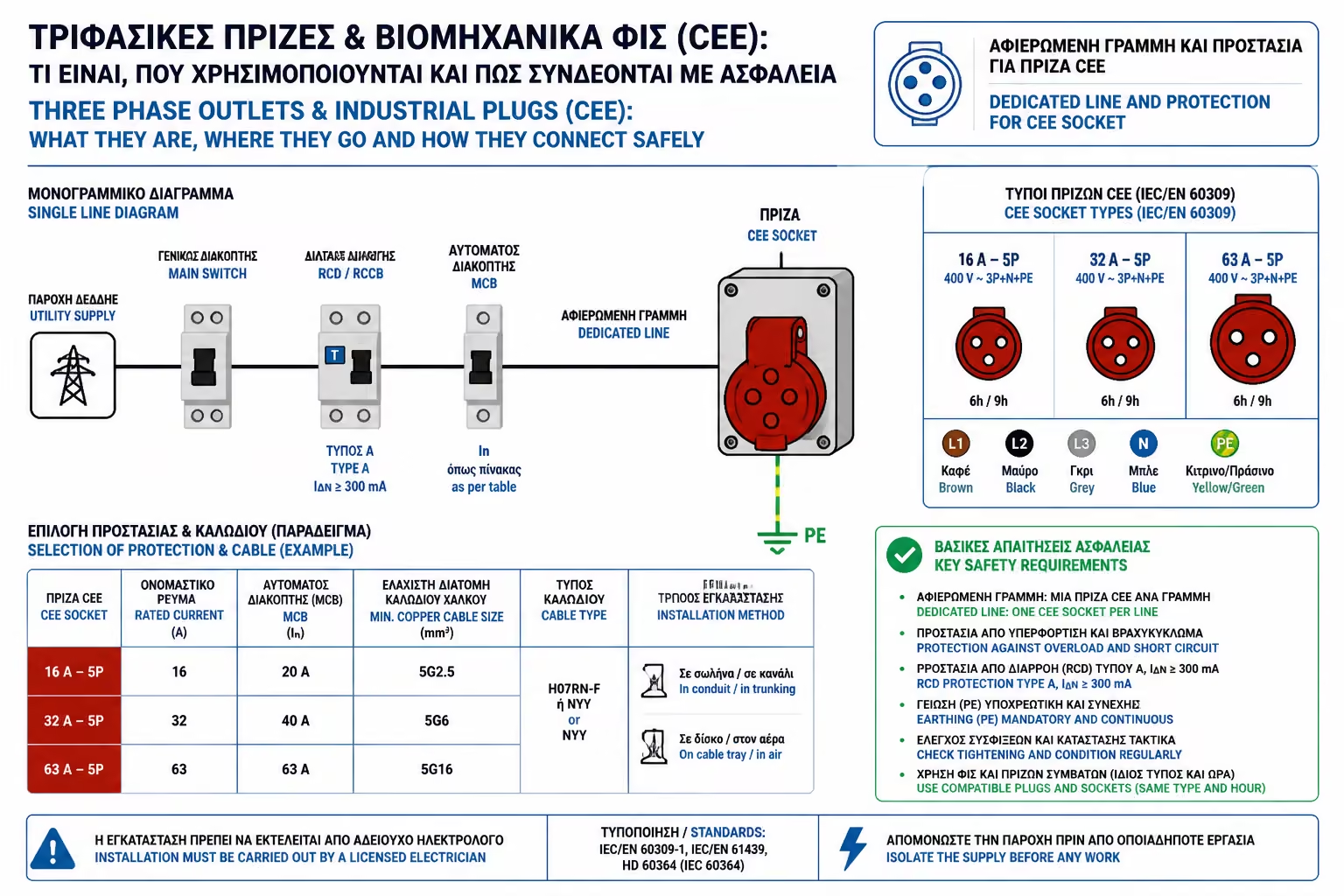
If you buy a portable EV charger and want to put a red three-phase outlet in your garage, the electrician MUST observe the following:
1. Exclusive Line: The CEE socket does not "steal" power from the lights. It requires its own, brand new cable that runs directly from the electrical panel. 2. Correct Wire Cross-section: For 16A three-phase socket, a wire of at least 5x2.5mm² is required. For a 32A three-phase socket, a cable of at least 5x6.0mm² is required. 3. Its own Fuse & Relay: A three-phase micro-automatic (16A or 32A respectively) and, strictly speaking, a separate three-phase Leakage Relay must be included in the panel. 4. The Converter (Adapter) Trap: You will find "adapters" on the internet that take power from a 32A red plug and output it to three simple Schuko plugs. This is prohibited and dangerous, because if you put a device in, the only protection it will have is the central 32A fuse (too big for a device that can withstand 16A).
If you're lucky and your home has three-phase power, a red CEE socket in the garage or shed is a great investment. It gives you access to professional tools and, above all, radically and cheaply solves the problem of safe, fast charging of your electric vehicle.
Next Step: We've completed Class A (Single Phase vs Three Phase) and understood how electricity gets to our home and outlets. Now, it's time to get a little more detailed. How do you know how much electricity you need before you even build the house? We move on to Category B: Load Distribution & Power Calculation, starting with the guide: How to Calculate the Total Power Required of a Home: Math and Examples (kVA & kW).
Return to category.
Go to categoryReturn to the central guide.
Go to guide