Lighting & Small Appliances
1.000W (1.0 kW)
When you start building a new home or a major renovation, your engineer and electrician will have to make a critical decision early: What size supply will we request from DEDDIE? If you ask for less power than you need, the fuses will keep going down. If you ask for too much, you'll be paying huge amounts unnecessarily. To find the "golden ratio", we don't guess. We apply simple math.
As engineers, we're going to look at exactly how a home's required electrical power is calculated, step by step, and how we translate the Watts of your appliances into the kVA that the power company understands.
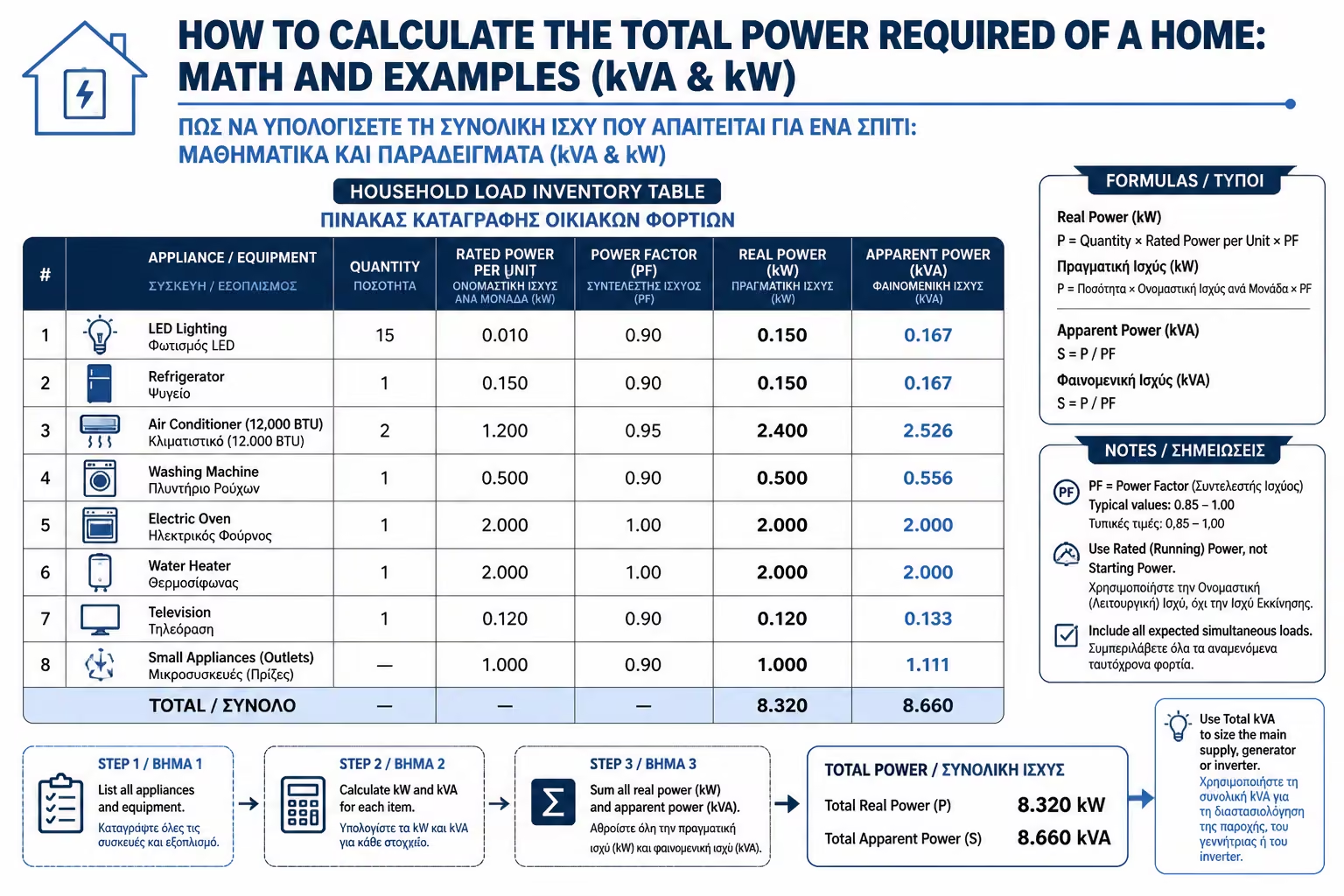
The first step is to take an "inventory" of all electrical appliances that will enter the home. Each device has a label indicating its rated power in Watts (W) or Kilowatts (kW, where 1 kW = 1000 W).
Below is a table with the typical prices of the most common household appliances:
| Device | Typical Power (Watts) | Power in kW |
|---|---|---|
| Lighting (LED throughout the house) | 300W - 600W | 0.3 - 0.6 kW |
| Refrigerator / Freezer | 150W - 400W | 0.15 - 0.4 kW |
| TV / PC / Router | 100W - 300W | 0.1 - 0.3 kW |
| Air conditioner (9,000 - 12,000 BTU) | 800W - 1,200W | 0.8 - 1.2 kW |
| Clothes/Dishwasher | 2,000W - 2,500W | 2.0 - 2.5 kW |
| Electric Oven | 2,500W - 3,000W | 2.5 - 3.0 kW |
| Classic Electric Water Heater | 4,000W | 4.0 kW |
| Induction Hobs (Induction) | 6,000W - 7,500W | 6.0 - 7.5 kW |
| Car Charger (Wallbox) | 7,400W or 11,000W | 7.4 or 11.0 kW |
Let's take as an example a modern renovation in an apartment, to do the sum:
Total Installed Power: 1.0 + 3.0 + 8.5 + 2.0 + 4.0 = 18.5 kW (18,500 Watts).
If you look at this number, you will panic. A typical single-phase house, as we have seen, has a limit of 8 kW. Do we need a giant three-phase supply to cover 18.5 kW? This is where engineering science comes in to save us from unnecessary expenses.
1.000W (1.0 kW)
3.000W (3.0 kW)
8.500W (8.5 kW)
2.000W (2.0 kW)
4.000W (4.0 kW)
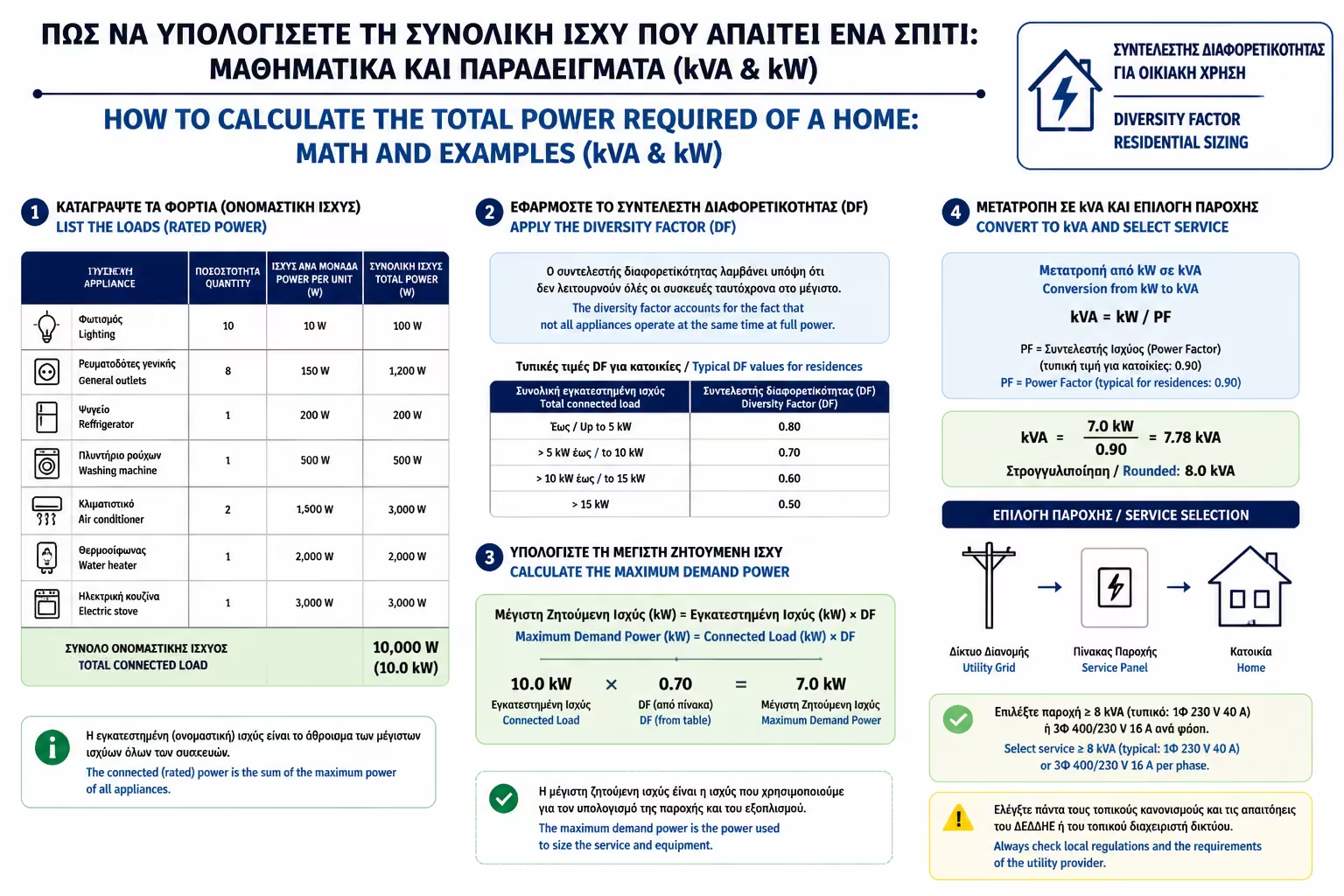
In real life, you never turn on all the appliances in your home at 100% power at the exact same time. You don't take a bath (water heater), while roasting a turkey (oven), boiling spaghetti on 4 burners at the same time and putting on a washing machine with all the air conditioners on full blast.
Electricians apply the Coefficient of Synchronization (or Heterosynchronization). For a typical home, this factor usually ranges between 0.4 and 0.6 (ie we calculate that 40% to 60% of the devices are working at the same time).
Application to our example (with a factor of 0.5): Required Power = 18.5 kW * 0.5 = 9.25 kW.
Suddenly, 18.5 kW became a completely manageable number!
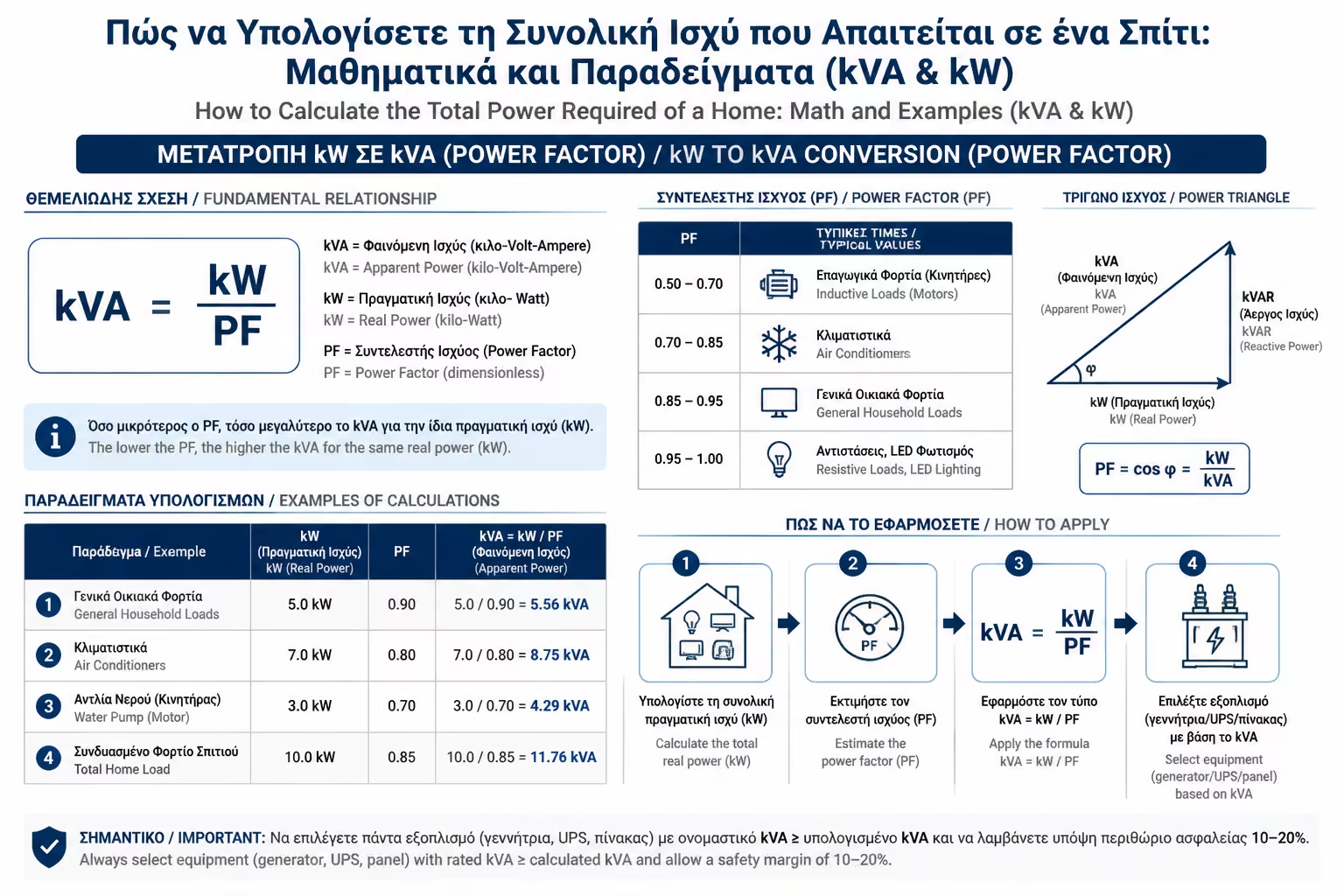
DEDDIE does not grant benefits in kW, but in kVA (Kilovoltamber - Apparent Power). What is the difference?
Without going into deep alternating current theory, the current (kVA) sent by the UPS is not all converted into useful work (kW) by the devices. A small part is "lost" in the magnetic fields of the motors (Power Factor - cosφ). In residences, we practically accept a coefficient of about 0.9.
The conversion formula: kVA = kW / 0.9
In our example: 9.25 kW / 0.9 = 10.27 kVA.
Now that we have the final number (10.27 kVA), we open the DEDDIE list of standard services and choose the one that covers us:
8 kVA (Marginally small, fuse may blow when 2 large appliances are switched on).
12 kVA (It perfectly covers the figure of 10.27 kVA. It is the ideal choice).
25 kVA (It is too much for this apartment, unless you plan to add an electric car in the future).
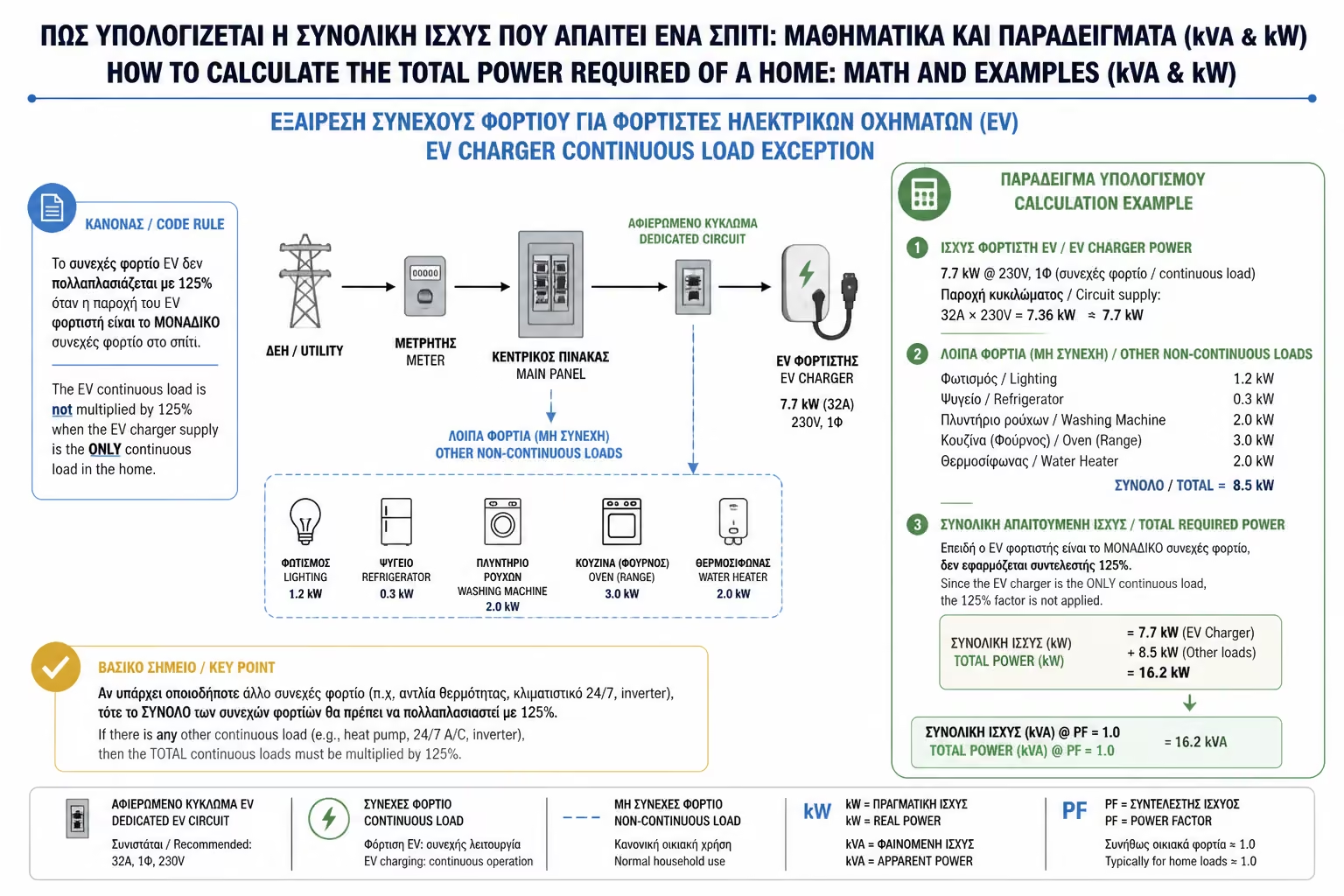
The rule of simultaneity (that not everything works together) does not apply to electric car charging. When you plug a car into an 11kW charger, it will draw 11kW steadily, non-stop, for a full 8 hours. In the engineers' calculations, EV charging loads (as well as heat pumps on frosty nights) come in with a Synchronization Factor of 1.0 (ie 100%). That's why benefits skyrocket when we add electrification.
Calculating power is not a process we leave to chance. By adding the loads and applying the heterochronism equation correctly, you ensure that the benefit you pay will be large enough not to bother you, but modest enough not to throw money away.
Next Step: Suppose you chose a large, three-phase 25 kVA supply. You have plenty of power! And yet, overall security is falling. What went wrong? Continue to our guide: Correct Symmetry & Load Balancing in Three-Phase: Why "Fuse Blows" When You Have Plenty of Current, to understand how the panel balance puzzle is solved.
Return to category.
Go to categoryReturn to the central guide.
Go to guide