Smart Relays (Micro-Modules e.g. Shelly, Sonoff): How to make your old
switch smart without messing around and changing aesthetics
When the conversation comes to the "Smart Home", the average
person imagines touchscreens, futuristic switches that glow and, of
course, dust, digging and expensive electricians.
This image belongs to the past. The biggest technological breakthrough
for existing homes in Europe came in small, colorful boxes no bigger
than a matchbox. These are Smart Relays (Micro-Modules). Companies such
as European Shelly, Sonoff and Fibaro have completely changed the rules
of the game, allowing owners to "hide" technology within their
walls.
As engineers, we consider micro-modules the ultimate
"Retrofit" solution. Let's take a look at exactly what they
are, how they work and why they save your renovation budget (and
aesthetics).
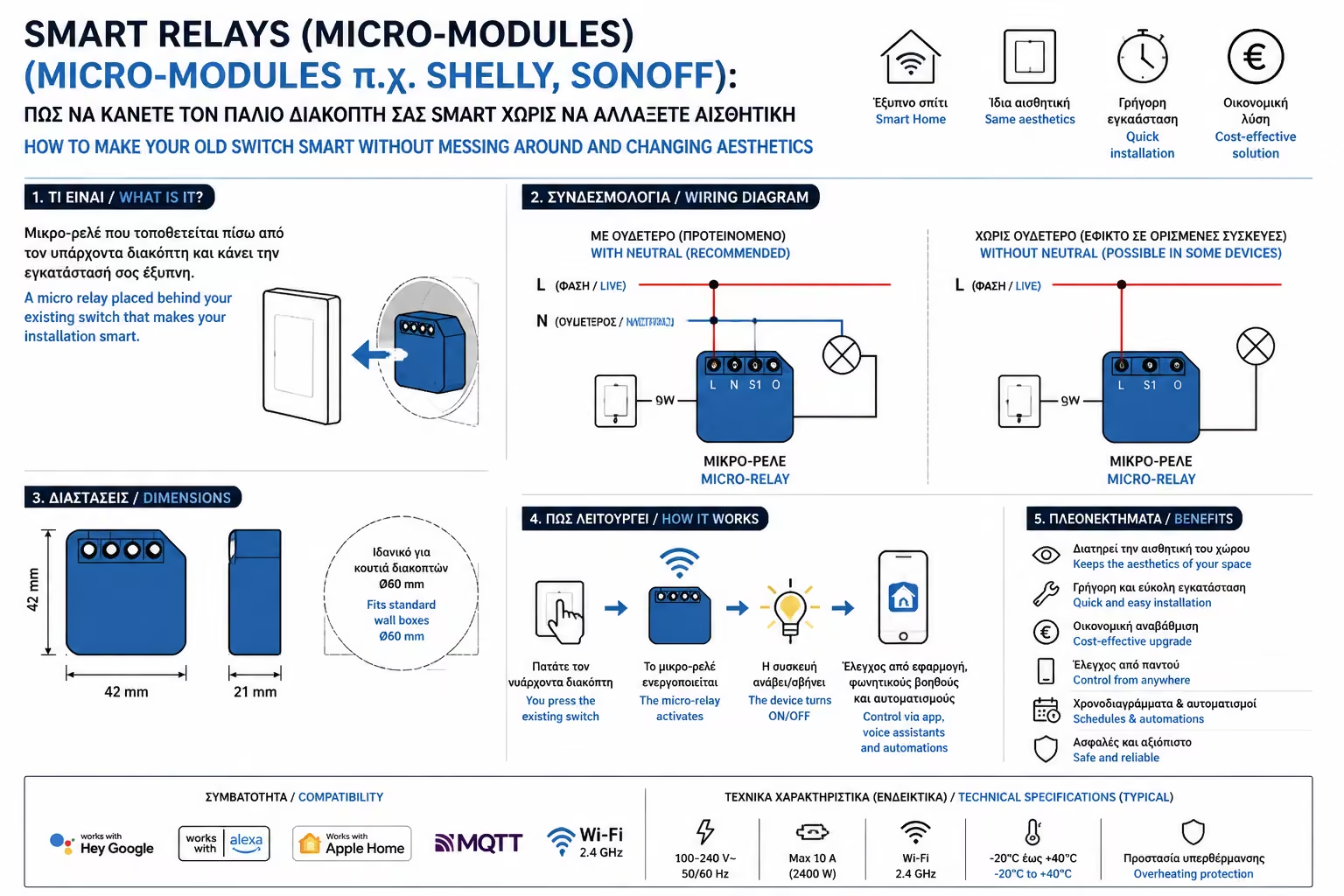
1. What are Smart Relays (Micro-Modules)?
A smart relay is essentially a tiny electronically controlled switch
(relay) integrated together with a Wi-Fi (or Zigbee/Z-Wave) board.
It is installed exclusively flush, inside the plastic wall box, right
behind your old, mechanical switch. Its purpose is to take control of
the lamp, but without removing the switch that you press with your
hand.
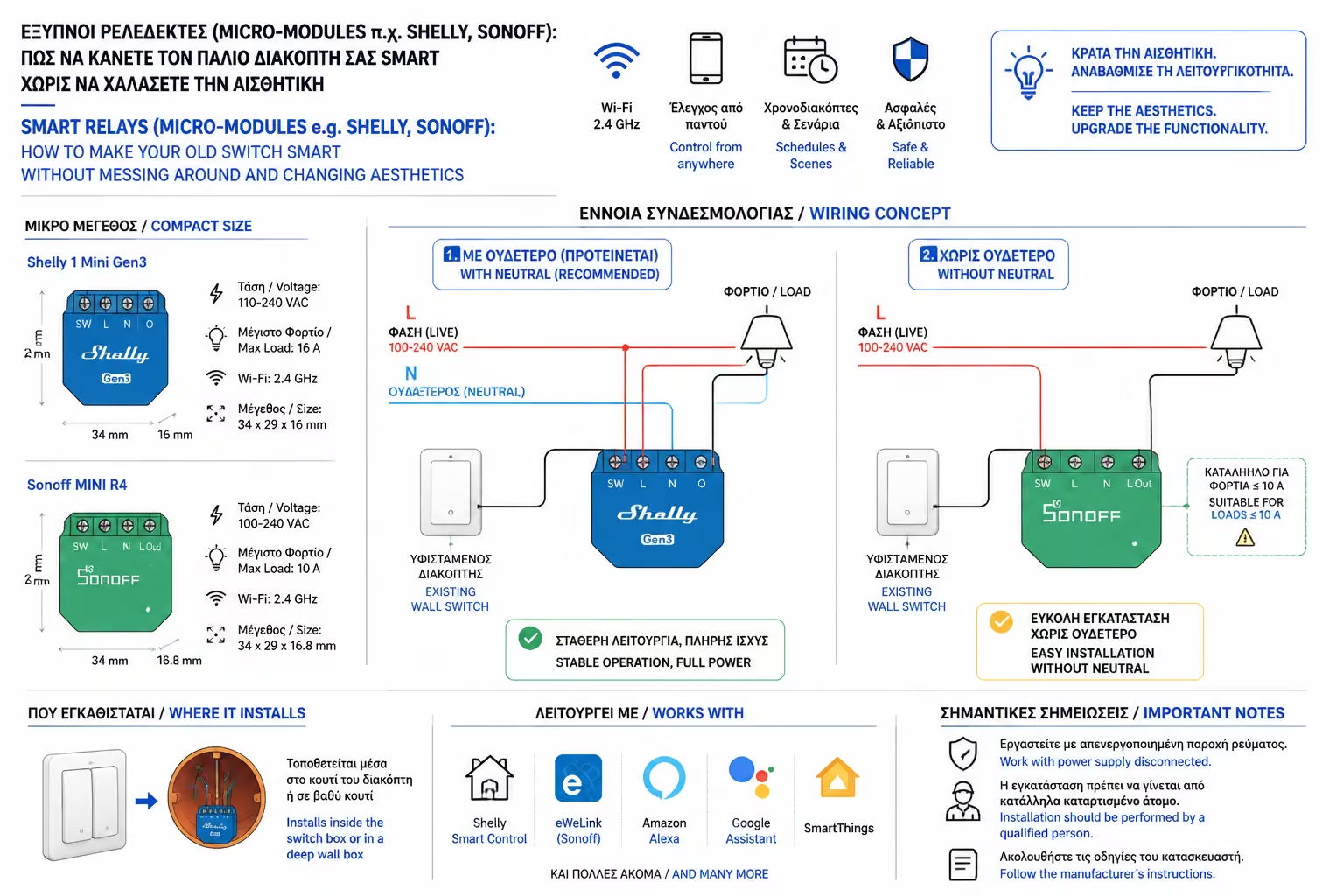
2. The New Connectionism: How Does "Magic" Work?
In a simple, traditional wall, current flows through the switch: You
press the button, the iron closes the circuit, current goes to the
lamp.
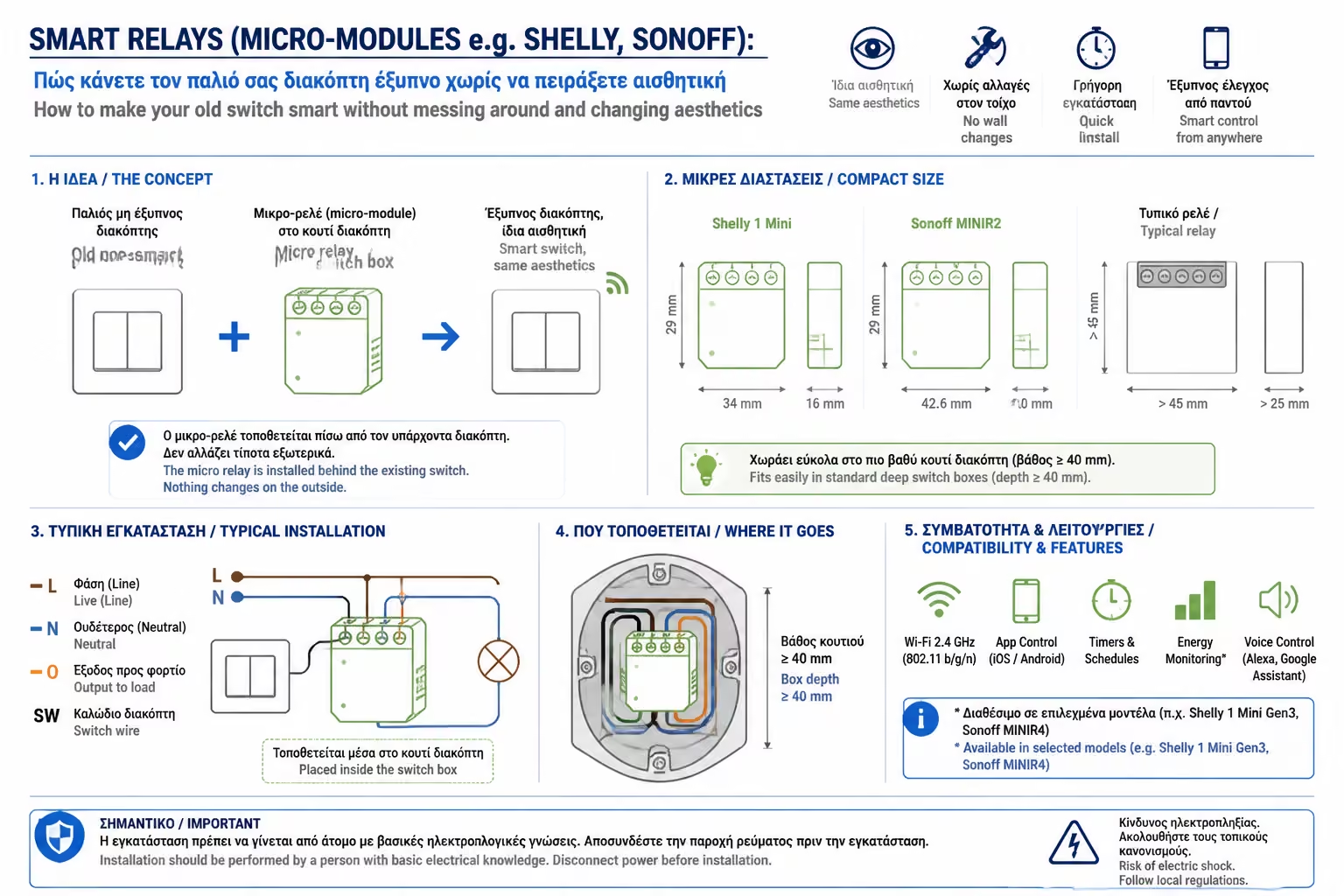
When the electrician installs a smart relay (eg a Shelly 1), the
architecture changes:
Current (Phase) now goes directly to the relay.
The wire that goes to the lamp is connected to the relay. (So the
relay turns the light on and off).
Your old switch is connected to the special contacts (Switch/SW) of
the relay.
What does this mean in practice? The wall switch no longer controls
230V current for the lamp. It simply sends an electronic signal
(command) to the relay. The relay "understands" that you
pressed the button, and in turn lets current pass to the bulb.
This gives you Dual Control: You can turn the light on from your
mobile, then turn it off from the wall switch, without one canceling
out the other!
This is the most important thing. You keep exactly the same switches
(eg the Legrand Valena or Vimar Plana series you have throughout the
house). No change in aesthetics. A visitor will never know that the
house is smart until you show them.
Mechanical Backup (Fail-Safe)
If the Wi-Fi goes down, or if your central Server crashes, you are
not left in the dark. You press the physical switch and the relay
(on almost all models) executes the command locally.
Economy (Without Contingency)
No need to dig up walls. Installation takes 10 minutes per switch,
and the cost of a relay (such as the Shelly Plus 1 Mini) is often no
more than €15 - €18.
Multiple Uses (Switches, Sockets, Rollers)
They come in different variations. Some measure energy consumption,
others control electric roller shutters and others dim the lights.
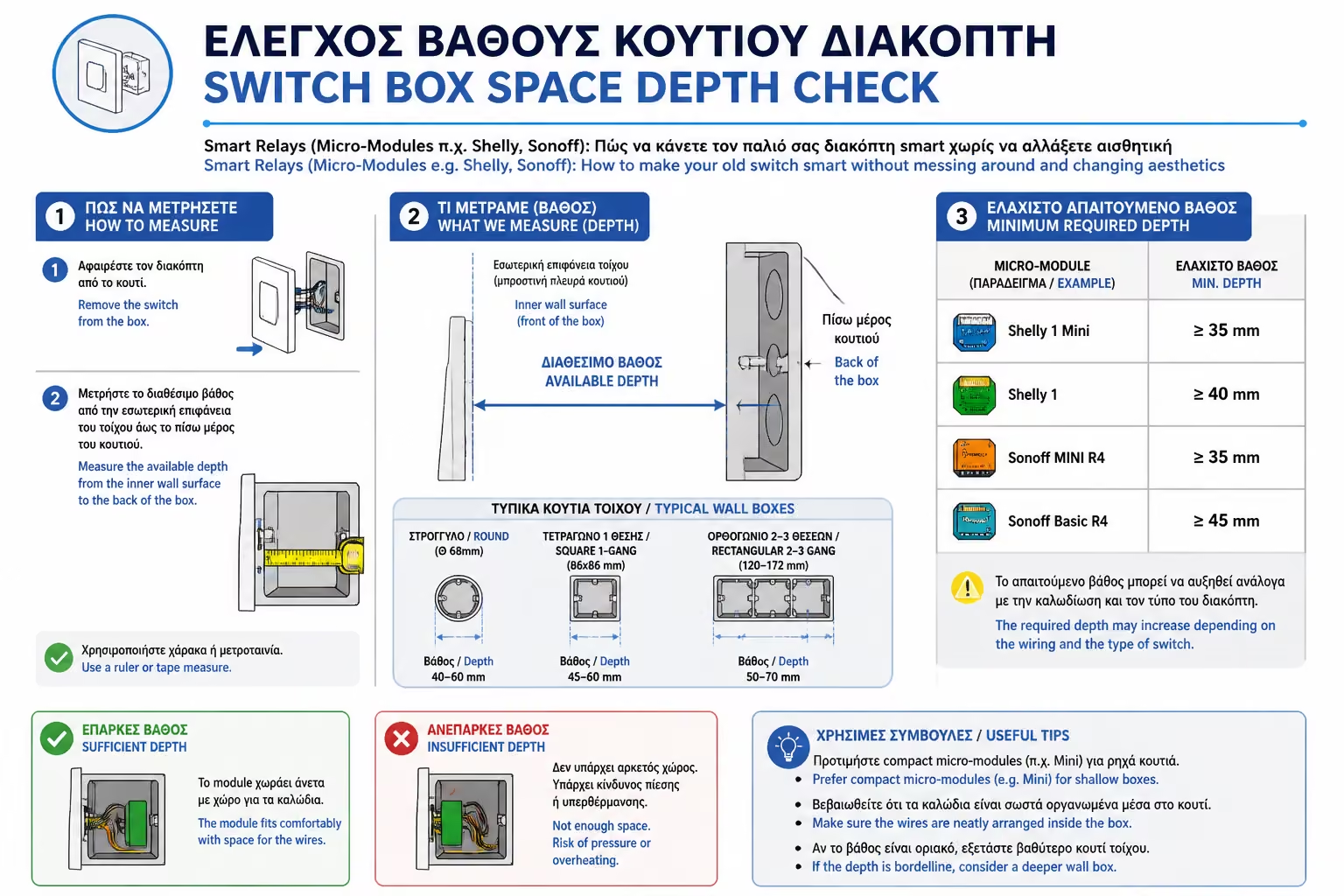
4. The Installers Challenge: "Does it fit on my wall?"
If there is one and only problem with smart relays, it is their
physical (spatial) placement.
Behind your switch is the plastic box. The old, round
"barrels" (boxes) in Greek houses of the '80s and '90s, are
usually 40 millimeters (40mm) deep. When you try to fit the switch
mechanism, thick wires (1.5mm²) and a relay into such a small space,
it becomes suffocating.
If you push it hard, you risk scratching the wires and causing a
short circuit.
If the wall is concrete, you cannot deepen the box easily.
The solution for modern renovations: If you are renovating and
changing pipes, ask your electrician to put in a box with a depth of
50mm or 60mm. This extra 1-2 cm makes installing smart relays a
breeze, offering plenty of space for proper and safe wiring.
(Alternatively, companies like Shelly have recently brought out their
"Mini" range, which is 35% smaller precisely to solve this
European problem).
Summarizing
Micro-Modules brought automation to the masses. They are the most
"painless", stylish and economical way to bring a
twenty-year-old home into the 21st century, keeping the classic feel of
the switch (the classic "clack") and adding the intelligence
of mobile and voice assistants.
Next Step: Having now learned about the hidden Smart Relays
(Micro-Modules), it's time for the big decision. Keep the old switches
and put relays behind them, or rip them all out and buy brand new flat
"Smart Switches" with touchscreens?
We continue to the next, practical comparison guide: Smart Switches vs.
Smart Relays: Comparison of cost, ease of installation and reliability.