
Flickering
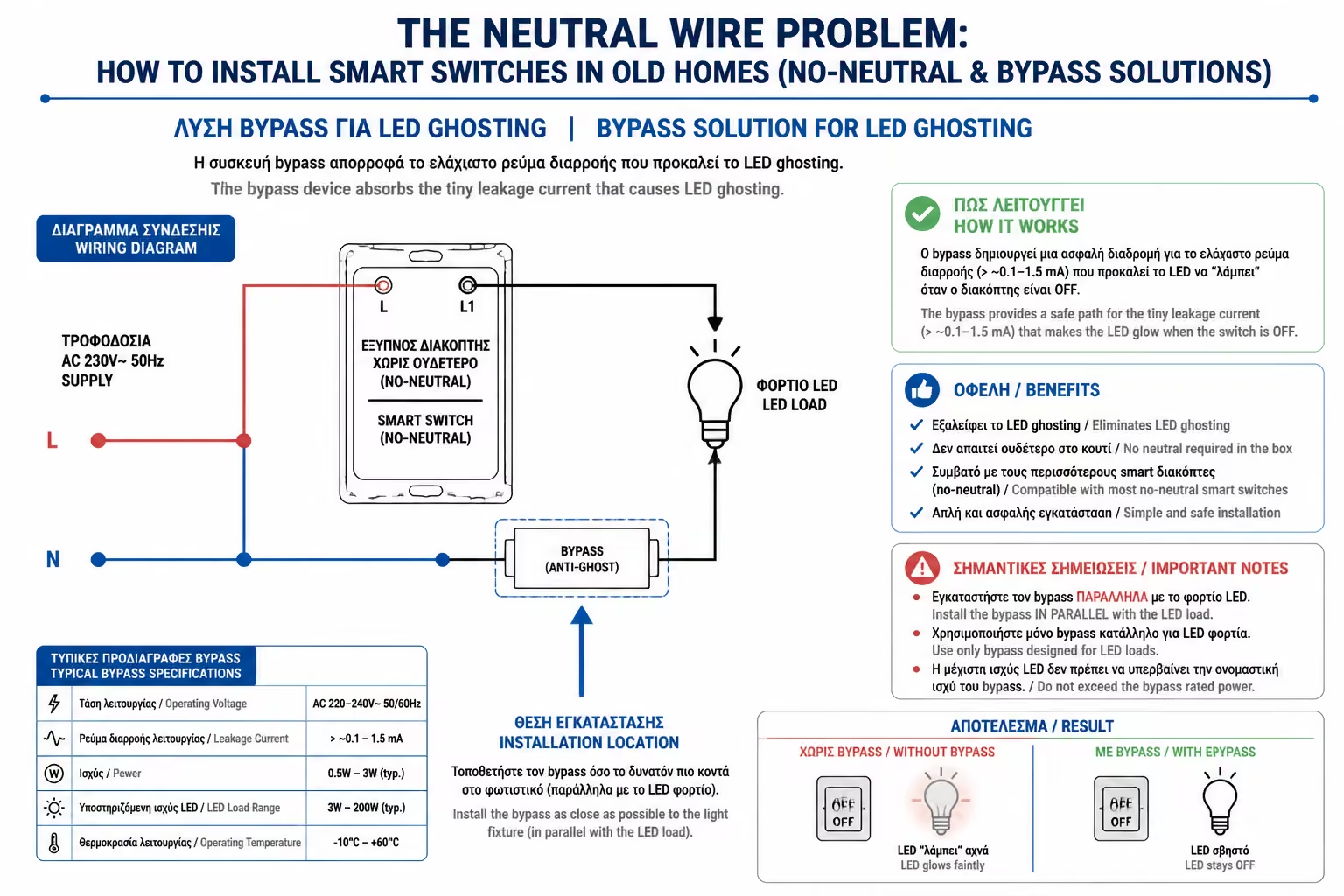
The off LED starts to blink slightly at night (like a camera flash).
We enter Category B, the joy of the DIYer and the electrical installer. You've chosen your wireless protocol (eg Zigbee) and you're ready to unscrew your first wall switch to make it "smart".
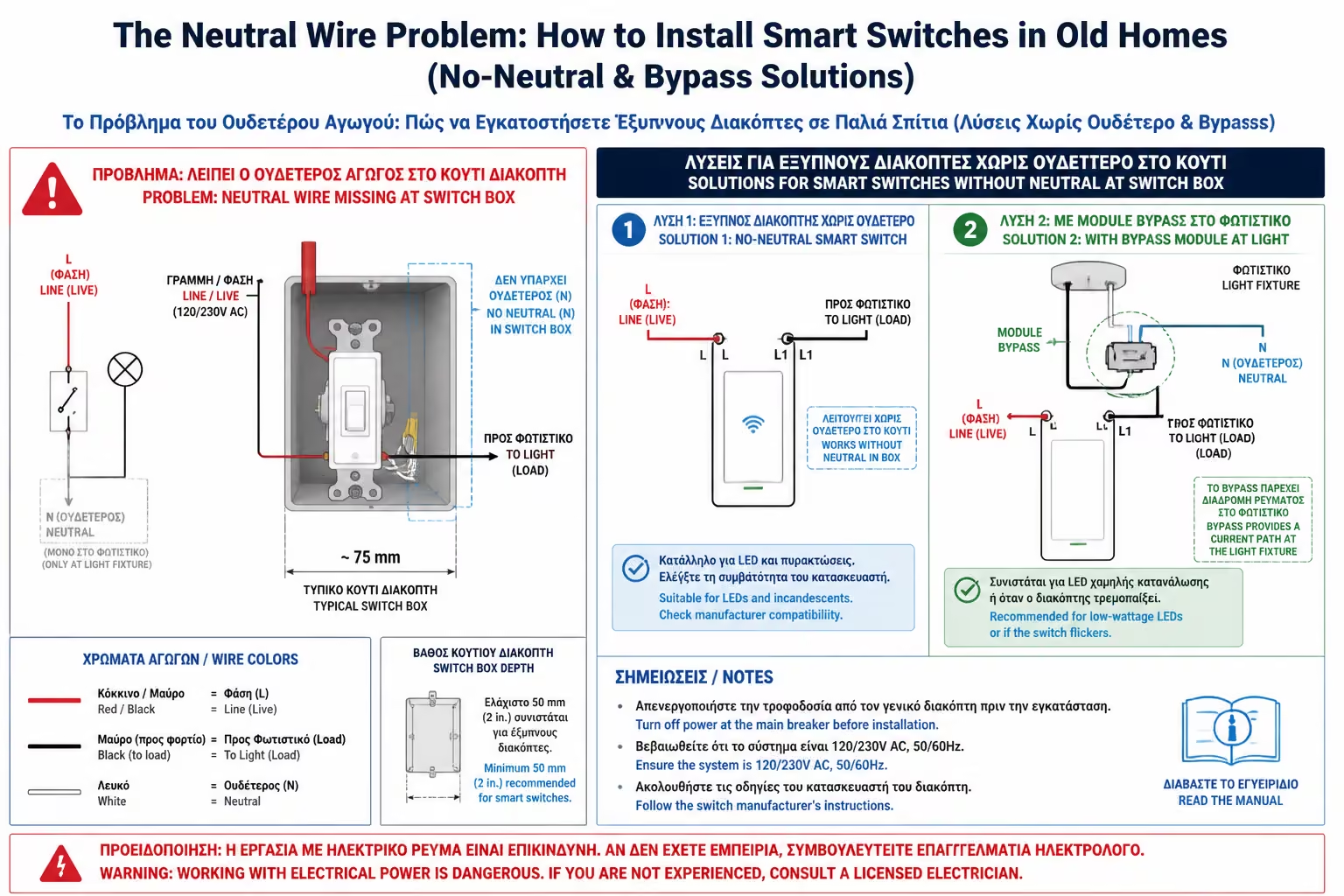
You open the lid and you are faced with the most classic, irritating and universal problem of the Smart Home in Greece (and throughout Europe): Inside the wall there are only two cables. There is no Neutral.
Most beginners get frustrated and give up, thinking their home is "too old" to be smart. As engineers, we assure you that this problem has been fixed for good. Let's find out why this cable is missing, why smart devices need it, and how to bypass it safely.
In order for a lamp to light, it needs two wires: the Live (the "striking" current, usually a brown or black wire) and the Neutral (the return of the current, usually a blue wire).
When electricians were building the houses in previous decades, they did the following which was perfectly reasonable (and economical) for the conditions of the time:
Therefore, behind your classic switch there are usually only two wires: The incoming Phase, and the outgoing Return. There is no blue wire.
The classic switch is a "dumb" piece of plastic and metal. It doesn't need electricity to work, it just lets it flow.
The Smart Switch (or smart relay, e.g. Shelly) is actually a tiny computer. It has a board, a Wi-Fi or Zigbee antenna and a processor. In order for this computer to listen to your command from the mobile (while the lamp is off), it must be permanently on 24 hours a day. This microcomputer needs a normal power supply to operate. That is, Phase AND Neutral are needed.
If possible, this is always the cleanest, most technically sound and safe solution (ideal if you're doing even a little paint/touch).
The electrician opens the round junction box (bouette) high up on the wall, just above the switch. Finds the terminal with the blue neutral wires. Using a "steel wire" (the flexible electrician's wire), run a new blue wire through the plastic tube that goes down to the switch. Within 10 minutes, you now have Neutral on your switch, and you can install 100% of the smart devices on the market.
Problems: Often the pipes in old houses are broken, "clogged" by cables or debris, and the steel does not pass through at all. Here we go to Plan B.
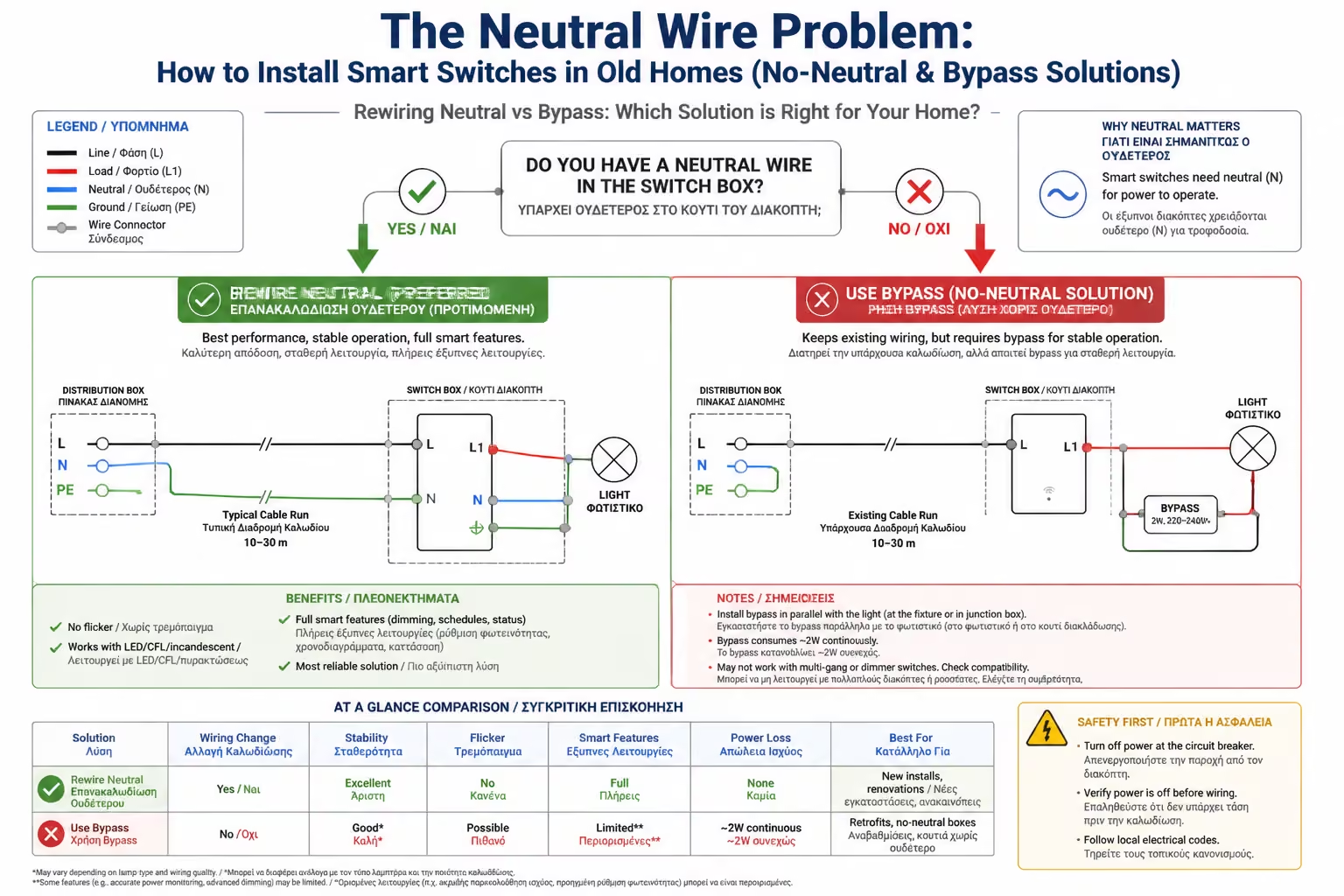
Recognizing the huge problem of European homes, companies developed so-called No-Neutral Relays (such as the Sonoff ZBMINI-L2 Extreme, some Aqara products or the Shelly Dimmer 2).
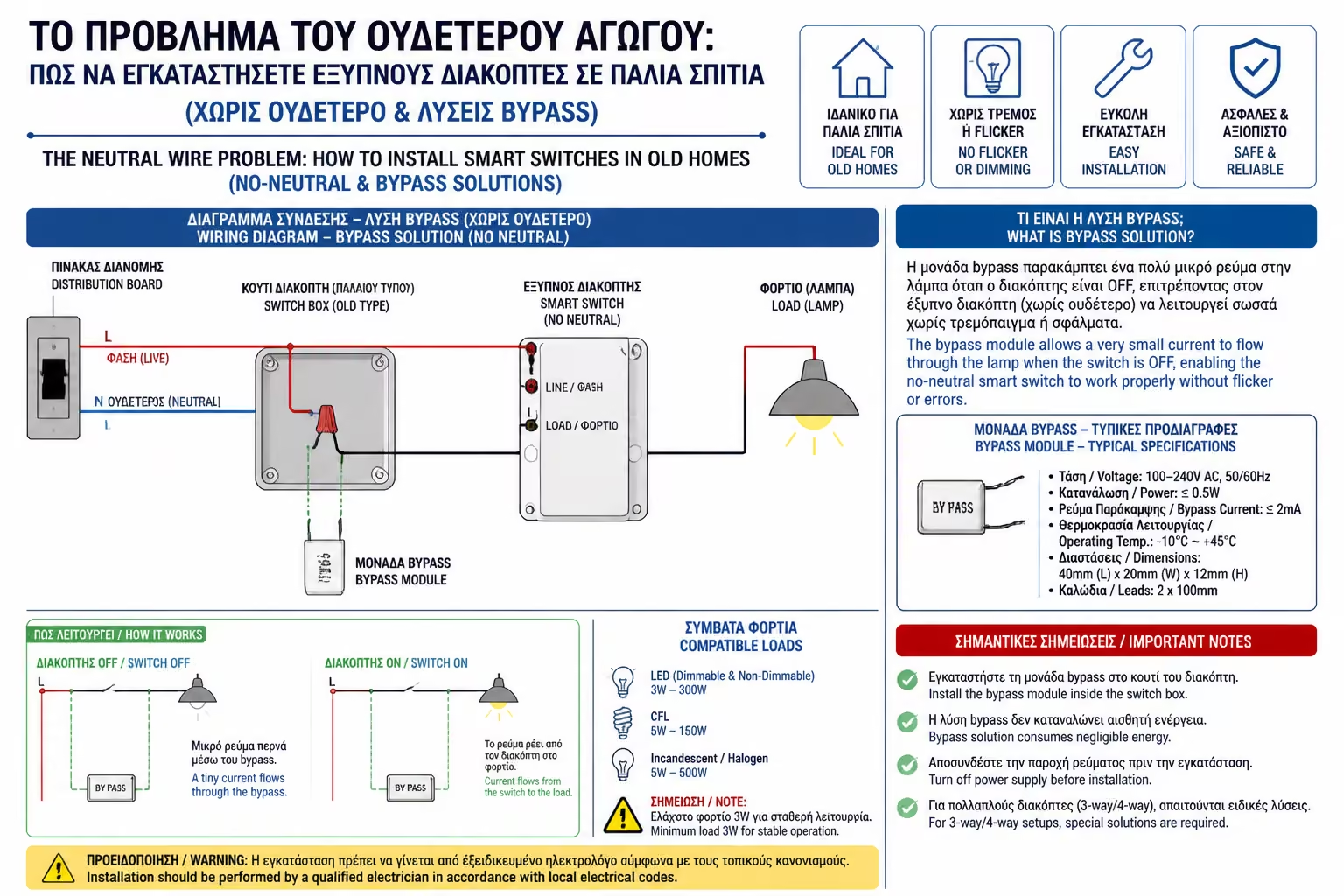
These relays are connected to Phase and Return only. How do they stay "alive" since they have no neutral? The "Trick": The relay lets a tiny, "invisible" amount of current (a small trickle) pass through the unlit ceiling lamp, to "steal" neutral through the lamp circuit. This current is so small (less than 1 Watt) that the bulb (theoretically) does not have time to light, but it is enough to keep the relay antenna alive!
Herein lies the technical pitfall of No-Neutral solutions. The "trick" we mentioned worked perfectly back when we had 60W incandescent bulbs. These needed a lot of current to light up, so the small leakage of the smart relay didn't affect them.
Today, we use LED lamps of 5W or 7W. They are so efficient that this minimal current leakage is enough to create a problem.
The Solution (The Bypass Component): When you buy a No-Neutral smart relay, the manufacturers usually recommend that you also buy a Bypass (a small electronic component, basically a capacitor/resistor, which costs 2-3 euros). Bypass does NOT go behind the switch! It is installed on the ceiling, parallel to the lamp (on the lamp holder). Its role is to "absorb" this small leakage current so that it does not pass through the LED. So the relay keeps its Wi-Fi alive, and the bulb stays 100% off.
(Engineer's Note: Newer generations of No-Neutral relays with Zigbee protocol, such as the Sonoff ZBMINI-L2, consume such infinitesimal power that they often don't even need Bypass for LEDs above 3 Watts. Zigbee here "saves" the situation!)
The off LED starts to blink slightly at night (like a camera flash).
The bulb never goes out completely, but remains dimly lit.
The absence of a neutral wire in the wall is no longer an excuse not to make your home smart. If the wires run easily (or if you're going to call an electrician anyway), have him run neutrals on the switches for you (it's minimal cost and hands-free). If you don't want hassle, the No-Neutral solutions (combined with a Bypass in the ceiling if needed) are completely safe, approved and work flawlessly.
Next Step: Now that we know how to attach them to the wall, comes the next shopping dilemma: Do I keep my old plastic Legrand/Vimar switches and hide smart relays behind them, or rip them out completely and buy brand new "Smart Switches" with touch screens?
We continue with our practical comparison guide: Smart Switches vs. Smart Relays (Micro-Modules): Comparison of cost, ease of installation and reliability.
Return to category.
Go to categoryReturn to the central guide.
Go to guide