Smart Switches vs. Smart Relays: Comparison of cost, ease of
installation and reliability
Now that we know what smart relays are and how they work, it's time to
make the big purchase. Opening the online stores, you will find that
there are two completely different paths to make your lights
"smart":
The "Hidden" Solution (Smart Relays): Keep your old,
mechanical switches and hide a tiny relay (Micro-Module, as we saw in
the previous article) behind them.
The "Obvious" Solution (Smart Switches): Completely rip out
the old switches and replace them with brand new, flat switches with
glass touch screens or LED buttons (e.g. Sonoff, Aqara or Livolo).
Which is the correct choice? As engineers, the answer we give is not
only technical, but mainly practical and aesthetic. Let's put the two
solutions under the microscope to save you time, money and... moaning
about the appearance of your wall.
1. The Solution: Smart Relays (Micro-Modules)
We remind you that these are the small "boxes" (eg Shelly
Plus 1, Sonoff Mini) that go inside the wall and the old switch is
connected to them.
The Disadvantage (The "Kleistophobia" of the wall): As we
pointed out, the biggest problem is space. Cramming a relay, the old
switch mechanism and 5-6 hard 1.5mm² wires into a shallow 40mm round
box is often a nerve-wracking nightmare for any electrician.
Absolute Uniformity (Interior Design)
This is their biggest asset. If you have beautiful, classic switches
at home (eg Legrand, Vimar or Jung series) and want to keep the same
aesthetic everywhere, relays are the way to go. The house is
becoming smart, but no one understands it visually.
Maintaining Multiple Contexts
In Greece, we often have a single plastic frame that houses 3 things
together: Light Switch + TV Socket + Power Socket. The hidden relay
is inserted from the back without spoiling this single unit.
Mechanical Reserve
If the Wi-Fi board breaks, in many models you can easily rewire the
switch, while your switch never stops having that classic
"mechanical" clack feel.
2. The Solution: Smart Switches
Here you throw the old switch in the trash (along with its plastic
cover) and replace it with a single, "high-tech" device.
The Downside (The Incompatibility Nightmare): Smart Switches have
their own, unitary frames (usually glass). They do not snap together
with the frames of the other switches. If you have a switch and an
outlet side by side on the same wall, and you only change the switch,
you will create a "Frankenstein" aesthetic (a glass square
next to an old, yellowed plastic).
Unparalleled Ease of Installation
Because all the "smarts" (the board) are built into the
body of the switch, their backs are usually very flat. They fit
comfortably even in the shallowest, old wall boxes. Unscrew the old
one, screw in the new one. End.
Built-in No-Neutral
Many of them (especially in Zigbee protocol, like Aqara's) are built
from scratch to work without a neutral, so you are not looking for
special relays and bypasses.
Visual Feedback (LEDs)
They have discreet lights that show you in the dark where the button
is, giving a strongly futuristic feel to the room.
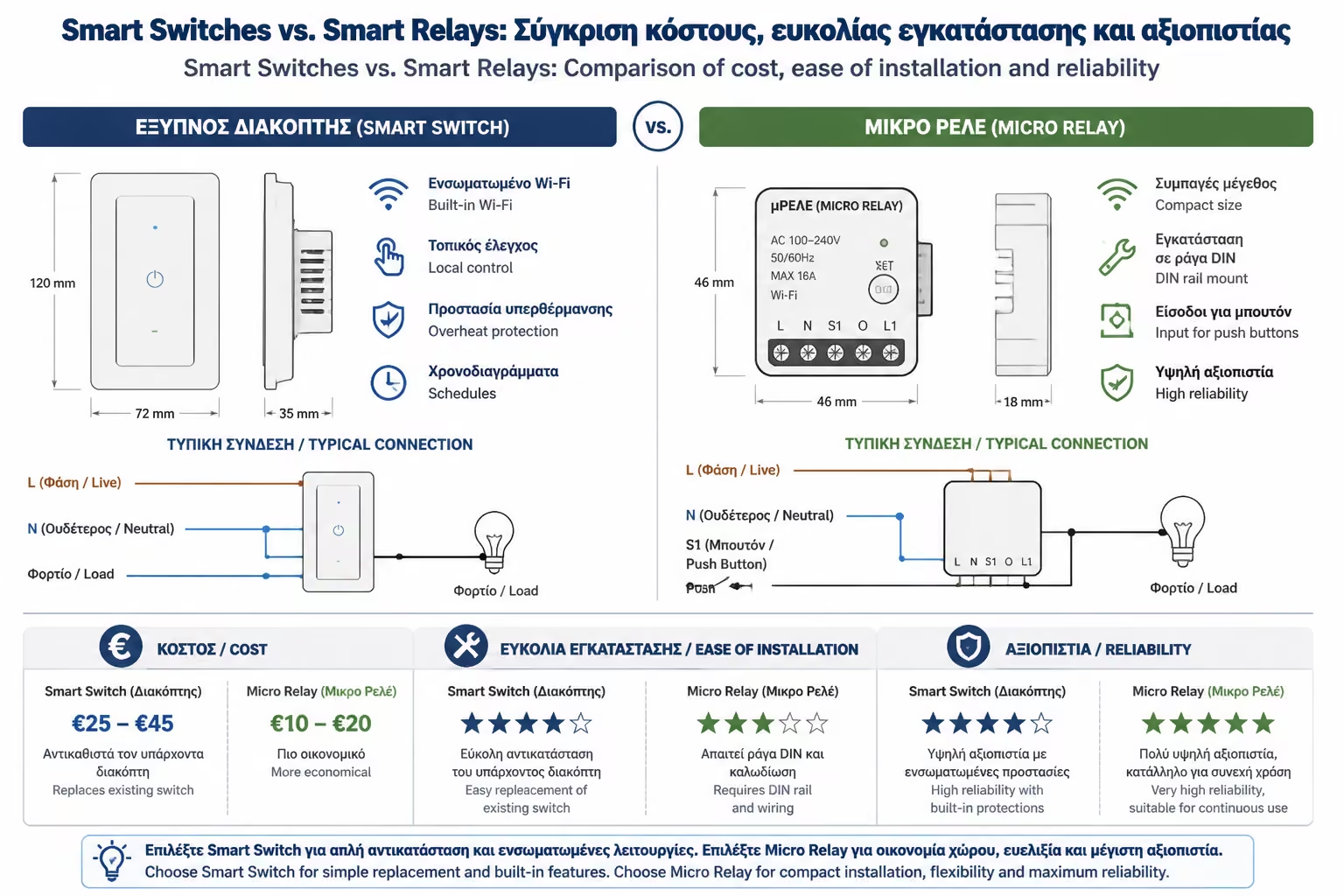
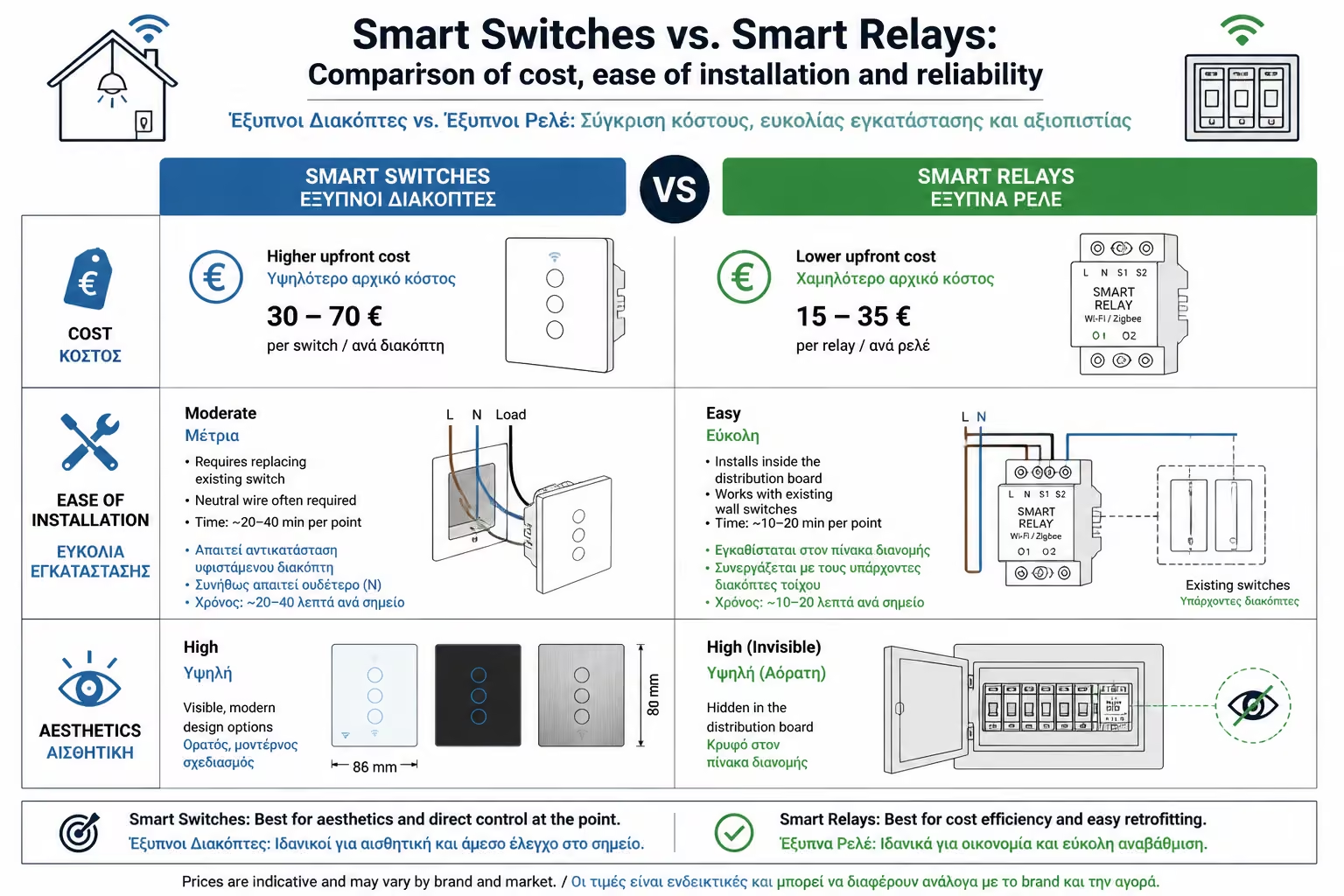
3. The Cost Comparison
If the criterion is strictly financial, things are clear:
Smart Relays
They usually cost €15 - €20 each. As long as you keep your old
plastics, it's the cheapest solution per lighting line.
Smart Switches
A quality smart switch starts at €30 and can reach €50. It makes
sense, as you pay not only for the software, but also for the
crystal/plastic of the finish.
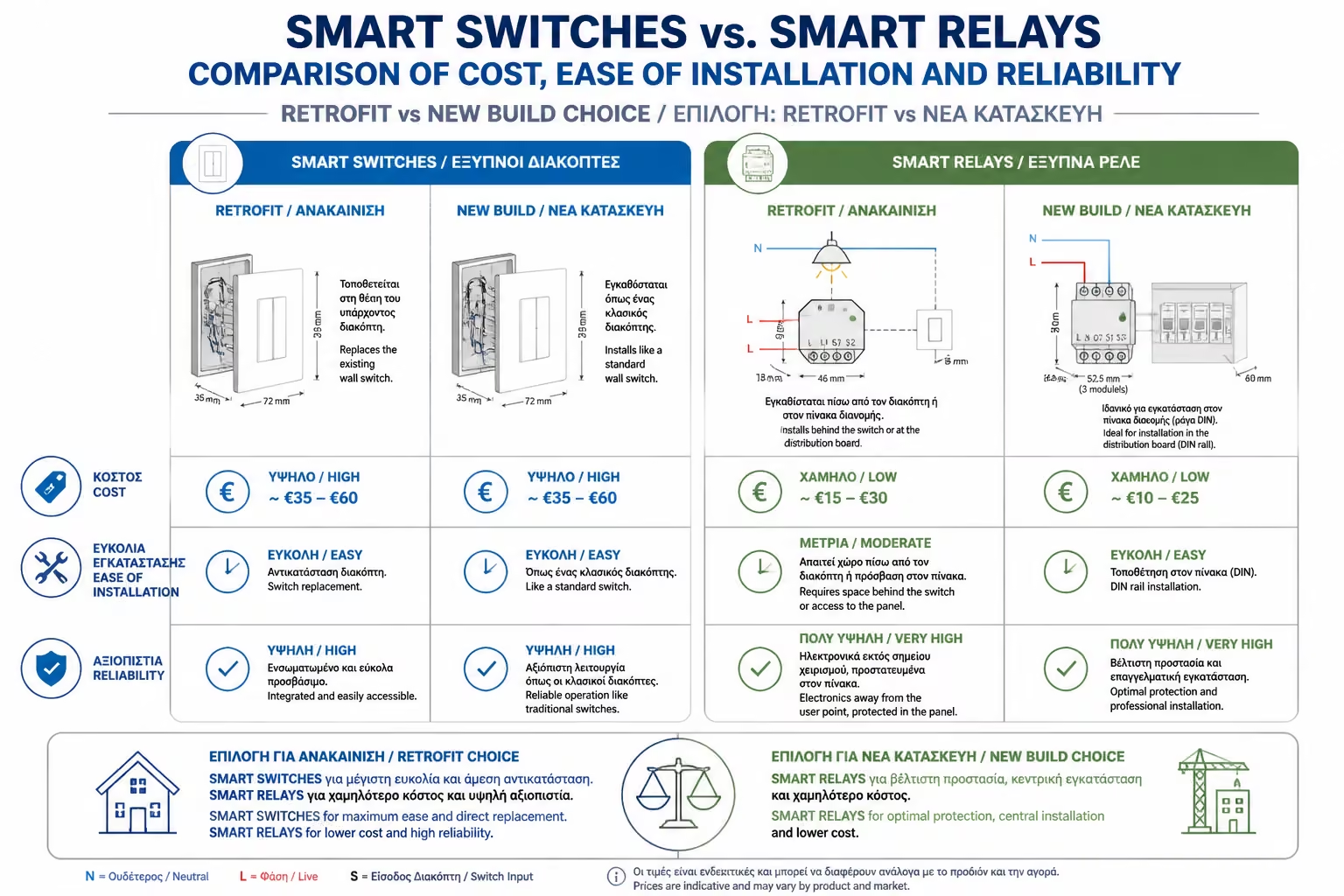
4. What to choose (The Decision Rule)
Are you confused? Follow this simple selection "algorithm":
1. Do you have multiple panels (switches and outlets joined in the
same lid)? YES: You must go to Smart Relays (Micro-Modules). It is the
only way not to damage the aesthetics of the wall. NO: (The switch is
on its own on the wall). Continue to the next question. 2. Are the
boxes inside your wall deep (over 45mm) or shallow/narrow? Deep: Put
Smart Relays. It will work out cheaper and you will keep the classic
feeling on the press. Shallow / Narrow: Select Smart Switches. You
will save hours of frustration and the risk of short circuit from
tangled cables.
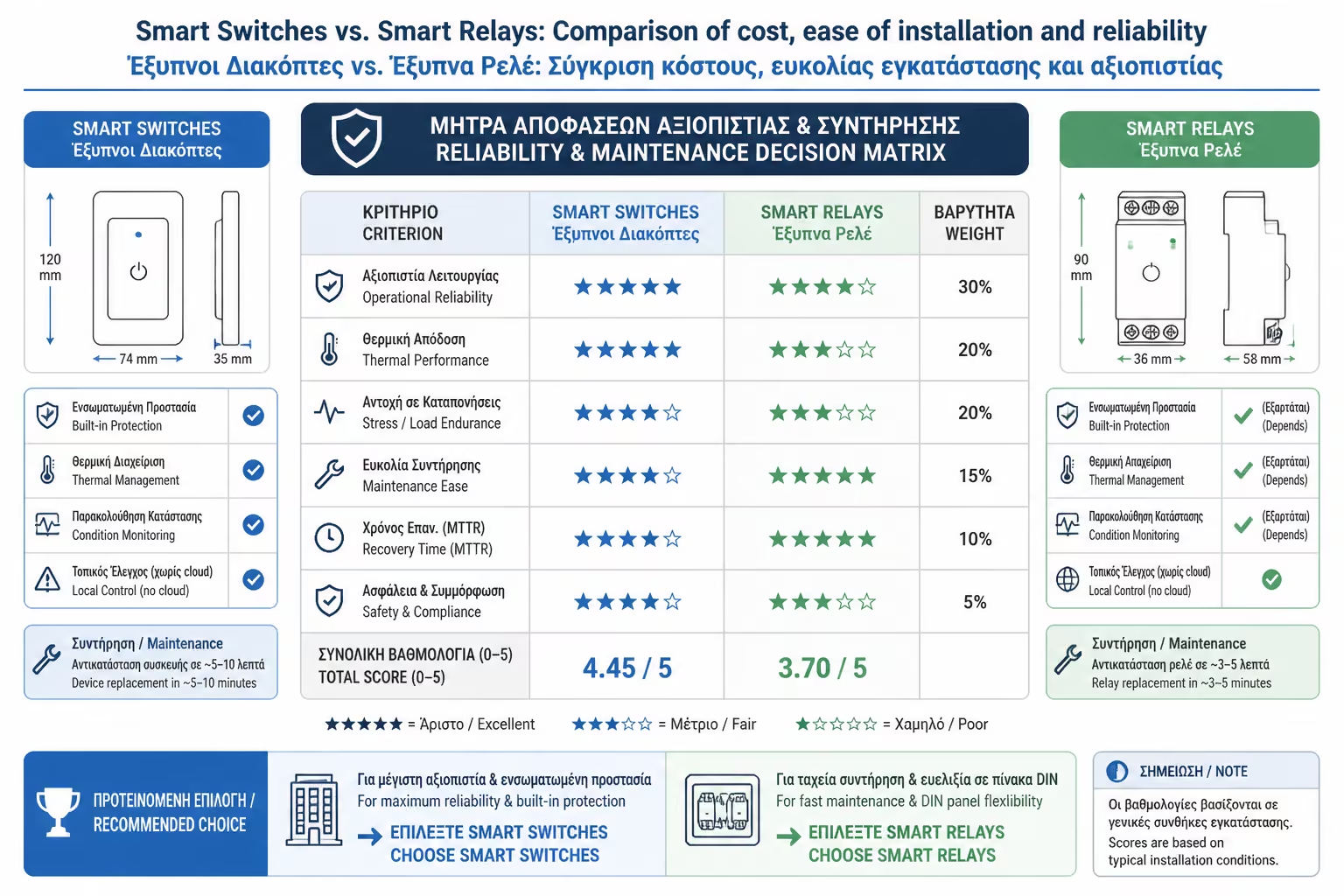
Summarizing
There is no "wrong" technology here. Both systems are now
extremely mature and reliable (especially if you choose branded
companies). The decision is 50% a matter of electrical space (what your
wall allows) and 50% a matter of taste (whether you prefer the classic
plastic "clunk" or the modern glass "touch").
Next Step: You've chosen your gear and you're hitting the runway.
However, there is a lamp that turns on at one end of the corridor and
goes off at the other. This is the famous "Alle-Retour"
circuit, the absolute headache of novice DIYers!
We continue to the next technical guide: Smart Switches Alle-Retour
(Two-way Switching): How to make the correct wiring in stairs, corridors
and bedrooms.