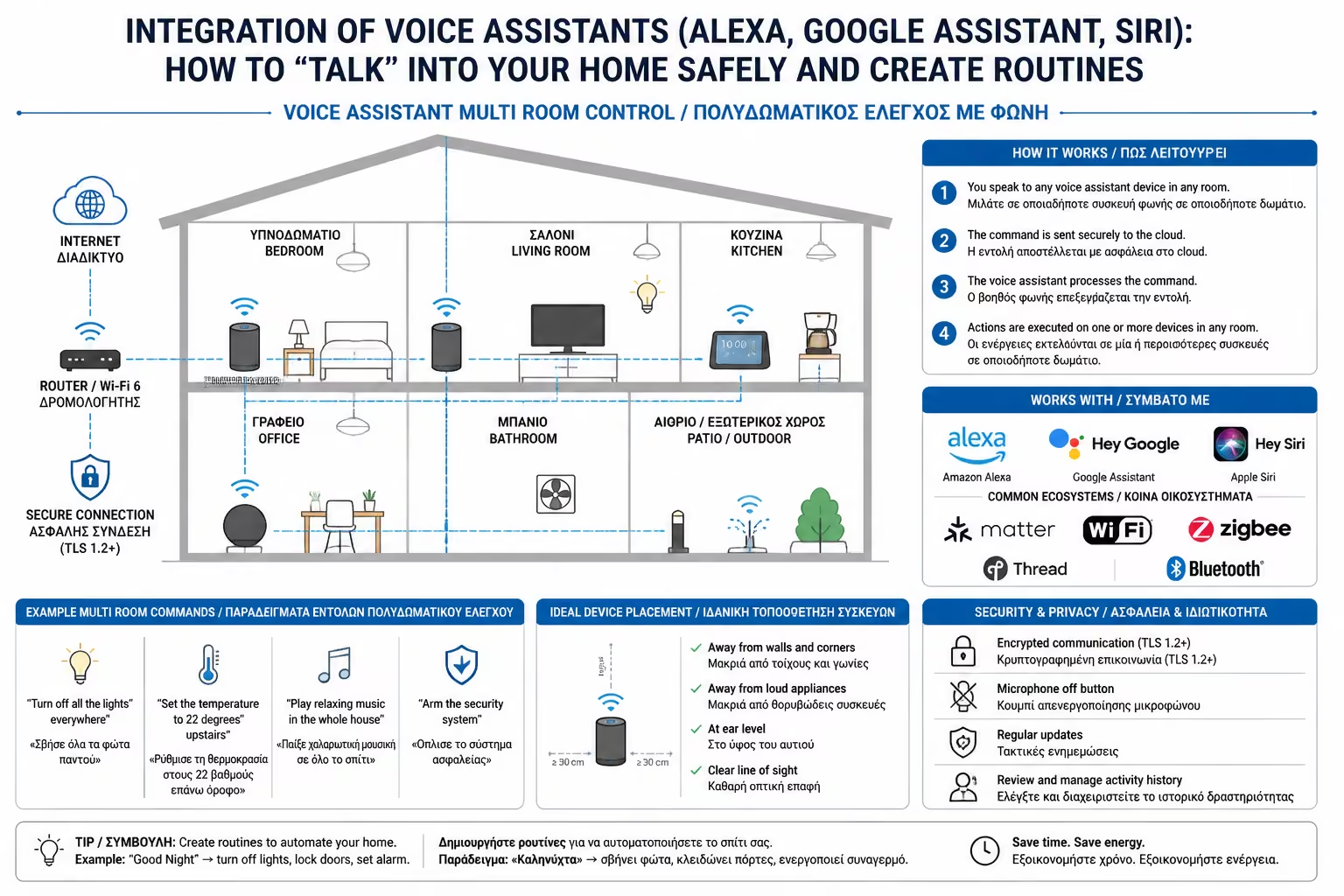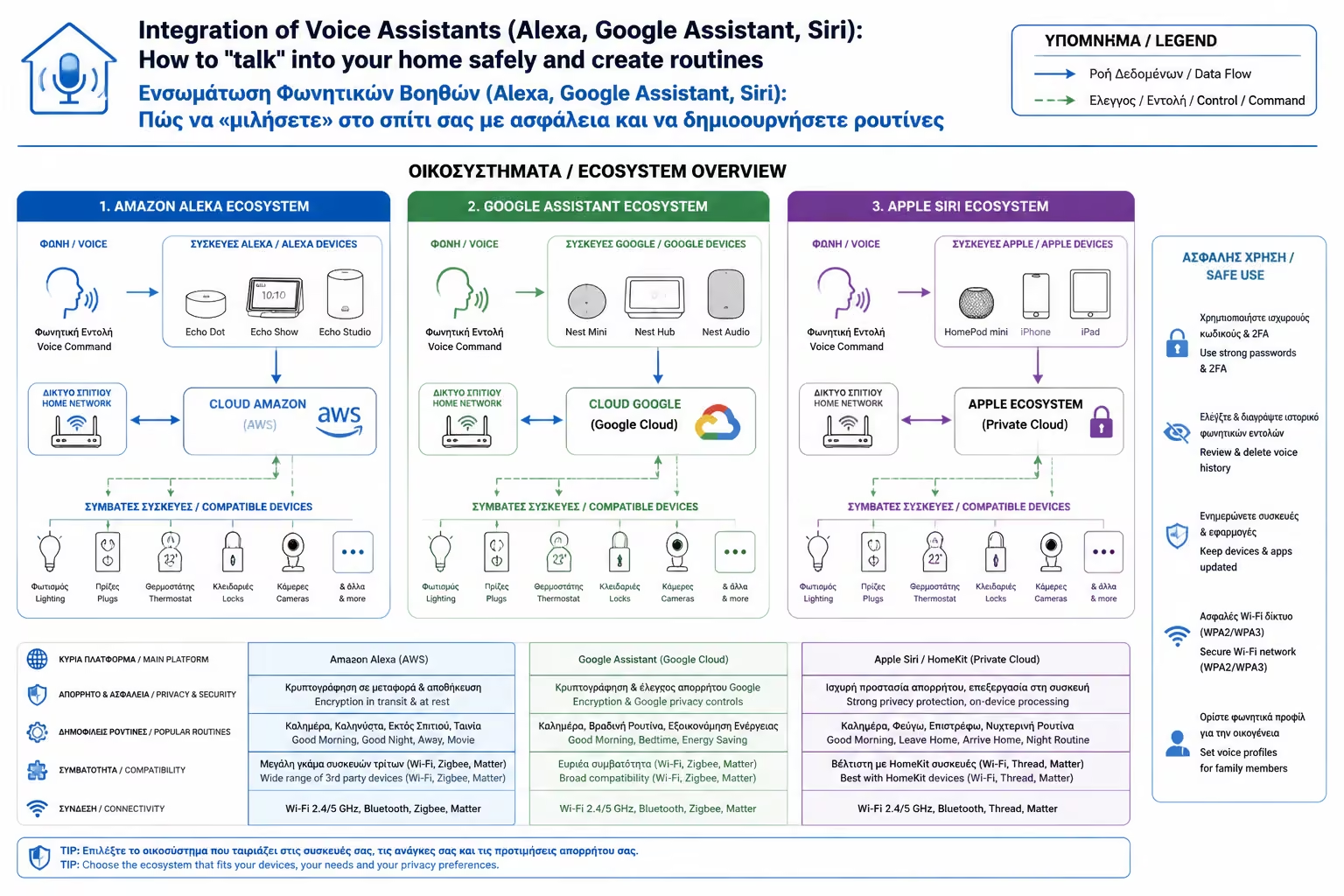
Integration of Voice Assistants (Alexa, Google Assistant, Siri): How to "talk" into your home safely and create routines

If you've followed the previous steps in our guide, your home is now a technological marvel. You have apps for lights, air conditioning, and shading. However, in the daily grind, searching for your phone, unlocking it, finding the right App and pressing a button to turn on the lamp is often more time-consuming than getting up to flip the switch.

The real "Star Trek" feel and ultimate liberation in the Smart Home comes when your hands are completely taken out of the equation. Voice Assistants are the invisible, ultimate User Interface.

As professionals, we see the addition of smart speakers as the "icing on the cake" of the experience. Let's see the "Holy Trinity" of assistants, how we solve the language problem in Greece, and how we ensure that we are not "hidden".

1. The "Holy Trinity": Which Assistant to choose?

The market is dominated by three tech giants. The choice isn't just about which speaker plays better music, but which ecosystem fits your lifestyle.

Illustration for 1. The "Holy Trinity": Which Assistant to choose?

A. Amazon Alexa (The King of Compatibility)

Amazon Echo speakers (the small "Dot" or the larger "Studio") are the most popular worldwide. Why it stands out: Alexa was born for the Smart Home. It has the best and most immediate support from third-party manufacturers. If you buy a Chinese smart plug or an expensive German roll, 99% of the time it will say "Works with Alexa". Microphones: Amazon's noise cancellation algorithms are top notch. Alexa can hear you whisper from across the room, even if music is playing.
B. Google Assistant (The Ultimate Artificial Intelligence)

The Google Nest speakers (Audio, Mini or Hub with screen). Why it stands out: Where Alexa is good at turning on lights, Google is elusive at...knowing everything. It is linked to the search engine. If you ask complex questions (eg "How much time do I have to the airport with the current traffic?"), Google Assistant is by far the smartest (now with Gemini model integration). Ecosystem: A perfect fit for Android users and those who use Google Calendar and Maps deeply.

C. Apple Siri (The Champion of Privacy)

The Apple HomePod (and HomePod Mini) speakers. * Why it stands out: It is the most expensive solution (Hardware) and has the smallest list of compatible devices (requires HomeKit/Matter certification). But it offers unreal sound quality for its size and the strictest privacy policy on the market. If the whole family has an iPhone and an Apple Watch, coordination is magical.

2. The Real Power: Routines

Illustration for 2. The Real Power: Routines

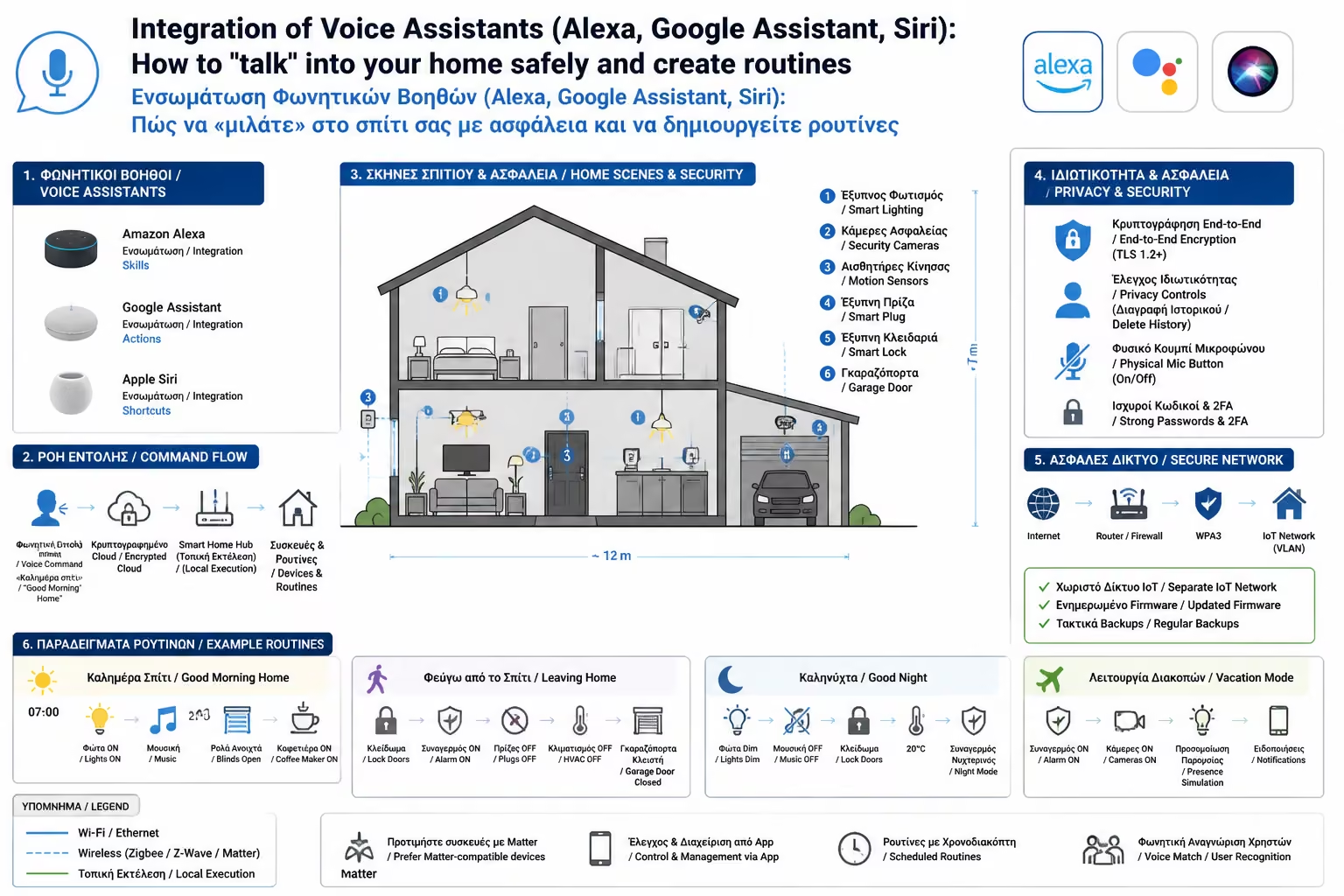
Voice control is boring if it's limited to "Turn on the light". The huge value of voice assistants is hidden in Routines / Automations, where a simple phrase (Trigger) triggers chain reactions on many, different devices.

Example: "Alexa, Goodnight" When you say this phrase while lying in bed, the system instantly performs the following:

  1. Turns off all the lights in the living room and kitchen.
  2. Lowers the living room blinds to 100%.
  3. Locks the front door smart lock.
  4. Drops the smart thermostat (eg Tado) to 18°C.
  5. He turns off the TV.
  6. Your speaker replies: "Goodnight. The alarm is set for 07:00 AM."

By creating routines (eg "Movie Time", "I'm Leaving"), you turn the house into a living organism that obeys a single command.

3. The Truth About Privacy (Are We Eavesdropped?)

The biggest concern of those who refuse to put smart speakers in their home is the invasion of privacy. As engineers, we need to explain exactly how technology works to dispel myths.

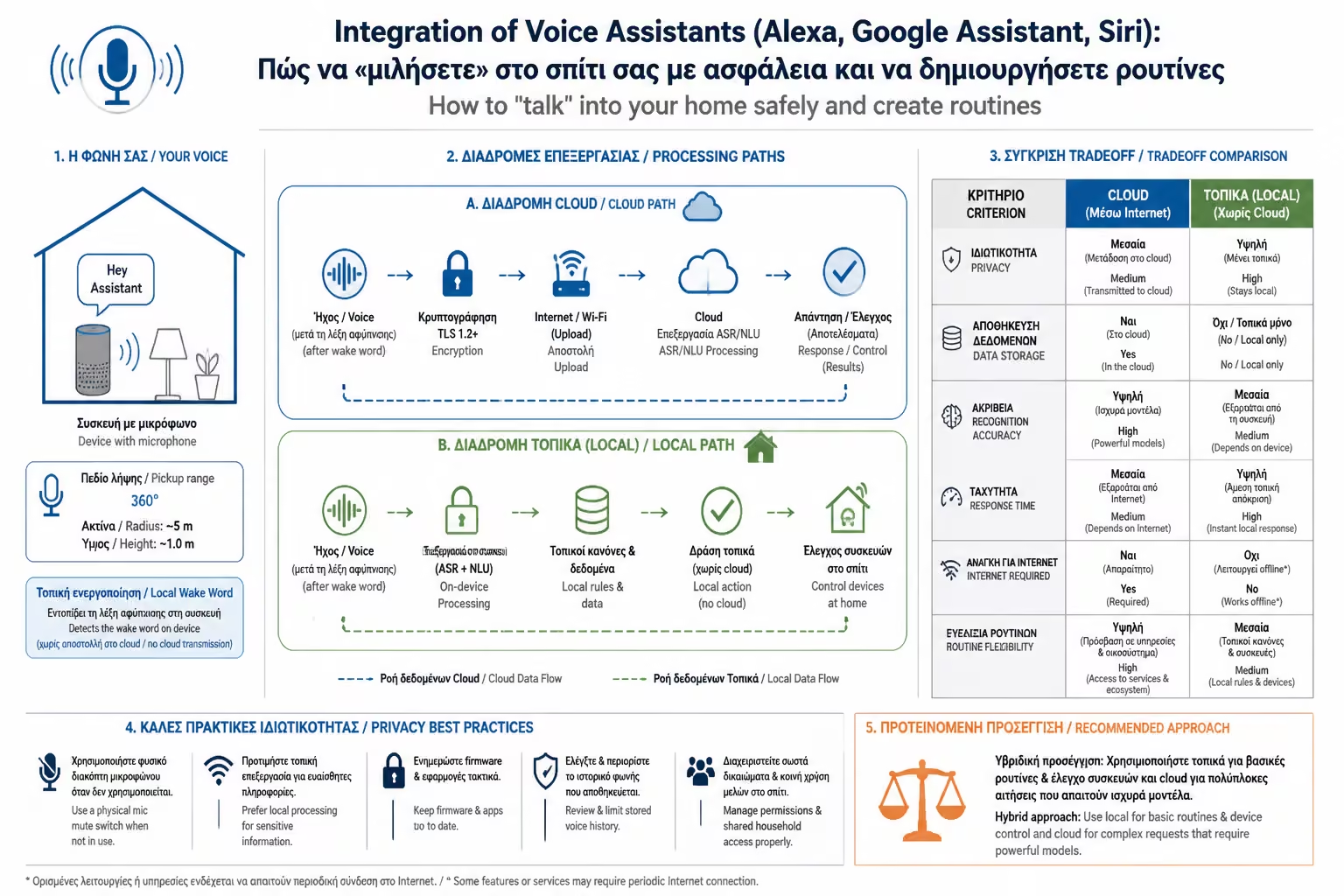
The speaker doesn't send what you say 24/7 to the internet. This would require unreal bandwidth and huge servers. It works on an architecture called "Wake Word Engine":

  1. The speaker has a small, local computer that ONLY listens for a specific word (eg "Hey Google" or "Alexa"). Everything else you say is instantly deleted from its cache.
  2. ONLY when it hears the wake word does it "wake up". The LED ring lights up to notify you that it is now recording.
  3. It then sends your command (the 3-4 second audio clip) to the Servers (Cloud) to be translated by Natural Language Processing, and returns the response.

What to do if you're worried:

  • All speakers have a physical Mute button. By pressing it, the circuit of the microphones is electrically cut (Hardware disconnect). The speaker is practically "deaf" until you press it again.
  • You can (and should) go into your Amazon or Google settings and delete your audio history.
Illustration for 3. The Truth About Privacy (Are We Eavesdropped?)

4. The Greek Reality (The Language Problem)

Illustration for 4. The Greek Reality (The Language Problem)

Here we must speak with complete honesty. Although our mobile phones (iOS / Android) understand Greek fluently, companies (especially Amazon and Apple) do not officially support the Greek language in their smart speakers (Smart Speakers) for home control. Google has made some attempts in the past, but the experience remains patchy.

The "Golden" Rule (Device Naming): For your voice control to work perfectly, you must address the speaker in English. This means that when you set up your devices in the app, DO NOT name them in Greek or in Greek (eg "Fos Kouzinas"). The speaker will never understand your pronunciation. Name your appliances in simple, basic English terms: "Kitchen Light", "Living Room A/C", "Main Blinds". So the simple "Alexa, turn on Kitchen Light" will always be executed perfectly and instantly, even by people with average accents.

Summarizing

Smart speakers cost little (often around €40 - €50 during sale periods) but offer the most "Sci-Fi" upgrade to your space. Choose the platform that suits you (Alexa for compatibility, Google for searches, Siri for the Apple ecosystem), "baptize" your devices in English, and let your voice replace the switches on the walls.

Next Step: We saw how to give commands at home. But how can the house "feel" that something is wrong and act on its own without us even talking to it?

We continue with an excellent, practical automation scenario that saves the house from mold and damage: Smart Bathroom Ventilation: Automatic start of ceiling fans based on built-in humidity sensors.

Related Articles

Smart Home, Building Automation (BMS) & Security

Return to category.

Go to category

Preview