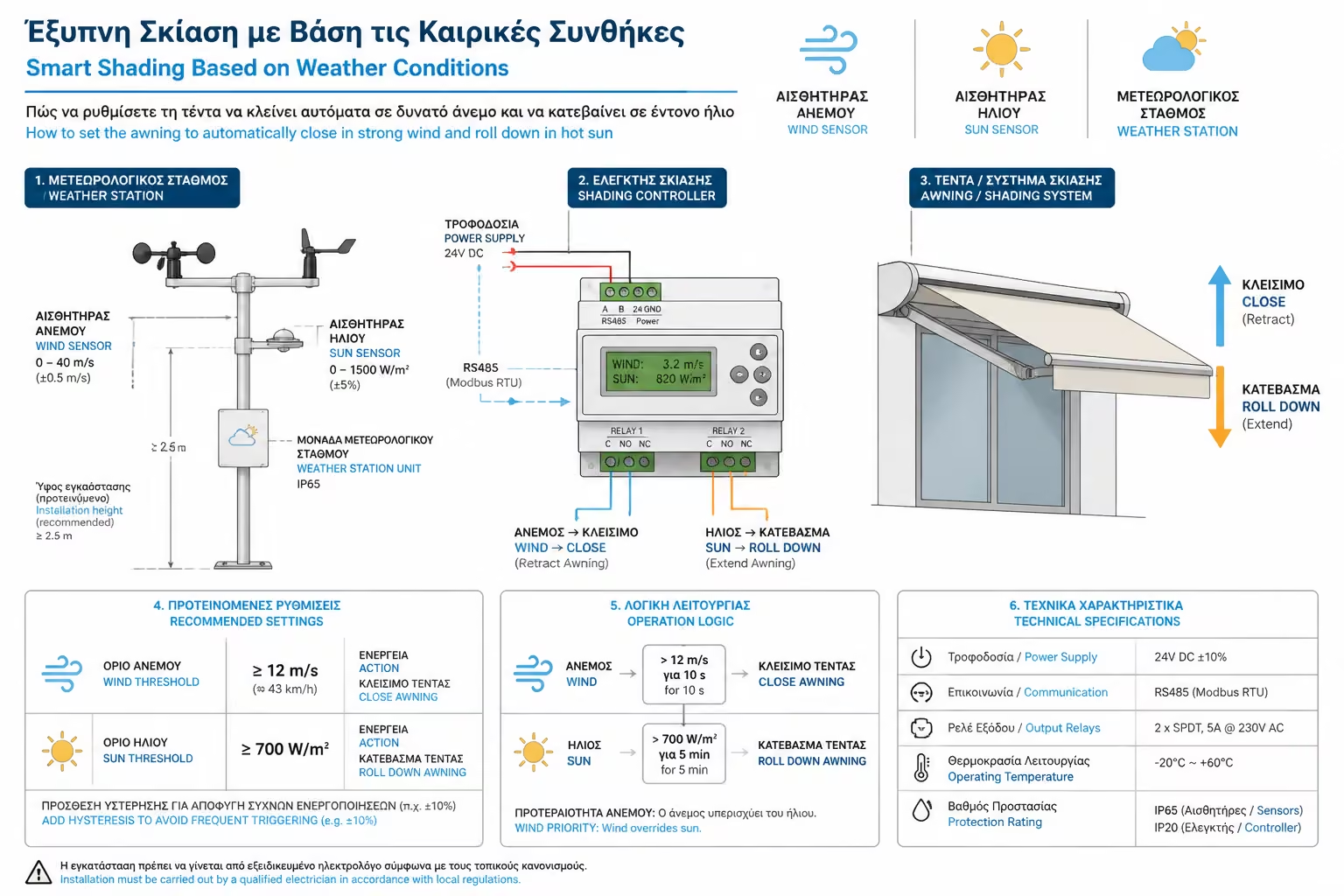
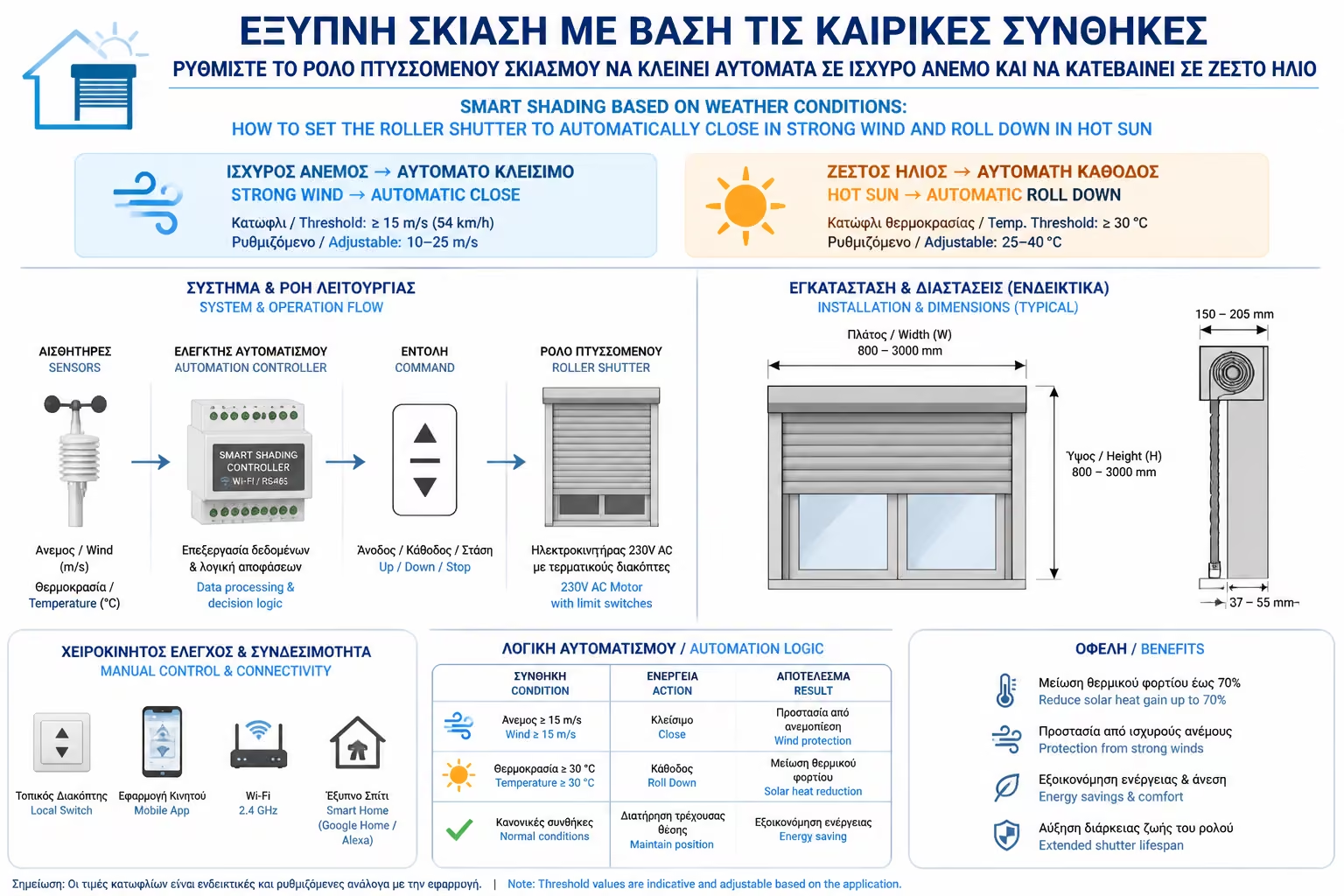
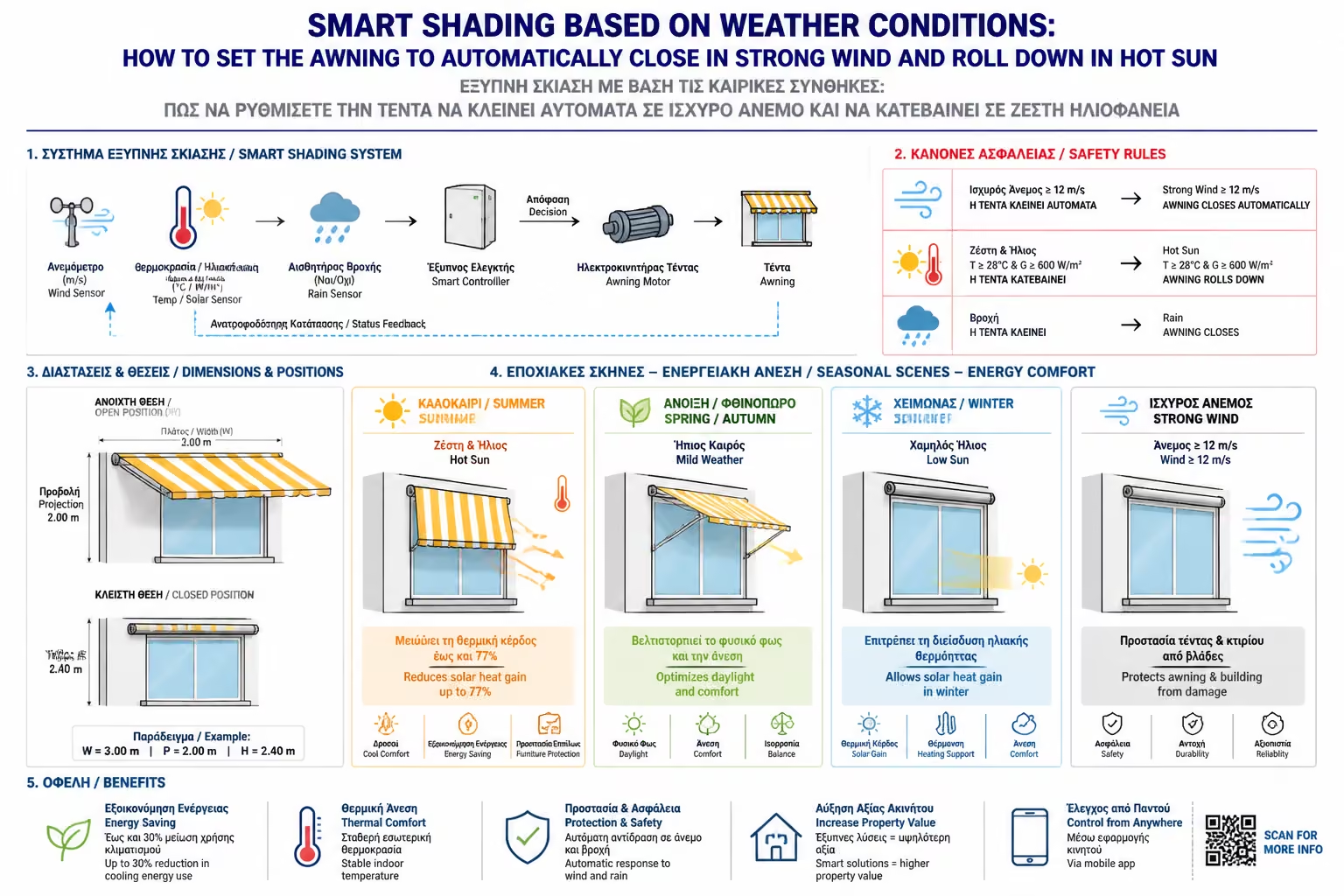
Smart Shading Based on Weather Conditions: How to set the awning to
automatically close in strong wind and roll down in hot sun
In the previous article, we managed to control our electric blinds and
awnings from the mobile, knowing exactly their position (0-100%).
However, if you have to open the app yourself every time it's sunny,
your home isn't "smart", it's just... remote controlled.
The real magic of building automation (and what we engineers call
Bioclimatic Control) happens when the house "senses" the
external environment and reacts autonomously. Proper shading management
has two main goals: Equipment Protection (Safety) and Thermal Comfort
(Economy).
Let's see how we can combine our smart shutters with weather data to
create automations that work in the background, 365 days a year.
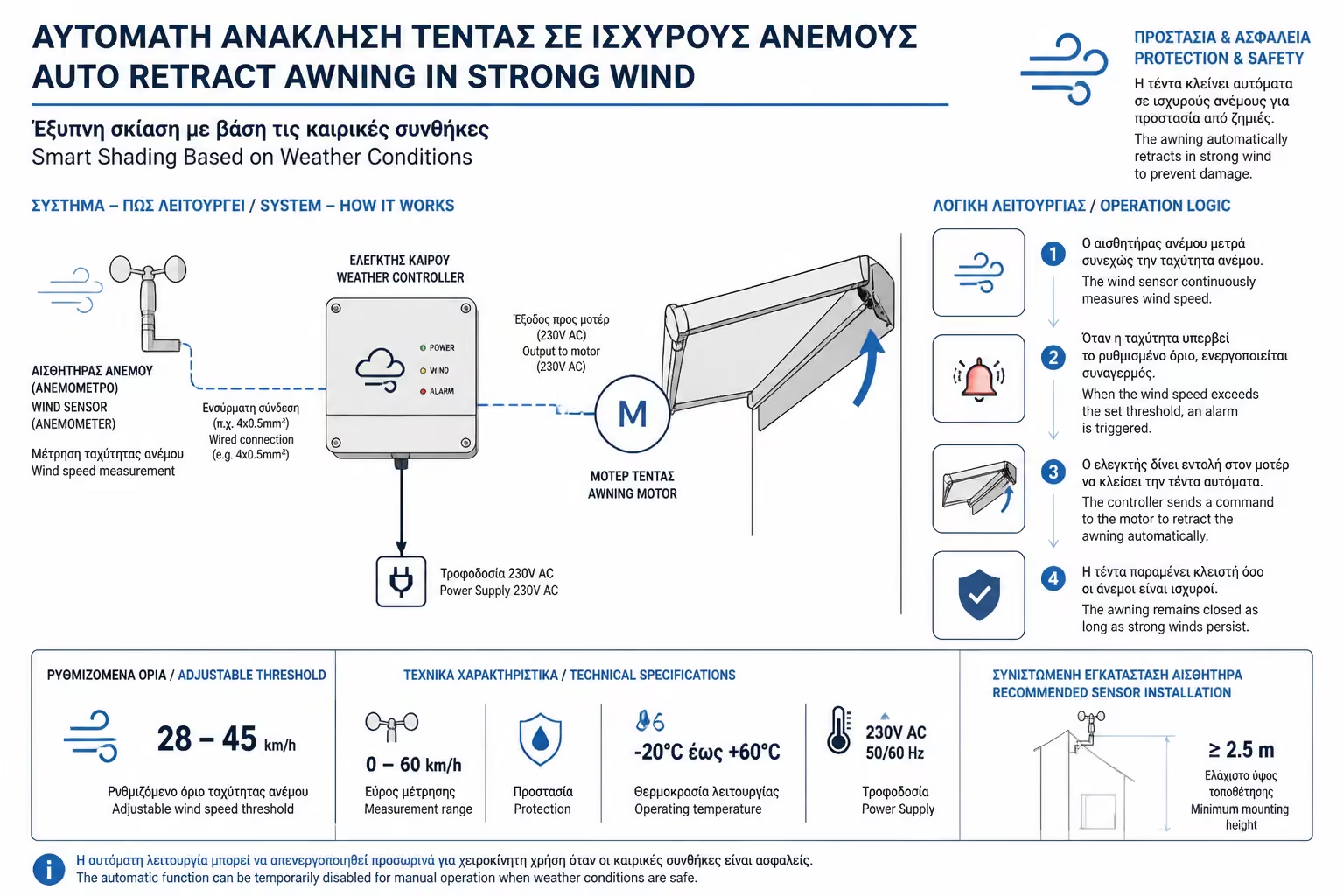
1. The Absolute Priority: Wind Alarm
A 5-meter awning or a bioclimatic pergola in a sudden summer storm or
a strong nor'easter acts like the sail of a sailboat. Damage (torn
sail or broken booms) often costs over €1,000. Air defense automation
is therefore an electronic insurance policy.
How it is implemented (The Hardware vs. Software Dilemma):
The Wrong Approach (Weather APIs)
Many beginners make a script using free weather data (eg
OpenWeatherMap): "If the forecast for my city shows wind >
40 km/h, pack the awning". This is dangerous. The weather has
microclimates. The airport giving the measurement may have apnea,
but your 5th floor balcony may have 6 Beaufort gusts. Also, if the
internet goes down, the script crashes.
The Right Approach (Physical Anemometer)
We place a natural wind sensor (anemometer) on the railings or on
the roof. In KNX installations it is standard equipment (Weather
Station). For DIY/Smart Home, there are solutions with Z-Wave
sensors or even simple anemometers that command a relay (like the
Shelly Plus 1). The relay "reads" the actual wind gust at
that moment and gives an instant, local command to the motors to
retract the awnings.
2. Thermal Shielding: Sun Tracking
In summer, heat enters the house mainly through radiation that
penetrates the glazing. If you wait for the room to warm up to turn on
the A/C, you've already lost the energy game. The secret is to stop
the sun before it hits the glass.
The "Smart" Summer Algorithm: Inside the Central Hub of the
Smart Home (eg Home Assistant or SmartThings), we don't just make a
"roll down the blinds at 14:00" scenario. The sun changes
its angle every day of the year. We use an algorithm that combines 3
parameters:
Sun Azimuth & Elevation: The Hub mathematically calculates,
based on your home GPS, exactly where the sun is in the sky with
degree accuracy.
Outside Temperature: "Is it summer or winter?"
Brightness (Lux Sensor): "Is it cloudy or is the sun
"burning"?" (Measured by an external Zigbee/Z-Wave
brightness sensor).
The Perfect Scenario (West Front Example):
Once the sun sets (Azimuth > 290°), the blinds are automatically
raised to 100% again to ventilate the house.
Treaty
If the outside temperature is > 25°C AND the light level is >
20,000 Lux.
Fact
When the Azimuth of the sun reaches 240° (ie the sun begins to
"see" the western windows).
Action
Lower the western blinds to 60% (so they block the radiation, but
still let some light in from below for you to see through).
3. Solar Harvesting
The exact same algorithm works in reverse in winter. When it's 10°C
outside but the sun is shining, solar radiation is free heating
energy.
The Smart Home "understands" that it is cold, reads the high
Lux of the sun, and makes sure that the shutters on the south and west
sides of the house remain wide open throughout the afternoon,
"trapping" the heat. When the sun goes down, the blinds go
down to 0% immediately, acting as a "thermal blanket" for
the windows, so that the heat does not escape outside at night.
4. Rain Sensors
If you have garden furniture under the awning or a wooden pergola with
movable blinds, rain is an additional factor.
Here, a simple weather forecast API is not enough, because the
showers are local.
A small Rain Sensor is installed. It's a small, sloping board with
gold lines. As soon as the first drop falls, the circuit closes and
the Smart Home instructs the awning to retract so it doesn't
"belly" from the weight of the water, or the pergola
blinds to close tightly to protect the furniture.
(Tip: Good rain sensors have a small heating resistor built in. That
way, when the rain stops, they "dry" the board immediately,
to signal the system that the danger has passed).
Summarizing
The motors of the blinds and awnings are the "hands" of your
home, but the weather sensors are its "eyes". By joining these
two, the house passively adapts to its surroundings. The energy savings
from the air conditioner in the summer—because the blinds went down on
time without you lifting a finger—are huge and quantifiable, making this
upgrade one of the most meaningful energy engineering moves.
Next Step: We set up the sun and wind outside. It's time to look inside
and tame our home's heating system (boiler or pump).
We continue with one of the hottest products on the market: Smart
Thermostats (Nest, Tado, Netatmo, etc.): Are they worth their money to
save in Greece and how are they connected to the boiler?