Depth
Quality in-ceiling speakers (usually 6.5 or 8 inches in diameter) require at least 10 to 15 centimeters of depth above the drywall to snap into place. The architect must anticipate this.
So far in our guide, we've talked about savings, safety and temperature control. Now, we move on to the "Premium" part of the Smart Home. Pure comfort, entertainment and architectural aesthetics.
Imagine walking into the house, starting your favorite playlist on Spotify and, as you walk from the living room to the kitchen and then to the bathroom, the music follows you everywhere, perfectly in sync, without a single cable or speaker in sight on the floor. This is the Architectural Multi-Room Audio experience.
As engineers, we all too often see audio wiring left out of the original plans for a renovation, resulting in unsightly wires hanging from the walls. Let's take a look at how it's designed right from the betas, what the specs are for ceiling speakers, and which amps are dominating the market.
The biggest mistake is confusing Multi-Room with portable Bluetooth speakers.
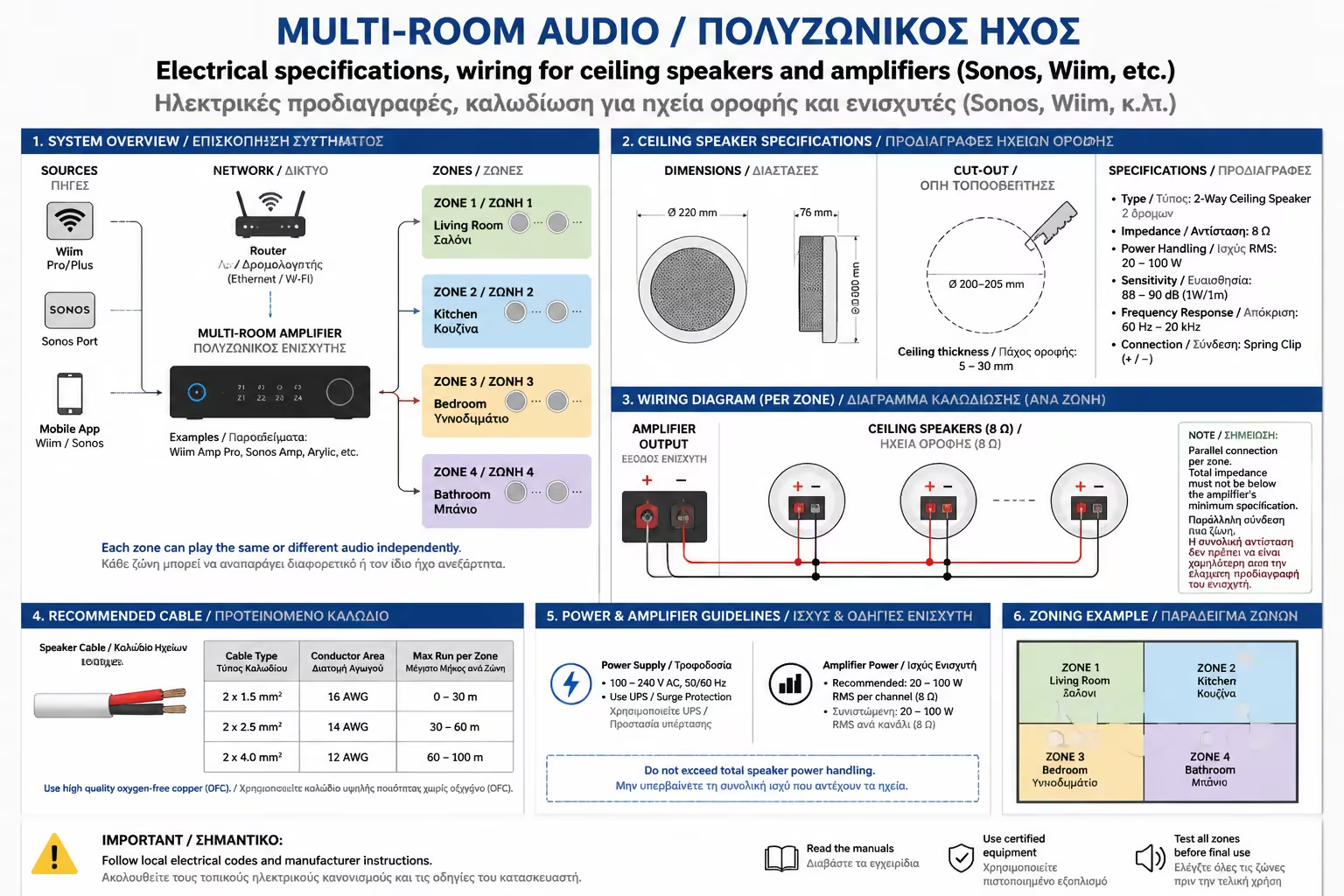
In addition, it allows you to control Zones: You can have relaxing music in the bathroom (Zone 1) at low volume, and at the same time the kids play Pop in the living room (Zone 2) at high volume, all controlled by the same app.
For the ultimate aesthetic effect, the speakers must be invisible. This is achieved with In-Ceiling Speakers.
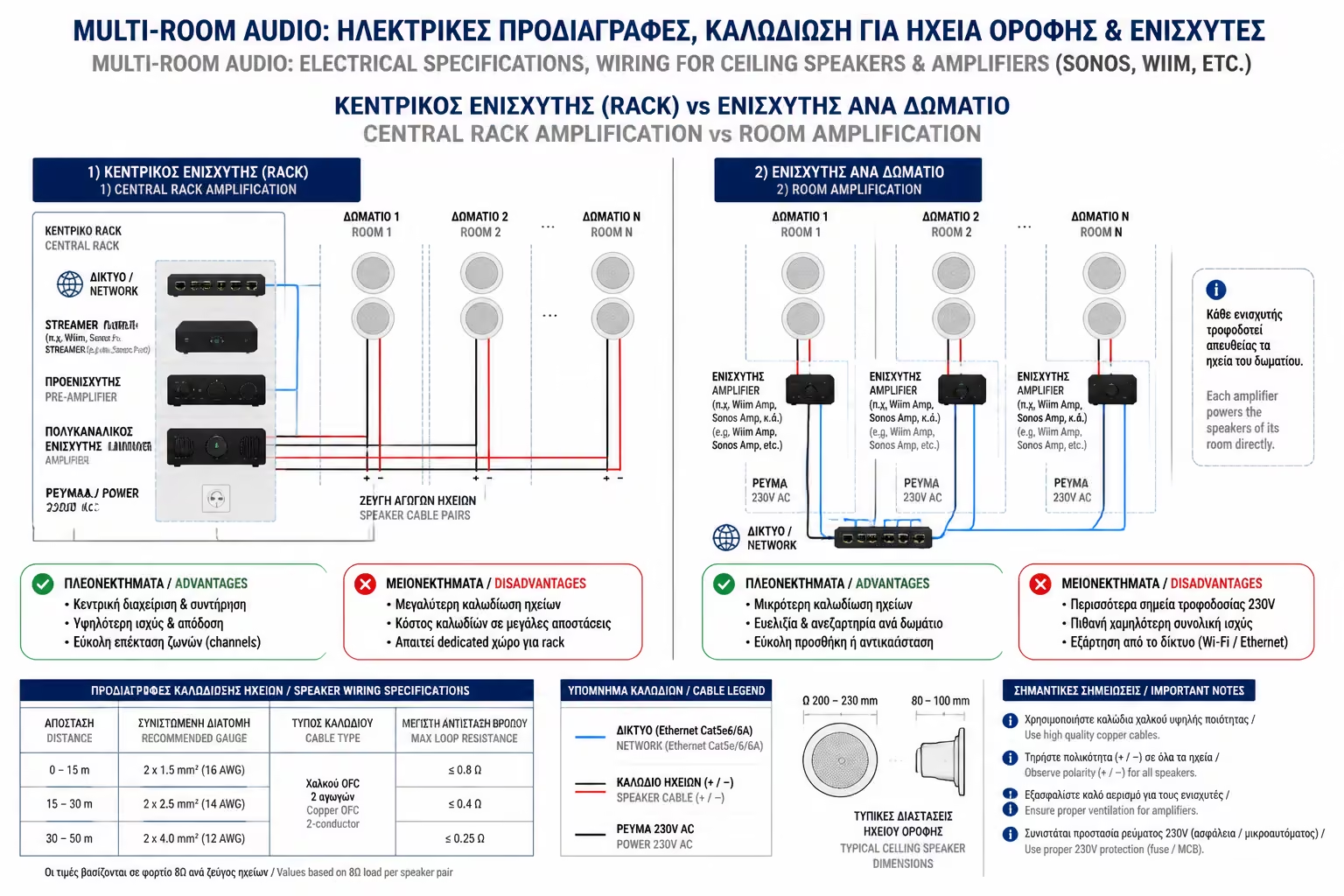
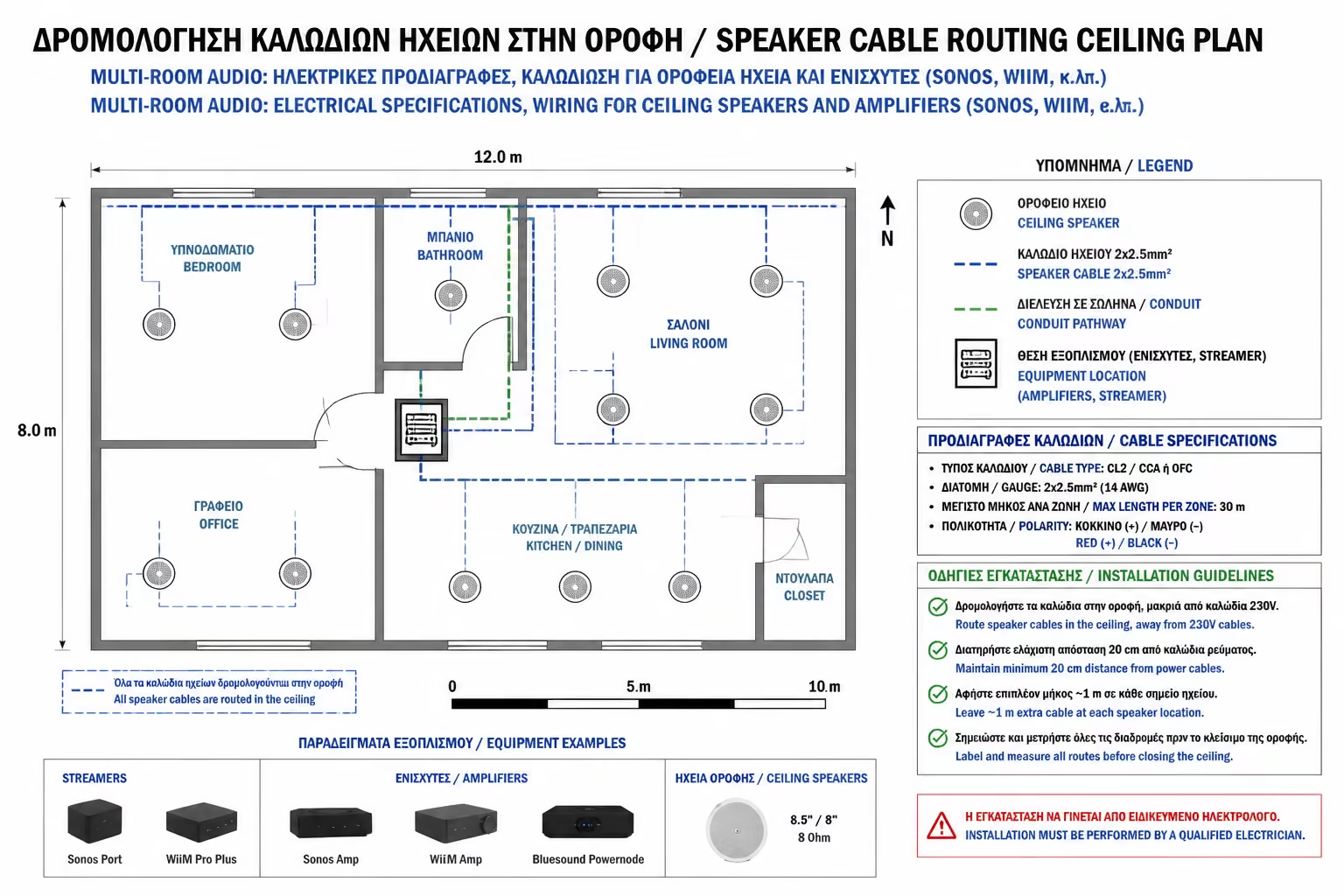
A. The Speakers (Passive): In the professional installation, we do not put "smart" powered speakers in the ceiling. We install passive ceiling speakers (usually 8-Ohm). They consist simply of the cone and a magnetic, paintable screen (grille) that becomes absolutely "one" with the plasterboard.
B. The Drywall Rule (Depth & Soundproofing):
C. The Wiring Topology (Star): From each speaker in the ceiling, an audio cable starts. It is forbidden to connect one speaker to the next (Daisy-chain). All the cables (2 speakers from the bathroom, 4 from the living room, 2 from the kitchen) must end up centrally at one point (Star topology), usually on the TV stand or on the central Rack of the house.
D. The Cable: We use quality, oxygen-free copper (OFC) speaker cable.
Quality in-ceiling speakers (usually 6.5 or 8 inches in diameter) require at least 10 to 15 centimeters of depth above the drywall to snap into place. The architect must anticipate this.
Your ceiling acts like a giant speaker. If you put the speaker bare, the bass will travel upstairs or into the next room. Good engineering practice requires placing "Backboxes" (wooden or acoustic boxes) behind the speaker inside the drywall, to "direct" the sound only downwards.
Cross section 2 x 1.5mm² (16 AWG).
Cross-section 2 x 2.5mm² (14 AWG) so as not to lose power.
All these cables that we collected in the central Rack, must be connected somewhere to get "life" and internet. That's where Smart Amplifiers (Streaming Amps) come in. Depending on your budget, the market is divided into two big "players".
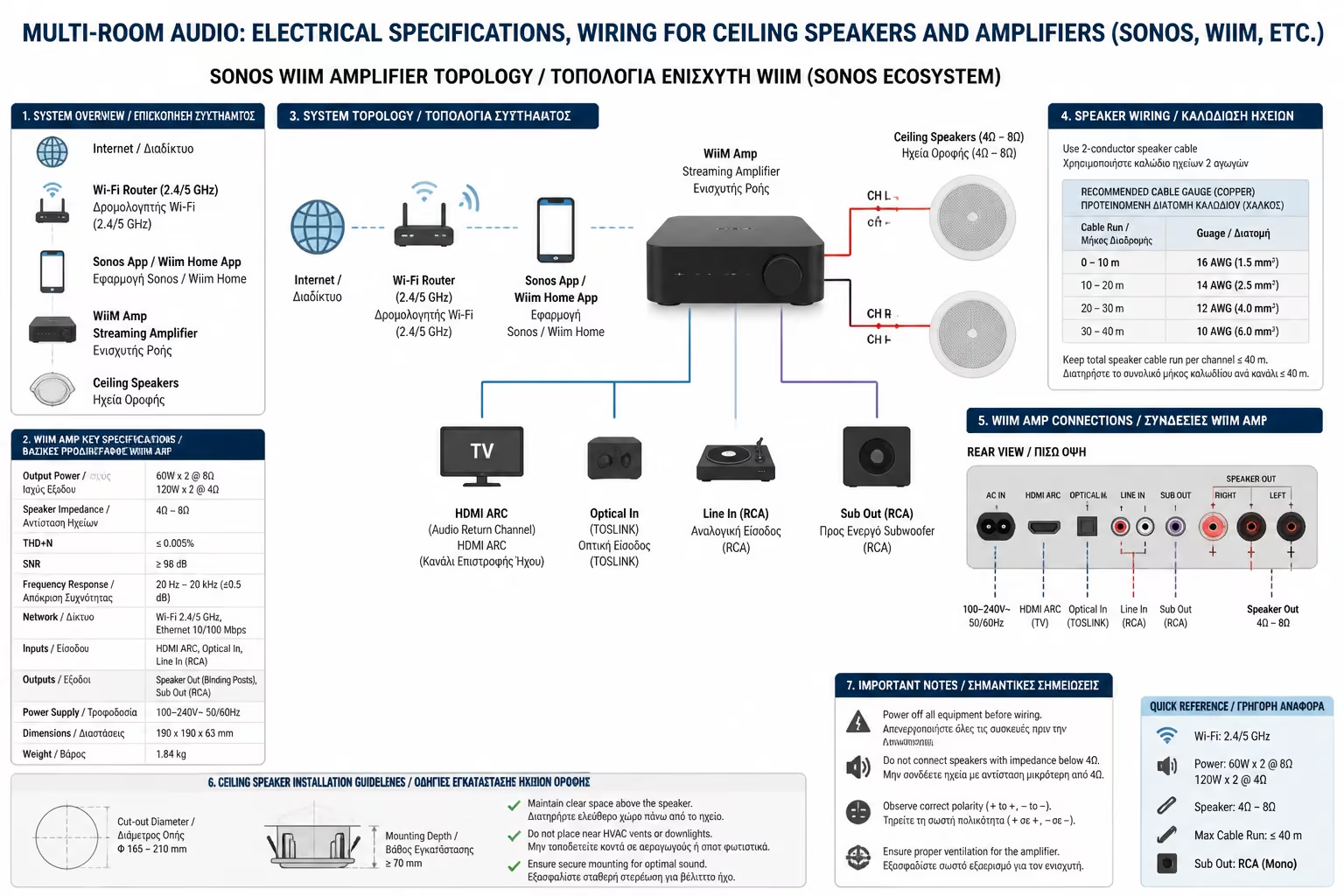
Sonos is the inventor of Multi-Room and remains the undisputed "king" of the category. What it does: The Sonos Amp is a powerful amplifier (125W per channel). You connect the ceiling speaker cables to it, plug it in and connect it to the internet. The Magic: The Sonos App is flawless. It supports over 100 music services. Synchronization if you have multiple amps (one for each room) is perfect. Plus, it has an HDMI ARC port, so you can hook up your TV, and the ceiling speakers will play the movie sound! * Cost: High. About €700 - €800 per zone (without the speakers).
Until recently, Sonos had a monopoly. Now the WiiM has shaken up the market by offering Audiophile features at a fraction of the price. What it does: The WiiM Amp is a beautiful, compact amplifier (60W per channel) that hides easily. It supports AirPlay 2, Chromecast, Spotify Connect and Tidal Connect. Why it stands out: It offers high-resolution sound (Hi-Res Audio) and excellent software. You can get three WiiM amps (for 3 different rooms) for almost the same money as a Sonos. * Cost: Approximately €350 - €380 per zone.
What if you're not renovating, the house has exposed concrete ceilings, and you can't run cables? Multi-Room is not lost.
In this case, we resort to Stand-alone Smart Speakers.
Allowing for in-ceiling speakers during a renovation is a decision no homeowner has ever regretted. Cable is cheap. Run the speaker wire up to the ceiling (even "blindly" if you don't have money for speakers right away). In the future, you'll be able to add a smart amplifier and turn your venue into a 5-star hotel, where music flows invisibly from above.
Next Step: We can control our lights, blinds, temperature and now our music, using our mobile. But the real liberation comes when we don't have to touch any phone.
We continue to the next, exciting chapter: Integrating Voice Assistants (Alexa, Google Assistant, Siri): How to "talk" into your home safely and create routines.
Return to category.
Go to categoryReturn to the central guide.
Go to guide