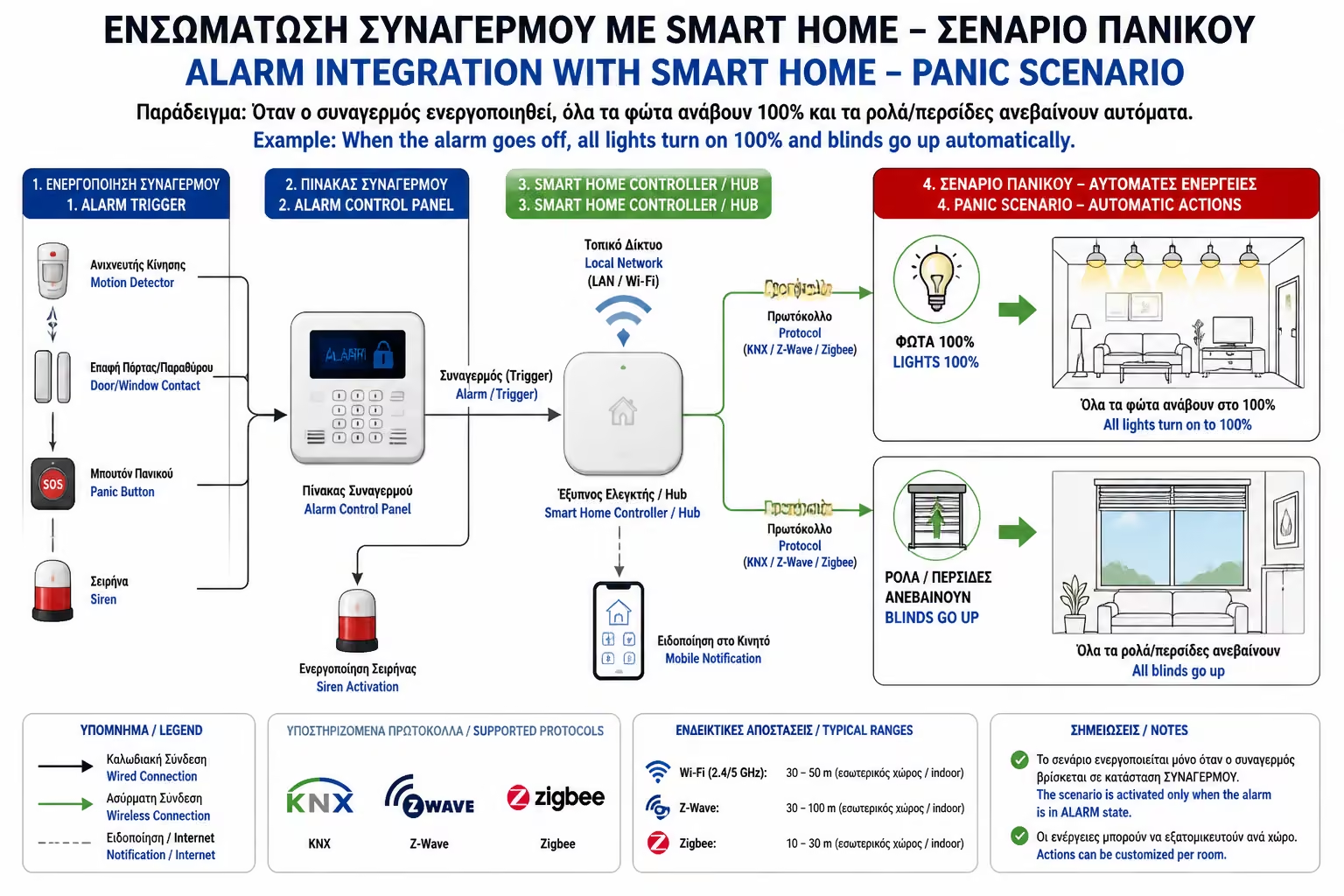
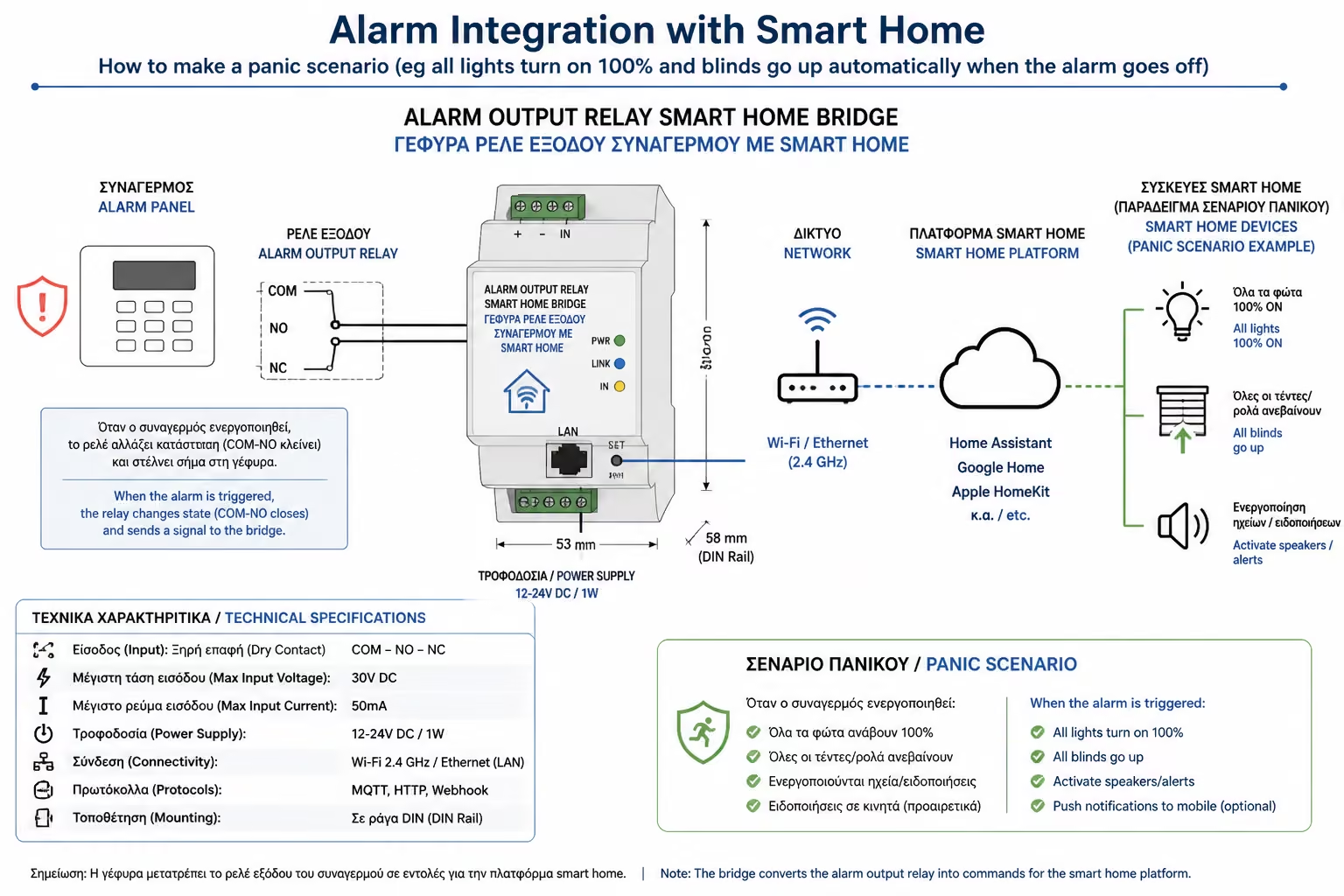
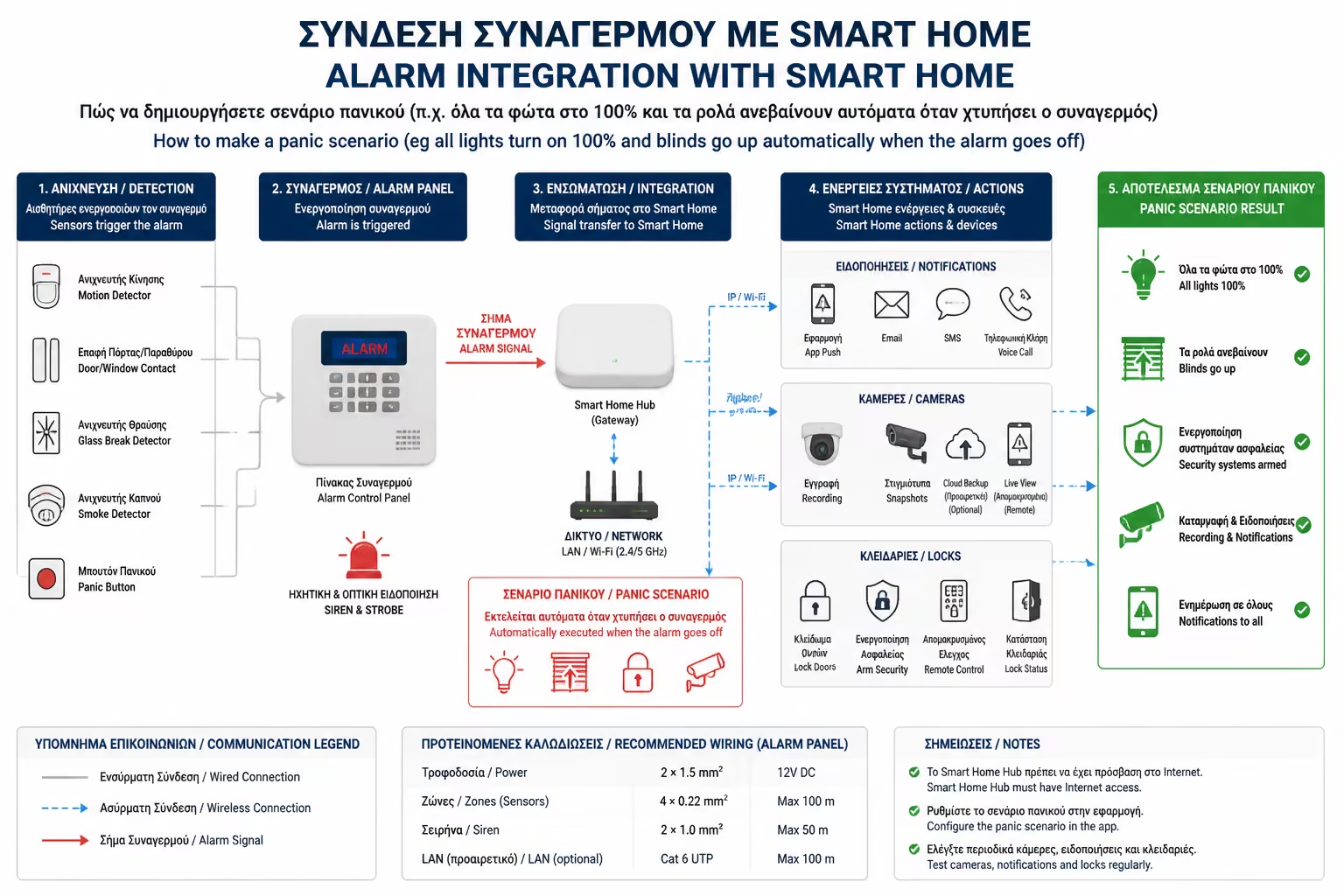
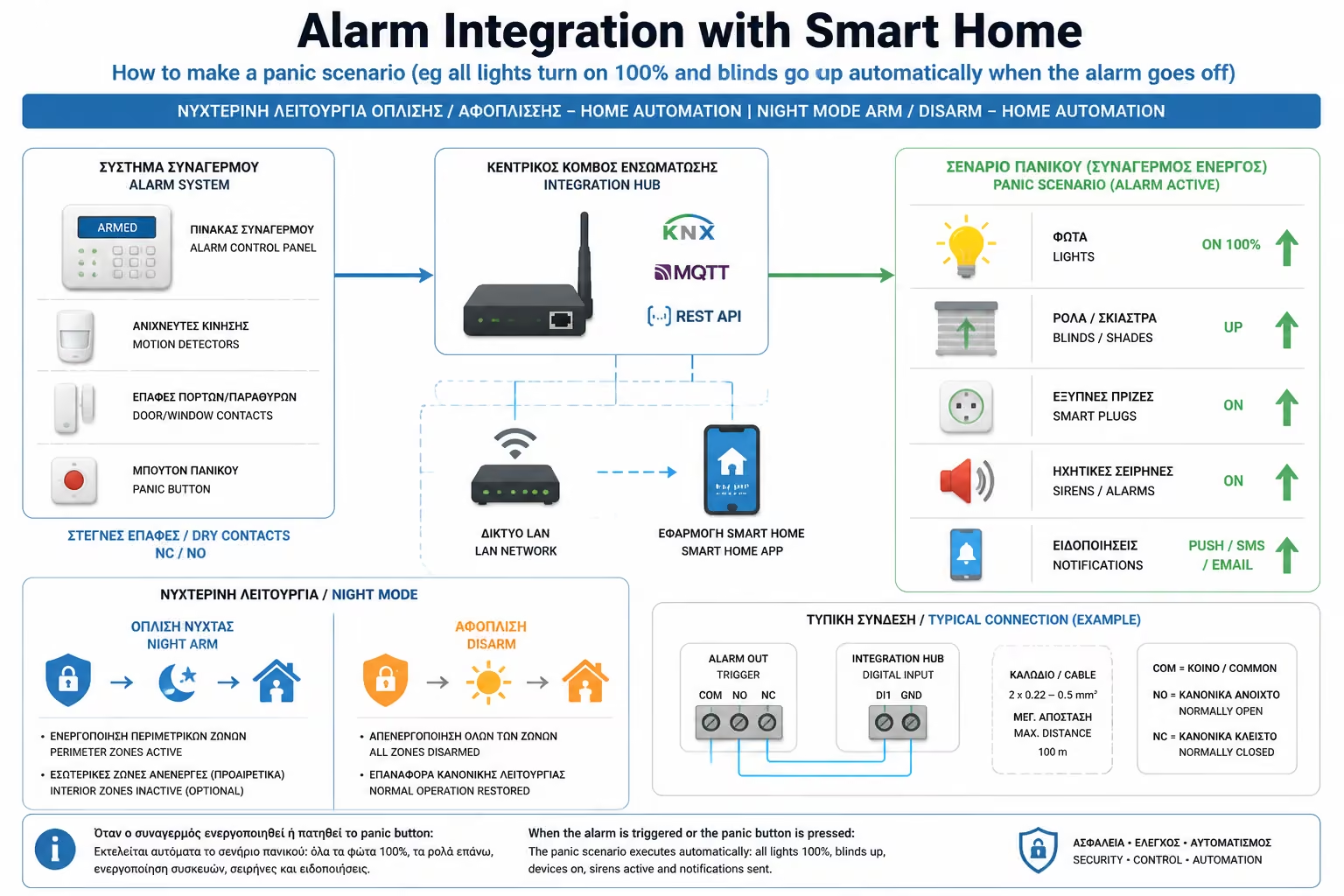
Alarm Integration with Smart Home: How to make a panic scenario (eg all
lights turn on 100% and blinds go up automatically when the alarm goes
off)
Coming to the end of our design, you now have two top-of-the-line, but
separate systems in your home: On the one hand, a "smart" home
that controls lights, blinds and temperature (Category C). On the other
hand, a state-of-the-art alarm that detects burglars (Category D).
In most homes, these two systems "live" in different worlds.
They don't talk to each other. But the "Holy Grail" of
building automation comes when we manage to unite them (Integration).
When the alarm stops being just a siren that makes noise, and turns into
the "General" giving orders to the building itself to defend
itself.
As engineers, we call this philosophy Active Defense. Let's see how we
bridge these two worlds and build the ultimate panic scenario.
1. How Systems "Talk" to Each Other (The Bridge)
For the alarm to say to the lights "Turn on, we have a
burglary!", we need a bridge. This is done in two ways:
Software solution (API & Cloud)
If you use a central Hub (eg Home Assistant, SmartThings, Hubitat)
and a modern alarm (eg Ajax, Paradox, DSC), there is often an
official "Integration" in the software. The Hub reads the
alarm data via the local network or the Cloud.
Hardware Solution (Dry Contacts - PGM)
The most "bulletproof" and professional solution. All
serious alarm panels have programmable outputs (PGM - Programmable
Outputs). The electrician connects a wire from the alarm's PGM to a
Smart Relay (eg a Shelly Plus 1).
Logic
When the siren goes off, the board supplies 12V to the PGM. Shelly
"sees" the power, understands the alarm, and instantly
updates the Smart Home!
2. The Ultimate Panic Scenario (What happens at 03:00 in the morning)
Imagine this: It is 03:00 in the morning. The alarm is armed (Night
Mode). A burglar manages to breach the balcony door. The magnetic
contact opens. In a split second, the house activates the "Panic
Routine":
The Lights (Shock and Awe): All indoor and outdoor lights in the
house instantly turn on at 100% intensity. If you have RGB (colored)
smart bulbs, they are set to flash red like a beacon. The thief, who
relied on darkness to hide, suddenly finds himself
"crammed" into a theater stage.
The Roller Blinds (Reveal): All electric roller blinds and awnings
are simultaneously raised to 100%. Why? Because if the thief gets
in, he often closes the shutters behind him so the neighbors can't
see him while he's searching! By raising the blinds, you expose him
to the street and to the eyes of the whole neighborhood.
The Sound (Multi-Room Audio): If you have the multi-zone sound
system we saw in a previous article, the amplifiers (eg Sonos) wake
up and start playing at full volume a pre-recorded message
("The police have been notified") or the sound of a huge
barking dog.
The Cameras: If the system is fully integrated, the security cameras
point their lenses (if PTZ - moving) towards the window that gave
the alarm, starting recording at maximum resolution.
The result? The environment becomes so hostile and unpredictable that
99% of burglars flee in disorder in less than 5 seconds.
3. Daily Convenience Scenarios (Beyond Panic)
The union of the two systems is not only useful in case of danger. It
makes your everyday life magical:
"Arm Away" script
You enter your code on the alarm keypad to leave. Smart Home
"sees" it and performs a routine: It turns off all the
lights you forgot, turns off the air conditioner, lowers the blinds
by 50% and starts the robotic vacuum cleaner.
"Return" (Disarm) script
You disarm the alarm when you enter the house at night. It
automatically dims the corridor light to 30%, the thermostat returns
to 21°C and the smart lock unlocks for you to pass through.
4. The Important Notice (Cyber Security)
Here, as engineers, we put a strict "red line" on how
communication is set up: The relationship must be one-way in terms of
security.
The Smart Home must HEAR the alarm (to turn on the lights or roll
down the blinds).
The Smart Home must NOT have the right to disarm the alarm!
If you set your voice assistant (eg Alexa) to disarm the alarm, a
thief could simply stand outside the half-open window and loudly
shout: "Alexa, turn off the alarm!". Keep the alarm panel as
the ultimate, closed and independent security "brain" of the
house, without giving it commands from insecure protocols.
Summarizing
Alarm and Smart Home Integration is when technology really pays off. By
harnessing the outputs of your alarm, you turn the house from a passive
observer that just makes noise, to an active defender of itself,
offering unparalleled security to you and your family.
Next Step: We completed the defense on the building (doors, windows,
internal radar). But perfect security means catching the intruder before
he even touches the wall of your home.
We continue to the next impressive chapter of our guide: Outdoor
Perimeter Protection: Beams (photocells), outdoor radar and AI IP
cameras with human/vehicle recognition.