Absolute Reliability
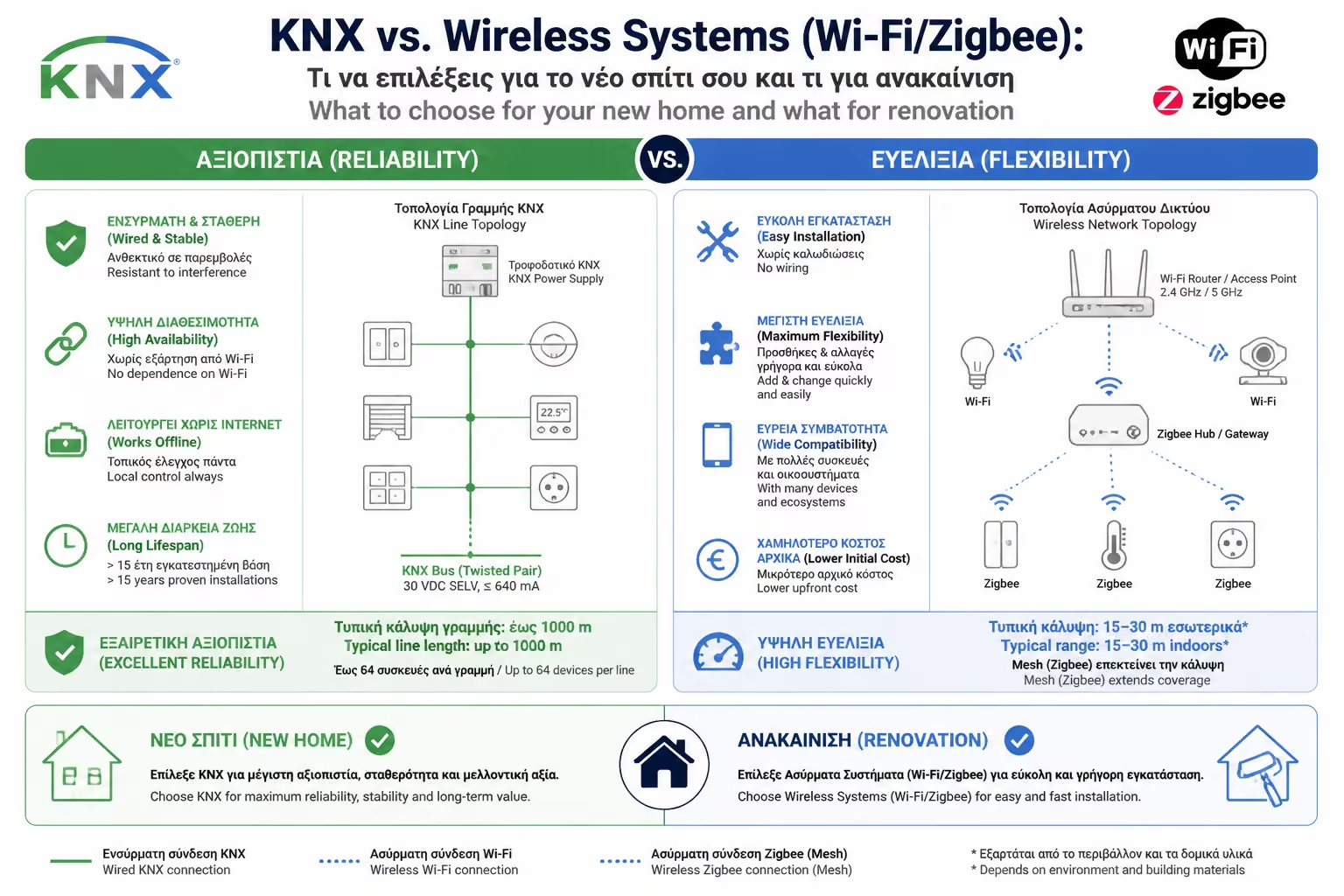
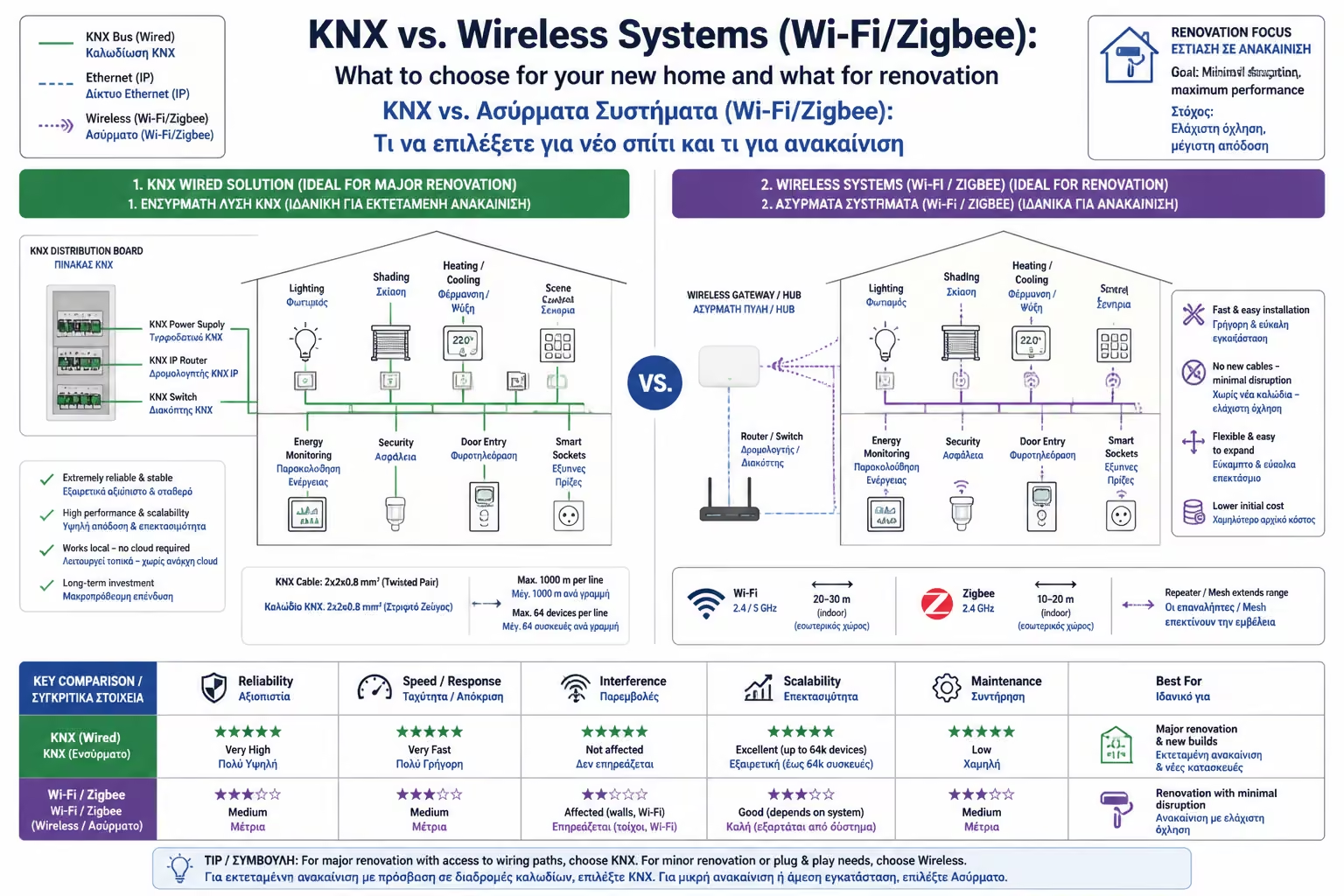
It is not interfered by thick walls, does not depend on routers and never loses its signal. When you press the button, the light turns on instantly, 100 out of 100 times.
When you make the decision to invest in a "Smart Home", the first and most critical question that the engineer or integrator will ask you is one: "Are we in beta or is this a renovation?" This question defines the technological direction of the entire project. On the one hand, we have KNX, the undisputed "king" of wired building automation, with decades of history. On the other hand, we have the modern revolution of Wireless Systems (Wi-Fi, Zigbee, Z-Wave), which democratize the Smart Home by lowering costs.
As professionals in the field, we do not believe that there is such a thing as a "bad" system, but a "wrong implementation" of a system. Let's look at the strengths and weaknesses of each philosophy to make the right choice.
KNX is not a brand (such as Apple or Samsung). It is a global, open communication standard supported by hundreds of manufacturers (ABB, Schneider, Hager, Gira, etc.).
The core of the system is a green data cable (BUS cable), which "runs" parallel to the power cables inside the walls and connects all the switches, sensors and thermostats.
It is not interfered by thick walls, does not depend on routers and never loses its signal. When you press the button, the light turns on instantly, 100 out of 100 times.
In KNX there is no "central brain" that if it breaks down the whole house "falls". Each switch has its own microprocessor. If the living room switch burns out, the kitchen continues to operate normally.
KNX installations made 20 years ago still work flawlessly and can accept modern spare parts. It is a lifetime investment for the property.
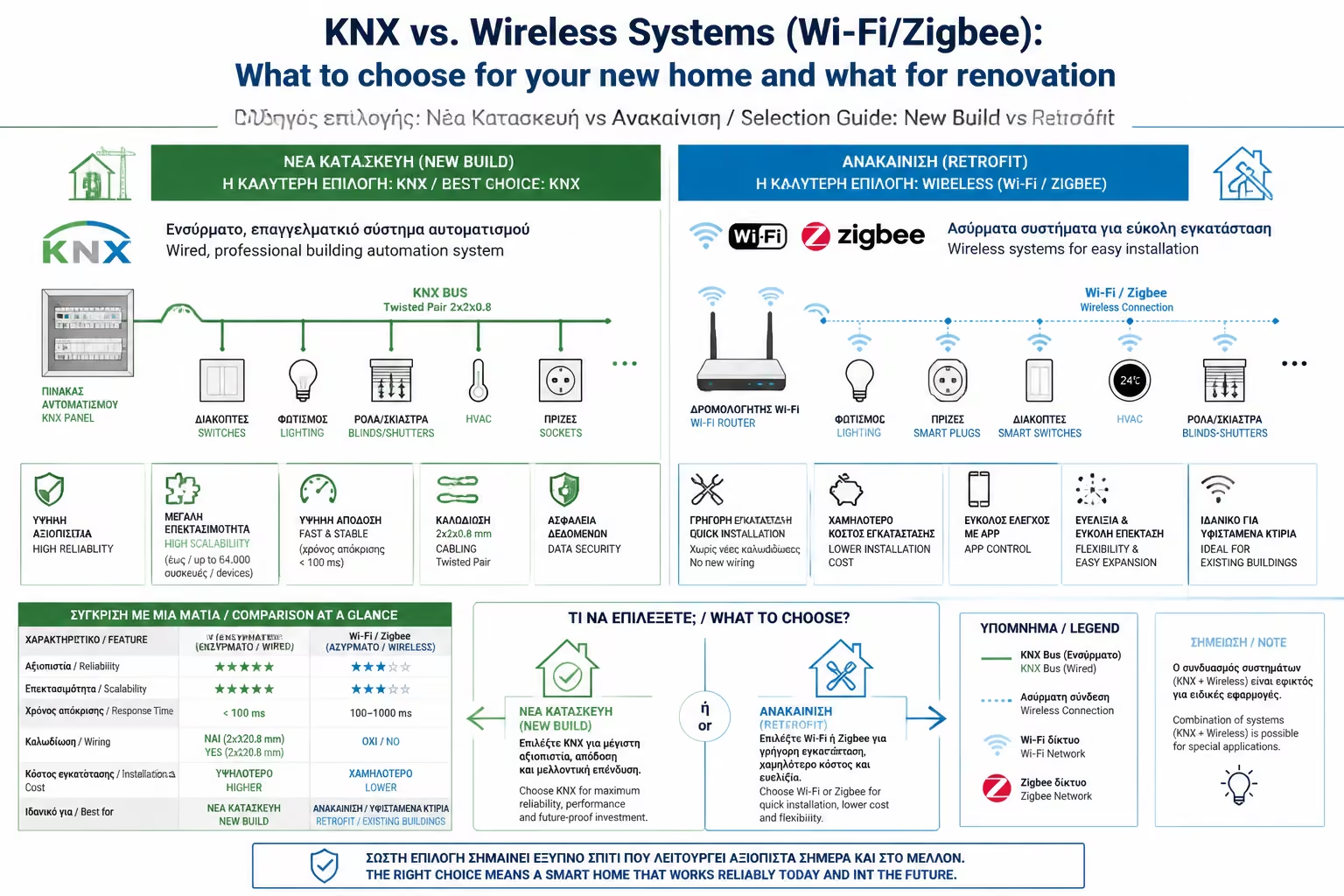
KNX materials are expensive, the electrical panel becomes huge and the fees of certified developers (KNX Partners) are high.
It must be foreseen at the stage of architectural plans (before the betas fall). Its installation in an existing house requires a radical renovation and demolition of walls.
Here we are talking about the "Retrofit" approach. We use existing, classic home wiring and add "smartness" wirelessly, using tiny relays (like Shelly's) or smart bulbs and sensors (with Zigbee protocol).
You can make your home smart this afternoon. The electrician hides the small relays behind the existing wall switches.
You can start with €50 (automating only the water heater) and expand the system room-by-room, depending on your budget.
The market (from IKEA to Amazon) is flooded with cheap, reliable sensors, cameras and smart plugs that talk Wi-Fi or Zigbee.
If your Wi-Fi router is cheap or has a poor signal, your home will suffer from lag or disconnections. Your Smart Home will only be as good as your wireless network.
Wireless motion, window or temperature sensors do not have a power cord. This means that every 1-2 years you should change batteries.
As professionals, our advice to clients is based on two clear scenarios:
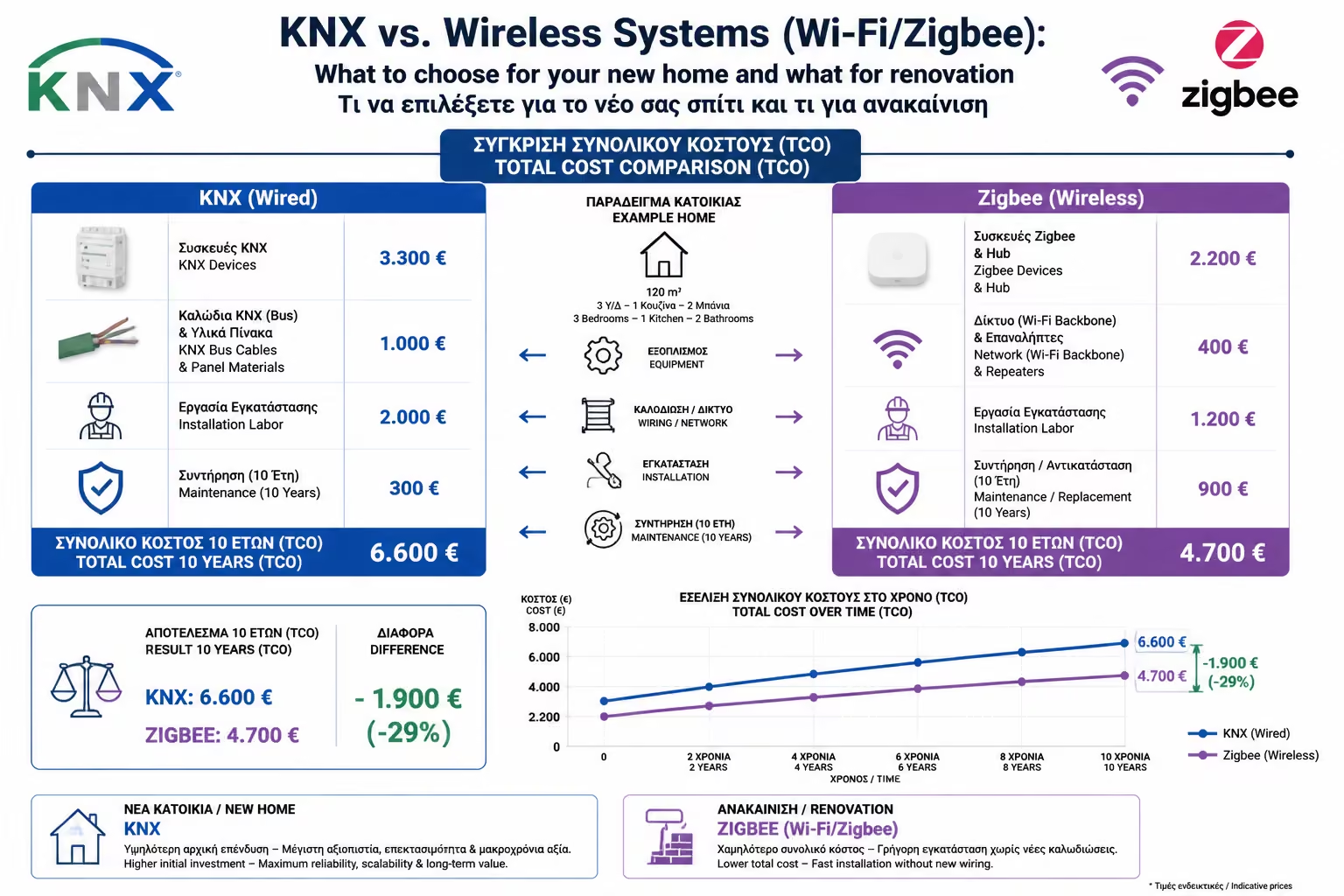
If your budget allows, go "blind" to KNX (or even an alternative wired BUS infrastructure). Wires never die. You build the "backbone" of the house with KNX for the critical systems: Lighting, Blinds/Shading and Air Conditioning (HVAC). You want the heating and lights to be guaranteed to work, even if the router catches fire.
Forget KNX. The cost of digging and new paneling will blow your budget to absurd numbers. Choose a strong Wireless Ecosystem (Zigbee + Wi-Fi). Invest €200-€300 in an excellent Mesh Wi-Fi system (to cover every square meter with a perfect signal) and place smart relays (micro-modules) behind your switches. You will have 95% of the functionality of a KNX system, with 10% of the cost.
The technology of 2026 allows us not to be absolute. Now, the systems talk to each other.
In many modern facilities, we implement a Hybrid Architecture. We install KNX for fixed and critical parts of the house (such as roller shutters, underfloor heating and central lighting). At the same time, we "click" on the KNX a server (Server/Gateway) such as the Home Assistant. This allows us to integrate inexpensive, wireless Zigbee sensors, Wi-Fi robotic vacuums and smart TVs into the robust KNX, creating the ultimate, integrated ecosystem without compromising on security.
Choosing between wired and wireless Smart Home is a matter of timing and budget, not superiority. If you are now pouring the concrete of your villa, the wired BUS is a reliable one-way. If you're renting or renovating a 20-year-old apartment, the wireless revolution is the "magic" solution you've been waiting for.
Next Step: We mentioned "Zigbee" many times as the best wireless solution for sensors and lamps, avoiding Wi-Fi. Why is this happening?
Moving on to our next tech guide: Zigbee Protocol: The Ultimate Guide: Why Wi-Fi Isn't Ideal for a Large Smart Home (and Creating a Mesh Network).
Return to category.
Go to categoryReturn to the central guide.
Go to guide