Routers
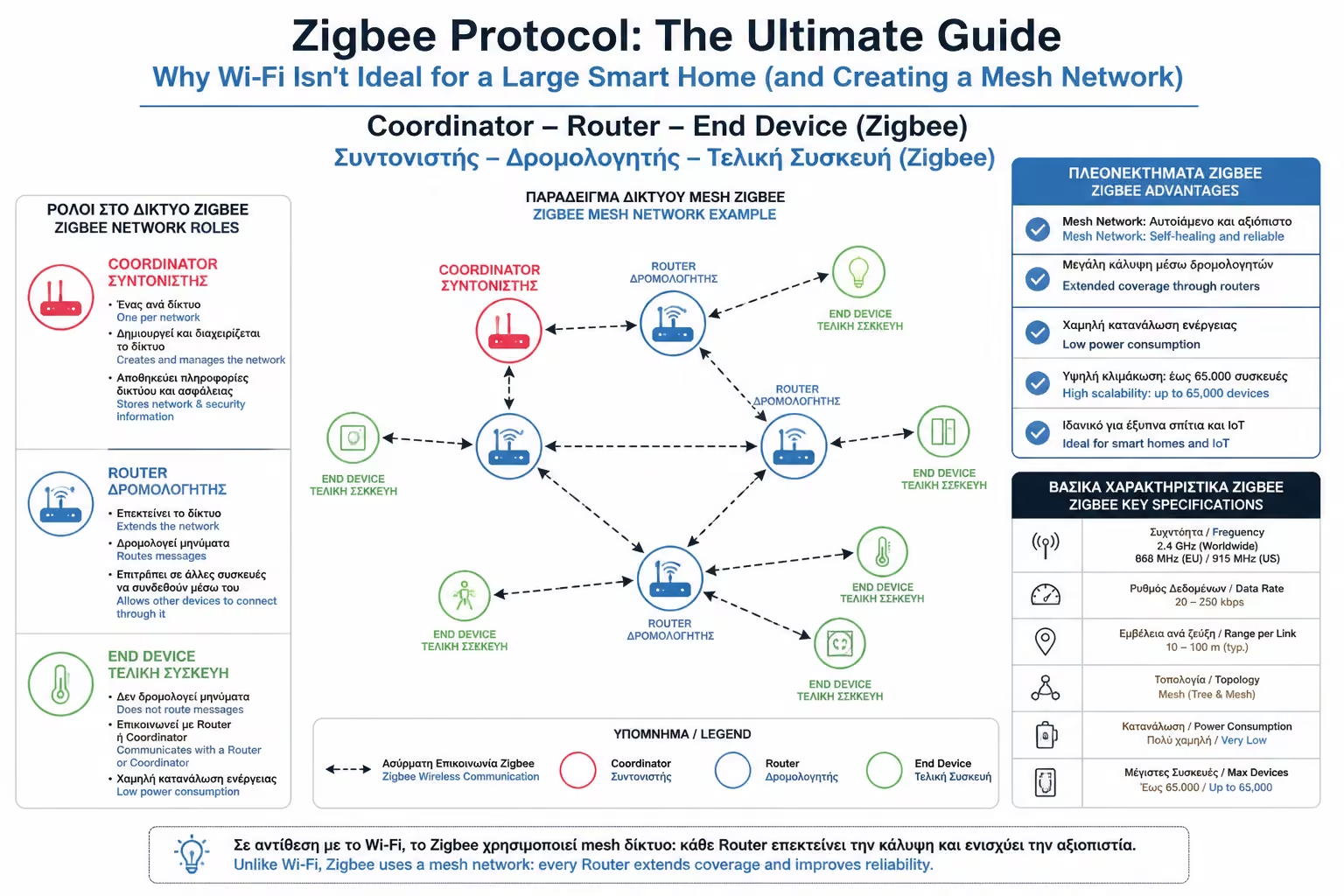
EVERY Zigbee device that takes permanent power from the socket (e.g. smart lamps, smart sockets, smart relays on the wall) also works as a Signal Repeater (Repeater).
When someone sets out to set up their first smart home (DIY), the logic goes: "I have internet at home, so I'll buy some smart lights and sockets with Wi-Fi, connect them to my router and I'm done".
This script works great if you have 5 or 10 devices. But what happens when you "sweeten up" and decide to put smart switches in every room, sensors in every window and smart lamps everywhere? Suddenly, devices become 50. Internet lags, lights lag, sensors go "Offline" and your provider tells you that the Router "kneeled".
As engineers, our answer to this mess is one word: Zigbee. It is the "invisible" wireless protocol behind the world's most successful ecosystems (such as Philips Hue and IKEA Tradfri). Let's see why Wi-Fi is the "wrong tool for the job" when it comes to automation, and how Zigbee creates an unbreakable, wireless mesh in your home.
Wi-Fi was designed with one purpose only: To transfer huge amounts of data, as fast as possible (4K Netflix streaming, downloading huge files, video calls).
When you put a smart bulb on Wi-Fi, it's like renting a 40-ton truck to deliver... a letter. The "On" or "Off" command is just a few bytes of data. Wi-Fi has three fatal disadvantages in the Smart Home:
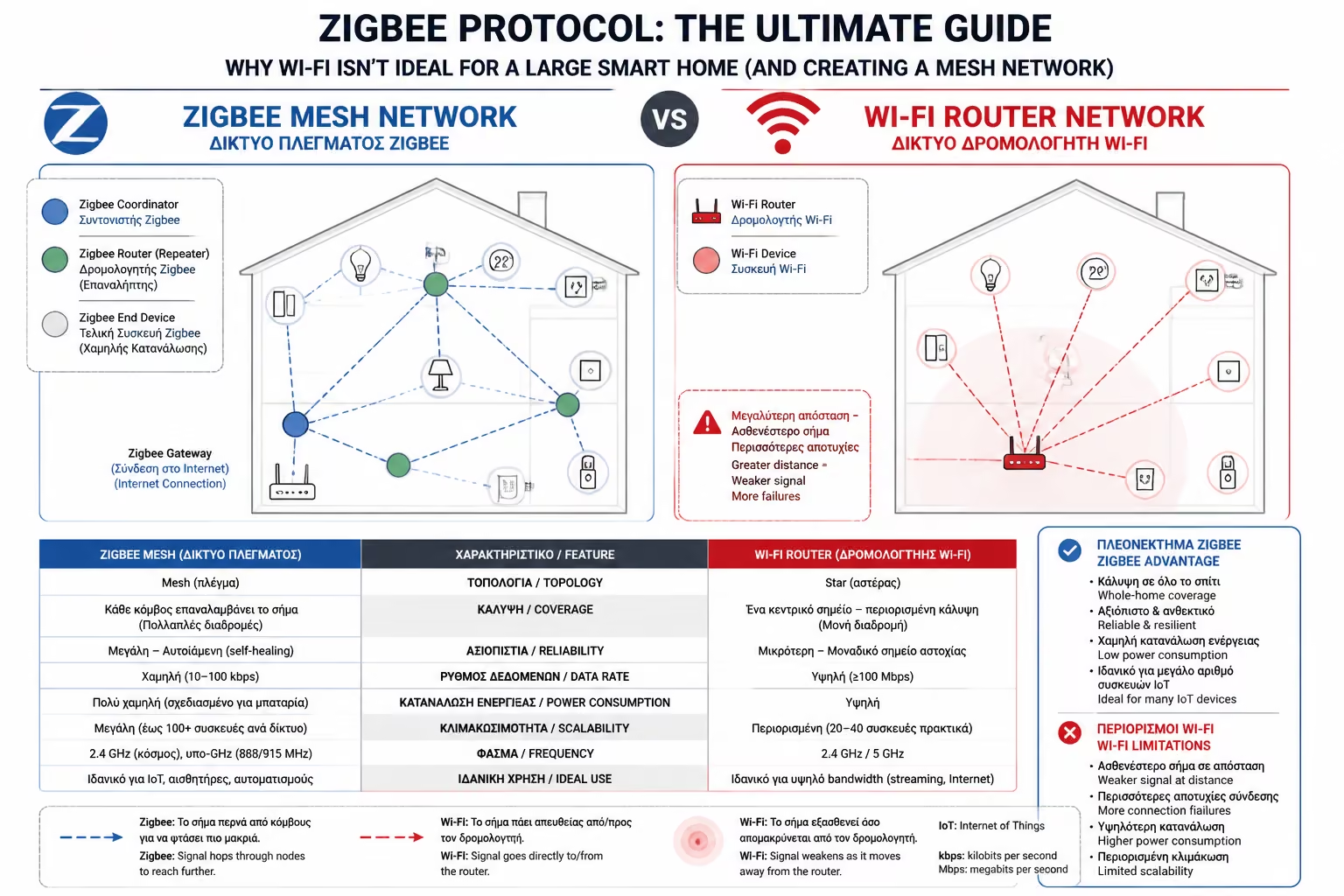
Zigbee (although it also transmits at the 2.4 GHz frequency) was created exclusively for Internet of Things (IoT) devices.
It cannot transfer video or music. It only transfers "crumbs" of data (short, short commands). Precisely because the amount of data is negligible, the protocol is extremely energy efficient. A Zigbee temperature sensor can run for 1.5 to 2 years on a tiny coin battery (CR2032), "waking up" in milliseconds only when it needs to send a measurement.
This is the real reason professionals love Zigbee. Instead of Wi-Fi's "Star Topology", Zigbee uses Mesh Network Topology.
How it works:
(Engineer's Note: Battery operated devices such as magnetic contacts are called "End Devices". These do NOT relay a signal to save battery. Only "plugged-in" devices build the Mesh).
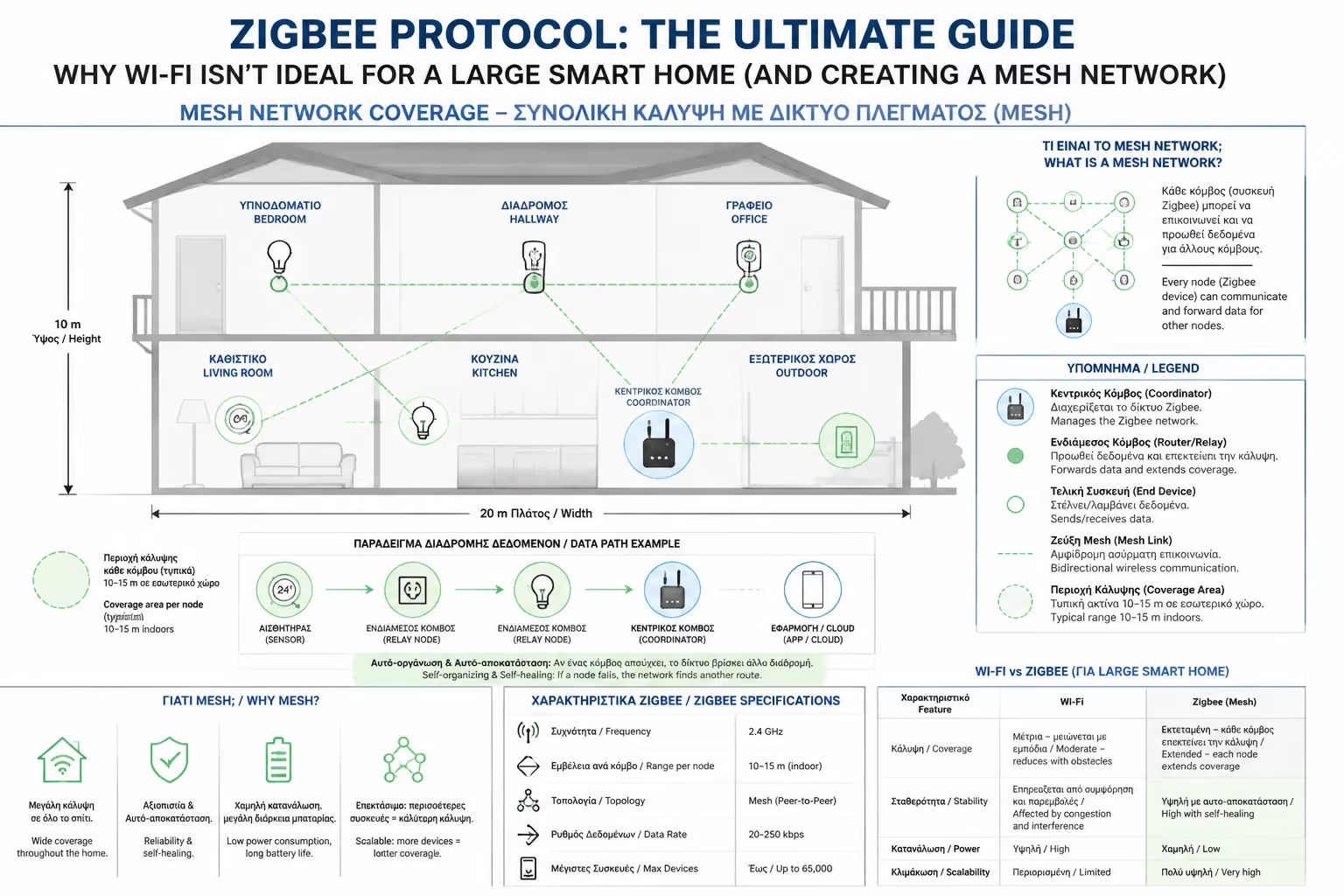
EVERY Zigbee device that takes permanent power from the socket (e.g. smart lamps, smart sockets, smart relays on the wall) also works as a Signal Repeater (Repeater).
If the central "brain" of the system is in the living room, and you put a sensor in the garden, the sensor does not need to reach the living room. It sends its signal to the porch smart light bulb, the light bulb gives it to the kitchen smart socket, and it delivers it to the living room!
If you pull the kitchen smart plug out of the wall, the network doesn't collapse. The system instantly reorganizes itself, and finds "another path" (eg through the corridor lighting) to pass the signal. The more Zigbee devices you add, the stronger and more seamless your network becomes.
The only "downside" of Zigbee is that your phone does not have a Zigbee antenna. Therefore, you cannot control a Zigbee bulb directly.
You need a "translator". This is called a Zigbee Gateway (or Hub, or Coordinator). It's a little box that connects to your home Wi-Fi (or Ethernet) and broadcasts Zigbee.
Furthermore, because the network is local, if the internet goes down in your neighborhood, the Zigbee Gateway continues to talk to the sensors and switches as normal (Local Execution). Scripts (eg "open the door, turn on the light") are executed instantly, without "traveling" to Servers in China.
The correct architecture of a modern smart home divides the roles:
By building a Zigbee network, you take a huge weight off your Router, reduce power consumption and get a system that reacts in fractions of a second.
Next Step: We solved the network issue. But there is another problem: If you buy a Xiaomi Hub, it only talks to Xiaomi devices. Philips Hub only talks to Philips. This war of "closed ecosystems" has plagued users for a decade.
We continue to the next guide, where we look at the solution that changes the world of technology: What is Matter (Standard): How the new global protocol finally unites Apple, Google, Amazon and Samsung devices.
Return to category.
Go to categoryReturn to the central guide.
Go to guide