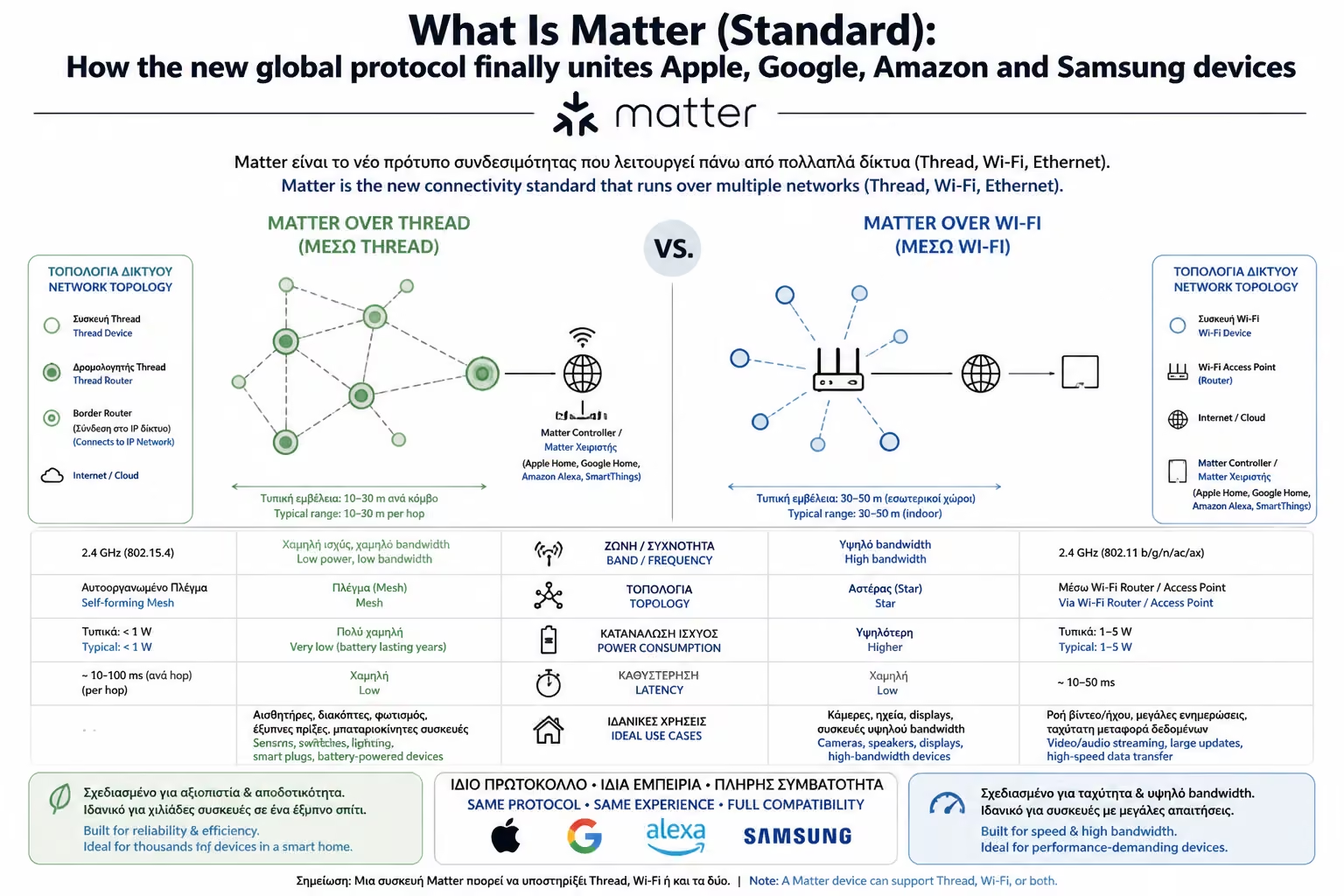
Wi-Fi & Ethernet
For devices that require a lot of bandwidth (eg security cameras, TVs) or are permanently plugged in.
If you've been involved with Smart Home in the last decade, you've definitely experienced the "Compatibility Nightmare". Have you ever gone to an electronics store to buy a smart plug and had to frantically fumble through the box to see which logo is on it: "Works with Apple HomeKit," "Works with Google Assistant," or "Works with Alexa"?
If you had an iPhone and your spouse an Android, you often had to use different apps to turn on the same light. The market was divided into "closed ecosystems" (Walled Gardens), where each company tried to lock you into its own products.
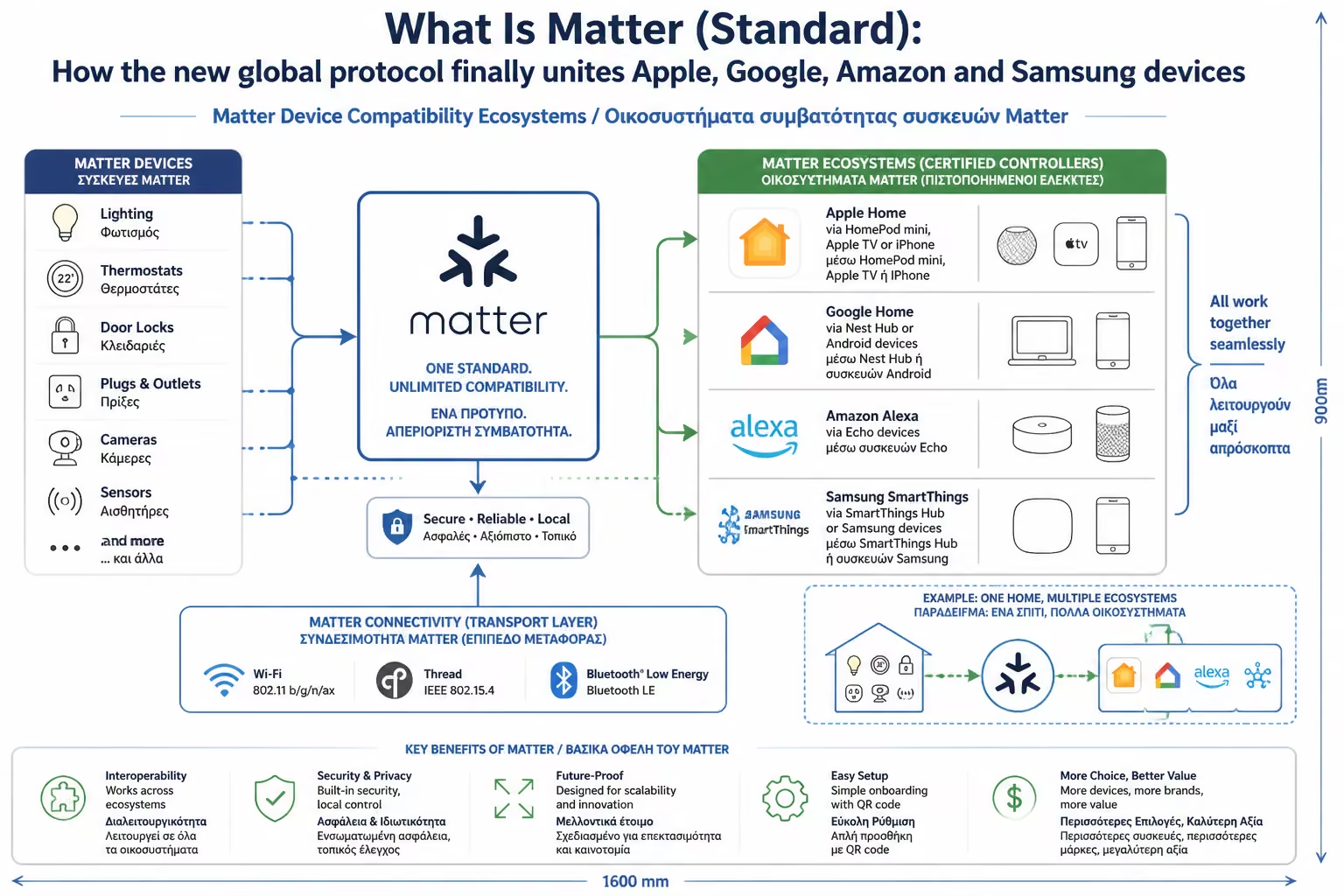
Entering 2026, this technological "Middle Age" has come to an end. The biggest competitors on the planet (Apple, Google, Amazon, Samsung), along with hundreds of other manufacturers, sat down at the same table under the umbrella of the CSA (Connectivity Standards Alliance) and created Matter. As engineers, we see Matter not just as another technology, but as the biggest revolution in the history of building automation. Let's see how it works.
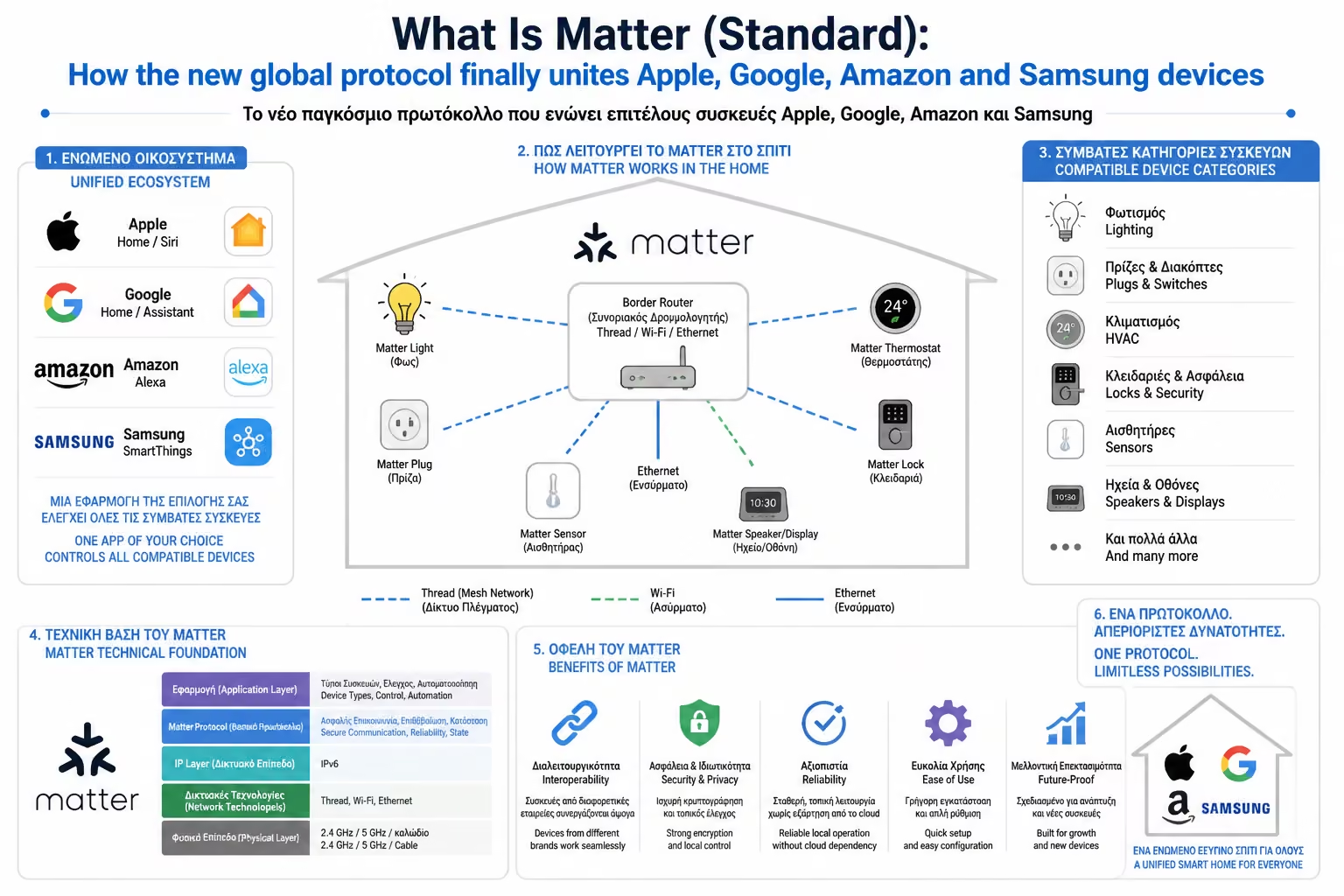
Matter is not a new kind of wireless signal (it doesn't broadcast anything new over the air). It is a Common Communication Language (Application Layer Protocol).
Imagine that until yesterday, Philips' smart light bulb spoke French, Nest's thermostat spoke Spanish, and Apple's speaker spoke English. Matter is the single, universal translator. If a device has the "Matter" logo on its box, it's 100% guaranteed to work seamlessly with your ecosystem of choice, regardless of who made it.
Since Matter is language, it needs a "road" to travel. The protocol relies exclusively on IP (Internet Protocol) networks. Matter devices communicate using:
What is Thread? In the previous article we praised Zigbee for its low battery consumption and Mesh Network. Thread is practically the "evolution" of Zigbee. This is also a Mesh Network (each bulb relays the signal to the next), but with a huge difference: It is based on the IPv6 protocol. This means that Thread devices directly speak the language of the internet. They don't need the "translator" (the manufacturer's proprietary Hub) that Zigbee needed.
For devices that require a lot of bandwidth (eg security cameras, TVs) or are permanently plugged in.
This is where the magic for gadgets lies.
Beyond the obvious (that you can buy any brand you want), Matter brings three technical innovations that change your everyday life:
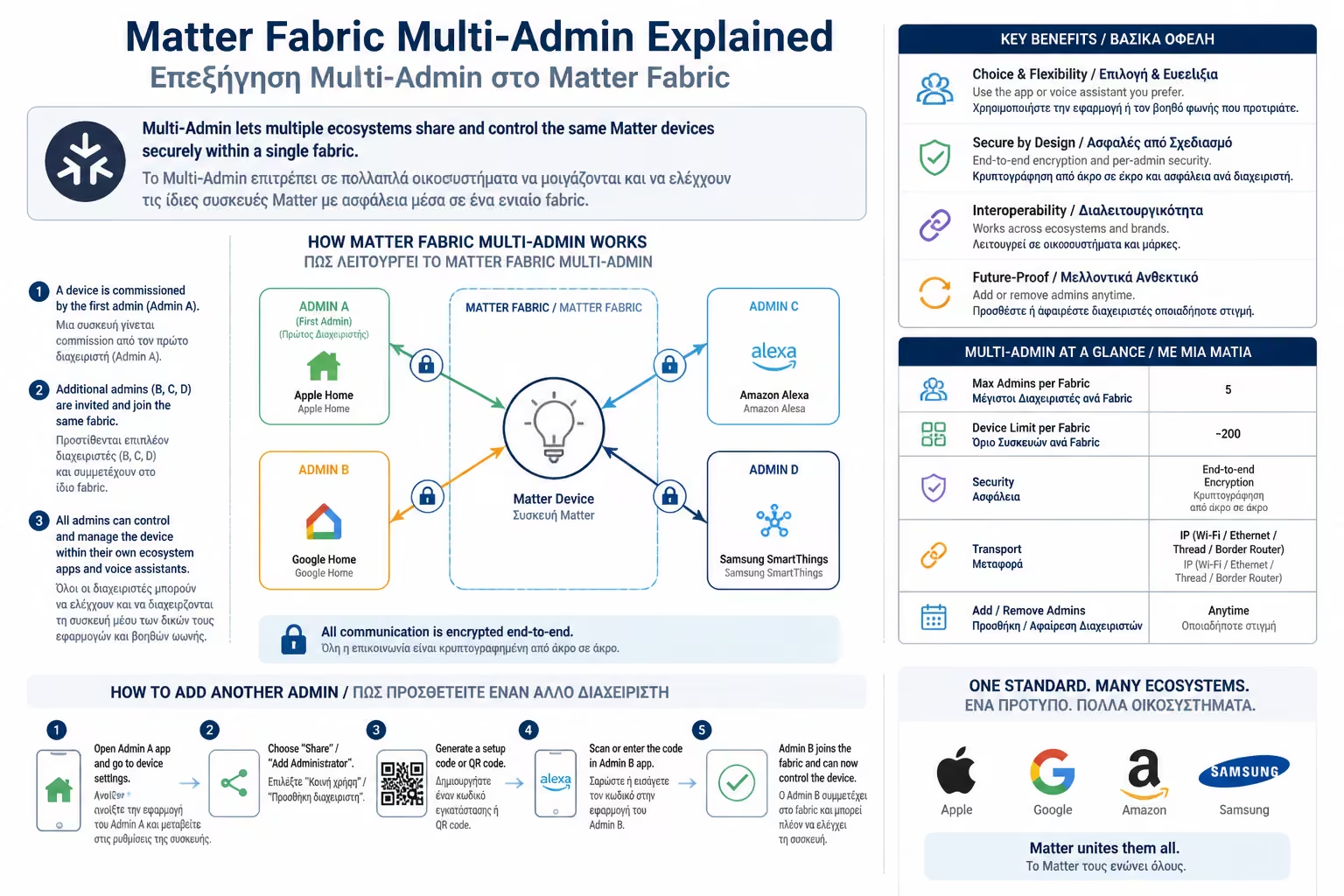
This was the "Holy Grail" of the Smart Home. With Matter, you can add the same smart lock simultaneously to Apple HomeKit (to open with your Apple Watch) and Google Home (to be opened by your kids with Android phones). The device reports its status (Open/Closed) to both ecosystems simultaneously. You don't need to choose a "camp" anymore.
Until yesterday, when you said "Alexa, turn on the light," your voice went to a server in Ireland, Amazon's server talked to TP-Link's server in China, and the command bounced back to your home. If the internet went down, you were in the dark. Matter was designed (by design) to work locally (Local Execution). The devices talk to each other directly over your home Wi-Fi or Thread network. Internet is only needed if you want to check them while away from home. This offers instant response and complete privacy.
Forget complicated pairings and downloading dozens of different apps from unknown manufacturers. All Matter devices come with a standard QR Code. You scan it with your mobile camera (via the Apple, Google or Samsung app) and within 5 seconds the device is safely on your network.
In order to build a Matter / Thread network, you need a "Router" that will bridge the Thread network (of gadgets) with your home Wi-Fi network. This is called a Thread Border Router.
The fantastic news? You probably already have one in your living room without even knowing it! Devices such as the Apple TV 4K, HomePod mini, Google Nest Hub (2nd Gen), and the newer Amazon Echo, have a built-in Thread Border Router. No need to buy extra equipment. These devices take on the role of "brain" quietly in the background.
Matter is to the Smart Home what USB was to computers: A universal, global standard that eliminates confusion. Now, when shopping for smart devices, you don't need to check if they match your mobile phone. You just look for the Matter logo (the three arrows coming together), knowing that you have in your hands a secure, fast device that won't be "defunct" if you decide to switch ecosystems tomorrow.
Next Step: We talked about the ready ecosystems of Apple, Google and Samsung. But what if you are a Power User? If you have already bought dozens of old devices (without Matter) and want to combine them all into one, ultimate, control screen of your own?
We continue to the next guide: Central Hubs & Gateways: How to unite different brands in one application (Home Assistant, Hubitat, SmartThings).
Return to category.
Go to categoryReturn to the central guide.
Go to guide