Outdoor Perimeter Protection: Beams (photocells), outdoor radar and AI
IP cameras with human/vehicle recognition
We've reached the final (and perhaps most advanced) chapter of our
guide. We have shielded the doors, windows and interiors. But if you
think about it, when the magnetic trap hits the window, it means one
thing: The burglar has already reached the building and probably already
damaged the frame (breaking/burgling).
The ultimate goal of a security system, especially for detached houses,
villas or ground floor apartments with a garden, is Deterrence. We have
to find the intruder before he touches the wall of the house. This is
where Perimeter Protection comes into play.
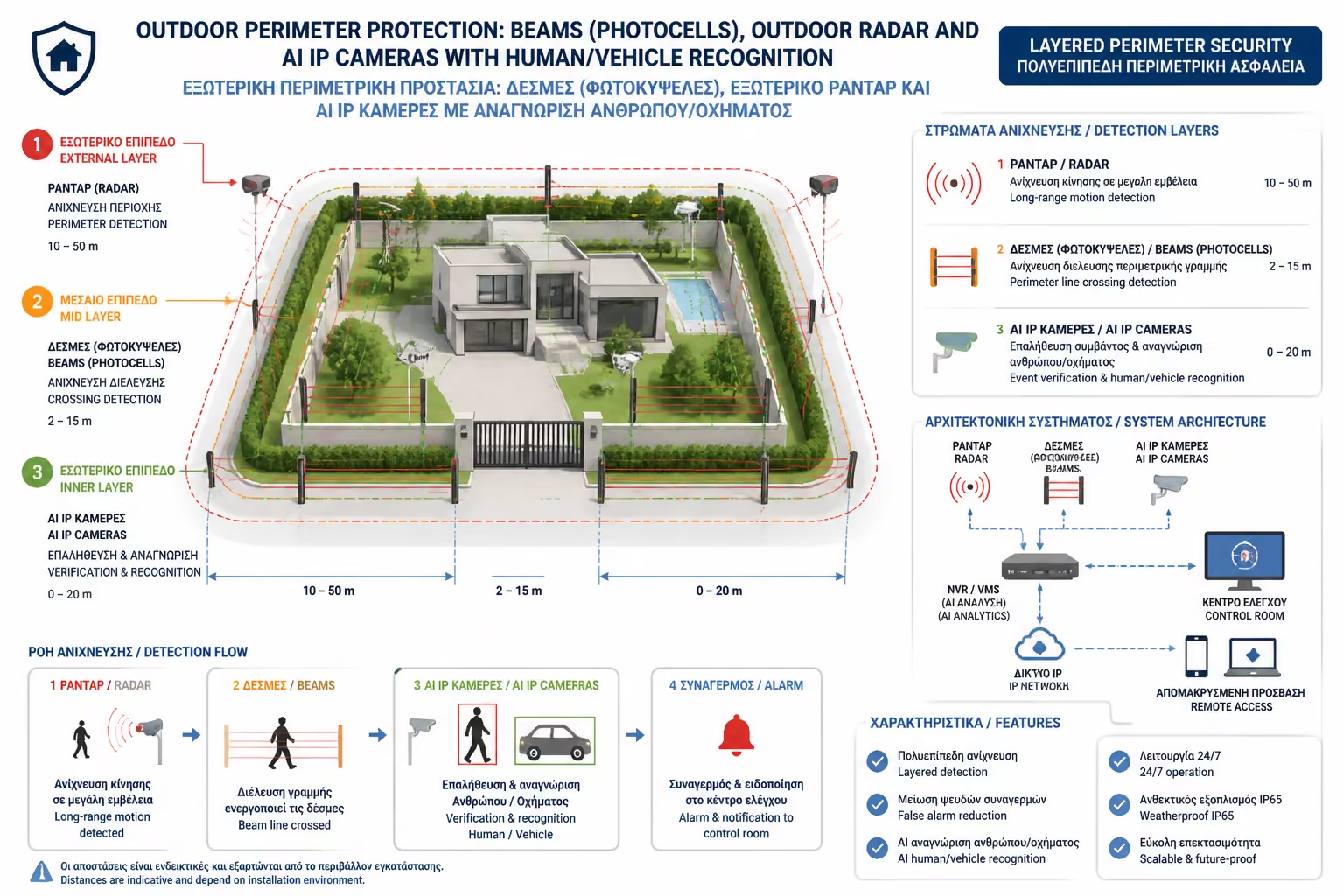
As engineers, we divide external security into three technologies. Each
has its own strengths and weaknesses. Let's see how you can build the
"invisible wall" around your property without waking up the
neighborhood every time a stray cat walks by.
1. The Classic Solution: Active Infrared Photocells (Beams)
Beams are the most traditional method of perimeter protection, also
known from action movies (as invisible lasers).
How they work
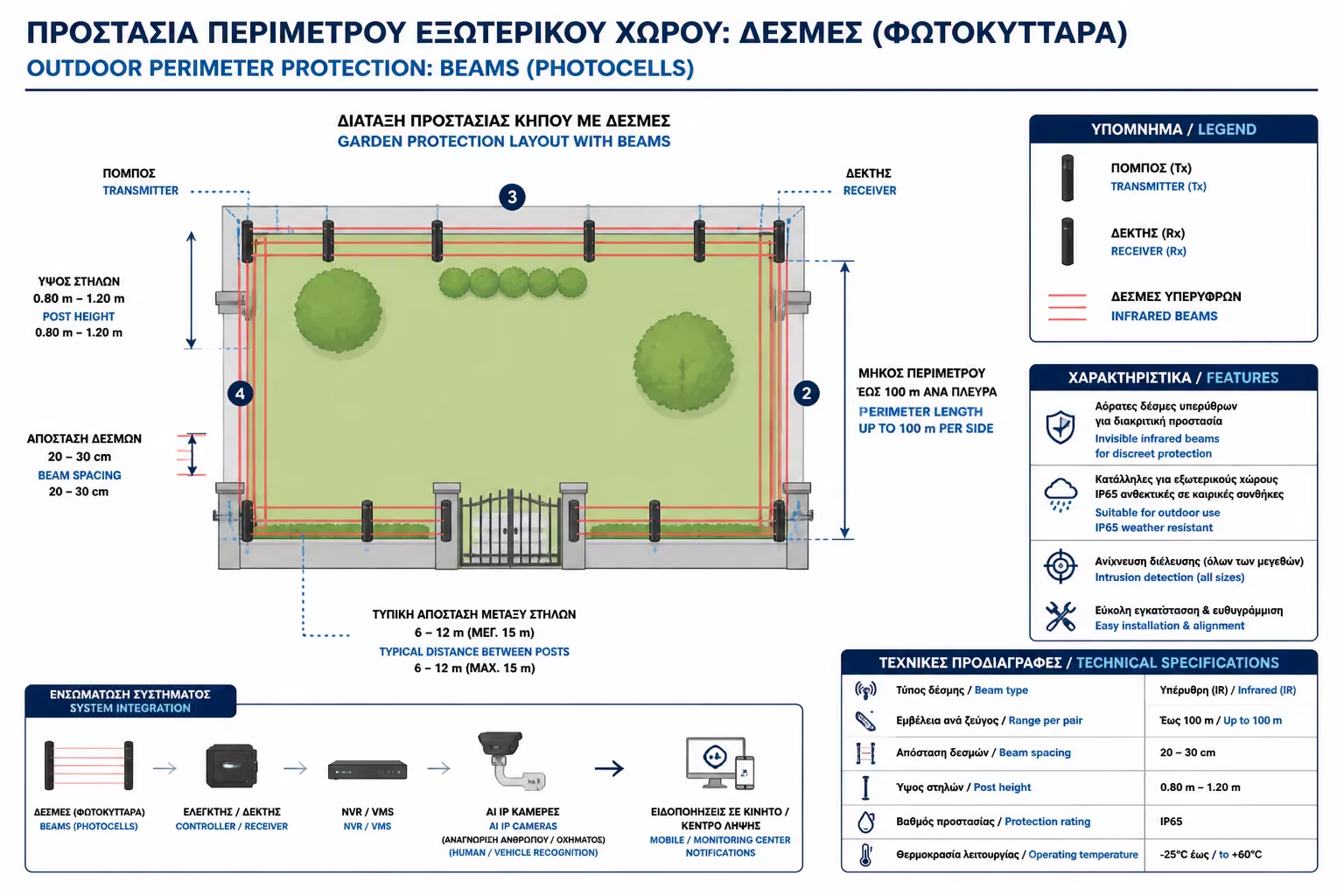
They consist of two devices (a Transmitter and a Receiver). They are
placed facing each other (e.g. at the two ends of the garden
paddock). The transmitter sends 2, 3 or 4 invisible infrared beams.
If someone walks between them and "cuts" the beams at the
same time, the alarm goes off.
The Advantages
They create an absolutely strict, straight "line" of
defense (up to 100 meters long). They do not "see" what is
going on beyond, so they are not affected by traffic on the road.
The Disadvantages
They require perfect mechanical alignment. They are vulnerable to
natural obstacles. If you plant a tree and its leaves grow into the
middle of the beam, the system will jam. Also, in extremely dense
fog, the beams can be refracted, causing false alarms.
2. Volumetric Coverage: Outdoor PIR/MW Radar
If you don't want a straight line, but want to protect an entire
volume (eg the entire balcony or patio), use outdoor radars (Motion
Detectors).
The Danger of False Alarms: The external environment is chaotic. The
sun warms the walls, the wind shakes the awnings, the birds fly and
the pets run. A simple, cheap radar will beep non-stop.
The Solution - Dual Tech & Pet Immunity: Professional outdoor
detectors (such as Optex series or Ajax outdoor radars) are
"monsters" of technology:
They use Infrared (PIR) to see the heat, but also Microwave to
confirm the object's mass. The alarm only goes off if both
technologies agree.
They ignore animals (Pet Immunity): Their algorithms (or their
multiple, overlapping lenses) are set to ignore objects below a
certain height or weight (eg under 20kg or 80cm), leaving your dog
to stroll around the garden undisturbed.
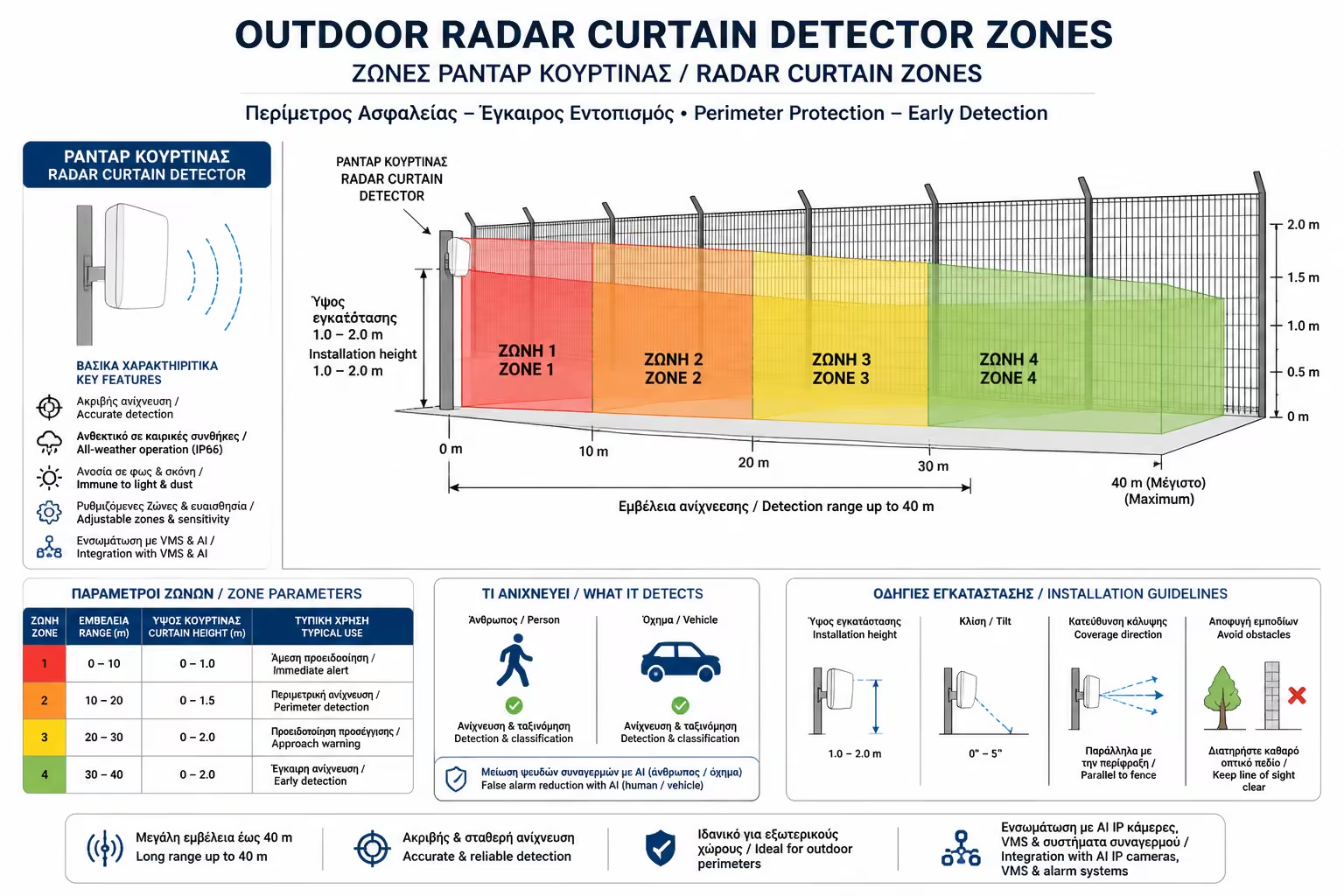
There are also "Curtain Detectors" type radars, which are
placed high and create a "waterfall" of protection right
next to the wall of your house (so that you can move freely in the
garden, but if someone comes within 1 meter of the wall, they will
be detected).
3. The New Era: AI IP Cameras with Active Deterrence
This is where the biggest revolution of the decade is happening. The
security camera stopped being a passive recorder (that just shows you
what was stolen after the break-in) and turned into the ultimate
perimeter defense sensor.
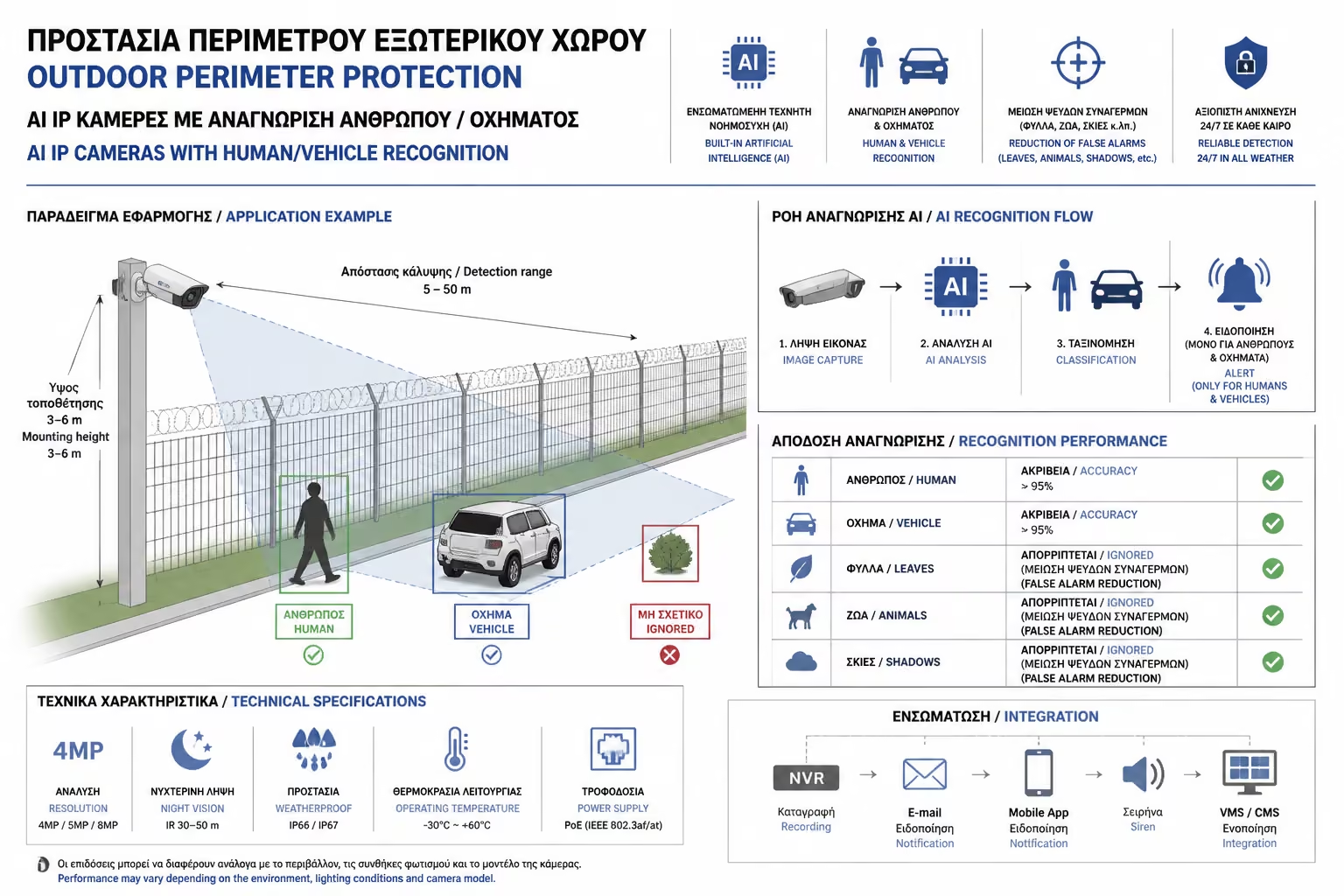
Artificial Intelligence (AI Analytics): Modern cameras (eg AcuSense
series from Hikvision or TiOC from Dahua) have built-in AI chips. You
can "draw" a digital line on your mobile screen (Line
Crossing) or a digital box around the pool (Intrusion Zone).
The camera analyzes the image live. If a shadow passes, a tree
moves, or a fox walks in, the camera simply ignores them (reducing
False Alarms by 95%).
But if the AI recognizes a human silhouette or a vehicle, it
activates!
Active Deterrence: This is the "weapon" of the camera. Once
he catches the man:
Turns on powerful, built-in Red/Blue Strobe lights (flashes like a
patrol car).
The camera's built-in speaker plays a warning in Greek:
"Caution, the area is under surveillance!" or weighs a
110dB siren.
Instantly sends a Push Notification with a photo to your mobile.
The burglar, seeing the light and hearing the voice, realizes that he
is not just caught, but that someone is "watching" him at
that moment. Abandonment is almost certain.
4. The "Pre-Alarm" Strategy
Because the outdoors remain unpredictable (even with AI), engineers
avoid connecting perimeter protection directly to central, massive
neighborhood sirens.
The correct programming practice is Pre-Alarm (Warning Zone): If
someone jumps the paddock and is caught by the Beams, external radars
or cameras, the system does NOT wake up the neighborhood. Instead:
The buzzer (Chime) on the internal keyboards is annoying.
All outdoor garden lights automatically turn on (Smart Home
Integration).
The external siren emits only 2-3 sharp "beeps" (Warning
beeps).
If the intruder ignores the warning, goes ahead and breaks the balcony
door (triggering the internal magnetic trap), then and ONLY then, the
siren screams at 100% and a signal goes out to the Police.
Summarizing
Perimeter protection is the "luxury" part of security, the one
that allows you to sleep soundly with your windows half open on summer
evenings. The combination of dual-technology external radars for the
alarm, and AI cameras with active deterrence, creates an impenetrable,
intelligent shield that sends burglars to... their next target, long
before they even get close to your home.