
Smart Home, Building Automation (BMS) & Security
Return to category.
Go to categoryIn previous articles we've demystified Wi-Fi, demystified Zigbee for lighting, and seen how Matter is bringing the world together. But there is a "silent ruler" in wireless automation that security companies have blindly trusted for years: Z-Wave.
Many users confuse Z-Wave with Zigbee, thinking they are the same thing. Although both build "Mesh Networks" and require a central Hub to operate, technologically they are in completely different camps.
As engineers, when we are asked to set up a villa's wireless alarm, smart locks (Smart Locks) or sensors in houses with "heavy" construction (stone walls, reinforced concrete), our first choice is Z-Wave. Let's look at the science behind this protocol and why it justifies its slightly higher cost.
The biggest and most critical difference of Z-Wave from Wi-Fi and Zigbee lies in the transmission frequency.
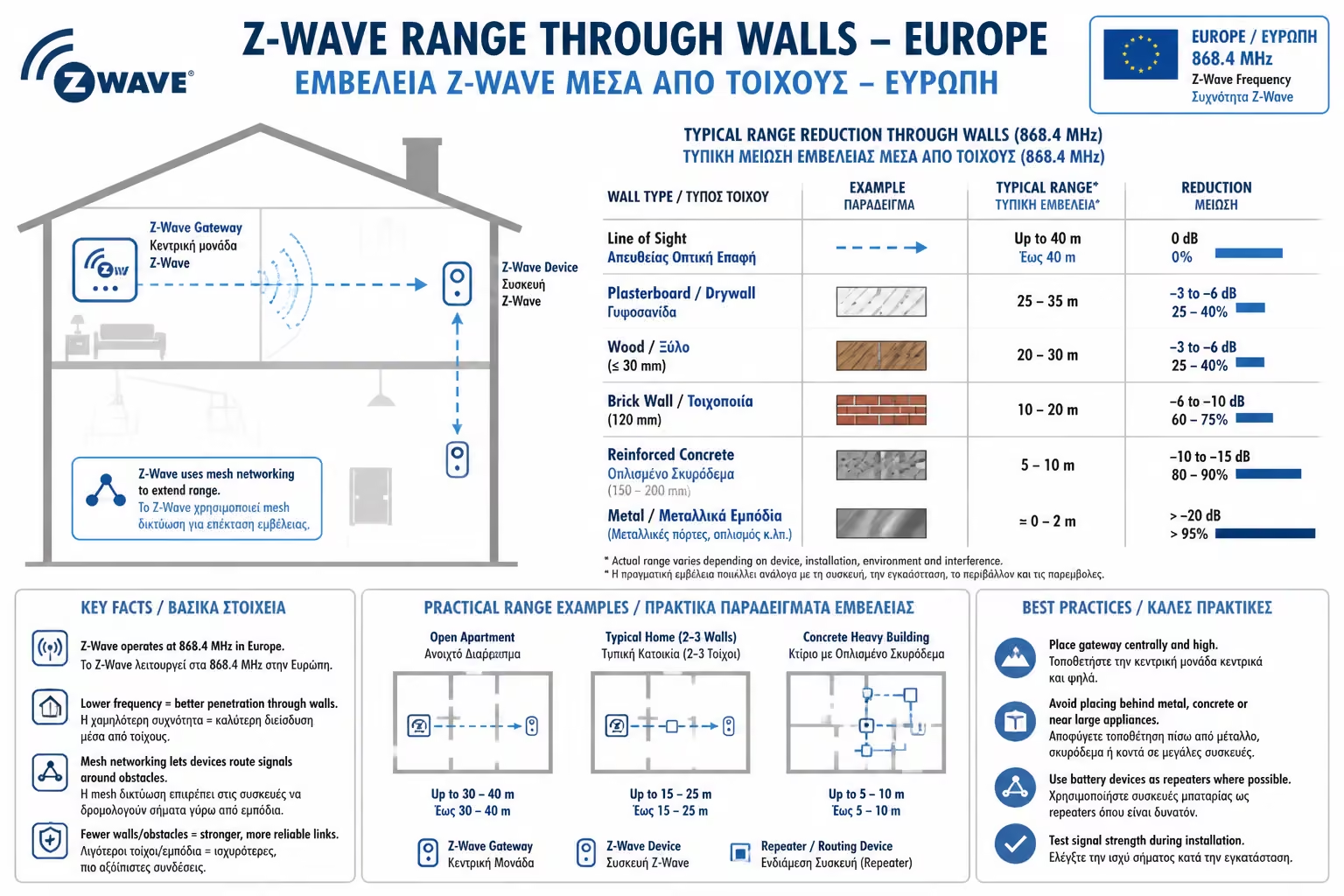
What does this mean in practice? In the physics of radio waves there is an unbreakable rule: The lower the frequency, the longer the wavelength. Z-Wave's lower frequency waves penetrate walls, floors and obstacles much more easily than 2.4 GHz signals.
Where a Zigbee sensor struggles to "talk" to the Hub if there are two thick brick walls in between, Z-Wave's signal typically gets through comfortably, offering up to 30% to 40% more range inside a home.
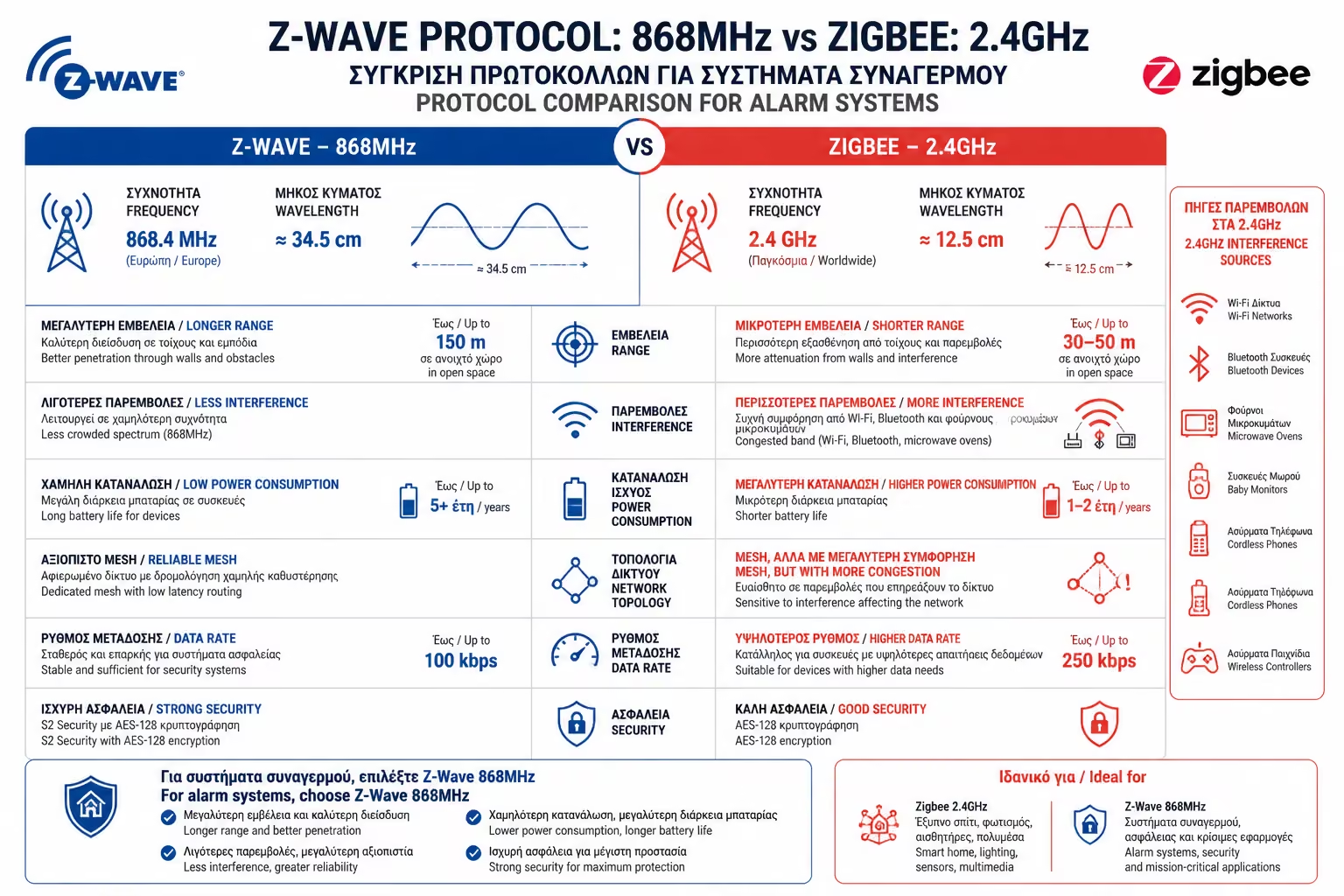
The 2.4 GHz frequency is the most "busy avenue" of modern technology. Your home Wi-Fi, your 10 neighbors' Wi-Fi, your headset's Bluetooth, Zigbee, baby monitors, and even your microwave (which makes "noise" at 2.4 GHz) are crowded in there. This congestion often causes dropped packets.
Z-Wave, on the other hand, runs on its own, private 868 MHz highway. No other home internet devices are allowed to broadcast there. The result is an absolutely "clean" signal, without interference. This is why commands in Z-Wave are always executed with 100% reliability.
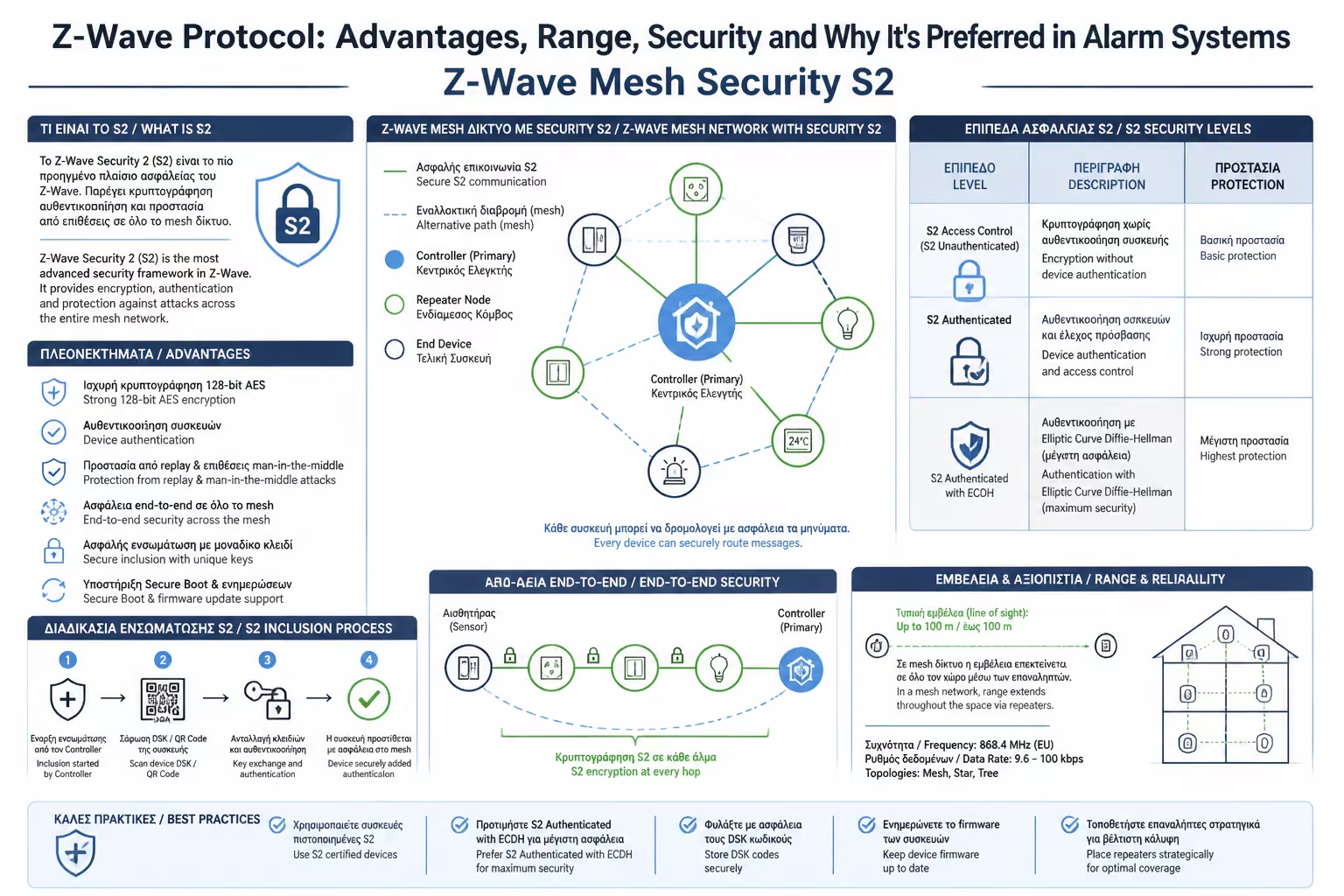
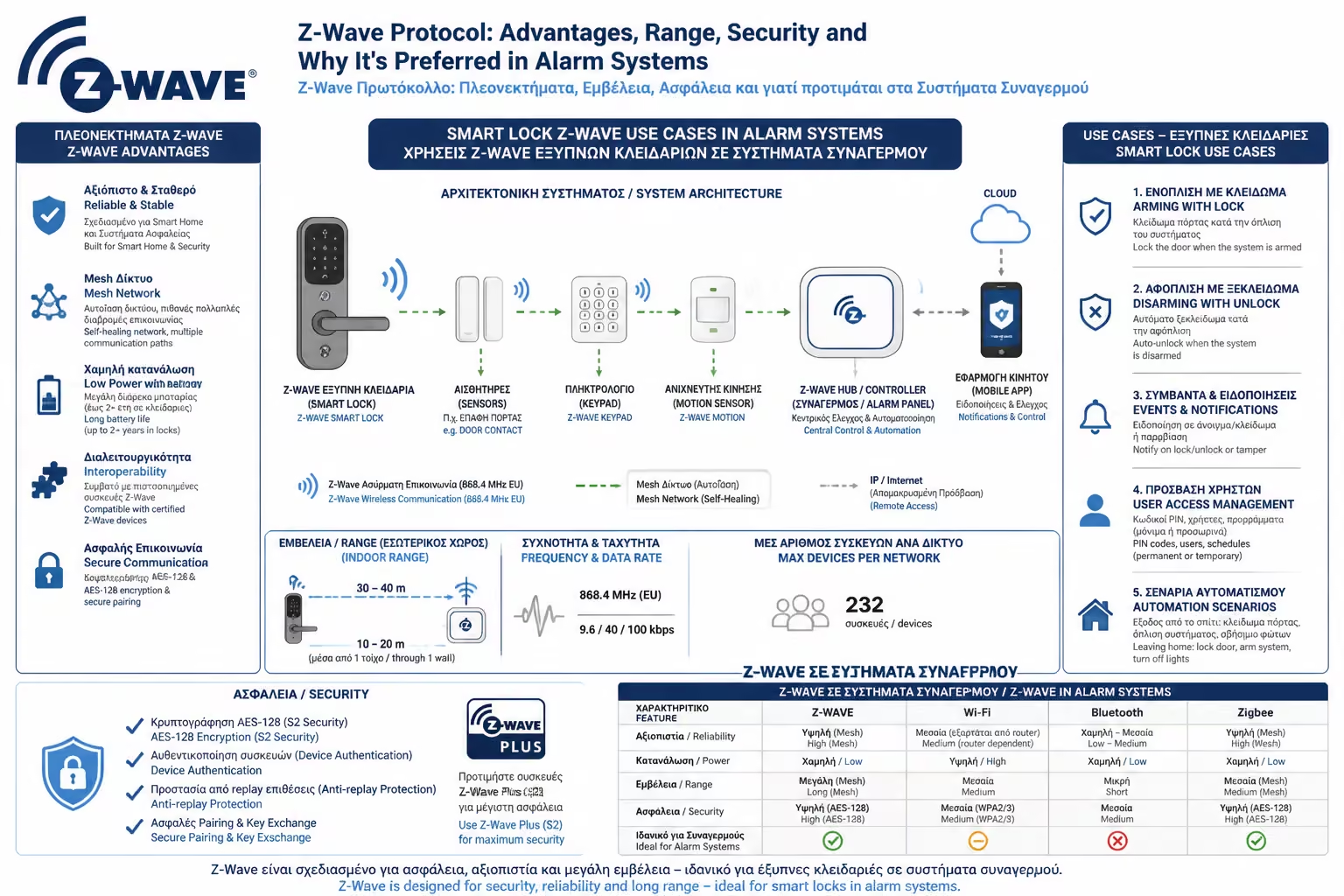
Why do leading wireless alarm systems (such as Amazon's Ring Alarm or Abode) and smart locks (Smart Locks) from Danalock and Yale use Z-Wave almost exclusively? The answer is Security 2 (S2).
While Zigbee is an open standard, Z-Wave is a tightly controlled technology (owned by Silicon Labs). The newest S2 security protocol:
One of the "complaints" of Zigbee users is that if they buy a cheap sensor from China, it may not work properly with the Philips Hub. Zigbee allows manufacturers to tinker with the code.
In Z-Wave, there is no anarchy. In order for a manufacturer to print the "Z-Wave Plus" logo on the box of their device, they must go through rigorous, expensive certification checks by the Z-Wave Alliance. If you have a Z-Wave Hub (e.g. SmartThings, Hubitat, Home Assistant with Z-Wave stick), any Z-Wave device is guaranteed to work, regardless of brand, by default.
Of course, not everything is perfect. Z-Wave has two specific disadvantages that you should be aware of:
Engineers' strategy for a reliable Smart Home is often mixed:
By choosing Z-Wave for your security, you're investing in a protocol that offers unmatched wall penetration, zero interference, and bank-grade encryption.
Next Step: We solved the issue of wireless networks, but as we said at the beginning of the category, the absolute "king" for a new build is cables and KNX.
If you are building your house now, we continue to the extremely critical technical guide: BUS Wiring (for KNX): Rough-In Requirements, Topologies and Electrical Panel Design.
Return to category.
Go to categoryReturn to the central guide.
Go to guide