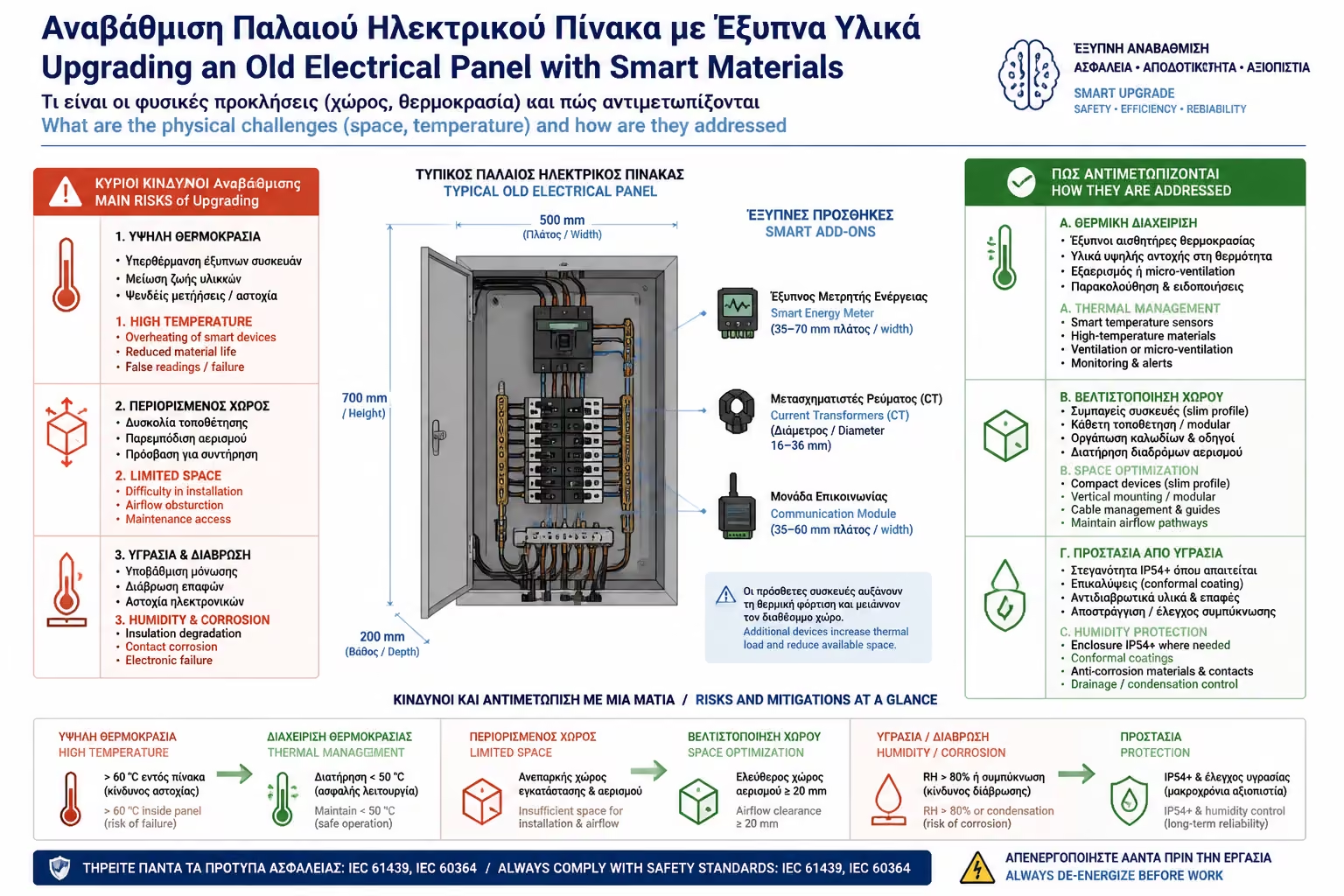
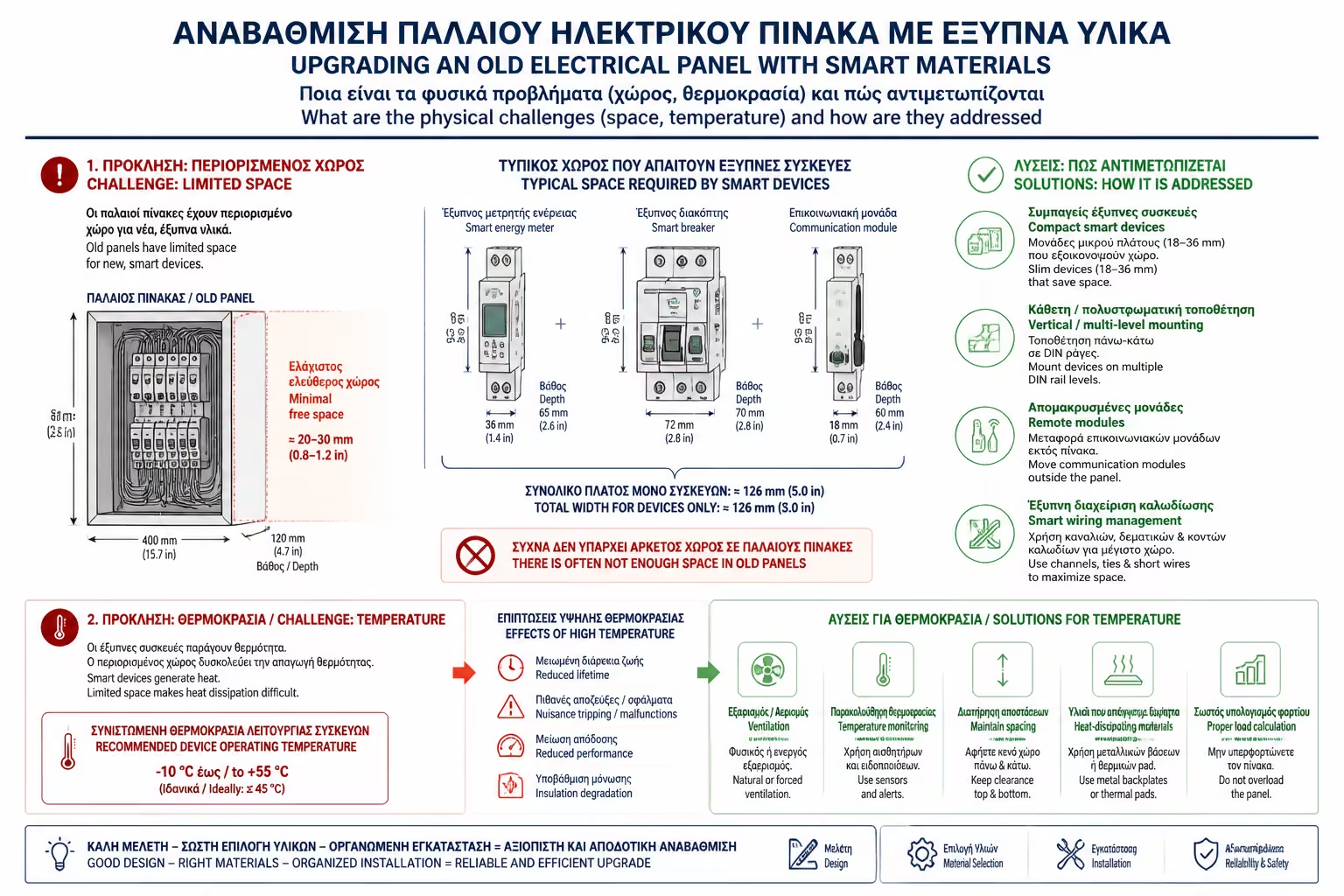
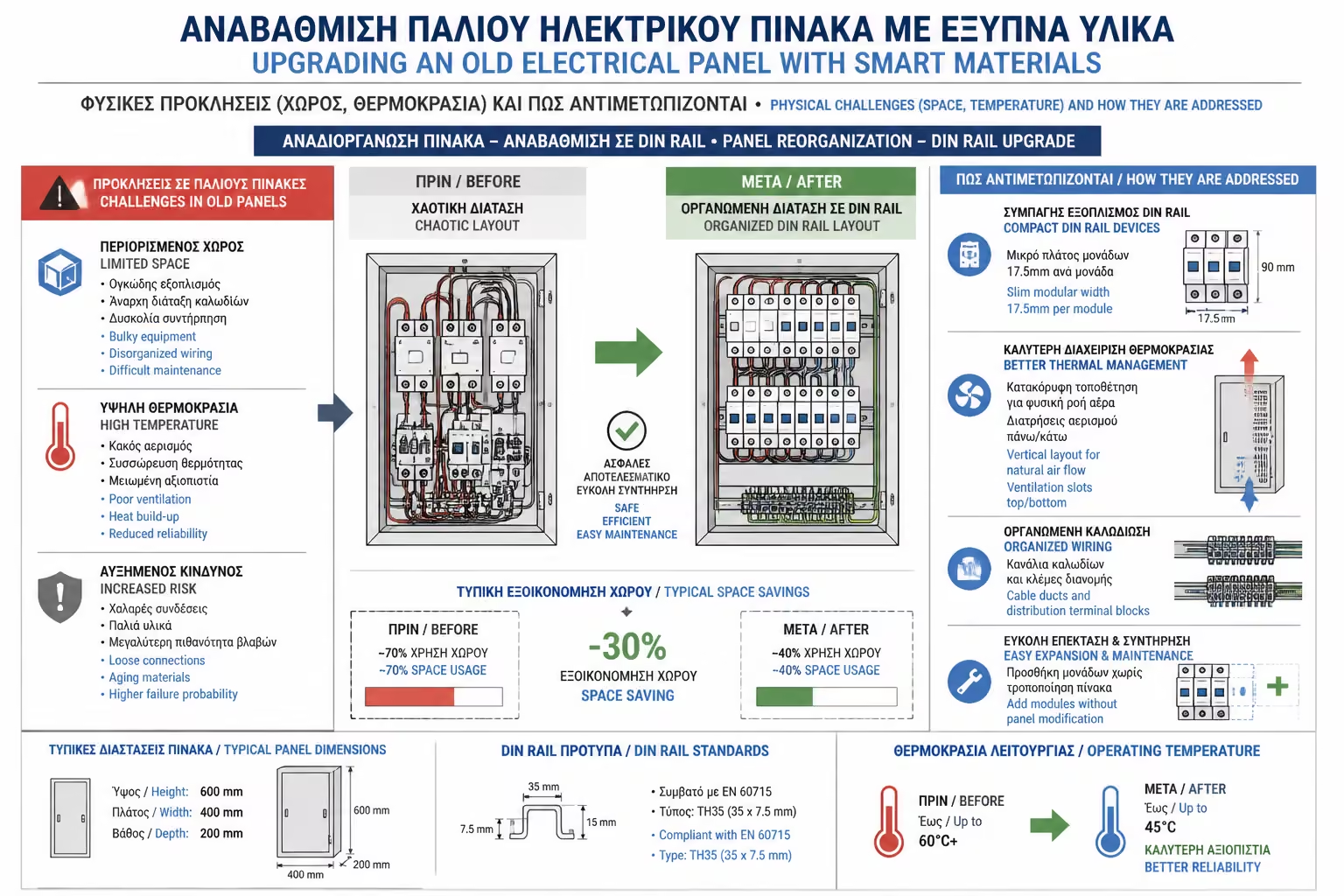
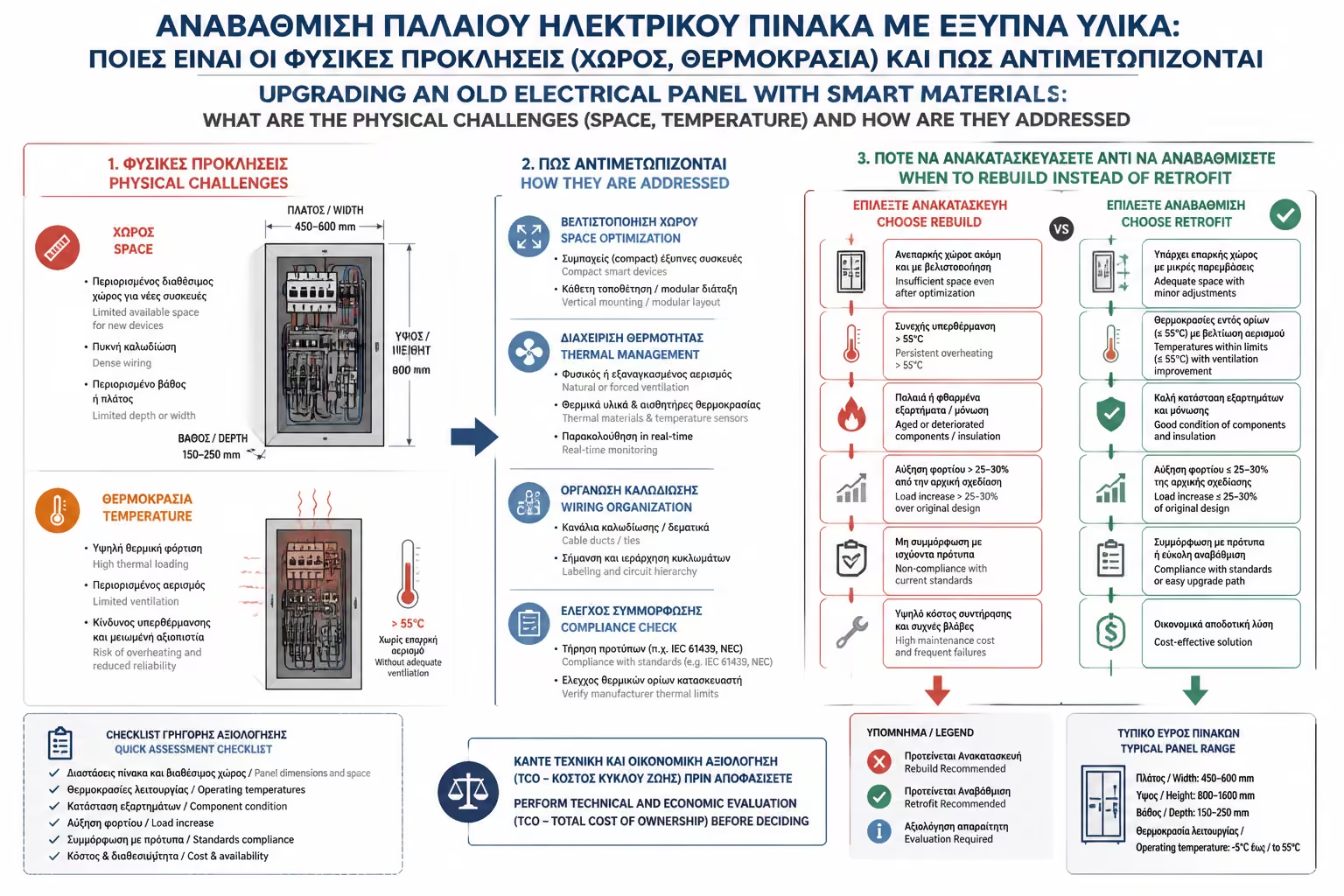
Upgrading an Old Electrical Panel with Smart Materials: What are the physical challenges (space, temperature) and how are they addressed

In the previous article we saw how professional and safe it is to control your home by placing the smart equipment (DIN Rail Relay) directly on the central electrical panel. This is the ideal scenario in a new construction.

But what happens when you decide to modernize your apartment, which was built in 1990? You open the panel door and instead of the "plenty of space" you see in the promotional videos, you're faced with a mess of tangled wires, old fuses and no free space.

Upgrading an existing (old) panel with Smart materials is not just a matter of purchasing equipment. As engineers, we face 4 specific physical challenges. Let's see what they are, how they are solved, and what is the biggest mistake beginners make trying to "squeeze" technology where it doesn't fit.

(Caution: Any work on the electrical panel must ONLY be done by a licensed electrical installer. The voltages inside it are lethal).

1. The Limitation of Wiring (What You REALLY Control)

The first "coolness" of the owner. In an old house, the wires from the living room switch go directly to the living room lamp. They do not return to the board.

So if you put a smart relay in the panel on the "Living Room Light" fuse, you won't just control the light. You'll be turning on and off the entire line, which often includes a few outlets!

What we actually check from the panel in old houses: We focus exclusively on Dedicated Lines. These are lines that leave the board and go to ONE device only. Such are:

  • The Electric Water Heater (The No. 1 Smart Upgrade).
  • The Electric Oven.
  • Air conditioners (if they have their own, separate insurance).
  • The central outdoor lighting of the garden.
Illustration for 1. The Limitation of Wiring (What You REALLY Control)

2. Challenge 1: The Lack of Space (Empty DIN Positions)

Illustration for 2. Challenge 1: The Lack of Space (Empty DIN Positions)

Each smart rail relay (eg Shelly Pro 1) occupies the space of a simple fuse (1 Element / 1 Module = 18mm). If you want to control the water heater, you need space for the smart relay (1 position) AND the 25A power relay (1 position). Total: 2 vacancies. Old tables rarely have free space.

The Solution: * Compaction: The electrician can replace old, bulky mechanical timers or bulky RCDs with more modern, "Slim" materials, freeing up valuable space.

Sub-panel

If the central panel is suffocatingly full, the cleanest solution is to place a small, plastic, wall-mounted panel (e.g. 4 or 8 seats) right next to or below the central panel. The electrician "bridges" the wires, and the new panel exclusively houses all the Smart equipment.

3. Challenge 2: Thermal Throttling

Unlike a "dumb" plastic fuse, a smart relay has a board, microprocessor, power supply and Wi-Fi antenna inside. All of these generate heat.

If you put 4 smart relays next to each other, in a closed panel without ventilation, in August, the temperature inside them will exceed 70°C-80°C. Quality relays (like Shelly's) have an internal temperature sensor and Over-temperature Protection function. If they get too hot, they'll just "drop" the power themselves (so they don't catch fire) and the house will be without power!

The Solution: We let the equipment "breathe". Good practice dictates that we leave a gap of half a cell (9mm spacer) between every two smart relays. We also place them at the lowest point of the panel, as heat always travels upwards.

Illustration for 3. Challenge 2: Thermal Throttling

4. Challenge 3: The Faraday Cage (Weak Wi-Fi Signal)

Illustration for 4. Challenge 3: The Faraday Cage (Weak Wi-Fi Signal)

If your electrical panel is metal (as the majority are in old commercial premises or old apartment buildings), it acts as a Faraday Cage. Metal blocks radio frequencies. You will close the panel door, and immediately your smart relays will go "Offline" from your mobile because they will lose the signal of the Router.

The Solution:

Using Ethernet (LAN)

The ideal solution. If the relays (eg Shelly Pro) have an ethernet port, you run an internet cable into the panel. Zero disconnections.

External Antenna

If you buy Z-Wave equipment or special Wi-Fi relays, many have a small plug for connecting an external antenna, which you stick with a magnet to the outside of the metal lid of the panel.

(Note

If your panel is plastic, you have no such problem, the signal passes normally).

Summarizing

Upgrading an old electrical panel is completely doable and often the most profitable step (especially for water heater control). However, it is not a "Plug & Play" job. It requires the assistance of an experienced electrician who will do a Space Management and Thermal Study, ensuring that your home will not only become "smart", but will above all remain safe.

Related Articles

Smart Home, Building Automation (BMS) & Security

Return to category.

Go to category

Preview