Smart Thermostats (Nest, Tado, Netatmo, etc.): Are they worth their money to save in Greece and how are they connected to the boiler?

If you ask someone what a Smart Home is, the first image that usually comes to mind is a Google (Nest) circular thermostat glowing on the wall. Companies (Nest, Tado, Netatmo, Ecobee) promise reductions of 20% to 30% on the heating bill.

But as engineers, we have to be honest with you: The marketing of these companies was written for American and Northern European homes. The Greek reality is completely different.

So is it worth paying €200 - €250 to replace your old thermostat with a touchscreen? Let's dispel the myths, explain when they really save money, and how you should connect them to "unlock" the potential of your boiler.

1. The Myth of "Learning" and Greek Construction (Thermal Mass)

Nest's biggest selling point is that it "learns" your routine. It sees when you leave for work and turns off the heating, and turns it back on before you return. In the USA, where the houses are wooden (light construction) and heated with ducts in 15 minutes, this works perfectly.

In Greece, houses are made of reinforced concrete and brick (Huge Thermal Mass). If your smart thermostat completely shuts down the boiler because you're gone for 4 hours, the walls will "cool down". When you return, the boiler (especially if we are talking about a heat pump or underfloor heating) will have to work at 100% power for many hours, "burning" huge amounts of energy just to reheat the cold floors. At the end of the month, this "on-off" can cost you more than if you had the old thermostat fixed at 20°C.

Conclusion: In Greece we don't buy a smart thermostat to "turn on and off" the heating like crazy, unless we are away for days. We buy it for the tuning algorithms.

Illustration for 1. The Myth of "Learning" and Greek Construction (Thermal Mass)

2. How they REALLY save: PID & OpenTherm

Illustration for 2. How they REALLY save: PID & OpenTherm

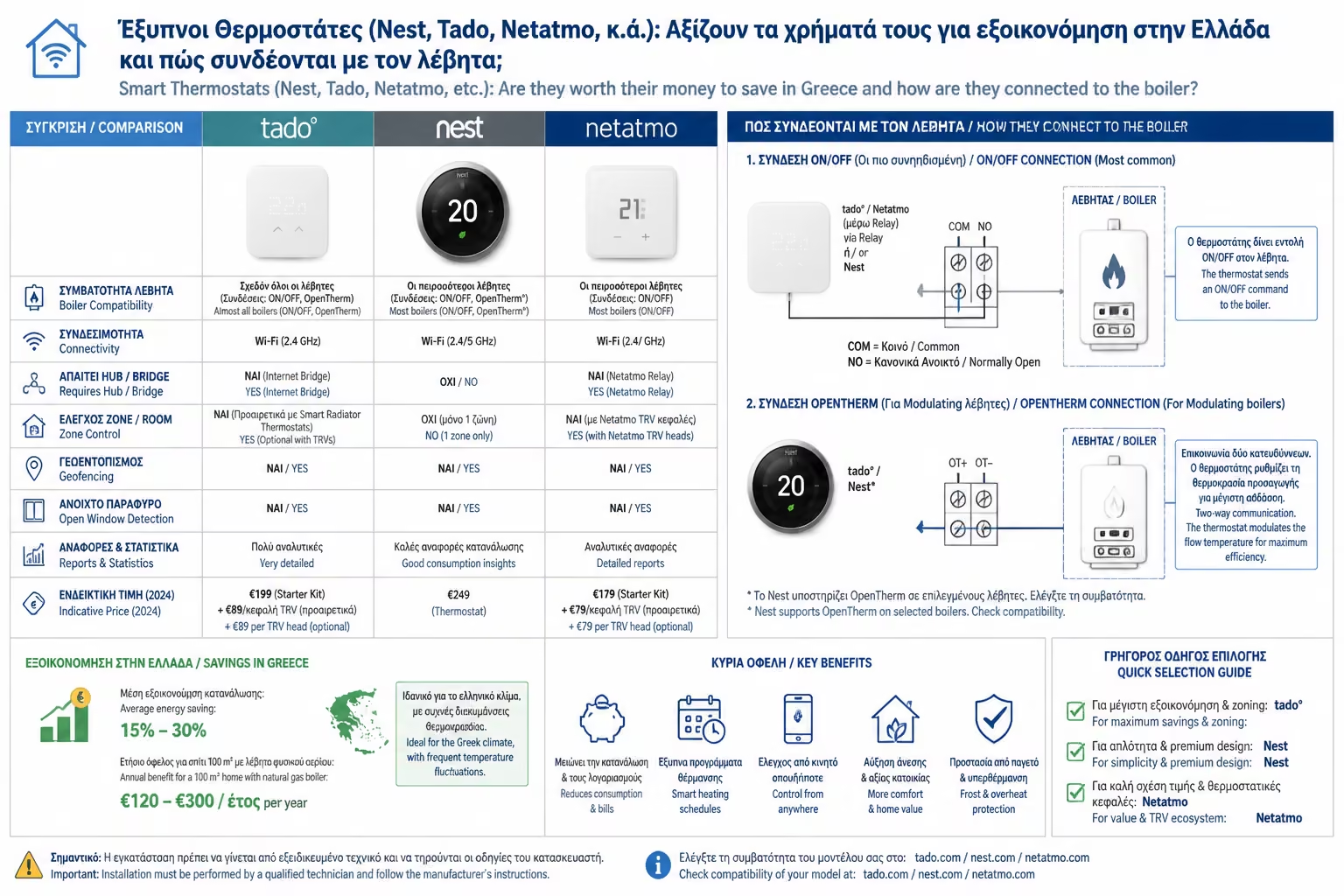
The real value of the smart thermostat lies in its software and the way it talks to the gas boiler or heat pump. There are two ways to connect:

Smart thermostats use PID (Proportional-Integral-Derivative) algorithms. They understand how quickly your home heats up and turn off the boiler earlier (e.g. at 19.6°C), letting the body's residual heat reach exactly 20.0°C without waste.

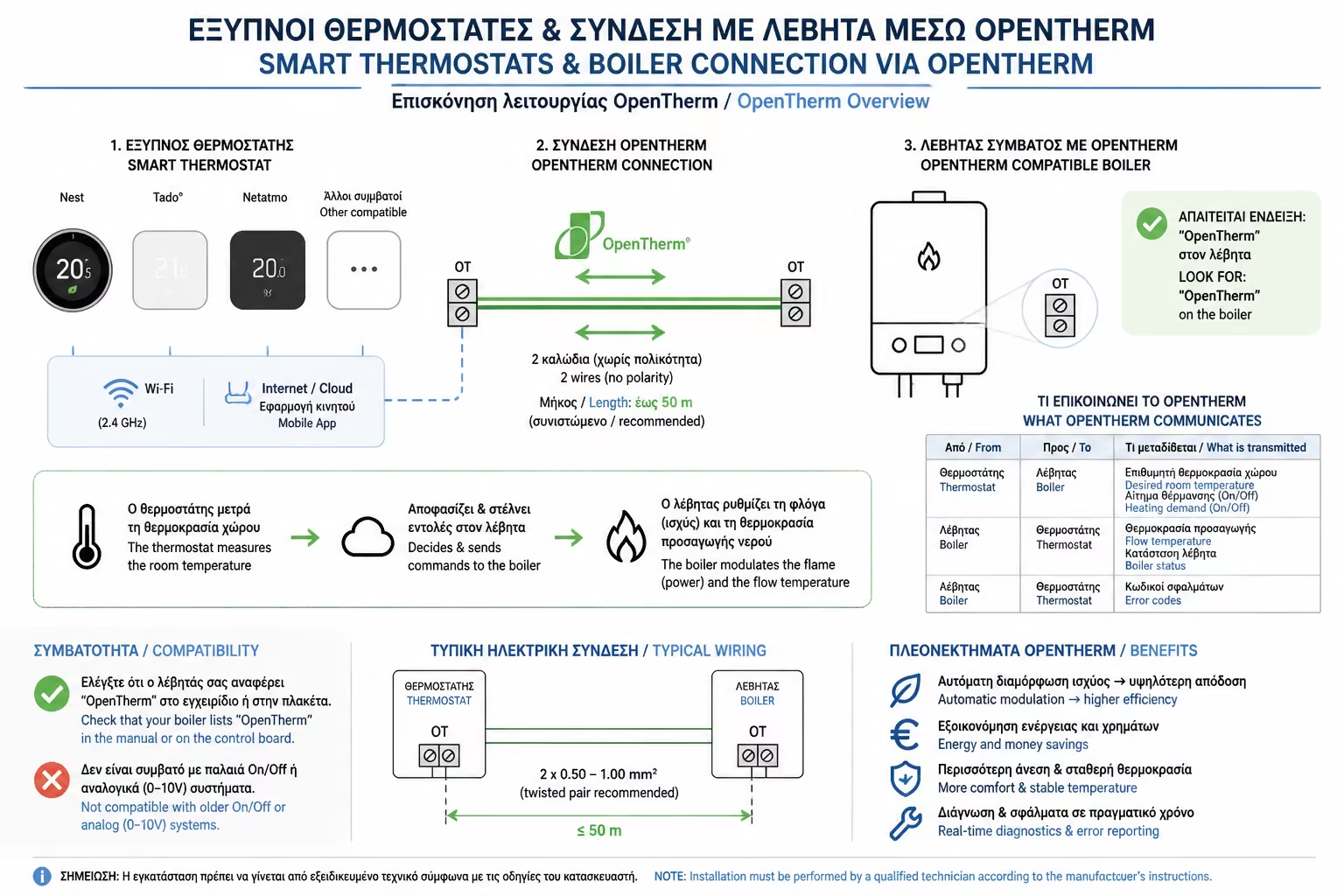
When the electrician/fitter connects them to the OpenTherm's 2 digital wires (rather than the On/Off contacts), the magic happens: The thermostat doesn't just say "On/Off". He's talking to the boiler! "I'm at 19°C and I want to go to 20°C. You don't need to burn at 100% power. Lower your flame to 20% and send me water to the radiators at 45°C, not 70°C." This Digital Analog Function (Modulation) keeps the boiler constantly in the phase of maximum efficiency (condensation), offering real savings of 10-15%.

A. The Old School: On/Off (Relay)

Your old thermostat operates with a "dry contact" (simple short circuit). He says to the boiler: "It's 19°C. Put it on full fire until it's 20°C. Stop." Because the radiators are burning, the room temperature will continue to rise (Overshoot) reaching 21°C. You get hot, you sweat, and you've burned a lot of gas.

B. The "Holy Grail": OpenTherm (Modulation)

If you have a modern gas (condensing) boiler, it probably supports the European OpenTherm protocol. Thermostats such as Tado° and Google Nest (European version) support OpenTherm.

3. Smart Radiator Heads (Smart TRVs)

What if you don't have an individual boiler (eg you have central heating in an apartment building or district heating), but you want control? This is where companies like Tado, Netatmo and Aqara shine.

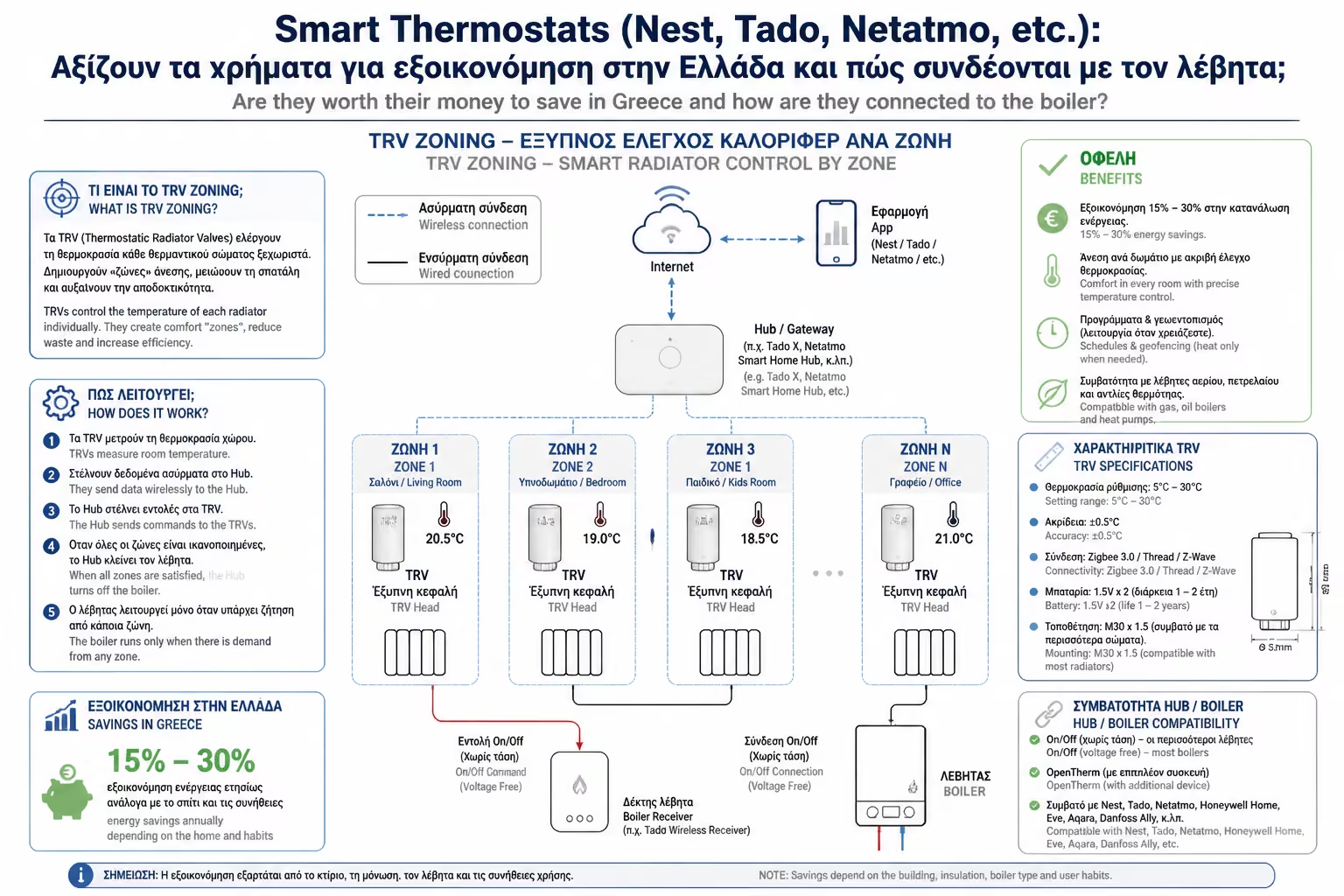
Instead of changing the wall thermostat, you replace the natural valves on the radiator bodies themselves with Smart Thermostatic Heads (Smart TRVs).

  • They work with batteries (usually AA that last 1-2 years) and Zigbee or RF protocol.
  • They allow you to have Independent Zones (Multi-Zone). You can have the living room at 21°C and the bedroom (which is empty during the day) at 16°C. The savings from not heating empty rooms is huge!
Illustration for 3. Smart Radiator Heads (Smart TRVs)

4. Smart Home Features (Geofencing & Open Window)

Illustration for 4. Smart Home Features (Geofencing & Open Window)

Beyond the mechanical aspects, the comfort they offer through their app is priceless:

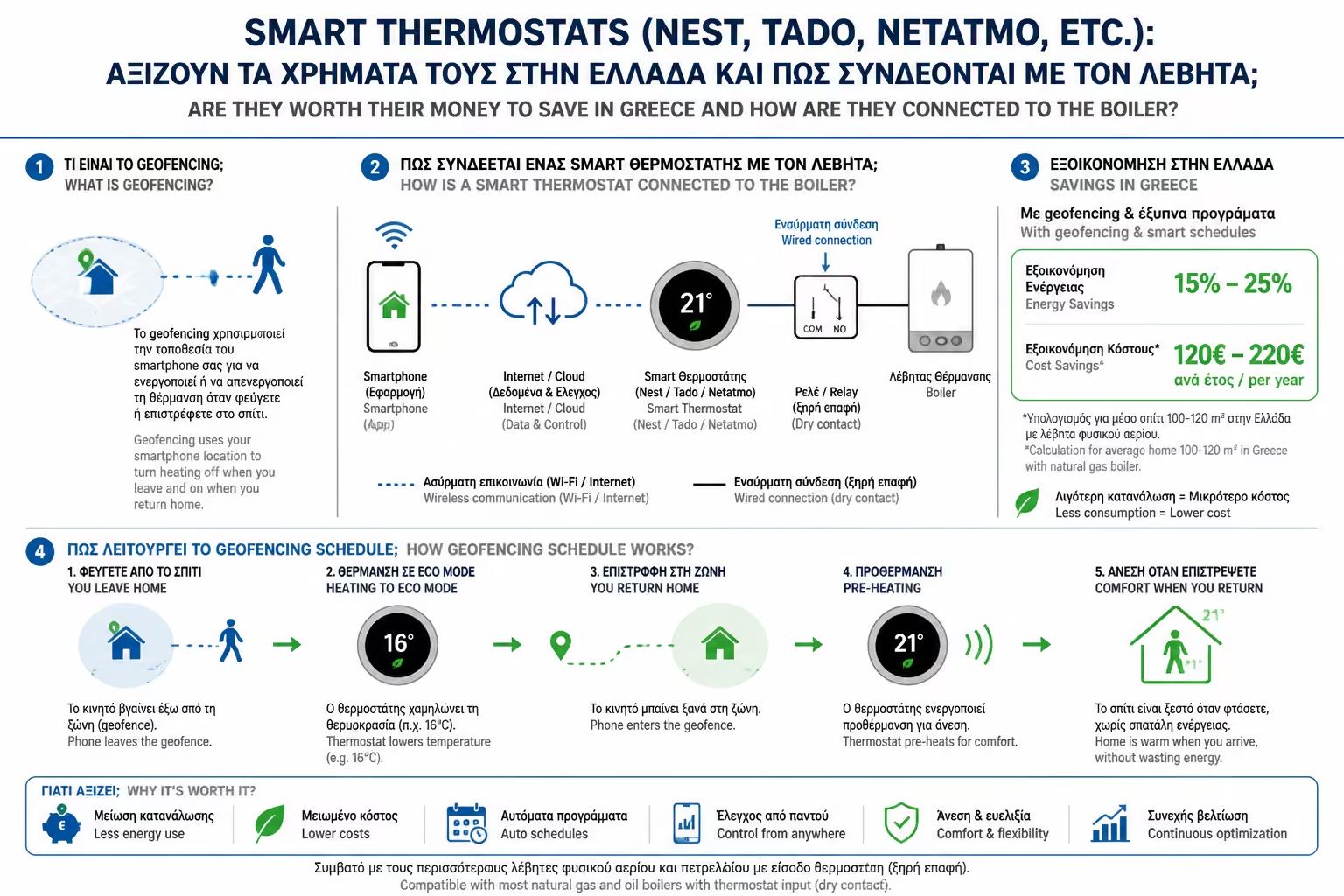
Geofencing

They use your phone's GPS. When you move more than 5 kilometers from home, they drop the temperature automatically by 2 degrees. When you come back, they turn on the heating before you put the key in the door.

Open Window Detection

If you open the patio door in winter to ventilate, the thermostat understands the sudden drop in temperature and "freezes" the boiler for 15 minutes so it doesn't try to heat... the neighborhood.

To sum it up: Is it worth the purchase?

If you expect the €250 thermostat to "pay back" in one season from the gas bills in Greece, you will probably be disappointed. Our houses are "heavy".

But it's worth it with your eyes closed for three other reasons: First, you replace the simple On/Off with digital flame management (OpenTherm) minimizing boiler damage. Second, you get thermal comfort (you stop getting cold/sweating) thanks to the PID algorithms. And thirdly, you return to an always warm home from your winter vacation, just by pressing a button on your mobile while at the airport.

Next Step: We adjusted the air conditioning, the blinds, the heating. Our house is now energy efficient. Now, we move on to pure, absolute comfort (Luxury & Comfort). What if your favorite music followed you from room to room, hidden in the ceilings?

Moving on to the next guide: Multi-Room Audio: Electrical specifications, wiring for ceiling speakers and amplifiers (Sonos, Wiim, etc.).

Related Articles

Smart Home, Building Automation (BMS) & Security

Return to category.

Go to category

Preview