Tile demolition
This is usually the first point at which the entire building starts to feel the project.
Renovating a bathroom in a single-family home and renovating a bathroom in an apartment building are not the same thing.
In an apartment, the work does not affect only the owner. It also affects the neighbors: demolition noise, dust in the common areas, elevator use, debris handling, working hours and, very often, a water shutdown from the central valve.
This does not mean that the owner has no right to renovate the bathroom. They do. But the work must be organized in a way that respects the apartment building rules, the statutory quiet hours and the daily life of the other residents.
Proper organization before the work begins can save tensions, complaints, delays and unnecessary conflicts.
In a bathroom renovation there are tasks that cause discomfort:
This is usually the first point at which the entire building starts to feel the project.
Heavy demolition creates both noise and practical disruption.
These tasks need the strictest time control.
The disruption spreads beyond the apartment into the elevator and corridors.
Even deliveries can cause tension if they are not organized properly.
At that point the issue stops being just noise and becomes a direct inconvenience for everyone.
Once the entrance, lift and corridors are involved, organization becomes mandatory.
This is all normal in a renovation. But in an apartment building they must be organized.
If the owner properly informs the neighbors, adheres to the timetables and consults with the manager, most will be understanding. But if the work starts suddenly, with noise, debris and water interruption without warning, friction is very likely to arise.
Each apartment building may have bylaws that provide for specific rules for work, use of common areas, transportation, working hours, and tenant behavior.
Before you start, ask or check the apartment building bylaws.
It may refer to:
The building may be stricter than the general habits of the market.
Saturdays, holidays or other days may be treated separately.
You need to know whether it is allowed and under what protective conditions.
This is often an explicit requirement, not just a matter of goodwill.
Some buildings expect notice to be given in a specific way.
Debris handling is one of the most common conflict points.
It is not automatic that every shared point can be used freely.
The method of notice and coordination may already be defined.
It should be clear who pays and who restores any damage if something goes wrong.
If the regulation is stricter than general practice, it is good to follow it. Even if something is generally allowed by law, it can create an issue in the apartment building if it violates agreed-upon living rules.
In Greece, statutory quiet hours differ between the summer and winter periods.
Noisy operations such as compressors, drills, breaking, tile cutting, mortar transfers and loud disturbance should be avoided during these hours.
Respecting quiet hours is not only a matter of politeness. It is also a practical obligation that can lead to complaints if ignored.
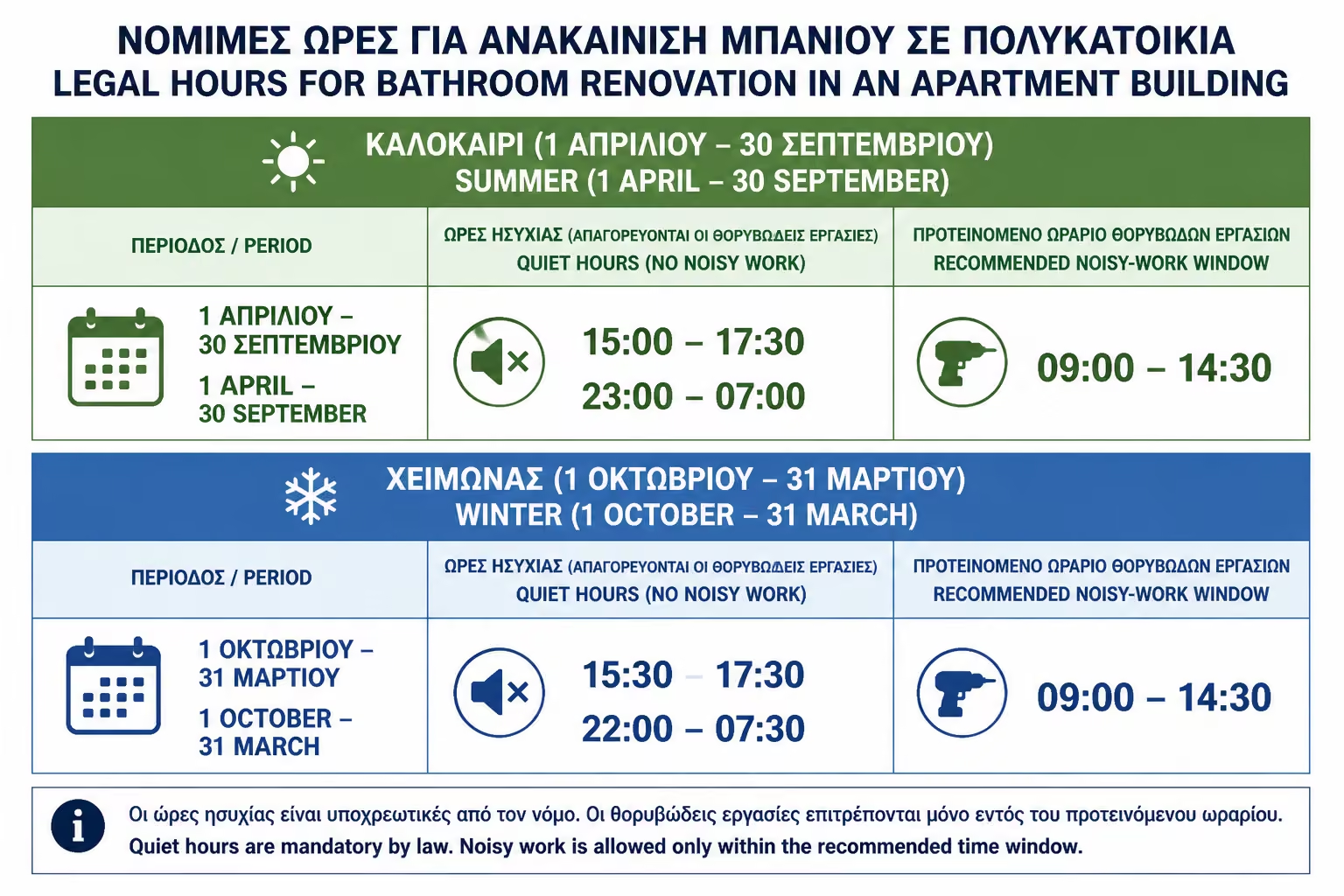
From April 1 to September 30, the quiet hours are:
From October 1 to March 31, the quiet hours are:
Even outside the official quiet hours, that does not mean noisy work is appropriate at any time of day.
For a bathroom renovation in an apartment building, a reasonable and safe schedule usually means:
That is usually the best window for the heaviest disturbance.
This is the baseline rule that should not be crossed.
Something can be technically legal and still feel unreasonable to the building.
That is usually where building patience starts to run out.
Even without an explicit ban, it is almost always the wrong choice.
Saturday is when residents feel the disturbance most directly.
A practical timetable for noisy work is, for example:
The heaviest tasks, such as lifting, compressing and breaking, should be done as concentrated as possible, especially in the morning part.
The main window for demolition, breaking and the heaviest noisy tasks.
Only if needed, and preferably for lighter tasks with less disturbance.
Early notification is the simplest and most effective measure to avoid complaints.
You don't need to ask for permission for every simple interior job, but it's OK to let them know.
Ideally, notify:
This is the first coordination point for shared spaces, water and practical project limits.
They will feel the daily disturbance first.
They are often more affected by noise, vibration and water-related issues than expected.
A brief, clear note at the entrance reduces misunderstandings dramatically.
The announcement should be short and specific.
If you know that there will be a water cut, a separate and more specific announcement must be made.
Dear residents, We would like to inform you that from Monday 12/05 until Friday 16/05, bathroom renovation works will take place in the apartment on the 3rd floor. The noisiest work will be carried out in the morning and always outside the statutory quiet hours. Care will be taken to keep the common areas clean and protected. Thank you for your understanding.
The water shutdown is one of the most sensitive issues in a bathroom renovation in an apartment building.
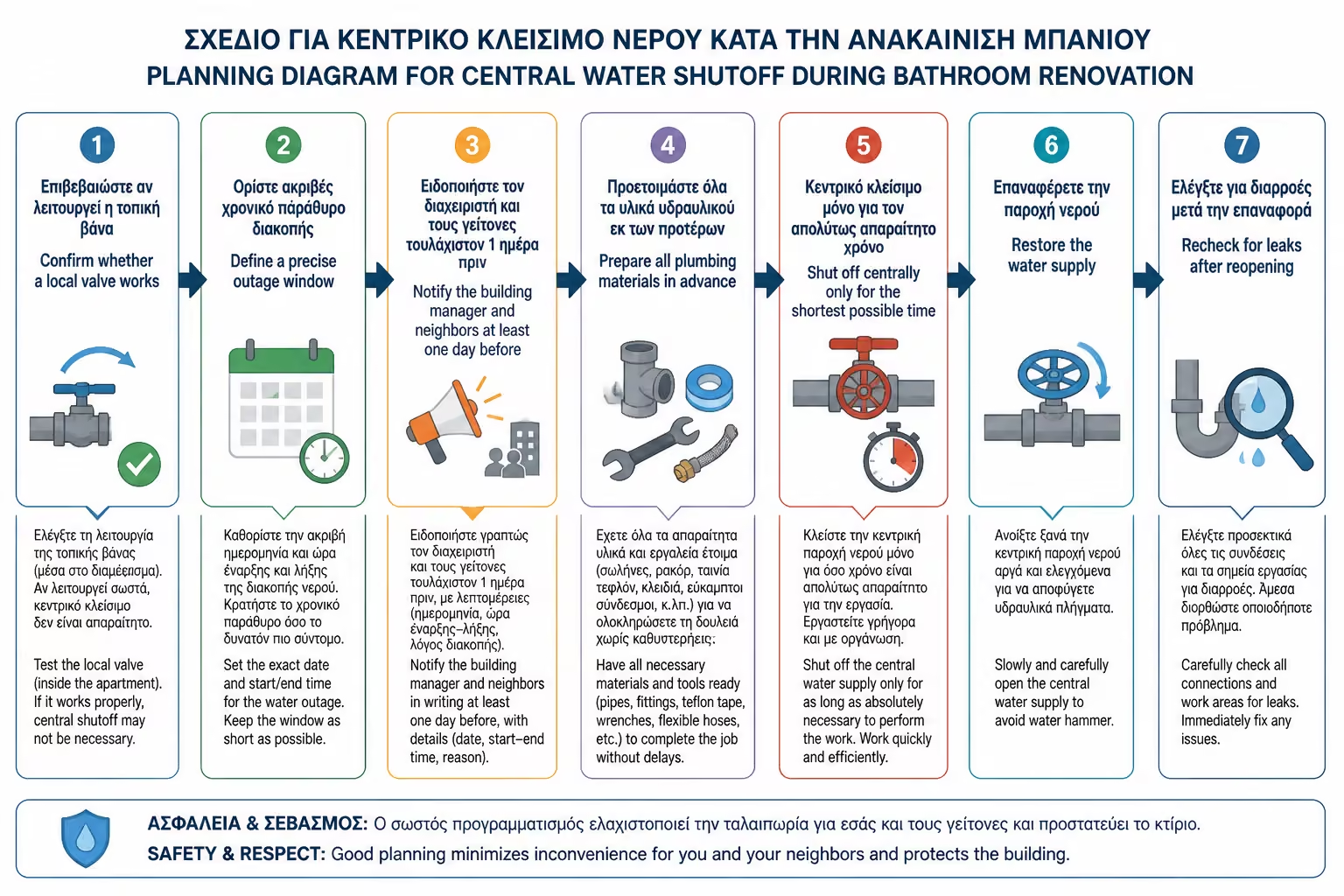
In old apartment buildings, there may not be a separate valve for each apartment, or it may not work properly. In that case, it may be necessary to close the central water valve in order to carry out plumbing works.
This affects all tenants.
Therefore, the central valve should never be closed without prior notification.
Before the central valve is closed, the plumber, manager and occupants must be consulted.
If there is a local valve and it is working properly, the entire block of flats need not be affected.
For example:
Water cut on Tuesday 10:00 – 11:30.
Not a general "sometime in the morning" type update.
First it must be checked if there is a way to turn off only the water of the specific apartment.
If the central valve must be closed, set a specific time window.
The announcement should be made at least 24 hours before, especially if there are families, elderly people, business premises or people who need planning in the apartment building.
The plumber should have materials and tools ready before turning off the water so that the outage lasts as little as possible.
After opening the valve, it must be checked that there are no leaks, pressure drop or problems in other areas.
Dear residents, We would like to inform you that on Tuesday 14/05, from 10:00 to 11:30, there will be a temporary water shutdown due to plumbing work in the apartment on the 2nd floor. The plumber will try to limit the duration of the outage as much as possible. We apologize for the temporary inconvenience and thank you for your understanding.
A simple announcement like this greatly reduces the potential for tension.
The transportation of materials and debris is also a point that can create problems.
Before work starts, the following should be decided:
It is not automatic that the crew can use it freely for every task.
Protection should be in place before transport starts, not after the first damage appears.
Daily cleanliness needs a named responsible party.
Moving materials is one thing; moving rubble bags is another.
The building may want to protect peak-use or quiet periods.
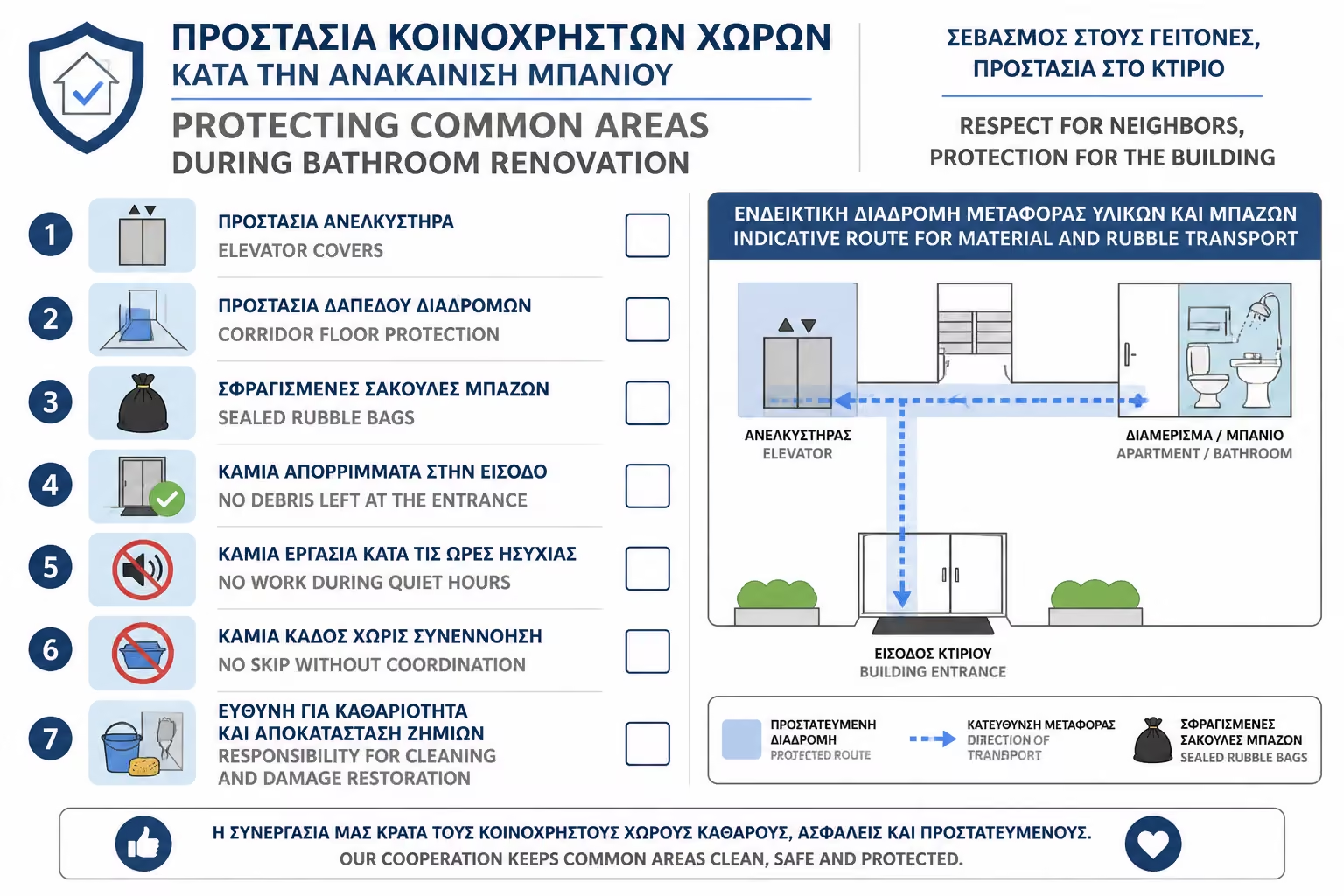
The transport route includes the whole path, not just the lift cabin.
Using the elevator for rubble bags without protection can cause damage, dust and complaints.
The safer practice is:
The lift should enter the process already protected.
Loose or open loads mean dust, stains and complaints.
Poor lift use can create real mechanical damage.
The project is judged every day, not only when it is finished.
Minor damage in shared areas is exactly what neighbors tend to remember.
Debris should not be left in shared areas without prior coordination.
There should be a clear plan for:
Temporary storage should be organized, not improvised.
Transport should follow a clear schedule, not happen whenever the crew feels like it.
This affects transport, cleanliness and elevator use.
That choice changes both logistics and permit needs.
The administrative side should be solved before a skip appears on the sidewalk.
Daily cleanup should be a real responsibility, not a vague promise.
This point should be settled before anything goes wrong.
Corridors, entrance and elevator must be kept as clean and safe as possible.
A project can be technically correct but create a bad impression if it leaves dust, mud and debris in the entrance every day.
Noise cannot be zeroed out in a bathroom renovation. But it can be organized.
Practical measures include:
A few difficult days are usually easier to tolerate than constant scattered disturbance.
That is when the noise feels disproportionately more intrusive.
Predictability makes noise easier to tolerate than surprise.
Even if technically allowed, it usually feels unreasonable in practice.
That is the fastest way to lose the building’s goodwill.
Unnecessary crew noise is often more irritating than the tool itself.
Small measures help stop sound from spreading through corridors.
The goal is not silence but controlled, predictable disruption.
Usually the neighbors can tolerate the noise more easily when they know when it will start and when it will end.
If damage is caused to a common area during the renovation, it must be clear who is repairing it.
For example:
They may seem minor, but they are among the most visible complaints.
The entrance is shared territory, so any damage there becomes an immediate issue.
Material and debris transport often causes these marks when the route is unprotected.
Vertical transport routes need special care.
At that point the problem stops being cosmetic and becomes functional for the whole building.
This is the scenario most likely to turn a simple renovation into a serious dispute.
It is good that this is also mentioned in the private agreement with the contractor.
The owner will be the first person to receive complaints from the apartment building. For that reason, the owner must clarify with the crew that the common areas will be protected and that any damage will be repaired.
For a simple internal bathroom renovation, without intervention in common areas, views or common facilities, special consent of all co-owners is usually not required.
But consent, or at least a more careful review, may be needed when:
Once the project touches common networks, it stops being a purely private matter.
Intervention in a shared supply changes the level of responsibility and oversight.
A lightwell is a sensitive shared element and should not be treated casually.
Anything that alters the building’s exterior is no longer a simple internal renovation issue.
This creates a direct shared-space issue for the other co-owners.
When common risers are involved, the technical risk increases.
Even technically feasible work can become problematic if it conflicts with the building rules.
In such cases, it is advisable to consult with an administrator and, where necessary, with an engineer or lawyer.
If renovation is done in an apartment building, the private agreement with the contractor must also include practical obligations for the apartment building.
For example:
This should be a direct contractual obligation, not a vague expectation.
The crew should be responsible for the building’s condition, not just the bathroom itself.
Cleanliness should appear as a concrete responsibility.
Pickup, bags and shared-area handling should be covered clearly.
The central-valve procedure should be described as a real process.
If damage happens, the discussion about responsibility should not start from zero.
Any disturbance or damage should end with a clear duty to restore.
Materials should not spread into shared areas by default.
These may seem like details, but in practice they are very important.
Before starting a bathroom renovation in an apartment building, check the following:
| Control | Is it done? |
|---|---|
| The apartment building regulation was checked | Yes / No |
| Admin has been notified | Yes / No |
| An announcement was made at the entrance | Yes / No |
| Working hours are set | Yes / No |
| Common quiet hours have been taken into account | Yes / No |
| There is a plan for the rubble | Yes / No |
| The elevator is protected | Yes / No |
| Common areas are protected | Yes / No |
| It has been clarified whether the central valve will be closed | Yes / No |
| A possible water outage is planned | Yes / No |
| There is responsibility for cleaning and damages | Yes / No |
Most problems in apartment buildings are not caused by renovation. They are created because there is no update.
Common mistakes include:
Surprise alone is often enough to trigger conflict.
This is one of the fastest ways to turn the whole building against the project.
When the entrance looks like a worksite, neighbors stop caring how good the technical work is.
The daily condition of the building shapes the entire mood around the renovation.
At that point the disturbance stops being subjective and becomes a clear violation.
This is the classic example of poor judgment about when the building can tolerate noise.
Lack of daily cleanup turns a temporary renovation into a constant nuisance.
Without basic coordination, every small issue grows larger than it should.
Unilateral use of shared or public space rarely passes without friction.
The crew’s behavior often determines how the entire project is judged.
All of this can be avoided with basic organization.
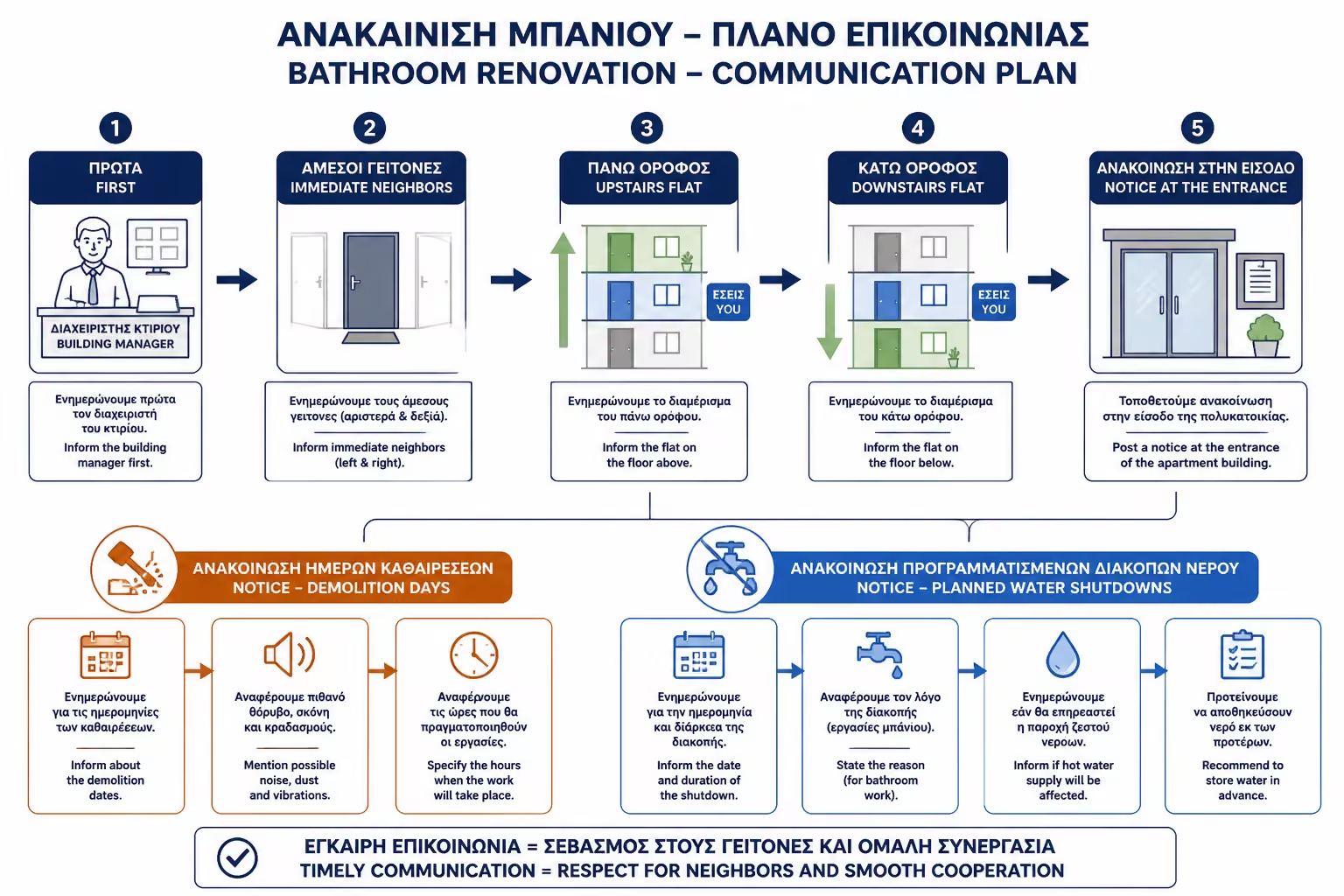
A simple communication plan could look like this:
Update the building manager, check the building rules, lock the start date and brief the crew on hours and shared-space restrictions.
Post the entrance notice, inform the immediate neighbors, organize debris handling and confirm whether a water cut will be needed.
Work only outside quiet hours, protect the elevator, keep the rubble bags closed and clean the common areas at the end of the day.
Post a separate notice with the exact time, update the building manager and make sure the plumber is fully ready for a short intervention.
Clean the shared areas, remove the debris, check for damage and update the building if a small follow-up item remains.
In an apartment building, a bathroom renovation is not only a technical project. It is also a coordination project. Respect the statutory quiet hours, inform the manager and post a notice before noisy works begin. If the central water valve must be closed, never do it without warning. Set a specific time window, give at least one day's notice, and make sure the plumber has all materials ready so the outage lasts as little as possible. Neighbors are usually understanding when they know what will happen, when it will happen and how long it will last. Problems start when there is no communication.
Renovating a bathroom in an apartment building needs proper organization, not just the right crew.
Check the apartment-building regulation and the legal quiet-hour windows before any demolition begins.
Clarify elevator use, transport routes and protection of shared areas before materials and debris start moving.
Plan in advance where debris will be collected and who will clean the common areas every day.
If the central valve may need to close, the time window must be specific and tightly controlled.
The manager and the immediate neighbors should know what will happen, when, and for how long.
Statutory quiet hours must be strictly observed. Noisy work should be done at reasonable hours in the morning and should be avoided at noon, in the evening, on Sundays and holidays.
The central water valve should only be managed by consultation. If an interruption is necessary, there must be a specific announcement, a specific time window and as short a duration as possible.
With good information, a clean program and respect for the common areas, the renovation can be done without tension and without needlessly disrupting the daily life of the apartment building.
Return to category.
Go to categoryReturn to the central guide.
Go to guide