Old tiles
Tile removal is usually the first source of debris and one of the biggest contributors to total volume.
When a homeowner thinks about bathroom remodeling, they usually factor in tile, plumbing, fixtures, labor, and materials. However, one cost that is often underestimated is the management of debris.
Removing old tiles, plaster, sanitary ware, bathtubs, grout or walls can create a significant amount of waste, even in a small bathroom.
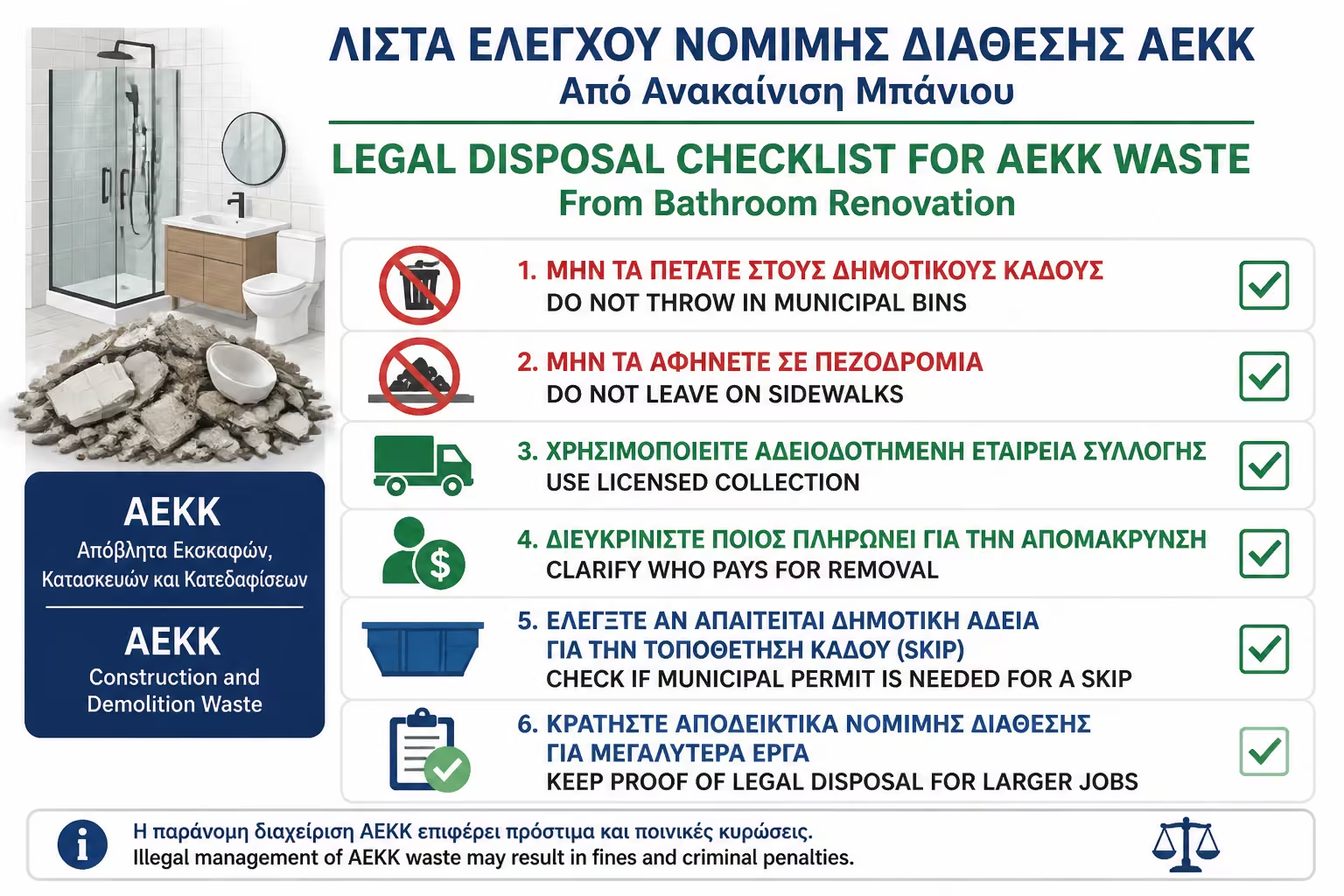
Debris is not ordinary trash. It should not be thrown into common waste bins, left on sidewalks, dumped on vacant plots or abandoned elsewhere. It is construction waste and must be handled legally.
That is why a proper renovation should budget debris removal from the start: who will handle it, how it will be done, what equipment will be used and what it will cost.
In everyday language, people call all demolition leftovers "rubble", but in practice a bathroom renovation can produce several different waste streams.
Typical debris includes the following:
Tile removal is usually the first source of debris and one of the biggest contributors to total volume.
These heavy materials increase not only volume but also the total carrying weight.
Even small wall openings or corrections can multiply the debris load quickly.
Toilets, basins and cisterns are not ordinary household waste.
A single bathtub can completely change whether bags are enough or a skip is needed.
Infrastructure materials and installation leftovers add more waste than most owners expect.
If the project includes wall work, debris removal stops being a minor line item.
Even lighter construction boards still require proper collection and legal handover.
Anything produced by stripping, breaking or cleanup should be counted in the debris plan.
None of this should be confused with normal household waste. Debris has weight, bulk and a specific disposal route.
Rubble from renovations generally belongs to the category of AEKK, i.e. Excavation, Construction and Demolition Waste.
Legislation stipulates that this waste must be collected, transported and routed to legal systems or management units for recycling, material recovery or legal final disposal.
In practice, that means debris must not:
Standard city bins are not intended for heavy renovation waste.
Temporary dumping in public space can create immediate problems with the municipality and neighbors.
Informal disposal outside a legal system is both an environmental and administrative violation.
AEKK follows a different disposal route from ordinary trash.
The cheap unofficial transporter often leaves the real legal risk with the owner.
The owner or contractor should work with a legitimate collection or management company, especially when the quantity is significant.
Liability must be made clear from the beginning in the offer or private agreement.
There are two common scenarios.
The offer should clearly state:
This basic point should never be left to assumption or verbal understanding.
The chosen method affects both logistics and final cost.
Without a quantity assumption, surprise charges are much more likely.
It is not enough to move debris out of the bathroom. Someone must remove it from the site as well.
The responsibility ends only when the debris reaches a lawful management route.
This is one of the most common sources of mid-project disputes.
If debris removal is not calculated from the beginning, it can appear as an extra cost in the middle of the project.
The best solution is to write clearly in the offer:
Debris removal is included / not included.
So there are no misunderstandings.
In this case, the contractor or technical company undertakes to unload, load and remove the rubble in a legal manner.
In this case, the owner must arrange a bin, skip, truck or special rubble bags, and make sure the removal is handled legally.
Depending on the quantity, floor, access and type of renovation, there are different options.
The most common choices are:
They work well when space is tight and the quantity stays relatively controlled.
A common solution for a standard bathroom with more organized debris collection.
Needed when the project produces much more weight or multiple demolition phases.
Useful when a skip cannot remain on site or removal must happen immediately.
Often the most practical option in apartments and apartment buildings.
There is no one-size-fits-all solution. A small bathroom can be handled with bags, while a full apartment renovation usually needs a skip or repeated collection routes.
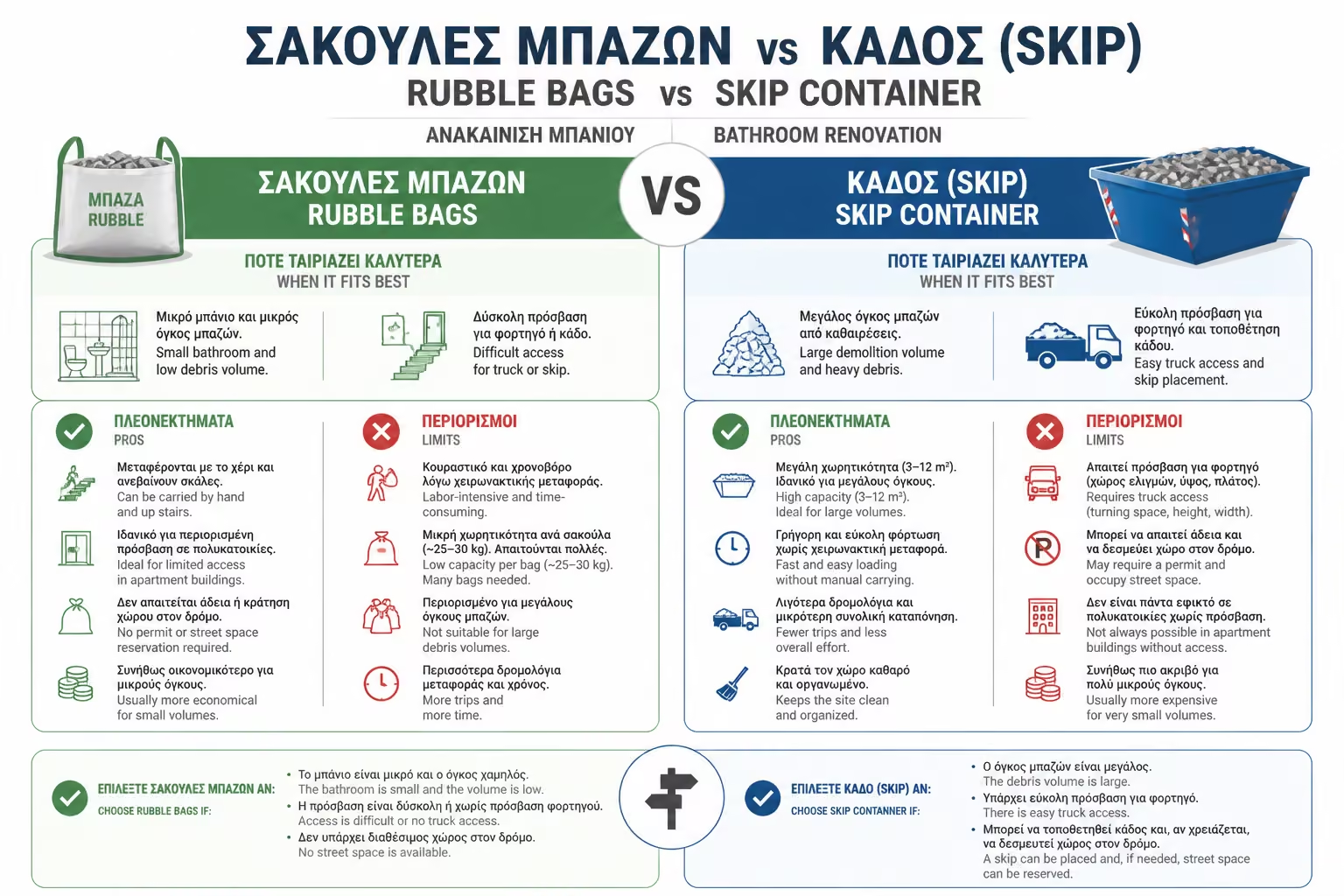
Special rubble bags are a common solution in small renovations, especially when there is no room for a bin or when the quantity is limited.
They are used to collect debris inside the apartment or near the entrance, and then transported or loaded by a removal crew.
In a small bathroom, bags can be economical, but the cost of carrying the debris down from the floor must still be counted.
They work well in a small bathroom, do not always require a street skip and help keep the work area organized in stages.
They need manual carrying, cost more when there is no elevator and are not ideal once the quantity becomes large or very heavy.
For small quantities, bag-based collection may start from roughly €50 – €80 total or €1 – €3 per bag, with higher pricing for difficult access.
A skip or collection tub is the classic solution when the quantity of debris is larger.
The company brings the bin, places it in a suitable place, fills it with rubble and then removes it for legal disposal.
Indicative:
In some cases, there may be offers for small bins from around €70 ex VAT for a specific duration, but the final price depends on transport, area, VAT, materials and company terms.
Typical pricing is roughly €80 – €150 for smaller quantities.
A more realistic range is about €120 – €250, depending on area and duration.
When volume or stay length increases, the cost can exceed €250.
If the bin is placed in a private area such as a yard or shed, things are usually simpler as long as it does not obstruct shared access or other owners.
However, if the bin is placed in a public space, sidewalk or street, a permit to occupy a public space may be required from the Municipality.
The owner or contractor must check:
Not every point outside a building is suitable or legal for a debris skip.
The answer depends on the location and the local procedure.
Public placement may require visibility and safety measures.
Pedestrian and vehicle movement should not be blocked by the placement.
This is a frequent source of neighborhood friction and should be checked in advance.
The permitted duration affects both compliance and total cost.
Responsibility must be clear: who applies for the permit, who pays the fees, who is liable if there is a fine.
A debris skip is not a container for every type of waste.
Usually allowed:
Tiles, bricks, plaster, cement, screeds, ceramic sanitary ware and clean demolition debris are typically accepted.
They must not be mixed without agreement:
These should not be mixed with demolition debris unless the company has agreed to it explicitly.
They require different handling and are not treated like inert rubble.
These need separate management and should not be thrown in casually.
This is a special category with strict rules and should never go into a standard debris skip.
They belong to different waste streams and must be removed separately.
Without prior agreement, they can trigger refusal of pickup or extra charges.
If the bin is filled with unsuitable materials, there may be an additional charge or refusal of collection.
Therefore, before filling it, you must ask the company what is allowed and what is not.
The amount depends on the size of the bathroom, the height of the tiles, the thickness of the old materials and whether only tiles or masonry/cement mortars are removed.
As a rough guide:
| Type of work | Possible amount of debris |
|---|---|
| Small WC 2 sq.m. | 10 – 25 bags |
| Small bathroom 3–4 sq.m. | 20 – 45 bags |
| Standard bathroom 5 sq.m. | 35 – 70 bags |
| Bathroom with bathtub, plaster and floor | 50 – 90+ bags |
| Bathroom with demolition or wall changes | May need a skip or collection tub |
These figures are only indicative. In older bathrooms with thick plaster, multiple tile layers or a lot of patchwork work, the quantity can increase significantly.
In a bathroom renovation, debris removal costs can vary substantially.
The price is mainly affected by the following:
Volume and weight are the first drivers of price.
Carrying debris down from an upper floor can cost almost as much as the pickup itself.
Easy loading and long carrying routes are priced very differently.
The chosen collection method changes the entire cost setup.
Fees and permit handling add directly to the budget.
If removal cannot happen in one phase, the cost climbs.
Mixed loads are harder to accept legally and may be priced higher.
Proper disposal costs more than an informal shortcut, but it actually protects the owner.
For a typical bathroom, a safe budget range for demolition and debris management combined can be around €250 – €450, as shown in most realistic bathroom renovation budgets.
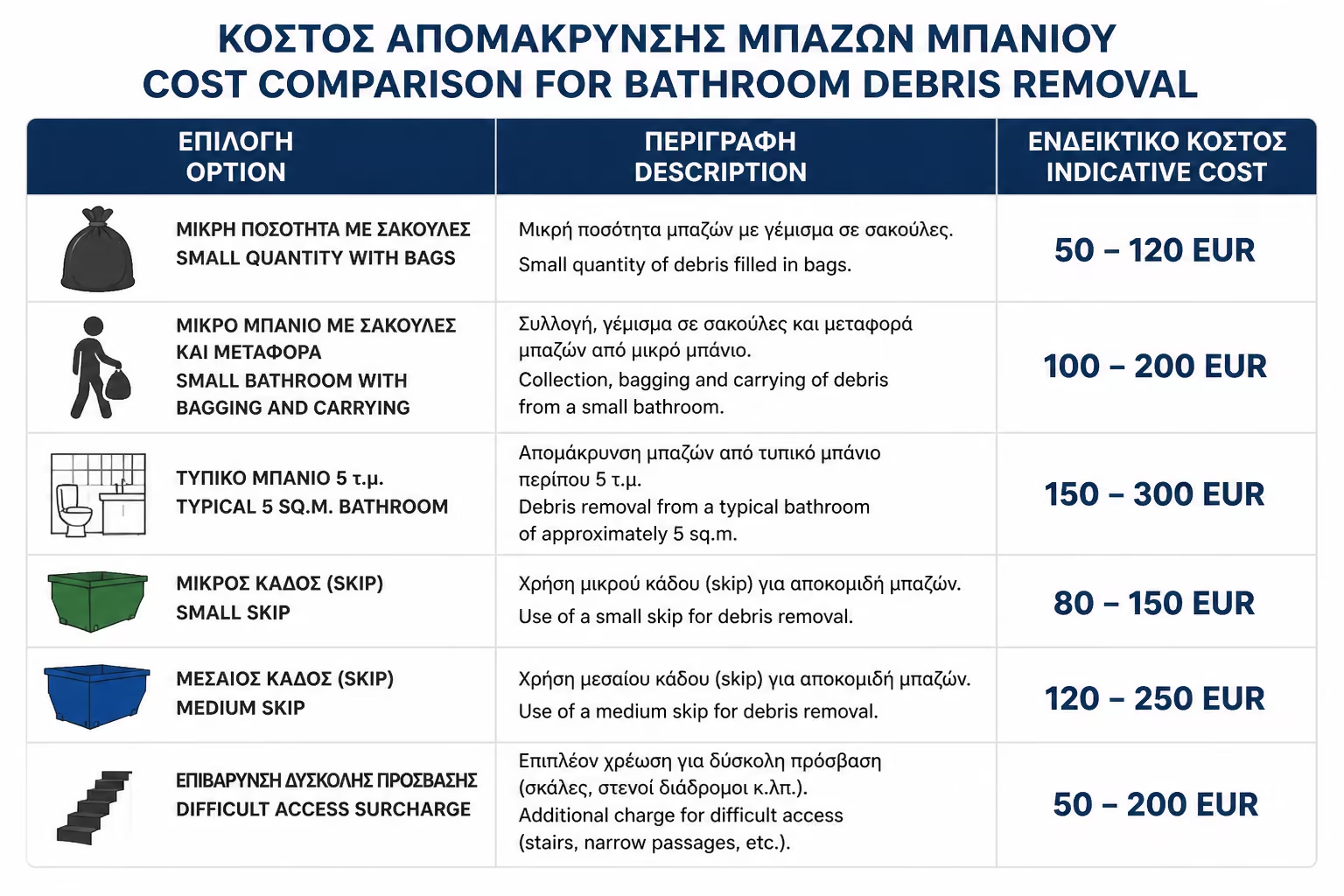
| Case | Realistic cost |
|---|---|
| Small quantity with bags | €50 – €120 |
| Small bathroom with bags and loading | €100 – €200 |
| Standard 5 sq.m. bathroom | €150 – €300 |
| Skip or collection tub | €80 – €250+ |
| Difficult access or upper floor without elevator | +€50 – €200 |
| Municipality permit / occupation of public space | Depends on the municipality and duration |
The renovation offer must clearly state what is to be done with the rubble.
Ideally, it should read:
The offer should say this explicitly, not leave it implied.
Internal transport through the building is a separate effort and cost.
The chosen method should be visible in the scope, not guessed later.
The number matters only if the full disposal chain is covered.
Where required, it should be clear who handles it and who pays for it.
A volume estimate protects both sides from misunderstanding.
The rule for extra quantity should exist before the extra quantity appears.
The owner should know if special materials require separate handling.
The phrase "debris included" is not enough if it is not explained.
Better to write:
Includes collection, bagging, carrying down and removal of debris from the bathroom renovation, up to the quantity corresponding to the described works.
or:
Debris bins / skips are not included, and collection will be charged separately depending on the final quantity.
That way the owner knows exactly what has been agreed.
There is no one right answer. It depends on the project.
In many renovations, the practical solution is a combination: bags inside the apartment and transporting them in a bin or truck.
The bathroom is small, the volume is limited, there is no room for a skip and collection can happen quickly without heavy demolition.
The volume is large, there are many removals or a bathtub/cement base, and truck access allows debris to stay collected for more than one day.
Illegal waste disposal can create serious problems.
Be careful in cases where someone suggests:
The fact that something is common does not make it legal or safe for the owner.
That is simply illegal disposal with an obvious risk of complaint.
Without paperwork, you do not know where the debris ended up or who carries the liability.
This usually means the disposal is happening outside the proper rules.
That "temporary" step often becomes the source of fines and neighborhood conflict.
These practices can lead to complaints, fines, problems with the City or neighbors, and environmental liability.
In apartment buildings, there is an additional risk of tension with the other tenants if the debris is left in common areas, entrance, corridor or sidewalk.
In larger projects or where there is a permit, documentation that the AEKKs have been legally managed may be required.
Even on smaller jobs, the owner can ask the removal company or contractor for a certificate or document showing that the debris was legally picked up.
This is useful when:
Administrative processes often require cleaner project documentation.
The bigger the renovation, the harder it is to keep debris disposal informal.
Proof of lawful pickup strengthens what has been agreed in writing.
A document closes the issue instead of leaving it as a verbal claim.
In those cases, proof of legal management becomes critical.
Not every minor repair needs heavy bureaucracy. But in a full renovation, lawful debris disposal should be completely clear.
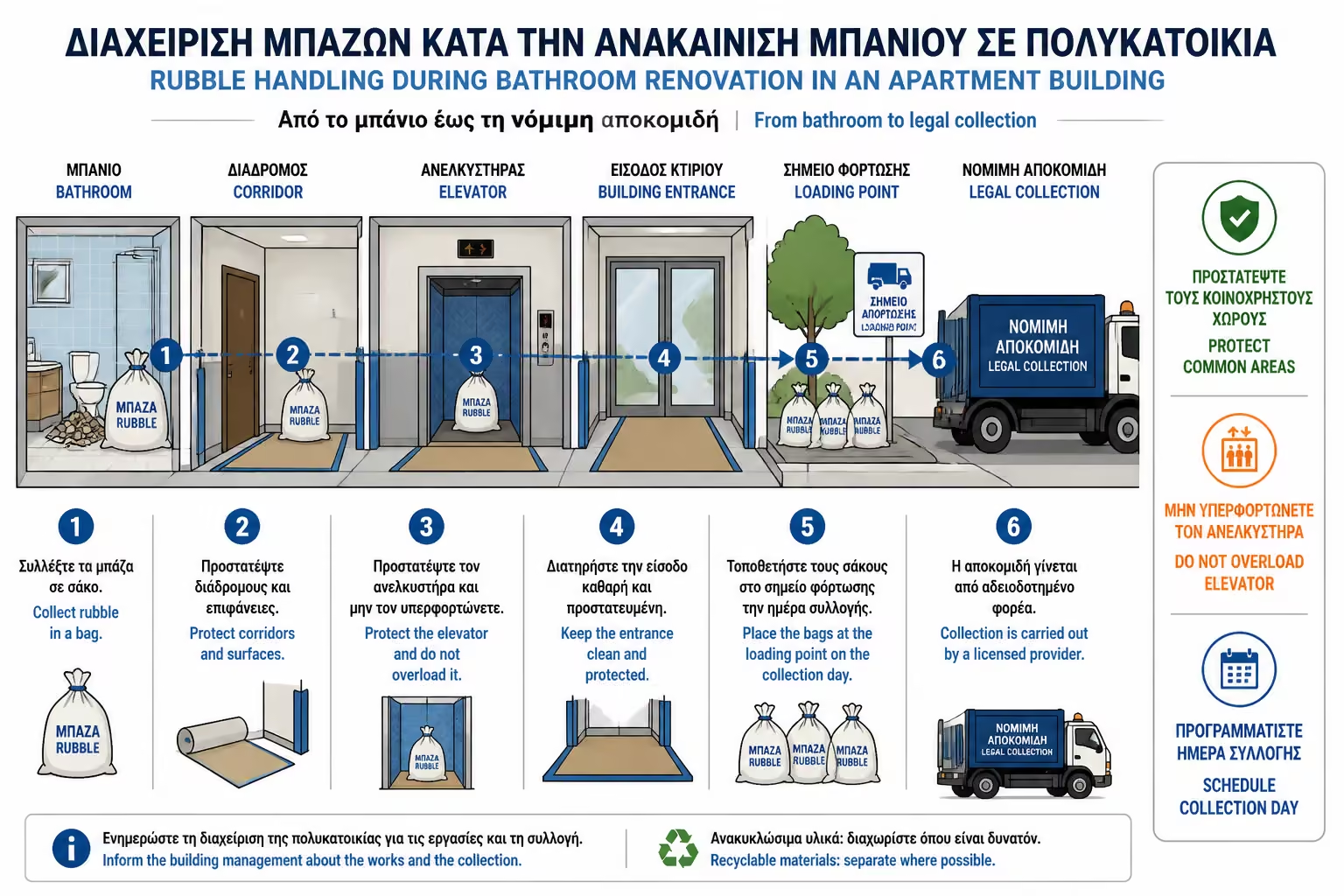
If the renovation is done in an apartment, the management of debris needs better organization.
Before you start:
Early notice prevents friction from day one.
Rules about hours, elevator use and common areas should be known before demolition starts.
Small damage in shared areas often creates the biggest conflict.
Debris should move through the building in an organized way, not sit in circulation routes.
The less time debris remains inside the building, the smoother the project feels.
Good timing is part of good technical organization.
Daily cleanup signals professionalism and reduces complaints.
Overloading can create damage and a completely new layer of liability.
Actual access conditions can change the entire removal plan.
Poor debris management is one of the most common reasons for tension in apartment buildings during renovation.
| Solution | When it fits best | Indicative cost |
|---|---|---|
| Special rubble bags | Small quantities, small bathroom, difficult access | €50 – €200 |
| Small skip / collection tub | Standard bathroom or moderate quantity | €80 – €150 |
| Medium bin | Complete renovation or more rubble | €120 – €250 |
| Loaded truck | When a skip cannot remain on site | €100 – €300+ |
| Combination of bags + bin | Apartment buildings or projects with stages | Depending on quantity |
| Municipality permit for a bin | When the skip is placed in public space | Depends on the municipality |
Before the removals begin, make sure the following are answered:
A first volume estimate is the basis for every later decision.
The collection method changes both logistics and budget.
This should not become a dispute once the project is already underway.
Internal transport inside the building is not a trivial detail.
Elevator access directly affects time, effort and price.
In an apartment building, this is not an optional concern.
Before a skip goes into public space, the administrative side should be settled.
Responsibility should not shift halfway through the project.
The lawful disposal route should be known in advance.
Without that, the cheap-looking solution can become the expensive one.
Special materials may require separate handling and separate pricing.
The rule for quantity overruns should exist before the overrun does.
If these are clear from the beginning, delays, disputes and extra charges are avoided.
Debris is not a small detail. In a bathroom renovation it may look like a side issue, but if it is not organized properly it can create extra cost, delays, neighbor complaints and legal problems. Do not throw rubble into common bins or leave it on the pavement without coordination. Ask the contractor or collection company to explain exactly how legal disposal will be handled. For a small bathroom, special bags may be more practical. For larger quantities, a small skip or collection tub is usually the better solution. The important thing is to state clearly in the offer whether debris removal is included, so you know from the start whether the cost is inside the budget or billed separately.
Debris management is a necessary part of any serious bathroom renovation.
Debris must be collected, transported and sent to a lawful disposal route. It should not be thrown into common bins, left on sidewalks or dumped on vacant plots.
Best for a small bathroom, limited quantity and difficult access.
Suitable for a typical bathroom when removal needs to stay concentrated and controlled.
Useful when there is a bigger demolition scope or much more debris volume.
Helpful when a skip cannot stay in place or removal must happen in one organized phase.
Often the most practical method is bags inside the apartment and transfer to a skip or truck outside.
For a typical bathroom, removal costs can range from around €100 – €300, while combined demolition and debris management often lands around €250 – €450.
The most important thing is to agree from the beginning who handles the removal, whether it is included in the offer, whether a skip or municipal permit is needed and where the debris will be taken.
A clear debris-removal agreement protects the owner, the contractor, the apartment building and the environment.
Return to category.
Go to categoryReturn to the central guide.
Go to guide