
Detailed Task Schedule: How Many Days Does It Really Take?
When starting a bathroom renovation, the most common question is, "When will you finish?" There is a myth that a bath can be done in a weekend, and another (mainly due to bad experiences) that it will take a month.
The truth lies somewhere in the middle. For a typical Greek bath, the realistic timeframe is between 7 and 10 working days. Any attempt to compress this time hides the risk of poor workmanship (e.g. not drying the materials), while any delay beyond this means poor coordination of the crews.
Let's look at the plan day by day so you know what to expect.
The Realistic Plan of 7-10 Business Days
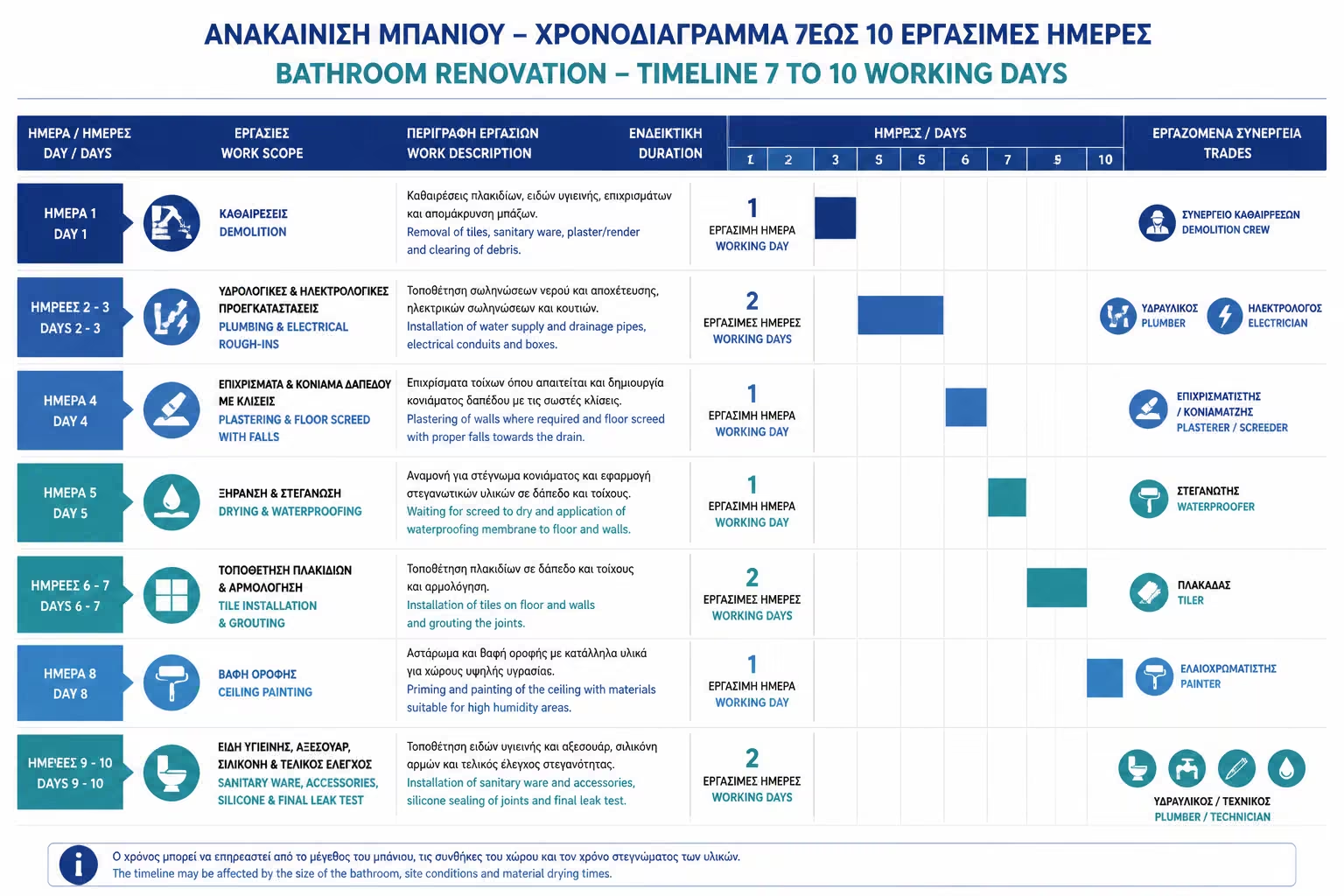
what's going on
The bathroom literally goes "yip". The old sanitary ware is removed, the old wall and floor tiles are broken, and the old plaster is removed if it is loose.
Duration
1 full day.
🚰 Day 2 - 3: New Plumbing & Electrical Installations
what's going on
The plumber runs the new water supply and drainage pipes, installs the central siphon and the built-in cistern (if present). At the same time, the electrician passes the new cables and waits for sockets, mirror and ventilation.
Duration
1.5 to 2 days.
📐 Day 4: Plastering Walls & Plastering Floors (Processes)
what's going on
The walls are plastered so that they are perfectly vertical (so that the tiles sit straight). The cement mortar is laid on the floor to cover the pipes and create the slopes (falls) towards the siphon.
Duration
1 days.
🛡️ Day 5: Drying & Waterproofing (Waterproofing)
what's going on
This is the day of "patience." Cementitious materials must absorb their moisture. Next, the spreadable waterproofing is applied (2-3 coats) to the floor and walls of the shower.
Duration
1 day (including drying times of intermediate hands).
🧱 Day 6 - 7: Tiling & Grouting
what's going on
The slab starts laying from the walls and ends on the floor, using the leveling systems. The next day, after the glue has dried, the clips are removed and the grout is applied.
Duration
2 full days.
🎨 Day 8: Stocking & Painting the Ceiling
what's going on
The painter plasters, sands and paints the ceiling with anti-mould paint. Dust from scrubbing cleans up immediately.
Duration
1 day.
🛁 Day 9 - 10: Installation of Sanitary Ware, Furniture & Finishes
what's going on
The great return of techniques. The basin, the cabinet, the washbasin, the glass cabinet, the batteries, the sockets and the accessories are installed. Anti-mold silicone is applied and the final crash test for tightness is carried out.
Duration
1.5 to 2 days.
📊 Summary Workflow Table
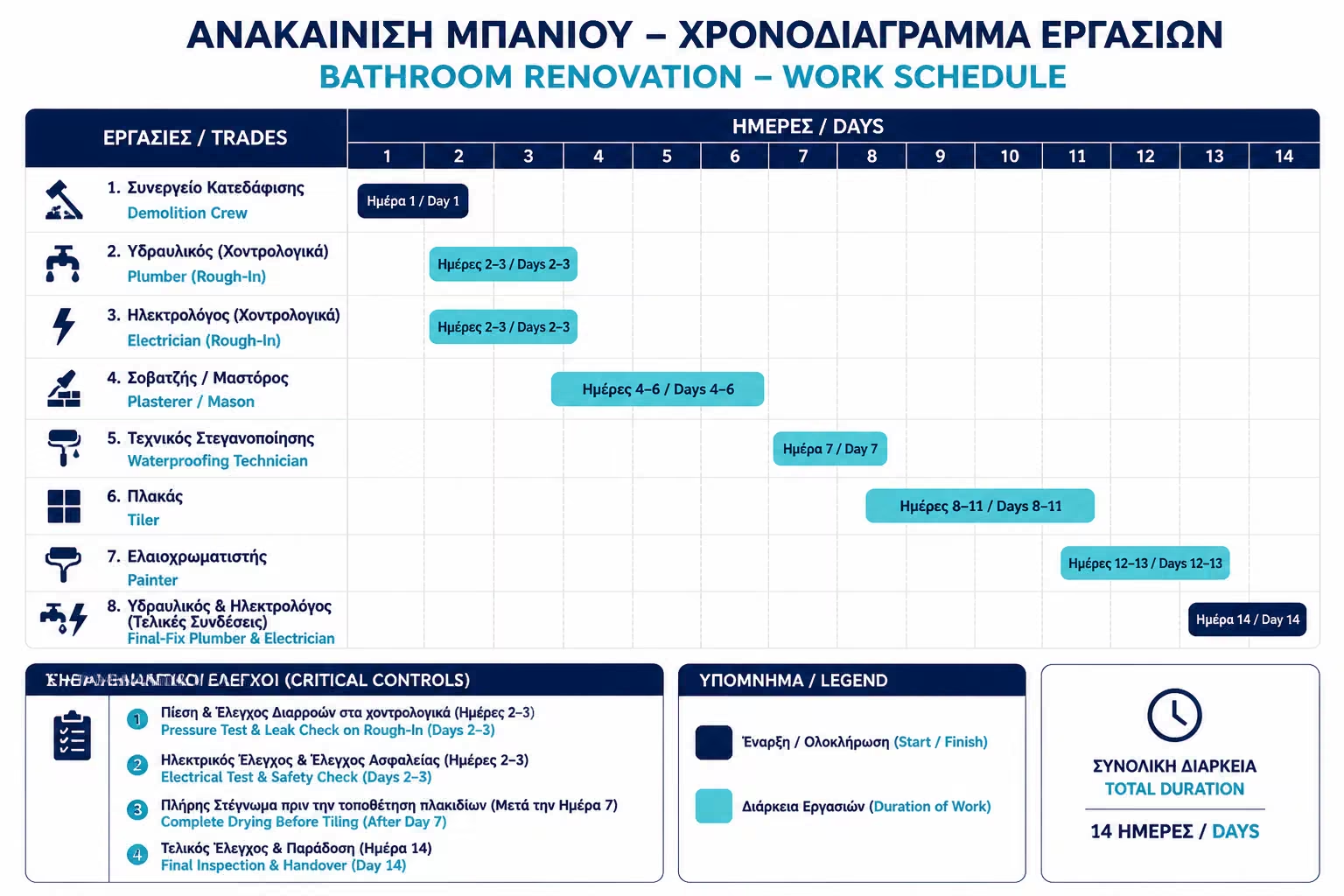
| Day | Main Work | Workshop involved | Critical Point of Attention |
|---|---|---|---|
| 1st | Cancellations / Removal | Workers / Demolitionists | Protection of common areas |
| 2nd-3rd | Plumbing & Electrical | Plumber / Electrician | Pressure test of new pipes |
| 4th | Plasters & Cement Mortar | Plasterer / Builder | Correct slopes towards the siphon |
| 5th | Waterproofing | Insulator / Technician | Completely dry before tiling |
| 6th-7th | Placing Tiles | You're kidding | Use of leveling clips |
| 8th | Ceiling painting | Oil painter | Use anti-mold paint |
| 9th-10th | Sanitary Ware & Silicones | Plumber / Electrician | Silicone only on the outside of the cabin |
💡 The Engineer's Advice
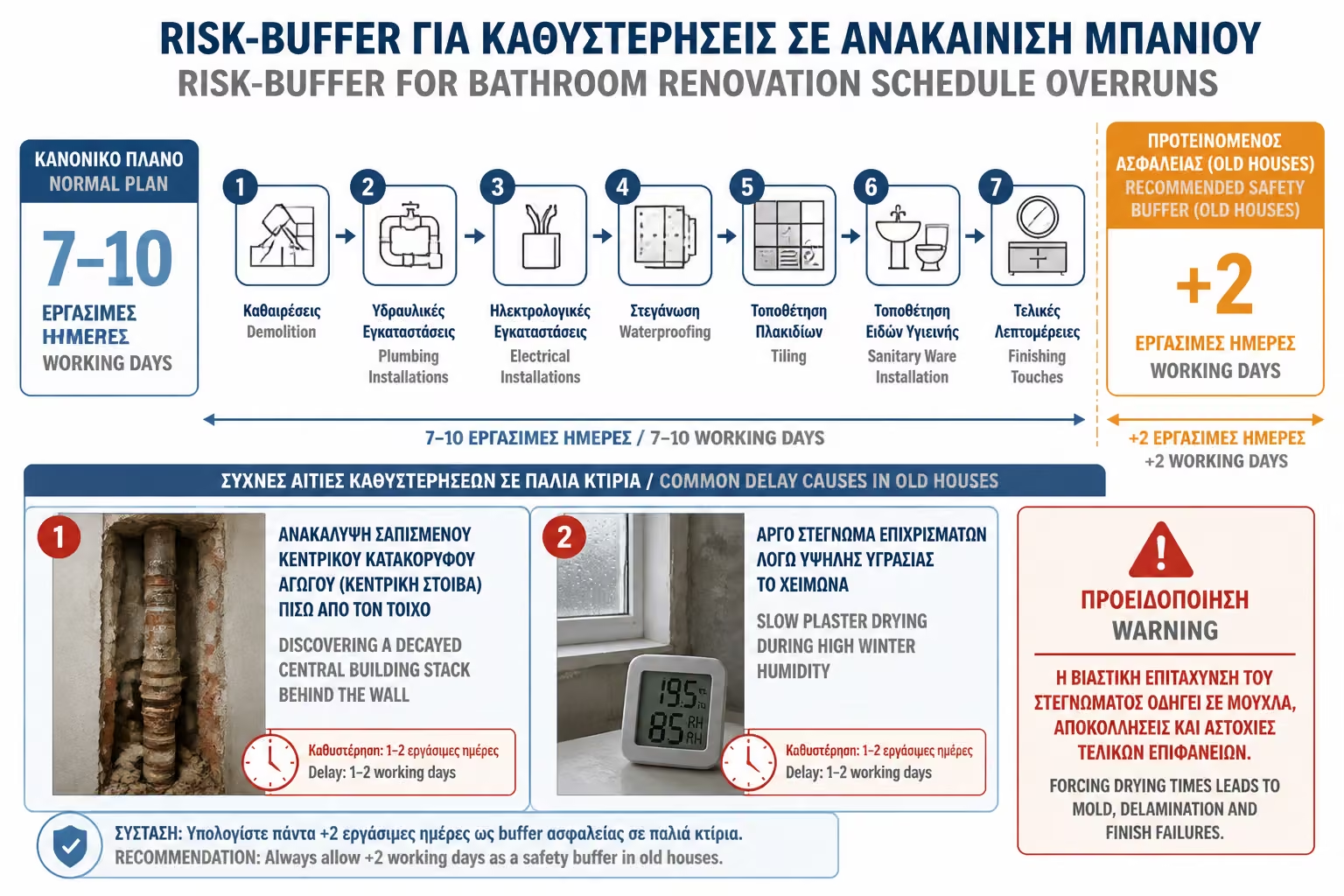
> "When signing an agreement with the contractor or crews, always ask for a delay clause based on 'business' days, not calendar days. Sundays and public holidays don't count. > Also, always factor in a +2 day safety window for the 'unstable factor'. In renovations, especially old houses, it's very common to open up a wall and find a flimsy center column of the apartment building that needs to be be repaired, or need extra time for the plaster to dry due to high humidity in the winter. Don't rush the drying time; haste here pays in mold and peeling."
Now you know exactly how time counts on the construction site.
Working days vs calendar days in the contract
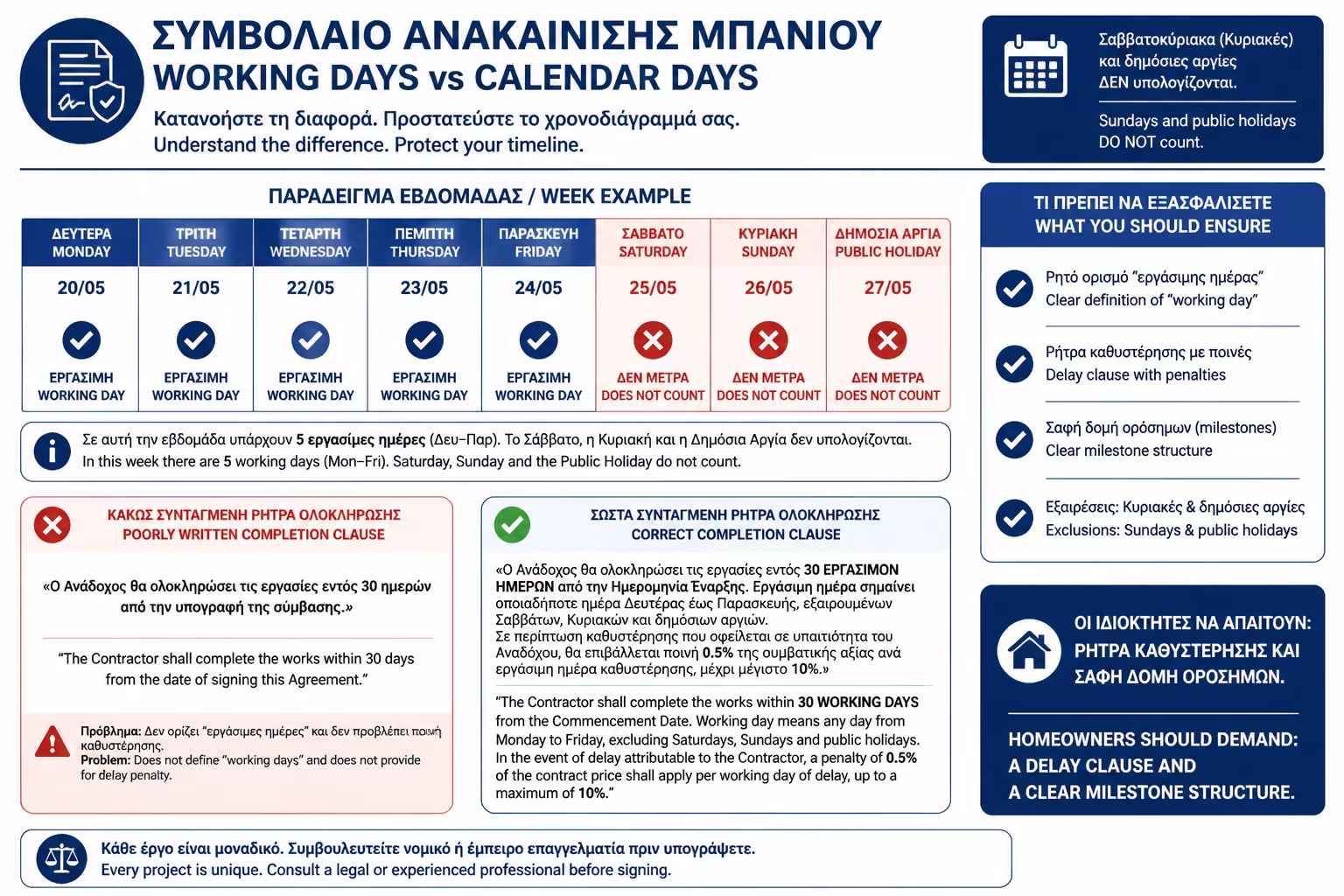
In the contract with the contractor or the individual trades, the wording around time is just as important as the sequence of works. Working days and calendar days are not the same, because Sundays, holidays, building restrictions and drying windows all affect what can realistically happen on site.
If this distinction is not clarified from the start, misunderstandings appear, trades get pushed unfairly, and the project is often rushed exactly where it should not be rushed. That is why the schedule must be explicit, realistic and tied to the actual working days of the renovation.
Related Articles
The Ultimate Bathroom Renovation Guide: The Correct Order of Work from A to Z Self-Managed vs Turnkey Bathroom Renovation: What Truly Benefits You? Phase 9 - Final Connections & Finishing: The Details That Make the Difference Living Through a Bathroom Renovation: How to Survive at Home When Your Only Bathroom Is a Construction Site
Bathroom Renovation & Design Guide
Return to category.
Go to categoryCentral Guide
Return to the central guide.
Go to guide