Demolitions
Removing old finishes already shows that this is technical work, not a basic household service.
When a homeowner begins a bathroom renovation, they usually deal with the cost of materials, labor, tile, plumbing, and fixtures. But there is also an issue that often remains unclear: the insurance of the craftsmen.
Who pays the workers' insurance? The owner? The contractor? The technical company? Does `ergosimo` apply? Is EFKA registration required? And what happens when the owner brings in different trades directly?
The answer depends on how the project is performed.
It is one thing to outsource the renovation to an organized company or contractor who undertakes the project with its own staff and documents, and another to directly call individual craftsmen for construction work on your property.
The important point is that, in most renovation works of this kind, we are not simply talking about paying labor. We are talking about EFKA obligations, construction-project classification, and insurance contributions.
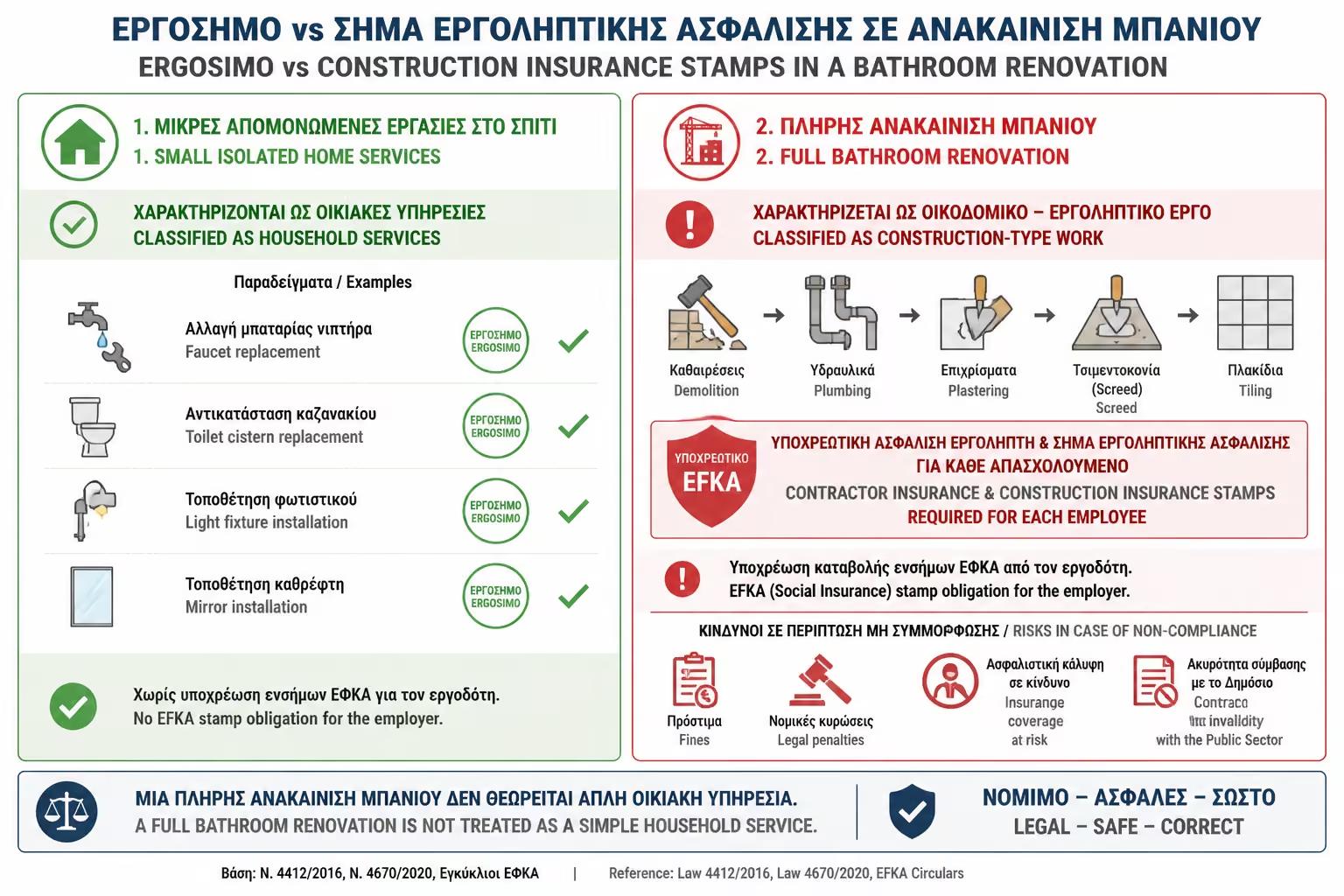
The first thing to make clear is that `ergosimo` is not a one-size-fits-all solution for every household task.
`Ergosimo` is used for specific categories of work such as domestic help, cleaning, gardening and certain isolated minor services that are not treated as building work.
A normal bathroom renovation falls into the construction or technical-work category. For that reason, many cases are not simply covered through `ergosimo`, but are treated as building works with EFKA insurance obligations.
Put simply:
`Ergosimo` may apply to isolated minor repairs that are not building works. A full bathroom renovation should usually not be treated as a simple household-service job.
Removing old finishes already shows that this is technical work, not a basic household service.
Interventions on water and waste networks usually sit outside the logic of `ergosimo`.
These are straightforward construction tasks with a building character.
Finishes and substrate repairs belong to the overall technical execution of the renovation.
In private construction projects, the basic rule is that the employer liable to EFKA is the project owner, i.e. the owner or co-owners of the property.
This means that, when building work is carried out on private property, the owner may have an obligation to:
This is the general rule.
But in practice there are different scenarios, and that is where the confusion arises.
The owner may need to register the project with EFKA before substantive construction work begins.
In some cases, a Detailed Periodic Statement must also be filed.
Insurance contributions should not be assumed to be someone else’s problem if the owner is organizing the work.
Where normal construction work is involved, someone must clearly take responsibility for the required insurance coverage.
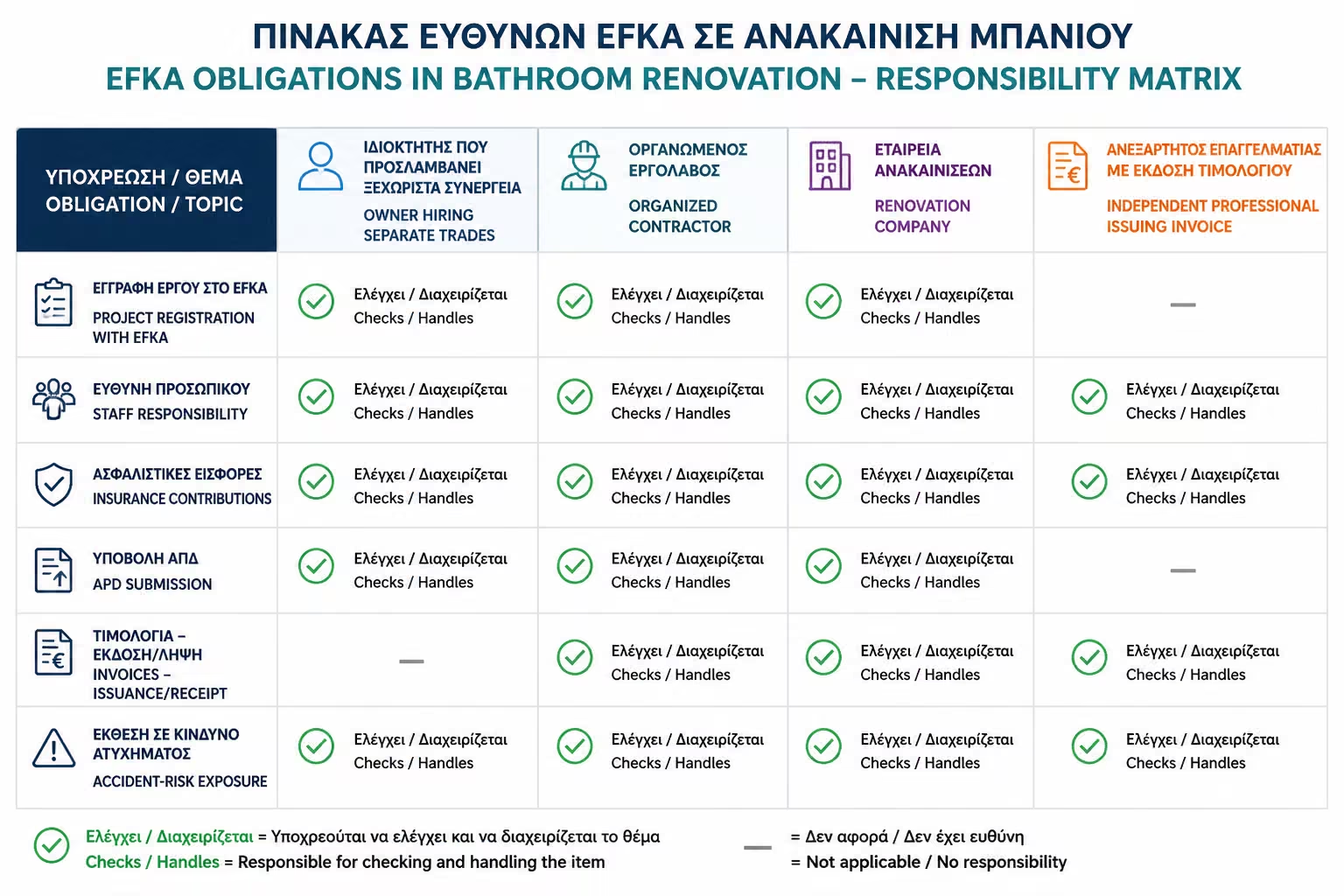
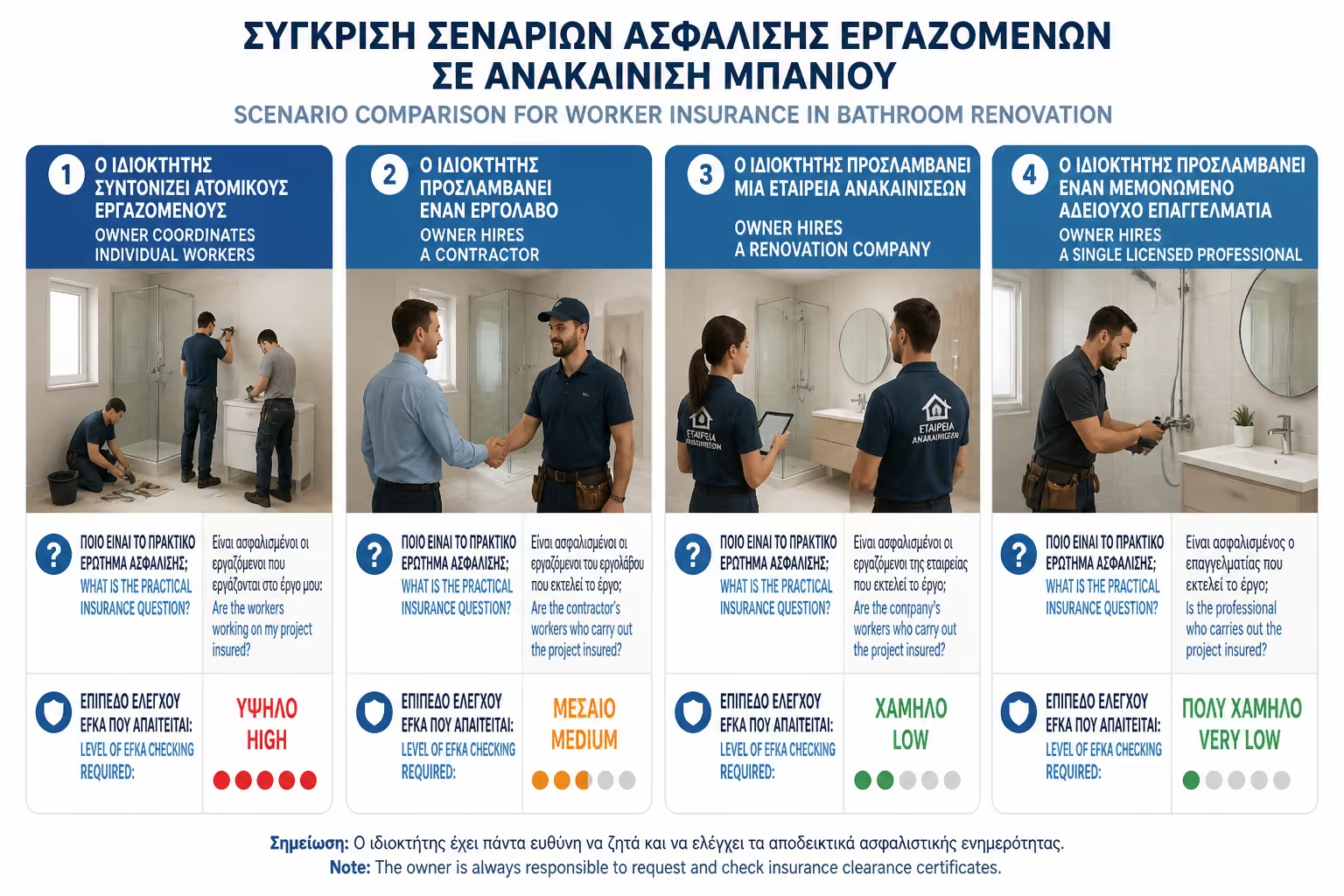
If the owner brings in separate trades directly, for example a plumber, a plasterer, an electrician and a tiler, then the owner is effectively organizing the project personally.
In that case, especially where real construction work is involved, the owner must check whether project registration and worker insurance through EFKA are required.
This does not mean that every small task in the bathroom automatically leads to a complex process. But it means that, when there is real construction work, employment of craftsmen and not a simple replacement of a part, it should not be taken for granted that "nothing is needed".
In such cases, a check must be made by an accountant, engineer or competent EFKA office as to whether an inventory and stamps are required.
Heavy strip-out work is a clear sign that this is no longer a minor household task.
Once the project includes building stages, the insurance question needs a real check.
Rebuilding the base and finishes changes the nature of the project completely.
Major interventions in supply and drainage lines usually justify an EFKA review.
If the owner assigns the project to a contractor or technical company, with a written agreement, supporting documents, and an organized scope of work, the practical picture changes.
The contractor or company may use its own staff, partners, or subcontractors. In that case, the owner must insist that the quote and the agreement state clearly who is taking responsibility for the crew’s insurance obligations.
Even so, caution is still needed. The presence of a contractor does not automatically remove the owner from every EFKA-related exposure. In private construction work, the project owner remains a central figure unless the contractual setup and the allocation of obligations have been handled correctly.
In practice, the safest route is a written agreement that spells out the following points:
The agreement should say clearly whether the work is being undertaken by the contractor, the company, or outside crews.
It must be clear who is responsible for the workforce and any subcontracted teams.
The owner should know exactly who is invoicing the work and under what commercial structure.
Insurance contributions should never be left as a vague promise hidden inside the total price.
The need for EFKA project registration should be checked early, not after demolition has started.
If a registration or filing process is required, the responsible party should be named in writing.
Responsibility for APD filing and broader EFKA compliance should be explicit and documented.
There are cases where the owner does not hire a worker as an employee, but assigns work to a professional who has his own sole proprietorship or company and issues a normal document.
Typical examples include the following:
He provides a professional service and issues the relevant tax document under his own business.
This is not treated the same way as hiring a laborer into a construction project.
The work is undertaken through an organized business operation with contractual terms and formal invoicing.
Proper tax documentation changes the framework, but it does not remove the need for a real check.
In these cases, the professional carries his own tax and insurance obligations as a business operator. That should not be confused with the insurance treatment of laborers working on a construction project.
If the professional works alone and invoices his own service, that is a different scenario from employing workers or a full crew on construction work that may need to be declared as a project.
That is why the actual facts of the specific case always need to be checked in practical terms.
Not every small job in the bathroom is a construction project.
Typical examples include:
A small fixture replacement usually does not have the character of a construction project.
When the scope remains a simple swap, the legal and insurance framework is usually much lighter.
A local fault repair is not the same thing as a full renovation project.
These limited technical interventions do not usually trigger the same treatment as heavy works.
Simple equipment replacement does not, by itself, make the job a construction operation.
A very limited repair without demolition or rebuilding is usually viewed differently.
As long as there is no demolition, masonry, or new network work, the scope may stay in the minor-repair category.
In such cases, construction insurance stamps may not become an issue at all. But once the work goes beyond minor repair and becomes a real renovation or building intervention, it has to be assessed differently.
The dividing line is not always obvious to the owner. So when there is doubt, it is better to ask an accountant, an engineer, or EFKA before work begins.
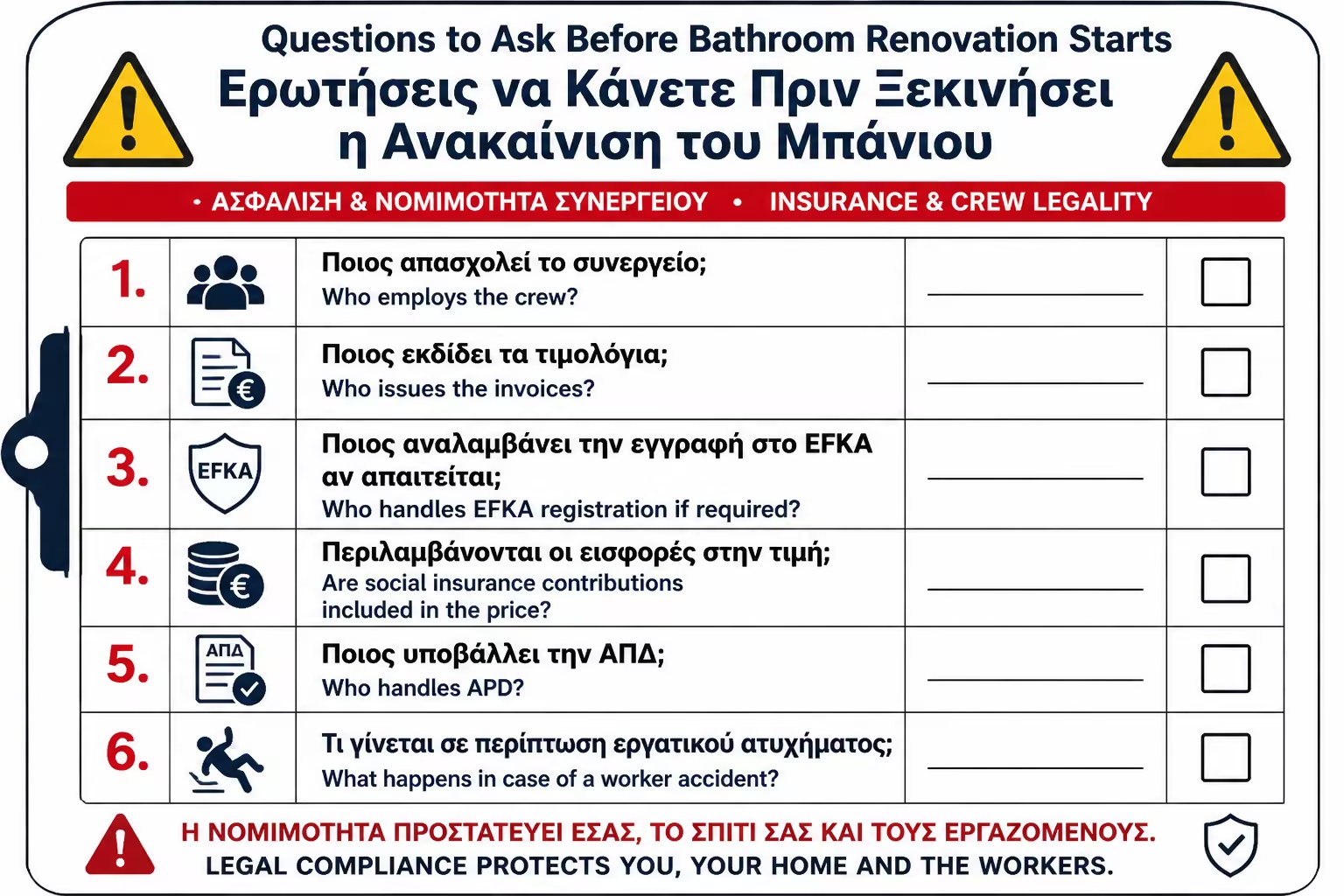
Before you commission your bathroom renovation, you need to ask some specific questions.
If you are working with a contractor or technical company, the core questions are the following:
Ask for a clear statement on whether the crew’s insurance burden is covered inside the quoted price.
This affects how responsibility is organized across the project.
Formal invoicing and documentation should be clear from the start.
Without a written framework, responsibility quickly becomes blurred.
If registration is required, the responsible party should be identified in advance.
These obligations should not be assumed to be automatically included in a lump-sum price.
Clarify whether insurance-related charges can appear later as extras.
The answer here is a good test of how seriously the project has been organized.
If you are bringing in individual trades yourself, you should at least ask the following:
The way the tradesperson works commercially affects the legal framework immediately.
There is a major difference between one professional working alone and a crew entering the project.
This is the main threshold that changes the insurance analysis.
The answer should be known before demolition or heavy works begin.
This helps determine whether a more formal insurance process is required.
The owner should not discover this only after the site has already been set up.
These questions may sound bureaucratic, but they protect the owner from very practical risk.
A proper renovation quote or agreement should clarify the issue of insurance and liabilities.
Ideally, it should cover the following points explicitly:
The financial offer should say clearly whether insurance-related charges are included where required.
The agreement should identify who is responsible for the crews entering the project.
The professional status and invoicing model of the trades should not be left vague.
If EFKA project registration may be needed, that possibility should be stated openly.
Procedural responsibility should never be postponed to a later “discussion”.
The agreement should say who bears the cost if an insurance claim arises later.
It should be obvious whether contributions are included or charged separately.
The presence of third-party crews affects how responsibility is allocated.
A generic phrase such as “labor included” is not always enough. Labor is the commercial side of the work; insurance is a separate liability and should be made explicit.
Many owners think that "since I paid the handyman, it's none of my business". But this is not always safe.
If a job is treated as construction work and the insurance obligations have not been covered, the usual problems are the following:
The owner may face charges that were never properly budgeted at the start.
Incomplete insurance coverage can lead to administrative penalties.
Unclear roles and weak documentation become immediate problems when the project is checked.
This is the most serious scenario because it can create heavy legal and financial consequences.
If insurance was never clarified, responsibility is easily pushed from one side to the other.
Insurance-related charges may surface later as an unexpected extra expense.
If the project is tied to permits or other administrative processes, insurance ambiguity affects the whole file.
The most serious issue is the work accident. If an uninsured worker is injured on site, the situation can become extremely serious for everyone involved.
That is why insurance is not a side detail. It is part of proper project organization.
There is a large gray area in bathroom renovation, because it can range from a very small repair to a substantial construction project.
When the scope stays very small, we are usually not talking about full EFKA project registration. But once the work becomes a real renovation, it should not be treated like a casual "day job", because EFKA obligations may come into play.
It can still be a simple case when the scope stays limited: changing a tap, replacing a toilet or vanity, a small plumbing repair or a small local patch.
A check is needed when the scope includes full demolition, tile removal, cement work, plastering, new drainage, full plumbing replacement, new tiling or layout changes.
In practice, there is no single answer that fits every case. It depends on who is organizing the work, who employs the workforce, and whether the scope is a normal construction operation or a limited professional service.
The owner should seriously examine the insurance obligation, because he may be the liable party toward EFKA.
A written agreement is needed to state who undertakes insurance, contributions, and any related EFKA process.
The scenario is different, but the key question still remains whether the work stays a service or becomes construction work.
The mistake is for the owner to think that "since there is a handyman, everything is his responsibility". In private construction projects, the project owner is of particular importance vis-à-vis EFKA.
| Case | Who should care about insurance |
|---|---|
| Owner brings his own handymen for construction work | The owner must check whether an EFKA obligation exists. |
| Owner assigns to a technical company with an agreement | The agreement should state clearly who carries staff and contribution responsibility. |
| A contractor with their own crews | The contractor/company must cover their staff, but the owner must have written coverage. |
| Freelancer with invoice | Different case, but it still needs review if the work qualifies as a construction project. |
| Single minor repair which is not building work | Construction insurance stamps may not be an issue at all. |
| Complete bathroom renovation with demolition and tiles | This should be checked carefully for EFKA project registration and insurance obligations. |
An owner wants to fully renovate a bathroom. The scope includes demolition, new plumbing, new drainage, screed work, waterproofing, and new tiles.
In that scenario, the owner must check whether EFKA project registration and insurance contributions are required.
If the work is assigned to a company instead, the owner should ask for written confirmation that the company is taking responsibility for its personnel, its insurance obligations, and its documentation. If project registration or another EFKA-related process is required, the agreement should also say who handles it and who pays the corresponding contributions.
The owner brings in an excavating worker, a plumber, a plasterer and an electrician. There is no company that undertakes the project as a whole.
The company gives a written offer, issues documents, has its own crews or cooperating professionals and undertakes the project as a whole.
To avoid surprises, organize the points that usually create legal and financial ambiguity before the work begins.
Ask for a real breakdown, not just a lump sum.
Confirm who issues invoices or receipts and for which part of the work.
Clarify whether contributions are included or billed separately.
Do not pay large amounts without a clear agreement on roles and responsibilities.
Ask whether project registration may be required before heavy work starts.
For larger scopes, involve an engineer or accountant early.
Lack of coverage is a risk for the owner as well, not only for the crew.
It does not automatically solve every renovation scenario.
Email, the quote and the agreement should all reflect what was actually agreed.
The point is not to scare the owner. It is to know what he is undertaking and what he should ask the contractor.
Not necessarily. `Ergosimo` does not generally cover all construction works. It may fit isolated minor repairs that do not count as building work, but not a full bathroom renovation.
If the craftsman issues a document for his own professional work, it is a different case. However, if technical staff are employed in a construction project, the EFKA obligations must be checked.
Maybe, but only if it is written clearly. Do not rely on verbal assurances.
It is not correct as a general rule. A small repair may not create such an issue, but a complete renovation with building work needs control.
Only if that is stated clearly in the quote or agreement. Otherwise they may appear later as a separate charge, or may not have been priced at all.
The safest approach is not to leave insurance questions unresolved. If you are bringing in crews yourself, check in advance whether EFKA project registration and contribution payments are required. If you are assigning the work to a contractor or company, ask for a written statement of who is responsible for the workforce, the documents, the insurance contributions, and any EFKA procedure. `Ergosimo` is not a general-purpose solution for normal construction work. It may fit minor repairs, but a full bathroom renovation with demolition, tiling, plumbing, and plastering needs a more careful legal and insurance check. A clear written agreement is the best protection for both the owner and the crew.
The issue of worker insurance and EFKA obligations in a bathroom renovation should never be treated as an afterthought.
Small repairs may never rise to the level of a real construction-project issue. But once the scope includes demolition, tiling, plumbing, drainage, and broader building work, the EFKA side of the project needs to be checked properly.
The general rule is that, in private building work, the property owner still matters significantly from EFKA’s perspective. When a contractor or technical company is involved, responsibilities must be clarified in writing.
Start from a clear and documented offer.
Do not leave the insurance issue vague.
For full renovations, ask whether EFKA registration is required.
Clarify who issues what and for which part of the project.
Do not assume it automatically covers every technical case.
When there is doubt, ask an accountant or engineer before work begins.
A proper renovation is not only technically sound. It is also legally organized, with clear responsibilities from the beginning.
Return to category.
Go to categoryReturn to the central guide.
Go to guide