
Washing your face
Bad Bathroom Lighting: Face Shadows, Wrong Color Temperature, and Missing Lighting Zones
Lighting is one of the most misunderstood parts of a bathroom renovation. Most homeowners spend their time and budget on tiles, furniture, the shower enclosure, and faucets, then leave lighting for the end as if it were a minor electrical detail.
The result is often a bathroom that looks attractive in materials but fails in daily use. The mirror throws shadows across the face, the shower stays dim, the light is either too cold or too yellow, and the whole room depends on a single ceiling fixture.
A bathroom does not simply need “more light.” It needs proper distribution, the right color temperature, and correctly planned lighting zones from the beginning.
1. Why Bathroom Lighting Matters So Much
The bathroom is not just a place for basic hygiene. It is a space for daily preparation, grooming, and close visual tasks in front of the mirror. That means lighting directly affects comfort, safety, and how accurately the room can be used.
Shaving
Makeup
Skin care
Drying your hair
Showering
Cleaning the room
Nighttime use without glare
Each of these activities asks for a slightly different kind of light. A fixture in the middle of the ceiling may create general brightness, but it does not guarantee a clear, usable mirror zone or comfortable lighting across the whole room.
That is why lighting should be planned together with the bathroom layout instead of being added casually at the end, when the options are already limited.
2. The Most Common Mistake: One Ceiling Light for the Entire Bathroom
The classic old bathroom usually had one fixture in the center of the ceiling and, at best, a small additional light above the mirror. For a modern bathroom, that is not enough. One light tries to do everything and ends up doing nothing particularly well.
Where dark spots remain
In front of the mirror
Inside the shower
Above the vanity
In room corners
Behind the door
In areas with dark tiles
What problems it creates
The face is lit from the wrong angle
Strong shadows appear
The bathroom feels smaller and heavier
The mirror loses practical value
The shower stays dim
Cleaning becomes harder
The right logic
General lighting
Proper mirror lighting
Shower lighting where needed
Ambient or night lighting
Practical lighting for cleaning
You do not need an excessive number of fixtures. You need proper distribution so that each zone is served by the right kind of light.
3. The Main Lighting Zones in the Bathroom
A well-lit bathroom uses more than one layer of lighting. The goal is not merely to make the room visible, but to make it comfortable to use without shadows, dead spots, or awkward contrasts.
Ideally, mirror lighting reaches the face from the front and, where possible, is balanced from both sides. At the same time, every fixture must be suitable for wet environments and properly positioned for the exact zone it serves.
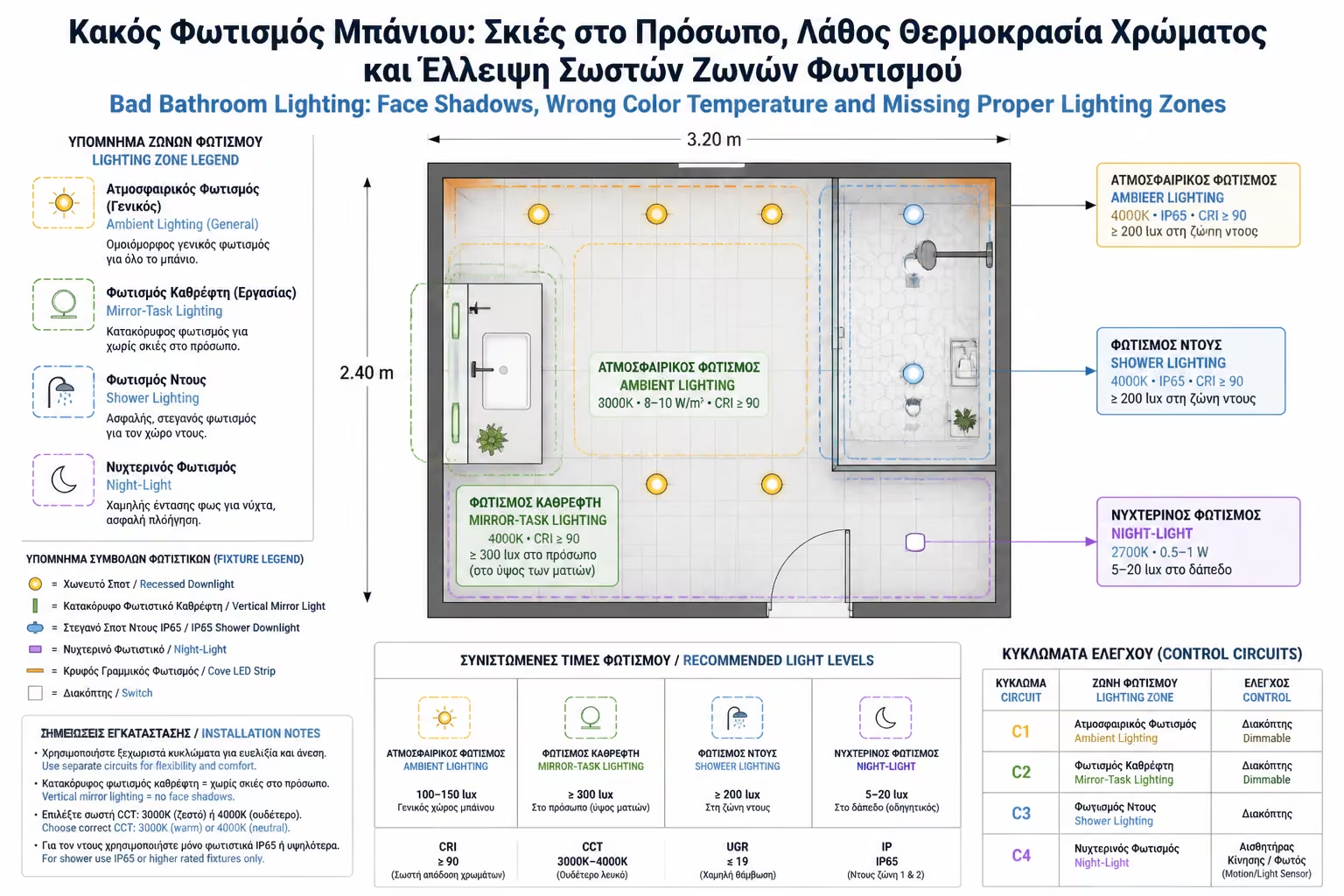
1. General lighting
This is the room’s base layer of light and usually comes from a ceiling fixture, recessed spots, or linear lighting.
2. Mirror lighting
This is the most important daily-use lighting because it affects shaving, makeup, and all face-care tasks.
3. Shower lighting
Bathrooms with enclosed cabins, dark tiles, or deep shower recesses may need a dedicated shower light.
4. Ambient or night lighting
It is not mandatory in every bathroom, but it can significantly improve nighttime use without turning on the whole room.
5. Task and cleaning lighting
You need enough clarity to reveal stains, limescale, moisture, and small details that otherwise stay hidden.
4. The Mistake of Face Shadows
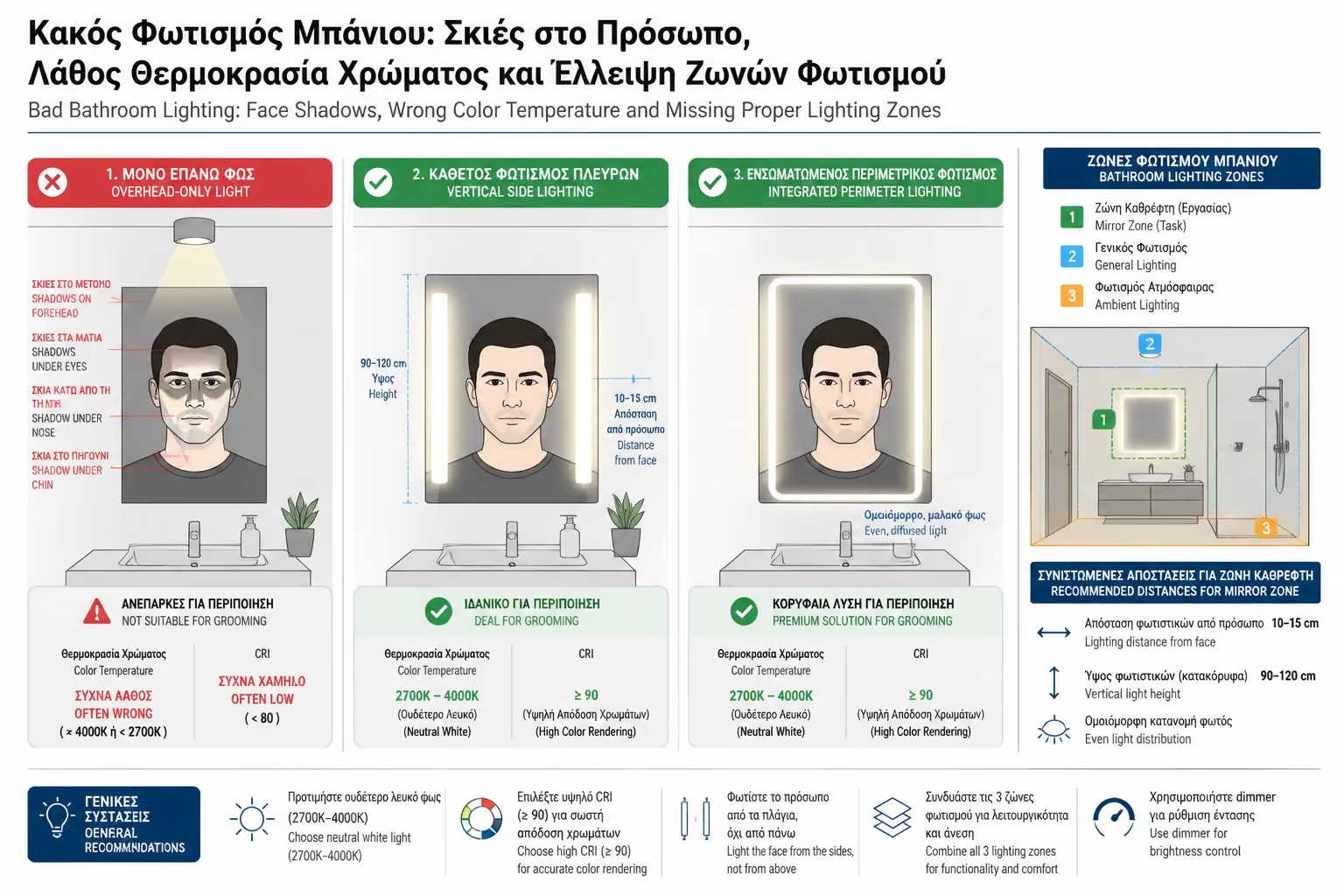
The biggest mirror-lighting mistake is not a lack of brightness, but poor light placement. When the light falls only from above, the face is lit unevenly and loses natural clarity.
That becomes obvious immediately when shaving, applying makeup, or doing anything that depends on seeing details without distorted shadows.
Where shadows appear
Under the eyes
Under the nose
Under the lips
On the chin
Across the neck
Better solutions
Fixtures to the left and right of the mirror
A mirror with integrated perimeter lighting
A linear fixture placed in front of the face, not far back on the ceiling
A combination of mirror lighting and general lighting
If you end up choosing a fixture only above the mirror, it should diffuse light properly and should not be positioned too high or too far back.
5. Mirror Lighting: What You Need to Check
The mirror is the point where bathroom lighting must be most disciplined. It is not enough for it to look attractive. It also has to be accurate, comfortable, and safe in daily use.
What it should achieve
Light the face evenly
Avoid glare
Prevent harsh shadows
Use an appropriate color temperature
Offer good color rendering
Be safe for bathroom use
Practical solutions
A mirror with built-in LED lighting
Wall lights to the left and right
A linear fixture above the mirror
Backlighting behind the mirror as a supplement
A lit mirror-cabinet combination
Backlighting behind the mirror can look elegant, but it is often not enough on its own for shaving or makeup. In most cases it works better as an ambient supplement than as the main face light.
6. Color Temperature: Too Cool or Too Warm
Color temperature is measured in Kelvin and has a major effect on how a bathroom feels. It influences not only the atmosphere, but also how naturally skin, surfaces, and colors appear in front of the mirror.
The right choice depends on the tiles, the available daylight, and the overall mood you want the room to have.
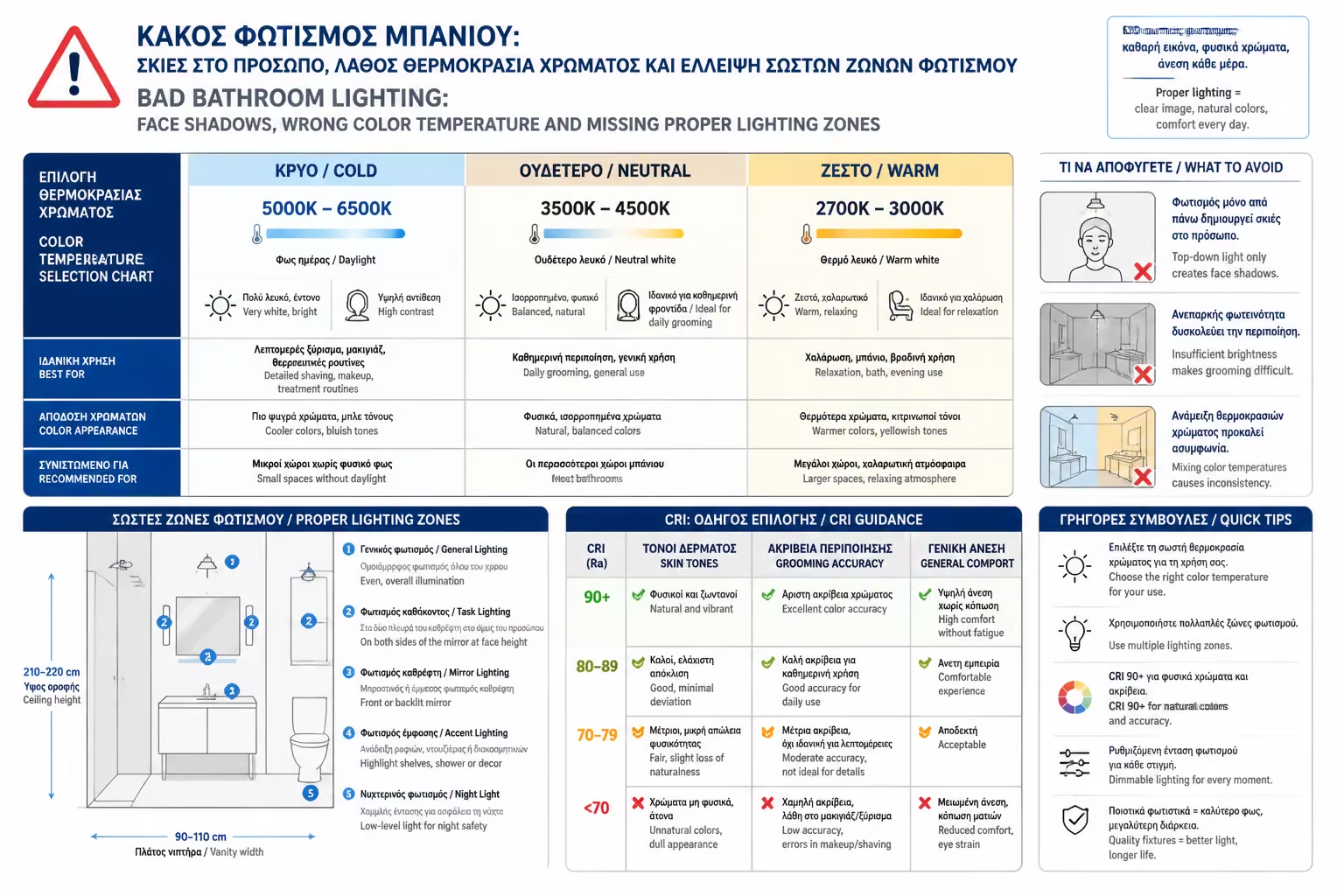
Very warm light
Around 2700K it creates a softer, more yellow atmosphere. That can work beautifully in a living room or bedroom, but in a bathroom it can easily distort the sense of clarity and the appearance of the face.
Very cool light
At 6000K to 6500K the result becomes cold, hard, and often clinical. The bathroom feels less welcoming and more tiring in everyday use.
The most balanced range
For most bathrooms, a practical and pleasant choice sits somewhere between 3000K and 4000K.
3000K
Warmer and more welcoming.
3500K
A strong balance between warm and neutral.
4000K
Cleaner and more neutral, often ideal for mirror use and daily preparation.
7. Color Rendering: The Point People Rarely Ask About
Kelvin is not the whole story. It also matters how faithfully the light renders colors. Cheap or poor-quality LEDs can distort the appearance of skin, the face, and even the materials in the room.
Why it matters
For more accurate makeup
For cleaner shaving
For better face-care routines
For a more natural view of skin and hair
For a truer sense of the room’s colors
For a more reliable everyday experience overall
What to ask for
You do not need to become a lighting specialist. It is enough to ask for lighting suitable for mirror use and daily grooming, not just a decorative LED fixture of unknown quality.
8. Bad Ceiling Spot Placement
Ceiling spots can create a clean, modern result, but placed badly they become a source of shadows. The most common mistake is putting them directly above the head when someone stands in front of the mirror.
They should light the room evenly
They should not create harsh shadows on the face
They should not strike the mirror zone from the wrong angle
They should support mirror lighting, not replace it
In the mirror area, use dedicated face lighting. Ceiling spots can serve the rest of the bathroom, but they should not be expected to do the whole job on their own.
9. A Dark Shower Zone
In many bathrooms, the shower sits in a corner, behind glass, or in front of dark tiles. Without the right lighting, that area feels heavy, closed-in, and awkward to use.
Why it is a problem
The zone feels smaller
Cleaning becomes harder
The enclosure feels more closed and heavy
Limescale or mold can stay hidden
The shower is less pleasant to use
How to avoid it
Lighting near the shower zone
A fixture suitable for wet areas
Lighter tile choices where helpful
A more transparent enclosure
General lighting that actually reaches the shower
Any lighting inside or very close to the wet zone must be rated for that use and installed by a qualified electrician.
10. No Night or Low-Level Lighting
It is not essential in every bathroom, but low-level lighting can make nighttime use much more comfortable. If a harsh white light blasts on every time someone enters, the experience quickly becomes tiring and unpleasant.
A small low-output LED
Discreet lighting under a wall-hung vanity
A motion sensor where appropriate
Mirror lighting at reduced intensity
A separate switch for ambient light
The goal is not to illuminate the whole bathroom. It is to allow safe movement without blasting the eyes.
11. Bad Switch Logic and Control
Even good lighting becomes frustrating if the switches are poorly planned. Everyday usability depends on whether you can turn on the exact zone you need, at the moment you need it.
Common mistakes
All lights turn on together
No separate mirror-light switch
No separate ventilation switch
The switch is placed awkwardly
Night lighting is not easy to control
Mirror lighting turns on only with the main light
Zones worth controlling separately
General lighting
Mirror lighting
Shower lighting
Ventilation
Night or ambient lighting
Not everything has to be on its own dedicated circuit, but the switch logic should reflect how the room is actually used.
12. Fixture Safety in Wet Areas
A bathroom contains water, moisture, and vapor. That means you cannot place just any decorative fixture anywhere simply because it looks good.
Appropriate protection for wet environments
Proper installation by an electrician
No improvised exposed wiring
Correct placement of sockets and feeds
Protection near splash zones
Compatibility with LED mirrors or lit cabinets
Do not choose a bathroom light only because you like the style. It also has to be appropriate for the exact location where it will be installed.
13. How Tiles Affect Lighting
Tiles have a major effect on how light behaves inside a bathroom. Lighting should not be designed separately from the finishes, but in direct relation to them.
Dark tiles
They absorb more light and make the room demand better planning if you want to avoid a heavy, compressed feel.
Glossy tiles
They reflect more light, but they can also produce glare and harsh reflections if fixtures are placed badly.
Matte tiles
They create a calmer effect, but often need a little more light so the space does not feel dull.
Textured tiles
They emphasize texture and shadow. That can look beautiful or too severe, depending on the direction of the light.
14. How Much Light a Bathroom Needs
There is no single answer that fits every bathroom. The right amount of light depends on the room size, daylight, finishes, and how the space is used.
The size of the bathroom
The amount of natural light
The colors of the surfaces
The type of tiles used
The size and location of the mirror
The room’s daily use pattern
Whether the shower sits in a closed or deep corner
In general, a small bathroom with light-colored tiles needs less light than the same room finished in dark matte materials. Even so, distribution matters more than brute intensity. One excessively bright light in the wrong place can be worse than two or three softer fixtures arranged properly.
15. What Must Be Planned Before the Tiles Go In
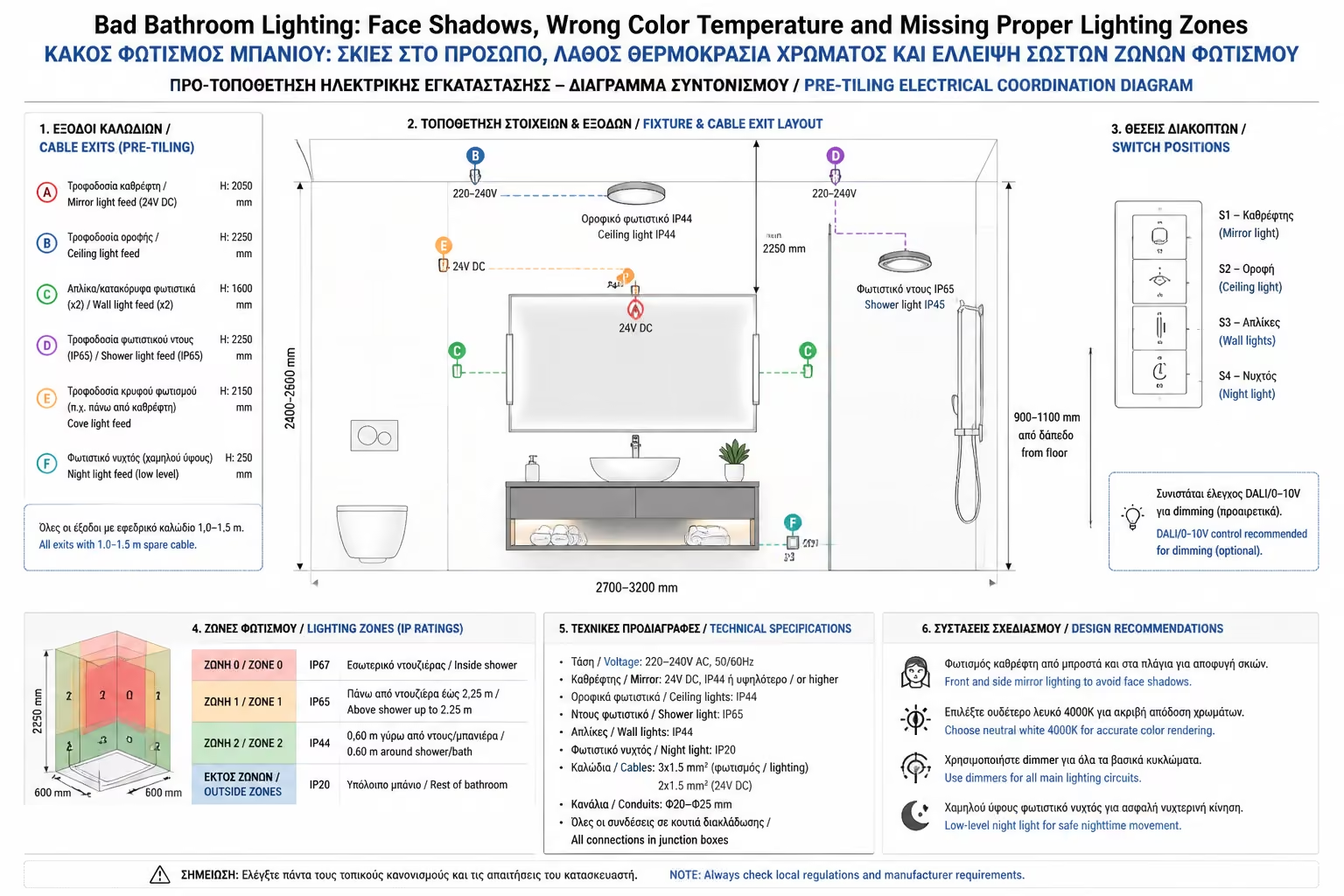
Lighting decisions must be made before the walls are closed and before the tiles are installed, because that is when the electrical feeds and final positions are set.
If the decision is postponed, the result is often improvised wiring, visible trunking, or forced compromises that damage both the look and the usability of the bathroom.
Wiring runs
Switch positions
Feeds for an LED mirror
Wall-light positions
Spot locations
Shower lighting
Sockets
Ventilation
Any sensor or dimmer
16. Common Bathroom Lighting Mistakes
The table below summarizes the most common mistakes and the practical problems they create.
| Mistake | What it causes |
|---|---|
| A single ceiling fixture | Shadows and poor usability in front of the mirror. |
| Light only above the mirror | Face shadows and poor detail visibility. |
| Very cool light | A hard, cold, clinical atmosphere. |
| Very warm light | Color distortion and reduced visual clarity. |
| An LED mirror used only for effect | Attractive appearance but inadequate practical lighting. |
| A dark shower zone | More difficult use, cleaning, and visual inspection. |
| All lights on one switch | Poor day-to-day functionality. |
| Fixtures unsuitable for humidity | Risk of damage or safety issues. |
| No early wiring plan | Improvised solutions after the tiles are installed. |
| No connection between lighting and tile choices | A false sense of space, glare, or excessive darkness. |
17. A Practical Setup for a Typical Bathroom
In a typical bathroom, the sensible goal is not to fill the ceiling with fixtures but to create a clear, balanced lighting hierarchy.
General ceiling lighting
Proper mirror lighting
A separate feed for ventilation
Optional low-level night lighting
Extra light in the shower if that zone stays dark
In a small bathroom, the answer is not more fixtures everywhere. It is the right fixtures in the right places. In a larger bathroom, separate lighting zones become even more important because one source cannot cover the space properly.
18. Lighting Checklist Before Renovation
Before the work begins, answer the following questions. If several answers are negative, the lighting plan needs improvement.
| Question | Yes / No |
|---|---|
| Is there separate mirror lighting? | Yes / No |
| Does the mirror light illuminate the face without shadows? | Yes / No |
| Has the right color temperature been selected? | Yes / No |
| Is there enough light in the shower? | Yes / No |
| Are the fixtures suitable for bathroom use? | Yes / No |
| Have the switches been divided logically? | Yes / No |
| Has power been planned for an LED mirror? | Yes / No |
| Has ventilation been planned? | Yes / No |
| Do the tile choices affect the lighting plan? | Yes / No |
| Has the lighting been decided before the tiles go in? | Yes / No |
💡 The Engineer's Advice
Do not treat bathroom lighting like a simple ceiling fixture. A bathroom needs general light, proper mirror light, and in many cases dedicated attention for the shower zone as well. The most common mistake is light that comes only from above and fills the face with shadows. For daily grooming, shaving, or makeup, the mirror must be lit from the front and as evenly as possible. Pay close attention to color temperature too: very cool light makes the room feel harsh and uncomfortable, while very warm light can distort colors. In most bathrooms, a range around 3000K to 4000K is the most balanced solution. Above all, make lighting decisions before the tiles go in, so the wiring, switches, mirror feed, sockets, and ventilation can all be planned correctly.
Conclusion
Bad lighting can ruin even an expensive bathroom. Attractive materials are not enough if the room does not work properly in daily life.
One ceiling light doing all the work
Shadows across the face
The wrong color temperature
Mirror lighting used only as decoration
A dark shower zone
Fixtures unsuitable for humidity
Bad spot placement
Poor switch logic
Lighting designed only after the tiles are installed
A good bathroom needs lighting zones: general light for the room, proper mirror light for the face, enough light in the shower, and, where useful, a lower-output option for nighttime use.
Lighting is not a decorative side note. It is a core part of bathroom function, safety, and atmosphere. When it is designed properly from the start, the room becomes not only more beautiful, but also more comfortable, practical, and enjoyable every day.
Related Articles
Ergonomics & Safety Distances in the Bathroom: The Ultimate Technical Guide Bathroom Spatial Mistakes: Doors That Slam on the Basin, Narrow Cubicles, and Spaces That Don't Work The 10 Biggest Bathroom Remodeling Mistakes: The Ultimate Guide to Homeowner Regrets After the Project The Ultimate Bathroom Renovation Guide: The Correct Order of Work from A to Z
Bathroom Renovation & Design Guide
Return to category.
Go to categoryCentral Guide
Return to the central guide.
Go to guide