
Water regularly reaching the floor
Bathroom Tile Pitfalls: From Slippery Floors to Textured Surfaces That Are Hard to Clean
Choosing tiles is one of the most enjoyable phases of a bathroom renovation because that is when the room starts to gain character. Colors, textures, patterns, and tones help the owner imagine the finished result.
In a bathroom, though, tiles cannot be chosen on aesthetics alone. They also need to cope with moisture, water, limescale, cleaning products, daily use, and frequent maintenance.
A tile that looks impressive in the showroom can become a poor choice when installed on a slippery floor, inside a tight shower, or on a wall that constantly collects limescale. Most problems are not visible on the day of purchase. They show up later, when the bathroom starts being used for real.
The right tile choice has to balance three things at once: appearance, safety, and ease of maintenance.
1. Bathroom Tile Is Not Just Decoration
In some other rooms of the house, tile can be chosen almost entirely by appearance. In a bathroom, it has to perform under much more demanding conditions.
Steam and long-term humidity
Soap and shampoo exposure
Limescale and splash marks
Frequent cleaning products
Heavy daily use, corners, and many joints
Real slipping risk
Before choosing a tile, you need to know where it will go, how often it will get wet, how easy it is to clean, whether it has slip resistance, and whether it increases installation cost. A beautiful tile that does not match bathroom use can easily become a daily frustration.
2. Pitfall 1: Ignoring the R Slip-Resistance Rating
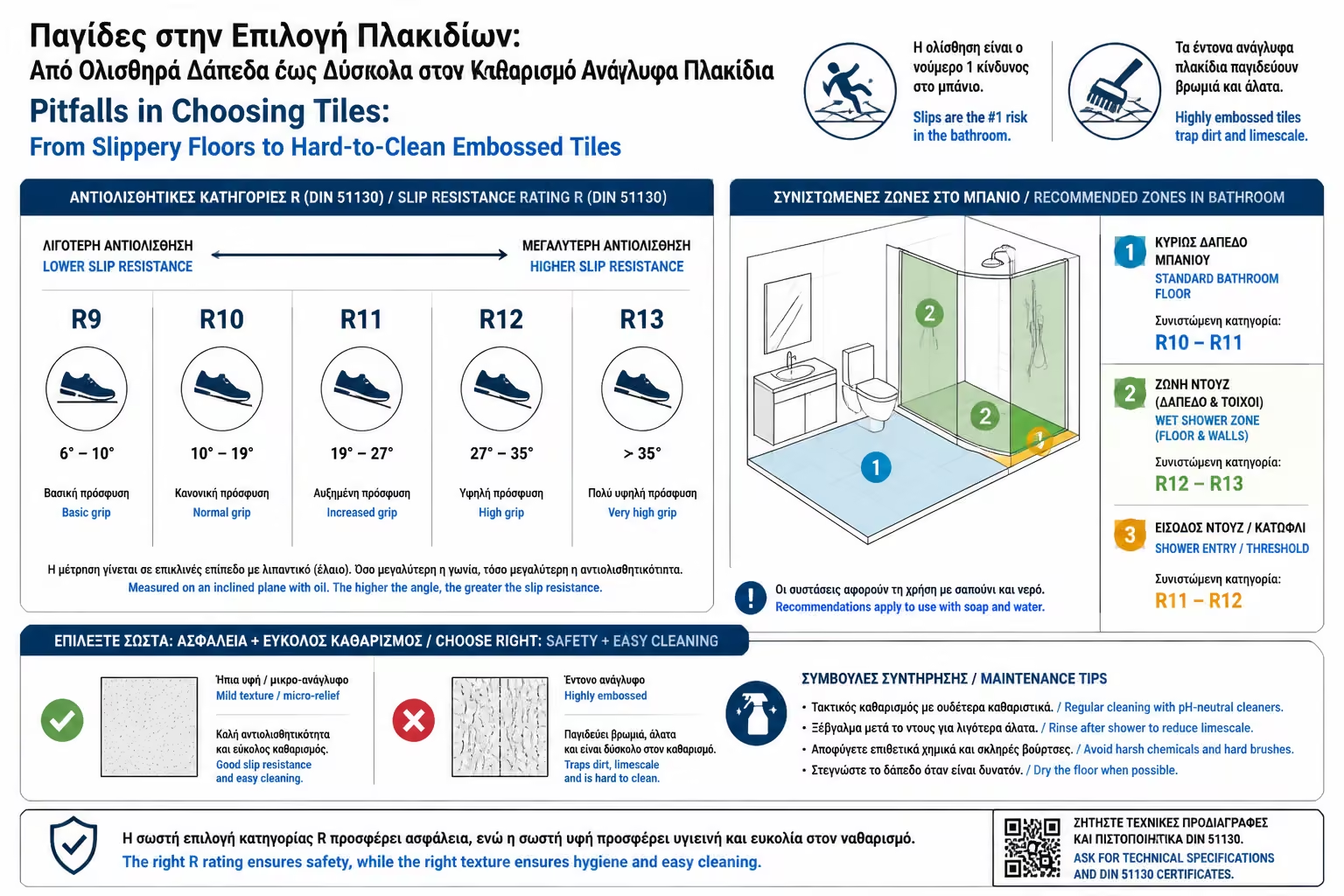
The most serious mistake in choosing floor tiles is ignoring slip resistance. In a bathroom, the floor gets wet regularly, and an overly smooth or glossy surface can become dangerous very quickly.
The R rating indicates how slip-resistant a surface is. The higher the number, the greater the resistance to slipping. In bathrooms, and especially in showers, safety has to come before visual shine.
R9
Low slip resistance. Better suited to dry interior spaces.
R10
Often a safer option for many domestic bathrooms.
R11
More appropriate for wetter zones, walk-in showers, and wet rooms.
R12-R13
Very high slip resistance, usually for more demanding or professional settings.
The practical takeaway
Do not choose a floor tile only because it matches the wall tile or looks attractive in the showroom. Always ask for the technical specifications.
3. Pitfall 2: Using Glossy Tile on the Floor
Glossy tiles can look bright, clean, and luxurious. On walls, they can work beautifully. On a bathroom floor, though, they require much more caution.
They increase slipping risk
They create a sense of insecurity after showering
They often lead to permanent use of bath mats
They are less forgiving for children or older users
Why this becomes a problem
Once a glossy floor gets wet, especially with soap, it can become very slippery. A visually elegant choice can turn into a daily safety risk.
How to avoid it
If you like the glossy look, keep it mainly on the walls. For the floor, a matte or satin finish with suitable slip resistance is usually the smarter choice.
4. Pitfall 3: Using Wall Tile on the Floor
Wall tile and floor tile are not interchangeable. The fact that a tile is ceramic or porcelain does not automatically mean it is appropriate for every surface.
It may be more slippery than expected
It may wear more easily under foot traffic
It may crack more easily
It may not behave well in a wet environment
It may not have the right slip-resistance rating
What to ask before buying
Confirm whether it is rated for floors, whether it is suitable for bathrooms, what the R rating is, and what use the manufacturer actually recommends.
The core lesson
Never assume a wall tile can automatically be moved to the floor simply because it matches the overall design.
5. Pitfall 4: Choosing Textured Wall Tiles Without Thinking About Limescale
Textured wall tiles can create shadows, depth, and a strong decorative effect. Inside the shower zone, however, they can become a permanent cleaning problem.
They trap limescale in recesses
They hold onto soap and shampoo residue
They collect moisture and dirt in harder-to-reach areas
They demand more persistent and frequent cleaning
Where they make more sense
They work better behind the sink, on a feature wall, in a guest WC, or in an area that does not get soaked constantly.
Where caution matters most
Inside the shower, especially in hard-water areas, a smoother and easier-to-clean surface is usually the safer long-term decision.
6. Pitfall 5: Choosing Very Dark Tiles in a Hard-Water Area
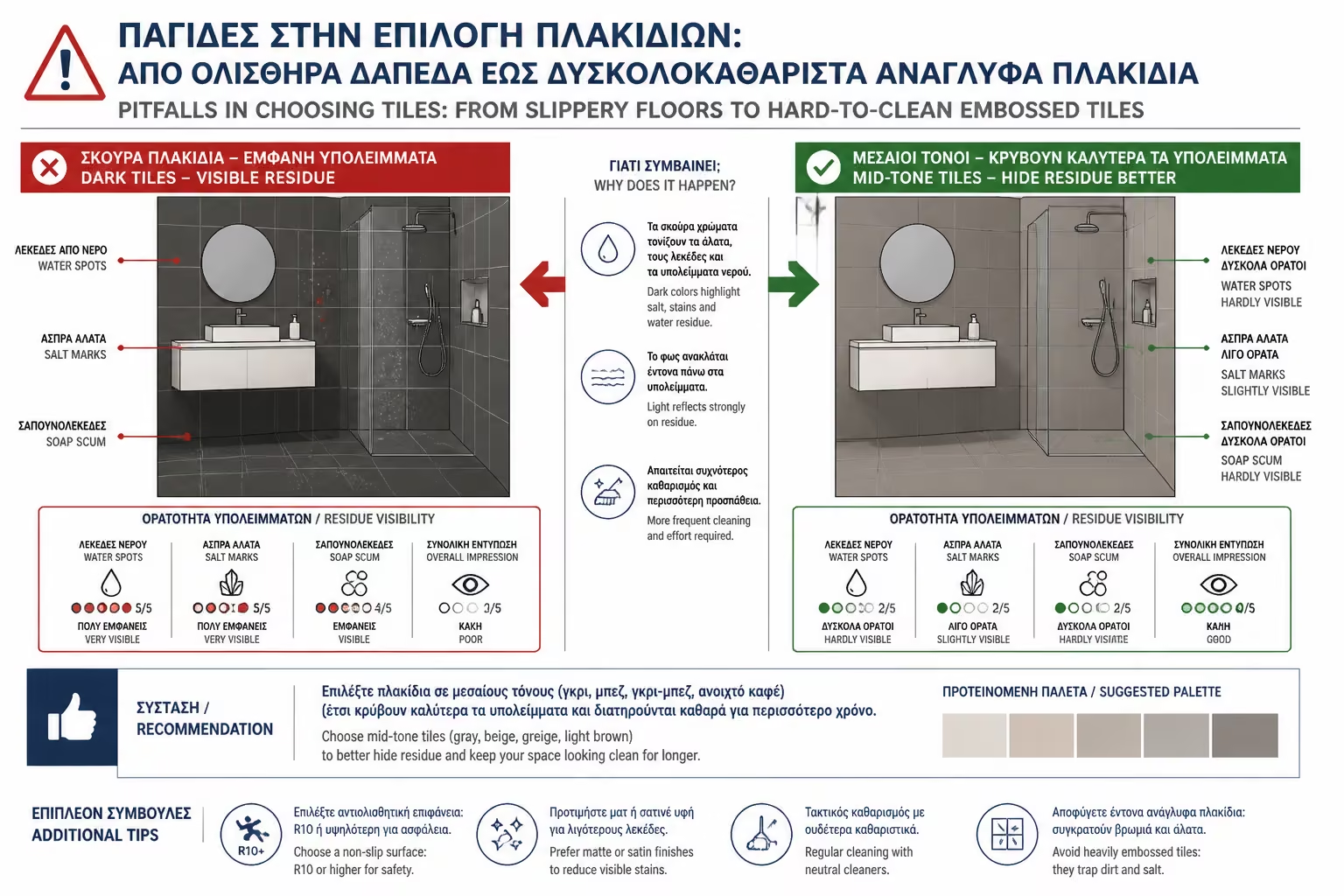
Dark tiles can be extremely striking and modern. Black, charcoal, and deep grey tones often look impressive in bathroom design.
In hard-water areas, however, dark surfaces show white marks, droplets, and residue much more easily.
Water droplets
Limescale
Soap marks
Fingerprints
Dust
Cleaning-product residue
What that means in practice
It does not mean you should never choose dark tiles. It means you should understand clearly that they usually require more frequent and more careful maintenance.
How to manage the risk
Use them more confidently on walls that do not stay wet all the time, avoid them inside the shower if you do not want frequent wiping, and remember that mid-tones are often far more forgiving.
7. Pitfall 6: Using Very Small Tiles Everywhere
Small-format tiles and mosaics can be beautiful. On a shower floor they can even help with slopes and grip because they create more joint lines.
If they are used across the whole bathroom, though, the number of joints increases dramatically, and so does the cleaning and maintenance burden.
Joints get dirty more easily
They hold more moisture
They require more frequent upkeep
They can make the room feel visually busier
Where they make the most sense
On the shower floor, inside a niche, on a small decorative area, or in a zone that genuinely benefits from the smaller format.
Where caution is smarter
On large surfaces, the result is often much more demanding to maintain. There, a tile with fewer joints is usually more practical.
8. Pitfall 7: Installing Very Large Tiles in a Very Small Bathroom Without a Plan
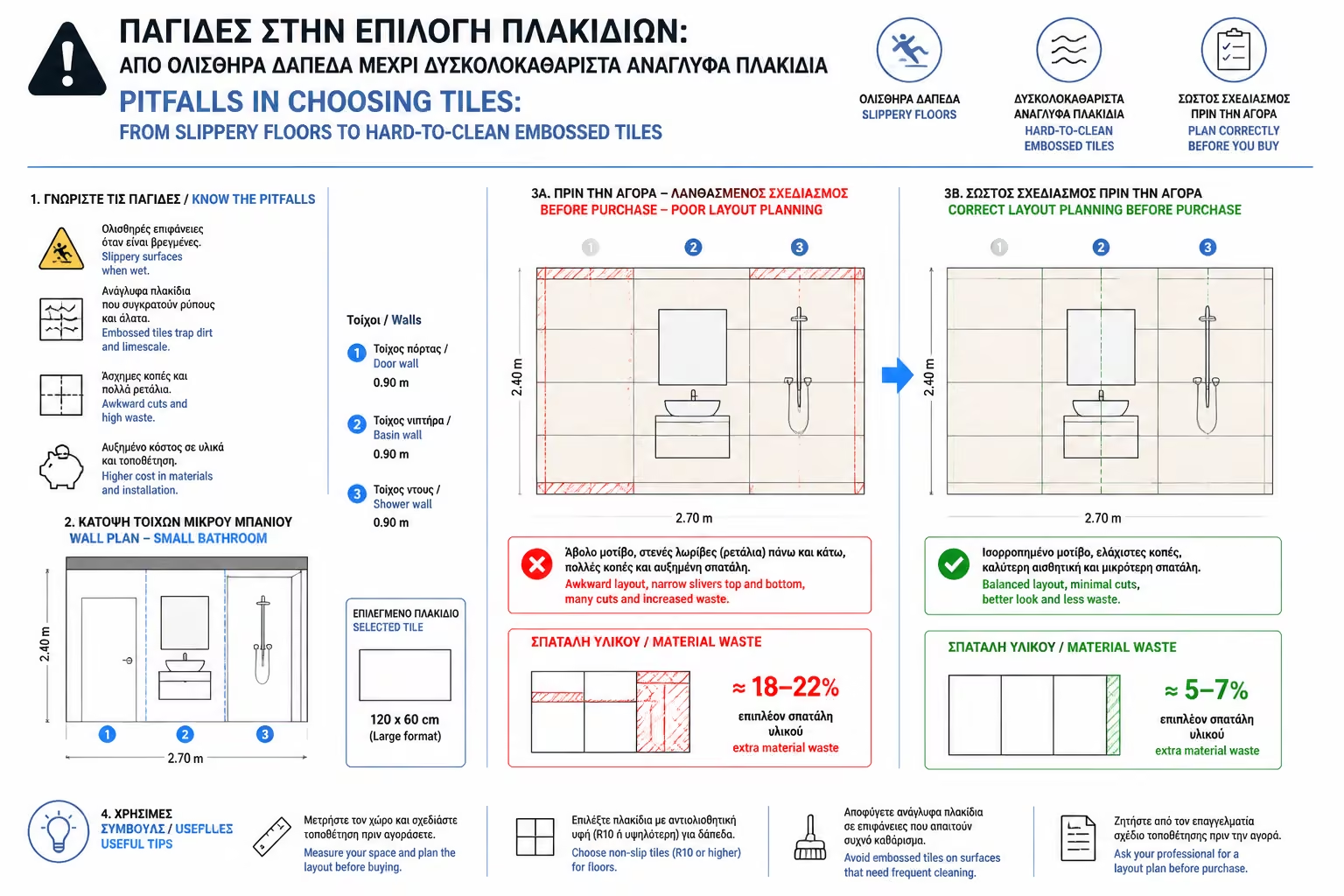
Large-format tiles, such as 60x120 cm, can create a clean and modern effect. In a small bathroom, though, they need serious planning before anyone buys them.
If the room has many corners, pipes, recesses, windows, or short wall sections, large tiles can lead to a lot of cuts, higher waste, and more expensive installation.
They increase purchase and installation cost
They increase waste
They demand better wall flatness and leveling
They can lead to awkward cuts if not planned carefully
They increase labor time
What to do before deciding
Measure the walls, check where the cuts will fall, talk to the tiler, and ask for realistic calculations for waste and higher labor cost.
The key takeaway
Large tiles can be beautiful, but they are not automatically the most economical or practical option for every small bathroom.
9. Pitfall 8: Not Allowing for Waste
Waste means the extra tiles needed because of cuts, breakage, layout patterns, and future repairs. Many homeowners calculate the exact square meters and buy only that amount. That is a mistake.
The same batch may not be available later
A later batch may have a tone difference
The project may be delayed
You may be forced to change the design
You may be left with unattractive cuts and no fallback
Rule of thumb
A typical estimate is around 10% extra for simple layouts and 15% or more for diagonal layouts, large tiles, heavy cutting, or small rooms with many corners.
What is worth doing in addition
Keep a few spare tiles for future repair so you do not have to search later for the same design or the same production batch.
10. Pitfall 9: Not Keeping Spare Tiles
Even if the renovation finishes perfectly, keeping a few tiles aside is extremely useful.
You may need a pipe repair
You may need to replace a drain or trap
A single tile may crack later
A small repair may be needed years down the line
How many to keep
It is usually worth keeping 2 to 3 floor tiles, a few wall tiles, or even one small box if the product is more unusual.
What else to save
Keep the product code or series information with them and store the tiles somewhere they will not be damaged.
11. Pitfall 10: Ignoring the Grout
Grout is not a minor detail. It affects the appearance of the bathroom, the ease of cleaning, and the long-term durability of the installation.
Very light grout that stains too easily
Very dark grout that over-emphasizes the pattern
Wrong grout width
Poor application
Cheap grout used in a wet zone
Joints that are hard to keep clean
What to consider about color
Grout close to the tile tone gives a calmer result. Strong contrast can make the pattern more lively, but it also highlights every imperfection.
What to specify
Choose grout suitable for bathrooms and wet areas. Inside the shower zone, quality and correct application matter even more.
12. Pitfall 11: Choosing Tiles That Do Not Match the Size of the Bathroom
A tile can look great on its own and still fail inside the actual room. In a small bathroom, an overly intense pattern can feel tiring, a very dark tile can visually shrink the space, and a very small tile can flood the room with joint lines.
How to evaluate it properly
Look at the tile in natural light, next to the other materials, on as large a sample as possible, and together with the grout color you are considering.
What to avoid
Do not decide only from a small photo or a tiny sample. What matters is how the tile behaves inside the real bathroom.
13. Pitfall 12: Not Asking the Tiler Before Buying
The tiler is the person who will actually have to work with the material. If you ask only after the purchase, it may already be too late to correct a poor decision.
Is it easy or difficult to install?
Does it need a special adhesive?
Does it involve significant waste?
Is it a warped or demanding product?
Does it require special grout?
Is it really suitable for wall or floor use?
Will it increase labor cost?
Does it truly fit the bathroom dimensions?
Will special trims or additional details be needed?
A short conversation before placing the order can save major surprises in cost, waste, and installation difficulty.
14. Which Tile to Choose for Each Zone
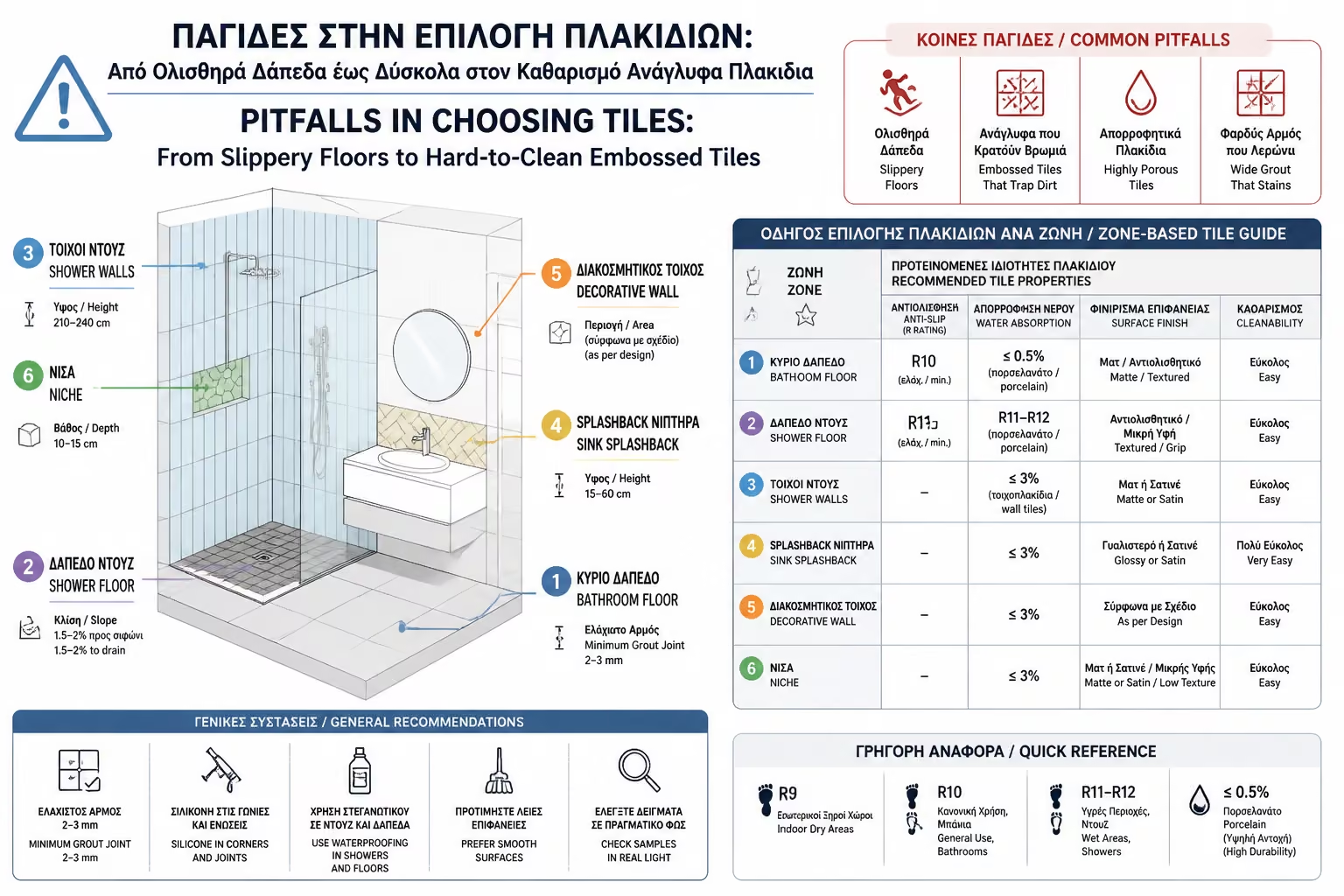
| Zone | What to prioritize |
|---|---|
| Bathroom floor | Slip resistance, easy cleaning, and durability. |
| Shower floor | Even more attention to slipping and proper slopes. |
| General wall areas | Appearance, cleaning, grout behavior, and moisture suitability. |
| Shower zone walls | Smooth, easy-clean surfaces, limited texture, and correct waterproofing behind. |
| Behind the sink | Resistance to splashes and easy cleaning. |
| Feature wall | This is where more distinctive patterns or textures can work. |
| Niche | Careful attention to cuts, grout, slope, and waterproof detailing. |
15. Checklist Before Buying Tiles
Before paying for the order, step back and review the essentials calmly.
| Question | Yes / No |
|---|---|
| Is it suitable for the floor, or only for the wall? | Yes / No |
| Does it have the right R rating for its location? | Yes / No |
| Does it become slippery when wet? | Yes / No |
| Is it easy to clean? | Yes / No |
| Will it show limescale heavily? | Yes / No |
| Does it have strong texture in a wet zone? | Yes / No |
| Does it fit the size of the bathroom? | Yes / No |
| Has waste been calculated? | Yes / No |
| Have spare tiles been kept? | Yes / No |
| Has the tiler been consulted before purchase? | Yes / No |
| Has possible increased labor cost been considered? | Yes / No |
If you cannot answer most of these, it is better not to finalize the purchase yet.
16. Where It Is Worth Paying More Attention
If the budget is tight, the priority should not be only visual impact. It should be the long-term functioning of the bathroom.
The floor’s slip resistance
Ease of cleaning inside the shower zone
The quality of the adhesive and grout
Correct installation
Proper waterproofing below the finish
You can choose a more economical tile as long as it is suitable for the job. You do not need the most expensive tile. You need the right tile in the right place.
17. Where You Can Experiment More Safely
If you want a more distinctive design, it is better to experiment in lower-risk areas rather than in the zones where safety and cleaning are critical.
On a feature wall
Behind the sink
On a small vertical accent strip
In a guest WC
Inside a properly built niche
On a wall that does not stay constantly wet
On the floor and inside the shower zone, bold experimentation often costs more in real life than it gives back in the first visual impression.
💡 The Engineer's Advice
Do not choose bathroom tiles only from a photo or only because they looked attractive in the showroom. Ask where they will be installed, how wet they will get, whether they become slippery, how they clean, and whether they are actually suitable for wall or floor use. For floors, give special weight to slip resistance. A glossy tile may look impressive and still become dangerous when wet. In the shower zone, avoid overly textured surfaces that trap limescale and soap. The right tile is not always the most expensive one. It is the tile that matches the use, the room, the installation team, and the way the bathroom will be lived in every day.
Conclusion
Tile selection is one of the most important bathroom-renovation decisions because it affects not only the visual result but also safety, cleanliness, maintenance, and installation cost.
Avoid glossy or slippery floors
Do not ignore the R rating
Do not use wall tile on the floor
Avoid heavy texture inside the shower zone
Be careful with very dark tiles in hard-water areas
Do not overload the room with excessive joints
Do not choose large-format tiles without a cutting plan
Calculate waste properly and keep spare tiles
Speak with the tiler before finalizing the order
Before buying tiles, look beyond the color and the pattern. Check slip resistance, suitability, cleaning behavior, waste, and installation logic. The tile you choose will be seen and used every day for many years. It is worth making it the right choice, not just an impressive one.
Related Articles
Phase 6 - Tile Installation & Grouting: The Visible Face of the New Bathroom How to Reduce Bathroom Renovation Cost Without Sacrificing Quality The 10 Biggest Bathroom Remodeling Mistakes: The Ultimate Guide to Homeowner Regrets After the Project Bathroom Spatial Mistakes: Doors That Slam on the Basin, Narrow Cubicles, and Spaces That Don't Work
Bathroom Renovation & Design Guide
Return to category.
Go to categoryCentral Guide
Return to the central guide.
Go to guide