What the owner often assumes
Rubble removal
Plumbing and drainage
Waterproofing
Adhesives and grout
Final cleaning
VAT and warranty
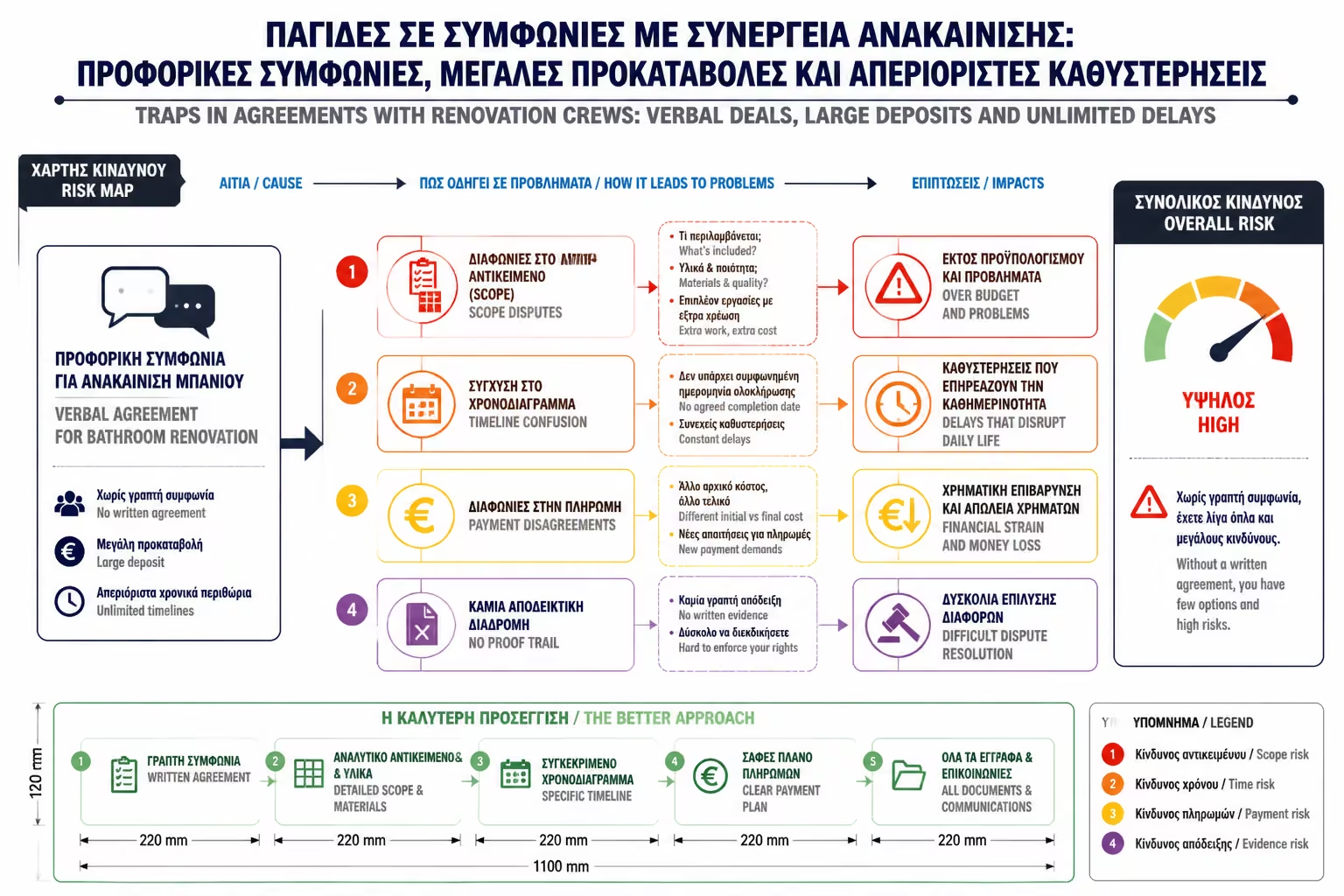
Bathroom renovations do not go wrong only because of bad workmanship. They also go wrong because of bad agreements. When nobody has clearly written what is included, when it will be delivered, and how it will be paid, every delay or extra charge becomes a conflict.
A proper agreement is not a sign of distrust. It is a way to give both owner and contractor a clear framework.
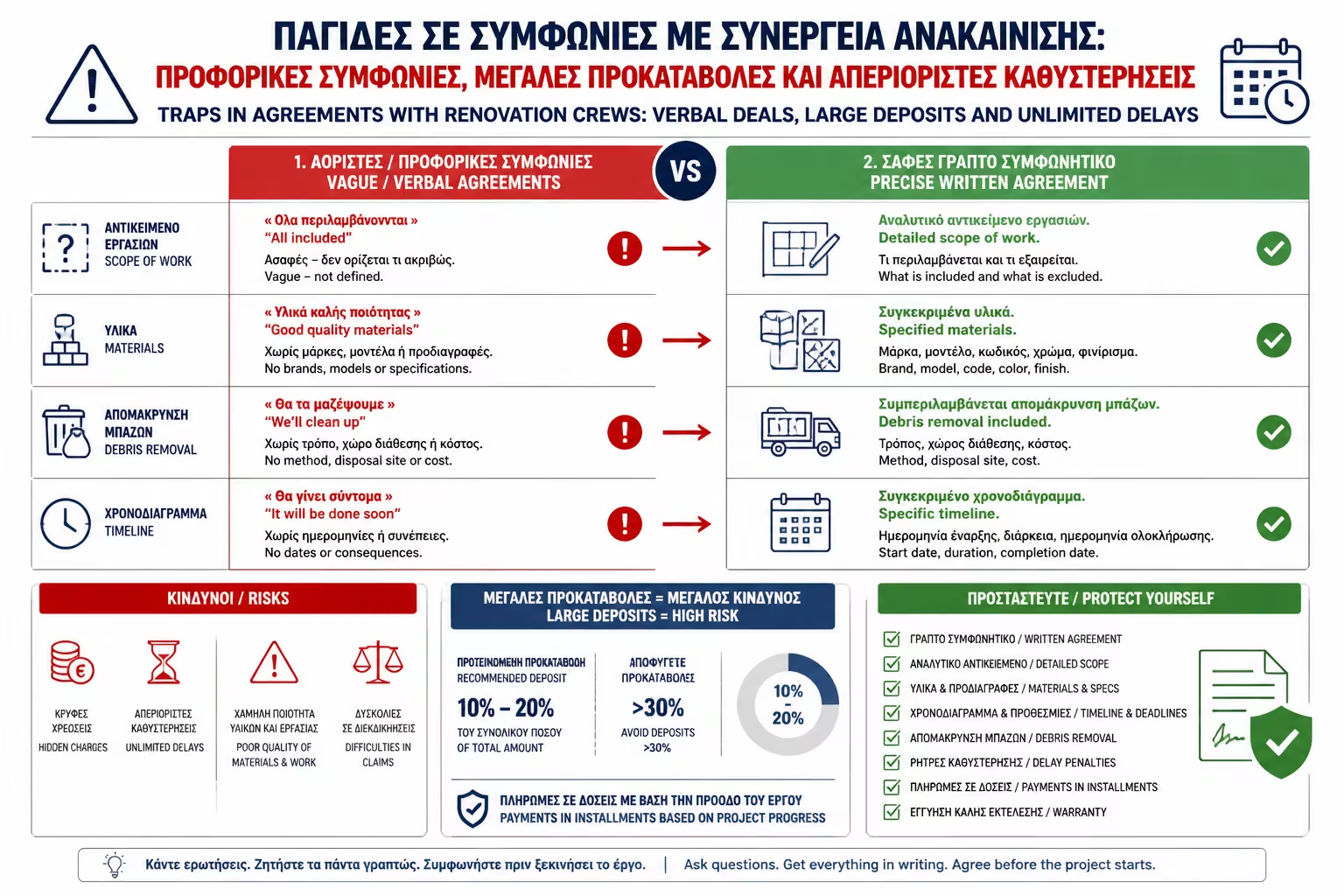
In a full bathroom renovation, a verbal agreement leaves too many gaps. The owner remembers an “all included” package, while the crew may believe it agreed only to basic labor or a limited scope.
The more stages and trades the project includes, the more dangerous it becomes to rely only on spoken promises.
Rubble removal
Plumbing and drainage
Waterproofing
Adhesives and grout
Final cleaning
VAT and warranty
Basic labor only
Limited scope of work
No materials or unforeseen conditions
No extra patching or repairs
No responsibility for material delays
The phrase sounds reassuring, but without breakdown it means nothing. “All in” must become a real list of included work, included materials, and exclusions.
Are plumbing and drainage included?
Is waterproofing included?
Are adhesives and grout included?
Are sanitary items included or only their installation?
Are rubble removal and cleaning included?
Is VAT included?
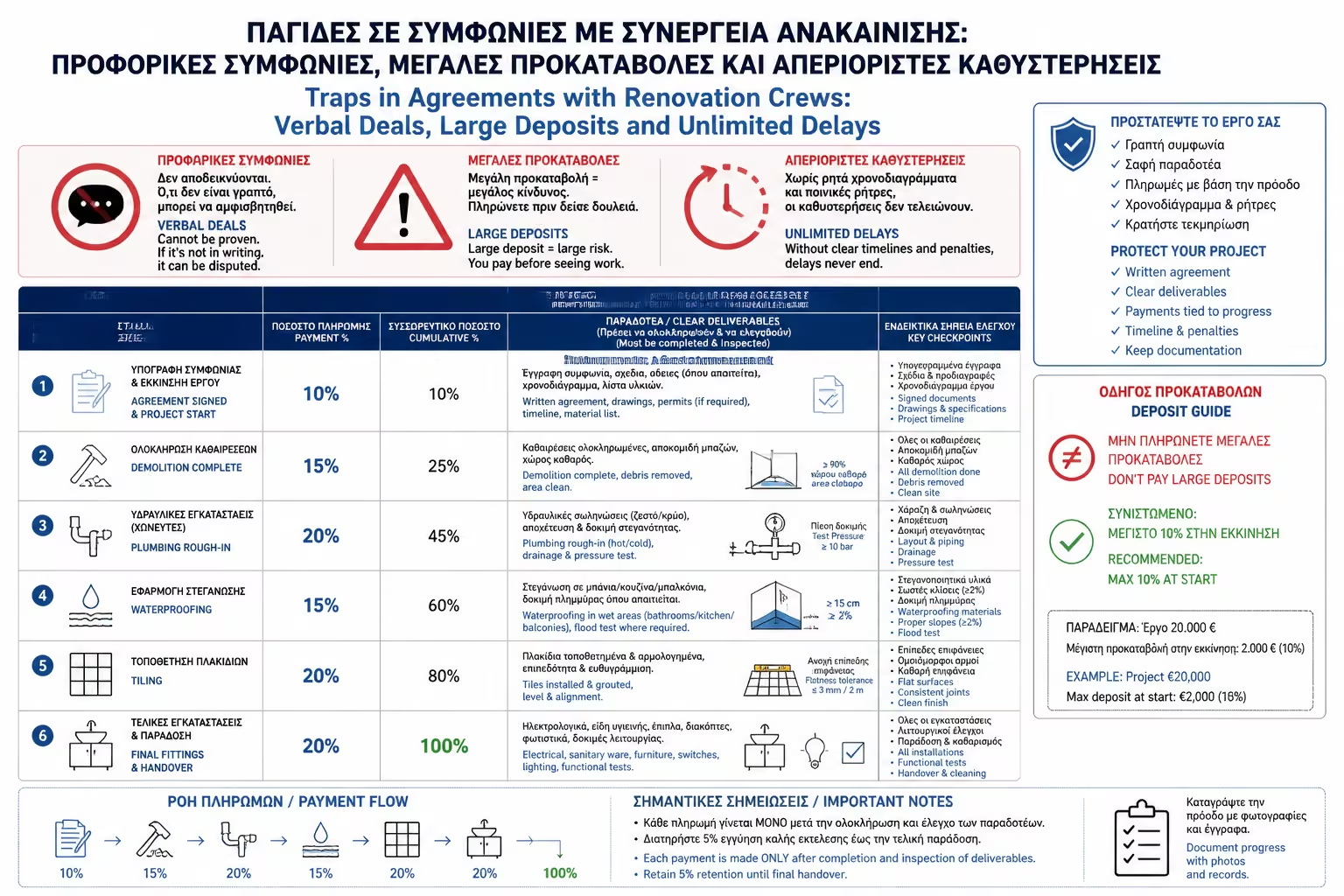
A deposit is not automatically wrong. The problem is a large deposit with no clear purpose and no connection to a defined first stage.
It is tied to initial material purchases
It is written into the agreement
There is a receipt or invoice
There is a confirmed start date
A large sum is requested before work begins
There is no written quote
There is no receipt
A second deposit is requested before visible progress
The cleanest arrangement is to connect payments to work stages and deliverables. That way the contractor does not finance the whole project alone, and the owner does not overpay before seeing real progress.
| Stage | Indicative payment |
|---|---|
| Signature / date reservation / first materials | 10% - 20% |
| After removals and plumbing start | 20% - 30% |
| After infrastructure and preparation are complete | 20% - 25% |
| After tiling | 20% - 25% |
| After final handover and inspection | 10% - 15% |
“We will finish in a week” is not a schedule. A real schedule defines when the project starts, the major stages, and how delays caused by materials or owner changes are handled.
Start date
Estimated duration
Main work stages
Rule for materials and owner changes
The work drifts with no limit
The owner cannot plan life around the bathroom outage
Payments detach from real progress
For a tiny job it may be unnecessary. For a full renovation, especially in an occupied home or with a fixed deadline, a simple delay clause or at least a written rule about unjustified delay has real value.
Delay caused by the crew
Delay caused by unforeseen technical conditions
Delay caused by material supply
Delay caused by owner-requested changes
The owner should not be left unprotected against unjustified delay, and the contractor should not be penalized for delays they did not cause.
It is not enough for an agreement to say “plumbing completed” or “preparation finished.” You need to know exactly what each stage means, otherwise payment happens without a clear inspection standard.
| Stage | Deliverable |
|---|---|
| Removals | Removal of old materials and site cleaning |
| Plumbing | New feeds / drains and testing |
| Preparation | Plastering, screed, floor falls |
| Waterproofing | Application in shower zone and critical points |
| Tiles | Installation and grouting |
| Handover | Function checks and final cleaning |
Old bathrooms often hide surprises. The mistake is not that surprises exist. The mistake is having no approval process before they become extra cost.
Rotten pipes
Dampness or weak walls
Old drain or poor waste line
Need for extra materials
What was found
What extra work is required
How much it costs
How much it changes the schedule
A payment without record is not just a tax issue. It becomes an evidence problem. Later, it may be impossible to prove how much was paid, when it was paid, and what stage it covered.
Detailed quote
Private agreement
Receipts or invoices
Bank transfers
Progress photos
Written payment confirmations
When the owner speaks to one person but several others show up onsite with no clear lead, responsibility dissolves. Then nobody answers clearly for delays, damage, or workmanship failures.
Who the main contractor is
Who the contact person is
Who approves changes
Who formally hands over the work
Who gives the warranty
“There is a warranty” is not enough. You need to know whether it refers to product warranty, labor warranty, or both.
What is covered
For how long
Who provides it
What is excluded
How it is activated
Mid-project choices often change: different tiles, a different toilet, a more complex vanity, another lighting plan. Those changes affect both cost and time.
What changes
What the price difference is
Whether extra labor is needed
Whether the schedule changes
“From” prices show the lowest possible scenario. They are not a real quote for your actual bathroom.
Bathroom renovation from €2,500
Tile installation from €6/sq.m.
Shower enclosure from €150
Vanity from €200
What exactly is included?
Does it include materials and VAT?
What raises the price?
What is the final price for my project?
The crew is not always the only cause of delay. If tiles, enclosure, vanity, or faucets are not locked early, the project can stall while decisions or deliveries are pending.
Tiles
Sanitary ware
Vanity
Shower enclosure
Faucets and lighting
Accessories affecting installation
You do not need a complicated legal document for every small job. You do need a clear written framework.
Detailed quote
Scope of work and exclusions
Total cost and VAT treatment
Payment schedule
Project timetable
Process for extras
Site lead and warranty terms
Everything verbal
No detailed quote
Large deposit with no deliverable
No start or completion date
No process for extras
No written warranty
Payments without records
| Trap | Risk | Protection |
|---|---|---|
| Verbal agreement | Disputes over what was agreed | Written quote or agreement |
| “All in” without breakdown | Hidden exclusions | Detailed scope description |
| Large deposit | Paying without progress | Stage payments |
| No timetable | Open-ended delay | Start and delivery dates |
| No deliverables | No clear payment checkpoint | Stages with inspection criteria |
| No extra-work approval | Unexpected charges | Written approval before work |
| No payment records | Hard to prove what was paid | Receipts, invoices, transfers |
| No responsible lead | Nobody owns the problem | Named project lead |
A homeowner verbally agrees to a €3,500 bathroom renovation and pays a €1,500 deposit without a detailed quote or receipt. After removals, the crew asks for extra money for plumbing, waterproofing, and rubble disposal because “those were not included.”
The owner believed everything was included. The crew believed it had priced only basic labor. From that point onward, every stage turns into an argument.
The owner asks for a detailed written quote before work starts. The document defines the works, materials, exclusions, payment schedule, timetable, project lead, and the process for extra works.
Reasonable deposit
Stage-based payments
Written approval for extras
Clear timetable
Specific warranty terms
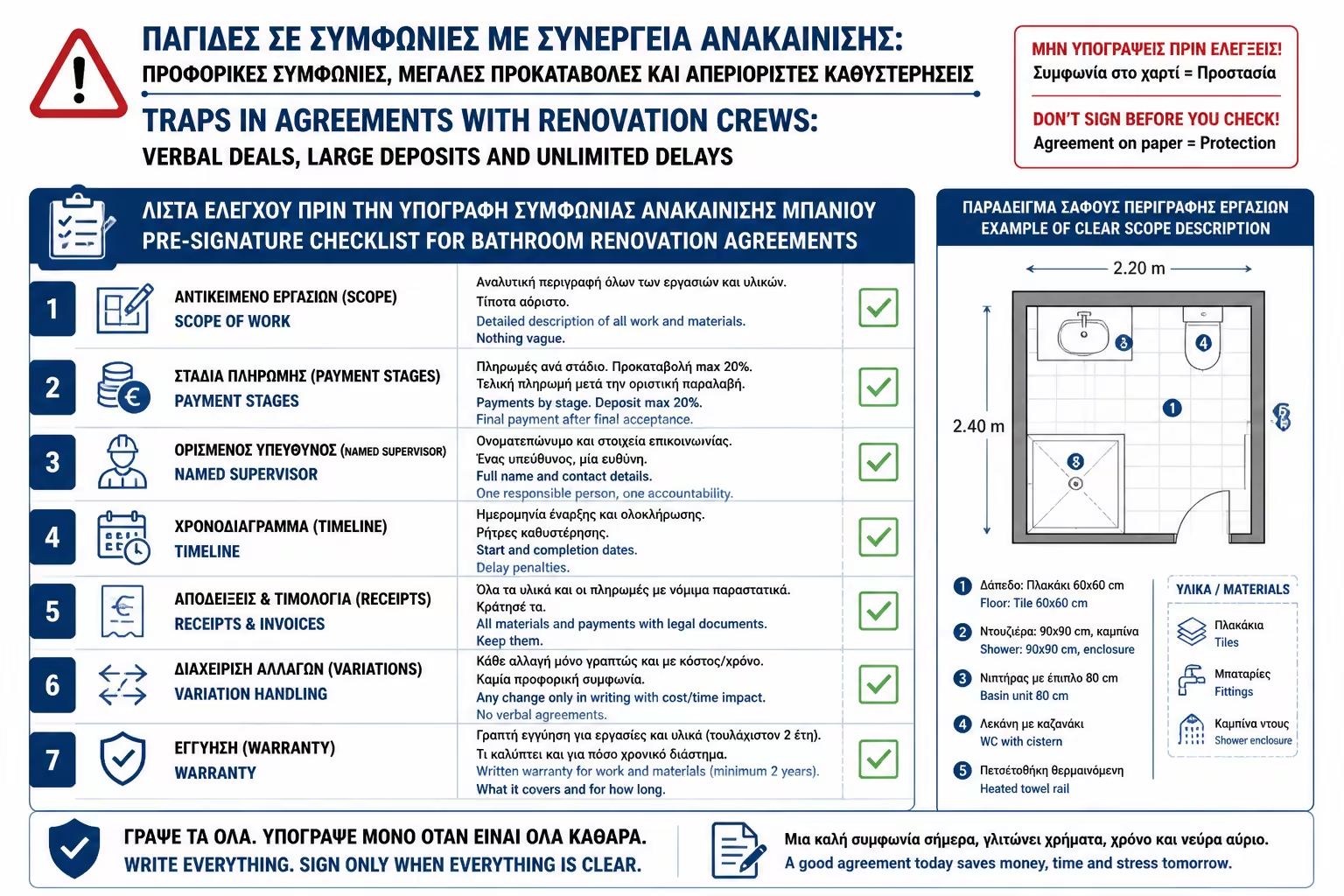
Before committing money, make sure the key answers already exist in writing.
| Question | Yes / No |
|---|---|
| Is there a written quote? | Yes / No |
| Are the works described in detail? | Yes / No |
| Do I know what is excluded? | Yes / No |
| Does the price include VAT? | Yes / No |
| Is there a payment schedule? | Yes / No |
| Is the deposit tied to a deliverable? | Yes / No |
| Is there a start date and estimated handover? | Yes / No |
| Is there a process for extra works? | Yes / No |
| Is there a named project lead? | Yes / No |
| Will I receive records and written warranty terms? | Yes / No |
Most disputes with renovation crews do not begin because one side necessarily wanted to exploit the other. They begin because the terms were never written clearly enough. In a full bathroom renovation, do not rely on phrases like “all in” or “we’ll figure it out.” Ask for a written quote, stage-based payments, a clear timetable, and a defined process for unforeseen works. A clean agreement protects both the owner and the good contractor.
A good renovation does not begin with demolition. It begins with a clear agreement. When scope, payments, deliverables, and timetable are defined from the start, both friction and expensive misunderstandings drop sharply.
Written quote
Detailed scope
Stage payments
Clear timetable
Rules for extras and payment records
Named project lead
Return to category.
Go to categoryReturn to the central guide.
Go to guide