
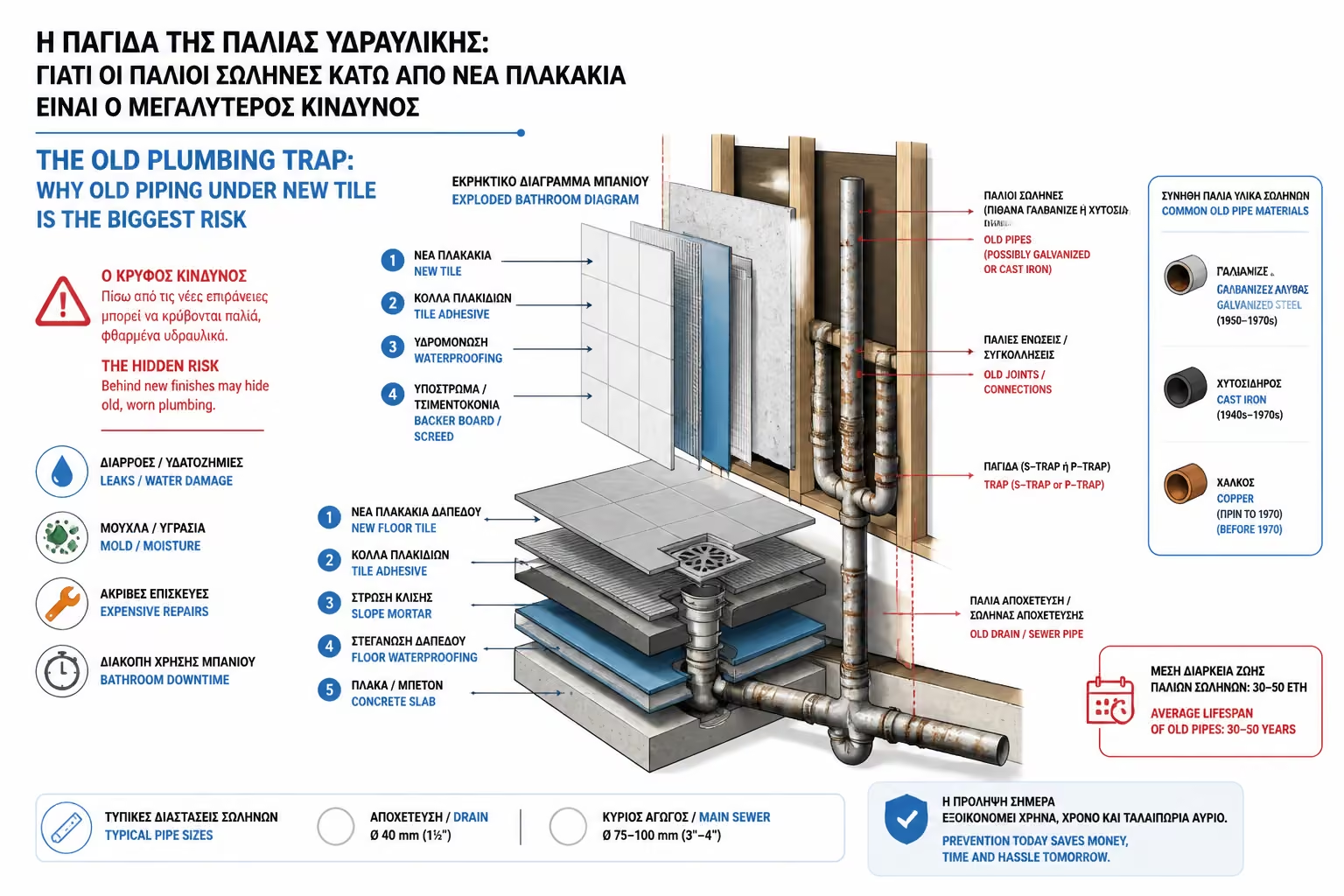
The piping inside the wall
The Old Plumbing Trap: Why Old Piping Under New Tile Is the Biggest Risk
In a bathroom renovation, many homeowners try to keep costs down by keeping the old plumbing. The thought seems logical: "Since they are not leaking now, why should I change them?"
The problem is that bathroom renovation is not a simple cosmetic change. When tiles, sanitary ware, tub, shower and flooring are removed, it opens up a rare opportunity to inspect and replace the installations that will be hidden again behind the new materials.
Leaving old pipes behind brand new tiles may save you some money up front. But if a leak occurs after a few months or years, the repair will not be simple. It will require gutting, breaking, new plumbing, new tiles, and possible repair of damage to neighboring areas.
Simply put, old plumbing is one of the places where saving money can turn into the most expensive mistake of the whole renovation.
1. Why Plumbing Is the Most "Invisible" Part of the Renovation
When the renovation is finished, the owner sees the polished result: tiles, toilet, vanity, washbasin, shower enclosure, taps and lighting.
That is exactly what makes old plumbing so risky. Once the project is complete, you can no longer inspect it easily. If something fails, the problem is already trapped behind the new bathroom.
The joints behind the tiles
The drains under the floor
The siphon and the floor slopes
Old patch repairs
The points that have already started to wear out
2. "They're Not Running Now" Doesn't Mean "They're Good"
One of the most common arguments is that the old pipes do not show an obvious leak. However, that does not automatically mean the system is in good condition.
In plumbing, the absence of a visible symptom is not proof of safety. Very often it simply means the deterioration has not yet reached the point where it becomes obvious.
Have internal wear that is invisible from outside
Carry rust or scale that restricts flow
Contain old joints with a higher chance of failure
Have a reduced internal diameter and lower performance
Hide rough repairs from previous years
Be close to the end of its service life
Show no clear symptom yet
Many plumbing problems do not appear suddenly. They build up slowly and become visible only after the damage has already progressed. Just because you do not see water today does not mean the installation is safe for the next 10 or 15 years.
3. When Is the Risk Higher?
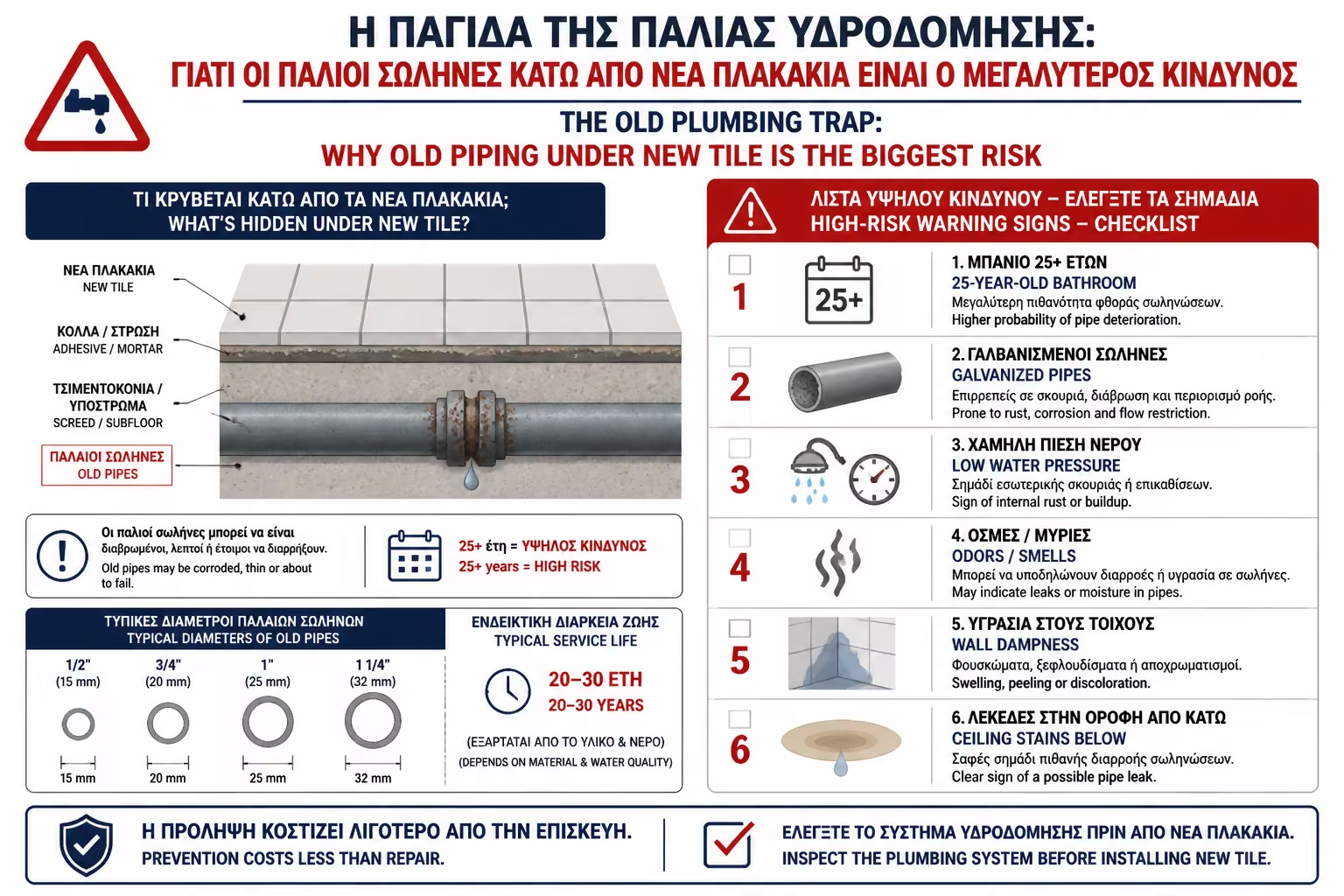
The risk increases the older the bathroom and the less we know about previous interventions.
Special attention is needed in the following cases:
In such cases, keeping the old plumbing behind new tiles is too much of a risk.
The bathroom is more than 20–25 years old
You do not know when the pipes were last replaced
There are old galvanized or iron pipes
There are repeated failures in taps or the cistern
Water pressure has dropped
There are drain odors or damp patches on adjacent walls
A stain has appeared on the ceiling below
There are old patch repairs or a history of rough fixes
4. What Points to Check
When renovating a bathroom, it is not enough to look only at the visible pipe outlets. The whole supply and drainage network needs to be reviewed together.
The bathroom is a small space, but it has many facilities concentrated. That's why a failure at one point can affect the whole project.
Cold and hot water supply lines
Pipes to the washbasin, shower or bathtub
Supply to the cistern and washing machine, if present
Toilet, washbasin and shower drainage
Floor drain and slopes
Joints and connection points to shared building stacks
5. What Can Go Wrong If the Old Piping Remains
Keeping old plumbing can lead to quite a few problems.
By the time you notice it, there may already be dampness, mold or damage in adjacent areas or in the apartment below.
1. Leaking behind the tiles
This is the most dangerous case. A small leak may not be immediately apparent. Water can seep into the plaster, floor or adjacent wall and appear much later.
2. Reduced water pressure
Old pipes with scale or internal wear can reduce water supply. So after the renovation you may have a beautiful bathroom but weak flow in the shower.
3. Frequent damage to taps and the cistern
If the network carries rust, scale or debris, it can damage new taps, filters, cistern mechanisms and valves.
4. Sewage odors
If the drains, slopes or siphon are not checked, odors, poor drainage or blockages can occur.
5. Damage to the lower floor
In an apartment building, a leak isn't just about you. It can cause damage to the ceiling of the lower apartment and create disputes, liabilities and additional costs.
6. The Financial Mistake: Save Little, Risk Much
The main trap is financial. The owner thinks that if the plumbing is not replaced, part of the renovation cost disappears. That may be true in the short term.
The real comparison, however, is not today's saving versus today's cost. It is the cost of prevention versus the cost of failure after the new bathroom is already complete.
If a leak appears after completion, the fix is rarely just one plumbing visit. It usually reopens a whole chain of work.
Fault detection
Tile removal
Opening the wall or floor
New plumbing work and waterproofing
New tiles, grouting and repainting
Possible restoration of damage in another area
Scenario A: Change plumbing during renovation
The bathroom is already open. The tiles are already removed. The crew is already on site, and access to walls and floor is available.
Scenario B: Leak after completion
The bathroom is finished. The new tiles are in place. The vanity, toilet and shower enclosure are already installed.
The second scenario is almost always more expensive, more disruptive and more stressful. You are not paying only for plumbing work. You are paying to reopen a project that should have been finished.
7. Indicative Cost: Now or Later?
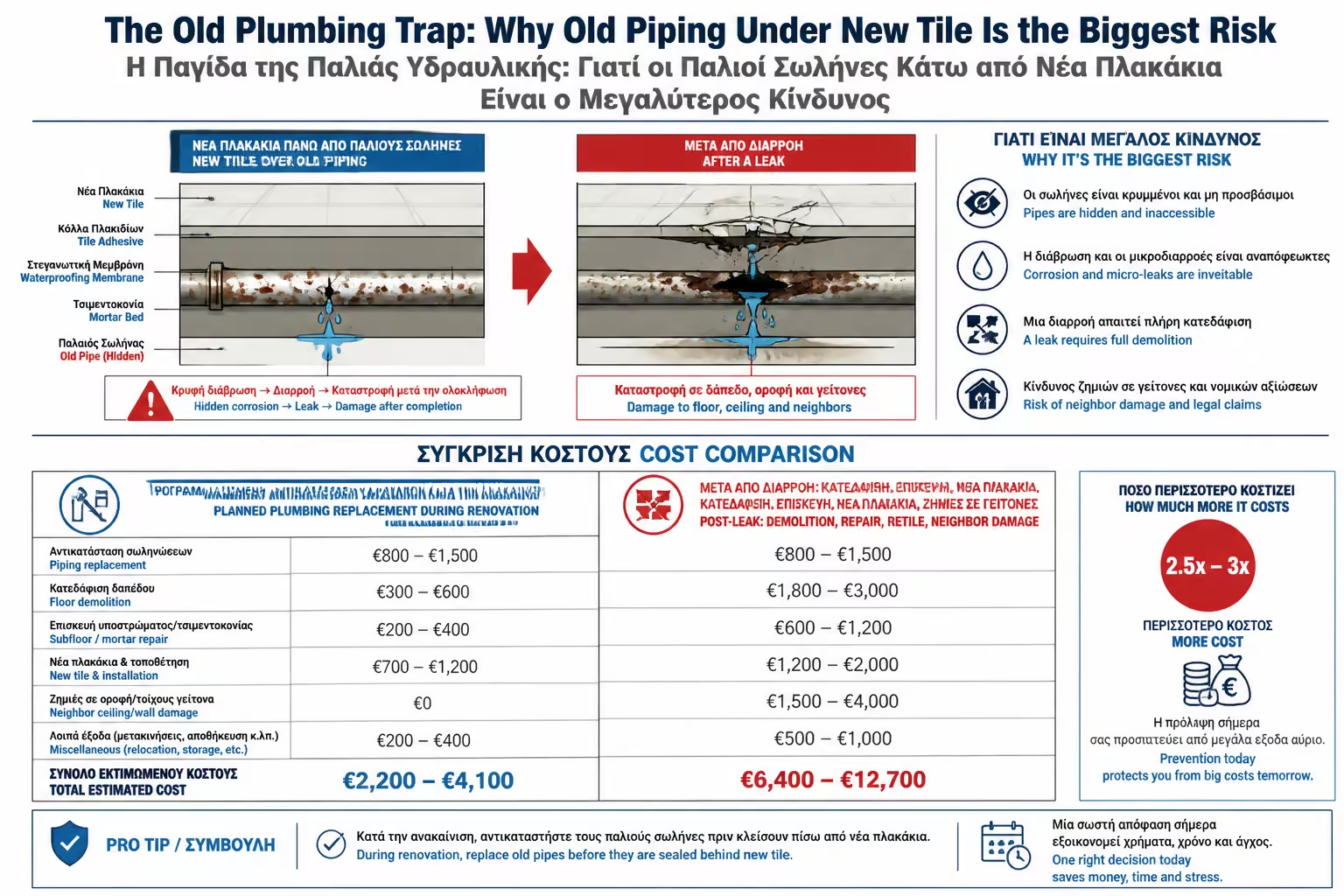
The amounts vary depending on the bathroom, the extent of work and the condition of the facilities. But the logic is always the same: when the bathroom is open, intervention is easier. When it is closed, the intervention is much more expensive.
| Task / Problem | Indicative Cost |
|---|---|
| Plumbing change during renovation | €700 – €1,400 |
| Local repair after a leak | €300 – €800 |
| Removal and restoration of tiles after damage | €500 – €1,500+ |
| Damage to an adjacent or lower apartment | Variable costs, often significant |
| Complete rebuild of shower zone due to moisture | €800 – €2,000+ |
The issue is not just the money. It is also the disruption: dust, noise, another crew visit, more rubble and another delay.
8. When a Full Replacement May Not Be Necessary
To be fair, not every bathroom needs to change all of its plumbing.
If the bathroom has been recently renovated, if the plumbing is up to date, if there is evidence of previous proper replacement, and if the plumber deems the installation to be in good condition, a complete replacement may not be necessary.
For example, a full replacement may not be necessary when the materials are modern, the previous work is documented and a real technical inspection confirms that the system is still sound.
The important point is that this decision should never be based on saving money alone. It should follow an actual inspection.
The piping was replaced recently
There are drawings or photos of the previous work
The materials are modern
There are no signs of dampness
Water pressure is good and the drains work properly
The new layout stays the same and the inspection shows no problem
9. When Replacement Is Almost the Only Sensible Option
In many cases, replacing the old pipes is the safest option.
Especially when the room is being opened fully, the layout is changing or there are already warning signs, keeping the old network stops being conservative and starts becoming risky.
If the entire bathroom is being gutted anyway, it's hard to justify keeping very old fixtures just to keep the initial cost down a bit.
The bathroom is old
All tiles are being removed
The bathtub is becoming a shower
The sanitary fixtures are changing position
The old installation is of unknown condition or metallic
There is dampness, odor or blockage history
The goal is a full renovation meant to last for years
10. Siphon and Drains Are Equally Important
Many homeowners think only about the water supply lines and forget the drainage side. But the siphon, slopes and drains are just as important.
If these elements remain old or poorly planned, the problem will not stay theoretical. You will live with it every day through odors, standing water or difficult maintenance.
Drain odors
Poor shower or basin drainage
Dampness from bad connections or backflow
Difficult cleaning and repeated blockages
The need for future demolition in an otherwise new bathroom
The shower or bathtub drain must have the correct slope. If that slope is wrong, water will not drain properly and may pool. In a full renovation, drainage is not a secondary issue. It is core infrastructure.
11. What to Ask the Plumber
Before deciding whether to keep or change the plumbing, ask for a clean technical opinion.
Ask specific questions and ask for clear answers, not just vague reassurance that “it should be fine”.
How old do the pipes appear to be and what material are they?
Are there old joints or visible signs of wear?
Does the siphon need replacement?
Are the slopes correct?
Is there any risk in the drainage system?
Will there be a pressure test or leak test?
What warranty is offered for the new installation?
What happens if the old network stays and then fails?
Don't just ask to "make it as cheap as possible". Ask to know what risk you are taking.
12. What the Offer Must Say
The offer must clarify exactly what is being done with the plumbing.
The sentence is not enough:
Bathroom plumbing.
It should state much more clearly:
Full replacement of water supply lines or local adjustments
Drain replacement or retention of the existing system
New siphon or retention of the old one
Supplies for washbasin, shower or bathtub, cistern and washing machine
Installation testing
Materials to be used
What is excluded
So the owner knows if he is paying for a complete replacement or for simple adjustments.
13. The “Partial Economy” Illusion
Sometimes an in-between solution is proposed: replace only the visible parts or only the lines needed for the new layout.
That can make sense on relatively recent installations. In very old bathrooms, however, it can create a mixed network, where new sections are tied into old ones.
Where the risk hides
The junctions between old and new systems often become the most sensitive points, especially when the old network already has wear or an uncertain history.
When it can fail
If the existing installation is already questionable, a partial replacement may not solve the problem at all. It simply moves the problem a little further down the road and hides it behind new finishes.
How to judge it correctly
In old bathrooms, a partial solution should be evaluated with strict technical criteria, not only by how much it reduces the initial quote.
14. How to Make the Right Decision
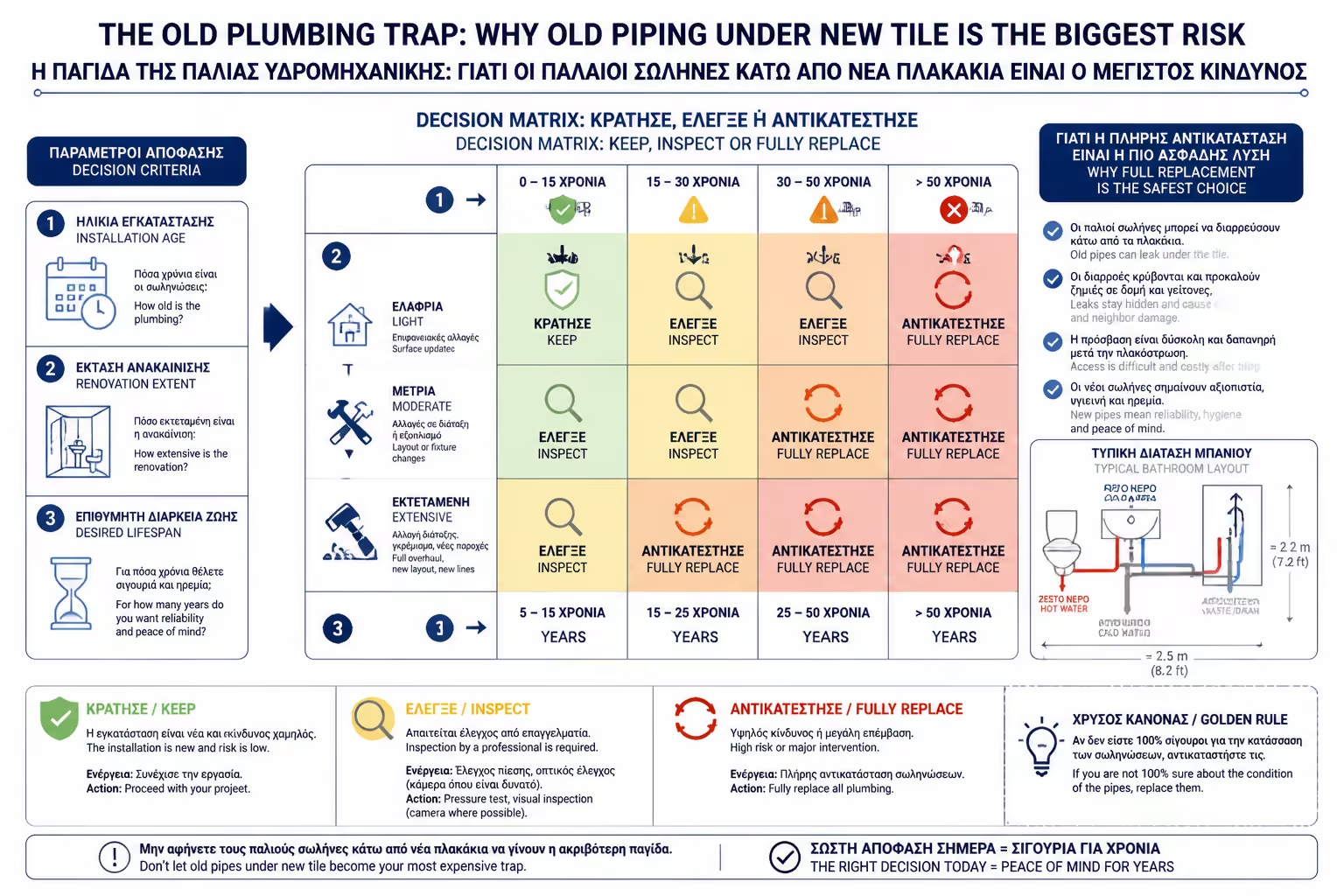
The decision should not be based on cost alone. It should be based on the age of the installation, the extent of the renovation and the service life you expect from the new bathroom.
1. Age of installation
The older the installation, the greater the risk.
2. Extent of renovation
If you are only changing one fixture, that is one thing. If the whole bathroom is being stripped, that opens the right moment for a full inspection and possible replacement.
3. Expected lifespan
If you want the bathroom to last 10–20 years, it makes no sense to leave behind infrastructure that may fail much sooner.
📊 Summary Decision Table
| Situation | Suggested Approach |
|---|---|
| 5-10-year-old bathroom with modern piping | Inspect it and likely keep it if condition is confirmed. |
| 15-20-year-old bathroom with no clear problems | Get a technical inspection before deciding. |
| Bathroom older than 25 years | Strong recommendation for pipe replacement. |
| Unknown installation age | Inspect carefully, especially if the whole bathroom is being opened. |
| Dampness or stains already present | Inspect immediately and replace the problematic points. |
| Reduced pressure or heavy scale build-up | Check the network and expect possible replacement. |
| Changing a bathtub into a shower | Check drainage, siphon and floor slopes. |
| Changing the bathroom layout | Usually requires new plumbing planning and work. |
15. What Not to Do
Avoid the following:
Keeping old pipes without inspection
Closing old networks behind expensive new tiles
Changing only the taps and assuming the plumbing is “done”
Leaving the old siphon because “it doesn’t show”
Skipping a drainage inspection
Accepting a vague quote for “plumbing”
Connecting old and new networks without technical evaluation
Sacrificing plumbing quality for more expensive tiles or furniture
The economy must be made in the visible and easily replaceable elements, not in the infrastructures that will be hidden inside the wall.
16. Example: The Cheap Scenario That Turns Expensive
A homeowner renovates a 30-year-old bathroom. To reduce cost, he decides to keep the old pipes and replace only the tiles, sanitary fixtures and taps.
The bathroom is delivered looking beautiful and fully functional. Six months later, dampness appears on the adjacent wall. Inspection shows a small leak from an old joint.
To fix it, part of the finished bathroom has to be reopened and several supposedly completed tasks have to be repeated.
Locate the leak
Remove tiles and open the wall
Replace the damaged pipe and dry the area
Restore the surface build-up
Find matching tiles or accept a visible compromise
Grout and finish the area again
The amount saved at the beginning can be lost several times over. Worse still, the brand-new bathroom has already started being torn open again.
17. Where It Makes Sense to Save Instead of Cutting Plumbing
If the budget is tight, there are far better places to save money than by gambling with the hidden infrastructure of the bathroom.
Good savings happen in elements you see and can replace later, not in systems that disappear inside walls and floors.
Where you can save
Cheaper tiles
Simple tile sizes
Ready-made vanity instead of custom
Simpler shower enclosure and mirror
Fewer decorative extras
Mid-range taps or keeping the same layout
Where you should not save
Pipes
Drainage and the siphon
Slopes
Waterproofing
Installation testing
These are the elements that keep the bathroom safe and functional for years. If you need to cut somewhere, cut on appearance, not on infrastructure.
💡 The Engineer's Advice
If the bathroom is old and is being fully stripped, keeping the old plumbing behind new tiles is one of the riskiest false economies you can make. Tiles, furniture and mirrors can be replaced more easily in the future. Pipes and drains cannot. Before deciding to keep the old installation, ask for a plumber’s inspection and a clear written description in the quote. You need to know whether the job includes full replacement, partial adaptation or a simple connection to the existing network. If the goal is a bathroom that will last for many years, sound infrastructure matters more than expensive tiles.
Conclusion
The trap with old plumbing is that it remains invisible. A bathroom may look brand-new while still hiding 25- or 30-year-old pipes behind the tiles. That alone is a major risk.
If those pipes fail after the renovation, the repair may require demolition, new plumbing, new tiles, dampness remediation and further cost.
Not every bathroom must automatically replace all plumbing
But a serious inspection is necessary when the bathroom is old or being fully stripped
The right decision is not always the cheapest one at the start
It is the one that reduces the risk of paying for the same bathroom twice
If you want to save money, do it on visible, replaceable materials
Do not do it on the pipes that will disappear behind the new tiles
Related Articles
Partial vs Full Bathroom Renovation: When Old Pipes Are a Time Bomb Phase 2 - New Plumbing & Electrical Routes: The Arteries of the New Bathroom The 7 Hidden Costs of Bathroom Renovation: What Can Derail the Budget The 10 Biggest Bathroom Remodeling Mistakes: The Ultimate Guide to Homeowner Regrets After the Project
Bathroom Renovation & Design Guide
Return to category.
Go to categoryCentral Guide
Return to the central guide.
Go to guide