
Hot showers
Underestimating Ventilation: How Water Vapor Destroys Paint, Furniture, and Joints in the Bathroom
Ventilation is one of the first things people neglect in a bathroom renovation. Homeowners naturally focus on tiles, furniture, shower enclosures, faucets, and sanitaryware, while the extractor fan is treated like a minor detail that can be solved later.
In reality, ventilation has a direct impact on how long the bathroom will last. Every shower loads the room with water vapor, and if that vapor is not removed properly, moisture settles on the ceiling, the walls, the joints, the mirror, the furniture, and the metal fittings.
The result is not just cosmetic. Joints and silicones darken, paint peels, vanity doors swell, mold appears, and the whole room starts to smell damp. In a bathroom without a window, the problem becomes even more serious because moisture has no natural way out.
1. Why Ventilation Is Critical in the Bathroom
A bathroom is a small room with a very high moisture load. Even when there is no obvious standing water, the air keeps filling with steam and residual damp from daily use.
Bathtub use
Lingering water vapor
Splashing around the basin
Wet towels
Water left on the floor
Slow drying because of poor drainage
Insufficient heating
Poor air circulation
If the air is not renewed, the humidity does not disappear. At first the mirror simply fogs up. Then the more serious signs start to appear: black spots on the ceiling, mold in the corners, musty odors, peeling paint, and damage to furniture.
Ventilation is not a luxury. It is a core part of bathroom infrastructure, just like good plumbing and proper waterproofing.
2. The Biggest Mistake: “I Have Tiles, So Moisture Is Not My Problem”
Many people assume that a tiled bathroom is automatically protected against moisture. That is only half true. Tiles cover certain surfaces, but water vapor travels everywhere in the room.
The ceiling
Painted surfaces
Furniture
The mirror
Cabinets and their interiors
Hinges and metal parts
Light fixtures
Joints and silicones
Areas behind furniture
The door and frame
Vapor does not stay only in the shower zone. It circulates throughout the bathroom and settles in colder, less ventilated areas. That is why even a properly tiled bathroom can develop a serious mold problem when ventilation is poor.
3. A Bathroom Without a Window: The Highest-Risk Case

In a bathroom without a window, mechanical ventilation is not optional. It is essential. Without a natural outlet, water vapor stays trapped inside the room until it condenses on the available surfaces.
This is where the value of a properly selected extractor fan becomes most obvious. If the unit is weak, poorly positioned, or stops as soon as the light goes off, the problem barely changes.
The mirror stays fogged for a long time
The walls remain damp after showering
The ceiling holds condensation
Towels dry very slowly
Furniture absorbs humidity
Odors remain trapped in the room
Mold finds ideal conditions
4. How Moisture Damages the Bathroom
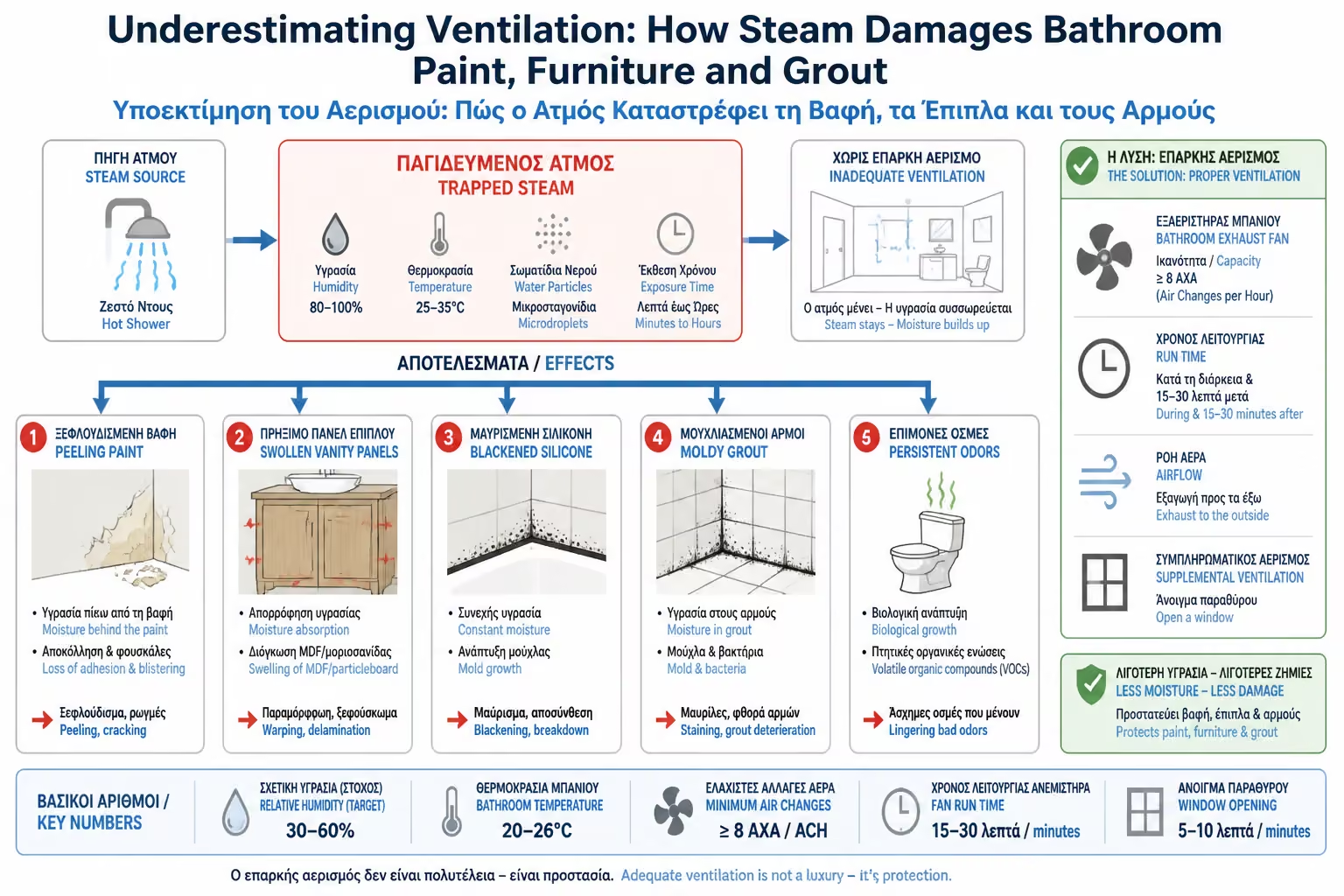
Moisture does not destroy a bathroom overnight. It works slowly and quietly until damage starts to appear in places that initially seem unrelated.
That is why bad ventilation is deceptive. For a while, everything may still look fine, but the wear keeps building inside materials that are exposed to steam every day.
What it does to furniture
Swollen doors
Detached finishes
Warped drawers
Worn hinges
Mold forming on the back side
What it does to paint and the ceiling
Blistering
Peeling
Black spotting
Frequent repainting needs
Mold in corners and cold zones
Where it shows up in joints
In the shower zone
In the corners
Around the enclosure
At the wall-floor junction
Around the bathtub
What it does to mirrors and fittings
It fogs and damages the mirror backing
It wears out light fixtures and LED mirrors
It corrodes screws and hinges
It stresses metal accessories
It puts extra pressure on poorly chosen sockets and switches
Anti-mold paint or more expensive materials are not enough on their own if the vapor never leaves the room. Poor ventilation shortens the life of multiple bathroom elements at once.
5. Signs That Ventilation Is Not Enough
In many cases, the problem gives you warnings before the major damage arrives. If the following signs appear regularly, ventilation needs serious review.
The mirror stays fogged for too long
The ceiling develops droplets after showering
Towels do not dry quickly
There is a musty, stale smell
Black spots appear in the corners
Paint swells or peels
Joints turn black
The vanity smells damp
The door and frame begin to deteriorate
The room feels heavy and humid after use
These symptoms are not fixed just by cleaning more often. They point to a failure in moisture removal.
6. A Weak Extractor: The Common Mistake
One of the most common mistakes is choosing an extractor only by price or by the size of the opening in the wall. It is not enough to have “something” installed. It has to work in real conditions.
The bathroom’s total volume
Whether there is a window
The duct length
How many bends the duct has
Whether it exhausts outside or into a shaft
The quality of the motor
The pipe diameter
The presence of a backdraft damper
Whether it can be cleaned properly
A small fan connected to a long, restrictive route with many losses may deliver very poor real airflow, even if it looks acceptable on paper.
7. How Powerful the Fan Should Be
The fan should be selected according to the bathroom’s volume and how many times per hour the air needs to be renewed. In a bathroom without a window, the requirement usually increases.
Example calculation
A bathroom measuring 2.00 x 2.50 x 2.70 m has a total volume of about 13.5 cubic meters.
What that means in practice
If you want several air changes per hour, the extractor must provide enough real airflow instead of simply spinning on the wall.
In small bathrooms, units around 90 to 150 m³/h are often considered, while larger or more demanding layouts may need a stronger solution. If the route is long or complicated, the final choice should be confirmed by an electrician or ventilation technician.
8. Why Extractor Position Matters
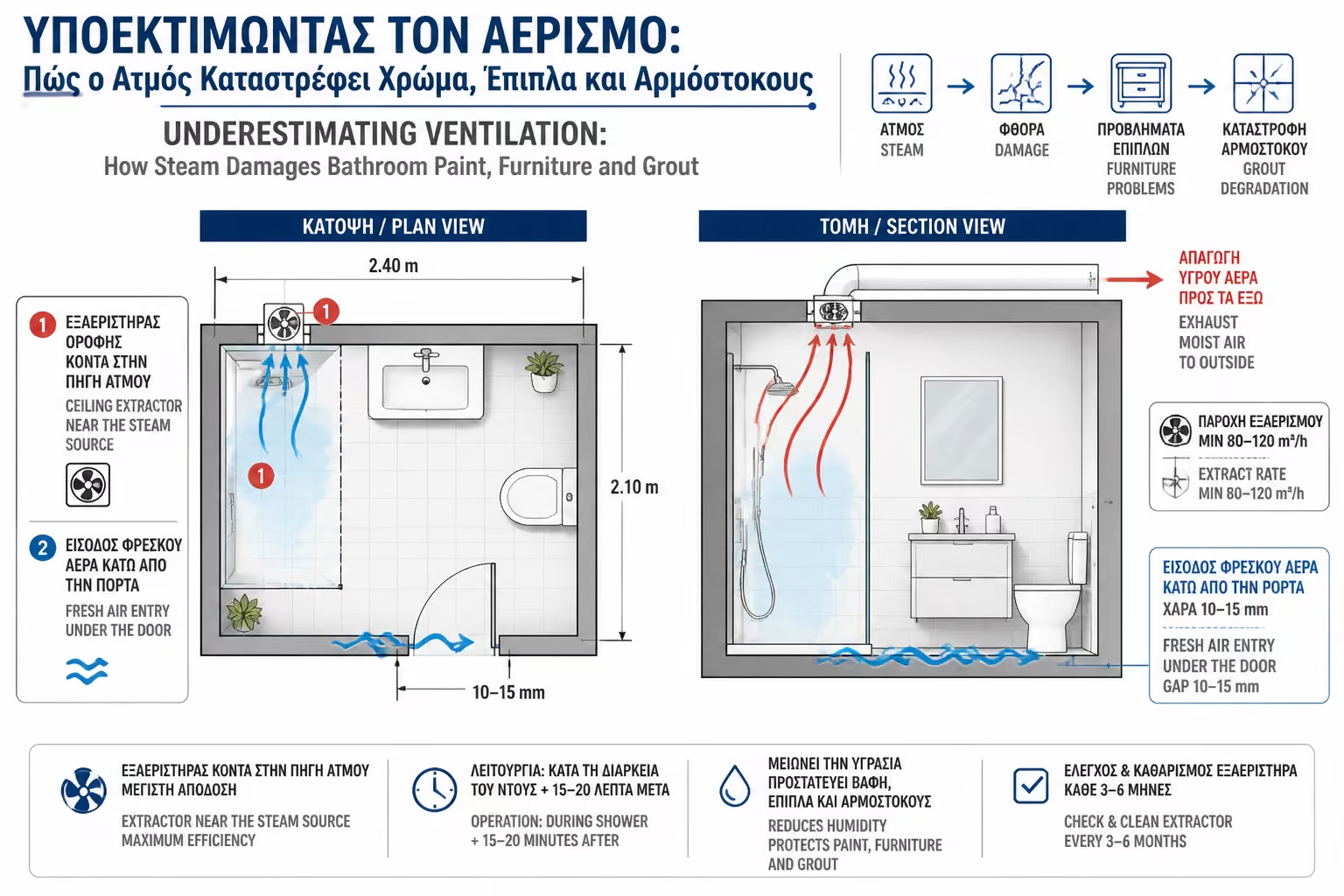
Even a good extractor can perform badly when placed in the wrong location. The aim is to pull the most humid air from the correct zone and move it out with as few losses as possible.
The real issue is not only the machine itself, but the whole airflow path: where fresh air enters, where humid air is collected, and how efficiently it leaves the room.
When it is too far from the shower zone
When it is blocked by a door or obstacle
When it pulls from the wrong part of the room
When there is no proper air inlet into the bathroom
When it connects to a narrow or problematic duct
When it ends in a poorly functioning shaft
An extractor is not useful simply because it exists. It has to be able to capture and remove the vapor where it is actually produced.
9. You Also Need an Air Inlet
For air to leave the bathroom, fresh air must be able to enter. If the door seals too tightly and there is no entry path, the extractor has a much harder time doing its job.
A small gap under the door
A door grille
Proper circulation from the corridor
A door that is not completely airtight
A combination with natural ventilation where a window exists
If the extractor is trying to pull air out but nothing can enter to replace it, the actual performance drops sharply.
10. Timer and Humidity Sensor
Another common mistake is letting the extractor stop the moment the light goes off. The moisture remains in the room after the shower, so ventilation should continue beyond the moment of use.
Timer
Keeps the fan running for a few minutes after you leave the bathroom.
Humidity sensor
Activates or extends operation when humidity rises above the desired level.
Practical recommendation
In a bathroom without a window, a unit with a timer or humidity sensor is a much better choice than a basic light-linked fan.
11. Noise: Why Owners Switch the Fan Off
If the extractor is too noisy, people avoid using it or shut it off as soon as possible. Then the system exists on paper, but not in meaningful daily use.
It should be strong enough
It should be as quiet as possible
It should suit the actual duct route
It should be good quality
It should be easy to maintain
The cheapest option can easily become so annoying that it defeats its own purpose. A good extractor should solve the problem without becoming a daily irritation.
12. Ventilation and Heating
Humidity is easier to control when the bathroom is heated properly. A very cold room encourages condensation on the walls, the mirror, and the ceiling.
Proper ventilation
Adequate heating
Suitable ceiling paint
Moisture-resistant furniture
Correct waterproofing
A bathroom that combines these measures will suffer far fewer moisture problems than one that relies only on a small fan.
13. Ventilation and Waterproofing Are Not the Same Thing
Ventilation and waterproofing solve different problems and should never be confused.
What waterproofing does
It protects the bathroom from liquid water passing below tiles, behind a shower enclosure, or into the structure.
What ventilation does
It removes water vapor from the air and reduces the room’s moisture load.
Good waterproofing without good ventilation can still leave you with mold on the ceiling and furniture. Good ventilation without proper waterproofing can still leave you with hidden damp behind tiles or in the next room. A correct bathroom needs both.
14. Extractor Maintenance
An extractor is not a fit-and-forget device. Over time it loses performance if it is not cleaned and checked.
What can build up
Dust
Lint
Moisture residue
Limescale
Dirt on the cover
Motor wear
What should be done regularly
Clean the outer cover
Check whether it is actually drawing air
Listen for unusual noise
Clean or replace any filter if present
Request technical inspection if performance drops
A clogged extractor may still be mounted on the wall, but no longer do meaningful work for the room.
15. What Must Be Planned During the Renovation
Ventilation should be planned before the walls are closed and before the electrical work is finalized, not as a late afterthought.
Whether there is a window
Whether mechanical ventilation is required
Where the extractor will be positioned
Where the exhaust air will be routed
What electrical provision and power feed are needed
Whether there will be a timer
Whether there will be a humidity sensor
Whether it turns on with the light or separately
Whether there is a proper air inlet
Whether the shaft or duct route is suitable
If these decisions are delayed, the result is usually either a compromised installation or equipment that underperforms from day one.
16. What the Quote Should State Clearly
A proper renovation quote should state clearly what is included for ventilation. The vague phrase “ventilation included” is not enough.
Whether an extractor is included
What type of extractor it is
Whether it includes a timer
Whether it includes a humidity sensor
Whether the electrical connection is included
Whether duct connection is included
Whether the existing outlet is checked
Whether new drilling or adaptation is required
Whether materials and labor are both included
17. Indicative Cost
Cost depends on the fan type, airflow rate, noise level, added features, and installation complexity.
| Work / Material | Realistic cost |
|---|---|
| Basic bathroom extractor | €30 – €80 |
| Better low-noise extractor | €80 – €180 |
| Extractor with timer or humidity sensor | €100 – €250 |
| Electrical connection or replacement | €50 – €150 |
| New duct route or more difficult installation | €150 – €400+ |
Compared with the total cost of a bathroom renovation, proper ventilation is a small investment. Compared with the damage caused by trapped moisture, it is one of the cheapest protective measures you can add.
18. Ventilation Checklist
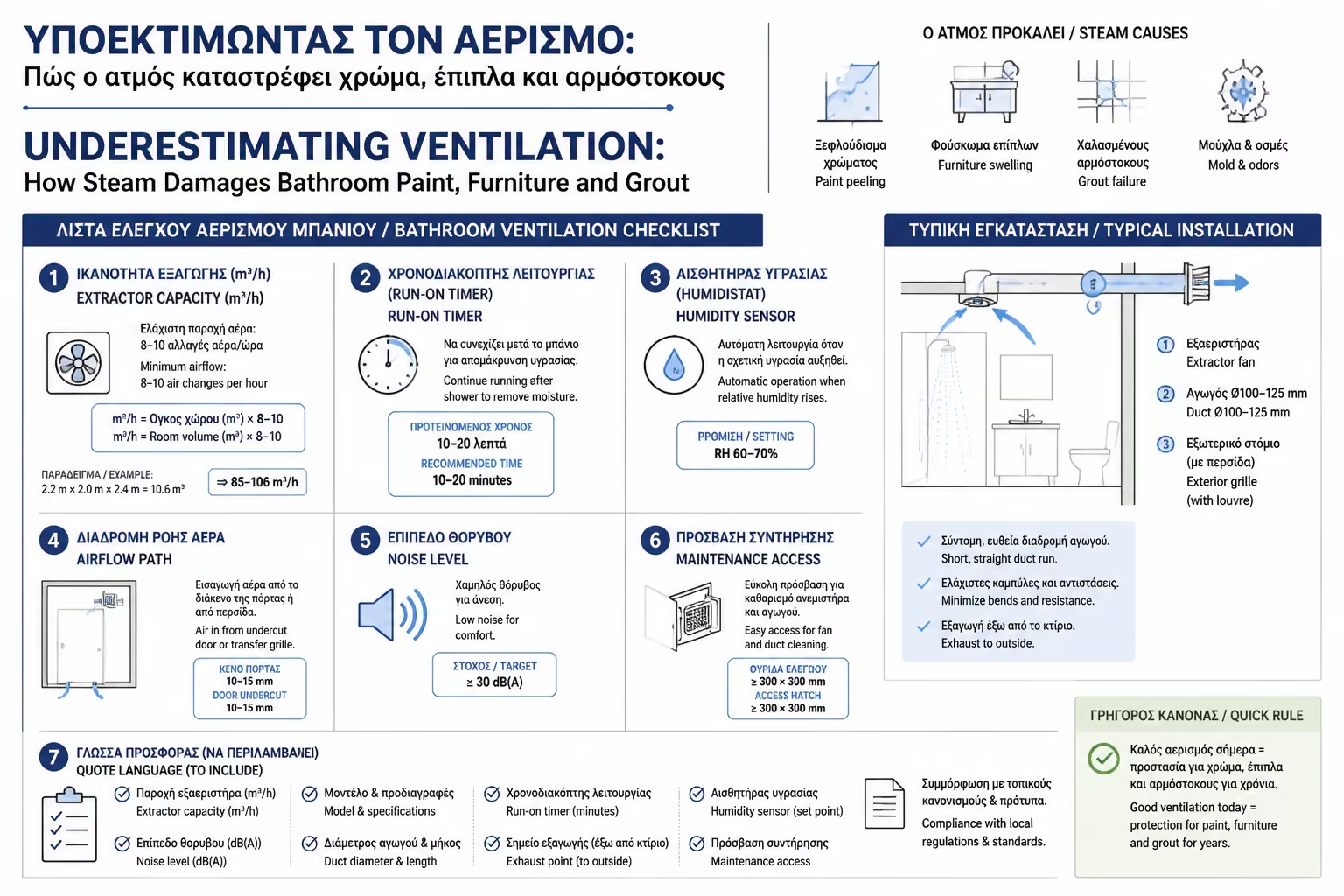
Before the renovation is closed out, make sure the following questions have clear answers. If several answers are negative, the ventilation plan needs to be upgraded.
| Question | Yes / No |
|---|---|
| Does the bathroom have a window? | Yes / No |
| If not, is there mechanical ventilation? | Yes / No |
| Does the extractor have enough airflow? | Yes / No |
| Is there a timer or humidity sensor? | Yes / No |
| Is the air routed properly outdoors or into a suitable shaft? | Yes / No |
| Is there a proper air inlet through the door or another point? | Yes / No |
| Is the extractor reasonably quiet? | Yes / No |
| Has it been planned properly within the electrical work? | Yes / No |
| Is there adequate heating and general moisture control? | Yes / No |
| Is it clearly described in the quote? | Yes / No |
19. Common Mistakes
No extractor at all in a bathroom without a window
An extractor that is far too weak
The fan switches off together with the light
No timer
No humidity sensor
No air inlet
A duct that is too long or too narrow
An extractor so noisy that nobody uses it
No maintenance at all
No coordination with heating and anti-mold protection
💡 The Engineer's Advice
In a bathroom without a window, the extractor is not an “extra.” It is a core part of the renovation. Do not choose the smallest or cheapest unit just to have something installed on the wall. It needs enough airflow, the right position, a sensible duct route, and ideally a timer or humidity sensor. If it shuts off the moment you leave the bathroom, it has no time to remove the vapor. The moisture stays behind and slowly damages paint, furniture, joints, and metal fittings. If you want to save money, do not do it by stripping out ventilation. It is far cheaper to install the right extractor from the beginning than to pay later for mold, swollen vanity units, and peeling ceilings.
Conclusion
Underestimating ventilation is one of the most common and most expensive bathroom-renovation mistakes. Water vapor does not disappear on its own. If it is not removed, it attacks the ceiling, the walls, the joints, the furniture, the mirror, and the light fittings.
Mold
Peeling paint
Swollen furniture
Blackened joints
Damp odors
Wear on mirrors and lighting
A shorter renovation lifespan overall
In a bathroom without a window, mechanical ventilation is essential. In a bathroom with a window, it may still be necessary if the window is rarely opened or the space tends to hold moisture. Proper ventilation should be designed from the beginning, described clearly in the quote, and coordinated with heating, waterproofing, and moisture-resistant materials.
A bathroom should not only look clean. It should also be able to dry properly after every use.
Related Articles
Waterproofing Mistakes: The Invisible Threat Behind Bathroom Tiles Bathroom Furniture Selection Mistakes: Materials That Swell, Rot and Fail from Moisture The 10 Biggest Bathroom Remodeling Mistakes: The Ultimate Guide to Homeowner Regrets After the Project DIY Failures: Which Bathroom Renovation Jobs You Should Not Do Yourself
Bathroom Renovation & Design Guide
Return to category.
Go to categoryCentral Guide
Return to the central guide.
Go to guide