
Bathroom DIY, Maintenance & Styling
Return to category.
Go to categoryLimescale is one of the most persistent "enemies" in a bathroom. It doesn't appear suddenly like a leak or a broken tile. It builds up slowly, day after day, in places that are constantly in contact with water: around faucets, on the spout, in shower-head nozzles, on glass panels, shower enclosures, tiles and shower trays. At first it looks like a slight haze. Then it becomes white marks. If it stays for long, it turns into a hard crust that won't go away with a simple wipe.
In Greek reality, the problem is particularly frequent. In many areas the water is hard, i.e. it contains increased calcium and magnesium salts. When the water evaporates, the salts remain on the surfaces. So even a clean bathroom can look dull or "old" because the surfaces are no longer as shiny as they were on the first day.
The difficult thing about limescale is not only removing it. It is removing it without damaging the materials. A chrome faucet can be dulled by the wrong cleaner. A matte black finish can be scarred by a strong acid. A glass panel can pick up fine scratches if rubbed with a harsh sponge. Natural stone or marble can be stained or chemically etched by vinegar or another acidic product. That is why proper descaling is not a matter of force, but of choosing the right method.
Many homeowners first try natural solutions, such as vinegar or citric acid. Others go straight to specialist scale cleaners. Both approaches can be correct if used in the right material, in the right concentration and for the right time. The mistake starts when a product is considered suitable for "the whole bathroom". There is no one cleaner that is perfect for every surface.
In this guide we'll look at how limescale forms, how to clean it from faucets, shower heads and glass surfaces, when vinegar helps, when citric acid is the better choice, when a specialist product is worth it and which surfaces need special attention. The goal is not only to remove the white marks today, but also to avoid wearing down the bathroom while cleaning it.
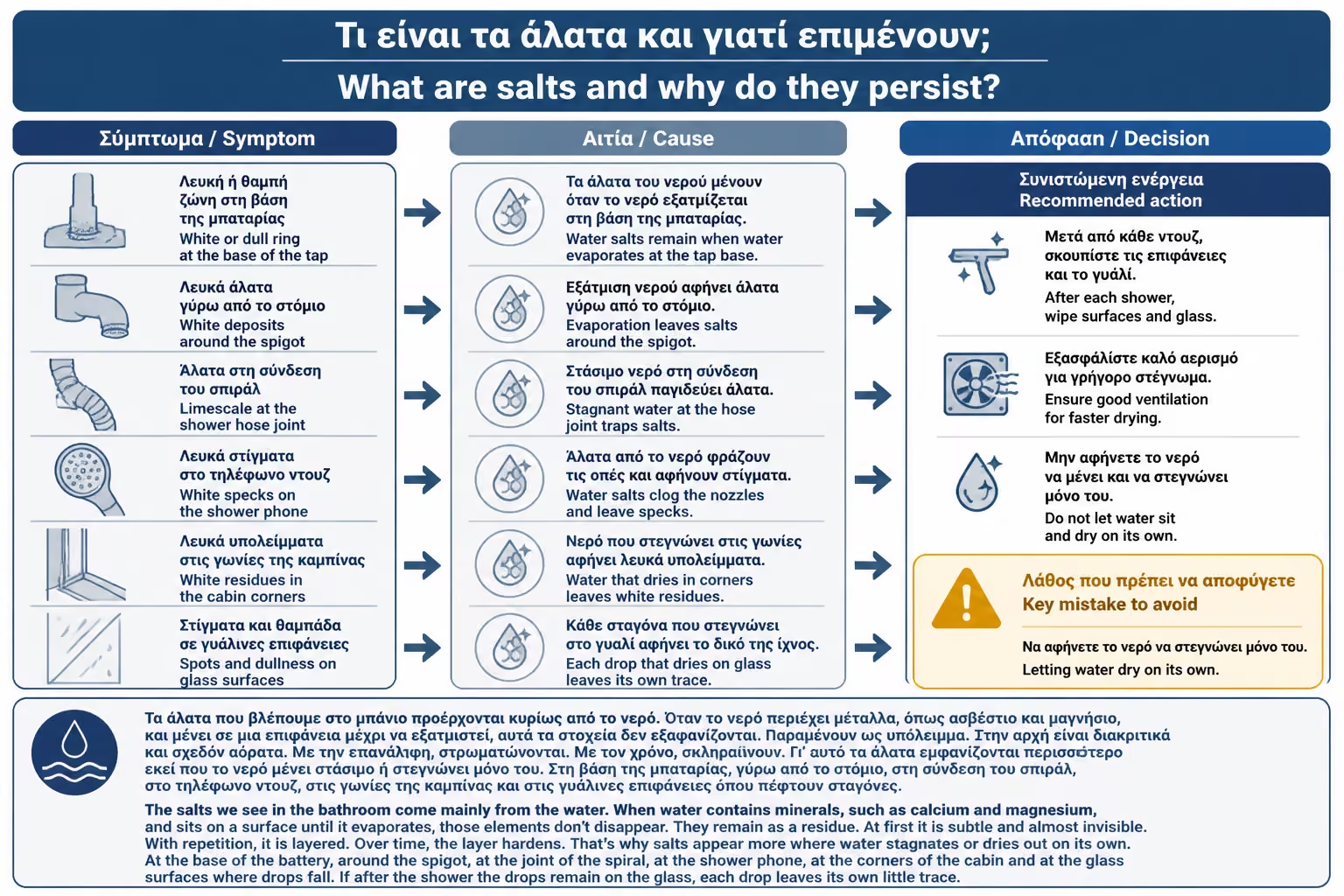
The salts we see in the bathroom come mainly from the water. When water contains minerals, such as calcium and magnesium, and sits on a surface until it evaporates, those elements don't disappear. They remain as a residue. At first it is subtle and almost invisible. With repetition, it is layered. Over time, the layer hardens.
That's why limescale appears more where water stagnates or dries on its own: at the base of the faucet, around the spout, at the hose connection, on the shower head, at the corners of the enclosure and on glass surfaces where droplets sit. If droplets remain on the glass after a shower, each one leaves its own small trace.
The problem gets worse when limescale mixes with soap, shower gel and cleaner residue. Then you do not just get white powder, but a greasier, stickier film that traps even more dirt. In shower enclosures, for example, cloudiness is not always just limescale. It is often a combination of limescale and soap residue.
Salts are easier to remove when they are fresh. The longer they stay, the harder it is to get out. That's why a simple wipe after use can make a bigger difference than a heavy-duty cleanser once a month.
The first reaction when the salts do not go away is to scrub harder. This is one of the most common mistakes. Salt may be hard, but many bathroom surfaces are susceptible to scratches, tarnishing and chemical wear. If you use a hard wire, metal scraper or rough sponge, you can remove the scale and at the same time damage the finish.
On chrome faucets, micro-scratches show up as haze. On black or gold finishes, they are even more visible because the surface coating gets marked or worn away. On shower glass, heavy rubbing with the wrong material can leave fine lines that stand out strongly in the light.
The correct logic is to soften the salts chemically and then remove them mechanically in a gentle way. That is, we leave the appropriate product to act for the appropriate amount of time and then wipe or rub lightly with a microfiber cloth, soft sponge or non-scratching brush.
A practical example is the base of a sink faucet. If scale has formed a ring around it, vigorous scrubbing with a harsh sponge can scratch the chrome and the tile or countertop around it. Instead, a cloth with a mild acidic solution left on the spot for a few minutes softens the crust and reduces the need for force.
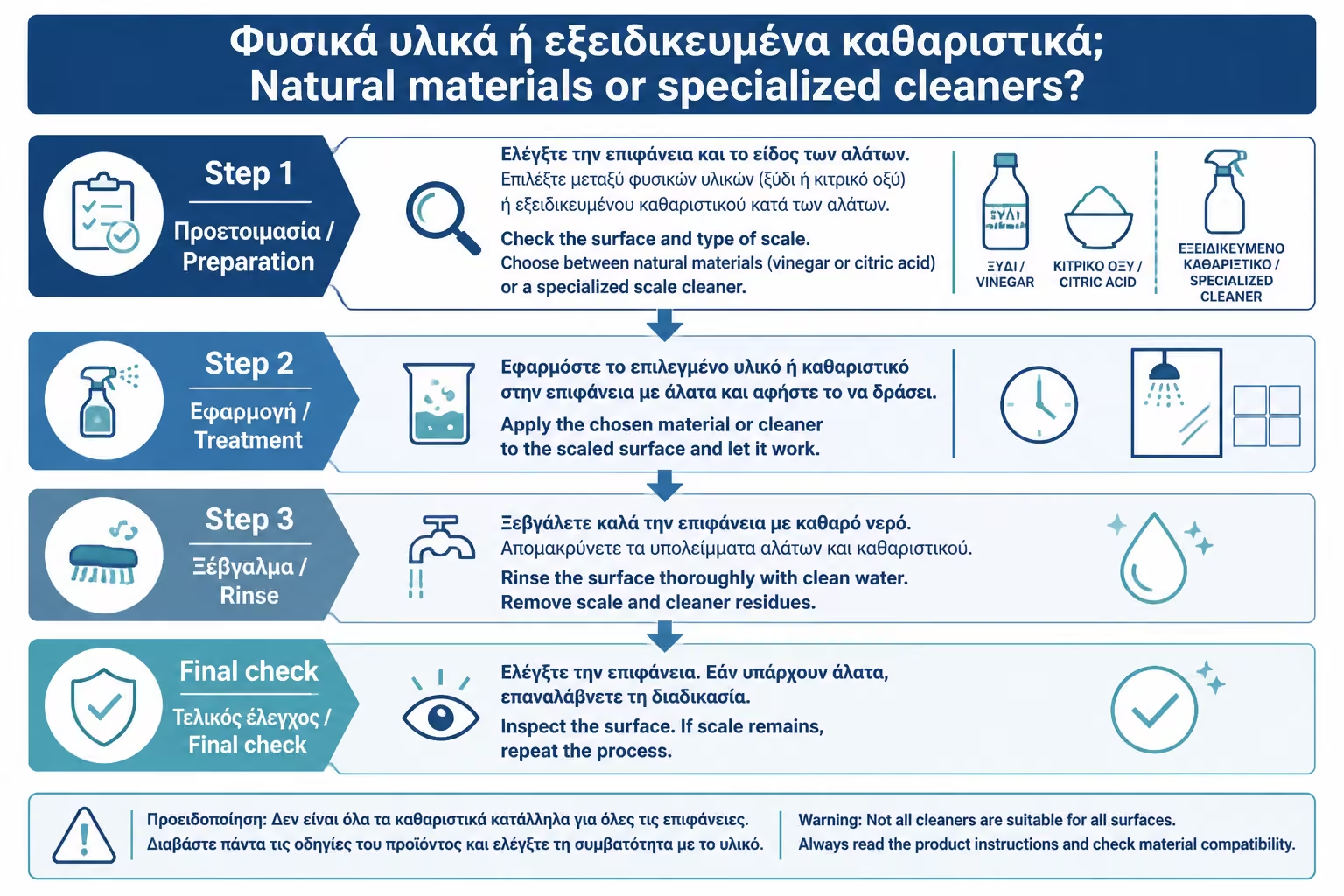
Natural materials such as vinegar and citric acid can work very well on mild to moderate salts. They are affordable, readily available and relatively simple to use. Vinegar is acidic and helps dissolve deposits. Citric acid, which usually comes in powder form, can be made into a solution with water and often has a cleaner smell than vinegar.
Specialized limescale cleaners are designed to act faster and often contain a combination of acids, surfactants and additives. They can be more effective on stubborn deposits, but they also need more care. Not all are suitable for all surfaces. One product is meant for chrome faucets, another for shower enclosures, another for tiles, and another for professional use.
The choice should not be made with the logic "the stronger the better". For daily maintenance, a mild product is sufficient. For stubborn salts, a stronger cleaner may be needed, but with a small spot test and strict adherence to instructions. For delicate finishes, natural stone, marble, pressed cement mortar or special coatings, special care is required.
The correct rule is simple: we start from the mildest method that can solve the problem. If it is not enough, we proceed gradually. We don't start with the most aggressive product, because we might gain time but lose the finish.
Vinegar is one of the most popular solutions for salt. It can help chrome faucets, faucets, shower phones, ceramic tiles and glass surfaces if used properly and not left on for too long. It is mainly useful for fresh or moderate deposits.
But vinegar is acid. This means that it is not suitable for all surfaces. On marble, limestone, travertine and other natural stones that react to acids, it can cause dullness or marks. In pressed cement mortar, special resins or surfaces with protective varnishes, the instructions of the material must be followed. On black or colored batteries, vinegar can affect the finish if left for too long.
Also, vinegar should not be used with bleach or other cleaners. Mixing cleaners can create hazardous fumes. If you have previously cleaned with another product, rinse thoroughly before using vinegar.
On simple chrome batteries, the practical use is to wet a cloth with diluted vinegar, place it on the salt spot for a few minutes, rub gently and rinse thoroughly. We don't let the vinegar dry on the surface and we don't leave it for hours for no reason.
Citric acid is also acidic and helps dissolve scale. It often circulates in powder form and dissolves in water. Its advantage is that you can control the concentration more easily and it usually has a less strong smell than vinegar. For many owners, it is more pleasant to use inside the bathroom.
It can be used to soak small parts such as aerator filters, shower heads or small plastic parts, as long as their material allows it. It can also be used in solution for glass surfaces or ceramic tiles. As with vinegar, however, it is not suitable for natural stones and sensitive surfaces that cannot withstand acidic cleaners.
Correct use is with mild concentration, time of action and good rinsing. If the crust is intense, it does not mean that you need to make an overly strong solution. Sometimes two gentle passes are better than one very strong one that can affect the surface.
Citric acid is especially useful on parts that can be removed and soaked. For example, a faucet filter with salts can be left in a small bowl of citric acid solution, cleaned with a toothbrush and rinsed. This is more controlled than spraying the entire bathroom with strong product.
Specialized scale cleaners can be very effective, especially when the scale has been there for a long time. However, they need careful use. First we read the label. It states which surfaces the product is suitable for, how long it should be left on, if it needs to be diluted, if gloves should be used and if certain materials should be avoided.
Don't assume that because a product is “for the bathroom”, it is safe for all bathroom surfaces. A cleaner may be suitable for ceramics and glass, but not for marble. It might be good for chrome, but not for matte black batteries. It can clean scale quickly, but dulls delicate finishes if left on too long.
Testing on a small inconspicuous spot is valuable, especially on expensive batteries, special paints, coated glasses or tiles with a special surface. If after the test there is no dullness, discoloration or roughness, you are more comfortable to proceed.
Also be careful with mixing. We do not mix scale removers with bleach, ammonia or other products. We do not "fortify" a product with vinegar or other acid. We use one product at a time, rinse well and ventilate the area.
Chrome faucets are one of the places where limescale is most visible. White marks appear around the base, spout, handle and joints. The chrome surface can be cleaned well, but it needs gentle handling to avoid dulling or scratching.
Start with a soft cloth dampened with warm water to remove surface dirt. Then apply a mild solution of vinegar or citric acid to a cloth, not necessarily directly onto the battery. Touch the cloth to the spot with the salts for a few minutes. If the base has a salt ring, you can wrap the cloth around the base to soften the crust.
Then scrub gently with a microfiber cloth or a soft toothbrush on the tough spots. Do not use wire, hard side of sponge or metal scraper. Rinse thoroughly with clean water and dry immediately with a soft cloth. Drying is important, because if you leave the battery wet, the salts will start to build up again.
On very stubborn salts, prefer repeated gentle applications instead of a strong product that will stay for a long time. The chrome surface can withstand quite a bit, but if it already has minor damage, strong products can burden it.
In recent years matte black, gold, bronze, gunmetal and other special batteries have been used more and more. They are aesthetically pleasing, but usually require more careful maintenance than classic chrome. Salts show strongly on them, especially on black finishes, but strong cleaners can leave marks.
On such surfaces, we first consult the manufacturer's instructions. Many companies recommend only mild soap, water and a soft cloth, avoiding acidic or abrasive products. If vinegar or scale remover is used unchecked, dullness, discoloration or an uneven surface may occur.
The best practice is prevention. Wipe the battery after use, especially in places where drops remain. So they don't have time to build up. If they appear, try a soft cloth with warm water and a very mild detergent first. If something stronger is needed, test in an inconspicuous spot.
A common mistake is to clean black batteries with the same desalting agents used on tiles. The result can be a permanent mark. In special finishes, maintenance is part of the selection. It is not enough that they look good in the market; they must be properly cleaned in everyday life.
The faucet filter, also known as the aerator, is one of the first places to get clogged with scale and small particles. When it becomes clogged, the flow becomes weak, crooked or broken. Many times the owner thinks that the water pressure has dropped, when in fact the problem is in the small filter in the spout.
Unscrew the nozzle by hand, if possible. If a tool is required, use a cloth to avoid scratching the finish. Take out the inner pieces and keep their order. Inside you may find salts, pebbles, rust or small black particles.
Soak the parts in vinegar or citric acid solution for a few minutes, depending on the situation, and clean with a toothbrush. Rinse well. Before screwing the filter back on, run the faucet without it for a while to flush out any particles from the spout. Then reinstall it with the correct seal.
If the filter is deformed, if the mesh is torn or if the scale does not leave, it is better to replace it. It's a small part, but it makes a big difference to the flow and feel of the faucet.
The shower head fills with limescale mainly in the small spray holes. When these become clogged, the water sprays sideways, the flow is reduced or the streams come out unevenly. In hard-water areas, this can happen relatively quickly, especially if the shower head is never wiped.
If the phone has rubber nozzles, you can often rub them gently with your fingers to break up the fresh salts. For a more intense crust, unscrew the phone from the spiral and soak it properly. If it is a simple chrome or plastic part, it can be put in a solution of vinegar or citric acid, if the manufacturer allows it. If it has a special finish, be more careful.
After soaking, clean the holes with a soft brush. Do not use a thick needle that may enlarge or distort the holes. If there are small filters on the phone input, check those too. Many times the problem is not only in the outlet holes but also in the inlet filter, where the spiral connects.
After cleaning, rinse well and let water run before normal use. If streaming remains poor, the phone may have internal scale, a worn streaming mechanism, or simply need replacement.
The shower spiral does not only fill external salts. In its joints, near the battery and the phone, salts collect around the nuts and seals. If there is a small leak, the salts build up even faster, creating a white crust.
For external cleaning, use a soft cloth with a mild solution. Do not leave acidic product for a long time on metal coils, especially if they are old or have minor wear. Rinse and dry. If the spiral is PVC or special finish, follow a gentler method.
If the salts are in the joints, uncoil only if you can do so safely and without stressing the battery. Check the seals. An old or hard seal can cause a small leak, which in turn creates scale. In this case, cleaning is not enough; the seal needs to be replaced.
Do not try to stop a leaking coil with descaler. If there is a drip, the cause is usually a worn seal, a crooked screw, or a worn fitting. Salt is the result of the leak, not the solution.
Cabin glass is one of the most difficult surfaces because the scale is very visible when the water dries. Every drop leaves a mark. If combined with soap, it creates a dull surface that is not easily removed with a simple glass cleaner.
For mild salts, a solution of vinegar or citric acid can help. Spray or wipe with a cloth, leave on for a few minutes and clean with a soft sponge or microfiber cloth. Rinse thoroughly and dry with a window squeegee or dry cloth. The final drying is essential, because otherwise new drops are created.
For more stubborn cabins, a specialized glass cleaner may be needed. But be careful with the profiles, the tires and the silicones of the cabin. A product that is good for glass may not be ideal for black metal profiles or old silicones. Do not spray uncontrollably all over the cabin without thinking about the materials around the glass.
If the glass has a special anti-salt coating, you need to be even more careful. Some coatings should not be cleaned with strong or abrasive products. In such cases, daily use of rubber after showering is the best protection.
Salts don't just sit on batteries and glass. They also sit on the tiles, especially low in the shower and near the faucet. On shiny tiles they look like white marks. On matte or textured surfaces, they can get trapped in the texture and be more difficult to clean.
On ceramic and porcelain tiles, a mild de-salting agent can help, as long as there are no delicate decorations, metal details or natural stone. The joints, however, need attention. Grouts are more porous than tile and can be affected by repeated use of strong acids.
If the joints turn black or crumble, the problem is not solved by descaling alone. There may be mold, grout wear or permanent dampness. In such a case, clean gently and assess whether local grouting or joint renewal is needed.
Be careful on marble-type tiles, natural stone or cement-like surfaces. There, acidic cleaners can cause permanent dullness. Before using any product, you need to know what material you have.
These surfaces need special attention. Marble and many natural stones react to acids. Vinegar, citric acid and many anti-salt products can "eat away" the surface, leave a dullness or create marks that will not be cleaned with just water. This is not dirt. It is a chemical alteration of the surface.
Pressed cement mortar and micro cement mortars depend on their system and protective varnish. Some endure better, others are more sensitive. In any case, you should not accidentally use acidic products without the instructions of the manufacturer or applicator.
For such surfaces, the best practice is prevention and neutral or special cleaners. Wipe up water, avoid letting drips dry, and use products specific to natural stone or the system in question. If strong salts have already formed, it is a good idea to ask a technician or material supplier for guidance before applying anything.
A wrong pass with vinegar on marble can do more damage than the salts themselves. Therefore, when you are not sure about the material, do not start with an acid cleaner.
There are silicones, rubbers, gaskets and plastic parts in the shower cubicles and joints. Salts often sit right on top of them or next to them. But these materials do not withstand all cleaning agents. Strong products, frequent bleaching or acids can harden, discolour or shorten their life.
On silicones that have salts but are otherwise clean and elastic, use a gentle cleanser. Do not scratch them with a metal tool. If the silicone has blackened into its mass or has come off, cleaning will not save it. Silicone replacement is needed there.
On cabin tires, only remove them if they are designed to come off and you know how they go back on. Clean with a mild solution, rinse and dry. If they are hard, yellowed or cut, they may need to be replaced. Salt often just reveals that the tire is old.
Do not allow anti-salt products to pool on silicones and rubbers. Apply targeted, clean and rinse. Correct use is short and controlled, not "spray and leave it until tomorrow".
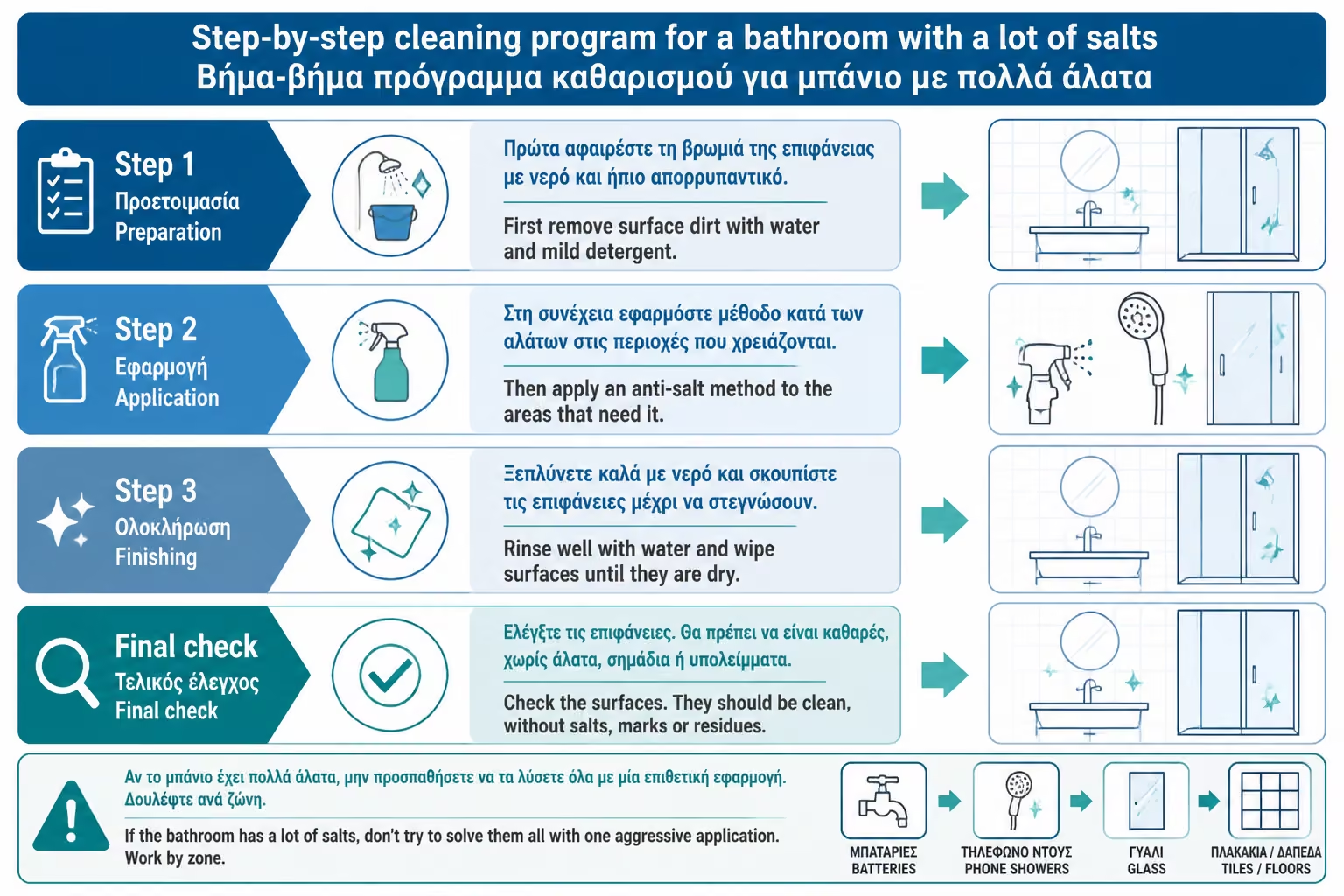
If the bathroom has heavy limescale, do not try to solve everything with one aggressive application. Work by zone. Start with the faucets, then the shower head, then the glass, and finally the tiles or floors. This way you control the products better and avoid mixing cleaners.
First remove surface dirt with water and mild detergent. Then apply an anti-salt method to the areas that need it. Do not apply an acidic product to soaps and dirt without cleaning them, as this reduces the effectiveness and creates sludge.
Then rinse well. Rinsing is often the neglected stage. If product residue remains, it can continue to act on the surface or leave a dullness. Finally, dry. Drying is not an aesthetic detail; it is the prevention of new scales.
For very stubborn deposits, repeat after a few days. Gradual removal is safer than using too strong a product and scrubbing hard all at once.
The best way to deal with scale is to not let it build up. This does not mean that you have to clean the bathroom thoroughly every day. A few small habits are enough. After showering, go over the glass with a rubber band. Wipe the batteries with a dry cloth. Do not allow drips around the battery base or on the black finishes.
In areas with very hard water, it may be worth using filters or softening solutions, depending on the installation and the needs of the home. It's not always necessary, nor does it always make economic sense for every home, but in homes with a severe scale problem it can reduce cleaning frequency and component wear.
Regular gentle maintenance is better than infrequent aggressive cleaning. If you clean every week light salts, you need mild media. If you leave the salts for months, stronger products and more scrubbing will be needed, so there is a greater risk of wear.
Especially in glass cabins, the difference is huge. A glass squeegee after each use can keep the glass clean for much longer than any expensive cleaner.
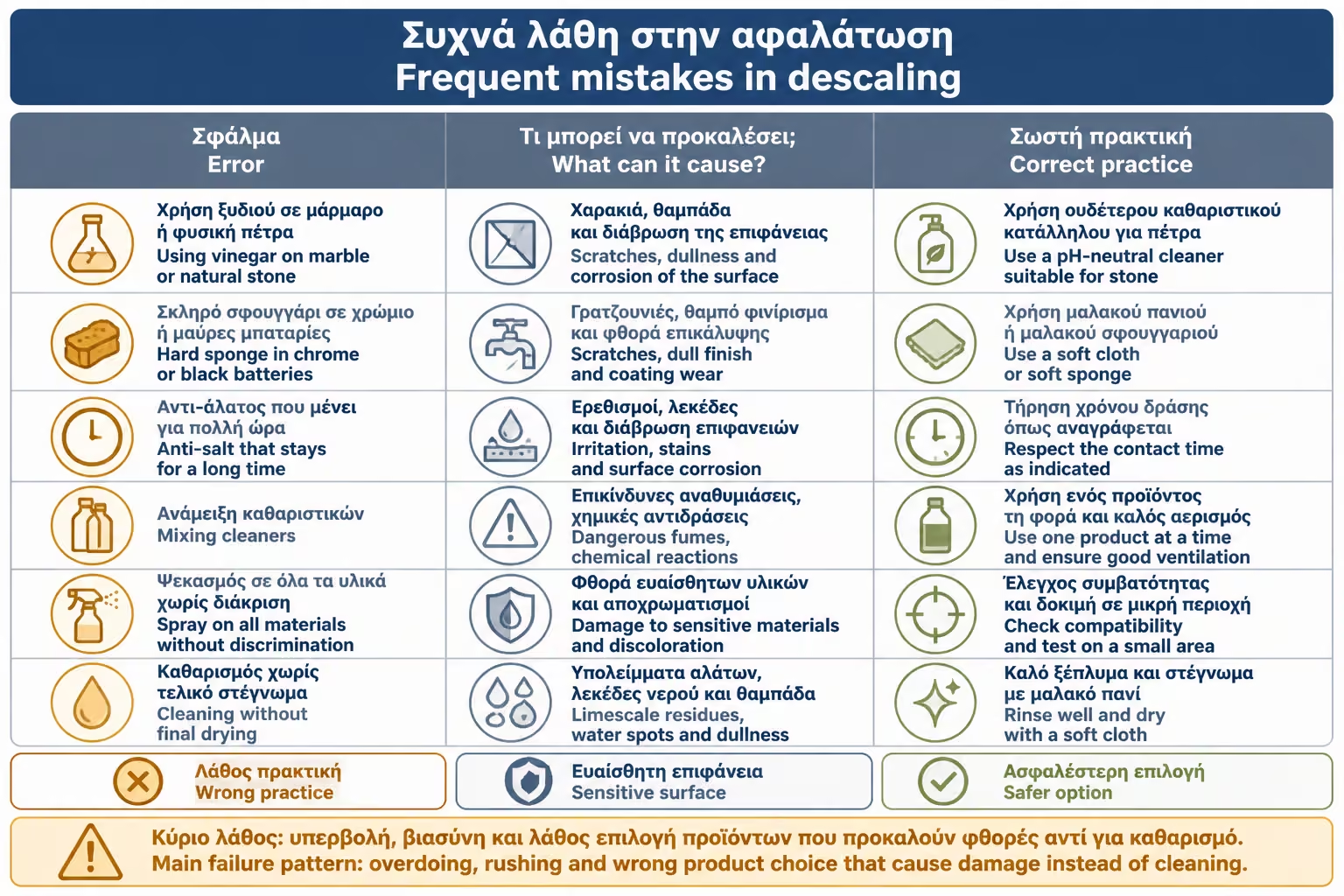
Mistakes in descaling are usually made in haste. We want an immediate result and use a stronger product, a longer action time or a harder scrub than necessary. The result can be a clean but dull surface.
| Error | What can it cause? | Correct practice |
|---|---|---|
| Using vinegar on marble or natural stone | Blur, chemical mark | Special neutral cleaner |
| Harsh sponge on chrome or black faucets | Scratches and finish wear | Microfiber cloth or soft sponge |
| Limescale cleaner left on for too long | Dullness or discoloration | Adherence to action time |
| Mixing cleaners | Hazardous fumes | One product at a time and a good rinse |
| Spray on all materials without discrimination | Wear on rubbers, silicones, finishes | Targeted application |
| Cleaning without final drying | Rapid re-appearance of scales | Wipe with a dry cloth |
| Excessive power instead of action time | Small scratches | Scale softening and gentle scrubbing |
| Ignore a leak that creates scale | Repetitive crust | Check seal or connection |
A typical example is a faucet that has limescale around its base because it drips slightly at the connection. The owner removes the crust every week, but it comes back. The problem is not cleanliness. It is the small leak that keeps leaving water in the same spot. If the cause is not corrected, the limescale will reappear.
Descaling is usually a low-cost job, especially if done regularly. Vinegar and citric acid are economical solutions. Specialized products cost more, but can save time in difficult cases. The real cost comes when the wrong cleaner wears out a battery, a glass coating or a natural stone.
| Material / Product | Indicative cost picture 2026 |
|---|---|
| Cleaning vinegar or white vinegar | around €1–3 |
| Citric acid powder | around €2–6, depending on quantity |
| Microfiber cloths | around €2–10 |
| Glass cleaning rubber for cabin | around €5–15 |
| General purpose mild scale cleaner | around €3–8 |
| Specialized cleaner for cabins / glass | around €5–15 |
| Cleaner for special surfaces or natural stone | around 8–20€+ |
| Replacement of aerator or small filter | around €2–10 |
| Shower phone replacement due to strong limescale | around €8–€50+, depending on quality |
The prices are indicative and depend on the region, the store, the packaging, the brand, whether VAT is included and the type of surface. You don't always need an expensive product. It takes the right product for the right material. An inexpensive natural solution may be ideal for plain glass or chrome, but disastrous for marble. Accordingly, a strong professional cleaner may be overkill for daily maintenance.
In most cases, descaling is purely a household task. But a professional is needed when the salts have formed a strong crust on sensitive surfaces, when you do not know the material, when there is natural stone or pressed cement mortar, when the glass is already dulled, or when the crust keeps coming back due to leakage.
A professional is also needed when scale is associated with low water pressure, clogged filters, clogged batteries, a hot water problem, or worn mechanisms. If you clean the showerhead and the flow remains poor, there may be salt or debris elsewhere in the installation.
In expensive cabins with special coating, black profiles or special materials, the wrong choice of cleaner can cost more than a professional maintenance. If you are not sure, test on a small spot or ask the manufacturer for instructions.
The professional is not called just for "cleaning". It is called when a diagnosis is needed: why the salts build up so quickly, if there is a leak, if there are worn seals, if the water is too hard or if the surface has already suffered chemical damage.
| Inquiry | Yes / No |
|---|---|
| Do you know what material the surface you will clean is made of? | Yes / No |
| Have you ruled out marble, natural stone, or sensitive flooring before using an acidic product? | Yes / No |
| Will you start with a gentle method before going to a strong cleanser? | Yes / No |
| Have you avoided a hard wire or abrasive sponge? | Yes / No |
| Will you do a small spot test if the surface is a special finish? | Yes / No |
| Won't you mix vinegar, bleach or other cleaners together? | Yes / No |
| Will you rinse thoroughly after cleaning? | Yes / No |
| Will you dry the surface after rinsing? | Yes / No |
| Have you checked if the salts are coming from a small leak? | Yes / No |
| For a glass cabin, would you use a rubber band after the shower for prevention? | Yes / No |
| If the flow is low, will you also check the aerator filter or the shower phone? | Yes / No |
If the answer is “No” to the points about material, testing, or avoiding mixing cleaners, don't start yet. In descaling, the wrong product can do more damage than the scale itself.
If you must keep only one thing, keep this: scale is best removed with proper action time and gentle scrubbing, not force. Start with the mildest medium, always check the surface material and do not use acidic products on marble, natural stone or unknown special finishes. In batteries and glass, good rinsing and immediate drying after cleaning are as important as the cleaner itself. If the salts return to the same spot, look for a small leak or permanent drip.
Descaling in the bathroom is not just a matter of cleanliness. It is a matter of proper maintenance of the materials. Faucets, shower phones, glass partitions, tiles, joints, silicones and special finishes are not all cleaned in the same way. Vinegar and citric acid can be very useful, but they are not suitable for every surface. Specialized products can solve difficult deposits, but they need proper use.
The safest approach is to start gently, let the cleaner work its way through, avoid harsh abrasives and rinse thoroughly. Then, dry. This last move is perhaps the most underrated: if the surfaces are dried after use, the salts do not have time to build up.
In a hard water bath, the salts don't disappear forever. They return as long as there is water that dries on the surfaces. But they can be controlled. With proper prevention, mild regular maintenance and attention to materials, the bathroom stays cleaner, the batteries maintain their finish and the glass surfaces do not become permanently cloudy from incorrect cleaning.
Return to category.
Go to categoryReturn to the central guide.
Go to guide