
Bathroom DIY, Maintenance & Styling
Return to category.
Go to categoryThe glass partitions in the shower give the bathroom a clean, modern and more spacious image. When they are new or just cleaned, they make the space look brighter and neater. The problem starts a few days after use. Drops dry on the glass, leave white marks, soaps create cloudy films and the cabin starts to look dirty even if the bathroom is cleaned often.
This is one of the most common complaints in bathrooms with a shower enclosure or fixed walk-in glass. The owner cleans the glass with a standard glass cleaner, the result looks good for a few hours, and then after the next shower the marks come back. The harder the water in the area, the faster the problem appears. In several parts of Greece, limescale builds so quickly that a glass surface can look dull after only a few uses.
The secret is not an expensive cleaner that promises to solve everything. The real secret is to remove water from the glass before it dries on its own. Every drop that evaporates leaves mineral residue behind. Any soap residue left on the surface sticks to that residue and creates a dull film. That is why the small hand-held squeegee is probably the most useful tool for a shower enclosure.
Anti-calc cleaning is not only about removing scale when it has already built up. It is mainly a maintenance system. It includes proper daily drying, gentle regular cleaning, deeper descaling when needed and, in some cases, special crystal waterproofing fluids that help keep water from easily “sitting” on the glass. But all this must be done in the right way, because the glass, profiles, silicones and rubbers of the cabin cannot withstand all cleaning agents.
In this guide we'll see why shower glass fogs up, how to properly use the squeegee after every shower, what cleaners help with scale, what special anti-calc waterproofing liquids offer, what mistakes spoil the result and when a cabin needs a deeper professional cleaning or replacement of worn parts.
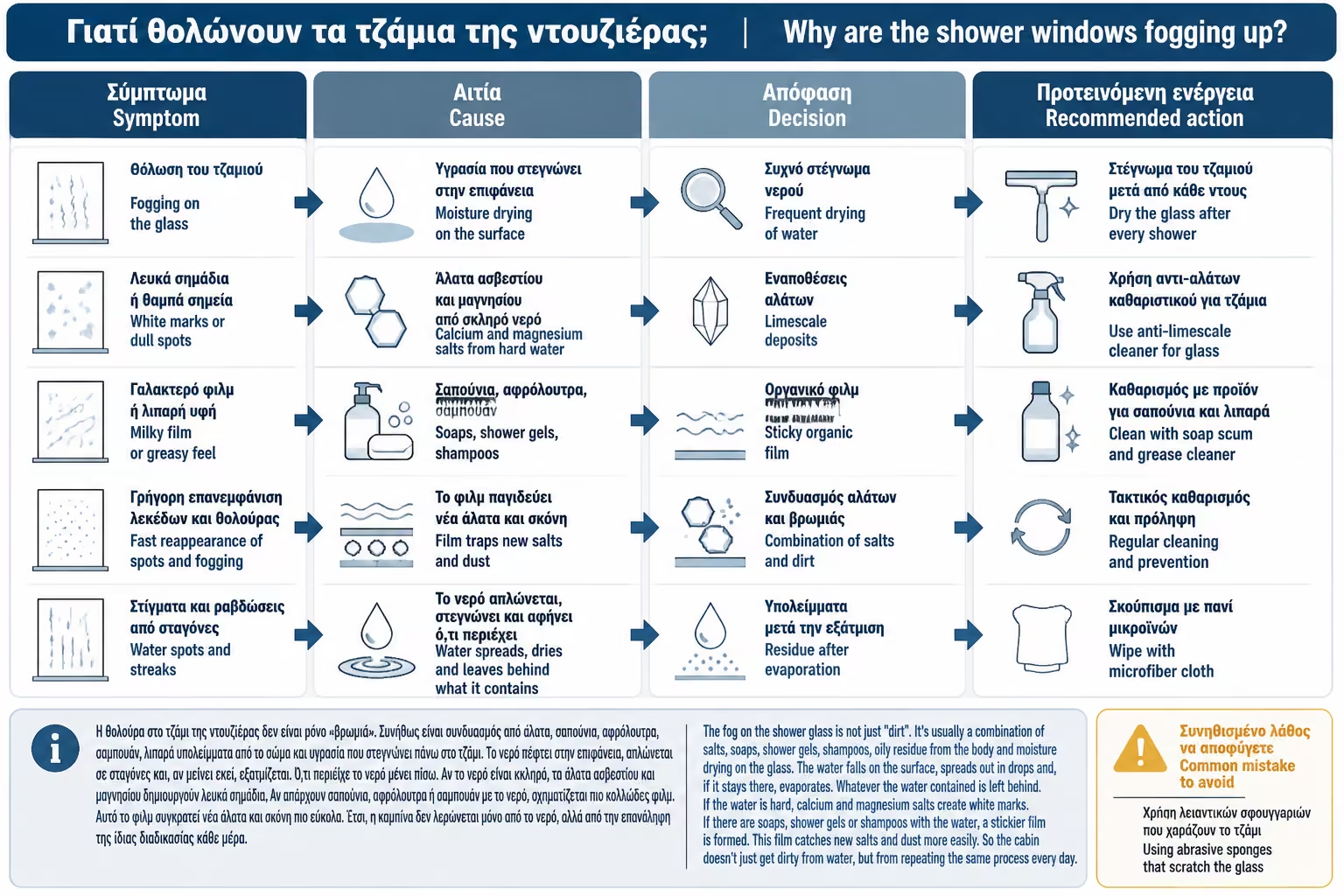
The cloudiness on shower glass is not just "dirt". It is usually a combination of mineral salts, soap, shower gel, shampoo, body oils and moisture drying on the glass. Water lands on the surface, spreads into droplets and, if it stays there, evaporates. Whatever the water contained is left behind.
If the water is hard, calcium and magnesium salts create white marks. If there are soaps, shower gels or shampoos with the water, a stickier film is formed. This film catches new salts and dust more easily. So the cabin doesn't just get dirty from water, but from repeating the same process every day.
At first the prints come off easily. With a cloth or mild cleaner, the glass cleans. But if the problem persists for weeks or months, the salts become harder and the dullness more persistent. In some cases, the glass appears as if it is "permanently frosted", when in fact it has layers of salts and soap on it that need more careful cleaning.
A common example is the lower half of the cabin. More water and foam fall there. The upper part can stay relatively clear, while the lower part the glass becomes white and dull. This does not mean that the glass is of poor quality. It means that the water stays there longer and the maintenance does not prevent deposits.
The term anti-calc is used a lot in cleaners, cabins and coatings. In practice it means "anti-scale", but this does not mean that the surface will never get dirty. An anti-calc coating or waterproofing fluid helps water slide off more easily, reduces scale adhesion and makes cleaning easier. However, it does not eliminate the need for maintenance.
If water stays on the glass and dries, it will leave marks even on a protected surface. It's just that the marks can be removed more easily and don't "stick" as strongly. This is an important difference. Anti-calc protection is not a magic shield. It is an aid, not a substitute for cleaning.
On new crystals, some cabins come with a factory coating. In other glasses, a special waterproofing liquid can be applied afterwards. In both cases, the duration depends on usage, cleaners, water hardness and how often the glass is wiped after showering.
A common mistake is to use very strong or abrasive cleaners on coated glass. This may reduce the duration of protection. If you have a cab with factory anti-calc, you must follow the manufacturer's cleaning instructions.
A hand squeegee is the simple rubber-bladed tool that passes over the glass and pulls the water downward. It may seem like a small detail, but it is the single most effective tool for keeping limescale from building up in a shower enclosure. The reason is simple: it removes water before it dries.
Using it after every shower drastically reduces prints. You don't have to clean the whole bathroom. It takes 20–40 seconds to pass the glass surfaces from top to bottom. If you do it every day, the salts do not have time to form a hard layer. If you skip it, each shower adds another thin layer.
The squeegee is more effective than the simple cloth on large glass surfaces, because it removes the water evenly. The cloth can leave moisture, spread the soaps or fill quickly. The rubber pulls the mass of water and leaves less residue.
The important thing is that it is in or next to the shower, where you actually use it. If it's locked in a cupboard, you'll forget about it. If it hangs on a hook on the glass or on the wall, it becomes part of the routine. In a home with hard water, this little habit is worth more than many cleaners.
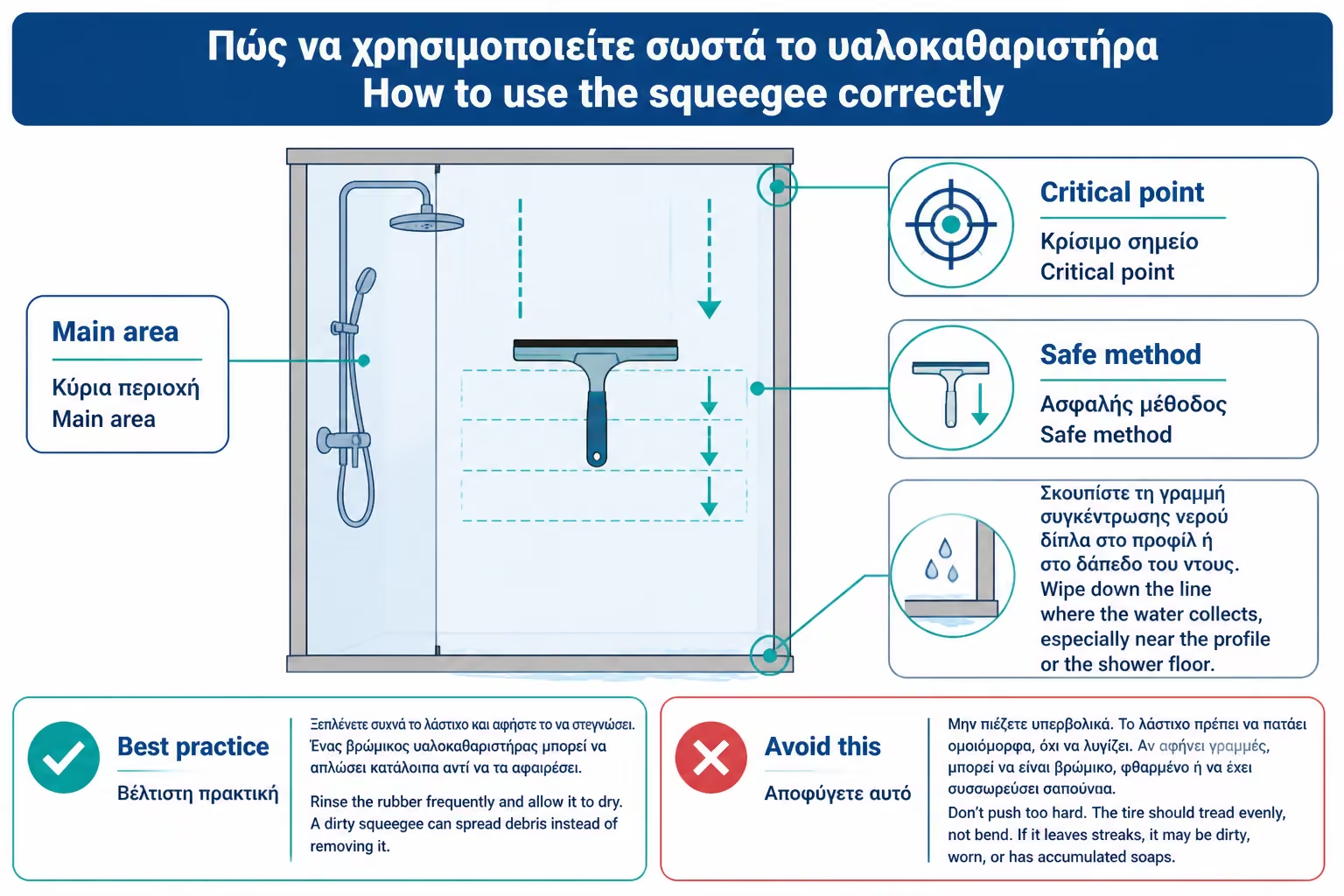
Correct use is simple, but it matters. Start at the top of the glass and draw the water down in a steady motion. Then pass the next strip, slightly overlapping the previous one. Finally, wipe down the line where the water collects, especially near the profile or the shower floor.
Don't push too hard. The tire should tread evenly, not bend. If it leaves streaks, it may be dirty, worn, or has accumulated soaps. Rinse the rubber frequently and allow it to dry. A dirty squeegee can spread debris instead of removing it.
In framed cabs, pay attention to corners and bottom profiles. Water and soaps are collected there. The squeegee pass should not be limited to just the center of the glass. If the water stays on the edges, the edges will dull first.
A practical example: in a walk-in shower with fixed glass, it is sufficient to wipe the inner side of the glass after showering. If the outside does not get wet, it does not need a daily pass. But if the water is thrown outside, clean there too, because the prints on the outside are very visible in the bathroom lighting.
Daily maintenance should not feel tedious, otherwise it will not happen consistently. The ideal routine after each shower is simple: quickly rinse soap from the glass, run the squeegee, and if you want, wipe the faucets and profiles with a small cloth. That alone is enough to dramatically reduce cloudiness.
Rinsing before squeegeeing helps because it removes soaps and shower gels. If you squeegee over foams, you may leave a thin film. A short pass with clean water and then a squeegee gives a better result.
After passing, let the cabin air out. If the shower door closes completely and the area remains damp, the rubbers, silicones and profiles retain moisture. Open the door slightly or let the ventilation work. Moisture not only affects the glass, but also the joints, silicones and the smell of the bathroom.
This routine is especially important in windowless bathrooms. There the moisture stays longer and the marks are created faster. If there is a fan, use it after the shower as well, not just during it.
Even with a daily squeegee, glass still needs periodic cleaning. The frequency depends on the hardness of the water, the use of the shower and the products used. In a bathroom with daily family use, a gentle cleaning once a week is usually practical. In milder use, every 10–15 days may be sufficient.
Regular cleaning should not be aggressive. If you dry daily, you don't need a strong anti-salt every week. Mild glass or bathroom cleaner, a microfibre cloth and a good rinse are often sufficient. We reserve the strong products for cases where the salts have built up.
In cabins with anti-calc coating, prefer cleaners that are compatible with coatings. Avoid abrasive creams, powders and hard sponges. The coating may not come off immediately, but with incorrect cleaning, its performance gradually decreases.
A mistake is to clean the glass only when it is already heavily fogged. Then more effort and stronger products are needed. Regular gentle cleaning keeps the problem at a low level and protects the glass.
Vinegar and citric acid can help moderate salts on plain glass. Vinegar is usually used diluted with water, applied with a cloth or sprayer, left for a few minutes and then cleaned with a soft sponge or cloth. Citric acid can be dissolved in water and used in a similar way.
The main consideration is the action time. You don't need to leave an acid solution on the glass for hours. Salts soften with controlled application. Then the surface must be thoroughly rinsed and dried. If the solution runs onto metal profiles, tires, black elements or natural stone, it can create a problem, depending on the material.
In a cabin with a lot of plastic or rubber, apply the solution to the cloth and not uncontrollably by spraying it all over the surface. This way you control where the product goes. If the cabin has black or colored profiles, test on a small spot first.
Never mix vinegar or citric acid with bleach or other cleaners. Mixing cleaners can create hazardous fumes. Use one product at a time, rinse well and ventilate the bathroom.
Specialized cabin scale cleaners can be very effective when the glass is sufficiently clouded. They are usually designed to dissolve salts and soaps faster than mild natural solutions. Nevertheless, they should not be used indiscriminately.
Read the label. The product should be suitable for shower glass and ideally safe for the materials around it. If it says not to be used on natural stone, marble, aluminum, painted surfaces or special finishes, take it seriously. The cabin is not all glass. It has profiles, rubbers, silicones, screws and tiles around it.
For stubborn salts, apply the product to a small area, leave for the recommended time and clean with a soft sponge. Do not let it dry on the glass. Do not arbitrarily increase the action time because it is "too salty". If necessary, do a second pass.
After cleaning, rinsing should be thorough. If product is left on the glass or tires, it may cloud or affect the materials. Finally, squeegee and dry. The final drying shows if the result is clear or if a second application is needed.
Crystal waterproofing fluids are products that create a hydrophobic surface on the glass. Simply put, they make water form droplets that slide more easily, instead of spreading and sticking. This reduces prints and makes cleaning easier.
But it is not a permanent solution. Their duration depends on the quality of the product, the preparation of the glass, the frequency of use of the shower and the cleaning method. If you use harsh cleaners or abrasive sponges, the coating wears out faster. If you use a squeegee after each shower, the coating lasts better.
Waterproofing works best on clean glass. If applied over salts and soaps, it "locks" the dirt and does not perform properly. That is why deep cleaning, descaling, good rinsing and complete drying must be done before application.
A practical example: if you have a new cabin or have just cleaned the windows thoroughly, then it is a good time to apply a hydrophobic product. If the glass is already dull, it needs restoration first. Waterproofing is not a substitute for cleaning.
Proper application begins with very clean and dry glass. First remove salts and soaps. Then rinse well. Dry completely with a microfiber cloth. If moisture or cleaner remains, the coating may not bond properly.
Then apply the product according to the manufacturer's instructions. It is usually applied with a cloth or a special applicator in a thin layer. You don't need too much. More product does not mean better protection. It often leaves dullness or streaks that need polishing afterwards.
After the waiting time, the glass is usually polished with a clean dry cloth. Some products need a second coat. Others require a specific time without water after application. This is important. If the shower is used immediately, the coating may not set.
Application should be done with good ventilation and gloves where the product states. Do not spray uncontrollably on profiles, silicones or natural stones. Aim for the glass and clean off any debris from other materials.
Some cabs have a factory anti-calc treatment. This is usually more even and durable than a simple application of product at home, but still not indestructible. It needs gentle cleaning and avoid abrasives.
Additional coating applied by the owner or a technician can help on cabs without factory protection or on glasses that have been cleaned and need better maintenance. It won't always last as long as a good factory treatment, but it can give a practical benefit.
The important thing is not to confuse expectations. Factory or additional protection does not mean that you will never clean. It means that water and salts will stick harder and be removed more easily. Using a squeegee is still essential if you want the glass to stay really clean.
If you don't know if your cabin has a factory coating, avoid harsh cleaners until you know for sure. In expensive cabins, it is worth keeping the maintenance instructions, because the wrong product can reduce the duration of the protection.
If the windows have been left for months without proper maintenance, cleaning requires patience. Don't always expect a perfect result with one pass. Start with a good wash to remove soaps and surface dirt. Then apply anti-calc cleaner or a mild acid solution, depending on the cabin materials.
Work in small areas. If you spray the entire cabin and the product dries before you can work on it, it can leave marks. Better to clean a section, rinse, dry and then continue. In very strong salts, two or three mild applications may be necessary.
If the glass remains dull after proper cleaning, there may be deeper wear or micro-scratches. In such cases, not everything can be removed by household cleaning. Sometimes dullness isn't just salt, but wear and tear from harsh sponges, the wrong chemicals, or years of neglect.
Before moving on to very strong products, evaluate whether it is worth it. An old cab with worn tires, blackened silicones and dull glass may need more general maintenance or component replacement, not just cleaning.
The shower glass is not alone. Around it there are metal profiles, hinges, wheels, rubber seals and silicones. These materials are often more sensitive than the glass itself. A cleaner that cleans the scale well can affect tires or dull painted profiles.
Black profiles need special attention. Acidic or strong products can leave marks, especially if left to dry. On tires, strong cleaners can cause hardness or discoloration. In silicones, continuous aggressive chemistry can shorten their life.
When cleaning the glass, try to control the application. If you spray, do not fill the entire cabin uncontrollably. If you use cloth, you have better control. After cleaning, rinse the profiles as well. Do not leave product in the corners.
If the silicones are deeply blackened or peeled off, they will not be saved by window cleaning. Silicone replacement is needed there. If the tires are hard, cut or do not fit, they may need to be replaced. A clean cabin isn't just glass; it's the whole system.
Abrasive creams, hard sponges and wires can remove scale, but they often leave micro-scratches. On glass, these scratches are not always immediately visible. They are visible when light falls at an angle or when the surface gets wet again. And the worst: on etched glass, the salts catch more easily.
This is why the correct method is based on chemical softening of the scales and not on violent scrubbing. We use a soft cloth, a sponge without a hard side or special microfiber cloths. If more action is needed, we controllably increase the time or repetitions, not the force.
The same goes for scrapers. There are professional glass scrapers, but for an owner there is a risk of scratching if used at the wrong angle or on coated glass. For home use, they are best avoided unless there is clear instruction and experience.
A glass that is cleaned gently but often will last better than a glass that is aggressively scrubbed every month. Maintenance should protect the surface, not just temporarily polish it.
Humidity in the bathroom worsens dullness. The longer the cabin stays wet, the more time the salts and soaps have to stick. If the bathroom is not well ventilated, the glass dries slowly and moisture remains in the profiles, silicones and joints.
Venting does not remove scale, but helps to remove moisture quickly. After showering, open a window or run a fan for several minutes. If the cabin has a door, leave it slightly open to allow air to circulate. The closed, wet cabin is an ideal condition for fogging and mold.
In windowless bathrooms, the ventilator must be properly sized and operate sufficiently. If it just turns on with the light for two minutes, it's often not enough. Good glass maintenance is linked to overall bathroom moisture management.
A practical sign is the mirror. If the mirror remains cloudy for a long time after the shower, the bathroom is holding moisture. The same thing happens in the cabin, only there the humidity also leaves salts.
Not all blur is removable. If the glass has been cleaned many times with hard sponges, it may have micro-scratches. If it has received the wrong chemicals, the coating may have been damaged. If it has been left for years with salts, stubborn wear may have formed on the surface.
A sign that it's not just scale is when the surface looks clean when wet, but once dry a permanent dullness appears that doesn't change with gentle cleaning. This may be deeper deposition or wear. In such cases, very strong products are not always a solution. They may make the picture worse.
If the cabin is expensive or has a special coating, it is worth asking for guidance before trying professional chemicals. There are cases where professional cleaning or restoration with special products is a better option than constant experimentation.
If the haze is accompanied by blackened silicones, salts in the lower profiles and stagnant water, the solution is not only glass. Peripheral materials must also be cleaned or changed.
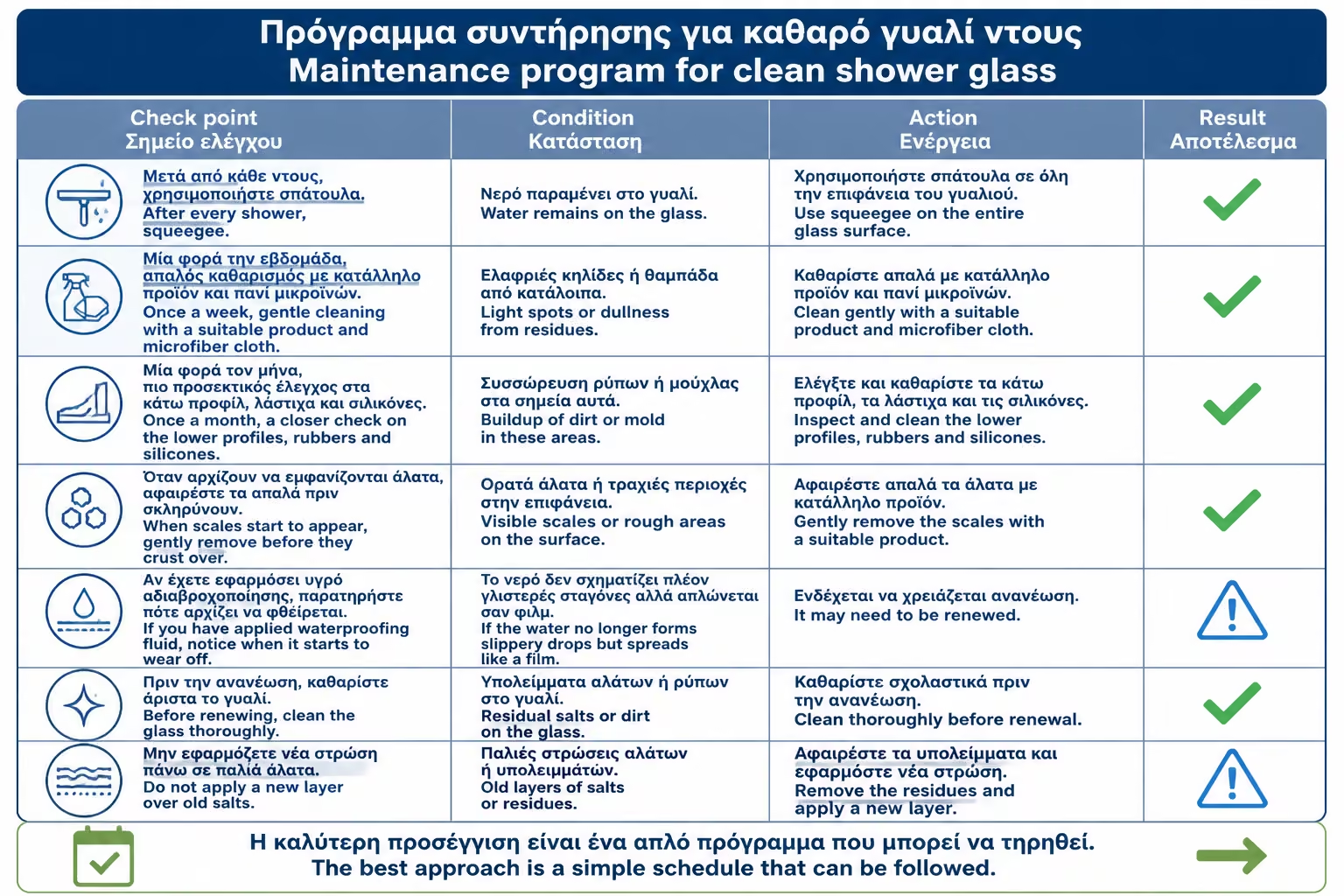
The best approach is a simple schedule that can be followed. After every shower, squeegee. Once a week, gentle cleaning with a suitable product and microfiber cloth. Once a month, a closer check on the lower profiles, rubbers and silicones. When scales start to appear, gently remove before they crust over.
If you have applied waterproofing fluid, notice when it starts to wear off. If the water no longer forms slippery drops but spreads like a film, it may need to be renewed. Before renewing, clean the glass thoroughly. Do not apply a new layer over old salts.
In families, the point is to make it a habit for everyone. If only one uses a squeegee and the others don't, the result will be mediocre. Hang the tool in a prominent place and make it part of using the shower, like turning off the water.
The schedule doesn't have to be rigorous. Consistency is needed. Salts win when we let them build up. They lose when we don't give them time to dry on the glass.
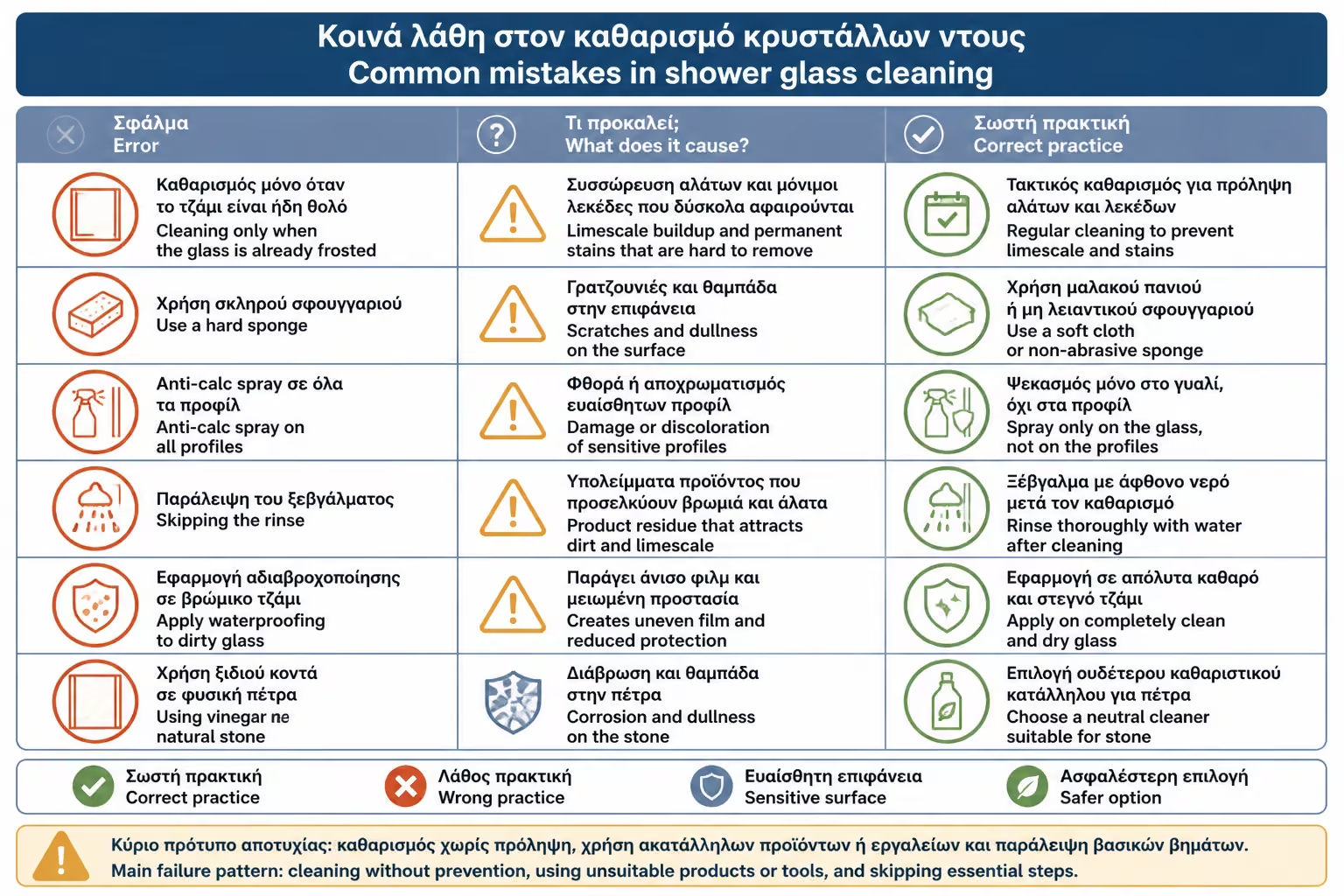
Most mistakes are made because we treat the cabin like a simple window pane. It's not the same. The glass of the shower accepts salts, soaps, hot water, moisture, cleaning agents and contact with profiles and silicones. A different logic is needed.
| Error | What does it cause? | Correct practice |
|---|---|---|
| Cleaning only when the glass is already frosted | Stronger products are needed | Daily squeegee and gentle maintenance |
| Use a hard sponge | Small scratches on the glass | Microfiber cloth or soft sponge |
| Anti-calc spray on all profiles | Wear on rubbers, silicones or ferrous metals | Targeted application to glass |
| Skipping the rinse | Haze from product residue | Rinse and dry well |
| Apply waterproofing to dirty glass | Locks salts and soaps | Thorough cleaning before coating |
| Using vinegar near natural stone | Possible chemical deterioration | Protection or special neutral products |
| Closed cabin after the shower | Moisture retention | Ventilation and ajar door |
| Overconfidence in anti-calc | The salts are coming back | Coating helps, not replaces drying |
A prime example is the cabin that is cleaned every Sunday with a strong product but never squeegeed after the shower. The result is a continuous cycle: intense dullness, heavy cleaning, temporary gloss, dullness again. If daily drying is introduced, the need for vigorous cleaning is noticeably reduced.
Shower glass maintenance is not expensive as long as it is done proactively. The most useful tool, the squeegee, is low cost and long lasting. Anti-calc cleaners and waterproofing fluids cost more, but can be worth it when used correctly.
| Product / Work | Indicative cost picture 2026 |
|---|---|
| Cabin hand squeegee | around €5–20 |
| Microfiber cloths | around €2–10 |
| Mild glass / bathroom cleaner | around €3–8 |
| Anti-calc cleaner for cabins | around €5–15 |
| Citric acid or vinegar for mild use | around €1–6 |
| DIY crystal waterproofing liquid | around €10–30 |
| More specialized glass protection set | about 25–60€+ |
| Professional deep cleaning / protection application | case by case, often from €50–€150+ |
The prices are indicative and depend on the region, the store, the brand, the quantity, the quality of the product, whether VAT is included and the condition of the cabin. The most economical "investment" is almost always the squeegee and its daily use. More expensive products make sense when the glass is clean and you want to keep it that way, not when you're trying to cover years of neglect.
In most cases, shower glass cleaning is a household chore. A professional is needed when the glass has a strong old haze that won't go away, when it has a special coating and you don't know what product is allowed, when the profiles are blackened or full of salts, when the rubbers have hardened or when the silicones have blackened and peeled off.
A professional may also be needed if you want proper application of hydrophobic protection in a large or expensive cabin. Coating success is highly dependent on preparation. If the glass is not cleaned properly, the product will not perform as it should.
If there are leaks from the cabin, water coming out or black spots on the lower profiles, do not limit yourself to cleaning the glass. It may need a door adjustment, change of tires, new silicone or camber control. Salts often show where water stays, but they don't always explain why it stays there.
Correct diagnosis is important: another dull glass from salts, another worn coating, another hose holding dirty water, another leaking from a bad seal. Every problem needs a different solution.
| Inquiry | Yes / No |
|---|---|
| Is there a squeegee in or next to the shower? | Yes / No |
| Do you squeegee the glass after every shower? | Yes / No |
| Are the soaps rinsed off first before the glass dries? | Yes / No |
| Is the bathroom ventilated after use? | Yes / No |
| Are soft cloths used instead of hard sponges? | Yes / No |
| Is anti-calc cleaner suitable for shower glass? | Yes / No |
| Has it been checked if the glass has a factory anti-calc coating? | Yes / No |
| Are the profiles, rubbers and silicones protected from strong chemicals? | Yes / No |
| Is waterproofing only applied to completely clean and dry glass? | Yes / No |
| Is there a good rinse and dry after each cleaning? | Yes / No |
| If the dullness persists, is it being looked at for wear rather than just salts? | Yes / No |
If the answer is “No” to the first two points, start there. No anti-calc solution performs as well as it should if the water is left to dry on the glass every day.
If you want clean shower screens, don't rely on cleaner alone. The most important step is done immediately after the shower: squeegee the glass before the drops dry. This way you catch the salts before they become a crust. Anti-calc products and waterproofing fluids help a lot, but only when the glass is already clean and when daily maintenance continues. Prevention in glass is always easier than remediation of haze.
Shower screens become cloudy because water, salts and soaps sit on the surface and dry. The longer they stay, the harder they are to remove. That is why the most effective solution is not the rare possible cleaning, but the daily removal of water with a squeegee.
A simple pass after each shower changes the image of the cabin. It reduces prints, reduces blurring and makes weekly cleaning much easier. Special anti-calc cleaners help when deposits are present, while crystal waterproofing fluids can improve the behavior of the glass, as long as they are applied to a clean and dry surface.
Proper maintenance also requires attention to the materials around the glass: profiles, rubbers, silicones, natural stones and special coatings. We don't use whatever cleaner we find throughout the cabin. Choose a gentle method, rinse well and dry. So the glass stays clean, the cabin looks new for longer and the bathroom maintains the clean image it had on the first day of renovation.
Return to category.
Go to categoryReturn to the central guide.
Go to guide