
Bathroom DIY, Maintenance & Styling
Return to category.
Go to categoryThe toilet bowl is one of the parts of the bathroom that gets cleaned often, yet it can still develop stubborn deposits. At first it looks like slight discoloration at the waterline. Then a brown, yellowish or gray crust forms lower inside. Sometimes vertical rust lines appear below the points where the flush water falls. This is the familiar hard build-up known in Greek as puri: a mixture of mineral salts, rust, residue and dirt that will not go away with an ordinary bowl cleaner.
Puri is not always a sign that the toilet is not being cleaned. In many parts of Greece, the water is hard and leaves mineral deposits quickly. If there is a slight continuous flow from the cistern, scale builds up right in the water path. If the pipes are old or the water carries iron particles, brown or orange rust marks appear. If the bathroom is used heavily or the bowl is left for a long time without proper cleaning below the waterline, the deposits harden.
Puri removal is different from simple daily cleaning. An ordinary cleaner disinfects and removes organic dirt, but it cannot always dissolve old mineral deposits. In those cases you need either a special acidic cleaner for limescale and puri or mechanical help, such as a pumice stone made for porcelain cleaning. In both cases, technique matters. The goal is to clean the toilet bowl without scratching the porcelain, without damaging seals, and without mixing dangerous chemicals.
The biggest mistake is overdoing it. More chemical, more time, harsher scrubbing, or mixing products "for better results" can make bathroom cleaning dangerous, especially if acidic products are mixed with bleach. They can also wear down the bowl surface. Once porcelain becomes etched, it stains more easily because salts and dirt catch in the micro-scratches.
In this guide we will look at what puri is, why it forms, how to distinguish it from ordinary dirt or mold, how to use special acidic cleaners, when pumice stone helps, what to avoid, and when constant recurrence points to a problem with the cistern or the water itself rather than a need for stronger cleaning.
Puri is a hard deposit formed mainly from mineral salts in the water. In a toilet bowl, however, it is never just salt. It mixes with rust, metal particles, organic dirt, cleaner residue and microbial film. That is why it can have different colors: white-gray when mineral salts dominate, brown or orange when there is rust, and yellowish when it has mixed with organic residue.
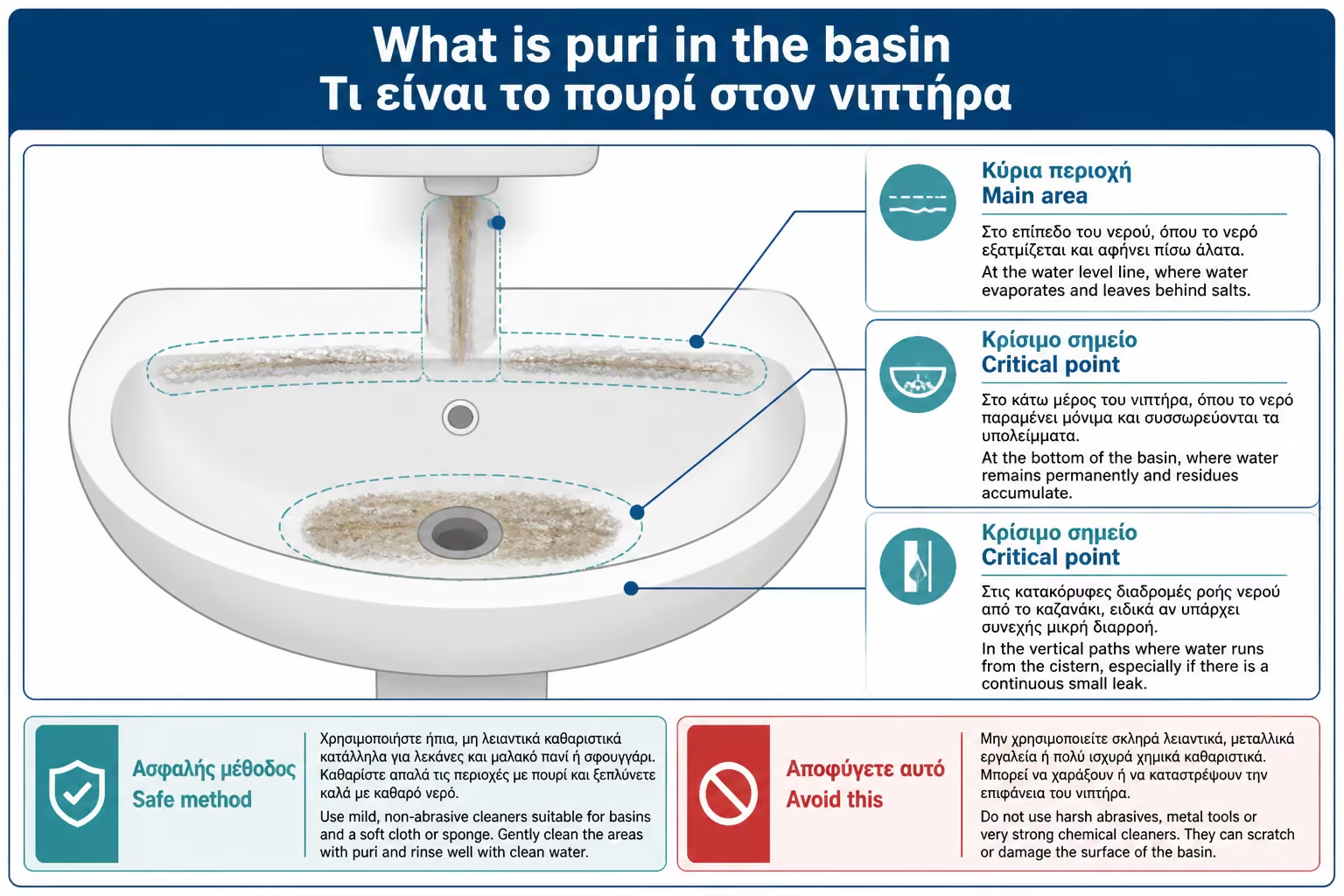
It usually appears in three places. First, at the waterline, because that is where water gradually evaporates and leaves salts behind. Second, at the bottom of the bowl, where water remains permanently and residue accumulates. Third, in the vertical paths where water runs down from the cistern, especially if there is a small continuous leak.
Puri is hard and often rough to the touch. It cannot be removed with a simple brush because it has effectively bonded to the porcelain. The longer it stays, the harder it becomes. In older bowls, it can form a thick layer that will not clean off with an ordinary disinfectant.
A practical example is a bowl that looks clean at the top, but has a brown ring at the bottom of the water. The owner applies cleaner every week, leaves it for a few minutes and scrubs. The smell improves and the surface is disinfected, but the brown ring remains. That is because the problem is mineral build-up, not simple surface dirt.
Puri forms because water leaves mineral residue behind. If the water in the area is hard, deposits form faster. If the bowl is used frequently, fresh water keeps coming through but leaves small amounts of minerals each time. If only the visible surface is cleaned and the bottom or waterline is ignored, the crust gradually builds up.
An important factor is a cistern that keeps running slightly. Even a subtle flow that is not always audible can keep sending water into the bowl. Wherever water passes repeatedly, deposits accumulate. Over time, a vertical line or brown stain appears. If the cistern is not fixed, the puri will return no matter how well you clean.
Rust can come from old pipes, metal particles in the water, or rusted parts in the faucet. If you see orange or brown marks that reappear quickly, it's worth checking for rusted screws, an old mechanism, ferrous particles or a general water issue.
Also, in houses that are closed for a long time, the water in the basin remains stagnant. Evaporation and scale build-up increase. That's why in country or second bathrooms we often see strong puri, even if the use is small. It's not just the use; it's also the stillness of the water.
Disinfection is about reducing microbes and organic load. Scaling refers to the dissolution or removal of hard mineral deposits. A product may disinfect well but not descale. Another might descale but not be the basic sanitizer you're used to. That's why you need to know what you want to achieve.
Many bowl cleaners on the market for everyday use have a fragrance, disinfectant or cleaning action, but they are not strong enough for an old cigar. If the problem is crust, a product that acts on the salts, usually acidic, is needed. If the problem is microbial dirt or odor, cleaning and disinfection is needed.
The mistake is to mix products to "do both". This is dangerous. We do not mix bleach with acidic cleaners, vinegar, citric acid or cigar cleaners. Mixing may produce toxic fumes. If you have used bleach, rinse thoroughly and wait before using an acidic product. If you have used acid, rinse thoroughly before applying another cleaner.
The right approach is in stages. First we clean and remove the hard deposit with a suitable product or tool. Then, after it is completely rinsed, we can do a mild disinfection with a compatible product, if necessary. Not everything happens together.
Before starting heavy cleaning, observe the surface. If the stain sits on top of the porcelain, it usually has a raised or rough texture. If the porcelain is etched or has lost its enamel, the spot may look permanently dull or gray even after cleaning. That is not ordinary puri.
In old basins, the enamel may have worn away from years of use, strong cleaners or hard tools. When the surface loses its smooth texture, it holds dirt and salts more easily. Then cleaning becomes more and more difficult. You may clean off the crust, but the bowl may not be as shiny as it used to be.
A simple test is to clean a small spot with a suitable product and brush. If the spot lightens in color and becomes smooth, there is a build-up. If it remains rough or dull even though there is no visible crust, wear may be present. That's where you need to be careful with abrasives, because you can make the surface worse.
If the basin is very old, with deep scratches, cracks in the enamel, or heavy permanent stains, replacement may make more sense in the long run than continued aggressive cleaning. Not every stain is completely reversible.
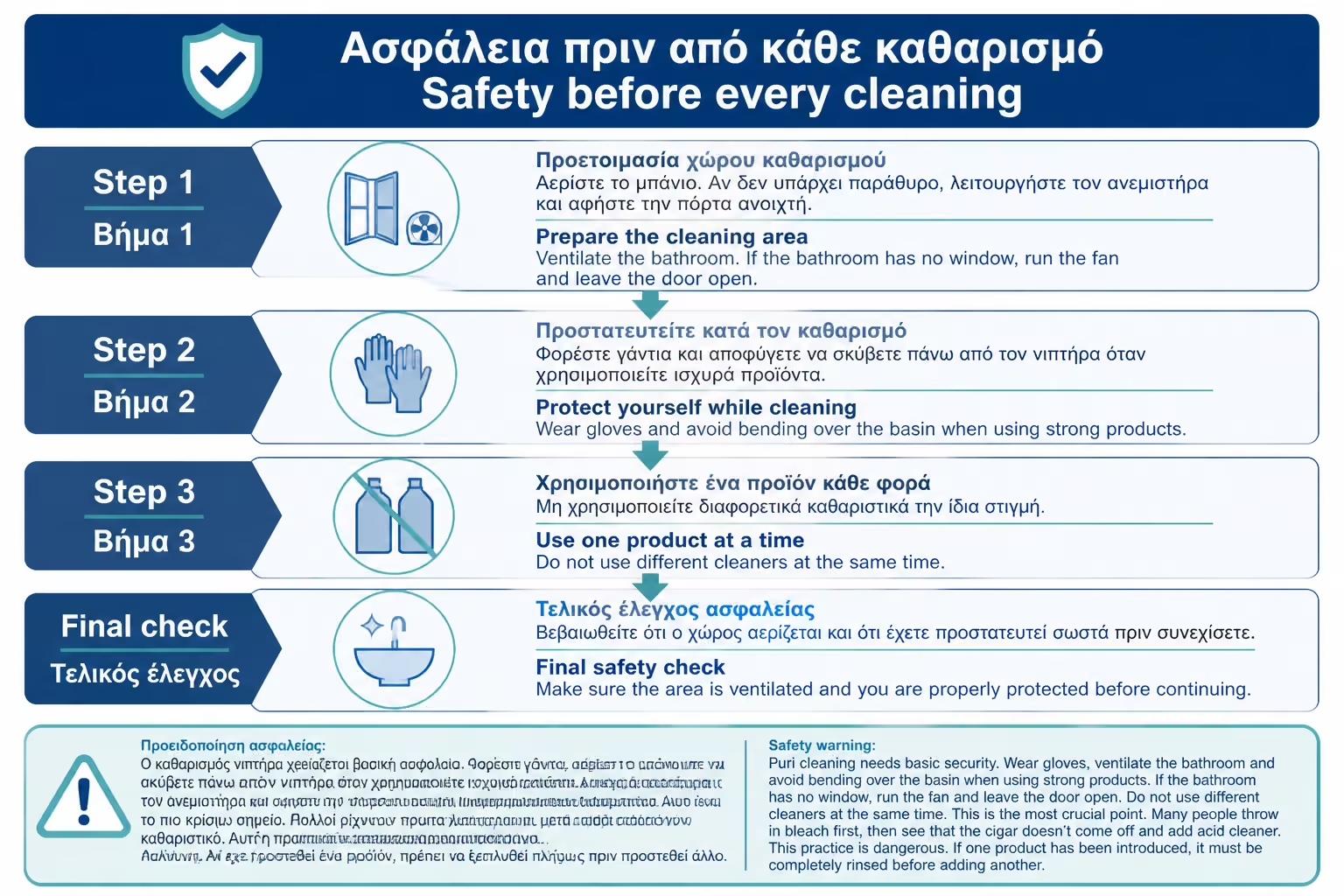
Puri cleaning needs basic security. Wear gloves, ventilate the bathroom and avoid bending over the basin when using strong products. If the bathroom has no window, run the fan and leave the door open.
Do not use different cleaners at the same time. This is the most crucial point. Many people throw in bleach first, then see that the cigar doesn't come off and add acid cleaner. This practice is dangerous. If one product has been introduced, it must be completely rinsed before adding another.
Protect the surrounding materials as well. Special acids for cigars can affect metal parts, marble, natural stone, pressed cement mortar, joints, chrome surfaces or plastic parts if they fall out of the basin. You apply targetedly into the basin and immediately wipe up any drips around.
Do not leave products on longer than the manufacturer states. "More time" is not always a better result. On old porcelain or on worn surfaces it may dull or affect gaskets and plastic parts of the mechanism if the product comes into contact with them.
The cigar is often below the water level. If the cleaner is immediately diluted in water, its effect is reduced. Therefore, in difficult cases, it helps to temporarily reduce the level inside the basin so that the product comes into contact with the deposit more concentrated.
A simple way is to close the cistern and pull the cistern so that it doesn't refill immediately if needed for testing. You can also push some of the water down the drain with the basin brush to lower the level. No need for extreme movements or emptying containers, unless you know what you're doing and can do it healthily.
The more exposed the cigar, the better the product will work. If the cigar is low on the bottom, you can place the cleaner there and let it work as directed. If it is at the water line, a paper towel or disposable cloth soaked in a suitable product can be left on the spot for a few minutes, always carefully and without mixing products.
After the action, a very good rinse must be done. Squeeze enough water and brush. If you used a paper or cloth for topical application, remove it and dispose of it in the trash, not in the sink, to create a non-clogging effect.
Special cleaners for puri and mineral deposits in the toilet bowl are usually acidic products. They act on the build-up and soften or dissolve it so it can be removed with brushing. They are often more effective than simple cleaners, but they require strict adherence to the instructions.
They are applied to the inside of the bowl, ideally on the areas with deposits. Many have a thicker texture so they cling to the walls. Leave them on for the time stated on the package and then scrub with a toilet brush. In difficult cases, a second application may be necessary. Two controlled applications are better than one excessive one.
Pay attention to the indications of the product. Some strong acids are only suitable for specific uses and not for all basins or all materials. If the basin has a special coating, if it is old or if there are metal/chrome parts too close, avoid letting the product run out of the porcelain.
The biggest issue is safety with other products. If the basin has a bleach tablet in the sink, or if you have just used a chlorine cleaner, do not pour in an acid cleaner without a good rinse and without being sure that it will not mix. Chemistry in the bathroom does not require improvisation.
Porcelain cleaning pumice stone can help when the puri has become a hard crust that won't come off with just a chemical. We are not talking about any stone or hard tool. A special pumice stone suitable for basin/porcelain cleaning is needed, which is always used wet.
The key secret is that both pumice and porcelain must be wet. If you rub dry, the risk of scratching increases. Wet the stone and the spot well, rub with gentle pressure and small movements on the crust. The stone wears away as it works and helps to remove the puri mechanically.
No need for excessive force. If the puri does not go away, first combine a chemical softener with a suitable cleaner and then a pumice stone. The pumice stone should work on the build-up, not persistently rub clean porcelain. Once the crust is removed, you stop.
On colored basins, special coatings or very old worn porcelain, pumice stone needs more attention and a small spot test. If the surface is already scratched, it can worsen the roughness. Correct use is targeted, not general scrubbing of the entire pelvis.
Avoid metal wires, screwdrivers, knives, tile scrapers and hard abrasive tools. They may remove crust quickly, but they can scratch porcelain. An etched basin will stain more easily, hold odors and acquire a new cigar more quickly.
Also avoid indiscriminate use of very strong chemicals that are not intended for basins. Products for professional cement removal, strong acids or cleaners for other surfaces may be unsuitable and dangerous for domestic use. The fact that they "dissolve salts" does not mean that they are correct for porcelain and a closed bathroom.
Do not pour boiling water into the basin to "break" the puri. Sudden heat stress can create a problem in porcelain or piping, especially in an old installation. Hot water can help with simple dirt, but puri needs another treatment.
Do not use kazanaki tablets as a solution for old puri. They can help with fragrance or mild maintenance, but they don't remove serious build-up. Some may even affect tires and mechanisms if used continuously, depending on their composition.
Brown lines coming down from the pelvic flushing points are very common. They usually combine salts and rust. If there is a fine continuous flow from the cistern, the water always passes through the same point and leaves a line. As long as the cistern continues to run, the line will return.
Clean the line with a suitable puri cleaner or pumice stone if it has become hard crusted. But then check the cistern. Open the cap and see if the float closes properly, if the level reaches the overflow, or if the outlet valve is leaking water. If the problem is mechanical, the cleaning will be temporary.
If the line is bright orange, there may be iron in the water or rust from old components. Check the cistern for rusted screws, metal parts or old fittings. In modern cisterns, many parts are plastic, but older installations may have metal details.
A practical sign is the respawn time. If you clean and the line comes back within a few days, we're not just talking about old cigars. There is an active cause: continuous flow, scale or rust from the supply.
The point below the pelvic brim is difficult because it is not easily seen. This is where the water comes out of the cistern and where salts, microbial film and dirt collect. If the spot becomes clogged with scale, flushing becomes uneven and streaks or poor cleanliness may occur after pulling.
Use a cleaner with a nozzle that reaches under the rim. Leave it on as directed, then brush that area thoroughly. There are brushes with a special shape for the underside of the rim. A standard brush often does not reach well there.
If there are hard deposits under the lip, work gradually. Do not use a metal tool blindly, as you may scratch the porcelain without seeing. If the basin has a closed or rimless design, cleaning is different and you must follow the manufacturer's logic.
Cleanliness under the lip also helps with odor. A basin may look clean on the inside but smell because the area below the rim holds dirt and salts. Disinfection should also reach there.
Vinegar, citric acid and baking soda are often used for bathroom cleaning. For light salts in the basin they can help, but in old puri they are usually not enough. The crust is often very hard and needs a special product or mechanical removal.
Vinegar and citric acid are acidic and can act on salts. They can be used in mild cases, with time of action and good brushing. However, they should not be mixed with bleach or other cleaning agents. Baking soda can help as a mild abrasive, but it won't dissolve hard puri on its own.
In very stubborn puri, natural remedies may provide slight improvement but not complete recovery. This does not mean that they are useless. They can be good for maintenance after deep cleansing so that the crust doesn't build up again.
The important thing is not to persist with endless sanding because you are using "natural" material. Even mild mechanical action can wear down surfaces if overdone. If the problem is serious, it needs the right product and the right method.
After the puri is removed, the basin should be rinsed very well. Only then does it make sense to disinfect with a compatible product. If you used an acid cleaner, pump water several times and brush. There should be no residue before another cleaner is used.
For disinfection, you can use a product suitable for basins, following its instructions. You don't need too much. The important thing is the correct contact with the surfaces and good rinsing where required. If a chloride product is used, do not mix it with anything else.
Disinfection is not a substitute for mechanical cleaning. If there is still a puri crust, germs and dirt can remain in the irregularities. That is why the deposit is first removed and then the clean surface is disinfected.
If the basin is used by many people or there is a need for increased hygiene, regular gentle cleaning is better than infrequent, very aggressive disinfection. Porcelain needs cleanliness but also protection from chemical excess.
Prevention starts at the cistern. If there is a continuous flow, correct it. A floater that doesn't close properly or an exhaust gasket that is leaking water will always build up new scale in the sump. The clean basin will not last if the water continues to run.
Second step is regular cleaning before crust builds up. If you pass the basin often with a suitable cleaner, the salts do not have time to become hard puri. Especially on the level line, the weekly passage greatly reduces cycle formation.
In hard water areas, more frequent maintenance may be needed. If the house has a general filter or softener solution, it may reduce the salts, but this depends on the installation and is not always necessary in every case. For most homes, proper cleaning and fixing leaks is sufficient.
If the bathroom remains unused for a long time, draw water and clean the basin before and after the period of non-use. Standing water and evaporation accelerate puri cycles. In country houses, this is especially common.
If you clean the toilet bowl properly and the puri returns within a few days or weeks, there is an active cause. The most common one is a running cistern. Even if it does not sound loud, the constant subtle flow leaves mineral residue in its path. Check the water level, the float and the outlet valve.
Another cause can be water with a lot of salts or iron. If you see similar brown or white marks on other faucets, faucets or showers, the problem is more general. There needs to be better filter maintenance, aerator cleaning and maybe an evaluation of hard water solutions.
If the puri returns to the exact same bottom of the basin, check if the surface has become rough. A worn porcelain holds salt more quickly. In such a case, cleaning will be needed more often and perhaps replacing the basin will be more practical in the long run.
Repetition is a clue. Don't just treat it with a stronger chemical. Look for why the settlement is being rebuilt.
Puri removal is usually an economical job when done by the owner, as long as the basin is in good condition and the problem is not too advanced. Special cleaners and pumice stone are low cost compared to replacing a basin or calling a technician.

| Material / Labor | Indicative cost picture 2026 |
|---|---|
| Simple basin cleaner | around €2–6 |
| Special puri / salt cleaner | around €4–12 |
| Porcelain cleaning stones | around €3–10 |
| Gloves, brush, cloths | around €3–15 |
| DIY deep cleaning of the basin | around €5–25 |
| Professional cleaning as a single job | around 40–80€+, depending on the region |
| Check or repair a leaking cistern | around €40–100+, with materials per case |
| Basin replacement due to wear or age | case by case |
The prices are indicative and depend on the area, the store, the quality of the products, whether VAT is included, the condition of the basin and whether there is an additional plumbing problem. A simple cleaning should not cost much. But if the leak is due to a leaking faucet, the real cost is in repairing the cause and not in the cleaners.
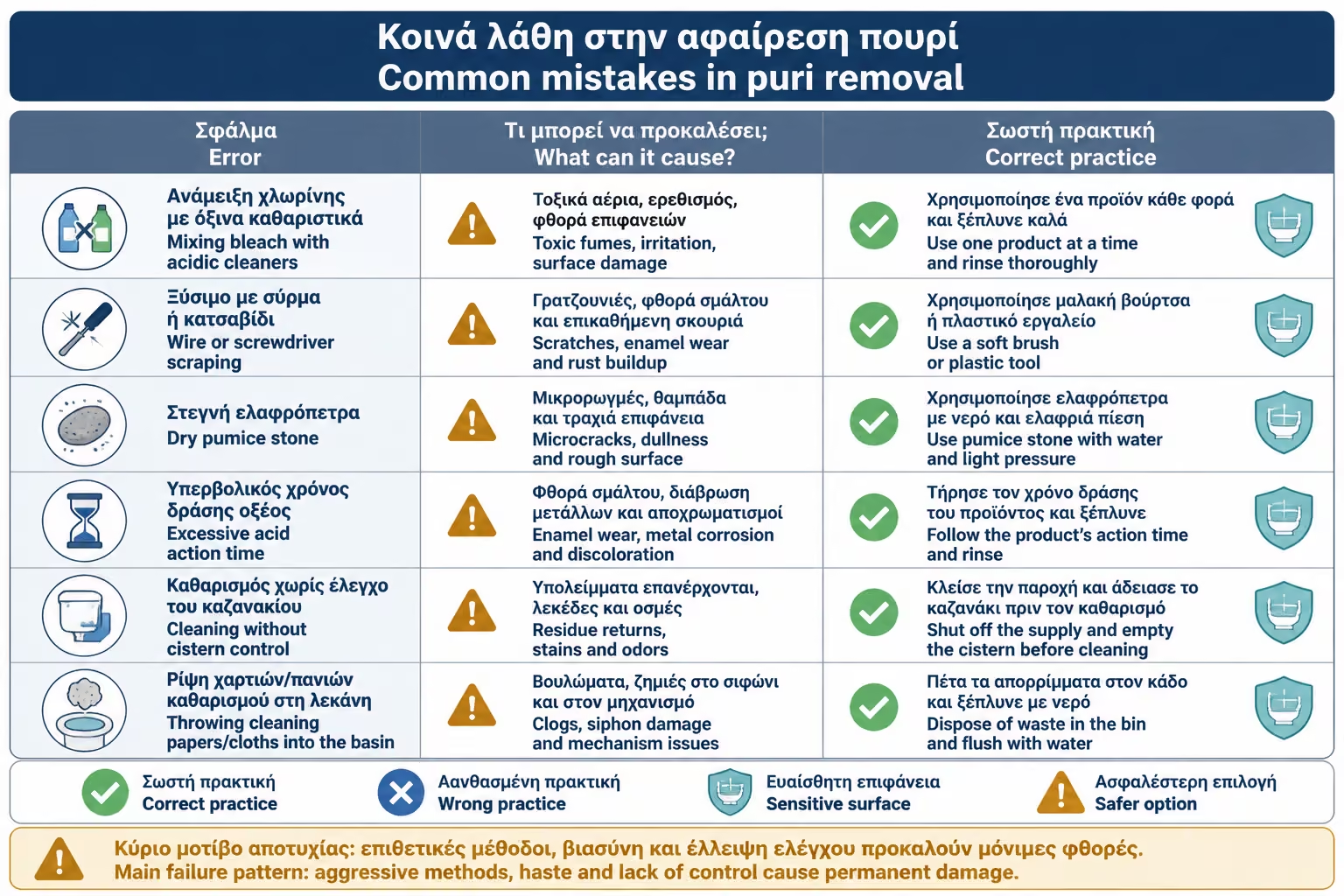
Puri removal mistakes are often more dangerous than simple cleaning mistakes because stronger products are used. The first and most serious is mixing cleaners. The second is scrubbing with inappropriately hard tools. The third is ignoring the running cistern.
| Error | What can it cause? | Correct practice |
|---|---|---|
| Mixing bleach with acidic cleaners | Hazardous fumes | One product at a time, good rinse |
| Wire or screwdriver scraping | Scratches on porcelain | Brush and wet pumice stone |
| Dry pumice stone | Risk of scratching | Always wet stone and surface |
| Excessive acid action time | Dullness or wear on old surfaces | Adherence to product instructions |
| Cleaning without cistern control | Quickly re-appear lines | Check float and exhaust valve |
| Throwing cleaning papers/cloths into the basin | Risk of clogging | Dispose of in the trash |
| Use of professional acids without knowledge | Risk to user and materials | Home products or professional |
| Consider that disinfection removes puri | The crust remains | First removal of deposits, then disinfection |
A classic case is the brown-lined toilet bowl caused by a running cistern. The owner bleaches it every week with a strong product, but the line comes back. The problem is not that a stronger cleaner is needed. It is that water keeps passing through the same point.
A plumber is needed when the puri returns due to a leaking cistern, when there is rust from old fittings, when the basin does not flush properly, when the cistern flow is uneven, or when the problem is suspected to be mechanical rather than just cleanliness.
A technician is also needed if the puri is combined with bad odor, poor drainage, rising water or frequent clogs. There may be a drainage issue there, not just deposits. Internal crusting in the pelvis should not be confused with a deeper drainage problem.
If the porcelain is deeply etched, cracked, or has lost its enamel, replacing the basin may make more sense. A worn surface gets dirty very quickly and constantly requires stronger cleaning. In such a case, the cost and inconvenience of maintenance may outweigh the benefit.
In old bathrooms, if there is a general renovation or replacement of the cistern, it is worth evaluating the basin as well. A new basin with proper flushing and smooth enamel is much easier to clean and creates fewer problems.
| Inquiry | Yes / No |
|---|---|
| Has it been determined whether it is cigar, rust or porcelain wear? | Yes / No |
| Has the cistern been checked for even a slight leak? | Yes / No |
| Will only one cleaner be used at a time? | Yes / No |
| Is mixing bleach with an acidic cleaner ruled out? | Yes / No |
| Is there good ventilation in the bathroom? | Yes / No |
| Will gloves be worn when using special products? | Yes / No |
| Will the pumice stone, if used, be porcelain specific and always wet? | Yes / No |
| Will no wires, screwdrivers or metal scrapers be used? | Yes / No |
| Will there be a good rinse before any disinfection? | Yes / No |
| If the puri returns quickly, will the cause be sought and not a stronger chemical? | Yes / No |
| If the porcelain looks chipped or worn, will replacement be considered? | Yes / No |
If the answer is "No" to the points about mixing products, pumice stone, or checking the well, don't rush into it. Deep pelvic cleaning requires care, not improvisation.
If the basin is dirty, do not start with the strongest product and do not combine cleaners. First check that the faucet is running, because a constant fine stream will build up scale again no matter how well you clean. For the crust, use a suitable acid cleaner or a wet porcelain-specific pumice stone, with gentle pressure and a good rinse. If the porcelain is etched or the cigar returns too quickly, the problem is not only cleanliness but wear or function.
Removing puri from the basin is not the same as simple daily cleaning. Puri is a hard deposit of salts, rust and residues that needs targeted treatment. Special acid cleaners can help, pumice stone can remove stubborn scale, but all must be used with care so as not to etch the porcelain and create dangerous chemical combinations.
The most important thing is to treat the cause as well. If the faucet is leaking, if the water has a lot of salt, or if there is rust from old fittings, the basin will get dirty again. Cleaning gives a clean surface, but prevention keeps the result.
With proper sequence, ventilation, gloves, appropriate product, careful mechanical assistance, and a good rinse, even a heavily purred basin can be greatly improved. But if the surface is worn, scratched, or the build-up comes right back, then the solution isn't more scrubbing. It is a technical inspection, cistern repair or, in old cases, basin replacement.
Return to category.
Go to categoryReturn to the central guide.
Go to guide