
Bathroom DIY, Maintenance & Styling
Return to category.
Go to categoryRust in the bathroom usually appears where you least expect it. On a once polished towel rail, on the base of the toilet paper, on the screws of a shelf, at the bottom of a metal basket in the shower or around the small joints of an accessory. At first it looks like a brown mark. Then it spreads, stains the tiles, leaves lines on the floor and gives the impression that the bathroom is old or poorly maintained.
The problem is not only aesthetic. Rust means that the metal or its surface protection has begun to deteriorate. In a bathroom, this happens easily because the space combines moisture, water vapour, salts, cleaning agents, water drops and often insufficient ventilation. Even accessories sold as "chrome", "inox look" or "moisture resistant" can show oxidation if the quality of the coating is poor or if they are constantly wet.
Many owners try to scrub the rust off with a wire or hard sponge. Sometimes the brown surface goes away temporarily, but some of the finish goes with it. The part is left more exposed and the rust returns faster. Others use harsh chemicals indiscriminately, dulling chrome surfaces, tarnishing black or gold finishes, or staining stone, countertops, or joints around the fixture.
Correct treatment begins with diagnosis. A surface rust on a screw or shelf edge is one thing, and deep corrosion that has eaten away at the metal is another. Another is a stainless accessory that has surface stains from salts and ferrous particles, and another is a cheap chrome-plated part that has peeled off to reveal iron underneath. In the first case it can be saved. In the second, replacement often makes more sense.
In this guide we will see how rust forms on metal bathroom accessories, how to clean it with gentle methods, when special products help, how to protect towel rails, shelves and bases from further oxidation and when you should stop trying to clean and change the part.
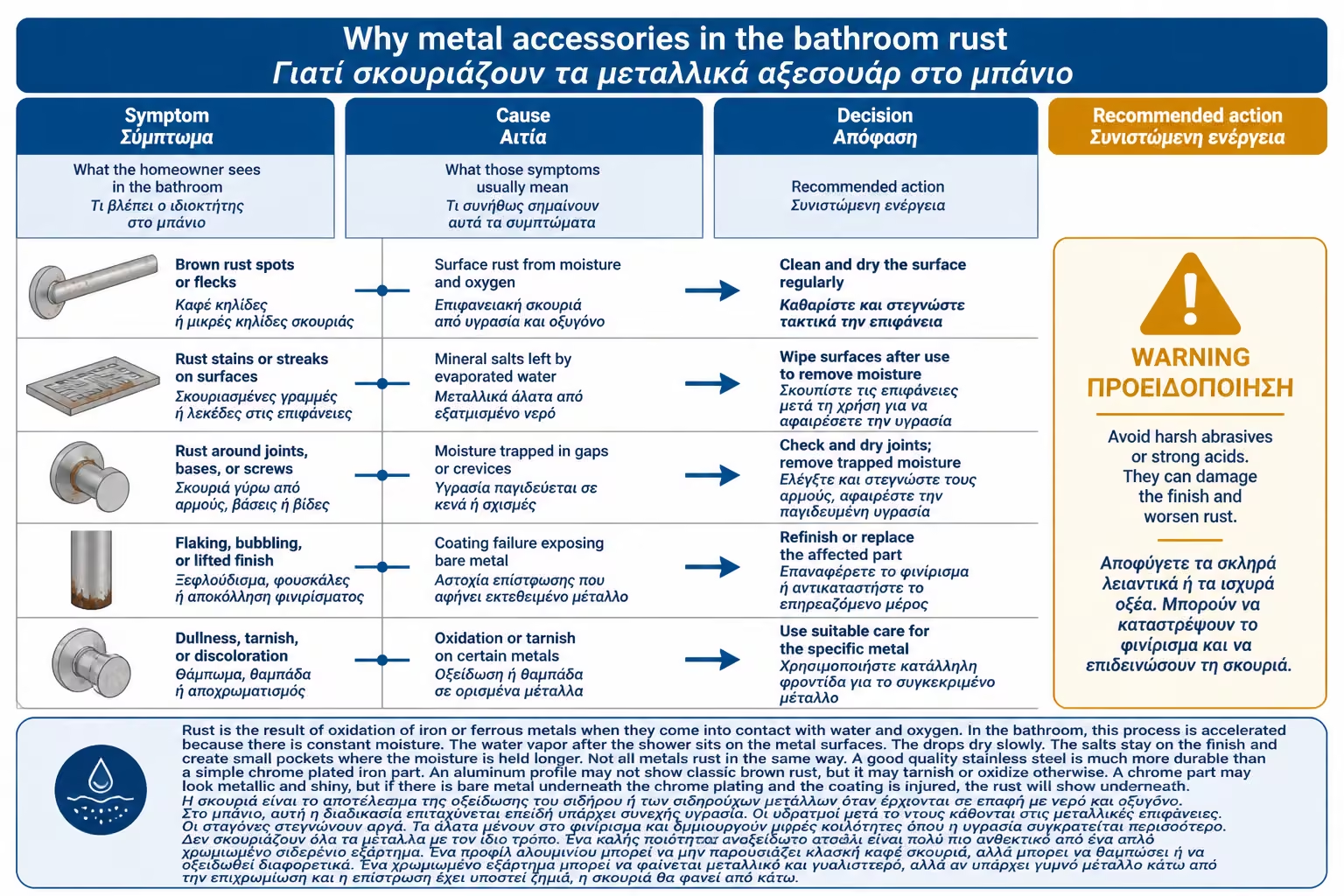
Rust is the result of oxidation of iron or ferrous metals when they come into contact with water and oxygen. In the bathroom, this process is accelerated because there is constant moisture. The water vapor after the shower sits on the metal surfaces. The drops dry slowly. The salts stay on the finish and create small pockets where the moisture is held longer.
Not all metals rust in the same way. A good quality stainless steel is much more durable than a simple chrome plated iron part. An aluminum profile may not show classic brown rust, but it may tarnish or oxidize otherwise. A chrome part may look metallic and shiny, but if there is bare metal underneath the chrome plating and the coating is injured, the rust will show underneath.
The bathroom burdens the accessories with cleaners. Anti-salts, bleach, acid cleaners and strong disinfectants can affect surface coatings, especially if left on the metal without a good rinse. A metal shelf in the shower, for example, receives daily water, shampoo, salts and cleaners. If it doesn't dry, wear is almost expected.
There is also the quality factor. Many affordable bathroom accessories have a thin chrome finish or paint that looks good at first, but doesn't hold up for years in intense humidity. Rust on joints, glues, screws and where water comes into contact is a frequent sign that protection has been limited.
Before you start cleaning, look carefully at the spot. If the rust is thin, like a brown stain on the surface, and the metal underneath still looks intact, there's a good chance it can be cleaned. But if the surface has swelled, the chrome has peeled off, small holes have formed, or the metal has become rough and brittle, then we are talking about deeper corrosion.
Surface rust often shows up on stainless or chrome accessories as brown spots. It can come from ferrous particles, salts, contact with other rusted objects or surface wear. If the area is cleaned in time and properly dried, serious damage may not occur.
Deep rust is different. There the protective finish is already gone. Scrubbing may remove the brown crust but will leave exposed metal. Without re-protection, the rust will return. In thin shelves, screws or bases, the mechanical strength may also be reduced. A shampoo shelf with rust at the joints isn't just unsightly; it can break.
A practical test is to gently clean a small spot. If the rust opens and a shiny or firm surface remains underneath, continue. If black, rough, corroded or flaked metal is visible underneath, then cleaning is only a cosmetic improvement and not a real restoration.
The most vulnerable accessories are those near the water. Shelves in the shower, shampoo baskets, sponge holders, metal soap dishes and cabin screws receive drops every day. If they are not really suitable for a wet environment, they will rust quickly.
Towel rails are also vulnerable, especially when wet towels are left on them for many hours. Moisture is trapped at the point of contact and does not allow the metal to dry out. On economical chrome fittings, rust often appears on the edges, mounts and screws.
Paper bases, hooks, screws behind the basin and metal furniture legs are at risk from indirect moisture, mopping and cleaning agents. They may not take a direct shower, but they live in a humid environment. If a floor cleaner or bleach is left around a metal base without rinsing, wear is accelerated.
Accessories that have glues or joints need special attention. Rust often starts there because the coating is weaker or moisture gets trapped in the small gaps. A shelf may look clean on large surfaces, but rust where the bars join the frame.
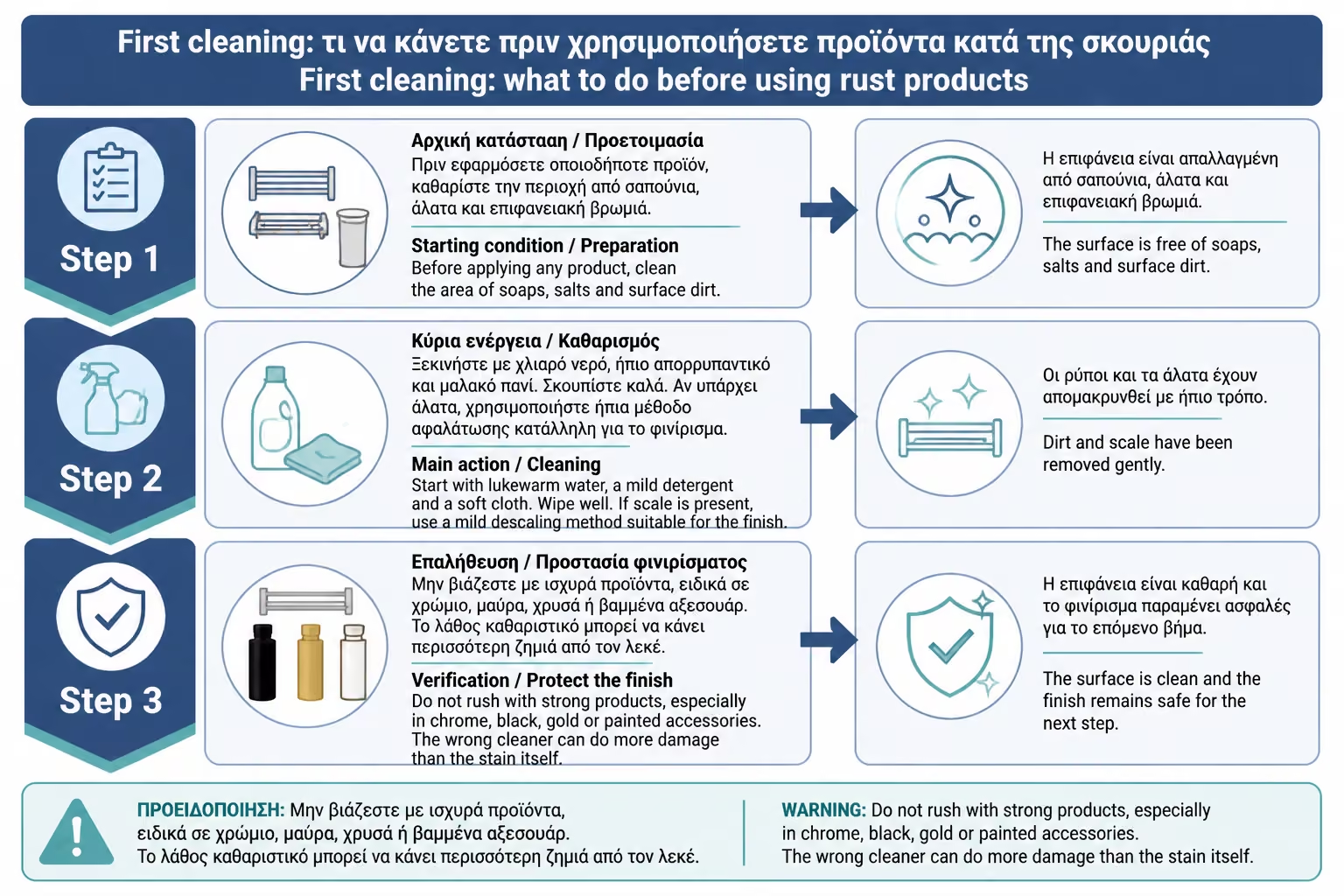
Before applying any product, clean the area of soaps, salts and surface dirt. Many times what looks like rust is a combination of scale and brown stains. If you put an anti-rust or acid product directly on dirt, you won't see clearly what's really going on.
Start with lukewarm water, a mild detergent and a soft cloth. Wipe well. If scale is present, use a mild descaling method suitable for the finish. Do not rush with strong products, especially in chrome, black, gold or painted accessories. The wrong cleaner can do more damage than the stain itself.
After the first cleaning, dry the part completely and observe. Actual rust will remain as a brown or orange mark. If the metal looks blistered or rough, the corrosion is deeper. If it's just spots, you can try more targeted removal.
Protect surrounding surfaces. If you are cleaning a towel rail over marble, natural stone, wooden furniture or a sensitive counter, do not let products run. Put cloth or paper underneath. Products that remove rust can stain or dull materials around the metal.
For light surface rust, mild methods such as a paste of baking soda with a little water or a very mild use of vinegar/citric acid can help, depending on the material. Baking soda works more as a mild abrasive. Vinegar and citric acid help dissolve some oxidations and salts, but they need caution because they are acidic.
On a simple stainless steel or durable metal fixture, you can apply baking soda paste to the spot, scrub gently with a soft cloth or nylon brush, and rinse thoroughly. Do not use kitchen wire, as it can scratch the surface and leave small metal particles that later rust.
Vinegar or citric acid should be used purposefully and for a limited time. We don't let them dry on the metal and we don't use them indiscriminately on special finishes. On low quality black, gold, painted or chrome accessories, they may affect the surface. Always test on a small spot.
After any natural method, rinsing and drying are necessary. Leaving moisture or acid residue may accelerate further oxidation. Removing rust without final drying is half the job.
Special rust removers can be more effective than natural solutions, especially on stubborn stains. They come as gels, liquids, sprays or pastes. Some are designed for metal, others for rust stains on tiles or sanitary ware. Not all are suitable for accessories with a decorative finish.
Before using such a product, read the label carefully. You need to know if it is allowed on chrome, stainless steel, painted metal, aluminum or gold plated/special surfaces. Some rust removers are strongly acidic and can dull finishes or affect adjacent surfaces.
Application must be targeted. Use a cotton swab, small cloth or brush to apply product only to the rust spot. Leave it as much as the manufacturer says, not more "to act better". Then rinse and dry thoroughly. If necessary, reapply gently rather than making an aggressive application.
Do not mix rust products with bleach, anti-salts or other cleaners. Mixing chemicals can create hazardous fumes or damage surfaces. In a small bathroom, always work with ventilation and gloves.
Chrome accessories need special attention because the glossy finish is immediately visible when scratched or dulled. If the rust is superficial, start with a soft cloth, gentle cleaning and very light mechanical action. Do not use abrasive powder or wire.
If there are brown spots, you can try soda paste or a special product suitable for chrome surfaces. Work gently and check constantly. If you see that the chrome is peeling or the surface underneath is rough, stop. The chrome plating is already damaged and rubbing will open it up more.
After cleaning, rinse and dry with a microfiber cloth. You can use a very thin protective product suitable for metal, as long as it does not leave an oiliness and does not affect the use. On towel racks, be careful not to leave greasy residue that will rest on towels.
If the rust starts at the mounting bracket, check the screws as well. Many times the chrome body itself is relatively good, but the screws or washers are of lower quality and rust first. Replacing screws with stainless ones may provide a better solution than repeated cleaning.
Many people think that inox never rusts. In practice, stainless steel is more resistant to corrosion, but can show surface spots, especially in an environment with salts, chlorine, detergents or contact with ferrous particles. This does not always mean that stainless steel is of poor quality, but it does mean that it needs proper maintenance.
In stainless steel accessories, always clean in the direction of the "water" of the metal, if there is a visible line. We use a soft cloth and cleaner suitable for inox. We avoid chlorinated products that can affect the surface, especially if they are left without rinsing.
If small brown spots appear, they are often removed with a special inox cleaner or mild paste. Then it needs a good rinse and drying. If the fixture is inside the shower, regular draining is important. Even good inox suffers when it is constantly in a wet environment with soaps and salts.
Pay attention to the quality of the inox. Not all stainless steel accessories are the same. Some are actually stainless steel, others just have an inox look. If a very economical shelf starts to rust at the joints after a few months, it is likely that the quality of the material or workmanship was not suitable for use.
Black, gold, bronze and other colored accessories usually have a surface paint or special coating. They are beautiful, but do not forgive a wrong cleaning. Scales and rust show strongly, while strong cleaners can leave marks, dullness or peeling.
On such finishes, start with only a mild cleaner, water and a soft cloth. If there is rust, test very carefully in an inconspicuous spot. Do not use acidic products or rust inhibitors without manufacturer's instructions. A product that cleans plain chrome well can ruin a matte black surface.
If rust has appeared under the paint, it usually means that the coating has pitted or peeled off. There cleaning will only slightly improve the image. Real restoration would require repainting or replacement, which is rarely beneficial for small bathroom accessories.
Prevention is very important. Wipe off the water, avoid harsh cleaners and do not let wet towels or metal objects constantly touch the part. The special finishes require a milder everyday life than simple inox.
Many times the rust does not start from the accessory itself but from the screws. A towel rail may have a decent body, but the screws inside the base are plain metal and rust. Over time, rust comes out around the base and leaves brown lines on the tile.
If you see rust around screws, you need to check that the support remains secure. A rusted screw can lose strength. If the accessory holds weight, such as a shelf, handle or towel rail with heavy wet towels, safety matters. It is not enough to clean the stain from the outside.
In many cases, replacing the screws with stainless steel is good practice. However, the right size and type must be chosen, and the floor or tile must not be damaged. If the screws are stuck with rust, care must be taken when loosening them so that they do not break inside the wall.
If there is rust running from the back of the base, water may have entered the mounting point. This can happen if the accessory is inside the shower or if the base was not sealed properly. There the cleaning must be accompanied by a tightness check around the support.
Rust from metal accessories often stains the surrounding surfaces. It can leave a brown print on tile, porcelain, floor or countertop. The treatment depends on the material. On ceramic tiles and porcelain, there are special rust stain cleaners that can help. In marble or natural stone, great care is needed.
Do not use the same product on all materials. Rust cleaners can be acidic and can damage natural stone, cement tiles, pressed cement mortar or delicate surfaces. If you do not know the material, test on a small spot or consult a technician.
On a simple tile, apply the product topically, leave as long as prescribed and rinse thoroughly. Do not let it run on joints or metal parts unnecessarily. If the stain has soaked into porous grout, it may not be completely removed by surface cleaning and may require spot cleaning or grout replacement.
The important thing is to remove the cause as well. If you clean the stain from the tile but the metal shelf continues to rust, the stain will return. First we fix or replace the rusted part, then we clean the surfaces.
After the rust is removed, the metal must be left protected. If the surface is intact, the best protection is good drying and avoiding aggressive cleaners. But if part of the coating has been removed, the spot remains vulnerable. A protective product, repainting or replacement may be needed there.
On some metal parts, a thin metal protectant or special wax/spray can be used as long as it is suitable for the environment and will not come into contact with towels or skin. We don't want greasy residue on surfaces we touch every day. For towel rails, the use of guards must be very careful.
If it's a small screw or hidden metal part, replacing it with a stainless part is often a cleaner solution than trying to protect it. If it is a shelf inside the shower that has already rusted at the joints, replacing it with real inox or a plastic/aluminum fitting may be more practical.
Protection is not a movement. It's maintenance. If the part is kept wet again every day, the rust will return even if it was cleaned perfectly.
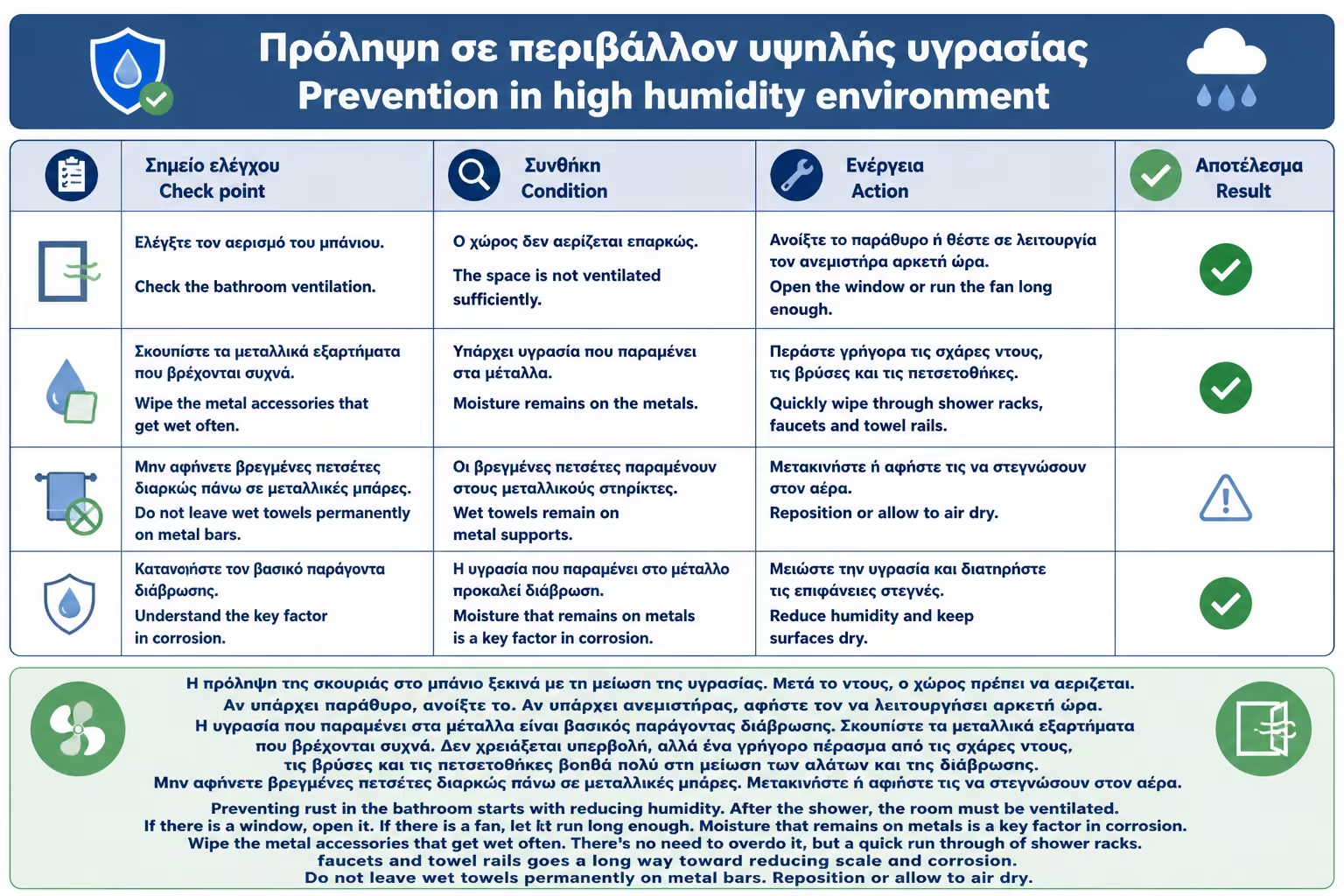
Preventing rust in the bathroom starts with reducing humidity. After the shower, the room must be ventilated. If there is a window, open it. If there is a fan, let it run long enough. Moisture that remains on metals is a key factor in corrosion.
Wipe the metal accessories that get wet often. There's no need to overdo it, but a quick run through of shower racks, faucets and towel rails goes a long way toward reducing scale and corrosion. Do not leave wet towels permanently on metal bars. Reposition or allow to air dry.
Avoid spraying strong cleaners on metal accessories and leave them. If cleaning tiles or glass with anti-salt, wash any drops off the metals. If you use bleach in the bathroom, be careful not to get it on metal bases, screws and shelves.
You choose the right materials from the start. In areas with a lot of water, such as in the shower, prefer real stainless steel accessories of good quality, high-strength plastics, properly processed aluminum or solutions that do not retain water. A cheap metal shelf in the shower may be economical to buy, but need to be replaced in a few months.
When shopping for metal bathroom accessories, don't just look at looks. The words "chrome" and "inox look" do not necessarily mean that the material withstands permanent moisture. Ask what the body is made of, what kind of coating it has and if the screws are stainless.
For places outside of direct water, such as a towel rail in a well-ventilated bathroom, a quality chrome accessory can hold up well. For inside the shower, however, the requirements are greater. That's where a real stainless rack or a good quality non-metallic fixture might be a better choice.
Pay attention to the glues, joints and screws. If they look rough, if the coating has small gaps, or if the part is very light and thin, it probably won't last long. Rust often starts in places that are not visible at first glance.
On black and special finishes, choose products from trusted lines and keep the cleaning instructions. Improper maintenance can negate the durability of even a good component.
Not all metal accessories are saved. If a shelf has rusted at the joints, if the chrome plating has worn off over a large area, if the screws have eaten away, if the base has lost strength, or if the rust returns a few days after cleaning, replacement makes more sense.
Persistence in cleaning can cost more in time, products and possible damage to surrounding surfaces. An inexpensive shower shelf that is constantly rusting can stain tiles and joints. If you replace it with a better material, you also solve the cause of the stains.
In components that hold weight or are used for support, safety comes before aesthetics. A rusty towel rail might just look ugly. A rusted handle or load-bearing base can be dangerous. We don't play with cleaning there. We check if an immediate replacement is needed.
If you can't find a part that is the same as the old one, consider whether it is worth changing the entire accessory set for a uniform image. In bathrooms where the accessories are old, replacing just one can look out of place. Sometimes a small overall refresh is a cleaner solution.
Surface rust removal is low cost when DIY. Basic materials such as cloths, brushes, baking soda or mild cleaners are inexpensive. Special rust products cost more, but are used topically and usually last for several applications.
Accessory replacement has a wide range. A simple shelf or hook can be very economical. A quality stainless steel towel rail, designer accessory set or special black/gold finishes cost more. If a technician is needed to unscrew old bases, drill new holes or cover old holes, the cost goes up.
| Case | Indicative cost picture 2026 |
|---|---|
| DIY cleaning with mild materials | around €2–10 |
| Special rust cleaner | around €5–15 |
| Microfiber brushes / cloths | around €3–15 |
| Replacement of screws with stainless steel ones | around €2–10 |
| Simple metal bathroom accessory | around €5–25 |
| Better inox shelf or towel rack | around €20–80 |
| Brand or special finish accessories | around €50–€150+ |
| Installation by a technician as a single visit | around €30–€70+, depending on area and work |
Prices are indicative and depend on area, quality, shop, whether VAT is included, whether new drilling is needed in the tile, whether old screws are stuck and whether the job is done alone or together with other small bathroom repairs. A low price is reasonable for simple replacement. A higher price is justified when there is a risk of breaking a tile, when special support is needed or when the part is part of a set of a certain series.
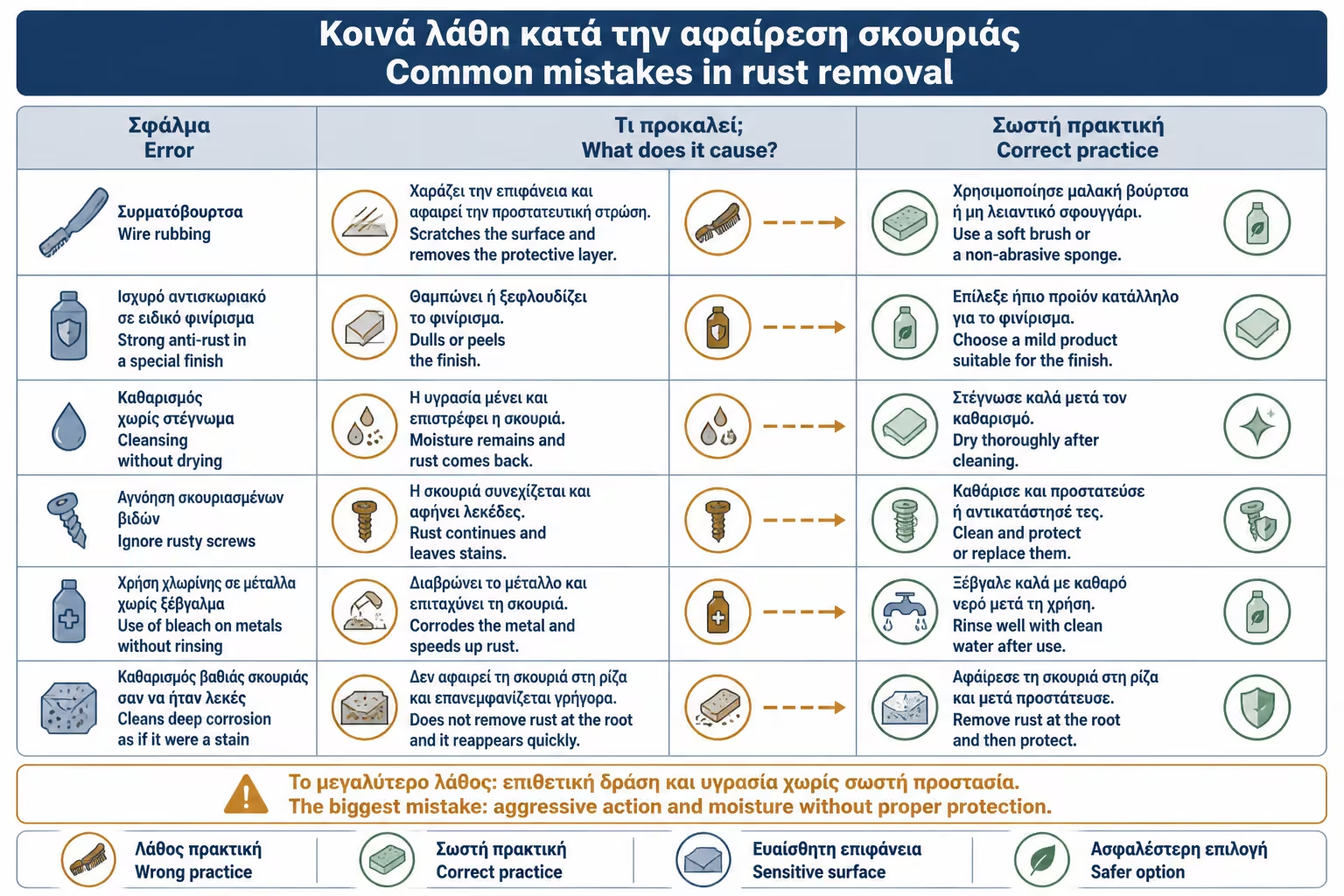
The first mistake is aggressive scrubbing. The rust comes off, but so does the finish. The second is using the wrong chemical on a specific surface. The third is to remove the stain without addressing the cause, such as permanent moisture or a rusty screw.
| Error | What does it cause? | Correct practice |
|---|---|---|
| Wire rubbing | Scratches, finish wear, new rust | Soft cloth or nylon brush |
| Strong anti-rust in a special finish | Dullness or discoloration | Test and product compatible with the hardware |
| Cleansing without drying | Fast oxidation return | Rinse well and dry completely |
| Ignore rusty screws | Reappearance of stains and possible loosening | Checking and replacing screws |
| Use of bleach on metals without rinsing | Accelerated wear on some components | Targeted cleaning and good rinsing |
| Cleans deep corrosion as if it were a stain | Temporary effect | Evaluation for replacement |
| Products running on marble or natural stone | Possible stains and dullness | Protection of surrounding surfaces |
A typical case is the shower shelf that rusts at the welding points. The owner cleans it with anti-rust, polishes it for a few days and then browns it again. The problem isn't that it wasn't cleaned enough. It is that the protection of the metal has been lost to the point where it is constantly receiving water. There, replacement is a more correct solution.
A technician is not needed for simple rust cleaning. But it is needed when a stuck-on rusty accessory needs to be removed, when screws won't loosen, when there is a risk of tile breaking, when the accessory is screwed to glass or a special surface, or when the rust appears to be coming from moisture behind the base.
A technician is also needed if the base has come loose and needs to be reworked. A towel rack that wobbles and has rusted screws isn't going to be fixed by cleaning alone. The floor, the hole in the tile, the fixing and whether moisture has passed through must be checked.
In shower cabins, if rust appears on hinges, castors or profiles, the work may be related to the operation of the door. There we do not remove arbitrary components without knowing how they are adjusted. A cab that doesn't snap back on properly can leak.
If there is rust on metal parts near electrical appliances or an electric towel rail, it needs special attention and inspection by a suitable professional. The bathroom is a place of humidity and electricity is not a field for improvisation.
| Inquiry | Yes / No |
|---|---|
| Have you determined if the rust is superficial or deep? | Yes / No |
| Do you know what material or finish the accessory has? | Yes / No |
| Has the area been cleaned of salts and soaps first? | Yes / No |
| Will there be a small spot test before a strong product? | Yes / No |
| Will you avoid wire or metal brush on chrome/special finishes? | Yes / No |
| Are tiles, marble, countertops or joints protected around the spot? | Yes / No |
| Will the part be rinsed and dried completely after cleaning? | Yes / No |
| Have the screws and mounts been checked for corrosion? | Yes / No |
| If the component is weight-bearing, has its mechanical strength been tested? | Yes / No |
| Is there sufficient ventilation in the bathroom so that there is no permanent moisture? | Yes / No |
| If the rust returns quickly, would a replacement be considered instead of a new cleaning? | Yes / No |
If the answer is “No” to the points about hardware, testing, or protecting surrounding surfaces, don't start with aggressive cleaning. The rust may go away, but damage to the finish or tiles may remain.
If you see rust on a metal bathroom accessory, don't start with wire and force. First clean off scale and dirt, see if the corrosion is superficial or if the metal has eaten away, and try a gentle method on a small spot. If the rust has started from screws, tacks, or worn chrome, cleaning is often temporary. In accessories that receive water daily, the right solution is often better material, stainless screws and good ventilation, not constant rubbing.
Rust on metal bathroom accessories is a symptom of moisture, wear or low protection of the material. It can appear on towel rails, shelves, bases, screws, hooks and metal cabin fittings. At an early stage, it can often be cleaned with gentle methods and careful use of special products. At an advanced stage, however, replacement is more reliable than repeated cleaning efforts.
The key is to protect the finish. We don't scrub aggressively, we don't use random chemicals and we don't let products run unchecked. We clean targeted, rinse well and dry. We check screws and mounting points, because many times the rust starts there and not from the visible body of the part.
The best solution, however, is prevention: good ventilation, wiping up water, avoiding strong cleaners on metals, stainless screws and choosing accessories suitable for wet environments. This way the bathroom stays clean, the fittings maintain their appearance and avoid the brown stains that make even a neat space look neglected.
Return to category.
Go to categoryReturn to the central guide.
Go to guide