
Bathroom DIY, Maintenance & Styling
Return to category.
Go to categoryMatte black, gold, copper, bronze and gunmetal faucets have greatly changed the image of the modern bathroom. They give character, make the space look more architectural and often turn a simple sink or shower mixer into a decorative element. When they are clean and properly maintained, they look impressive. But when they become dull, full of salts or the finish starts to wear, the problem appears much more strongly than with a classic chrome battery.
This is the big disadvantage of special finishes: they do not forgive incorrect cleaning. A chrome battery can withstand more strain, though not indefinitely. A matte black or gold battery can be permanently scarred by a strong de-salting agent, a harsh sponge, some bleach left on the surface, or a cleaner that wasn't suitable for the finish. The result can be dullness, stains, discoloration, “water” in the finish or even peeling.
The most common mistake is that owners clean all batteries in the same way. They see scale on the black battery and use the same product they used for years on the chrome. They see dullness in gold battery and rub harder. They see white drops of hard water and leave vinegar or anti-salt to work for a while. In practice, many of these moves are exactly what are prohibited.
Not all colored batteries are the same. Some have electrostatic painting, others PVD coating, others special varnish, others simple surface coating. Their durability depends on product quality, finishing method, water hardness, use and cleaning. That's why the safest rule is simple: the more special the finish, the gentler the maintenance.
In this guide we'll look at what not to do with matte black and colored batteries, how to properly clean them, how to remove scale without damaging the surface, when a mark is simple dirt and when it's permanent wear, and how to prevent tarnish before it becomes a problem.
The classic chrome battery has a metallic, glossy surface that reflects light and hides small imperfections relatively well. Matte black and colored batteries work differently. The finish is what gives the color and texture. If this finish is injured, there is nothing underneath that can easily be polished back.
On matte black surfaces, the salts stand out because they are white against a dark background. Even a few drops that dry leave marks. This leads many to clean more often and more aggressively. But the matte finish should not be rubbed like stainless steel or chrome. If polished locally by the wrong sponge, permanent unevenness can be created.
With gold, copper and bronze finishes, the problem is often chemical sensitivity. An acidic cleaner can create a dull stain. A very alkaline product may affect the coating. Bleach can leave marks. Even a cleaner that is "for the bathroom" may not be suitable for such surfaces.
A typical example is the black sink faucet that is cleaned with an anti-salt spray and left on for ten minutes. The scale may come off, but the surface is left with dull prints where the product sat. The owner thinks it didn't rinse well. In fact, the finish may already be affected.
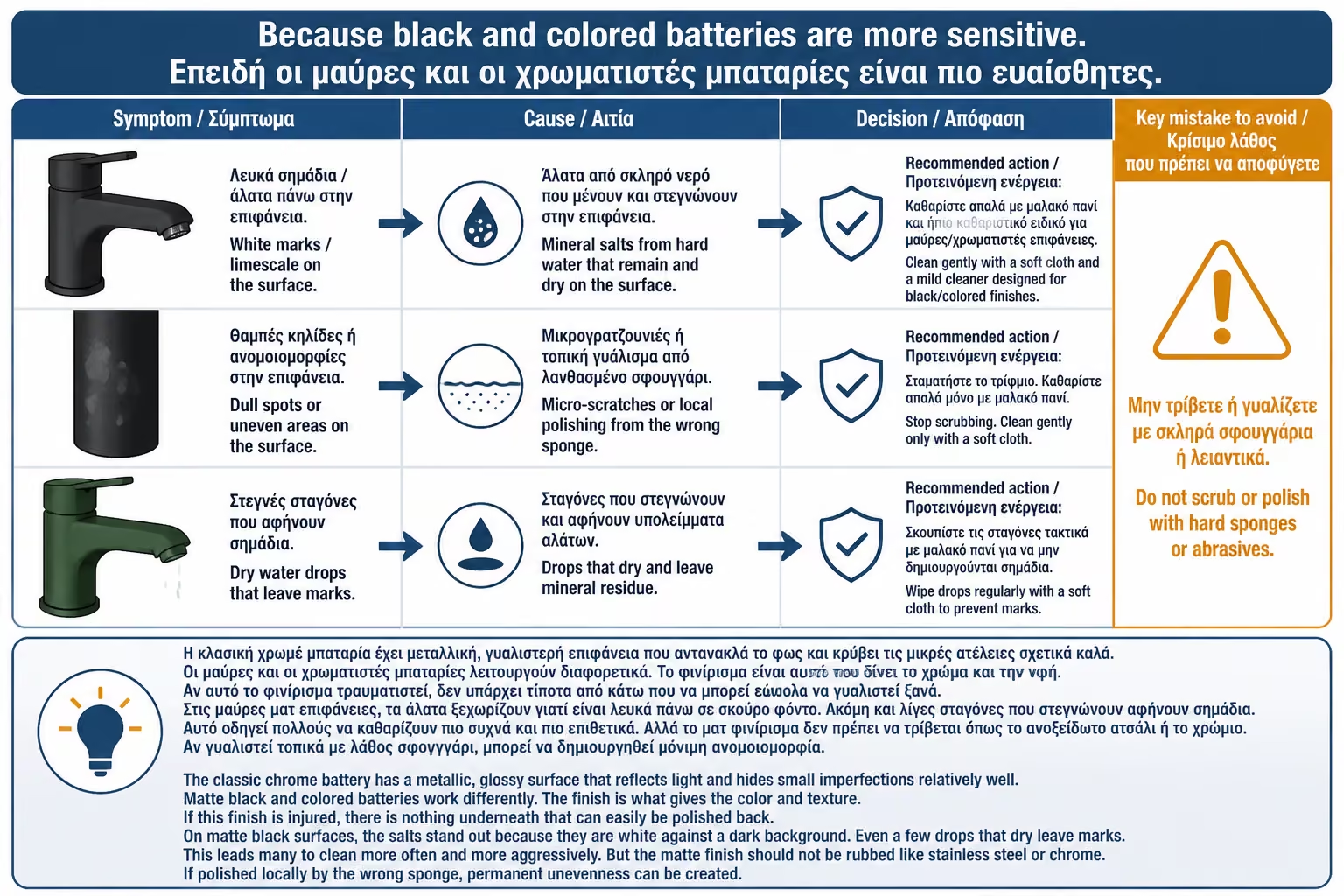
There are cleaning habits that should be completely avoided in special finishes. The first is hard sponges, wire sponges, abrasive creams and cleaning powders. These may remove scale, but they also scratch or polish the finish. On a matte surface, this looks like a permanent polished stain.
The second prohibition is the uncontrolled use of acidic products. Vinegar, citric acid and strong anti-salts can help in other parts of the bathroom, but colored batteries need extra attention. We don't leave them on for a long time, we don't spray them everywhere and we don't use them if the manufacturer forbids them.
The third is bleach and strong disinfectants on the battery. The basin, tiles or siphon can be cleaned with stronger products, but the battery should not have splashes left on it. Bleach can stain, discolor or corrode metal finishes and rubber.
The fourth is mixing cleaners. We do not combine vinegar with bleach, anti-salt with other products, acids with alkaline cleaners. In addition to the risk to the surface, there is also the risk of fumes. In the bathroom, which is often a small space, this is not innocent.
| It is prohibited | Because it's dangerous |
|---|---|
| Wire, hard sponge, abrasive creams | Scratches, matt surface polish, finish wear |
| Strong anti-salts without testing | Dullness, discoloration, local marks |
| Vinegar or citric acid for a long time | Chemical effect on the finish |
| Chlorine on the battery | Stains, corrosion, surface protection wear |
| Spray that dries on the surface | Permanent prints and unevenness |
| Clean with hot water and strong product | Thermal and chemical stress |
| Rub with kitchen paper to a matte finish | Small scratches on sensitive surfaces |
| General purpose products without control | Unknown compatibility with special finishes |
If you have to stick to one simple rule, it is this: on matte black and colored batteries we do not clean with force. We clean with a gentle touch, the right cloth, a little product and immediate drying.
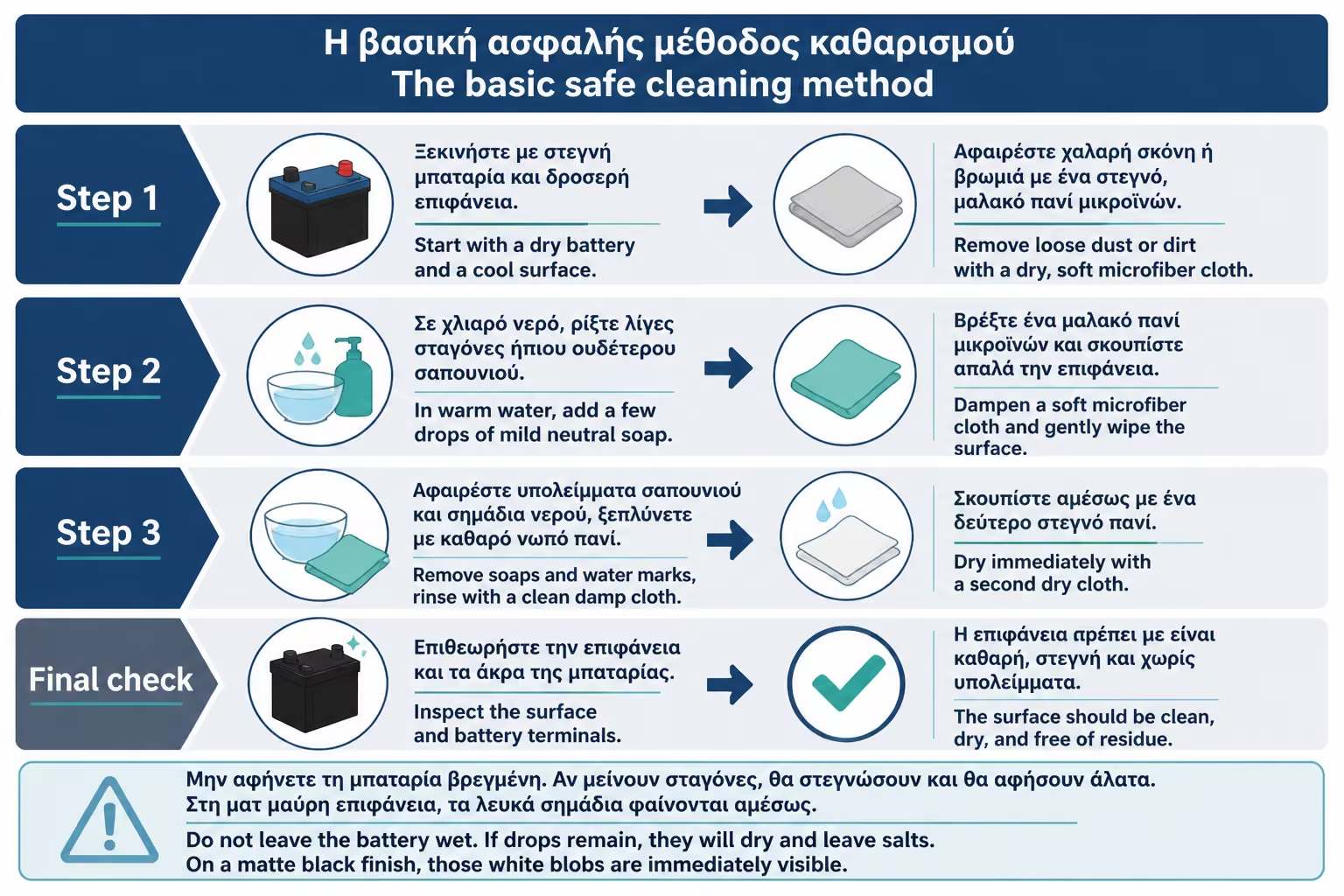
The safest method for daily or frequent cleaning is simple: warm water, a few drops of mild neutral soap and a soft microfiber cloth. Gently wipe the surface, remove soaps and water marks, rinse with a clean damp cloth and dry immediately with a second dry cloth.
Drying is the most important stage. If you leave the battery wet, the drops will dry and leave salts. Especially in a matte black finish, those white blobs are immediately visible. If you wipe the battery after use, you reduce the need for anti-salt products.
In a sink, the area around the base of the faucet needs special attention. Water, toothpaste, soap and salts are collected there. If you leave them, a white ring is created, which then requires more intensive cleaning. If you wipe it daily or even often, the problem doesn't have time to build.
On the shower faucet, pay attention to the handle, dial and connections. On colored finishes, drops around moving parts leave marks faster. After showering, a quick wipe down with a dry cloth makes a big difference.
Kitchen paper seems practical, but it is not always ideal for matte and special finishes. It can leave small fibers, rub more than we think and, on some delicate surfaces, create very fine micro-scratches with repeated use. Microfiber cloth is safer, softer and more effective at drying.
A good microfiber cloth absorbs water without the need for pressure. This is critical. We don't want to "polish" the finish. We want to remove drops. On matte surfaces, vigorous rubbing in the same spot can change the texture. That's why we work with gentle movements and a clean cloth.
The cloth must be clean. If it has dust, sand, cleaning residue or salts from previous use, it can act as an abrasive. Keep a separate cloth for faucets and special finishes, not the same cloth you use for counters, mirrors or floors.
After use, wash cloths without fabric softener, as fabric softener can reduce absorbency and leave a film. A clean, dry cloth is the simplest tool to protect an accurate battery.
Salts are the hardest spot on black and colored batteries. We can't leave them, because they show and harden. But we can't chase them with strong anti-salts every time. The correct approach is to soften them gently and remove them before they become crusty.
If the salts are fresh, try only a fresh microfiber cloth and mild soap first. Many times it is enough. If there are a few days left, you can use a cleaner that the battery manufacturer allows for that particular finish. Ideally, apply it to the cloth and not directly to the battery so you can control the amount.
If you want to try a very mild descaling solution, test on an inconspicuous spot first. Do not leave it on for long. Wipe gently, rinse immediately with a clean damp cloth and dry. If you see any blurring or color change, stop.
The safest bet is to never get to the point where heavy descaling is needed. In special finishes, prevention is far more important than cure. A daily drying is worth more than a strong cleanser once a month.
Vinegar and citric acid are often used for salts. On chrome or simple surfaces they can be useful, under conditions. However, matte black, gold, copper and special batteries should not be considered automatically safe. They are acidic solutions and can affect some coatings.
The problem is not only the chemical composition. It's also time. Many people wrap the battery with a cloth dipped in vinegar and leave it for half an hour or more. This may work on a durable part, but on a special finish it can leave a permanent stain. This practice should be avoided unless expressly permitted by the manufacturer.
If any mild acid solution is used, it must be very controlled: small test, short contact, immediate rinsing, complete drying. We do not spray uncontrollably and do not let it dry on the battery. We also never use it together with bleach or any other cleaner.
In many cases, the best solution is to avoid vinegar altogether in specialty batteries and only use a product that states finish compatibility. "Natural" does not always mean "safe for any material".
Gold and copper batteries give a luxurious image, but easily show rings, water and tarnish. Their cleaning should be gentle and regular. Allowing scale to build up makes removal more difficult and increases the risk of wear.
In these finishes, mild soap and water is the base. Then, always drying. Do not use metal polishing products unless they are specifically suitable for the particular finish. Many metal polishes have abrasives or chemicals that can change the surface of a chrome plated or PVD battery.
Fingers are usually removed with a damp cloth and drying. If you persist with harsh sanding, you may create an uneven sheen. On brushed gold or bronze finishes, you should follow the direction of the texture, if any. Circular scrubbing can leave marks.
A practical example: a golden basin faucet with a white ring on the base. If the ring is fresh, it comes off with a fresh cloth and mild soap. If it has become crusty, the owner is tempted to add anti-salt. That's where testing and prolonged contact should be avoided. The best solution is to never leave water in the base.
The matte black batteries look impressive, but the white salt prints are immediately visible. This does not mean that the battery is of poor quality. It means that the water leaves a white residue on a dark surface. The harder the water, the more obvious the problem.
The solution is not continuous anti-saline. The solution is drying. After washing hands, a quick pass around the base and spout is enough to prevent marks from forming. In the shower, after use, wipe the battery and dial. If you do it systematically, the black surface stays much cleaner.
If prints appear, start with a soft, fresh cloth. If they don't go away, try mild soap. If they persist, use a matte finish compatible cleaner, not a random scale product. The matte finish should not be polished or sanded. If an area gets glossier, it doesn't come back easily.
Be careful with fingerprints too. They may look like greasy prints. They don't want a strong cleanser. They want mild soap and good drying. The less chemistry you use, the more you protect the surface.
The shower or bathtub battery lives in a harsher environment than the sink battery. Accepts hot water, steam, shampoo, bubble baths, salts and frequent splashing. If it is black or colored, it needs even more careful maintenance.
After showering, quickly rinse the soap residue from the battery. Shower gels and shampoos can leave a film on the finish. If this film dries together with salts, it creates a haze. Then wipe with a soft cloth. The process takes less than a minute, but significantly protects the surface.
Be careful with the cleaners you use on the glass or shower tiles. If you spray anti-calc on the glass, the product may fall on the battery. If you clean the joints or tiles with an acidic product, it can run onto the metal parts. On special finishes, any splashes should be wiped up immediately.
A common problem is dull marking around the flow dial or handle. Drops and soaps stay there. If it is not cleaned often, the point is loaded. Do not wait for a white crust to form. Preemptive pass is much safer.
If a black or colored battery is dulled, you must first determine whether it is surface residue or finish wear. If it is salts or soap, it can be improved by gentle cleaning. If the finish has been damaged by a chemical or abrasive, restoration is difficult.
Start with mild soap and a microfiber cloth. Clean, rinse with a fresh cloth and dry. If the blur changes or decreases, it was probably film. If it stays exactly the same, especially if it has a clear outline of a drop or spray, it could be a chemical sign.
Do not attempt to "polish" tarnish with metal polish or abrasive. In a matte finish, this can make the area glossier and stand out even more. On gold or copper, it can remove some of the coating. If the mark is permanent, the practical solution can only be to replace the part or accept the wear and tear.
If the battery is expensive or recently purchased, contact the supplier before trying recovery products. There may be a specific maintenance instruction or it may be clarified whether the wear is due to improper cleaning or a finish defect.
Peeling is different from dullness. If the finish has started to wear off, if another color is visible underneath, or if the surface has small blisters, cleaning will not restore it. The coating has lost its adhesion or has been damaged.
In this case, rubbing usually makes the image worse. It opens up the spot more and exposes more surface area. Cleaners can also get under the coating and accelerate wear. If the peeling is at a point where it receives water, it will spread more easily.
The practical treatment depends on the value of the battery. In very inexpensive batteries, replacement usually makes more sense. On branded ones, a warranty, spare part or technical evaluation may be considered. But cleaning cannot properly "repaint" a worn coating.
A prime example is the black shower faucet that has peeled off at the edge of the handle. The point is touched daily, receives water and cleaning agents. If the coating is gone, each new cleaning should be gentler, but will not restore the black. We are talking about wear and tear there, not dirt.
The battery mount is the trickiest part. Water, salts, soap and dust collect there. On black and colored batteries, the white ring around the base is very visible. If you leave it, it hardens and then requires a more aggressive method, which we don't want.
Best practice is daily or frequent dewatering around the base. After using the sink, run a dry cloth around the battery. If there is already residue, use a fresh cloth with mild soap. In the corners, a very soft toothbrush helps, but without pressure and without an abrasive product.
Do not leave cotton wool or paper with vinegar wrapped around the base of the battery. This technique may be popular for salts, but on special finishes it is dangerous. The product remains concentrated in the same place and may leave a ring of different texture or color.
If the ring does not come off gently, stop before scrubbing hard. Try an approved finish product or ask for guidance. Sometimes a little patience saves a battery from permanent damage.
The aerator, i.e. the filter at the mouth of the faucet, can become clogged with salt and pebbles. In colored batteries, its removal needs special care because the hole can be easily scratched. If you need to unscrew it, try by hand first. If a tool is required, be sure to put a soft cloth between the tool and the finish.
If the battery has a hidden aerator, do not try to remove it with a screwdriver or knife. A special plastic key is needed. A scratch on the mouth of a black or gold battery is immediately visible and not easily hidden.
The filter itself can be soaked in a suitable descaling solution, but be careful not to soak the colored outer ring if it is unsafe. In many cases you can only remove the internal components and clean them separately. If not possible, use very mild method and short time.
After cleaning, screw first by hand. If inserted incorrectly, it may injure the thread or scratch the orifice. Tighten only as needed. Over-tightening does not help flow and can create new damage.
If the spiral or shower telephone is black, gold or copper, the same rules apply: gentle cleaning, avoid abrasives, dry immediately. Shower phones get scale in the holes. If the nozzles are rubber, rub them gently with your finger to remove fresh salts. Do not use pins or metal needles that may mar the holes or slip on the finish.
If a deeper cleaning is needed, uncoil the phone and clean only the places that allow it. Do not submerge an entire colored phone in vinegar or strong de-salting agent without instruction. It can clear the holes and dull the outer body.
On special finish spirals, watch out for joints. If a seal is leaking, scale will continually build up around the nut. Do not repeatedly clean the crust without checking the seal. A new seal can stop the drip and thus the cause of the scale.
After every shower, if the phone and coil are left wet, the scale will show. In black shower systems, drying is almost a necessary habit if you want to maintain the image.
Hard water is the main reason why special batteries look dirty quickly. It doesn't mean the finish is bad. It means that every drop leaves a white residue. On a chrome surface this is often less visible. In matte black it is immediately visible. In gold or copper it creates dull waters.
If the home is located in an area with very hard water, maintenance should be more frequent. You cannot expect the same behavior as an area where the water leaves little salt. Choosing black or colored batteries in such an area means you have to accept the drying routine.
Filters and softeners can reduce the problem, but are not always necessary or economical for batteries alone. They may make sense if the problem is general: scale in water heater, aerators, shower, cabin and basin. In any case, daily maintenance remains essential.
A good practical measure is to have a small microfiber cloth next to the sink or inside the furniture. If the cloth is available, you will use it. If you have to look for it every time, maintenance will be skipped.
Many products say "for bathing", "anti-scaling" or "for batteries". This does not mean that they are suitable for every finish. They may be safe for chrome and porcelain, but not for matte black or gold. The label should be read in conjunction with the warnings and materials for use.
Look for whether it mentions compatibility with colored batteries, matte surfaces, PVD or special finishes. If it doesn't say anything, don't assume it's safe. Test in an inconspicuous spot. If the product has a strong smell, is very acidic or requires attention to metals, use it with great caution.
Sprays have an additional problem: they go everywhere. You spray for the battery, but the product sits on the base, on the tile, on the counter, on the joints, on the siphon, on the silicones. In special finishes it is better to apply the product to the cloth and then to the surface. This is how you control the contact.
Don't just trust "home remedies" without knowing the finish. What worked on a chrome battery can ruin a matte black one. Proper maintenance starts with the manufacturer's instructions.
Many colored batteries are placed on counters, furniture, marble, natural stones or surfaces with a special coating. There the cleaner does not only affect the battery. If it runs into the base, it can fall on the counter or joints. This is especially dangerous on marble and natural stone, because acidic products can leave a permanent dullness.
In such cases, avoid sprays. Use a fresh cloth with mild soap and work in a controlled manner. Wipe immediately around the base. Do not allow water to pool between the battery and the bench, as this creates scale and can also affect the material of the bench.
If descaling is required, protect the bench with a dry cloth around the base and work only on the battery area. Rinse the cloth frequently. Do not allow product to go under the base or on silicones.
A small scale ring around a black battery on marble is a double problem: you can't easily use acid on either the battery or the marble. There prevention by drying is practically the only safe strategy.
Proper maintenance of special batteries is not expensive. A good microfiber cloth, mild soap and care are enough for everyday life. The real cost comes when the finish is damaged. Unlike a simple accessory, a quality black or gold battery can cost quite a bit, and replacing it due to incorrect cleaning is frustrating.

| Product / Case | Indicative cost picture 2026 |
|---|---|
| Good quality microfiber cloths | around €3–12 |
| Mild neutral detergent / soap | around €2–8 |
| Cleaner compatible with special finishes | around €5–15 |
| Replacement seals for spiral / shower | around €1–5 |
| Aerator replacement in a special battery | around €5–20, depending on type |
| Economical colored basin faucet | around €40–90 |
| Medium / quality black or gold battery | around 90–250€+ |
| Branded range of special finish | around 200–500€+ |
| Replacement work by plumber | around €40–€100+, depending on access and area |
Prices are indicative and depend on region, brand, quality, whether VAT is included, type of battery and difficulty of installation. The bottom line is that prevention costs little compared to replacing a dead battery.
Simple cleaning does not require a professional. But it is necessary to contact the supplier or manufacturer when the battery is new and shows rapid peeling, when you do not know the finishing method, when it is clouded by a chemical, or when you want to use a restoration product.
A plumber is needed when scale or stains come from a small leak. If compound, spiral, rosette or base drips, cleaning is not enough. Water will still leave marks. The seal, connection, or component causing the leak must be repaired.
If the battery has started to peel and is under warranty, don't rub it anymore. Take a picture of the spot, keep the purchase details and ask for direction. Many warranties don't cover wear and tear from the wrong cleaners, so it's important not to do extra tests that could worsen the image.
In expensive facilities with black or gold bathroom sets, it is worth asking the authority for cleaning instructions in writing. This way you know what is allowed and what is not, and you better protect your investment.
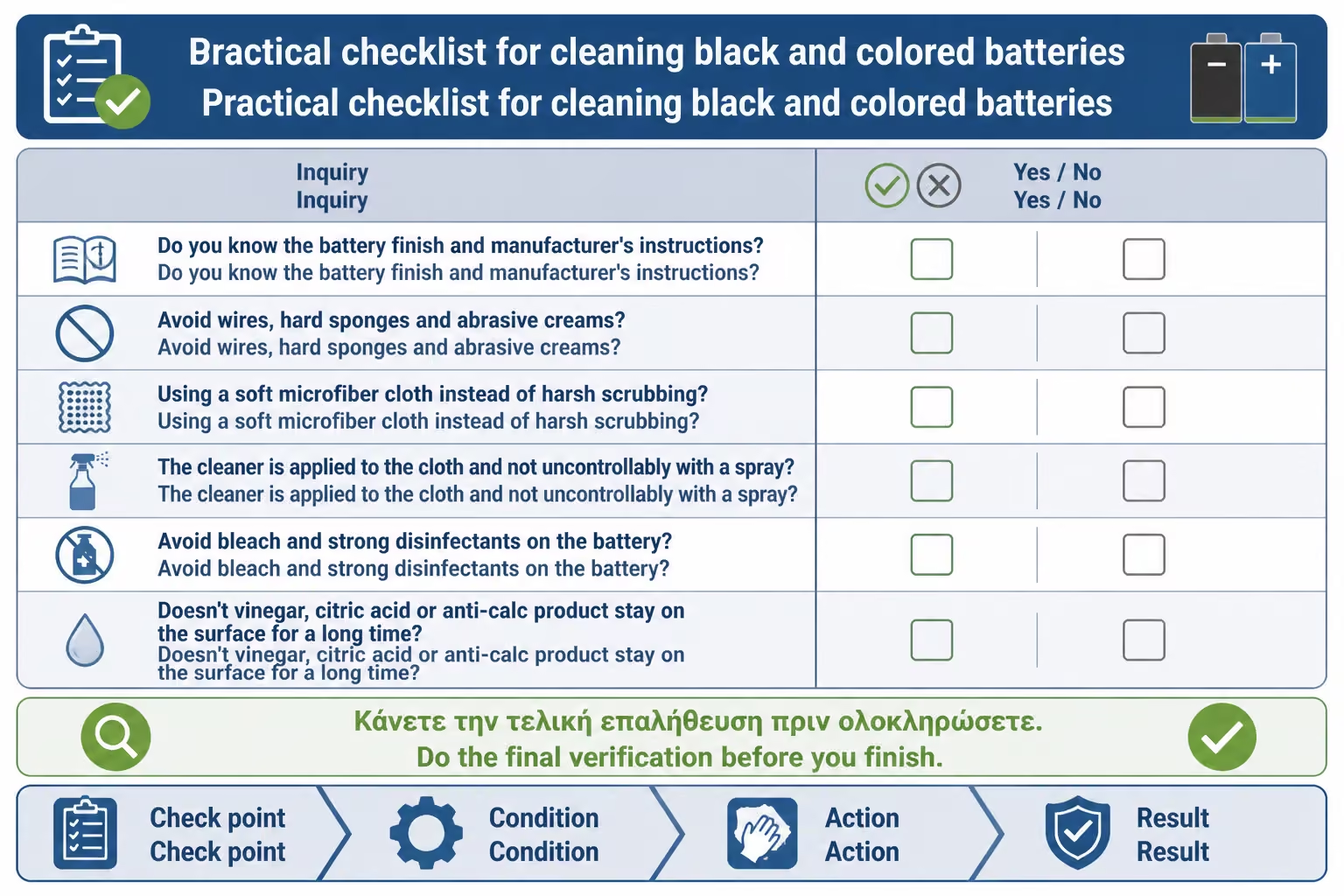
| Inquiry | Yes / No |
|---|---|
| Do you know the battery finish and manufacturer's instructions? | Yes / No |
| Are wires, hard sponges and abrasive creams avoided? | Yes / No |
| Is a soft microfiber cloth used instead of vigorous scrubbing? | Yes / No |
| Is the cleaner applied to the cloth and not uncontrollably sprayed? | Yes / No |
| Avoid bleach and strong disinfectants on the battery? | Yes / No |
| Doesn't vinegar, citric acid or anti-calc product stay on the surface for a long time? | Yes / No |
| Is an inconspicuous test done before a new product? | Yes / No |
| Is the battery rinsed with a fresh cloth after cleaning? | Yes / No |
| Does the surface dry immediately after use or cleaning? | Yes / No |
| Has it been checked if the scale stains are from a small leak? | Yes / No |
| Are marbles, countertops, joints and silicones around the battery protected? | Yes / No |
| If there is peeling, is further scrubbing avoided and instruction requested? | Yes / No |
If the answer is "No" to the points about abrasives, bleach, prolonged action of cleaners or drying, the battery is more at risk from cleaning than from dirt.
If you have a matte black, gold or copper battery, treat it like a delicate finish and not just chrome. Do not rub it, do not spray it with strong anti-calc, and do not let vinegar or bleach touch it. Best care is lukewarm water, mild soap, microfiber cloth and immediate drying after use. If the salts form a crust, the risk of wear increases. That is why in special batteries prevention is not a luxury; it is the only safe way to maintain the finish.
Matte black and colored faucets can dramatically upgrade a bathroom, but they require a different cleaning logic. They do not withstand the same aggressive treatment as classic chrome fittings. Strong de-salts, harsh sponges, bleach, abrasives and prolonged contact with acidic products can cause permanent dulling, discoloration or peeling.
Safe maintenance is simple but must be done systematically. Mild soap, soft cloth, clean water and immediate drying. If there are salts, we first try the mildest method and never let products dry on the surface. If in doubt, follow the manufacturer's instructions or test in an inconspicuous spot.
The most important thing is that the salts do not become crusty. In special finishes, prevention is much safer than restoration. A battery that is wiped after use can remain beautiful for years. A battery that is cleaned infrequently and aggressively can lose its finish much sooner than you expect.
Return to category.
Go to categoryReturn to the central guide.
Go to guide