
Bathroom DIY, Maintenance & Styling
Return to category.
Go to categoryNatural bathroom cleaners have become popular for a very simple reason: many owners want a bathroom that is clean, without strong chemical smells, without heavy disinfectants on every surface, and without the fear that every cleaning fills the space with irritating fumes. Especially in small, windowless bathrooms, using strong cleaners can become tiresome or annoying. The idea of a gentler cleaning with vinegar, baking soda, lemon and essential oils is, therefore, completely understandable.
But here an important clarification is needed. "Natural" does not automatically mean suitable for all surfaces, nor does it mean that we can mix everything in the cupboard. Vinegar and lemon are acidic. Baking soda is mildly abrasive. Essential oils are concentrated substances and should not be used uncontrolled. If applied correctly, they can be of great help in daily cleaning. If used incorrectly, they can dull marble, affect special finishes, leave residue or create a false sense of sanitisation.
The bathroom is a space with many different surfaces: tiles, joints, porcelain, glass, chrome faucets, black matte faucets, silicones, mirrors, plastic lids, metal accessories, wooden or MDF furniture. Not everything is cleaned with the same recipe. A mixture that is great for salts on glass may not be suitable for marble. A soda paste that helps joints may be too much for a delicate matte tile. The correct approach is to know what each hardware does and where it is allowed.
Also, DIY natural cleaners are very useful for maintenance, mild dirt, fresh salts and daily care. They do not always replace specialized products when there is deep mold, old mold, heavy rust, heavy microbial load or the need for technical disinfection. They should not be presented as a solution for everything, because this way the owner can delay a necessary repair, such as changing silicone, cleaning a siphon or dealing with moisture.
In this guide we'll look at how to make simple DIY bath recipes, where to use white vinegar, when baking soda helps, what lemon does, how to safely add essential oils like tea tree and lavender, what to never mix, and when to ditch the natural solutions and opt for a special cleaner or a professional check.
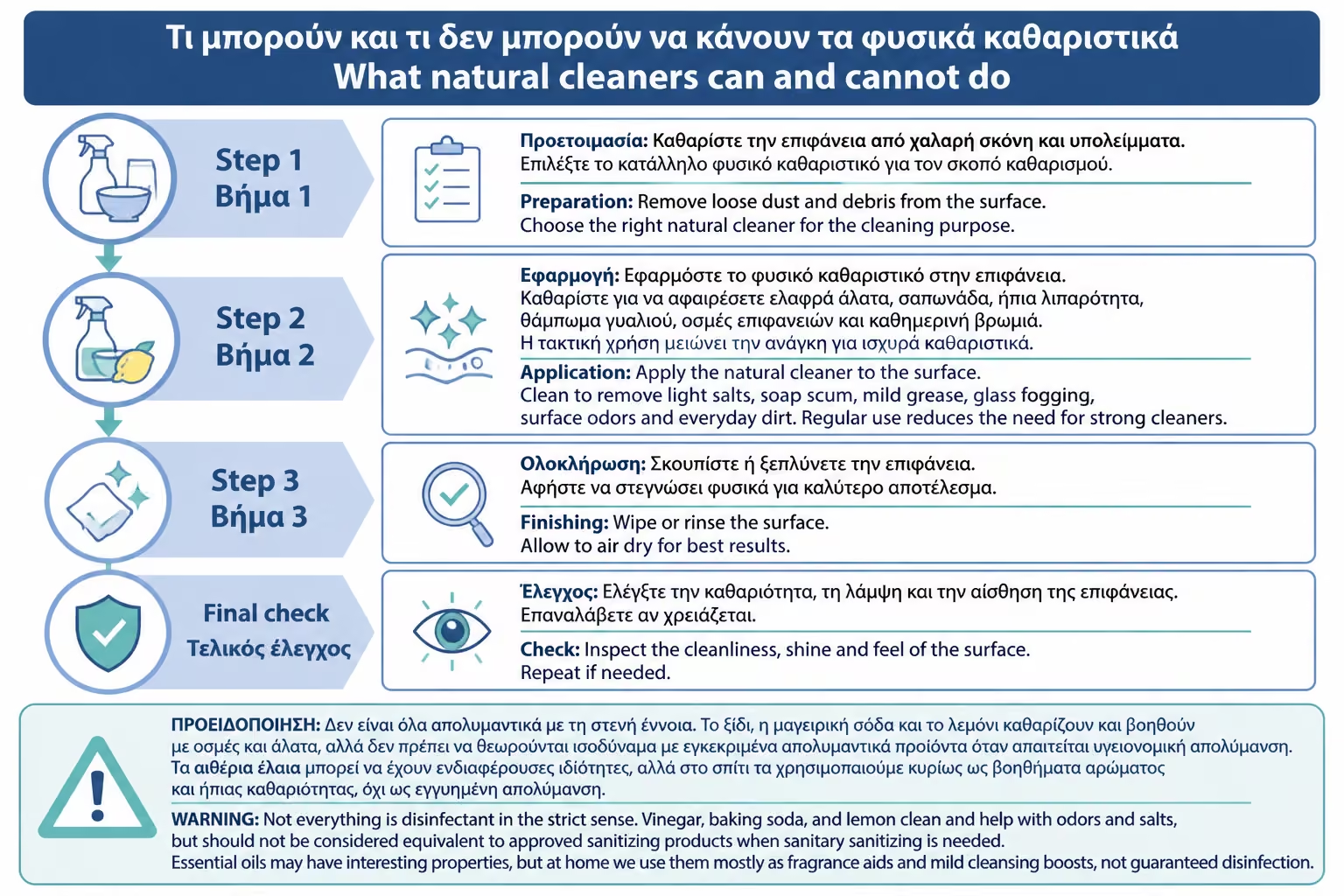
Natural cleaners are great for frequent maintenance. They can remove light salts, soap scum, mild grease, glass fogging, surface odors and everyday dirt. They can also reduce the need for strong cleaners, as long as they are used regularly. If you clean little and often, you'll rarely need anything too aggressive.
But not everything is disinfectant in the strict sense. Vinegar, baking soda, and lemon clean and help with odors and salts, but should not be considered equivalent to approved sanitizing products when sanitary sanitizing is needed. Essential oils may have interesting properties, but at home we use them mostly as fragrance aids and mild cleansing boosts, not guaranteed disinfection.
This is of practical importance. For a sink with few salts, a vinegar solution may be sufficient. For a heavy puri basin, a special acidic product may be needed. For a silicone with deep black mold, cleaning may lighten the color a bit, but the correct solution may be to remove and replace. For a surface that has come into contact with sewage, we don't rely on "lavender scent" but on proper hygienic procedure.
The value of DIY cleaners lies mainly in the routine. A bathroom that is swept, aired and gently cleaned every few days stays in much better condition than a bathroom that is cleaned once a month with a very strong product. Prevention is more important than strength.
First and most important: we never mix natural cleaners with bleach or other strong cleaners. Vinegar, lemon and citric acid are acidic. If mixed with bleach, hazardous fumes may be produced. The same applies to many combinations with commercial products that we are not aware of. "A little bit of everything" isn't a cleanser; it's a risk.
Second, we don't use the same recipe on all surfaces. Vinegar and lemon do not get on marble, natural stone, travertine, limestone materials or unknown surfaces that may react with acids. They can dull the surface. Baking soda should not be rubbed vigorously on sensitive glossy or matte finishes. Essential oils should not be dropped undiluted onto plastics, silicones or painted surfaces.
Third, we always test on a small, inconspicuous spot. This is especially true for matte black faucets, gold finishes, colored tiles, natural stone, bathroom furniture and special coatings on cabin glass. If after the test there is a dullness, a stain or a change in texture, we stop.
Fourth, rinse and dry. Many DIY cleaners leave residue if not removed properly. Baking soda leaves a white powder. Vinegar leaves an odor and may continue to work if left on a sensitive surface. Essential oils can leave a greasiness. Cleaning is completed with clean water where necessary and drying with a cloth.
White vinegar is useful mainly against salts. Its acidic action softens light deposits from hard water, so it is used on glass surfaces, simple chrome nozzles, faucet filters, ceramic tiles and places where white water marks have been left. It is economical and easy to use.
In a bathroom with simple ceramic tiles and chrome faucets, it can be very useful for maintenance. For example, a cloth with diluted vinegar can go over the glass of a shower or the spout of a faucet, as long as there is a good rinse and drying afterwards. On aerator filters that have come out of the faucet, soaking in vinegar can help remove scale and grit.
But vinegar is not suitable for all batteries. On matte black, gold, copper or special finish batteries, its use should be avoided unless permitted by the manufacturer. Do not leave it for a long time on metal surfaces and do not use it on marble or natural stone.
Also, vinegar is not the solution for greasy soap scum when there is a thick film. There, a mild soap or cleaner may be needed first to remove the organic dirt, then vinegar for the salts. If you spray vinegar on a layer of soap and dirt, you may not see a good result.
Baking soda is useful because it acts as a mild abrasive and helps with odors. It can be used on joint paste, sinks, porcelain surfaces and lightly soiled areas. It doesn't dissolve hard salts on its own like an acidic product, but helps lift dirt when worked with a brush or sponge.
In tile joints, soda paste can be of great help, especially when combined with a little oxygen or water and worked with a special brush. In basins or wash basins, it can help with mild dullness. On surfaces that scratch easily, however, care is needed. Baking soda is milder than many abrasives, but it is still a particle that rubs against the surface.
We do not use it heavily on matte black faucets, glossy special finishes, natural stone or sensitive plastics. We do not put it in very large quantities in siphons and drains expecting that it will "unclog" a serious blockage. It can help with odors and light maintenance, but is no substitute for mechanical siphon cleaning.
A common mistake is the combination of soda and vinegar for "strong foam". The reaction foams spectacularly, but essentially the acid and base are largely neutralized. Foam can mechanically help with light debris, but it's not a magic cleaner for serious scale or clogs.
Lemon has an acidic effect and a pleasant aroma. It can help with mild prints, fresh odors and small salt spots. It is particularly useful as an adjunct to mild recipes, not as a primary cleanser for heavy build-up.
Like vinegar, it should not be used on marble, natural stone or acid-reactive surfaces. Lemon juice can leave marks if left on sensitive materials. Also, because it contains natural sugars and organic residues, it should be rinsed well. Do not let lemon dry on bathroom surfaces.
It can be used in small amounts to give a more pleasant feel to a cleaning solution, but should not be considered a general purpose disinfectant. The smell of cleanliness does not always mean actual disinfection or removal of deposits.
Practically speaking, lemon is good for mild maintenance, not for tough jobs like old cigars in the basin, deep mold in the silicones or heavy rust. A different approach is needed there.
Essential oils are often used in DIY cleaners for fragrance and a fresh feeling. Tea tree has a strong, clean smell and is often preferred in sanitary areas. Lavender gives a milder and more pleasant aroma. They can make a natural cleaner more pleasant to use, especially if you don't like the smell of vinegar.
But essential oils are concentrated. They are not used undiluted on surfaces. They can leave grease, affect certain plastics or irritate the skin. In homes with small children, pregnant women, pets or people with sensitivities, more care is needed. We do not recklessly spray large quantities into the air or onto frequently touched surfaces.
In DIY cleaners, a few drops in a spray bottle is usually enough. It must be shaken before use, because oils do not mix perfectly with water. They should not be put in too much for "more action". More essential oil does not mean better cleaning. It means more residue and potential sensitivities.
Essential oils do not replace mechanical cleaning, rinsing and ventilation. A bathroom that smells like lavender but has damp, mold and dirty joints is not really clean. Fragrance should come after cleansing, not instead of it.
A simple multipurpose spray for daily maintenance can be made with water, a little white vinegar and a little mild soap. It is used on simple ceramic tiles, on glass surfaces without a special coating and on surfaces that can withstand mild acid action. Not for use on marble, natural stone or special finishes.
A practical recipe is:
| Material | Quantity |
|---|---|
| Warm water | 500 ml |
| White vinegar | 100 ml |
| Mild liquid soap or dishwashing liquid | 3–5 drops |
| Lavender or tea tree essential oil | 3–5 drops, optional |
Shake before use, spray lightly and wipe with a microfiber cloth. In places that will touch skin or on surfaces near batteries with a special finish, it is better to spray first on the cloth and not directly. After a few minutes, where there is vinegar, it is good to pass with a clean fresh cloth and dry.
This spray is not for heavy mold, deep mildew or heavy rust. It is to prevent the bath from reaching this point. It is ideal for frequent passes on tiles, glass and light water prints, as long as the materials allow it.
For surfaces where acids are not desired, such as marble, natural stone, pressed cement mortar with an unknown preservative, matte black batteries or colored finishes, a very mild solution of water and neutral soap is safer. This will not remove hard scale, but is suitable for daily maintenance without risk.
A simple recipe is:
| Material | Quantity |
|---|---|
| Warm water | 500 ml |
| Mild neutral soap | 1/2 tsp |
| Lavender essential oil | 1–2 drops, optional |
You apply it to a cloth, not directly with a lot of spray, and wipe gently. Then wipe with a clean, fresh cloth and dry. On black or colored batteries, the final drying is more important than the cleaner itself, because the drops are what leave the scale.
This mixture is good for frequent use on sensitive surfaces, but should not be allowed to pool on wooden or MDF bathroom furniture. Furniture needs minimal moisture on the cloth and direct drying, not spraying.
For gray or stained joints, a paste of baking soda and a little water can help. If there is more blackness, oxygen can be used instead of water, but never with bleach or other cleaners. The paste must stay on the joint and be worked with a special joint brush.
A basic recipe is:
| Material | Quantity |
|---|---|
| Baking soda | 3 spoons |
| Water or oxygen | as needed for paste |
| Tea tree | 1–2 drops, optional |
Spread the paste on the joints, leave for a few minutes and rub with a nylon brush. Then rinse very well. Baking soda leaves a white residue if not completely removed. On floors, enough clean water is needed so that there is no dullness.
Do not use this method on joints around untested natural stone, nor on joints that are chipped. If the grout comes out as dust, no more sanding is needed; repair or new grout is needed.
For a plain glass cabinet, a mild vinegar solution can help with water marks. The basic condition is that the glass does not have a special coating that prohibits acid cleaners and that the surrounding profiles, rubbers and silicones are protected.
A practical recipe is:
| Material | Quantity |
|---|---|
| Water | 400 ml |
| White vinegar | 100 ml |
| Liquid soap | 2–3 drops |
| Lemon or lavender essential oil | 2–3 drops, optional |
Spray lightly on the glass or, even better, on the cloth. Leave it on for a while, wipe with a soft sponge or cloth, rinse and dry with a squeegee or microfiber cloth. If the product runs onto black profiles or natural stone, wipe up immediately.
The most important thing about the windows is not the spray. It's the squeegee after every shower. The natural spray helps with weekly cleaning, but if the drops dry on the glass every day, the prints will return.
For porcelain sinks or ceramic sanitary ware, baking soda can help with mild dullness and residue. Pour some soda on a fresh surface, gently wipe with a soft sponge and rinse well. If there is scale around the valve, a little diluted vinegar can help, as long as there are no sensitive metals or natural stone nearby.
For milder daily cleaning, lukewarm water and a little neutral soap are sufficient. Porcelain does not always need a rough approach. If you clean it often, salts and soap scum do not have time to build up.
In washbasins made of natural stone, marble, solid surface or special materials, we do not use the same recipes without instructions. Porcelain is relatively durable, but modern materials may have other requirements. Always check the material.
A practical example: white porcelain sink with a slight haze of toothpaste and soap. Baking soda paste with a gentle rub can freshen him up. A marble sink with the same markings should not be cleaned with vinegar or lemon, because it risks dulling.
Odors from siphons are not always solved with perfumes. If a siphon smells, it may be dirty, the odor trap has dried up, or there is a drainage problem. Natural materials can help with mild odors and maintenance, but not serious clogs or breakdowns.
For gentle maintenance, you can pour some hot water into the siphon, followed by a small amount of baking soda. Leave for a few minutes and rinse with water. If you use vinegar, it will lather with the baking soda, but don't expect it to dissolve hair or a deep clog. For a sink or faucet that drains slowly, mechanical cleaning is needed, not an aromatic recipe.
In floor siphons that are left unused, the most important thing is to top up with water to fill the odor trap. If it is dry, odors rise from the drain. No essential oil solves this problem if the trap water is missing.
You can add 1–2 drops of essential oil to siphon water for fragrance, but in moderation. No greasy film should form or be considered disinfection. The real solution is a clean siphon, water in the trap and proper ventilation.
The bathroom mirror needs a different approach than the tiles. It doesn't need a lot of soap, because it leaves a dullness. He doesn't want too much vinegar that can run behind the edges and affect the mirror coating. Cleaning must be done with a controlled amount of liquid.
A simple solution is water with a very small amount of vinegar:
| Material | Quantity |
|---|---|
| Water | 300 ml |
| White vinegar | 1–2 spoons |
| Essential oil | better not in the mirror |
Spray on the cloth, not directly on the mirror, and clean. Then wipe with a dry microfiber cloth. Avoid running liquid around the edges, especially on mirrors without a good seal. Moisture behind the mirror can create tan on the edges over time.
If the mirror has an anti-glare coating or special surface, follow the manufacturer's instructions. Not all mirrors are the same.
A simple scented spray can give a pleasant feel to the bathroom, but it should not be used to hide real odors from siphons, mold or dampness. If the bathroom smells bad, first we find the cause. The fragrance is complementary.
A mild recipe is:
| Material | Quantity |
|---|---|
| Distilled or boiled and cold water | 200 ml |
| Lavender essential oil | 3–4 drops |
| Tea tree | 1–2 drops, optional |
| Alcohol | 1 spoon, optional for better dispersion |
Shake before each use and spray into the air, not on sensitive surfaces, not on batteries, not on natural stone and not on a floor where it can become slippery. Use a small amount. Essential oils can irritate people with sensitivities or pets, so use should be measured.
This spray does not disinfect surfaces. It's for perfume. If the bathroom needs cleaning, we clean. If it needs ventilation, we ventilate. If it smells like sewage, we check siphons.
This is probably the most important chapter in any DIY cleaning guide. The greatest safety is not to use "natural" materials, but to know what does not go together. Cleaners don't get better because they all go in together.
| Do not mix | Why |
|---|---|
| Chlorine with vinegar | Hazardous fumes may be produced |
| Chlorine with lemon or citric acid | Dangerous acid reaction |
| Chlorine with oxygen | Unsafe reaction and strong oxidation |
| Chlorine with ammonia | Very dangerous fumes |
| Different commercial cleaners from each other | Unknown chemical reaction |
| Vinegar with descalers | It is not needed and may increase the risk of wear |
| Soda with vinegar to store in a bottle | The reaction produces foam/gas and is not safe for a closed container |
If you have used one product, rinse thoroughly before using another. Don't assume that just because it doesn't smell anymore, there is no residue. In basins, siphons and joints, products can remain in places that cannot be seen.
Never store a mixture of baking soda and vinegar in a closed bottle. The reaction produces gas and can increase the pressure in the container. Make only what is needed at the time, where it is needed, and not a "ready-made foam bomb" for later.
Vinegar, lemon and citric acid are useful but acidic. They don't fit everywhere. Marble, natural stone, travertine, limestone tiles, cement tiles, certain pressed cement mortars, specially varnished surfaces, matte black faucets and colored metal finishes are prohibited or require great care.
On these surfaces, the damage can be permanent. Marble, for example, can become dull because the acid reacts with the limestone material. This doesn't just clean with a cloth. May need polishing or professional restoration.
On black and colored batteries, the acid can leave marks or tarnish on the finish. In silicones and rubbers, frequent or heavy use of acidic products can accelerate wear. On mirrors, if the liquid gets to the edges, it can affect the back coating.
If you are not sure about the material, choose neutral soap and water. Gentle maintenance may not remove everything right away, but it's much safer than a wrong acid application.
If you want to use natural cleaners, organize them properly. Do not have unlabeled bottles. Write what they contain and when they were made. DIY mixes don't always have preservatives, so they don't have to sit for months in the cupboard. Make small batches.
Keep separate bottles for vinegar, mild soap and scented spray. Do not reuse the same bottle without a good rinse. If a bottle has bleach or strong cleaner in it, don't use it for vinegar or another DIY solution.
Keep essential oils away from children and pets. They are concentrated and should not be treated as a simple perfume. Use a few drops and avoid direct contact with skin, eyes and sensitive surfaces.
A practical "natural" cabinet does not need much. White vinegar, baking soda, mild neutral soap, microfiber cloths, a joint brush, a squeegee, and maybe an essential oil are enough for frequent maintenance. Multiple bottles create confusion and increase the risk of wrong combinations.
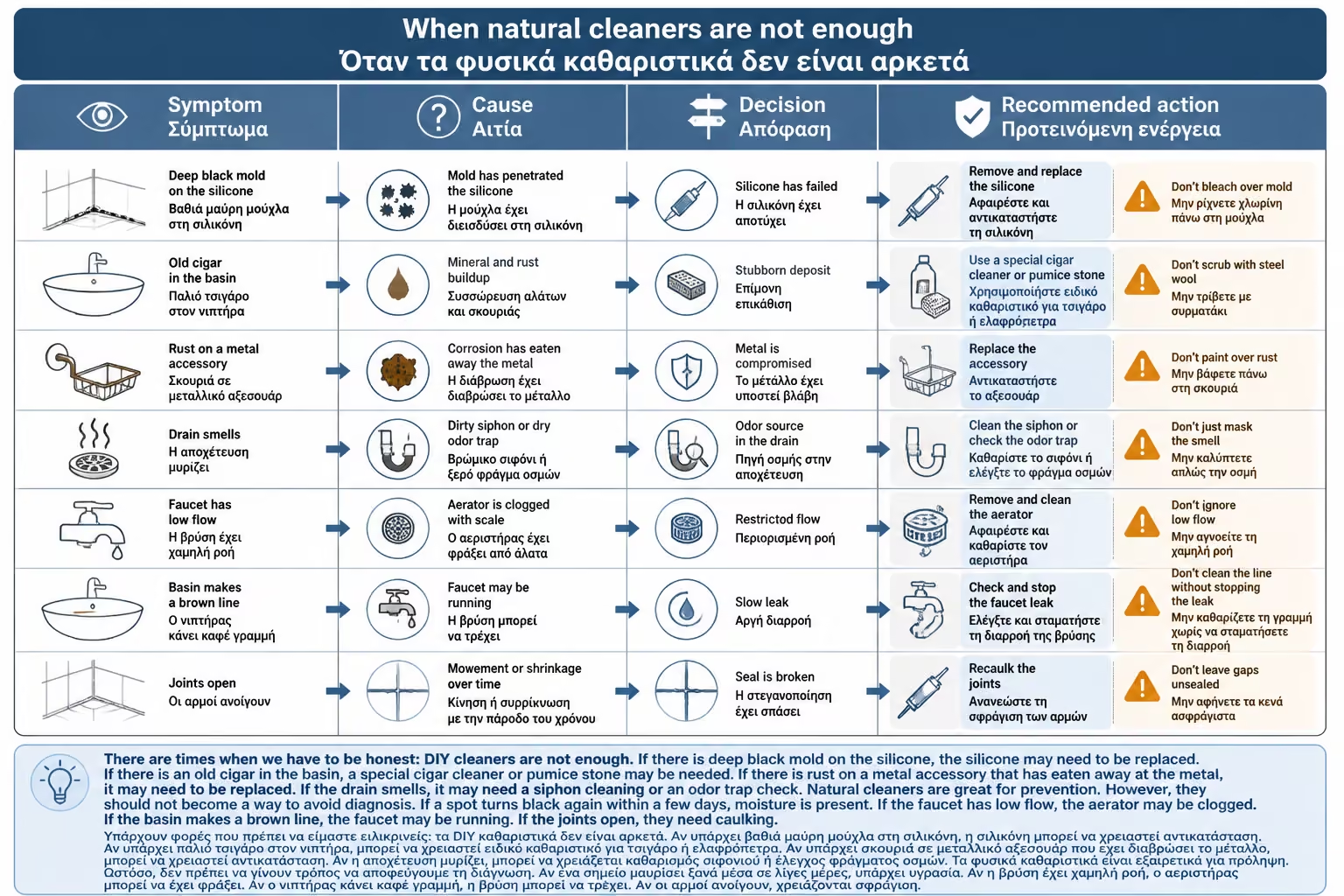
There are times when we have to be honest: DIY cleaners are not enough. If there is deep black mold on the silicone, the silicone may need to be replaced. If there is an old cigar in the basin, a special cigar cleaner or pumice stone may be needed. If there is rust on a metal accessory that has eaten away at the metal, it may need to be replaced. If the drain smells, it may need a siphon cleaning or an odor trap check.
Natural cleaners are great for prevention. However, they should not become a way to avoid diagnosis. If a spot turns black again within a few days, moisture is present. If the faucet has low flow, the aerator may be clogged. If the basin makes a brown line, the faucet may be running. If the joints open, they need caulking.
"No toxic gases" does not mean "no technical logic". It means we choose milder solutions where appropriate and avoid dangerous mixes. When the problem is technical, the cleaner, physical or chemical, simply delays the correct solution.
A serious cleaning guide should also tell when to stop. If you rub the same spot every week and the problem returns, you don't need a new prescription. You need a diagnosis.
Natural cleaners are economical, especially when used for frequent maintenance. The main cost is not the materials, but the consistency. A bottle of vinegar and some baking soda will not keep the bathroom clean if used once a month in an already difficult situation.
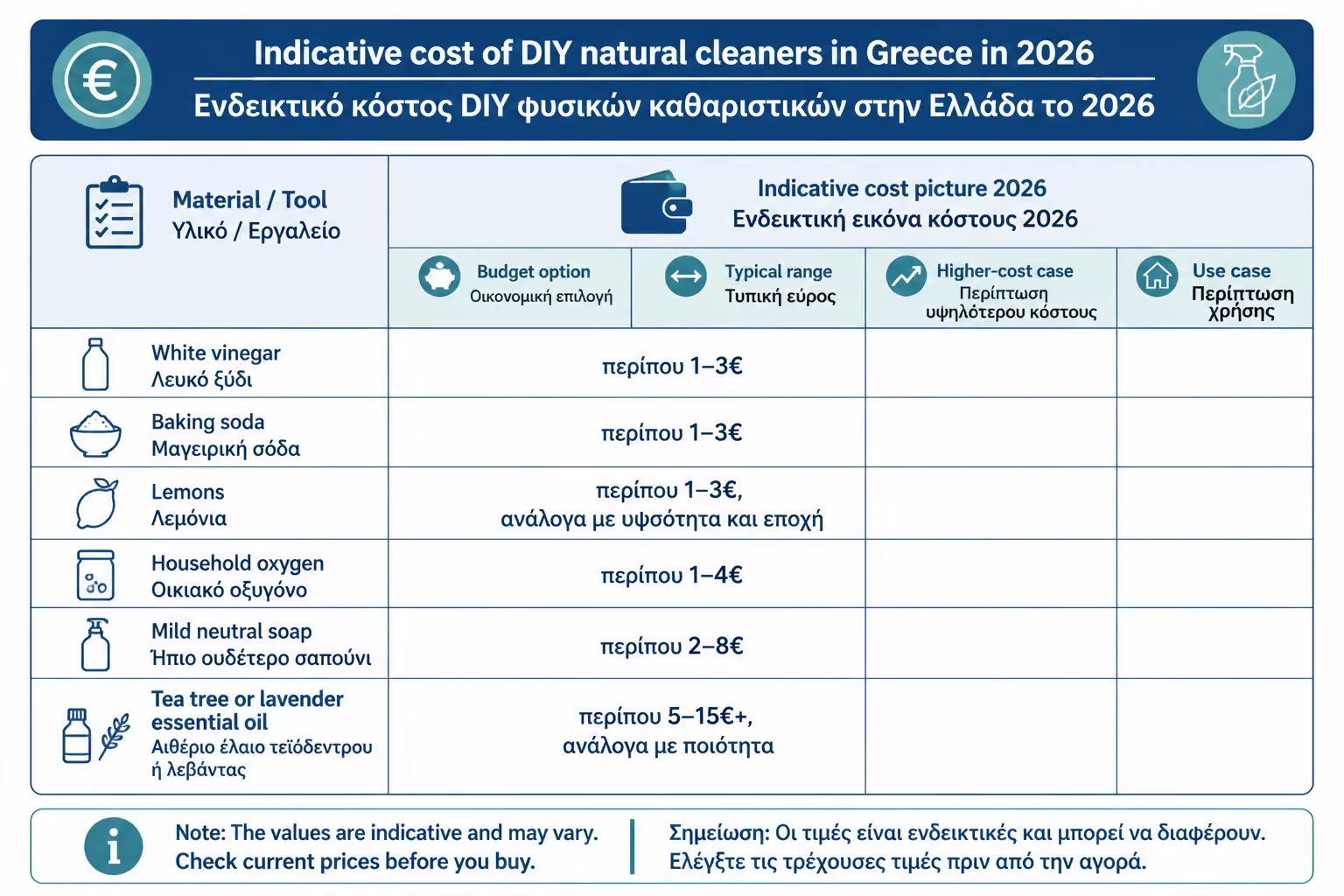
| Material / Tool | Indicative cost picture 2026 |
|---|---|
| White vinegar | around €1–3 |
| Baking soda | around €1–3 |
| Lemons | around €1–3, depending on quantity and season |
| Household oxygen | around €1–4 |
| Mild neutral soap | around €2–8 |
| Tea tree or lavender essential oil | around €5–15+, depending on quality |
| Spray bottle | around €2–6 |
| Microfiber cloths | around €3–12 |
| Joint brush | around €3–10 |
| Squeegee for shower glass | around €5–20 |
Prices are indicative and depend on region, store, quality and packaging. Compared to specialized cleaners, DIY materials are economical. But for special surfaces or serious problems, a proper special product can be safer than an improvisation.
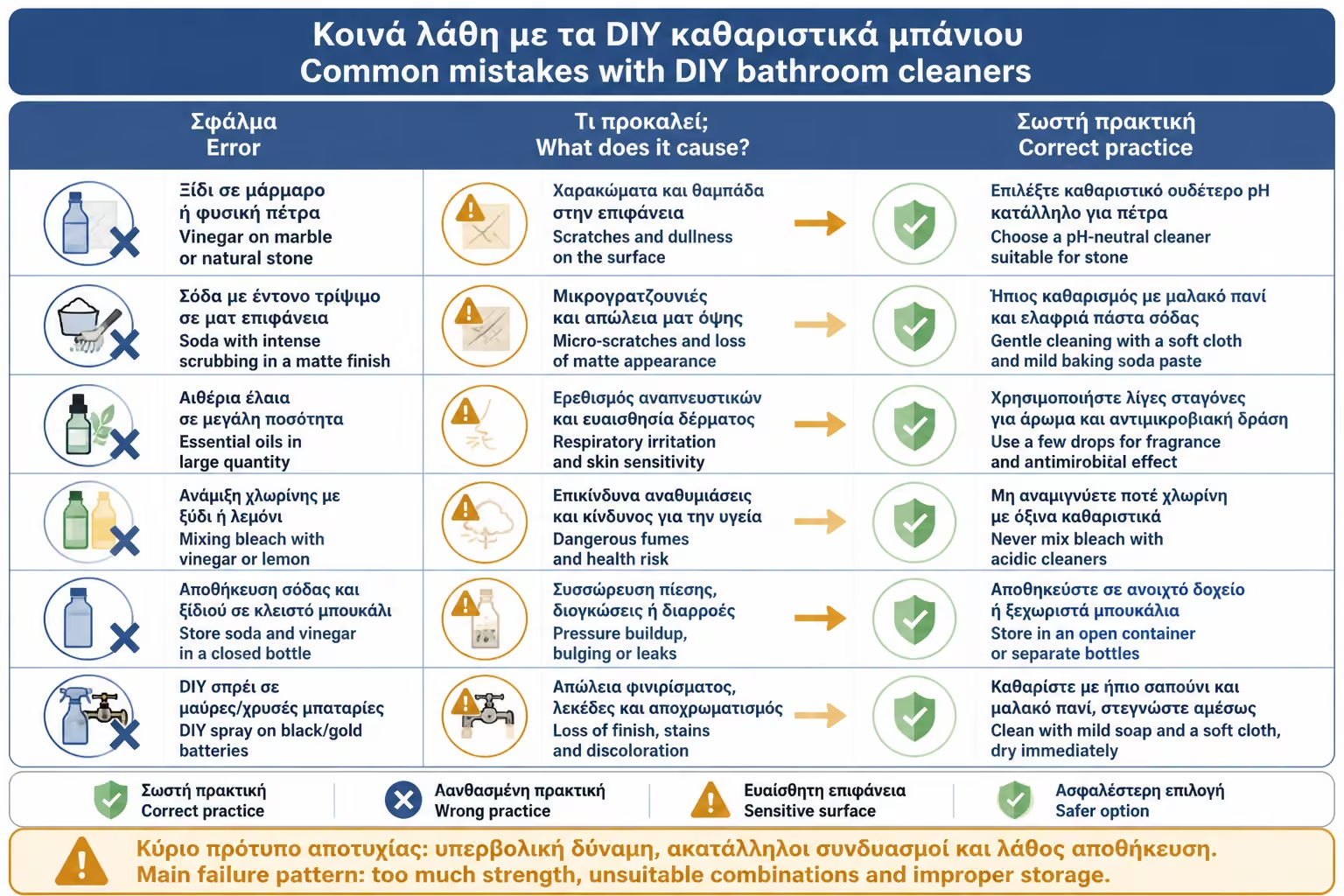
Most mistakes are made from too much trust in the "natural". Because something is in the kitchen, we consider it harmless to everything. It's not like that. Vinegar can damage marble. Baking soda can dull a delicate finish if rubbed vigorously. Essential oils can leave greasy marks. Lemon can stain if left on.
| Error | What does it cause? | Correct practice |
|---|---|---|
| Vinegar on marble or natural stone | Dullness and chemical deterioration | Neutral special cleaner |
| Soda with intense scrubbing in a matte finish | Minor wear and polishing | Mild cloth and soap |
| Essential oils in large quantity | Oiliness, irritations, residue | A few drops and dilution |
| Mixing bleach with vinegar or lemon | Hazardous fumes | Never a combination |
| Store soda and vinegar in a closed bottle | Pressure, foam, ineffective mixture | Use only immediately |
| DIY spray on black/gold batteries | Possible blur | Manufacturer's instructions and mild soap |
| Perfume instead of siphon cleaning | The smell is coming back | Odor trap inspection and cleaning |
| Use the same mixture for the entire bathroom | Damage to sensitive materials | Selection by surface |
A typical example is the bathroom with black faucets and marble on the counter. A vinegar spray can be useful for plain glass, but in this bathroom it is dangerous if sprayed uncontrollably. The same "natural" recipe can be right in one bathroom and wrong in another.
| Inquiry | Yes / No |
|---|---|
| Do you know what surface the cleaner will be used on? | Yes / No |
| Have you ruled out marble, natural stone or delicate finish before applying vinegar/lemon? | Yes / No |
| Will you test on a small spot before first use? | Yes / No |
| Is the bottle clearly labeled with the ingredients? | Yes / No |
| Won't mix DIY cleaner with bleach or commercial products? | Yes / No |
| Will the essential oils go in a few drops and not undiluted? | Yes / No |
| Will you rinse or wipe the surface after use where appropriate? | Yes / No |
| Will you be drying batteries, glass and salt spots after cleaning? | Yes / No |
| Won't you use harsh scrubbing soda on sensitive surfaces? | Yes / No |
| If the problem returns, will you check the cause and not just a new prescription? | Yes / No |
If the answer is “No” to the points about surface, mixing, or testing, do not make the cleaner yet. Safety in DIY cleaners starts before the bottle is opened.
If you want natural bathroom cleaners, use them as a maintenance tool, not as a magic cure-all. Vinegar is good for salts, but not for marble or special finishes. Baking soda helps the joints, but should not be rubbed violently. Essential oils give a pleasant sensation, but do not replace disinfection or technical repair. And above all: never mix with bleach or unknown cleaning agents. The safest bathroom is not one that smells strongly, but one that is cleaned frequently, properly ventilated, and has no hidden causes of dampness.
Natural bathroom cleaners can be very helpful when used correctly. White vinegar helps with light salts, baking soda with joints and gentle mechanical cleaning, lemon gives acidity and aroma, while essential oils such as tea tree and lavender make use more pleasant. With simple materials, you can reduce heavy chemicals in daily maintenance and keep the bathroom clean in a gentler way.
The important thing is not to use everything everywhere. Each surface has its strengths. Acidic natural materials are not suitable for marble and natural stone. Baking soda is not suitable for heavy scrubbing on delicate finishes. Essential oils need a few drops and proper dilution. And no DIY cleaners should be mixed with bleach or strong commercial products.
The best strategy is frequent, gentle maintenance: clean before scale builds, dry before mold, air before mold appears, and check the cause when a problem returns. This is how natural cleaners become really useful, not because they promise miracles, but because they are part of proper, practical bathroom care.
Return to category.
Go to categoryReturn to the central guide.
Go to guide