
Bathroom DIY, Maintenance & Styling
Return to category.
Go to categoryThe bathtub, sink and toilet bowl are among the surfaces that immediately define how clean a bathroom looks. When they shine, the space feels fresh, bright and well kept. But when they become dull, fill with micro-scratches or develop permanent stains, even an otherwise clean bathroom can look old. In many cases, the wear does not come from misuse, but from overly aggressive cleaning.
Acrylic bathtub and porcelain are not cleaned in the same way. The acrylic surface is softer and sensitive to scratches. It can be scratched by a hard sponge, abrasive powder, wire, or even grains of sand left on the surface. Porcelain is harder and more durable, but it too can become dull or scratched if routinely cleaned with the wrong tools, especially when its enamel has already worn away over time.
The usual mistake is thinking "the stain doesn't go away, so it needs a stronger scrub". In fact, the more a surface is scratched, the easier it gets dirty afterwards. Microscratches hold soaps, salts, dirt and mold. So the tub looks clean for a while after heavy scrubbing, but dulls faster the next time you use it. Over time, cleaning becomes more and more difficult.
Especially in acrylic bathtubs, the wrong maintenance can destroy the original gloss. Hard sponges, scouring powders, abrasive creams and very strong chemicals can create permanent dullness. In porcelain, wear can appear as graying, loss of luster, stains that "catch" more easily, or a rough texture where it is frequently rubbed.
In this guide we will see how to properly clean acrylic tubs and porcelain surfaces, which cleaners and tools to avoid, how to deal with salts and soaps without scratching, what to do with stubborn stains and when a wear is no longer a matter of cleaning but an indication that the surface has been stressed.
The acrylic bathtub is usually lighter, warmer to the touch and more sensitive to scratches than a classic enamel or porcelain surface. Acrylic material has a surface gloss that can be maintained for years if properly cleaned. However, if it is frequently rubbed with abrasives, the surface becomes dull.
Porcelain, on the other hand, has a hard enamel surface. It is more resistant to daily use, which is why it is used in sinks, toilet bowls and some tubs. But that durability does not make it invulnerable. If the enamel is scratched, cracked or worn, the surface becomes more porous and holds stains more easily. In older sanitary ware, this often shows up as permanent dullness or graying.
The distinction matters in practice. What a porcelain toilet bowl or sink can tolerate does not mean it is safe for an acrylic bathtub. If you use cleaning powder or a harsh sponge on acrylic, you may see fine lines immediately. If you repeat this often, the tub will lose its smooth feel.
A simple example: an old white porcelain toilet bowl with puri may need a special acidic cleaner or, in certain cases, a pumice stone made for porcelain. The same logic does not apply to an acrylic bathtub. There, pumice stone or hard scrubbing can leave obvious damage.
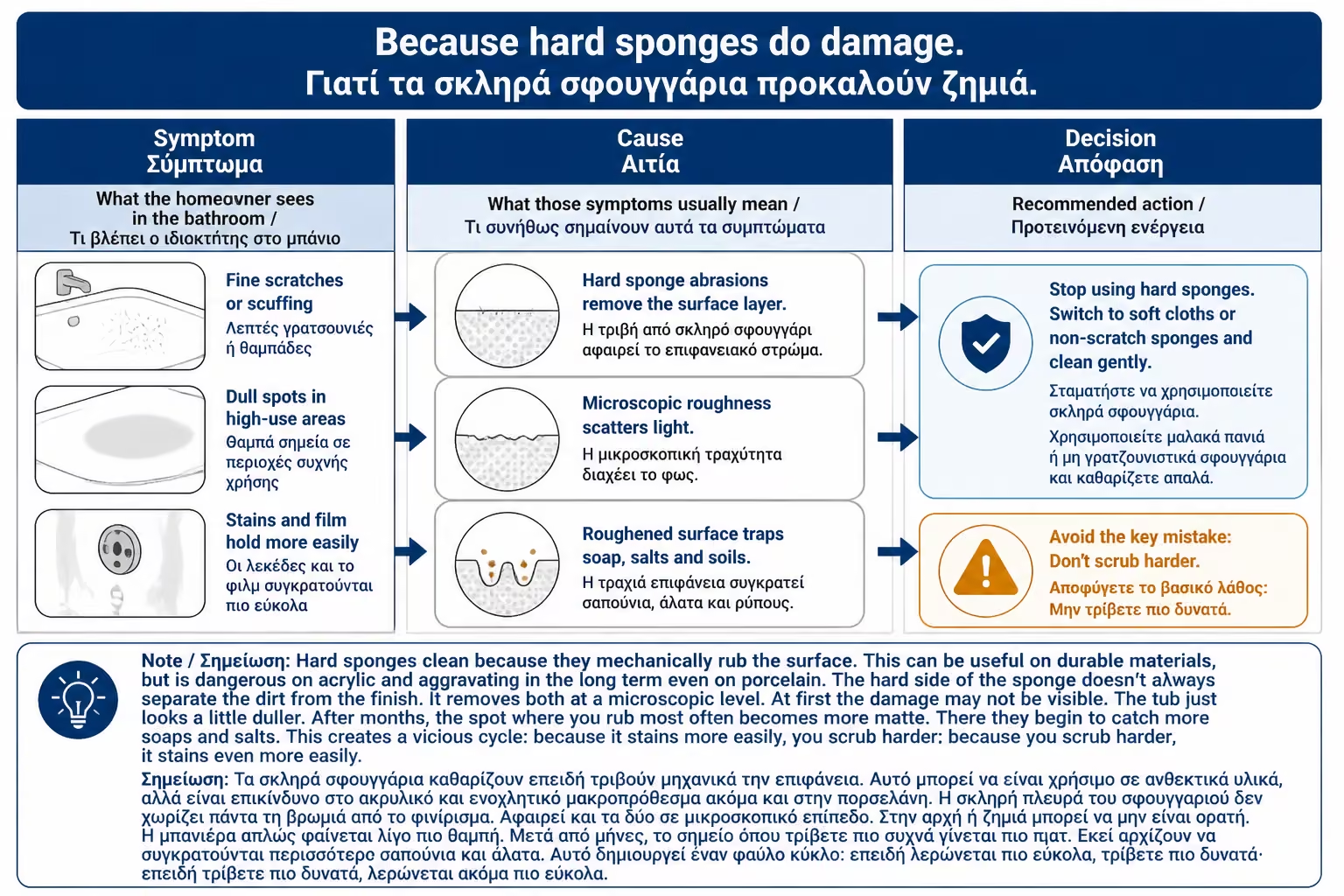
Hard sponges clean because they mechanically rub the surface. This can be useful on durable materials, but is dangerous on acrylic and aggravating in the long term even on porcelain. The hard side of the sponge doesn't always separate the dirt from the finish. It removes both at a microscopic level.
At first the damage may not be visible. The tub just looks a little duller. After months, the spot where you rub most often becomes more matte. There they begin to catch more soaps and salts. This creates a vicious cycle: because it stains more easily, you scrub harder; because you scrub harder, it stains even more easily.
In the acrylic bathtub, wear can be clearly seen when light falls from a window or from a spotlight. You see fine lines, an uneven sheen, or a "fuzzy" spot on the tub floor. In porcelain, micro-scratches can hold gray dirt and make the surface look older.
For daily cleaning, prefer a soft sponge, microfiber cloth or brush with soft fibers. If a stain won't come out, it doesn't automatically mean that a tougher tool is needed. It usually needs a suitable cleanser and a little action time.
Cleaning powders and many abrasive creams work with small grains that abrade the surface. In older homes, they were often used in bathtubs, basins and sinks, because they gave a feeling of "deep cleaning". The problem is that repeated use of them gradually wears away the finish.
In the acrylic tub, abrasive powders should generally be avoided. They can scratch and dull the surface. Even if they are thoroughly rinsed, their grit may remain in corners or around the valve and continue to rub off on subsequent use.
On porcelain, the occasional use of a mild abrasive may seem tolerable, but it is not ideal as a routine. If the enamel is old or already has minor damage, the dust will make it worse. On basins with scum or old deposits, it is better to use a special scum/scum product rather than just more scrubbing.
A common mistake is to pour cleaning powder into the bathtub, wet it a little and scrub with a hard sponge. This is one of the fastest ways to lose the gloss of the acrylic surface. The tub may look white, but it won't be smooth anymore.
The best care is frequent gentle maintenance. After bathing or showering, rinse the surface with clean water to remove soaps, shower gels and shampoos. These residues, if dried, form a film that holds salts and dirt. A quick rinse prevents much of the dullness.
For regular cleaning, use lukewarm water, mild liquid detergent or neutral soap and a soft cloth. Wipe the surface without pressure, rinse and dry with a microfiber cloth where practical. In the bathtub, complete drying is not always necessary, but in places where scale remains, such as around the valve, faucet and low walls, it helps a lot.
Frequency depends on usage. In a family bathroom with a daily shower, a gentle cleaning once a week and a quick rinse after each use makes a big difference. If you expect slime, scale and blackness to build up, you will need more intensive intervention.
The goal is not to let the leftovers become a crust. When the dirt is fresh, it goes away gently. When it stays, the temptation to rub hard grows.
For acrylic tubs, go for cleaners that say they're suitable for acrylic surfaces or mild, non-abrasive liquid cleaners. Neutral soap, a small amount of mild dishwashing liquid, and special acrylic bathroom cleaners are usually safer options.
Avoid strong solvents, acetone, heavy duty chlorinated products, powders, grit creams, oven cleaners, cement cleaners, strong anti-salts and products that do not list compatibility with acrylic. Acrylic can dull, yellow or develop micro-cracks if exposed to the wrong chemicals.
If in doubt, test on a small inconspicuous spot. Wait, rinse and see if the sheen or texture has changed. Do not try a new product for the first time in an obvious place in the bathtub. Damage to acrylic is not easily covered.
For salts, use gentle and short application, only if the product is suitable. In many cases, it's better to clean the scale frequently in a gentle way than to let it build up and then need a strong acid.
Porcelain is more durable than acrylic, but should not be treated as indestructible. For sinks, basins and porcelain surfaces, mild bathroom cleaners and porcelain cleaners are suitable for frequent use. For salts or puri, products that act on mineral deposits are needed, usually acidic, but with proper use.
The main rule is not to combine products. If you use a bleach-based cleaner, do not add vinegar or an acidic descaler. If you use a special cleaner for puri or mineral deposits, rinse thoroughly before applying anything else. Mixing cleaners in the bathroom can be dangerous.
In porcelain sinks, avoid systematic use of abrasives. It may appear to clean, but over time it dulls the enamel. In basins, for stubborn puri, wet porcelain-specific pumice may help under conditions, but is not used on acrylic and is not applied dry or by force.
Porcelain is best cleaned when we don't let the problem get old. A sink that is washed off with toothpaste and soaps every day will need much gentler maintenance than one that is cleaned when it has already turned gray.
Salts need chemical softening, not violent scraping. In an acrylic tub, use only product suitable for acrylic and leave on for the time allowed. Then wipe with a soft sponge and rinse. Do not allow acidic product to dry on the surface.
On porcelain, you can use a stronger limescale remover, but always with caution. Apply it only to the area with mineral deposits, leave it on for the recommended time, rub with a brush or soft sponge and rinse well. If the puri is old, more than one application may be needed.
Around valves, faucets and siphons, pay attention to metal finishes. A cleaner that is safe for porcelain may not be safe for a black, gold or chrome faucet. Do not spray the whole area indiscriminately. Apply it to a cloth or only to the target area, protecting sensitive components.
If deposits keep coming back to the same spot, check for a small leak or drip from the faucet. A constant drip will keep building up limescale no matter how well you clean.
The acrylic tub is often dulled by soaps and shower gels, not just salts. Body products leave a thin film, especially when combined with hard water. If this film remains, the tub feels slippery or dull.
The solution is mild degreasing cleansing. A little neutral liquid soap or mild dish soap in warm water can remove residue without scratching. Wipe with a soft sponge, rinse well and dry where necessary. Good rinsing is important, because if soap remains, it forms a new film.
If the tub is slippery after cleaning, it may not have been rinsed well or product residue may have been left behind. This is not only a matter of cleanliness but also of safety. A slippery acrylic tub increases the risk of falling. Rinse until the surface is soap free.
Do not try to remove the slime by harsh scrubbing. If the problem is organic film, it needs a proper cleaner and rinse, not sanding the surface.
Acrylic surfaces can be stained by hair dyes, strong cosmetics, self-tanning products, colored shampoos or body oils. These stains should be cleaned as soon as possible. The longer they stay, the more likely they are to water or cast shade.
In the acrylic tub, start with mild soap and water. If this is not enough, use a cleaner suitable for acrylic. Do not use acetone or solvents to remove paint. They can damage the surface much worse than the stain.
On porcelain, stains often come off easier, but we still don't start with hard tools. Use a suitable cleaner and let it work. On rust stains or metal products, a special rust product may be needed, not a simple disinfectant.
A practical preventive measure is not to rinse hair dyes in an acrylic tub without protection and immediate rinsing. If done frequently, the marks may become permanent. In such uses, porcelain is usually more tolerable, but even there it must be cleaned immediately.
Micro scratches on the acrylic bathtub can appear from hard sponges, toys, metal objects, bath chairs, basins, buckets or even from sand on the feet. If they are superficial, in some cases they can be improved with special polishing products for acrylic surfaces. But this must be done with care and according to the manufacturer's instructions.
We do not use car polishes, abrasive creams or improvised means without knowing if they are suitable. The acrylic surface can be polished locally and remain uneven. If the scratch is deep, simple maintenance will not remove it.
In bathtubs with severe wear, there are professional repair or restoration solutions, but not all have the same effect and cost. Before attempting a DIY repair, assess whether the damage is cosmetic or has affected the tightness/structure of the tub. A crack in acrylic is not a simple scratch.
Prevention is best. Do not touch metal objects inside the acrylic tub, do not clean with hard tools and be careful with objects with sharp edges. The acrylic surface requires a "softer" everyday life than porcelain.
Proper use helps as much as proper cleaning. If you use plastic bath seats, basins, children's toys or metal containers, make sure they don't have rough bases. A small pebble or hard edge can leave a line on the acrylic surface.
If you wash a pet in the bathtub, be extra careful. Nails can scratch acrylic. Use a non-slip bath mat and clean thoroughly afterwards to remove hair, soap and sand. The mat should also be removed and dried, because if left permanently attached, it can retain moisture and create marks.
Do not allow shampoo bottles, metal foam containers, paints or cleaners to sit directly on the acrylic surface for long periods of time. They can leave rings or stains. Use a rack or tray that drains.
After work in the bathroom, such as painting, plastering or plumbing changes, protect the bathtub. Powders, putties, glues and tools can create scratches. A lot of damage to bathtubs is not done in use, but during work.
The porcelain sink gets dirty from toothpaste, soap, salts, cosmetics, hair and small metal objects. The best maintenance is frequent rinsing and gentle cleaning. If you leave toothpaste and soaps to dry every day, a film is created that dulls the surface.
For regular cleaning, a mild liquid cleaner and a soft sponge are sufficient. Around the valve, where scale collects, use a product suitable for porcelain and be careful with metal finishes. If the valve is chrome, black or gold, do not allow strong product to sit on it.
If gray lines appear from metal objects such as jewelry or tools, a special porcelain cleaner may be needed. Do not scrub with a wire. Metal lines are often superficial, but incorrect removal can scratch the enamel.
In old wash basins, if the surface has lost its shine and gets dirty immediately after cleaning, the enamel may have worn out. That's where cleaning helps, but doesn't fully restore the original strength.
The toilet bowl needs stricter hygiene than the sink, but even here mechanical abuse must be avoided. For daily or weekly cleaning, use a porcelain-safe toilet cleaner and a toilet brush. For puri and mineral deposits, use a dedicated descaling product rather than abrasive powder or metal wool.
A pumice stone should only be used if it is made specifically for porcelain, always wet and with great care. It should never be used on acrylic, plastic seats, colored surfaces or fittings. The goal is to remove the crust, not to scrub the entire bowl.
Do not mix cleaners. This is especially important in the toilet bowl, where many people use bleach first and then add an acidic cleaner for puri. That is dangerous. If one product has been used, it must be rinsed away thoroughly before anything else is applied.
If the bowl keeps developing streaks or puri, check the cistern. A small continuous flow of water creates limescale in its path. If that is not fixed, you will keep cleaning the same problem over and over again.
Yellowing can come from salts, soaps, old water, cosmetics, smoke, cleaners or surface wear. Try gentle cleansing first. If this is not enough, use a cleaner suitable for the particular material. Don't assume that all yellowing needs bleach.
In the acrylic bathtub, the yellowing can be a surface film or deterioration of the material. If it is a film, it can be improved with a mild cleaner. If the material has been damaged by sun, age or chemicals, cleaning has limited results. Do not continue with stronger and stronger products.
In porcelain, yellow stains are often linked to mineral deposits or organic residue. That is where specialized cleaners can help. However, if the enamel is worn, the discoloration may have penetrated more deeply. Full restoration is not always possible.
A practical criterion: if, after proper cleaning, the surface is smooth but remains slightly discolored, aging may be the issue. If it is rough, there is still a build-up or wear. The treatment is different.
Vinegar, baking soda and lemon are often used in the bath. On porcelain and ceramic surfaces they can help with mild salts and dirt, with care. In acrylic bathtubs, however, they should not be used indiscriminately. Vinegar and lemon are acidic, baking soda is abrasive. All can create a problem if used incorrectly.
For acrylic, prefer a cleaner that states compatibility. If using a natural solution, test and avoid prolonged contact or vigorous rubbing. For porcelain, vinegar can help with scale, but should not be mixed with bleach or sink cleaners.
Baking soda can help with joints or mild dirt, but not as a daily rub on the acrylic surface. If you want to use baking soda paste, limit it to tough spots and work very gently. On sensitive surfaces, it is better to avoid it.
"Natural" is not always safer for hardware. It's just different. The surface doesn't care if the acid comes from a lemon or a bottle of cleaner. If it is sensitive to acids, it will be affected.
If the acrylic bathtub has many scratches, deep dullness or small cracks, simple cleaning will not restore it to its original condition. There are professional services for polishing, repairing or restoring acrylic surfaces, but the result depends on the depth of the damage and the quality of the work. For deep cracks, technical evaluation is needed.
On porcelain, if the enamel has worn away, there are enameling or repainting solutions, but not all have the same durability as the factory finish. In old basins or sinks, replacement may be more practical and financially sensible than restoration, especially if the sanitary ware has other problems.
Before deciding, evaluate the cost, age of the bathroom, appearance and daily use. A small dull patch in a guest tub may not justify a major intervention. A deeply worn bathtub in a main bathroom can affect both appearance and everyday cleanliness.
The important thing is not to try to hard clean something that is material wear. If the surface is stressed, the extra sanding usually makes it worse.
Proper acrylic and porcelain tub maintenance is low cost when done proactively. Mild cleaners and microfiber cloths are economical. Costs increase when the surface is already worn and needs professional restoration or replacement.
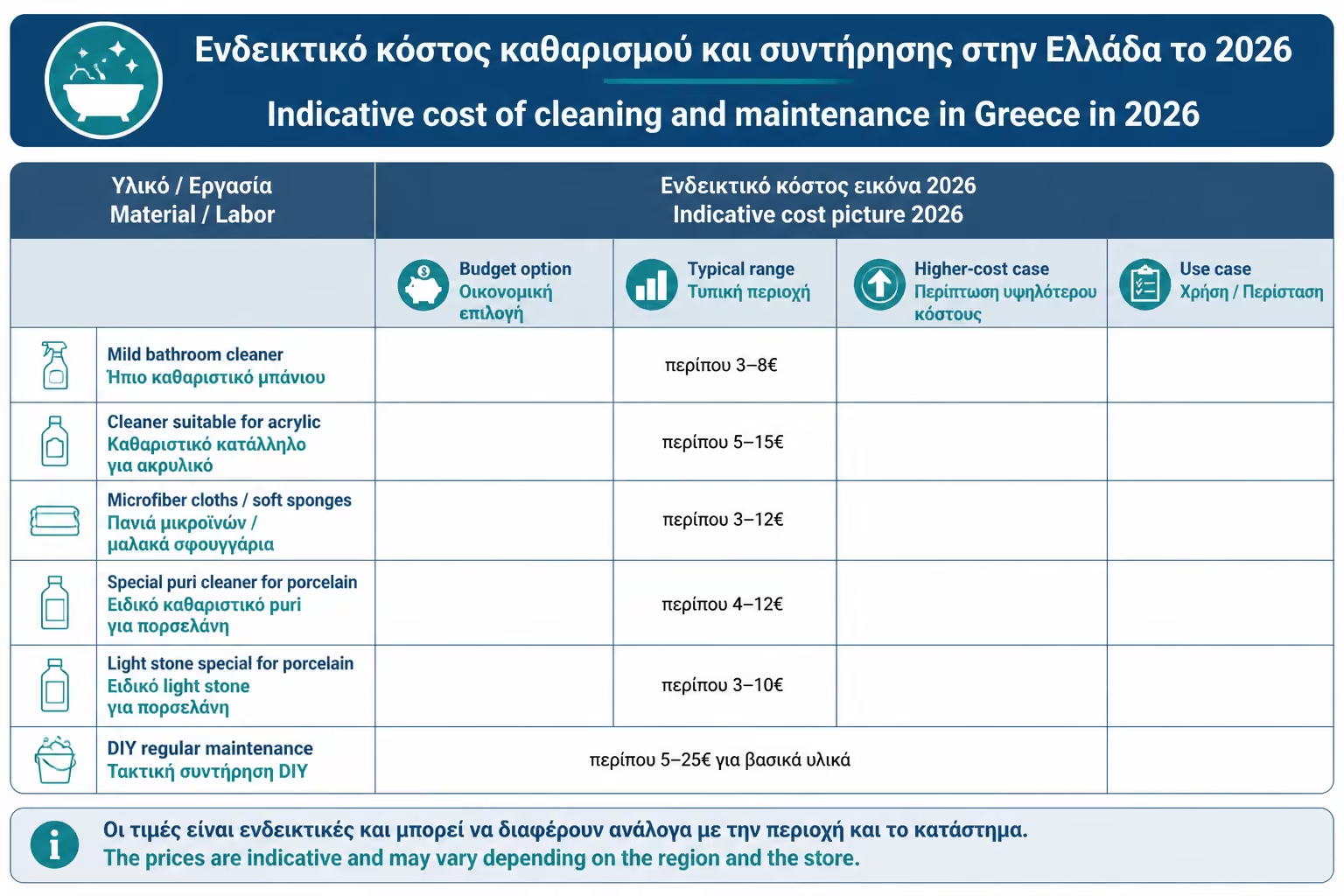
| Material / Labor | Indicative cost picture 2026 |
|---|---|
| Mild bathroom cleaner | around €3–8 |
| Cleaner suitable for acrylic | around €5–15 |
| Microfiber cloths / soft sponges | around €3–12 |
| Special puri cleaner for porcelain | around €4–12 |
| Light stone special for porcelain | around €3–10 |
| DIY regular maintenance | around €5–25 for basic materials |
| Professional cleaning / polishing of acrylic surface | case by case, often €80–€250+ |
| Replacement of a simple sink or toilet bowl | case by case |
| Bathtub replacement | significantly higher costs, depending on tasks and access |
The prices are indicative and depend on the area, the quality of the products, whether VAT is included, the condition of the surface, access and whether we are talking about simple cleaning or technical restoration. The most economical option is always prevention: gentle cleaning before damage occurs.
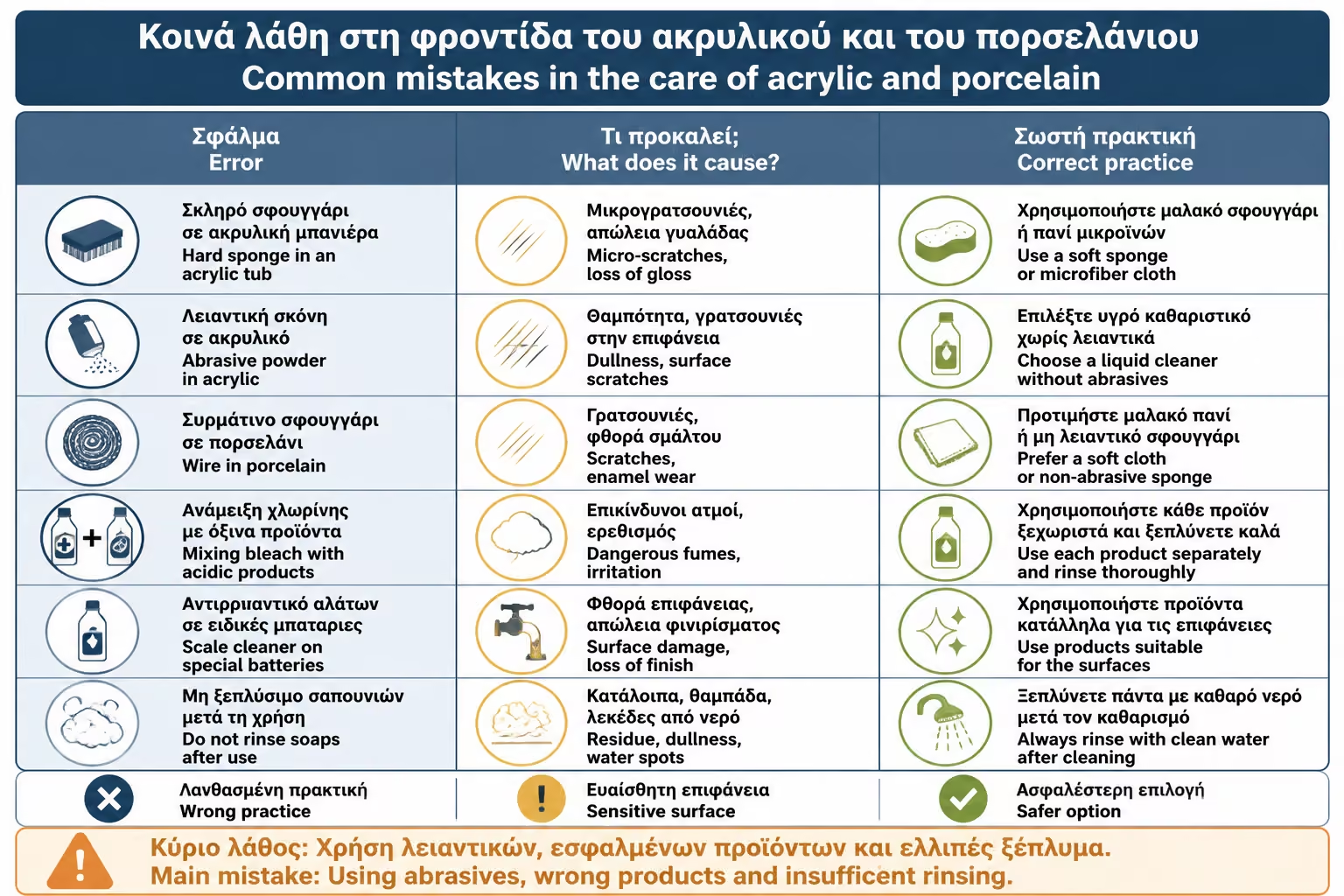
Most mistakes are made by trying to clean something up quickly. The bathroom needs cleaning, but the surfaces need respect. The wrong power does more damage than dirt.
| Error | What does it cause? | Correct practice |
|---|---|---|
| Hard sponge in an acrylic tub | Scratches and permanent dullness | Soft cloth or sponge |
| Abrasive powder in acrylic | Wear of the glossy surface | Liquid cleaner suitable for acrylic |
| Wire in porcelain | Minor scratches and graying | Brush or special product |
| Mixing bleach with acidic products | Hazardous fumes | One product at a time |
| Limescale cleaner on special-finish faucets | Dull or worn finish | Targeted application and protection |
| Do not rinse soaps after use | Slippery residue and dullness | Quick rinse after shower |
| Remaining wet objects in the bathtub | Rings and stains | Shelves and proper drying |
| Persistence in rubbing while the surface is worn | More damage | Technical assessment or restoration |
A typical example is the acrylic bathtub that gets scrubbed every week with abrasive powder "to whiten it". In the first months it may seem cleaner. Then it starts to look dull and collect slimy residue more easily. The problem is not only the quality of the bathtub. It is that the surface has been microscopically etched.
A professional is needed when there are deep scratches, cracks, peeling, worn enamel, severe permanent yellowing or marks that do not change with proper cleaning. Also, if the bathtub has soft spots, movement, sounds or a suspected leak, we are not talking about cleaning but a technical inspection.
In an acrylic bathtub, a crack should not be ignored. It may allow water to seep under the surface or grow with use. In porcelain, a break or crack can create a sharp point or allow stains to penetrate deeper. These cannot be solved with a cleaner.
A technical opinion is also needed if you are considering professional restoration, polishing or repainting. Not all surfaces are suitable and not all solutions last the same. Ask clearly what the work includes, how durable it is, what warranty is given and how it should be cleaned afterwards.
If the bathroom is old and the sanitary ware has general wear and tear, perhaps replacement makes more sense than repeated cleanings. The decision depends on condition, usage and budget.
| Inquiry | Yes / No |
|---|---|
| Do you know if the surface is acrylic, porcelain or another material? | Yes / No |
| Are you using a soft sponge or microfiber cloth? | Yes / No |
| Do you avoid hard sponges, wires and abrasive powders? | Yes / No |
| Is the cleaner suitable for acrylic if it is an acrylic tub? | Yes / No |
| Do you rinse off soaps and shower gels after use? | Yes / No |
| Are you drying spots where scale collects? | Yes / No |
| Do you avoid solvents, acetone and strong acrylic products? | Yes / No |
| Don't mix bleach with acidic cleaners? | Yes / No |
| Do you protect the bathtub during bathroom work? | Yes / No |
| If there is a crack or deep wear, will you request a technical inspection? | Yes / No |
| If the surface dulls quickly, check if it is already micro-etched? | Yes / No |
If the answer is “No” to the items about tools, cleaner or mixing products, change your cleaning routine first. The surface may wear more from maintenance than from use.
If you want to keep an acrylic bathtub or porcelain surface in good condition, don't think about “scrubbing harder”. Think “more frequent and gentler cleaning”. Hard sponges and abrasive powders may give a quick sense of cleanliness, but they scratch and dull the surface. Once the smooth texture is gone, dirt sticks more easily. Prefer a mild detergent, soft cloth, good rinsing and drying in places with salts. The best protection is to never need "heavy" cleaning.
Acrylic bathtub and porcelain can be kept clean and bright for many years, as long as they are cleaned with the right logic. The secret is not strength, but gentle and frequent care. Soaps, salts and stains must be removed before they become stubborn deposits. This avoids the need for hard tools and aggressive cleaners.
Hard sponges, wires, abrasive powders and inappropriate chemicals can cause permanent damage, especially to acrylic. Porcelain is more durable, but it also needs attention, especially when the enamel has aged. A surface that has been scratched or dulled doesn't just get dirtier; it's also harder to clean.
If the wear is superficial, proper maintenance can greatly improve the image. But if there are deep scratches, cracks, lost enamel or permanent dullness, cleaning has limits. Then technical evaluation, professional restoration or replacement is needed. Proper care from the beginning is always more economical and safer than trying to fix a surface damaged by improper cleaning.
Return to category.
Go to categoryReturn to the central guide.
Go to guide