
Bathroom DIY, Maintenance & Styling
Return to category.
Go to categoryThe shower curtain is one of the simplest and most economical parts of the bathroom, but also one of the easiest places for mold, limescale and unpleasant odors to build up. It is exposed every day to steam, soap, shampoo and water. Its lower edge often rests on the tub or the floor, stays wet for a long time, and often folds onto itself instead of drying properly. That is how the familiar beige or pinkish-orange film forms at the bottom of the curtain.
Many owners consider the shower curtain a disposable item and change it as soon as it gets dirty. Others leave it for months or years, even when it has obvious mold, because "if it gets wet all the time, it will get dirty again." The right approach lies somewhere in the middle. The shower curtain is indeed not a permanent structural element. But with proper washing and maintenance, it can last much longer, look clean and not become a source of mold in the bathroom.
Cleaning isn't difficult, but it does require you to know what material you have. Another behavior is a thin PVC plastic curtain, another polyester fabric curtain, another inner clear liner and another heavy decorative curtain. Some are easy to put in the washing machine. Some want a mild program and a low temperature. Some do not withstand wringing or drying. If you wash them all the same way, they may clean but crease, harden, fray or distort.
The biggest pitfall is mold on the bottom. If the mold is superficial, it can be cleaned. If it has gone deep into the material, if the curtain smells even after washing, or if the plastic has turned yellow and stuck, then replacement is a more hygienic and practical solution. There's no point in bothering a cheap part with harsh chemicals if the material is already worn out.
In this guide we'll look at how to properly wash your plastic and fabric shower curtain, how to deal with mold down low, what products help, what to avoid in the washing machine, how to dry it properly and when it's time to replace it. The goal is not just to get the stains out for a few days, but to keep the bathroom cleaner and drier in daily use.
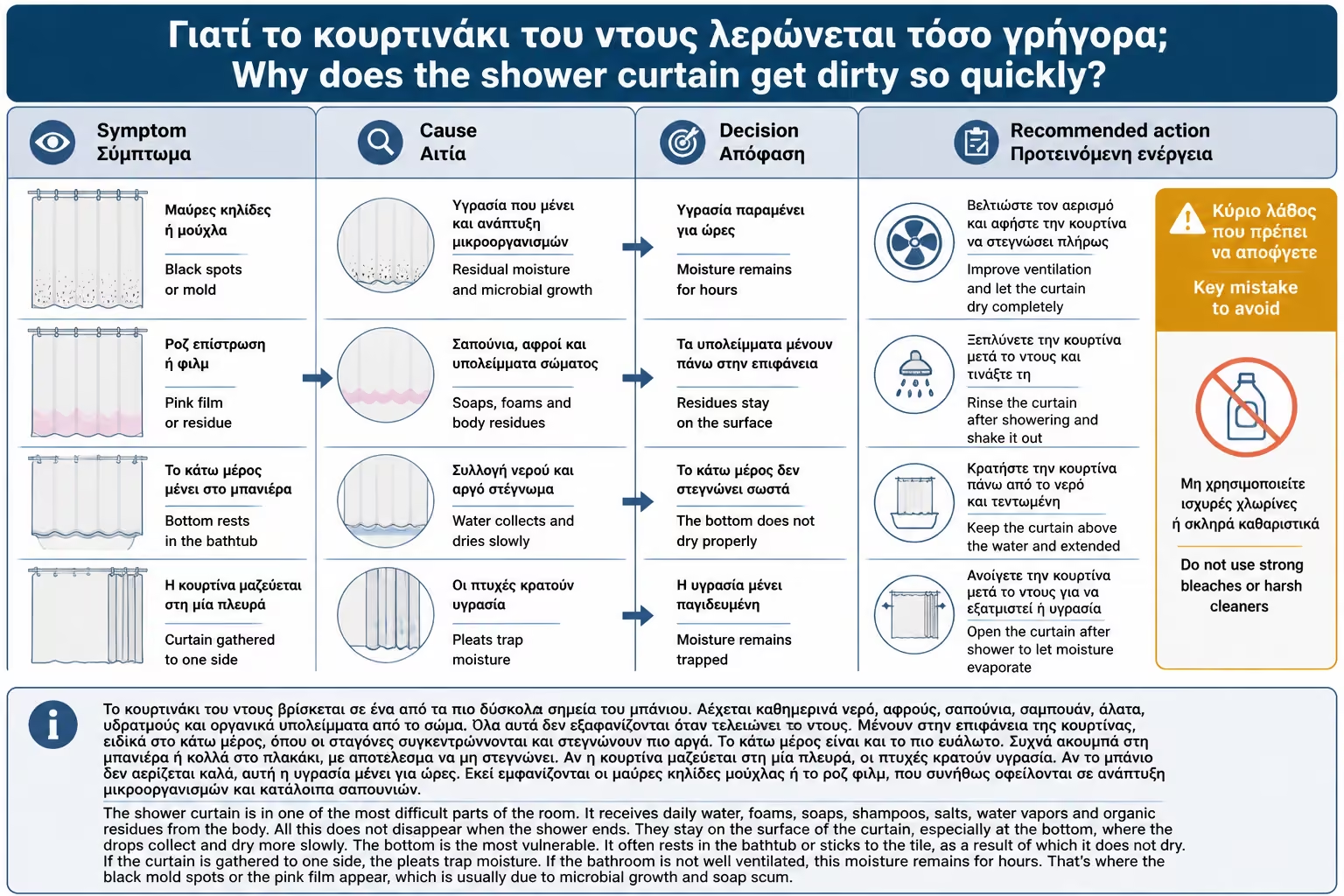
The shower curtain sits in one of the most demanding parts of the room. It is exposed every day to water, soap, shampoo, limescale, steam and organic residue from the body. None of that disappears when the shower ends. It remains on the curtain surface, especially at the bottom, where droplets collect and dry more slowly.
The bottom is the most vulnerable. It often rests in the bathtub or sticks to the tile, as a result of which it does not dry. If the curtain is gathered to one side, the pleats trap moisture. If the bathroom is not well ventilated, this moisture remains for hours. That's where the black mold spots or the pink film appear, which is usually due to microbial growth and soap scum.
Salts also play a role. In hard water areas, the drying droplets leave a white residue. These make the surface rougher and hold more dirt. So the curtain looks dull, even if there is no visible black mold.
A common example is the curtain that appears clear at the top but has a black or orange band in the last 10–20 cm. This is no accident. That's where most of the water stays, that's where it rests on the tub, and that's where the air circulates the least. If you only clean the visible surface and leave the bottom, the problem returns very quickly.
Before you put the curtain in the washing machine, you need to know what it is made of. Plastic curtains, usually made of PVC, PEVA or EVA, are waterproof and economical, but can be deformed by high temperature or strong wringing. Fabric ones, usually polyester, are easier to wash and hold up better in the washing machine, but they need proper drying.
There are also internal linings, the so-called liners, which enter from the side of the tub and receive the water, while the outer curtain remains more decorative. In this case, the liner gets dirtier and needs more frequent washing or replacement. The outer curtain can be washed more lightly, depending on the material.
The care label is valuable. If there is one, follow it. It will state whether the curtain can go in the washing machine, at what temperature, whether spinning is allowed and whether it can go in a dryer. If there is no label, choose the gentlest method: low heat, gentle cycle, no strong spin and no tumble dryer.
Don't assume that a plastic curtain will last because it is "for the bathroom". It is designed to get wet, not necessarily washed at 60°C or spun hard. The wrong temperature can cause it to wrinkle, stick, harden or lose its shape.
The frequency depends on the use of the bathroom, the ventilation and the water of the area. In a bathroom that is used daily for showering, the curtain should be washed about once a month or every 6–8 weeks, before severe mold appears. If the bathroom is not well ventilated or if the bottom is constantly wet, it may be needed more often.
In a second bathroom or WC that is rarely used, the curtain can look clean for longer. But if the room is closed with moisture, mold can appear even with little use. Low frequency of use does not necessarily mean less maintenance. It means that it needs to be checked if it dries properly.
A rule of thumb is don't wait for it to turn black. If the curtain starts to smell, stick, slimy at the bottom or shows pink/orange marks, it is already overdue for cleaning. The earlier you wash it, the easier it cleans and the less strong products are needed.
Maintenance after every shower greatly reduces the frequency of washing. If you rinse the soaps, spread the curtain open and ventilate the bathroom, mold is significantly delayed.
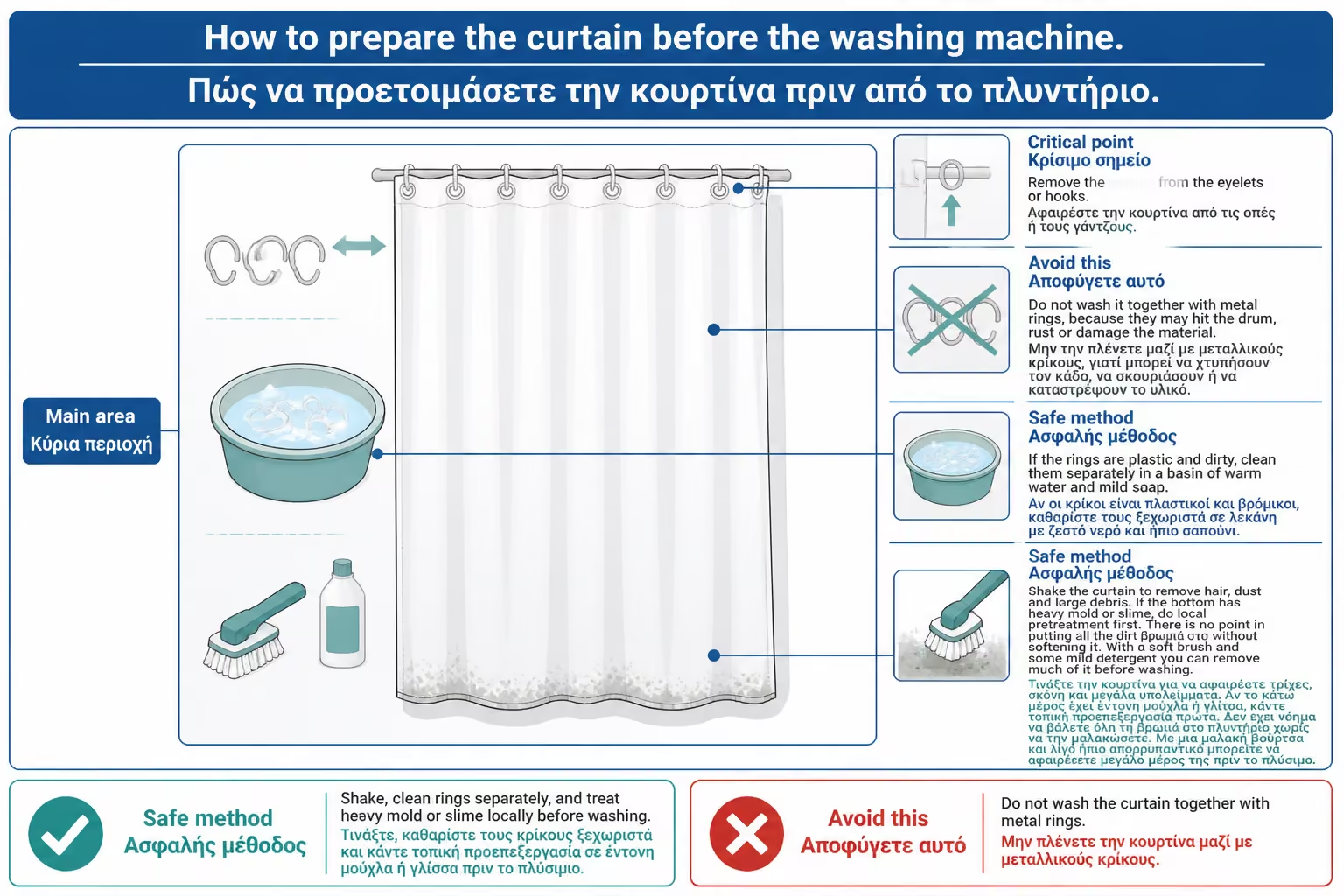
Before going into the washing machine, remove the curtain from the eyelets or hooks. Do not wash it together with metal rings, because they may hit the drum, rust or damage the material. If the rings are plastic and dirty, clean them separately in a basin of warm water and mild soap.
Shake the curtain to remove hair, dust and large debris. If the bottom has heavy mold or slime, do local pretreatment first. There is no point in putting all the dirt in the bin without softening it. With a soft brush and some mild detergent you can remove much of it before washing.
Check the seams and eyelets. If they are torn, the washing machine can increase the wear. If there are metal trunks that have rusted, the rust can stain the fabric or plastic. In such a case, the curtain may need to be replaced.
It helps to wash the curtain together with one or two old towels. The towels act as a gentle mechanical aid inside the drum, lightly scrubbing the surface and helping the curtain avoid sticking to itself. Do not use your good towels, because they may pick up residue or odors.
The plastic curtain should be washed on a gentle cycle, with a low temperature, usually 30°C or cold water, unless the label says otherwise. Hot water can warp the plastic. Choose a gentle cycle and avoid a strong spin. In many cases, the spin should be very low or omitted.
Use a small amount of mild detergent. You don't need a lot of product. Too much can leave a film on the plastic surface, which will then hold more soap and dirt. You can add a little white vinegar to the fabric softener case to help with salts and odors, but only if the material allows it and there are no sensitive metals.
Do not use fabric softener. It doesn't add anything substantial to the curtain and can leave a residue. Do not use a dryer. Heat can destroy plastic. After washing, hang the curtain back in place or in a ventilated area to dry naturally.
If the curtain comes out with wrinkles, do not iron it. Let it hang and straighten with its own weight. Iron can melt or distort it. If the plastic curtain has become hard, sticky or has lost its elasticity, washing will not fully restore it. That's where replacement time approaches.
Fabric shower curtains, especially polyester ones, are usually easier to wash. Here too, however, we start from the label. If there is no instruction, we choose a mild program at 30°C or 40°C, depending on the condition and strength of the fabric. Very hot water can affect waterproofing or cause some materials to clump.
Use a mild detergent and avoid using too much. If mold is present, the bottom may need to be pre-treated before washing. For white or light-colored fabric curtains, oxygen or an oxygen cleaner can help if allowed by the label. We do not use bleach without control, because it can yellow, weaken fibers or spoil colors.
The squeeze should be gentle. It doesn't have to come out completely dry. Better to drip a little and hang to dry than to wrinkle and strain in the bin. If it's a heavy fabric curtain, make sure the washing machine can handle it when it gets wet and gets heavier.
After washing, hang it open to dry. If left folded or gathered, it can smell again. The fabric curtain must be completely dry before being closed or gathered to the side.
Mold on the bottom is the most common and most difficult spot. Before the curtain goes into the washing machine, lay it out in a bathtub or on a clean surface and work the bottom area locally. For mild mold, a solution of warm water and mild detergent can soften the slime. Scrub with a soft brush or sponge, not a wire brush.
For more persistent blackness on white plastic or fabric curtains, oxygen or an active oxygen product can help, always according to the strength of the material. Oxygen can open stains without the aggressiveness of bleach, but still requires a small spot test, especially on colored curtains.
Bleach can whiten quickly, but it's not always the best solution. It can discolor fabrics, make plastic more brittle with repeated use, and leave a strong odor. If used, it must be diluted, with good ventilation, gloves and without any mixing with vinegar, ammonia, oxygen or other cleaners.
If the mold is deep in and won't go away after proper washing, don't persist with stronger and stronger chemicals. A curtain that has deep mold in the material, smells even clean, or has black marks that won't open, is best replaced.
White vinegar mainly helps with odors and salts. It can be used in the washing machine in a small amount, usually in the fabric softener compartment, to help rinse and remove residues. But it is not a strong cleaner for deep mold. Also, it should not be mixed with bleach.
Baking soda can help with odors and mild dirt. It can be added in a small amount to the bucket, along with the detergent, or made into a paste for topical rubbing on stubborn spots. It should not be used as a "hard rub" on thin plastic curtains, as it may scratch or dull the surface.
Oxygen is most helpful on organic stains and tarnishes, especially on light-colored materials. But it needs testing, because it can affect colors. We do not mix it with bleach or other strong products. We use it purposefully, rinse and then wash normally.
A practical scheme is as follows: for salts and odors, vinegar. For mild dirt and scrubbing, baking soda. For mold and blackness, oxygen or active oxygen product. Not all together in an improvised combination. Safety is more important than impressive foam.
Do not wash plastic curtain at high temperature. It can wrinkle, melt, warp or become hard. Do not put it in the dryer. Do not iron it. Do not wring it hard if the material is thin or old. These movements can damage the curtain more than dirt.
Do not mix bleach with vinegar, oxygen, ammonia or other cleaners. This is always true in the bathroom, but especially when you are cleaning mold and there is a temptation to put in "a little bit of everything". Fumes can be dangerous, especially in a small bathroom.
Do not scrub the curtain with wire or a very hard brush. In plastic, scratches can be created where it will then catch dirt more easily. In fabric, the fibers may fray. Use a soft brush or sponge.
Do not leave the curtain gathered when wet. It is probably the most common everyday mistake. If after the shower you pull it to the side and it stays folded, the inside of the folds does not dry. Mold grows there. The curtain should be left open while it dries.
Washing cleans the curtain, but drying determines how quickly it will get dirty again. After washing, hang the curtain open, ideally in place to drain in the bath or shower. If it drips a lot, put it so that the water goes down the drain and not on the floor.
Do not leave it folded in a basin or basket. Trapped moisture creates odors and can bring back mold. If it's fabric, lay it out as wide as possible. If it's plastic, keep it from sticking to itself while it dries.
After each shower, stretch the curtain along its entire length. It doesn't need to be taut like a living room curtain, but there should be air circulation in the pleats. If the bathroom has a window, open it. If it has a fan, let it run for a while after showering.
The bottom should not stick to the tub. If the curtain is too long and dragging, cut it or replace it with the correct length. When the material is constantly in contact with a wet surface, mold is almost inevitable.
Prevention starts with the correct position of the curtain. During the shower, the curtain should be inside the tub or shower so that no water comes out. After showering, however, it should be spread out and allowed to dry. If it constantly sticks to the inside of the tub, mold will form underneath.
Rinse the bottom occasionally with clean water, especially if it has shampoo or shower gel on it. Soap scum feeds slime and makes mold easier to catch. A quick rinse after showering can greatly reduce the problem.
If the bathroom has poor ventilation, the curtain will need more frequent washing. Ventilation is not a luxury. It's part of maintenance. A curtain that dries quickly stays clean much longer than a curtain that stays damp until the next morning.
You can also use two curtains: an inexpensive water-repellent inner liner and a nicer fabric outer. This way you change or wash the liner more often and protect the outer curtain.
Many times the curtain is washed, but the rings and rail remain dirty. Moisture, dust and soaps from the hands collect there. If the rings are metal and have started to rust, they can stain the curtain or leave brown marks on the holes.
Clean the rings in a basin with warm water and mild soap. If they are plastic, dry them thoroughly before putting them back on. If they are metal and rusted, consider replacing them with stainless or plastic rings. There is no point in washing the curtain and rehanging it on rusty fittings.
The rail or pole should also be cleaned. In damp bathrooms, it may have scale or mold on the edges. If it's a spring-loaded telescopic rod, check for rust where it contacts the wall. Rust there can stain tiles or reduce stability.
If the rail is too low and the curtain is dragging, it may need height readjustment. A properly fitted curtain should cover the tub, but not collect too much material below.
There is a point where washing no longer makes sense. If the curtain has deep mold that won't go away, if it smells even after washing, if the plastic has yellowed heavily, if it has become sticky, if it has torn in the eyelets or if it has hardened, replacement is the best solution.
The shower curtain is a relatively economical accessory. It is not worth repeatedly using strong chemicals, bleaches and vigorous scrubbing to save a worn curtain. In addition to aesthetics, there is also the matter of hygiene. A curtain that holds mold and odor affects the sense of cleanliness of the entire bathroom.
If the curtain is made of fabric and has lost its waterproofing, it can get soaked and let water seep out. If the liner has become cloudy, hard and full of marks, but the outer curtain is good, replace only the liner.
A rule of thumb: if after proper washing and complete drying the curtain does not look and smell clean, replace it. Maintenance must work. If it doesn't, the material has reached its end.
If you're changing curtains, consider maintenance before the show. An easily washable polyester fabric curtain may be more practical than a very cheap thin plastic one that sticks and molds quickly. If you like a decorative fabric curtain, combine it with an inner liner that is easy to change.
Prefer curtains with reinforced holes for rings. Cheap curtains often tear there. If the holes have metal plugs, check that they are rust resistant. In a wet bathroom, low-quality metal hardware can rust and stain the curtain.
The right length is important. A curtain that doesn't go low enough lets water seep out. A curtain that is too long and drapes holds moisture and mold. Ideally, it fits into the tub or shower when in use, but doesn't bulk up at the bottom.
If the bathroom is not well ventilated, choose material that dries quickly. The faster the curtain dries, the less likely it is to develop mold.
Shower curtain washing and maintenance is low cost. The basic ingredients are usually already present at home: detergent, vinegar, baking soda, oxygen or mild cleaner. The cost only increases if a curtain, rings or rail needs to be replaced.

| Product / Work | Indicative cost picture 2026 |
|---|---|
| Machine wash with existing detergent | practically €0–2 per wash |
| White vinegar or baking soda for preservation | around €1–3 |
| Oxygen or product of active oxygen | around €1–8 |
| Plastic shower curtain | around €5–20 |
| Polyester fabric curtain | around €10–40 |
| Inner liner | around €5–20 |
| Curtain rings | around €2–10 |
| Rail or telescopic rod | around €10–40 |
The prices are indicative and depend on the quality, the store, the area, whether VAT is included and the type of curtain. A better quality curtain that washes properly and dries quickly can be more beneficial than a very cheap one that needs changing every few months.
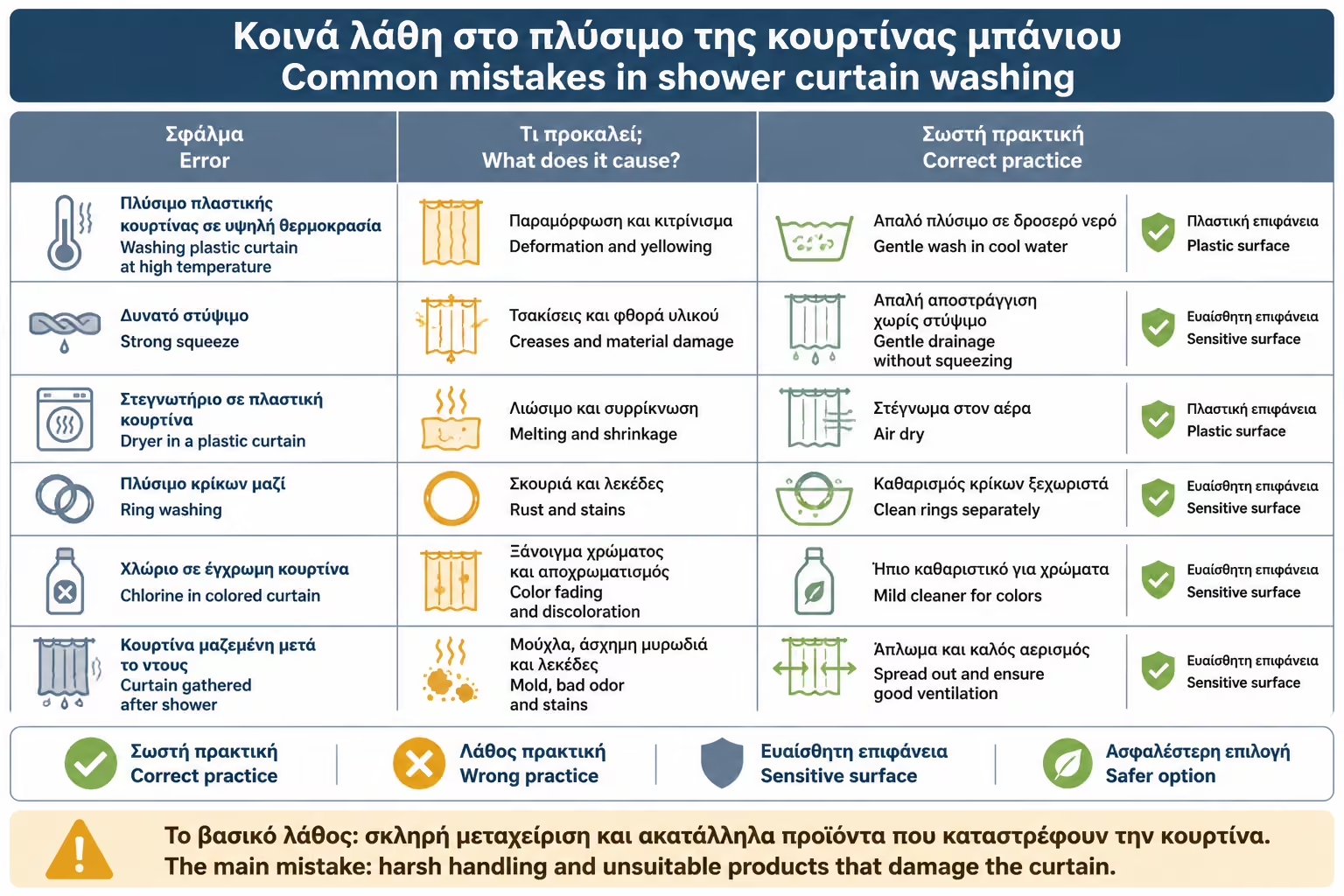
The most common mistake is high temperature. The owner thinks that "it's a bathroom, it needs hot water", but the plastic curtain can break. The second mistake is strong squeezing. The third is the use of bleach without control. The fourth is that after washing the curtain is left gathered and does not dry.
| Error | What does it cause? | Correct practice |
|---|---|---|
| Washing plastic curtain at high temperature | Wrinkling, deformation, hardening | Cold or low temperature |
| Strong squeeze | Tearing, creasing, hole wear | Mild or no wringing |
| Dryer in a plastic curtain | Deformation or melting | Natural drying |
| Washing with the rings attached | Hits in the drum, rust, damage | Remove rings before washing |
| Chlorine in colored curtain | Discoloration and wear | Trial or mild alternative |
| Curtain gathered after shower | Mold in the folds | Open to dry |
| Failure to clean bottom | Mold return | Local pretreatment |
| Replacement too late | Persistent odor and poor hygiene | Change when it no longer cleans |
A typical example is the thin plastic curtain that is placed at 60°C to "disinfect". It comes out cleaner, but wrinkled and sticky. After a few uses it collects even more dirt in the folds. The correct solution would be low temperature, gentle washing and good drying.
If the curtain gets moldy very quickly, the problem may not be the curtain itself. It may be that the bathroom is not properly ventilated, the bathtub is holding water, the curtain is too far, the ventilator is not working or there is permanent moisture in the room. In this case, changing the curtain will solve the symptom only temporarily.
Check if the area dries after the shower. If the mirrors remain cloudy for a long time, if the joints darken quickly, and if the curtain smells even when washed, the ventilation is probably not sufficient. There you need better air circulation, use of a fan or change of habits after showering.
Also check if the curtain is positioned correctly. If it stays out of the tub during use, the water will run onto the floor. If it stays in but drags a lot, it holds moisture. If the rail is too low, correct its position or choose a shorter curtain length.
The curtain is often the "indicator" of humidity in the bathroom. If it breaks down too quickly, something in the use or ventilation of the space needs improvement.
| Inquiry | Yes / No |
|---|---|
| Have you checked if the curtain is plastic, fabric or liner? | Yes / No |
| Have you read the care label before washing? | Yes / No |
| Were the rings removed before washing? | Yes / No |
| Was local pretreatment done on the bottom where there is mold? | Yes / No |
| Low temperature selected for plastic curtain? | Yes / No |
| Was strong wringing avoided? | Yes / No |
| Wasn't bleach used along with vinegar, hydrogen peroxide or other cleaners? | Yes / No |
| Was the curtain hung open to dry completely? | Yes / No |
| After every shower does the curtain stay open and not gathered? | Yes / No |
| Is the bathroom ventilated after use? | Yes / No |
| Does the bottom not permanently drag in the tub or on the floor? | Yes / No |
| If the mold does not go away or the curtain smells, will it be replaced? | Yes / No |
If the answer is "No" to the points regarding drying, ventilation or bottom, the curtain will quickly re-mould even if washed properly.
If you want to keep the shower curtain clean, don't wait until it turns black to wash it. Wash it gently and often, removing the rings first and working the bottom where the mold collects. After each shower, leave it open to dry and ventilate the bathroom. If the curtain smells even after washing, or has deep mold that won't go away, the right solution isn't more bleach; it's replacement and improved ventilation.
The shower curtain is a simple accessory, but it greatly affects the image and hygiene of the bathroom. If it is left wet, collected and full of soaps, it will quickly develop mold and smell. If it is washed properly, dried well and the area is ventilated, it can be kept clean for much longer.
The plastic curtain needs low temperature, mild program and natural drying. Fabric usually holds up better in the washing machine, but still needs proper care. The bottom should be cleaned locally, because that's where the biggest problem starts. Chlorine and strong products are used only with great care and never in combination with vinegar, oxygen or other cleaners.
If the curtain no longer cleans, has deep mold, smells or is worn, replacement is the most correct and hygienic option. The most important thing, however, is to correct the cause that spoils it: poor ventilation, permanent humidity, the wrong length or the daily habit of being bundled up wet. So the new curtain will not quickly repeat the same problem.
Return to category.
Go to categoryReturn to the central guide.
Go to guide