
Bathroom DIY, Maintenance & Styling
Return to category.
Go to categoryMarble and natural stone give the bathroom a sense of luxury that is hard to replace. A marble countertop, wall paneling, natural stone flooring or a stone-textured shower can make the space look more "architectural", more timeless and more expensive. But this beauty comes at a price: natural stone cannot be cleaned like ordinary tile.
The biggest mistake is that many treat marble as a ceramic tile. They see salts, stains or soaps and use vinegar, lemon, anti-salt, strong bathroom cleaners or abrasive powders. On a ceramic surface these may work. On marble, however, they can leave a permanent dullness. The problem is not just that it got "dirty". It is that the surface has been chemically altered.
Marble and many natural stones are limestone materials. This means they react to acids. Vinegar, lemon, citric acid and many descalers can literally "eat away" the surface, creating matte marks, white spots or a rough texture. This wear often does not go away with simple cleaning, because it is not a residue on the stone. It is a change in the surface itself.
In the bathroom, the problem becomes even more intense, because the stone comes into contact with water, soaps, toothpaste, cosmetics, salts, hair products and cleaners. A marble counter around the sink can be marked by a few drops of vinegar or by a cleaning product that was sprayed on the faucet and ran onto the base. A natural stone floor can dull from repeated mopping with an inappropriate cleaner.
Proper care of marble and natural stone is based on three principles: neutral pH, gentle mechanical action and immediate drying. No need for "powerful" cleaning. Needs proper cleaning. In this guide we'll look at which cleaners to avoid, what neutral pH means, how to clean stone countertops, floors and showers, how to protect the gloss and when it needs professional maintenance or polishing.
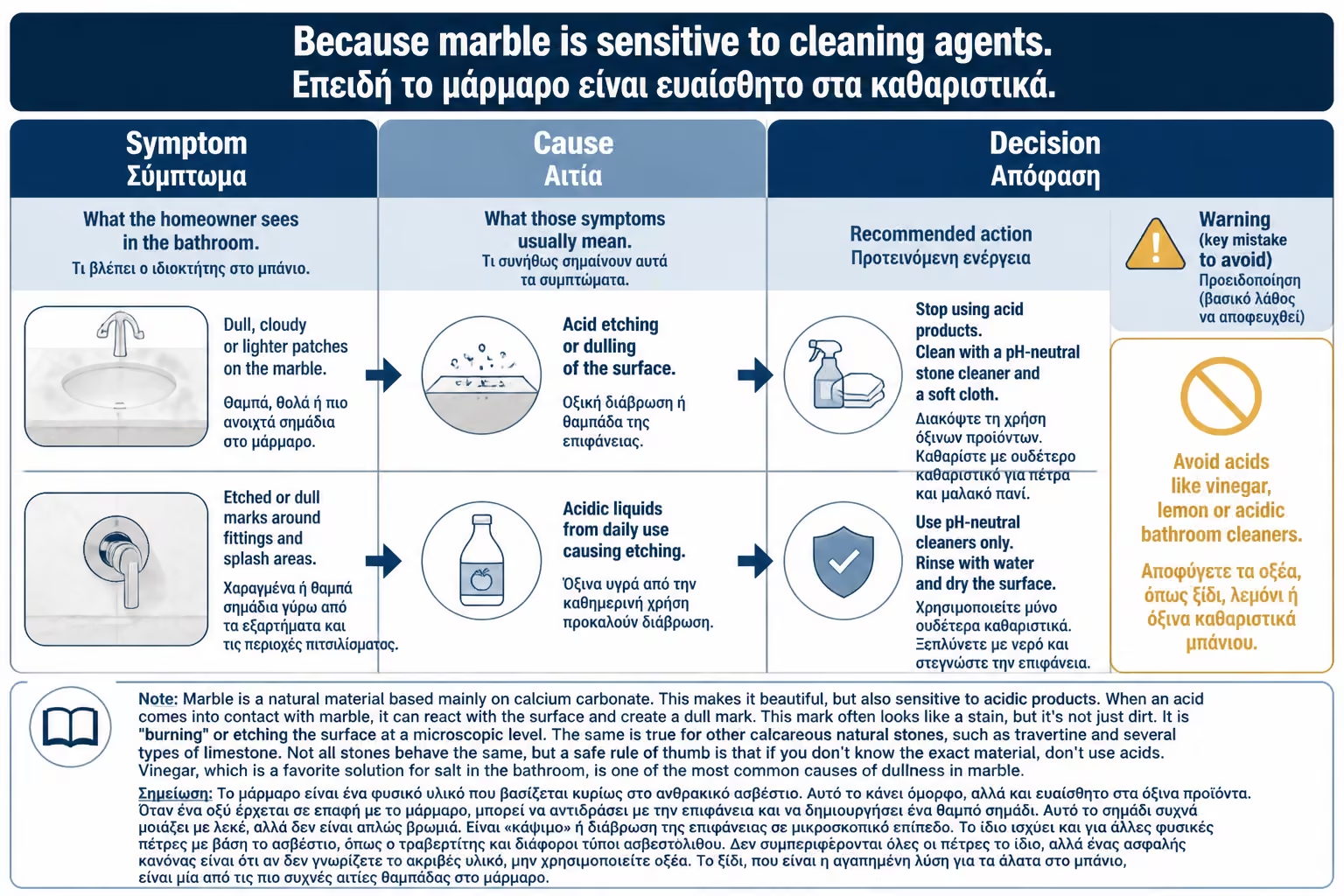
Marble is a natural material based mainly on calcium carbonate. This makes it beautiful, but also sensitive to acidic products. When an acid comes into contact with marble, it can react with the surface and create a dull mark. This mark often looks like a stain, but it's not just dirt. It is "burning" or etching the surface at a microscopic level.
The same is true for other calcareous natural stones, such as travertine and several types of limestone. Not all stones behave the same, but a safe rule of thumb is that if you don't know the exact material, don't use acids. Vinegar, which is a favorite solution for salt in the bathroom, is one of the most common causes of dullness in marble.
Sensitivity is not just about acids. Abrasive cleaners can scratch or dull the surface, especially if the marble is polished. Highly alkaline products, strong degreasers and chlorinated cleaners can also affect protective materials or sealants. The problem may not be apparent at first use, but with repetition the gloss diminishes.
A prime example is the marble countertop around the sink. The owner sprays anti-salt on the battery, the product runs on the base and stays for a few minutes. After rinsing, the scale is gone, but the marble around the battery has become a dull ring. This is not cleaner residue. It is wear and tear of the stone.
The most dangerous cleaners for marble and limestone stones are acids. These include vinegar, lemon, citric acid, many salt removers, cigar products, cement cleaners, some bathroom cleaners with strong anti-salt action and some natural DIY mixes that are considered "innocent".
The problem with these products is that they can remove scale, but at the same time attack the stone itself. Because marble contains calcareous elements, the acid does not always separate the deposit from the surface. So, along with the white crust, it can also remove part of the polished surface.
Abrasive cleaning powders, creams with grains, hard sponges, wire sponges and metal scrapers are also dangerous. These can create micro scratches. On polished marble, micro-scratches appear as a blur when light hits them. In matte or honed stone, they can create an uneven texture.
Care should also be taken with bleach. It may not "eat" marble in the same way as acid, but it is not ideal for frequent use on natural stone. It can affect sealants, joints, metal parts and leave dull or uneven areas if used frequently and without a good rinse.
| Cleaner / Material | Because it is avoided in marble and natural stone |
|---|---|
| Vinegar | Acidic, can dull or "eat" the surface |
| Lemon / citric acid | Acidic action, risk of chemical etching |
| Strong anti-salts | Often acidic, dangerous for limestone stones |
| Citric / cement cleaners | Very strong for natural stone |
| Abrasive powders | Minor scratches and loss of gloss |
| Hard sponges / wire | Mechanical wear |
| Chlorine as a frequent routine | Possible deterioration of sealants and surrounding materials |
| Ammonia or highly alkaline products | They can affect shields and gloss |
If you're unsure about a product, don't try it in an obvious spot. On marble, the wrong cleaner can leave a mark in minutes.
When we say that marble needs a neutral pH, we mean a cleaner that is neither acidic nor strongly alkaline. The neutral pH is roughly close to 7. Such products clean gently without reacting aggressively with the stone or its protectants. It is the safest choice for routine maintenance.
pH neutral cleansers are not necessarily "weak". They are designed for sensitive surfaces. They remove everyday dirt, dust, light soaps and residue without affecting the shine. For heavy scale or old stains they may not look as impressive, but this is better than damaging the surface.
In practice, we look for a product that states that it is suitable for marble, natural stone, granite or sensitive surfaces and that it is pH neutral. It is not enough that it says "for bathing" or "for general use". Many general bathroom cleaners are formulated for salts and can be acidic.
For daily or weekly cleaning, a neutral detergent and a soft cloth are usually sufficient. If the stone is cleaned often, you don't have to deal with heavy deposits. Proper maintenance of marble is more a matter of routine and less of a matter of "strong" chemistry.
The marble sink counter is one of the most vulnerable surfaces, because it receives daily water, toothpaste, soap, cosmetics, hair products and cleaning products that may accidentally fall. Daily care should be simple and quick: wipe water, remove residues and dry.
After using the sink, especially if there are drops around the faucet, wipe the surface with a soft cloth. Water must not pool around the base of the battery, as this is where salts form. In marble, however, we cannot remove them afterwards with a strong anti-salt. So prevention is even more important.
For regular cleaning, use neutral natural stone cleaner and microfiber cloth. Spray on the cloth or apply controlled, not uncontrolled on batteries and compounds. Clean and dry. Do not let the product dry on its own, as it may leave a film.
Be careful with toothpastes, perfumes, hair dyes, aftershaves and products with acids, such as some facial cosmetics. If they fall on the marble, wipe up immediately. Small drops of cosmetics can leave a stain or dullness, especially if left overnight.
The marble or natural stone floor in the bathroom needs gentle mopping and immediate removal of stagnant water. The common mistake is to use the same floor cleaner that is used throughout the house or a strong bathroom cleaner. If the product is not suitable for natural stone, it may dull the floor gradually.
Before mopping, remove dust, hair and small particles. These can act as abrasives when pushed by the mop. Use clean water and a small amount of neutral detergent. Too much product leaves a film, which makes the stone appear dull and more prone to dirt.
The mop must be well drained. We do not flood the marble with water. Natural stone can absorb moisture, especially if it is not properly sealed. On bathroom floors, standing water in the corners and around the sink or tub creates stains, salts and black spots on the joints.
After mopping, if the floor remains very wet, wipe with a dry mop or cloth. This is especially useful on polished marble, where water marks are easily seen.
The natural stone inside the shower is beautiful but demanding. Accepts daily water, soaps, salts, shampoo and moisture. If it is not cleaned and dried properly, it can become dull, dirty in the pores, black in the joints or acquire white deposits. And since we cannot use classic anti-salts, maintenance must be more frequent.
After showering, rinse surfaces with clean water to remove soaps and shower gels. If practical, use a squeegee or soft cloth to remove much of the water. Good ventilation is essential. A stone shower that stays wet for hours will get dirty much faster.
For weekly cleaning, use only product suitable for natural stone and neutral pH. Do not use vinegar, anti-salt sprays for cabins, acid joint cleaners or bleach as a routine. If strong salts are present, a special product safe for stone or technical advice is needed.
Waterproofing and sealing the stone is also important. If the stone is porous and unprotected, it will absorb water and debris. In such applications, there must be proper sealant and regular renewal depending on the material and use.
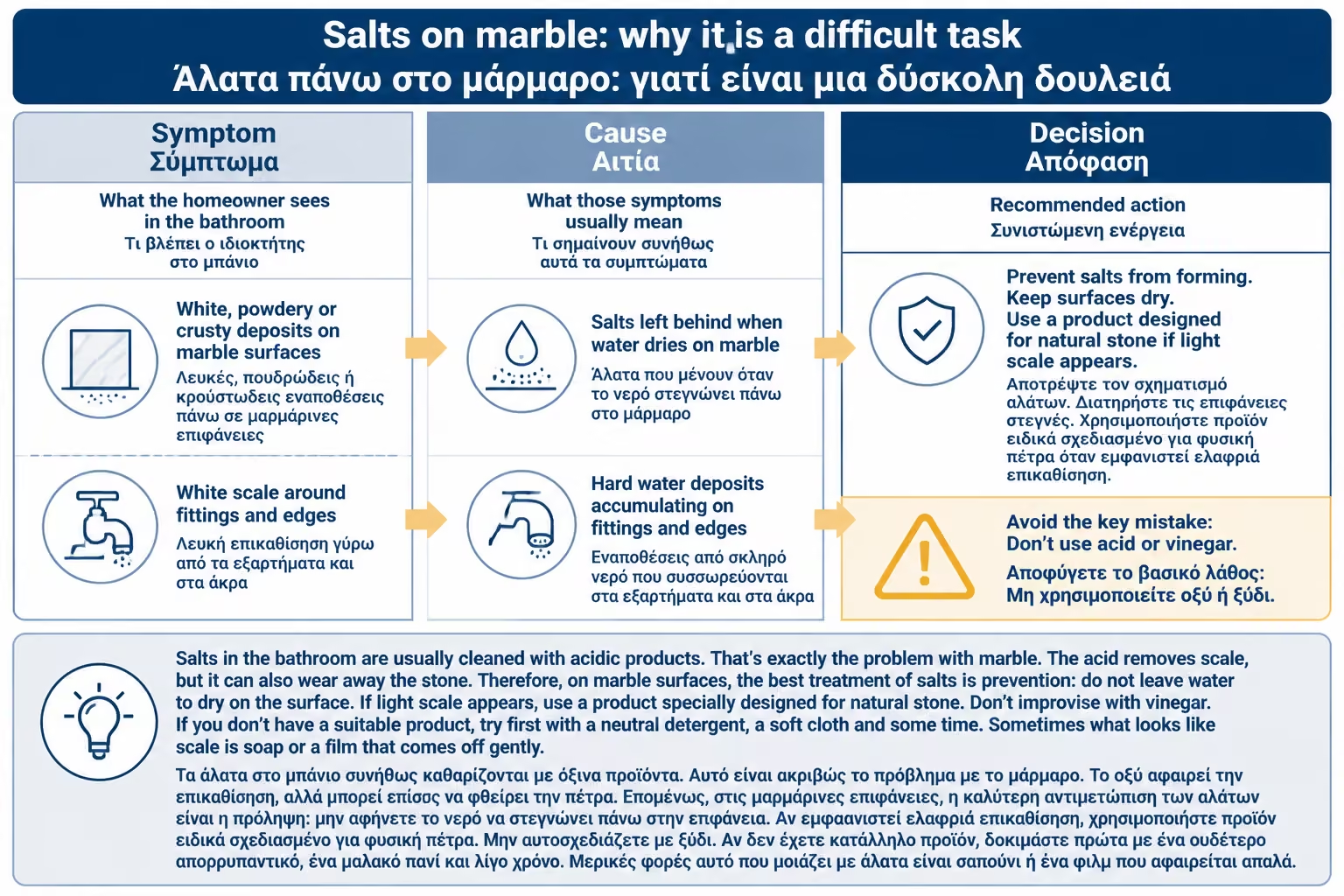
Salts in the bathroom are usually cleaned with acidic products. That's exactly the problem with marble. The acid removes scale, but it can also wear away the stone. Therefore, on marble surfaces, the best treatment of salts is prevention: do not leave water to dry on the surface.
If light scale appears, use a product specially designed for natural stone. Don't improvise with vinegar. If you don't have a suitable product, try first with a neutral detergent, a soft cloth and some time. Sometimes what looks like scale is soap or a film that comes off gently.
On stubborn white crusts, especially around faucets or on the bottom of the shower, do not scrub with a hard sponge. You may peel off the crust and leave a dull mark. Better to ask for a product or instruction for that particular material. Some marble, some granite, some travertine, some slate.
An important point: many times the "salt" that appears on the stone is actually efflorescence, i.e. salts that rise from inside or behind the material due to moisture. This is not solved by surface cleaning. Needs moisture and cause control.
Soaps and cosmetics can leave a film or stain on natural stone. Products with body oils, creams, make-up, hair dyes or perfumes can soak into porous materials. If the stone is not properly sealed, stains become more difficult.
The first move is a direct sweep. The faster a product is removed, the less likely it is to stain. Use a fresh cloth with a neutral detergent. Do not add acid or abrasive because the stain appears stubborn. You may deal second damage.
For greasy stains on natural stone, a special cleaner or poultice, i.e. a special stain-absorbing paste, may be needed. This is no simple home recipe with random ingredients. It must match the type of stone and the type of stain. On expensive surfaces, it is better to ask for technical advice.
On marble counters, it is advisable not to leave cosmetics and bottles directly on the stone. Use a tray or base that is easy to clean, but be careful not to trap moisture underneath.
Natural stone sealing is a protective application that reduces the absorption of liquids and stains. It does not make the stone indestructible, nor does it fully protect it from acid cleaners. A sealed marble can again be dulled by vinegar or lemon. Sealing mainly helps with absorption, not acid resistance.
Whether sealing is needed depends on the material, finish and use. Some marbles and stones are more porous than others. A polished marble may absorb less than a honed or rough finish. A stone in the shower needs more protection than a decorative counter that gets a little wet.
Sealing must be applied to a clean and dry surface. If applied over moisture, dirt or stains, it can lock in the problem. Also, a product suitable for the specific type of stone must be used. Not all sealants are the same.
Protection needs renewal. If the water begins to absorb quickly and darken the stone, the sealer may have weakened. A simple test is to leave a few drops of water in an inconspicuous place and see if they are absorbed quickly. If the stone darkens immediately, it needs evaluation.
Polished marble has a high gloss and reflects light. It looks luxurious, but every blur is immediately visible. It needs very careful cleaning, soft cloths and avoiding abrasives. If the gloss is lost in one spot, the difference is clearly visible.
The honed finish is more matte and less reflective. It hides small blemishes a bit better, but can be more absorbent and smudge more easily if unprotected. It does not mean that acids are allowed. It's just that the chemical blur may look different.
Hard or non-slip finishes have a texture. They are practical on floors or showers, but they hold more soap, salt and dirt in small irregularities. They need more frequent gentle cleaning with a suitable soft brush, not harsh scrubbing.
Care must be adapted to the finish. A product or tool that leaves little mark on honed stone may show a lot on polished marble. That is why testing in an inconspicuous spot is always necessary.
Many people use the word "marble" for any natural or stone surface. This can lead to incorrect cleaning. Granite, for example, is usually more acid-resistant than marble, but can have a sealer that is affected by the wrong cleaners. Travertine is calcareous and sensitive to acids. Slate has a different behavior. Artificial quartz surfaces have resins and are not always cleaned like natural stone.
If you don't know exactly what material you have, treat it like a sensitive stone. Use a neutral pH and avoid acidic, abrasive and highly alkaline products. The conservative option is safer.
In bathrooms, there are often combinations: marble countertop, ceramic sink, chrome or black faucet, natural stone on the wall. A cleaner suitable for one material may damage another. That's why spraying "all over the area" is bad practice. We work purposefully.
If the material is expensive or you are not sure, ask the supplier or craftsman for maintenance instructions. The right information at the beginning can save permanent damage.
If vinegar, lemon, anti-salt or acid cleaner gets on the marble, the first step is to immediately rinse with clean water and wipe. Don't wait. Do not rub vigorously. Remove the product as soon as possible. The less that is left, the less chance of wear and tear.
If a dull mark appears after wiping, do not try to fix it with another cleaner. Do not put soda, powder, metal polish or more acid. The mark may be chemical etching. Restoration usually requires special polishing or professional intervention, depending on the depth.
If the mark is small and in a less obvious spot, there are marble refinishing products for mild tarnishing, but they require attention and are not for all finishes. On polished marble, a faulty DIY attempt can create more unevenness.
On expensive or large surfaces, it is better to consult a professional. Marble is often restored by proper polishing, but not by haphazard cleaning.
Joints around natural stone require different attention than ceramic tile joints. Many joint cleaners are acidic or abrasive. If you use them around marble, they may clean the joint but dull the stone next to it. This is a very common mistake in showers and floors.
For cleaning joints in natural stone, use a product suitable for stone and a soft brush. Do not use vinegar, strong anti-salts or hard brushes without testing. If the joints have mold, the problem may be related to moisture and not just surface dirt.
If the grout is loose, missing or cracked, cleaning is not enough. Needs repair. In natural stone, the right choice of grout and sealant is important, because the materials around the stone must cooperate with moisture and absorbency.
Also be careful of silicones around marble counters or showers. If they turn black, it doesn't mean you have to put strong mold repellants all over them. The product may affect the stone. Often the correct solution is removal and replacement of silicone with careful protection of the stone.
The gloss of the marble is maintained by gentle cleaning, protection from acids and avoiding micro-scratches. Not maintained by frequent polishing with random products. If the surface is polished, any wrong cleaner or hard cloth can create unevenness.
Use soft microfiber cloths, neutral detergent and clean water. Do not allow water to dry. Do not drag objects onto the counter. Put trays under cosmetics and bottles, but lift them up regularly to clean and dry underneath.
Avoid general purpose "polishes". Many are not for marble and can leave a film or make the surface slippery. For floors especially, slipperiness is a safety issue. If actual polishing is required, this is done with appropriate diamond pads or a professional process, not a spray.
The gloss is gradually lost if the marble is cleaned incorrectly. If the dullness has already appeared to a large extent, the solution is an evaluation for professional polishing and then proper maintenance so that it does not disappear again quickly.
Natural cleaners are not always safe for natural stone. Vinegar and lemon are natural, but they are acidic. They can dull the marble very quickly. Baking soda is also natural, but can act as an abrasive if rubbed on a polished surface. Essential oils can leave greasy marks on porous materials.
This does not mean that every natural solution is bad. It means it has to fit the hardware. For marble, the safest "natural" approach is clean water, a soft cloth and immediate drying, or a neutral stone-specific cleaner. No vinegar. No lemon. No harsh scrubbing soda.
Just because a cleaner doesn't have a "toxic smell" doesn't mean it doesn't have a chemical effect. Marble reacts to pH, not user intent. A drop of lemon from a natural cleaner can leave a mark just like a commercial acid.
In marble bathrooms, it is a good idea to have a separate stone cleaner and not to use general DIY recipes throughout the space.
Proper daily maintenance of marble and natural stone is not particularly expensive. A good neutral cleanser and a few microfiber cloths are enough for the routine. Costs go up when sealing, stain removal, polishing or professional restoration from tarnishing and chemical marks is needed.

| Material / Labor | Indicative cost picture 2026 |
|---|---|
| Neutral cleaner for natural stone | around €6–18 |
| Microfiber cloths | around €3–12 |
| Special stain remover for stone | around 10–30€+ |
| DIY natural stone sealer | around 15–40€+ |
| Professional benchtop or small surface sealing | case by case |
| Professional marble polishing | usually with a price per sq.m. or per task |
| Restoration of local acid dullness | as the case may be, depending on depth and finish |
| Replacement of worn marble block | significantly higher cost, depending on material and labor |
Prices are indicative and depend on area, material, surface, whether VAT is included, access, quality of stone and type of wear. Prevention is almost always much cheaper than remediation. A bottle of the wrong de-salter can create damage that costs many times more than the right stone cleaner.
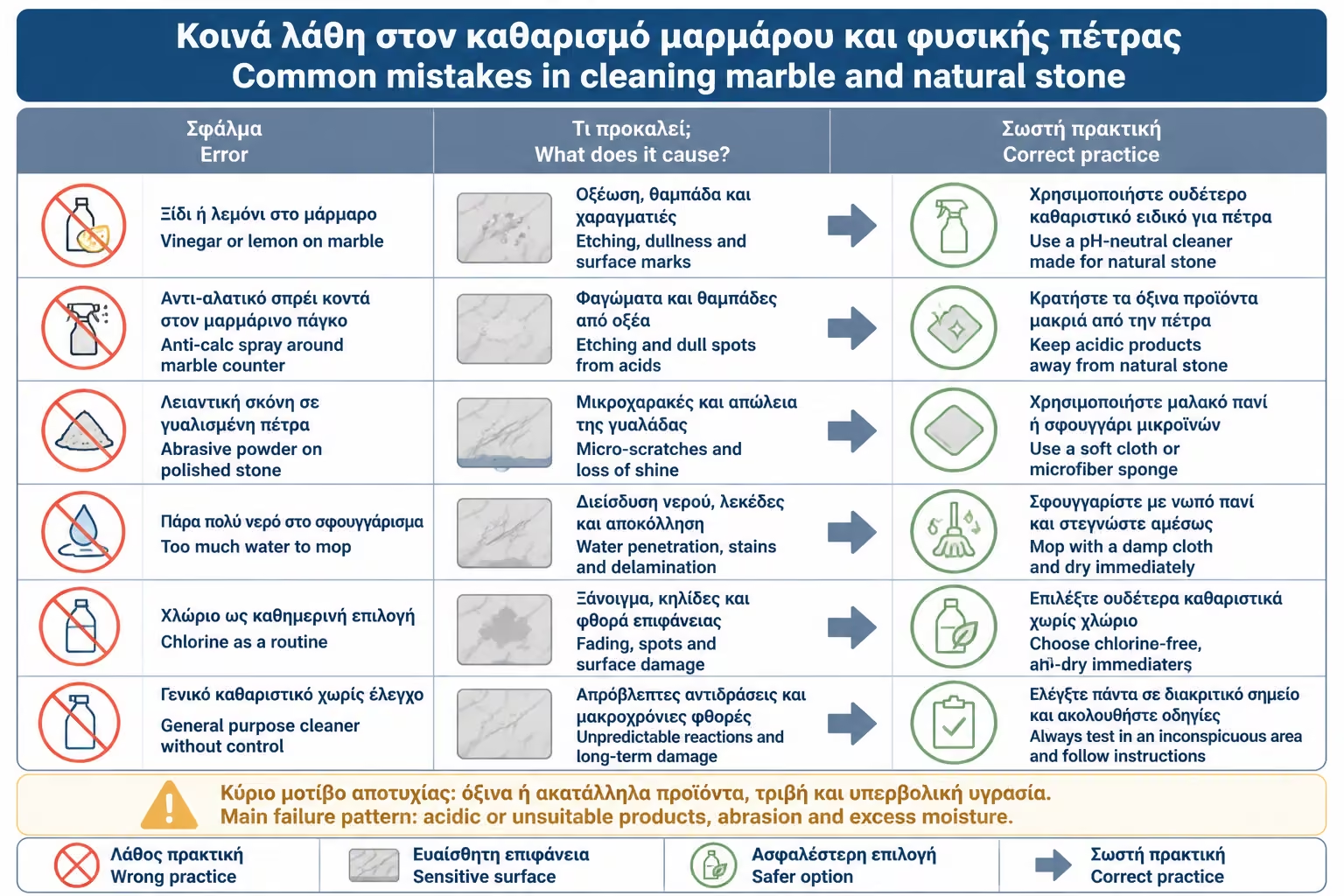
Mistakes are usually made because the owner is trying to solve a real problem with the wrong medium. He sees salts and puts vinegar. He sees blackness in the joints and puts on a strong cleaner. He sees dimly and rubs with dust. In marble, these movements can create permanent wear.
| Error | What does it cause? | Correct practice |
|---|---|---|
| Vinegar or lemon on marble | Chemical dulling / etching | Neutral pH cleaner |
| Anti-calc spray around marble counter | Dull rings and stains | Targeted battery cleaning with protection |
| Abrasive powder on polished stone | Small scratches | Soft cloth and special product |
| Too much water to mop | Absorption, stains, moisture in joints | Well-drained mop |
| Chlorine as a routine | Wear of sealants and surrounding materials | Gentle cleaning and targeted disinfection only where permitted |
| General purpose cleaner without control | Unknown pH and possible deterioration | Product specific for natural stone |
| Careless drying | Salts and prints | Instant wipe of water |
| DIY polishing with random products | Uneven gloss | Professional assessment |
A characteristic incident is the marble bench with white prints around the battery. The owner thinks it's salt and puts more anti-salt. The blur grows. In fact, the first prints were already chemically worn from a previous acid product. The correct solution was not more cleaning, but restoration of gloss.
A professional is needed when there is acid dulling, deep staining, permanent loss of gloss, moisture absorption, scale that appears to be coming out, worn joints around stone, or the need to seal a large area. These are not always solved with household products.
A professional is also needed when you do not know the type of stone. The correct cleaning and polishing method varies by material and finish. A wrong product or polishing disc can make the surface uneven. On expensive surfaces, non-expert testing can cost more than initial maintenance.
If the stone is in a shower and is blackening or absorbing water, the waterproofing should be checked, not just the surface. There may be a problem with joints, silicone, sealant or a bad slope. Natural stone in a wet zone is not just a decorative material; it is part of a waterproofing and maintenance system.
If you have already created a haze with vinegar or anti-salt, do not continue experimenting. Take a picture of the spot, stop using inappropriate products and ask for an assessment. The less you disturb the wear and tear, the easier the restoration can be.
| Inquiry | Yes / No |
|---|---|
| Do you know exactly what stone you have: marble, granite, travertine, limestone or another material? | Yes / No |
| Are you using a pH neutral cleaner suitable for natural stone? | Yes / No |
| Do you avoid vinegar, lemon, citric acid and strong anti-calc? | Yes / No |
| Do you avoid abrasive powders, wires and hard sponges? | Yes / No |
| Do you immediately wipe water around batteries and sink? | Yes / No |
| Do you protect the stone when cleaning batteries or glass with other products? | Yes / No |
| Have you checked if the stone needs sealing? | Yes / No |
| Don't leave cosmetics, perfumes or dyes on the stone? | Yes / No |
| Do you mop with a well-drained mop and not with too much water? | Yes / No |
| In a natural stone shower, does the area dry out after use? | Yes / No |
| If acid blur occurs, do you avoid further experiments? | Yes / No |
If the answer is “No” to the points regarding acids, abrasives or neutral pH, the surface is at risk. On marble, the wrong product can leave a mark faster than you can wash it off.
Marble doesn't spoil because it "wasn't cleaned enough". It usually breaks down because it was cleaned with the wrong product. Vinegar, lemon and strong anti-salts are among the most common reasons we see dull rings around faucets and sinks. For natural stone, safe maintenance is neutral pH, soft cloth, little water and immediate drying. If clouding occurs, do not try a second and third cleanser. Stop and ask for a proper assessment, because it is often not a stain but wear to the surface itself.
Marble and natural stone can make a bathroom look stunning, but they need different care than simple tiles. Acidic cleaners, anti-salts, vinegar, lemon, abrasive powders and hard sponges can cause permanent dulling, scratching and loss of gloss. The damage is often not surface dirt, but chemical or mechanical alteration of the stone.
Proper care is based on neutral pH products, soft cloths, controlled humidity and immediate drying. At the counters, we wipe off water and cosmetics immediately. On the floors, mop with a well-drained mop. In natural stone showers, prevention is even more important, because salts and soaps cannot be removed with classic acid products without risk.
If the stone is already dull, has stains that won't go away, or appears to be absorbing water, it needs an evaluation. Sealing, special cleaner, professional polishing or restoration may be required. Natural stone is not difficult when you take care of it properly. It becomes difficult when treated like a simple ceramic tile.
Return to category.
Go to categoryReturn to the central guide.
Go to guide