
Bathroom DIY, Maintenance & Styling
Return to category.
Go to categoryThe floor drain is one of the most neglected parts of a bathroom. We step on it every day, we see it next to the shower or in the center of the floor, but we rarely deal with it until a problem arises. And when it occurs, it's usually inconspicuous: the water is slow to drain, hair collects around the grill, there's a heavy sewer smell, or, in the worst case scenario, the bathroom floods after a shower.
A bad smell from the floor drain does not always mean that there is a serious damage to the drain. Very often it is due to something simple: the siphon has become clogged with hair, soaps and organic residues, or the odor trap has dried up because the bathroom is not used often. In holiday homes, second bathrooms, guest WCs or apartments that are kept closed, this is extremely common. The water that normally blocks odors evaporates and odors from the sewer network find a free passage to the space.
On the other hand, a clogged floor drain should not be taken lightly. If the water doesn't drain properly, if dirty water comes up from the grill, or if the odor returns immediately after cleaning, there may be a deeper problem: a blockage in the pipe, incorrect slopes, a broken odor trap, a bad connection or a problem with the drain vent. It is not enough to throw a little perfume or bleach there.
Proper cleaning of the floor drain is a task that the owner can do in many simple cases. No need for toxic chemicals or excessive force. The grill needs to be properly removed, hair and debris removed, the trap cleaned, the spot flushed and the water level restored. The important thing is to understand the logic of the siphon, not just to "unclog" it hastily.
In this guide, we will look at how the floor drain works, why it smells, how to clean it step by step, what tools are needed, what to avoid, when a drain snake or plunger helps, and when a plumber is needed. We will also see why the simple habit of adding a little water to unused bathrooms can save you from a lot of unpleasant odors.
The floor drain is the water collection point on the bathroom floor. It can receive water from the shower, floor cleaning, possible overflows, or general runoff, depending on the installation. In many older Greek bathrooms, the floor drain is located in the center or near the shower area and acts as the main drainage point of the room.
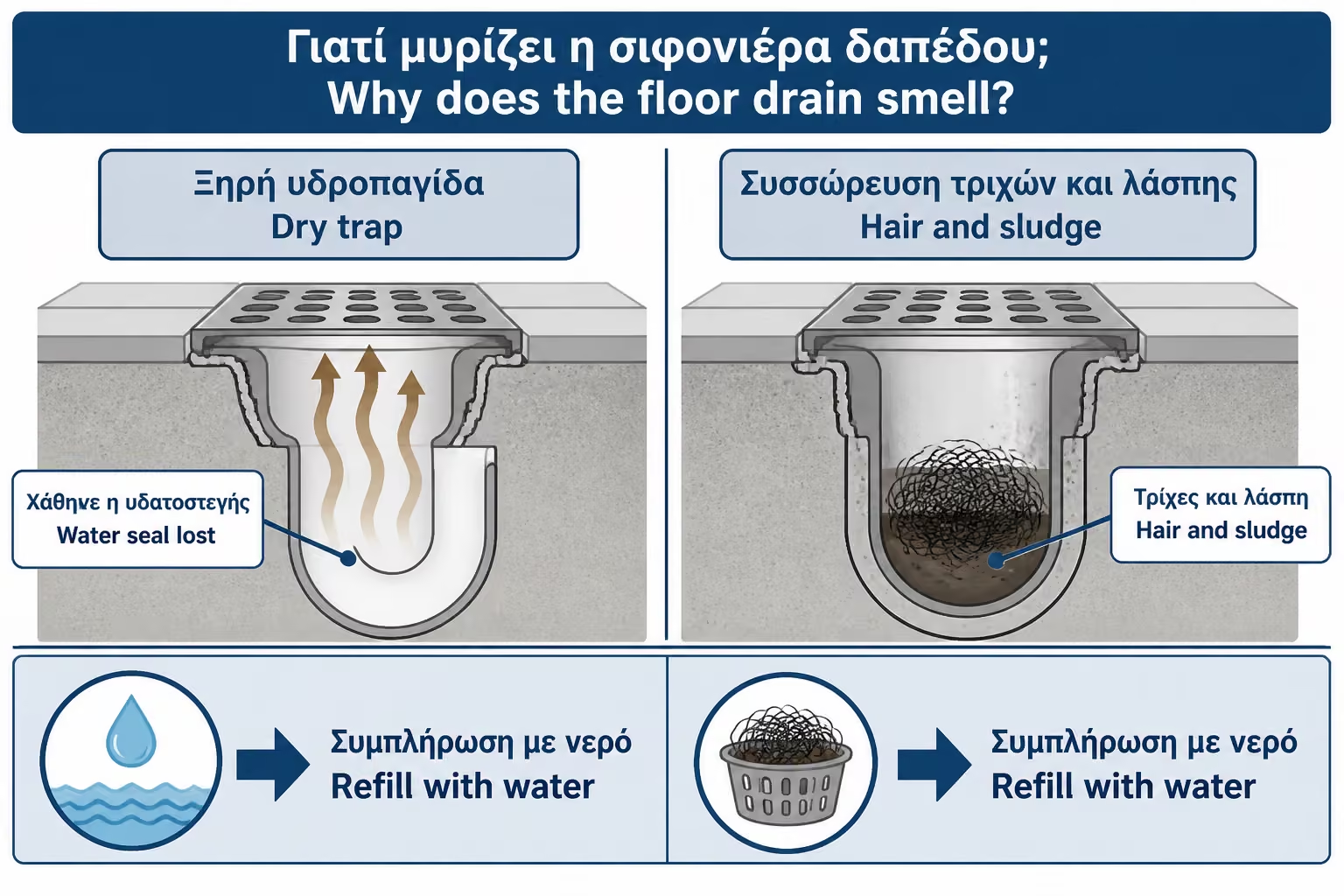
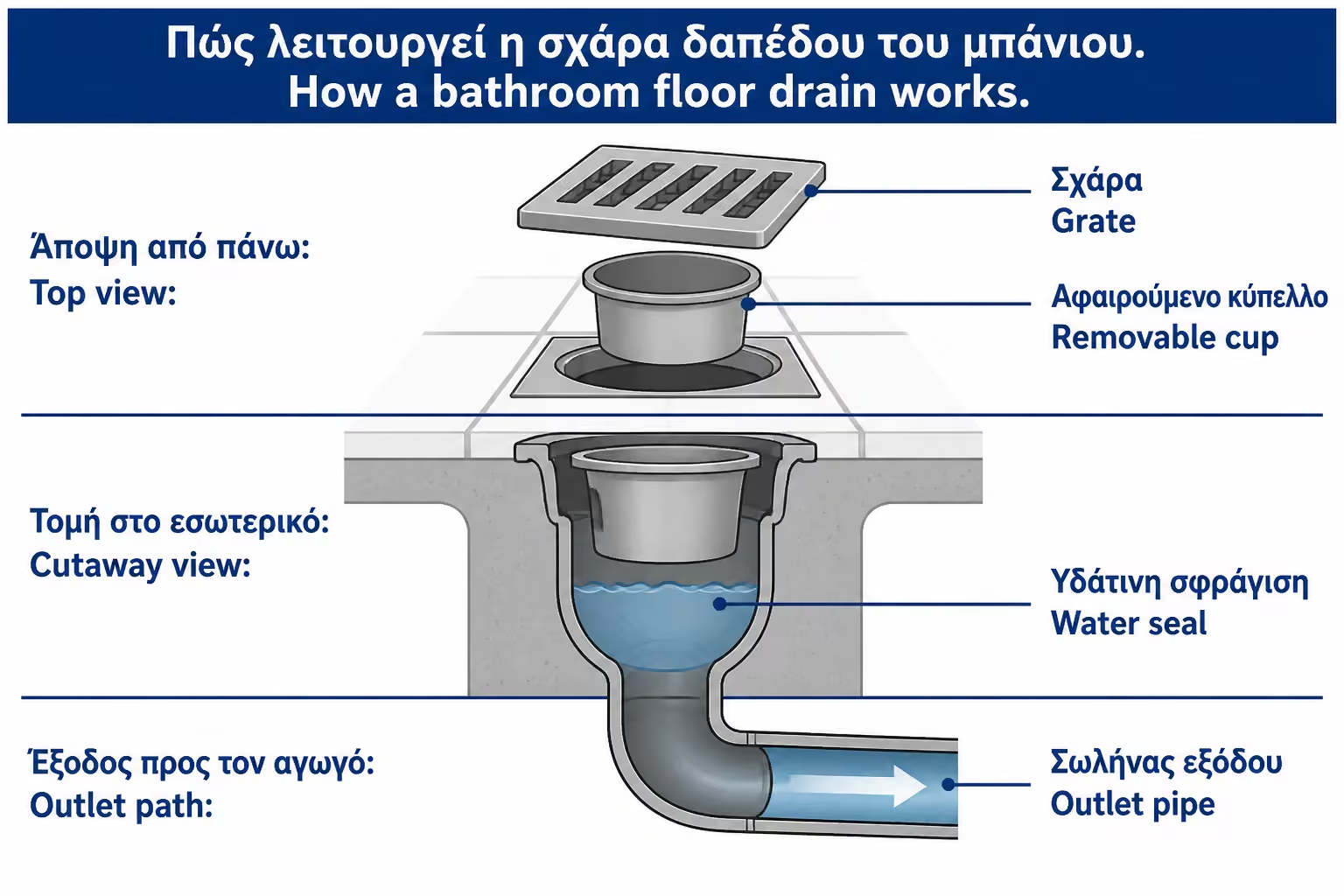
Its main function is not only to remove water. It also prevents sewer odors from rising into the bathroom. This is done through the odor trap, i.e. a small amount of water that remains inside the siphon and acts as a liquid "barrier". Odors from the sewer network cannot pass easily while this trap is full.
But if the water in the trap evaporates, if the siphon is not at the correct level, if an internal component is broken or if there is a plug that holds dirty residue, then the siphon becomes a source of bad smell. The owner can clean the whole bathroom, ventilate, add fragrances and still the smell returns, because the cause is under the grate.
A practical example is the second bathroom of a house that is used only when there are guests. For months no water falls into the siphon. The odor trap dries up, and suddenly the bathroom smells like a drain with no visible leak or clog. In this case, the solution may just be a good cleaning and water refill, not a major repair.
Bad odor can have different causes. The simplest is a dry siphon. If the water in the odor trap evaporates, smells pass through freely. This happens mainly in bathrooms that sit unused, in holiday homes, in closed apartments, in auxiliary WCs, or in bathrooms where the floor drain rarely receives water.
The second cause is the build-up of organic residue. Hair, soap, shower gel, skin residue, dust, cleaners, limescale, and general dirt collect under the grate and on the siphon walls. Over time, that material starts to smell, especially if it stays wet and never rinses away properly. The odor is not necessarily coming from deep in the drain; it can come from the dirty floor drain body itself.
The third cause is partial clogging. When water doesn't circulate properly, debris stagnates. The siphon may still have water in it, but that water is full of organic debris and is not replenished. In such cases, the odor is often associated with slow drainage, gurgling, or water that temporarily rises after showering.
There are also more technical causes: poor installation, incorrect slopes, absence or damage of an odor trap, a problem with the drain ventilation or a connection that allows suction of trap water. These cannot be solved by simple cleaning and require a professional diagnosis.
If the bad smell appears after a period of disuse and decreases when you pour water into the siphon, we are probably talking about a dry odor trap. If the smell is accompanied by hair around the grill, slow drainage or slime under the lid, the first step is cleaning. These are the simple and common cases.
But if water rises from the floor drain when you use the sink, bathtub, or washing machine, the problem may lie deeper in the drainage system. If there are gurgling sounds from more than one point, if the smell stays strong even with a full odor trap, or if the problem returns a day or two after cleaning, a closer investigation is needed.
An especially important sign is backflow. If you see dirty water coming out of the floor drain, especially when another plumbing point is being used, this is not just "a few hairs". There may be a partial or complete blockage in the drain line. Aggressive use of a drain snake by an inexperienced user may not solve the problem and can create damage.
The right approach is to start with the basics: clean the grate, remove debris, rinse the drain, and top up the water seal. If those steps solve the problem and restore the flow, that is enough. If not, the floor drain is pointing to something deeper.
No special equipment is needed for basic floor-drain cleaning. But you do need tools that protect both you and the bathroom materials. The grate can be stainless steel, plastic, or metal with screws. Inside, there may be a plastic cup, bell, or other odor-trap component. If you use the wrong tool, you can scratch tile, bend the grate, or break a plastic part.
| Tool / Material | Use |
|---|---|
| Nitrile gloves or thick cleaning gloves | Protection from dirt and germs |
| Screwdriver | Removal of screw grill, where present |
| Plastic spatula or plastic tool | Scratch-free grill lift |
| Small brush or old toothbrush | Cleaning walls and grill |
| Kitchen paper or cloth | Remove debris and dry around the site |
| Garbage bag | Removal of hair and slime |
| Bucket of hot water | Rinse after cleaning |
| Small hand drain snake | Only if the plug is deeper and with care |
| Lens | Check inside siphon |
| Mild cleanser | Cleaning without caustic action |
It is best to avoid very strong chemical sealants from the start. If they are not uncorked, they will remain in the siphon and then cleaning by hand will become dangerous. Also, on old plastic parts, gaskets or metal parts, caustic chemicals can aggravate the situation.
Before you start, ventilate the bathroom. If the smell is strong, open a window or ventilation and avoid bending over the siphon for a long time. There is no need to worry too much, but some practical attention is needed.
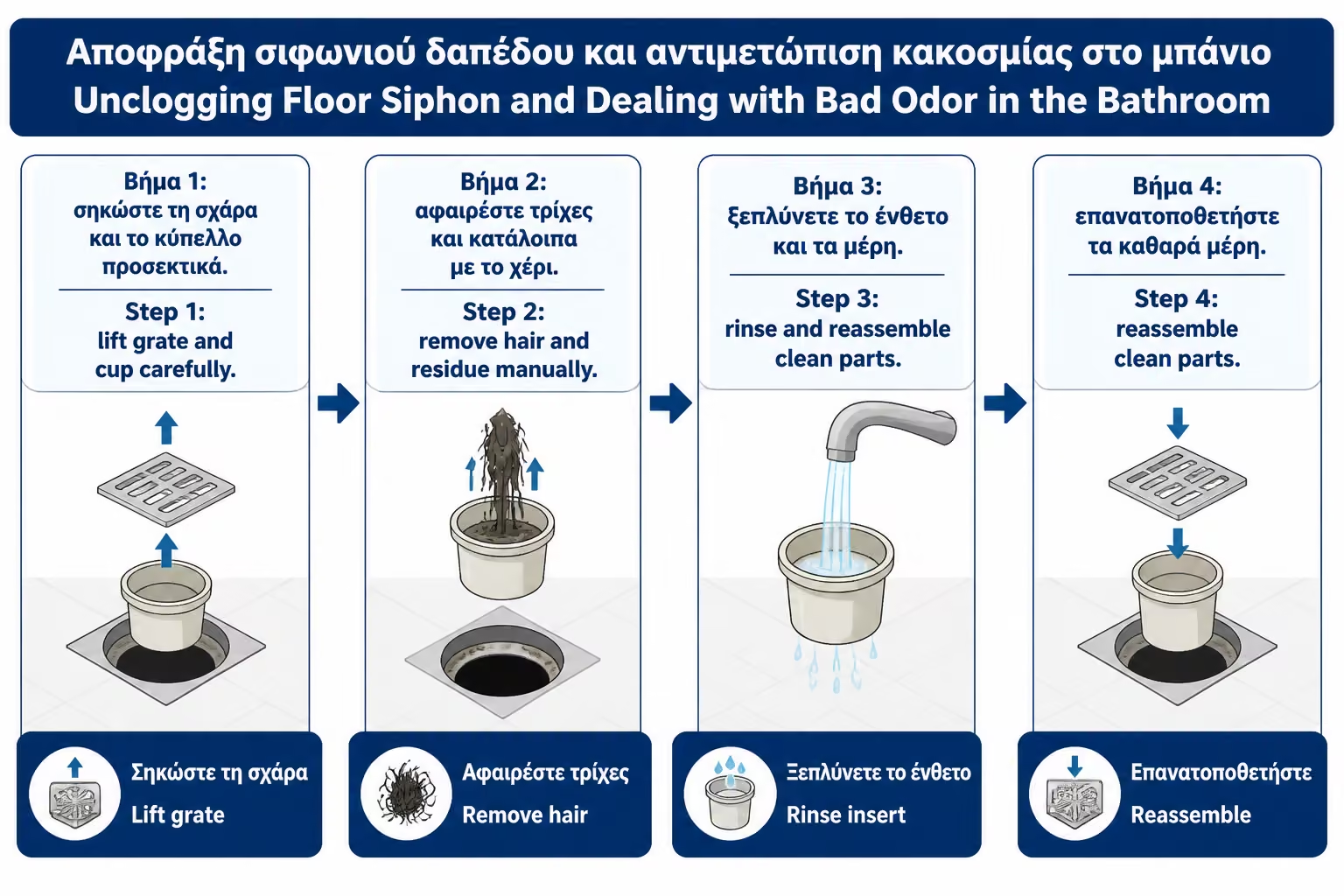
The grill is the first hurdle. In some siphons it just rises. In others it has one or two screws. In more modern constructions there may be a decorative cap that sits flush inside a frame. Do not try to force it out before you see how it holds.
If it has screws, use the correct screwdriver so you do not damage the heads. If the screws have scale or rust, work slowly. A stripped screw can quickly become an annoying little problem. If the grate is a snap-on type, try lifting it with a plastic tool from the edge. Avoid using a metal screwdriver directly on exposed tile or stainless steel, because it can leave marks.
Once the grill is removed, do not leave it on the floor with the clean side down. Put it on paper or in a bowl. Often its underside has slime, hair and salts. Clean it separately with a brush and warm water. If the grill is blackened or has scale, use a mild cleaner suitable for its material.
At this stage you will usually see the real picture. Many siphons that look clean on the outside have a layer of hair and soap under the grate. This material is often the root cause of the smell.
After the grill is removed, first remove large debris with a glove or paper towel. Do not push them further down with water. This is one of the most common mistakes. If the hair and slime are pushed deeper into the mesh, it can move the plug instead of loosening it.
Hairs usually form a mass around the siphon inlet or on internal plastic parts. Pull them slowly. A large "string"-like piece of hair, soaps and dirt may come out. It's not pleasant, but it's exactly the stuff that creates slow runoff and bad odor.
Then clean the walls with a small brush. Pay attention to the places where slime collects: under the lip of the grill, around the inner lid of the odor trap and in the corners. If there is a removable cup or inner plastic piece, carefully remove it only if it appears to be designed for cleaning. Do not pull on unfamiliar parts with force.
A practical example: in many bathrooms, the owner only cleans the grate above and considers that he has done maintenance. But the real mass is 3–5 cm below, around the odor trap. If this is not removed, the smell quickly returns.
The smell trap is the critical point. Depending on the type of siphon, there may be an internal plastic cap, cup, bell or shaped passage that holds water. This part must not be removed or misplaced without care, because odor protection depends on it.
If the inner piece comes out easily, clean it separately. Remove scale, hair and slime. Check if it is broken, distorted or missing. In some old siphons, the odor trap has been lost from previous cleaning or misplaced. Then the siphon may smell even if it is clean.
If you're not sure how it goes back in, take a picture before you remove it. Correct position is important. An inner piece that doesn't fit well can let in odors or block water flow. After cleaning, put it back in without force and make sure it clicks properly.
If the siphon does not have a visible odor trap or if only a hole to the drain is visible, attention is needed. It may be a different type of construction or a component may be missing. If the stench is strong and persistent, it's a good idea to have it checked by a plumber.
After removing debris, gradually pour warm water into the siphon. Not necessarily boiled, especially if you don't know the condition of the plastic parts. Hot water helps to remove soaps and thin slime left on the walls.
Pour water in small amounts and observe the flow. If the water drains quickly and without rising, the cleaning was probably successful. If it goes up and is slow to leave, there is still an obstacle. It may be further down the pipe or there may be material left where it is not visible from above.
You can use a mild detergent to clean the grill and the inlet, but avoid mixing different products. Do not combine bleach, acid cleaners, sealants and other chemicals. In addition to the risk of fumes, gaskets and plastic parts may be affected.
The flush should end up in clean water inside the trap. This is also key to smell. If you leave the siphon dry after cleaning, it may smell again, not because it is clogged, but because there is no water in the odor trap.
The odor trap only works when it has water. If the bathroom is left unused for weeks or months, the water evaporates. This happens more quickly in the summer, in warm apartments, in areas with underfloor heating, in well-ventilated bathrooms or in holiday homes that remain closed.
When the trap dries, there is no longer a barrier. Sewer odors rise directly into the bathroom. The owner may think there is a malfunction, when in fact the water that should be in the siphon is simply missing. The solution is to pour water into the siphon to refill the odor trap.
In bathrooms that are not used often, it is a good idea to pour a glass or small bucket of water into the faucet every now and then. The same applies to sinks, showers or siphons that do not receive water often. If the house will be closed for a long time, this small movement before you leave and when you return can prevent strong odors.
Some technicians recommend, in special cases of long disuse, a small amount of suitable liquid that reduces evaporation on the surface of the trap. But this must be done with care and with materials that do not damage the network or components. For most residences, simple regular water topping up is sufficient.
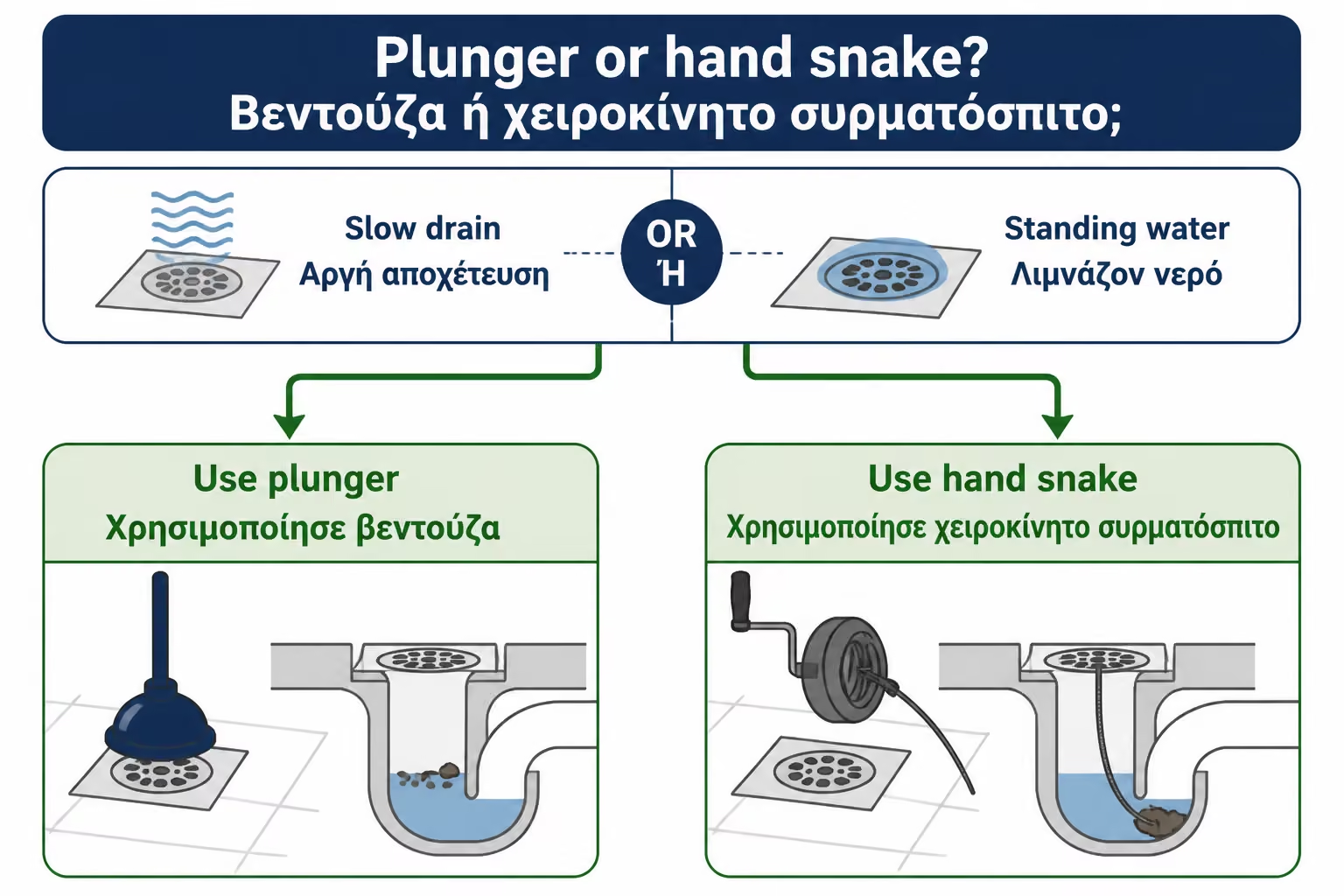
A suction cup can help when there is a partial blockage near the siphon. It is not always easy to use on the floor, because the surface around the grill may not be completely flat or not allow a good seal. But if the siphon has enough water and the suction cup is pressed correctly, it can create pressure and suction that moves the debris.
Before using a suction cup, remove the grill and visible debris. If you try to push on a mass of hair, you may just push it deeper. Add a little water to cover the suction cup rubber and use steady, not violent, movements. You want rhythm, not sudden force.
After a few passes, pour water in and see whether the flow improves. If the water drains better, continue with rinsing. If nothing changes, do not keep going forever. The blockage may be deeper and may need a drain snake or professional equipment.
Never use a suction cup if there has been a caustic chemical plug in the siphon. The pressure may throw liquid upwards and cause burns or irritation. If a chemical has entered and the problem is not solved, the work becomes more dangerous and requires more care.
Steel is used when the plug is deeper than the visible part of the siphon. It's useful, but it's not a tool to be used lightly. The floor drain has curves, internal fittings and branches. If you push hard, it can stick, push the plug into a worse place, or injure old plastics.
Before using a drain snake, remove as many internal parts as can be taken out safely and easily so you do not break them. Feed the snake in with rotation and short movements. If it meets resistance, do not assume immediately that you need to push harder. It may simply be reaching a bend in the piping. Work gently and progressively.
If the blade gets hair or slime, clean it every time. Do not place it on clean surfaces, carpets or furniture. Have a bag and paper nearby. After use, rinse the siphon thoroughly with water and check the flow.
If the snake goes very deep and the problem is still not solved, or if it sticks badly, stop there. In such cases, professional clearing with suitable equipment, or even a camera inspection, may be needed. Forcing it can make the problem worse.
The first thing to avoid is pushing hair and debris down. Whatever you can get your hands on, you scoop it up and throw it in the trash. The drain must not accept again the same material that clogged it.
The second is the excessive use of chemicals. The smell doesn't always mean a caustic caulking is needed. It can mean a dry odor trap or a dirty grill. If you frequently pour strong chemicals, you may stress the materials without solving the cause.
The third is to remove internal components and not put them back properly. Many siphons have a plastic piece that acts as part of the odor trap. If you leave it out because "water drains better", you may open the way for odors. Good flow is not enough if odor protection is lost.
The fourth is to ignore a recurring symptom. If you clean every month and the siphon smells again, something is wrong. There may be misuse, but there may also be a technical issue in the installation. Repetition is a symptom, not a normality.
If you cleaned the siphon thoroughly, poured water and the smell persists, you need to consider other causes. First see if the odor trap fills properly. Sometimes the water leaves quickly and the necessary level is not left. This could be due to a wrong part, missing internal piece or poor construction.
Second, check if the smell is actually coming from the floor drain. In bathrooms, odors can come from the basin, from the sink, from the shower spout, from ventilation, from moisture behind a piece of furniture or from mold in silicones. Temporarily cover the grill with a damp cloth or plastic wrap for a while and see if the smell subsides. If not, the source may be elsewhere.
Third, consider venting the drain. If you hear a gurgling sound from the siphon when the bathtub is emptied or the faucet is flushed, negative pressures may be created that draw water into the odor trap. This is a technical issue and cannot be resolved by cleaning.
In such cases, the plumber is called not just for "unclogging", but for diagnosis. He needs to check trap operation, connections, slopes and possibly network venting.
If you do the basic cleaning yourself, the cost is small. Gloves, a brush, mild detergent, and perhaps a small hand drain snake are inexpensive tools that can be reused. For a simple floor drain with hair and debris, the biggest "cost" is time and attention.
If a professional is needed, the price depends on the type of problem. A simple cleaning or local occlusion can be relatively inexpensive, while a deeper occlusion, emergency visit, use of equipment, or malodor investigation can raise the cost. Indicative for 2026, a simple visit for a local problem can range from around €40–80, while more demanding blockage or work with equipment can reach around €80–150 or more, depending on the case.
| Case | Indicative cost picture 2026 |
|---|---|
| DIY grill and odor trap cleaning | around €5–20 for basic materials |
| DIY with a small hand iron | about €10–30 more |
| Simple professional siphon blockage | around €40–80 |
| Difficult blockage or deeper blockage | around 80–150€+ |
| Investigation of persistent odor / technical problem | case by case |
The prices differ by area, access, floor, urgency, equipment, whether VAT is included and whether the work concerns only cleaning or technical repair. A low value is reasonable for simple visible plugging. A higher price is justified when the problem is deeper, repetitive or requires special equipment.
A plumber is needed when the water does not drain at all, when it backs up from the faucet, when there is gurgling in several places, when the smell persists with a full odor trap, or when the problem returns quickly after cleaning. These signs indicate that the problem may not just be under the grill.
A professional is also needed if the siphon is old, broken, without a proper internal fitting, or if the trap is suspected to be malfunctioning. In old apartment buildings, drains may have irregularities, old cross-sections, bad slopes or connections that are not visible from above.
If the bad smell appears after renovation work, changes in sanitary ware or installation of a new shower, it should not be taken for granted that cleanliness is to blame. A siphon may have been connected incorrectly, an odor trap has been removed, or a ventilation problem has arisen. There technical diagnosis is essential.
The plumber can check if there is a proper water trap, if the pipes have sufficient flow, if there is a deeper blockage, and if a siphon replacement or sewer intervention is needed. The important thing is not to turn the bad smell into a permanent problem with scented and rough cleaners.
Prevention is simple, but requires consistency. After showering or cleaning, remove visible hair from the grill and do not flush with water. Periodically clean the grate and the first inner part of the siphon, especially if the bathroom is used daily by several people.
In bathrooms that remain unused, top up water in the faucet. This is probably the simplest and most underrated maintenance. A glass or small bucket of water every now and then can keep the odor trap active and prevent sewer odors. The same applies when you return to a holiday home or apartment that was closed.
Avoid throwing hair, cotton wool, wipes, wax residue, putty, paint, cement or other materials from small jobs into the siphon. Especially after renovation, siphons are often filled with dust, grout and material residues. These do not always come off with water and can create a hard clog.
Finally, pay attention to the ventilation of the bathroom. Moisture promotes slime, mold and odors. A bathroom that dries quickly has fewer problems not only on the walls and silicones, but also on the faucets.
| Inquiry | Yes / No |
|---|---|
| Has the grate been removed without scratching the tile or metal? | Yes / No |
| Is hair and debris removed instead of pushed down? | Yes / No |
| Has the underside of the grill been cleaned? | Yes / No |
| Has the inner part of the odor trap, if any, been cleaned? | Yes / No |
| Did the inner part go back into the correct position? | Yes / No |
| Hot water flush and flow check done? | Yes / No |
| Is there water in the odor trap after cleaning? | Yes / No |
| Did the stench go down after adding water? | Yes / No |
| Have no caustic chemicals been used prior to mechanical cleaning? | Yes / No |
| If the problem persists, has the forceful use of steel been avoided? | Yes / No |
| Has it been checked if other siphons also smell or just the floor? | Yes / No |
If the answer is “No” to the points regarding the odor trap, proper repositioning, or the presence of water, the odor may return even after cleaning. If the answer is “Yes” to all and the problem persists, it probably needs a technical check.
If the floor drain smells, do not start with aromatic or caustic chemicals. Start with basic logic: is there water in the odor trap? Is the grill clean? Are the hairs and slime removed? Is the inner fitting seated correctly? In most simple cases, the solution is mechanical cleaning and water replenishment. But if the smell persists with a full trap or if the water returns from the siphon, then it is not a matter of cleanliness but a possible technical drainage problem.
The floor drain is small in size, but critical to the hygiene and operation of the bathroom. When it's clean and full of water, it does its job quietly: removing water and keeping odors at bay. But when it becomes full of hair, soaps and residues or when the odor trap dries up, it quickly becomes a source of bad smell and discomfort.
The right treatment begins simply. We take out the grill, remove the remains, clean the trap, rinse with hot water and make sure that there is water in the siphon at the end. In bathrooms that are not used often, periodic water refills are essential maintenance, not a detail.
If the problem is solved and the flow is restored, there is no need to exaggerate. But if the smell persists, the water rises, gurgling sounds are heard, or the same symptom keeps coming back, then the siphon is simply revealing a deeper issue in the drain. There the best solution is to have it checked by a plumber, before the small problem becomes a permanent nuisance or major damage.
Return to category.
Go to categoryReturn to the central guide.
Go to guide