
Bathroom Fixtures & Water Equipment
Return to category.
Go to categoryA wall-hung toilet is one of the most popular choices in a modern bathroom, but it is also one of the choices that creates the most hesitation. Many owners want it for the aesthetics, the easy cleaning and the sense of a free floor, but they stop at the same question: "Will it really hold up?"
The image of a toilet that does not touch the floor naturally creates doubt. People are used to seeing a toilet resting on the floor, looking solid and self-supporting. A wall-hung toilet, by contrast, appears to float off the wall. That is where the myth begins: that it may not be strong enough, that it could come loose, that it is suitable only for "light" use, or that it is an aesthetic choice with hidden risk.
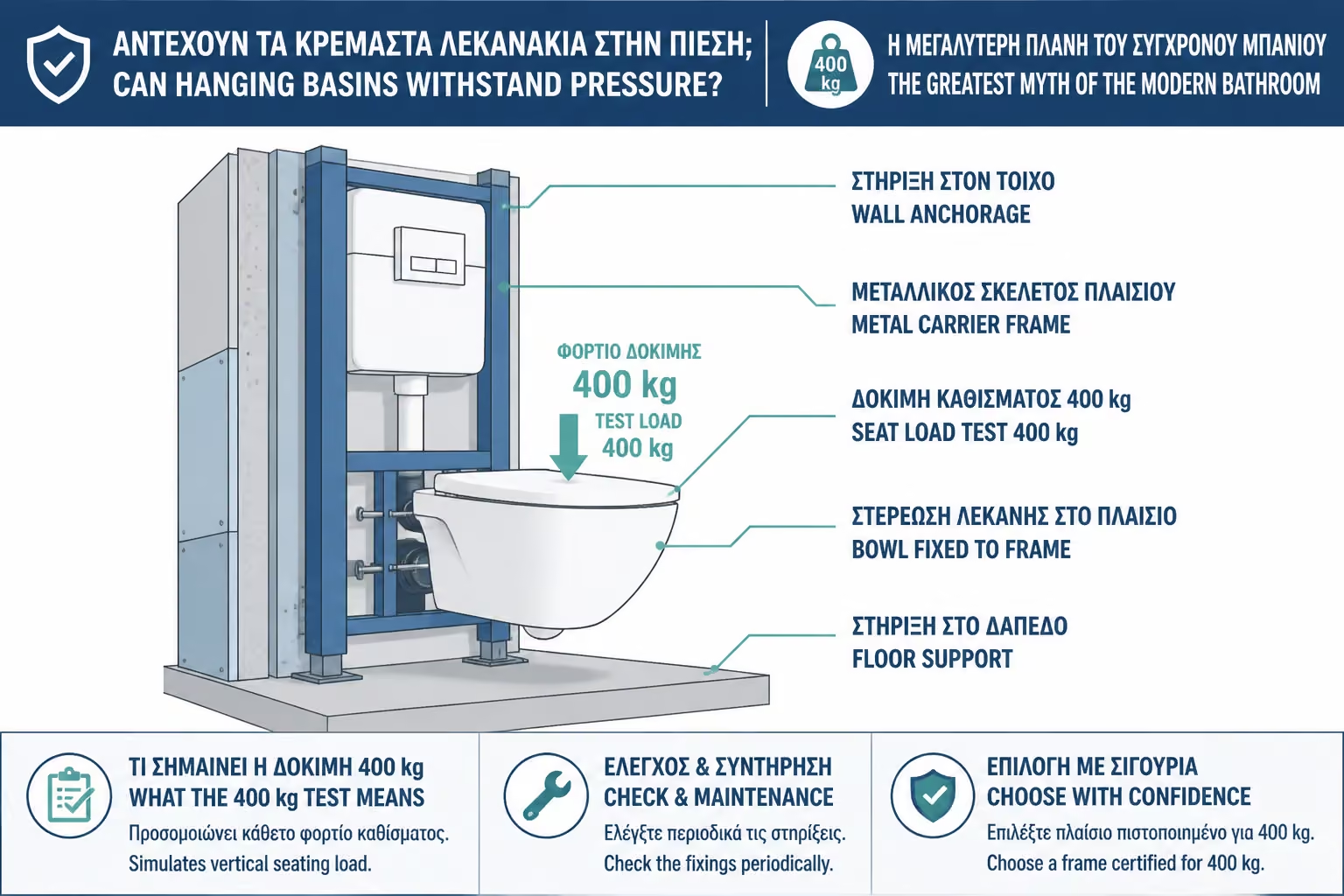
In reality, a properly installed wall-hung toilet does not rely on the tile, on drywall, or on just two screws in the wall. It relies on a special metal frame designed to transfer loads into the floor and the wall, or into the correct supporting structure. That frame is the real load-bearing system behind the toilet.
The problem is not the technology of the wall-hung toilet. The problem is poor installation. When the correct system is used, with a frame suited to the wall type, proper anchors and installation that follows the manufacturer's instructions, a wall-hung toilet is completely reliable. If it is installed carelessly, inside a weak construction or with the wrong frame, then of course problems can appear.
So the right question is not "can a wall-hung toilet hold up?" The right question is: "has the correct frame been installed, in the correct way, on the correct wall or structure?"
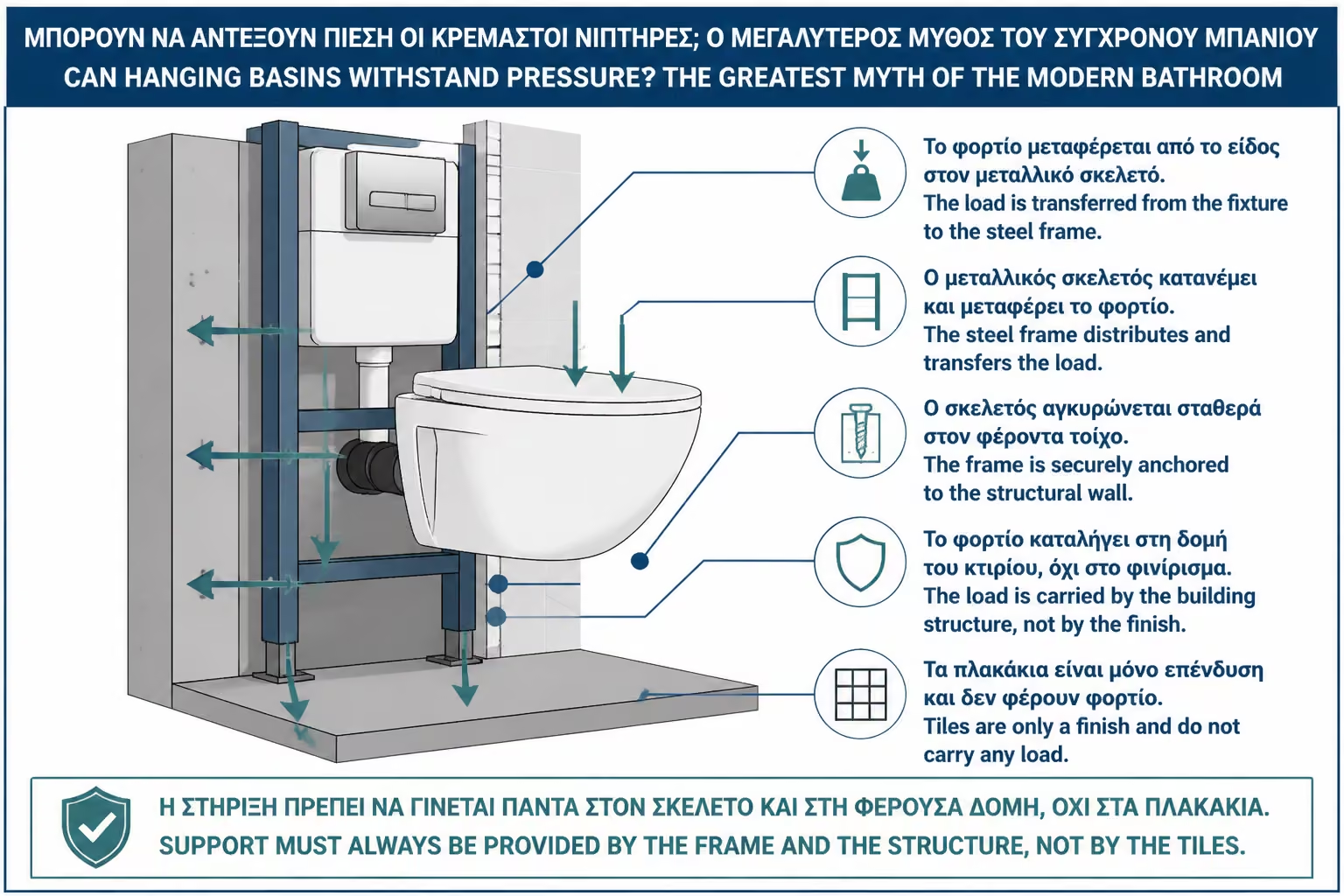
This is the most common fear and at the same time the biggest misunderstanding. A wall-hung toilet does not hang from the tile. The tile is only the final finish. It does not carry weight, it does not act as a support and it should never be treated as a structural element.
Behind the tile sits the metal installation frame. This frame is fixed to the floor and the wall, or to the structural frame in a dry-construction system. The toilet is mounted onto threaded fixing rods connected to that frame. When someone sits on the toilet, the load is transferred into the frame and from there into the structure.
If the installation is correct, the tile is not acting as a structural element. But if someone tries to support a wall-hung toilet without the proper frame or on weak construction, then the problem is not the technology of the wall-hung toilet. It is simply a bad installation.
Many branded frame systems for wall-hung toilets report capacities in the order of 400 kg. That does not mean every installation automatically supports 400 kg under any condition. It means the particular system has been designed and tested for high loads when installed as intended by the manufacturer.
The difference is significant. The product may have a high specification, but the installation must support it. If the frame is not properly anchored, if the wall is flimsy, if the drywall is weak, or if careless interventions are made, the real strength of the structure is reduced.
That's why weight specifications are useful, but shouldn't be read as a magical guarantee. The frame, wall, floor, anchors and mounting all work together. Safety is not just a product feature. It is the result of a proper system.
The metal frame is the heart of the installation. It carries the weight of both the toilet and the user. It is usually self-supporting or reinforced, with adjustable legs, horizontal and vertical metal members, fixing rods for the toilet and an integrated concealed cistern.
The legs of the frame rest on the floor, while the upper points are connected to the wall or to the structural frame. The load is therefore distributed rather than concentrated at one point. That distribution is what gives a wall-hung toilet its stability.
A good frame is not just "some metal". It has correct dimensions, height adjustment, proper connection positions, anti-corrosion protection, compatibility with the toilet pan and flush plate, and access for service through the flush plate. This is not the place for aggressive cost-cutting, because the frame will remain hidden inside the wall for years.
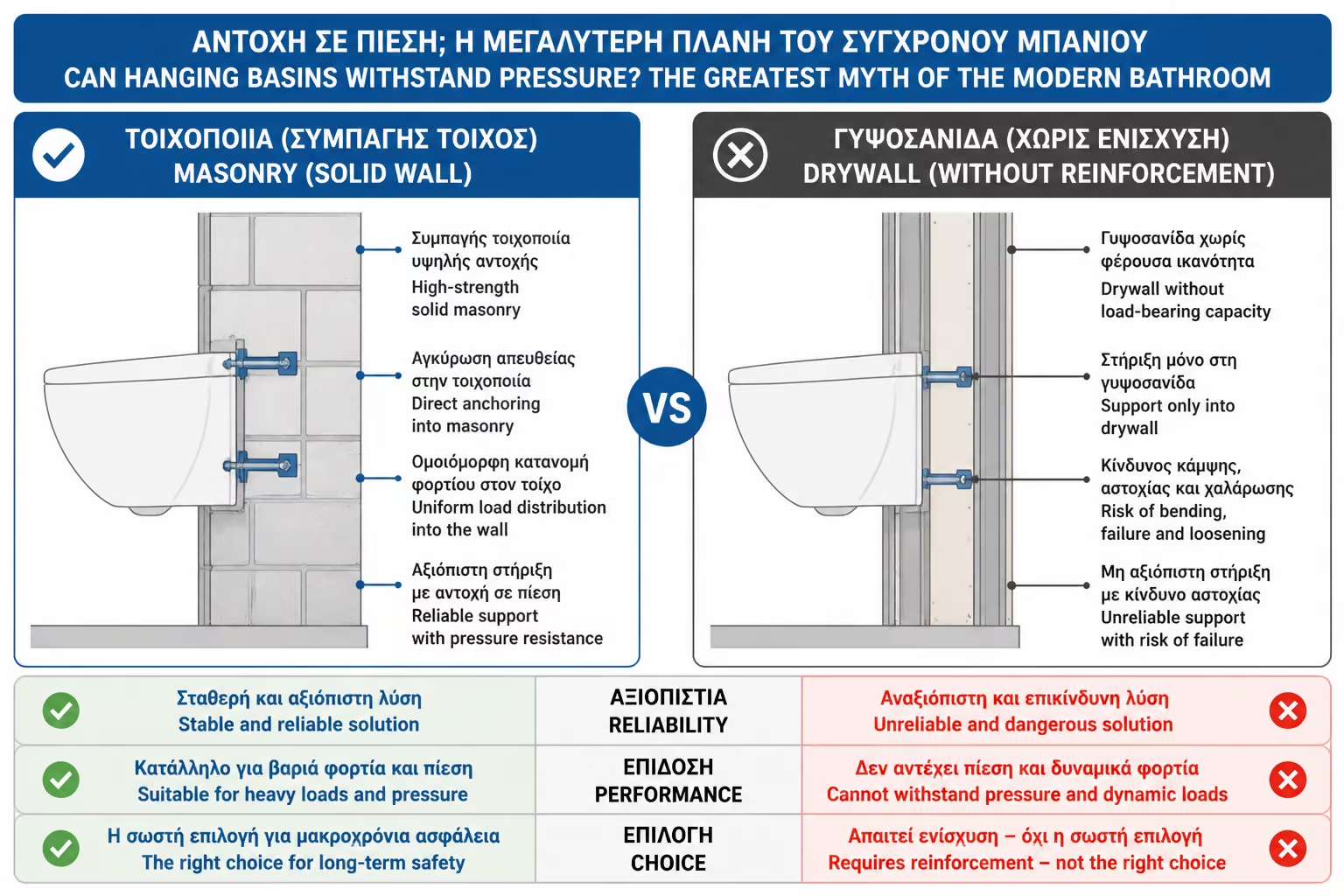
On a masonry wall of brick, concrete or other solid construction, the frame can be supported more confidently if the masonry is sound and the anchors are installed correctly. That still does not mean the system supports itself automatically. A wall-hung toilet should never be treated like something that can simply be fixed to a wall with two screws.
Often the frame is placed in front of the masonry wall and then covered with plasterboard, cement board or other cladding. In other cases, a recess or boxed-out construction is formed around the cistern. The end result can be very clean and robust.
The critical thing is to check the wall. In old bathrooms, we may have loose plaster, crooked walls or old bricks that do not give proper anchorage. If the wall is not suitable, the support must be properly transferred to the floor and reinforced frame. Wall weakness is not fixed with more tile.
Drywall can be completely safe, but only when it is done correctly. The wall-hung toilet does not rest on the plasterboard. It rests on the metal frame, which must be properly connected to the floor and the supporting structure. Plasterboard or cement board acts as cladding, not as the load-bearing element.
In dry building systems, the frame must be suitable for such installation. The frame must be properly shaped, the slabs suitable for a wet area and the lining sufficiently stable. In many cases, double slabs or special cement boards are used, depending on the solution and the manufacturer's instructions.
The mistake is to see drywall and automatically fear. The right question is not "is it drywall?". It's "is there a proper context behind it?". If there is, the solution can be very reliable. If it doesn't exist, it's sketchy.
A properly installed wall-hung toilet should not wobble, creak or feel unstable. If those symptoms appear, something has usually gone wrong: the fixing rods may not be tightened correctly, the frame may not be properly anchored, the backing behind the pan may have voids, or the pan may not sit evenly on the finished surface.
Special gaskets and soundproofing sheets are placed between the toilet pan and the tile to reduce stress, micro-movements and noise. These details are invisible, but they matter. A pan clamped directly onto tile without proper intermediate protection can create problems or creaks.
So stability doesn't just depend on the big frame. It also depends on the small details of the final installation.
The ceramic pan is the obvious product, but the supporting system does the real work. You can usually replace the pan later without major drama. The frame and the cistern, however, stay inside the wall. That is why their quality matters more technically.
A branded frame usually offers better mechanical handling, more adjustment options, better corrosion protection, clear fitting instructions and available parts. These are important in a product that you don't want to peel off after a few years.
A cheap toilet pan can be replaced. A cheap unknown frame buried inside a wall is a much harder problem. If there is one point where quality is worth paying for, it is the frame and the concealed cistern.
In normal use, a properly installed hanging pan is designed for very high loads. That's why the fear that "it will fall because someone is heavy" is usually unfounded when we talk about a certified system and proper installation.
The issue is not only static weight. It is also dynamic use: someone sits down abruptly, shifts sideways, leans more to one side or uses the toilet every day for years. A good frame is designed for those stresses. A rough installation, by contrast, may reveal weaknesses over time.
If there is a special case of very high weight, professional space or use by people with special needs, then the system selection must be made even more carefully, based on the technical specifications of the manufacturer.
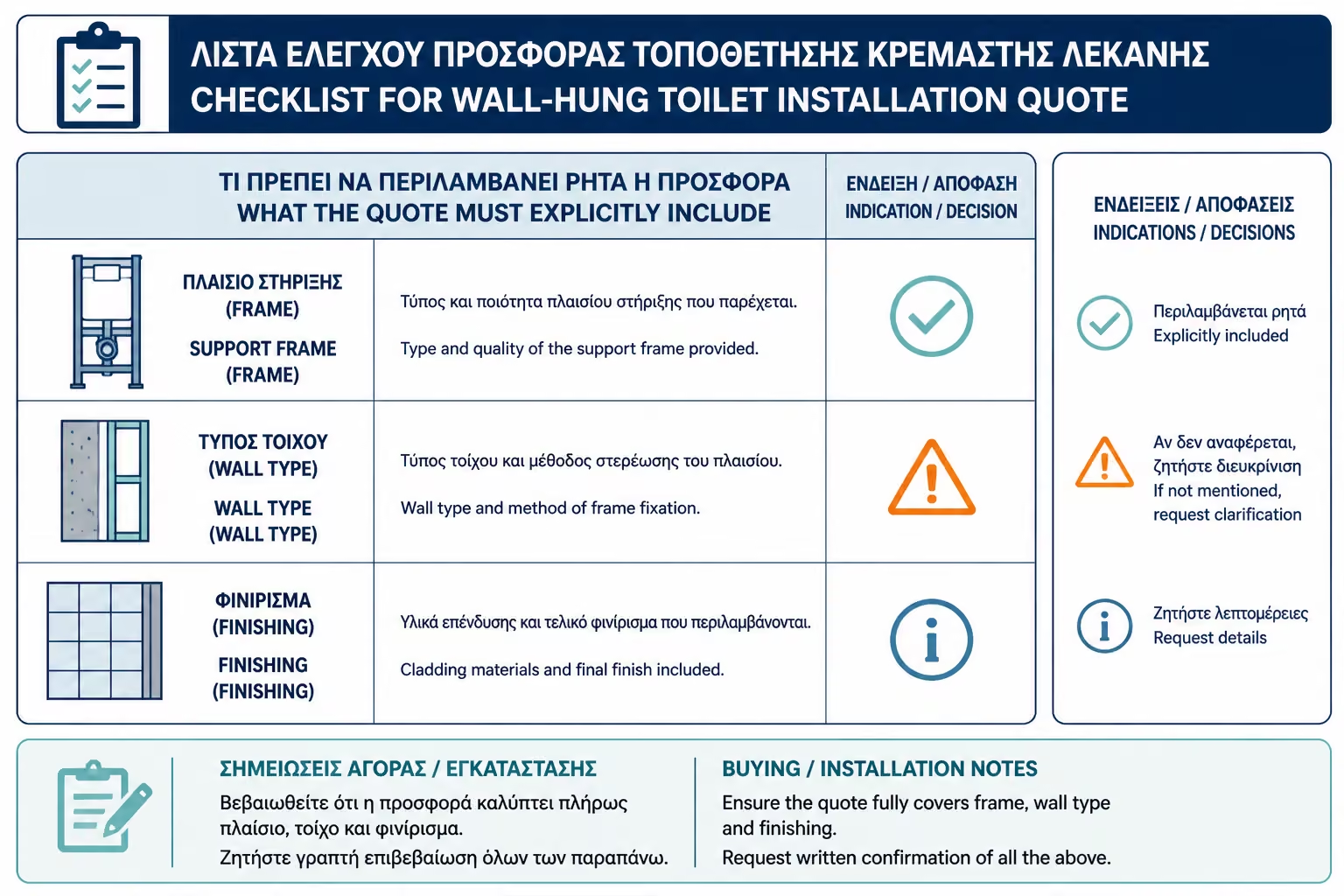
A proper quote for a wall-hung toilet should not mention only the pan. It should specify the frame, the concealed cistern, any soundproofing layer, the installation method, whether it is dry construction or masonry boxing, and the plumbing and fixing work involved.
If the offer simply says "wall-hung toilet with cistern", it is not enough. Which cistern? Which frame? For masonry or plasterboard? Are spare parts available? Which flush plate is included? How thick will the finished construction be? Will there be a soundproofing gasket behind the pan?
A wall-hung toilet is a system. The quotation or offer should describe the full system, not only the ceramic fixture.
A wall-hung toilet often looks more expensive than a floor-mounted toilet because it includes more components and more labour. That is true. But the right comparison is not just toilet against toilet. In the suspended solution you are also paying for the frame, the concealed cistern, the flush plate, the built-out wall and the cleaner visual result.
| Element | Indicative cost |
|---|---|
| Wall-hung toilet | 180–700€+ |
| Branded frame with built-in cistern | 250–600€+ |
| Flush plate | 40–250€+ |
| False wall construction / dry construction | 250–800€+ |
| Installation and plumbing connections | 250–700€+ |
| Sound insulation gasket / micromaterials | additionally, per system |
The prices are indicative for Greece 2026. The final cost depends on the brand, type of wall, drainage, access, tiles, VAT and whether it is a total renovation or an individual change.
The first mistake is to think the wall-hung toilet rests on the wall like a shelf. It does not. It needs a dedicated frame. If the supporting system is wrong, the installation is fundamentally wrong.
The second mistake is choosing a cheap frame of unknown quality. The owner sees the ceramic and the flush plate, but not the frame. Yet that is where the real structural reliability lies.
The third mistake is poor dry construction. Drywall alone does not support the pelvis. If there is no proper frame and proper anchoring, the structure can show movements.
The fourth mistake is not measuring the final depth. A false wall can steal valuable space from a small bathroom. A wall-hung toilet looks lighter, but the structure behind it still needs to fit ergonomically.
| Inquiry | Yes / No |
|---|---|
| Is there a certified metal support frame? | Yes / No |
| Is the frame suitable for the type of wall? | Yes / No |
| The anchoring is to the floor and the wall/frame right? | Yes / No |
| Is dry building suitable for a wet area? | Yes / No |
| Is the system high load rated? | Yes / No |
| Are there any spare parts for the cistern? | Yes / No |
| Is servicing carried out through the flush plate? | Yes / No |
| Has the final thickness of the structure been calculated? | Yes / No |
| Will there be a gasket between the toilet pan and the tile? | Yes / No |
| Is the installation done by an experienced technician? | Yes / No |
In a bathroom being fully renovated, a wall-hung toilet with a good-quality frame is often a very strong choice. The frame is installed before the tiles, the drainage is positioned correctly, the false wall is designed to the right thickness and the final result is both clean and stable.
In an older small WC, where the owner simply wants to replace the toilet, a wall-hung model can be a harder choice to justify. If a large false wall and drainage changes are required, a back-to-wall floor-mounted toilet may be more practical. That does not mean the wall-hung option is weak. It means the installation may not be worth the extra cost and loss of space.
In a plasterboard bathroom, a wall-hung toilet can be perfectly safe if there is a proper metal frame behind it. But if someone tries to support it on a light construction without reinforcement, the problem is not the toilet. It is the wrong installation logic.
A wall-hung toilet is reliable when there is a proper metal support frame behind it. It does not rely on tile, drywall or brick alone. The technology is not the weak point; sloppy installation is. Ask for a branded frame, clear load specifications, proper anchoring and a technician who has real experience with these systems. In dry construction, the load must be transferred to the frame and the structure behind it, not to the lining boards.
The fear that wall-hung toilets "won't last" is one of the biggest myths in the modern bathroom. A properly installed wall-hung toilet, with a certified metal frame and correct anchoring, is designed for very high loads and for daily use.
Durability does not come from the tile or from the plasterboard. It comes from the support frame. That is the element that must be chosen carefully. The quality of the frame, the wall type, the anchoring, the dry-construction details and the final installation all determine how safe the solution really is.
The specifications of up to 400 kg quoted by several branded systems show that the technology is mature and reliable, when applied correctly. But that's no excuse for sloppy work. The product and installation must work as a single system.
If you are doing a full renovation and want clean aesthetics, easier cleaning and a modern effect, a wall-hung toilet is worth considering. Just do not cut corners on the hidden structure that supports it. That is where the whole system either succeeds or fails.
Return to category.
Go to categoryReturn to the central guide.
Go to guide