
Bathroom Fixtures & Water Equipment
Return to category.
Go to categoryChoosing a toilet changes the image of a bathroom far more than many people expect, even though it is often treated as a standard sanitary fixture. In practice, the toilet affects cleaning, the sense of space, installation cost, ease of maintenance and the overall aesthetic of the room. Especially in small bathrooms, the difference between a wall-hung toilet and a classic floor-mounted toilet can be much greater than it seems at first.
The wall-hung toilet has become almost synonymous with the modern bathroom. It leaves the floor free, hides the cistern inside the wall or inside a plasterboard construction, is easier to clean around and underneath, and creates a cleaner minimal look. On the other hand, the floor-mounted toilet remains the simplest, most proven and most economical solution. It is easier to install, has a lower initial cost and does not always require major wall work.
The dilemma is not merely aesthetic. A wall-hung toilet needs a concealed cistern, a metal support frame, correct drainage, accurate installation and service access through the flush plate. If those details are handled correctly, the result is excellent. If they are handled carelessly, concerns about stability, leaks or difficult repairs start to make sense. A floor-mounted toilet is technically simpler, but it does not offer the same visual and practical lightness.
To choose properly, you need to look not only at which toilet you prefer visually, but also at what your bathroom actually allows, what the budget is, whether the project is a full renovation or a simple replacement, and how much importance you place on cleaning and aesthetics.
A wall-hung toilet does not touch the floor. It is mounted on a special metal frame hidden inside the wall or inside a plasterboard or cement-board construction. The cistern is usually concealed too, and the only visible part on the wall is the flush plate.
This creates a very clean image. The toilet seems to float, the floor continues underneath it and the whole room feels lighter. In small bathrooms, that visual freedom can make a major difference. The room does not actually gain square metres, but it looks more open because the eye sees more uninterrupted floor.
But a wall-hung toilet is a system, not just a single sanitary item. It includes the toilet itself, the concealed cistern, the support frame, the flush plate, the water and drainage connections and the final wall finish. That is why it should be treated as part of the renovation system, not as a simple like-for-like replacement.
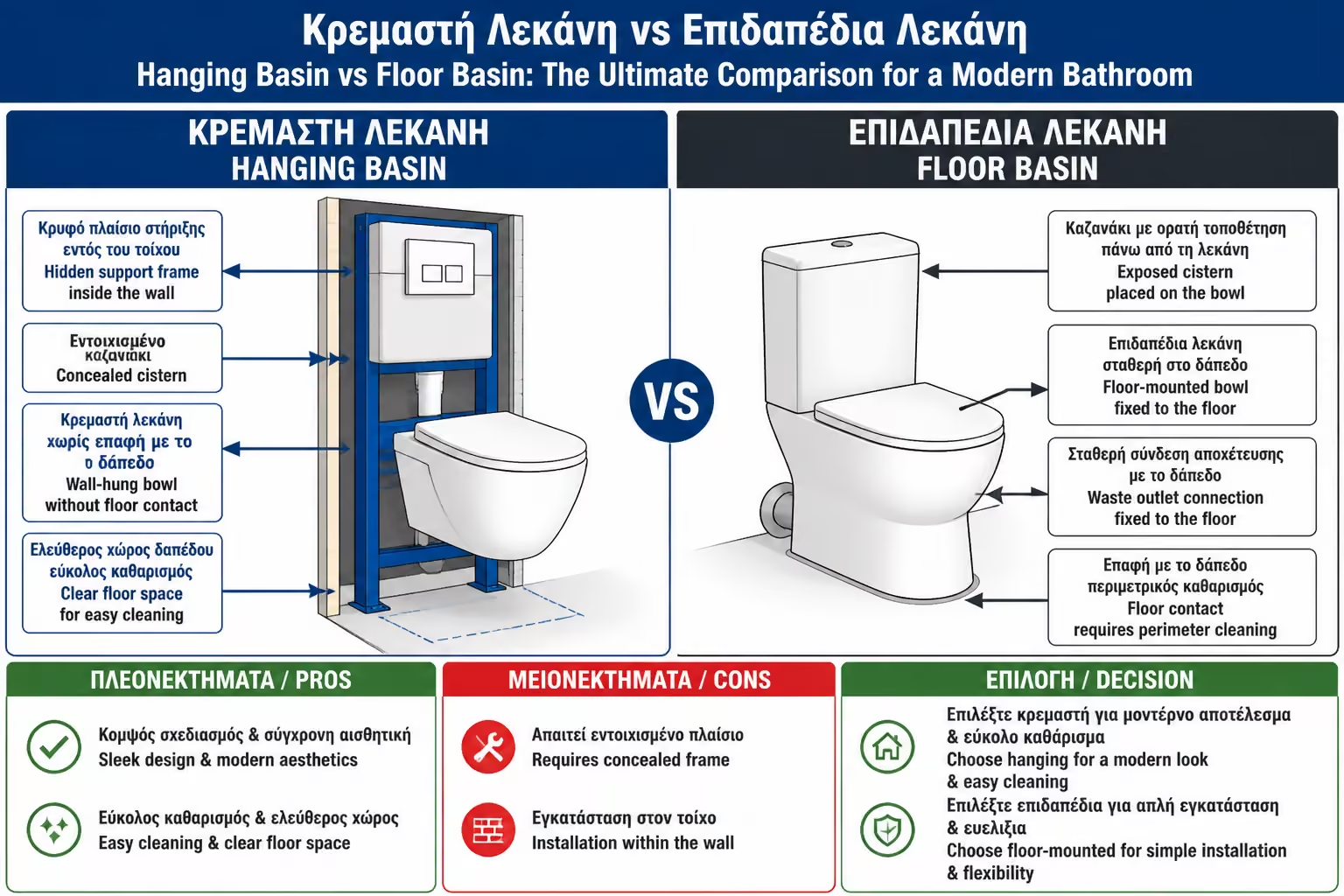
The floor-mounted toilet is the classic solution. It rests directly on the floor and connects to either a close-coupled cistern or a separate cistern, depending on the model. It is the most familiar choice in Greek bathrooms and it still has many advantages.
Its main advantage is simplicity. In a straightforward replacement, it can often be installed without major interventions on the wall. If the drain and supply are already in the right place, the work is faster and more economical. It is also easier to service. If there is a problem with the cistern, the mechanism is visible and directly accessible.
The downside is that it takes up more visual and practical space. The base rests on the floor, creates joints that collect dust and moisture, and makes cleaning around the toilet more difficult. In older bathrooms, especially where the toilet sits close to the wall or to the furniture, that becomes obvious every day.
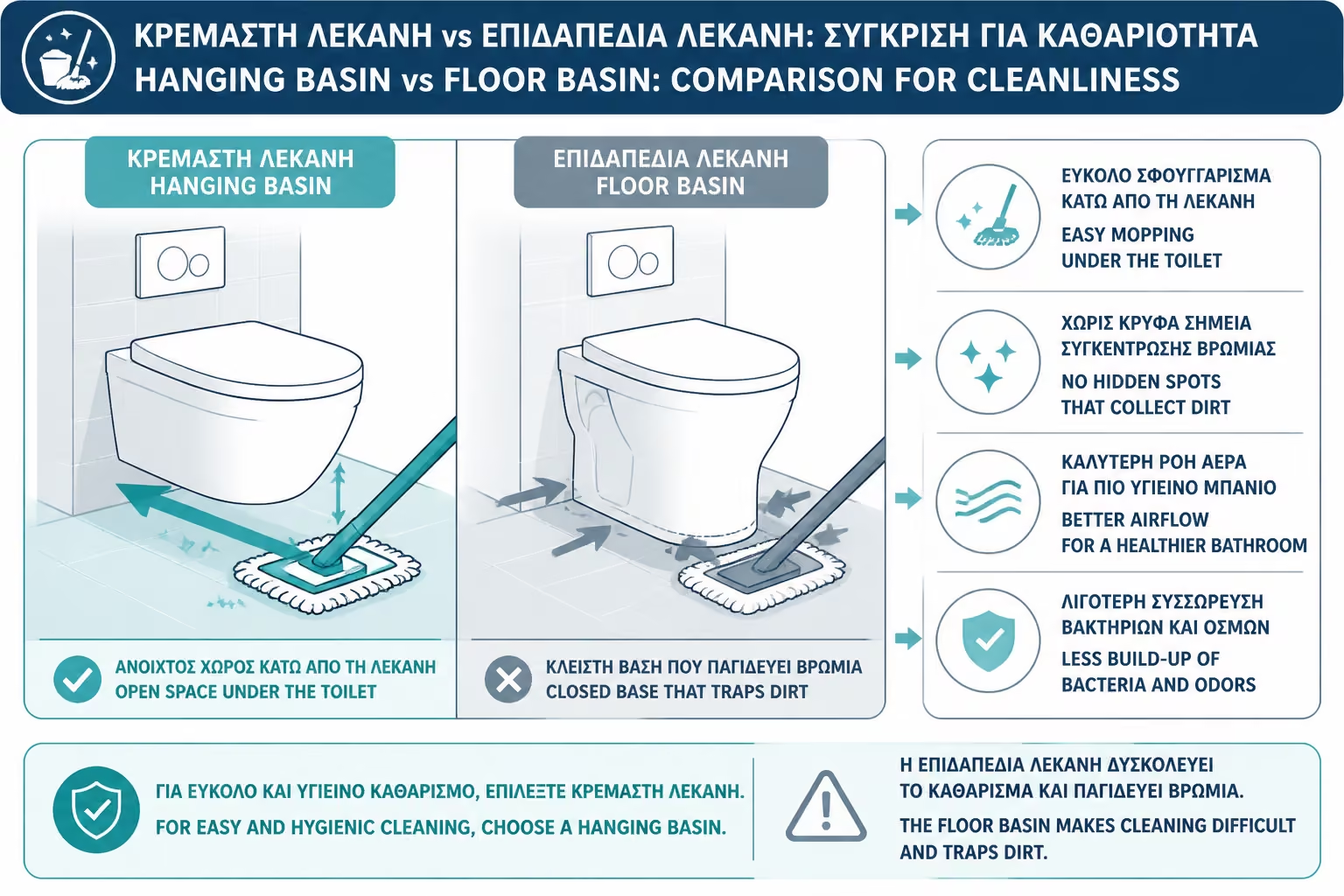
If there is one point where the wall-hung toilet clearly wins, it is cleaning. Because it does not rest on the floor, there are no awkward corners around the base. You can pass a mop or cloth underneath it without obstruction. The floor remains more continuous and much easier to clean.
That matters a lot in a bathroom, where water, dust, hair, cleaning product residue and moisture collect around the toilet. In a classic floor-mounted toilet, the joint at the floor usually needs more attention. The silicone or perimeter joint can darken or trap dirt, especially in a poorly ventilated bathroom.
A wall-hung toilet makes cleaning simpler and faster. It does not mean the toilet cleans itself. It means one of the most irritating cleaning points, the base at floor level, disappears.
Aesthetically, the wall-hung toilet gives a more modern effect. The concealed cistern, the clean flush plate and the uninterrupted floor create a more minimal image. In bathrooms with large tiles, continuous flooring or hidden lighting, the wall-hung solution usually fits better.
A floor-mounted toilet can still look excellent, especially in modern slim back-to-wall models, but it rarely gives the same visual lightness. Even with a good design, it feels more grounded because it meets the floor and the cistern is often visible.
In small bathrooms, the difference is noticeable in daily use. A wall-hung toilet does not necessarily save real centimetres, because the concealed cistern needs depth. But it wins visually. The floor looks more continuous, the bathroom appears cleaner and the toilet does not cut the room up as much.
We often hear that a wall-hung toilet saves space. That is true, but it needs clarification. A wall-hung toilet mainly saves visual space and makes the bathroom look bigger. In real dimensions, the final result depends on the depth of the concealed cistern and on whether the wall can accept it without creating a bulky projection.
If the cistern goes inside an existing wall or in a technical area, the result can be very clean and economical in terms of space. But if it is necessary to create a false wall in front of the wall, 10–20 cm of depth may be lost. In a large bathroom this is not a problem. In a very small WC it can count.
A floor-mounted toilet has a more predictable footprint. It may not feel as minimal, but it does not always require new construction behind it. In a simple replacement in an older bathroom, that can be a major advantage because it keeps the room closer to its current condition.
Installing a wall-hung toilet requires the correct support frame, correct anchorage, correct drainage and the right cladding. The frame must be firmly installed, accurately aligned and covered with a suitable construction. If it is set into plasterboard or a false wall, that construction must be appropriate for a wet area and able to handle the load.
The concealed cistern must be of good quality. The flush plate is not just a button. It is also the main service access point. If the system is installed correctly, most maintenance is done from there. If a poor system is chosen or the installation is careless, repairs become harder.
A floor-mounted toilet is simpler. If the clearances and connections already work, installation is faster and more economical. That is a major advantage when the job is not a full renovation but a straightforward replacement.
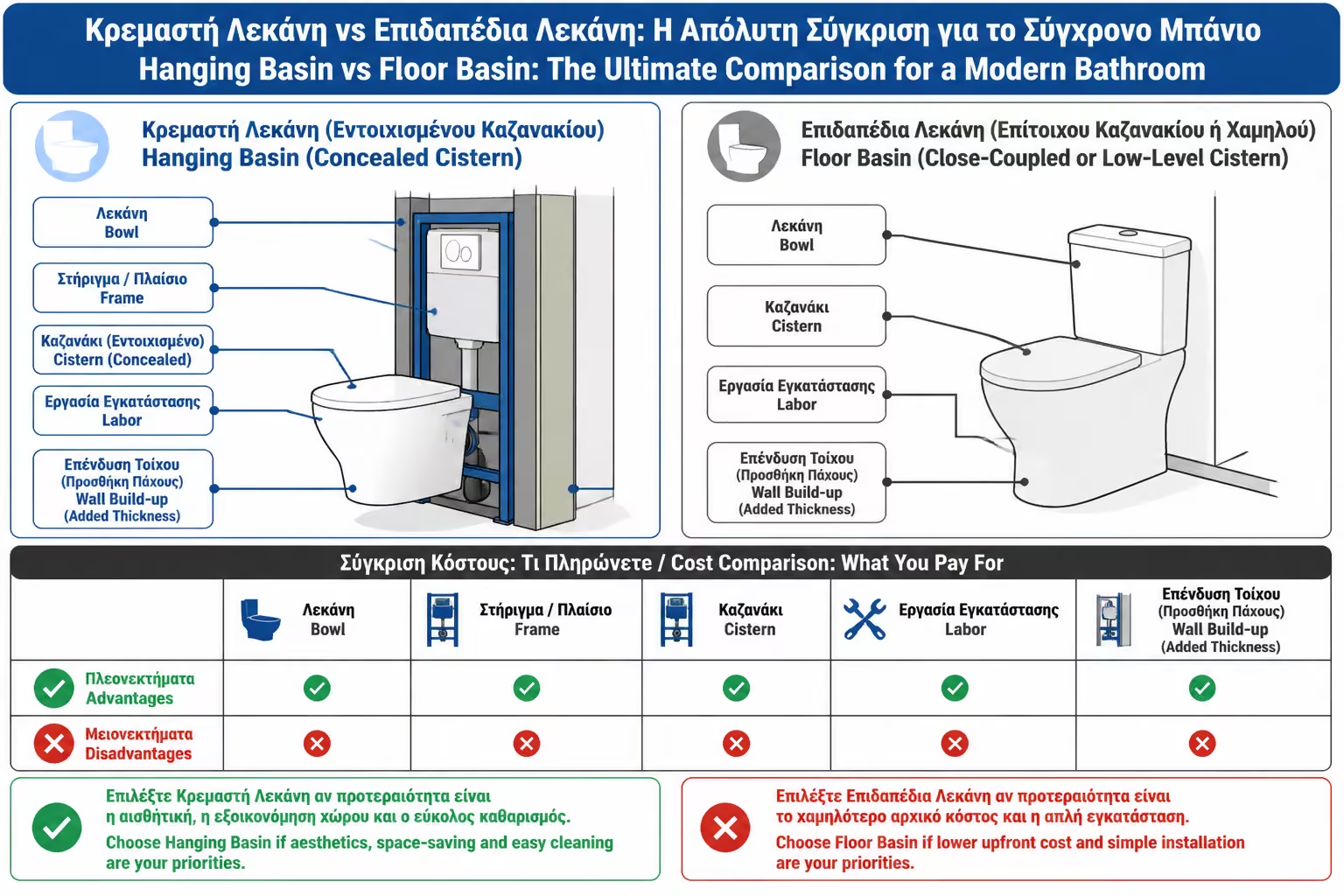
A floor-mounted toilet is usually more economical as a complete solution. It has a lower product cost and a lower installation cost. A wall-hung toilet requires more components: the pan, the concealed cistern, the frame, the flush plate, the construction, the cladding and more labour.
| Selection | Indicative cost |
|---|---|
| Simple floor-mounted toilet | €100–€300 |
| Better floor-mounted / back-to-wall toilet | 250–600€+ |
| Wall-hung toilet | 180–600€+ |
| Built-in cistern with frame | 180–500€+ |
| Flush plate | 40–250€+ |
| Installation of floor-mounted toilet | 80–200€+ |
| Mounting hanger with frame/structure | 250–700€+ |
| Additional drywall/paneling/tiles | per project |
The prices are indicative for Greece 2026. They are affected by brand, quality, whether it is a total renovation or simple replacement, drainage condition, need to transport pipes, VAT and labor.
In a full renovation, the extra cost of a wall-hung toilet can be absorbed more easily into the overall project. In a simple replacement, the difference is much more visible.
A common fear about wall-hung toilets is: "If the concealed cistern fails, do I have to break the wall?" In a proper system, the answer is no for ordinary faults. The main cistern components are accessible through the flush plate. Of course, that still depends on having a quality system and a correct installation.
A floor-mounted toilet has the advantage of straightforward access. The cistern is visible, opens easily and most parts can be replaced without any special procedure. That makes it feel more familiar and less stressful for many owners.
The hanging solution isn't difficult to maintain when done right, but it doesn't forgive cheap and unknown systems as easily. That's where it's worth paying for a reliable built-in cistern, because it will stay inside the wall for years.
Another common fear is whether a wall-hung toilet can really take the load. Properly certified systems with the correct support frame are designed for exactly that. The issue is not the idea of the wall-hung toilet itself. The issue is the quality of the frame and the quality of the installation.
If the frame is anchored properly to the floor and wall, or to the correct supporting structure, the toilet is stable. If the installation is sloppy, the frame is unsupported or the background structure is weak, then problems can appear.
Put simply, a wall-hung toilet is not inherently risky. Sloppy installation is the real risk.
There is also an intermediate category worth attention: the back-to-wall floor-mounted toilet. It rests on the floor, but its rear edge sits neatly against the wall and it can often be combined with a concealed cistern. That gives a cleaner image than a classic floor-mounted toilet without becoming fully wall-hung.
The advantage is that it looks more modern and hides the pipework better. Cleaning around it is easier than with older toilets that have obvious curves and gaps, though not as easy as with a wall-hung model. It is a good solution when we want a more modern effect but do not want, or cannot fit, a wall-hung toilet.
In renovations where drainage does not favor a full-hung solution, back-to-wall can be a very practical compromise.
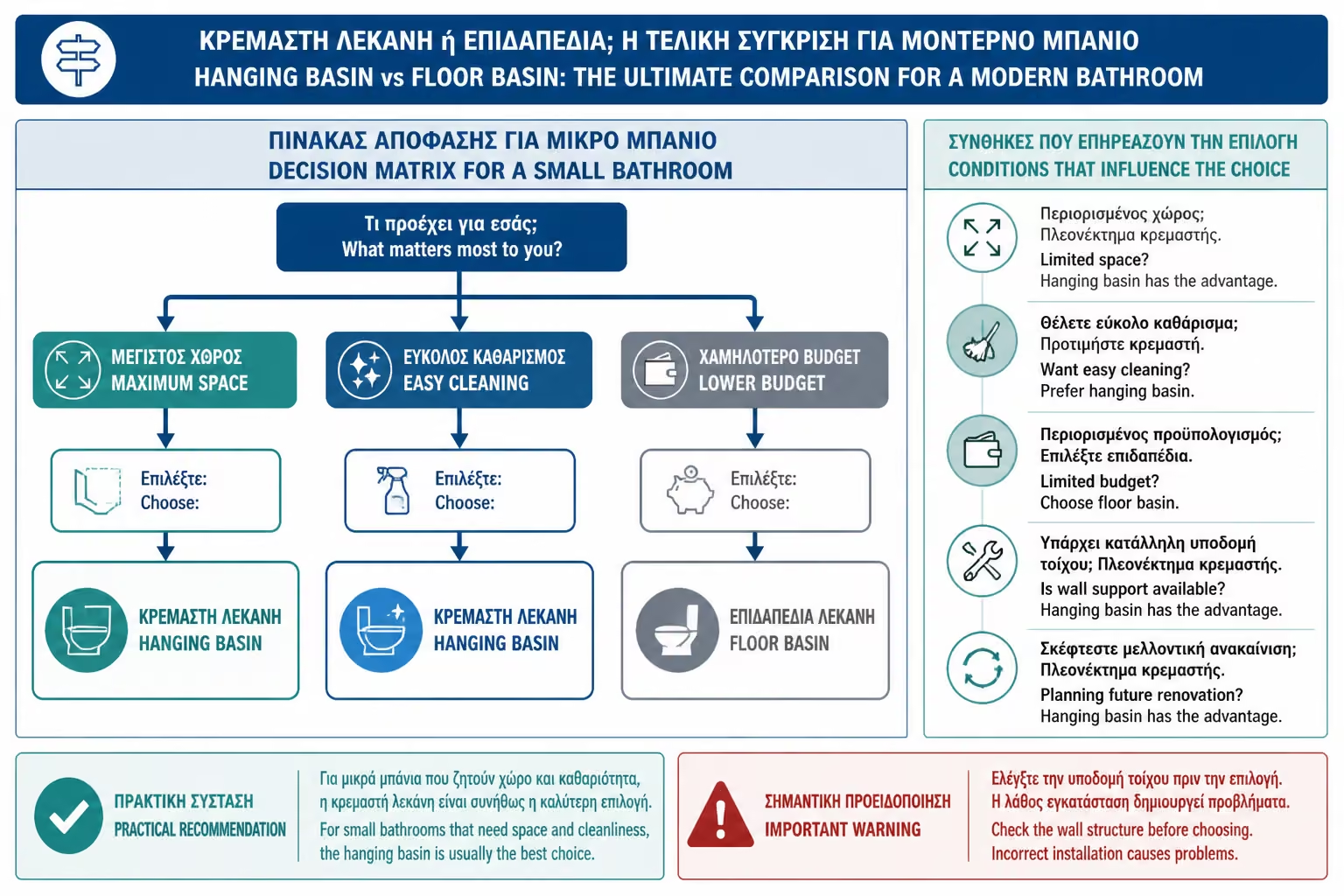
In a small bathroom, a wall-hung toilet has a strong aesthetic advantage. The clear floor makes the room look bigger and cleaner. If the concealed cistern can be installed without losing too much depth, it is an excellent choice.
However, if the bathroom is very small and thick false walls are required, the layout must be calculated carefully. Sometimes a compact floor-mounted or back-to-wall toilet is more practical. The point is not only to make the toilet look modern, but to leave enough room for legs, the door swing and movement.
In small WCs, toilet projection is critical. There are compact wall-hung models and compact floor-mounted models. In those rooms, every centimetre matters.
| Criterion | Wall-hung toilet | Floor-mounted toilet |
|---|---|---|
| Floor cleaning | Much better | More difficult around the base |
| Aesthetics | More modern and minimal | More classic |
| Visual sense of space | Very good | Heavier |
| Purchase cost | Higher overall | Lower |
| Installation cost | Higher | Lower |
| Installation | Needs a proper frame and concealed cistern | Simpler |
| Service | Through the flush plate, if it is a good system | Direct access |
| Suitable for total renovation | Ideal | Also appropriate |
| Suitable for simple replacement | Not always | Very good |
| Value for money | High in modern bathroom | High in budget solution |
The first mistake is choosing a wall-hung toilet without calculating the false wall first. If the concealed cistern projects too much, the room can end up smaller than expected. In small bathrooms, this has to be measured from the start.
The second mistake is choosing a cheap concealed cistern of unknown quality. The toilet pan is relatively easy to replace. The cistern, however, stays inside the wall. That is not where major savings are worth chasing.
The third mistake is assuming that a floor-mounted toilet is always an outdated solution. There are excellent modern floor-mounted and back-to-wall models that can deliver a clean result at a lower cost.
Another mistake is failing to check the drainage. Converting from a floor-mounted toilet to a wall-hung one may require connection changes. If that is not calculated in advance, the cost rises quickly.
| Inquiry | Yes / No |
|---|---|
| Is it a complete renovation or a simple replacement? | Yes / No |
| Is there space for a built-in cistern? | Yes / No |
| Will the false wall reduce the depth of the bathroom too much? | Yes / No |
| Has the location of the drain been checked? | Yes / No |
| Is the concealed cistern branded and reliable? | Yes / No |
| Is there service access through the flush plate? | Yes / No |
| Does the toilet have the correct projection for the space? | Yes / No |
| Will the installation be done with a proper support frame? | Yes / No |
| Does the total cost include the frame, flush plate and finishing work? | Yes / No |
| Does the choice match the style of the bathroom? | Yes / No |
In a fully renovated 4 sq.m. bathroom, a wall-hung toilet can change the visual impression dramatically. If it is combined with large floor tiles and a concealed cistern, the bathroom looks more open and cleaner. Cleaning becomes easier and the overall look more modern.
In an older bathroom where the owner simply wants to replace the toilet without stripping tiles, a floor-mounted toilet is usually more practical. If a modern back-to-wall model is chosen, the room can improve significantly without the work required for a wall-hung installation.
In a very small WC, a wall-hung toilet can help visually, but only if the cistern does not require too much depth. If the false wall projects too far, a compact floor-mounted toilet may work better.
If you are carrying out a full bathroom renovation and the budget allows it, a wall-hung toilet is usually the cleanest and most modern option. It wins on aesthetics, cleaning and visual lightness. But do not save money on the concealed cistern and the support frame, because those are the parts that remain hidden inside the wall. If you are doing a simple replacement without stripping the bathroom, a good floor-mounted or back-to-wall toilet may be the more sensible and economical choice. The right decision is not only about design; it is also about space, drainage, cost and installation quality.
Wall-hung and floor-mounted toilets follow different philosophies. The wall-hung toilet is the more modern, cleaner-looking and visually lighter option. It frees the floor, makes cleaning easier and helps the bathroom look more organized and more spacious. It is ideal for full renovations and for bathrooms where a minimal effect matters.
The floor-mounted toilet remains the simplest, most economical and most practical solution, especially when you do not want to disturb walls and plumbing installations. With a good modern model, especially a back-to-wall version, it can still deliver a very strong result without excessive cost.
If the bathroom is being renovated from scratch, a wall-hung toilet is seriously worth considering. If the job is a simple replacement, or if the budget is tight, a floor-mounted toilet may be the more sensible choice.
The important thing is not to compare only the price of the toilet pan. In the wall-hung solution, you also have to include the concealed cistern, the frame, the flush plate, the construction work and the installation. Only then is the comparison real.
Return to category.
Go to categoryReturn to the central guide.
Go to guide