
Bathroom Fixtures & Water Equipment
Return to category.
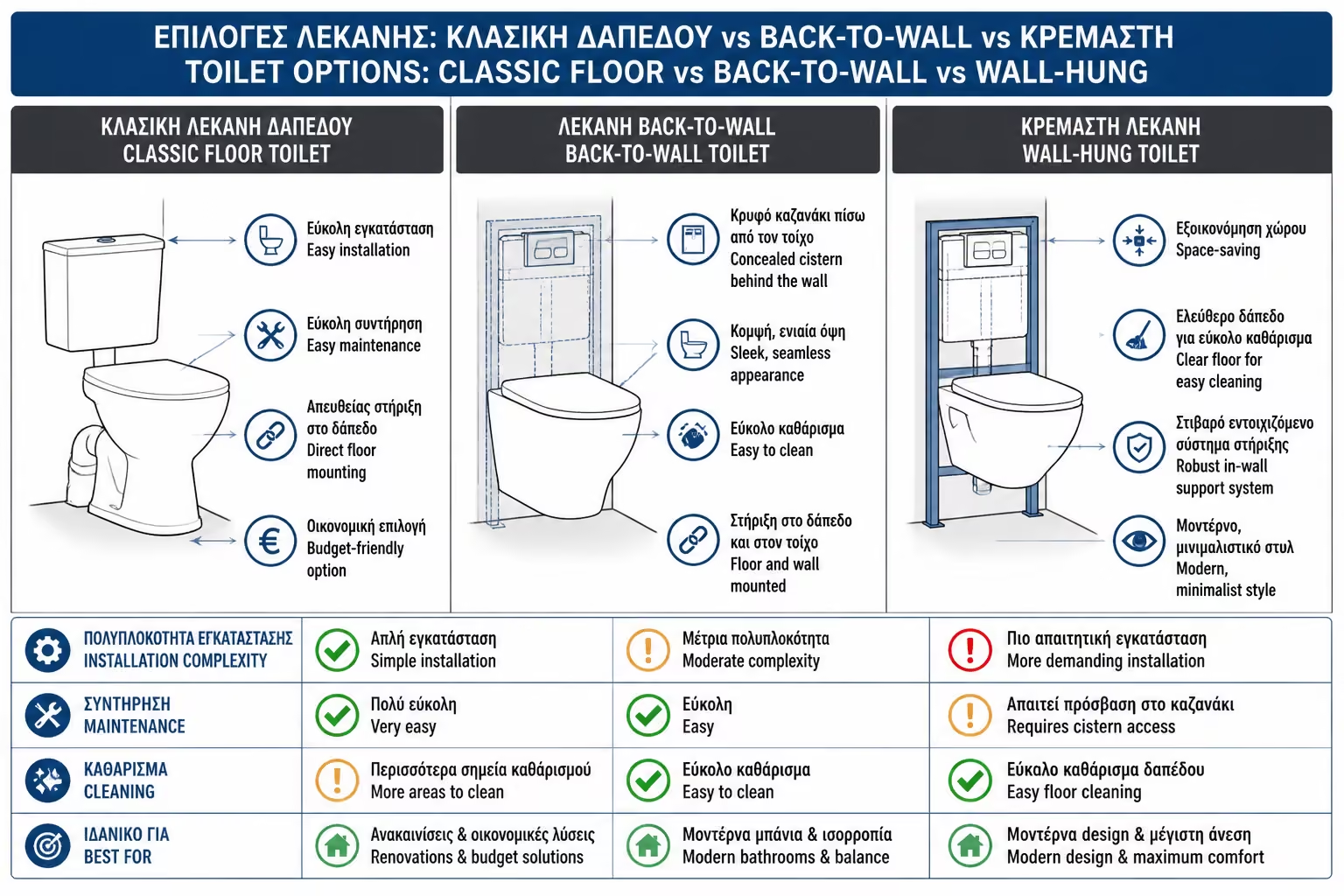
Go to categoryA back-to-wall toilet is one of the smartest solutions for bathrooms that want a cleaner, more modern look without necessarily switching to a fully wall-hung toilet. Put simply, it is a floor-mounted toilet that sits tight against the wall. It rests on the floor like a classic toilet, but its back is closed and finished flush with the wall, hiding pipes, traps and awkward curves.
This makes it ideal for owners who want a more modern result but either do not want, or cannot fit, a wall-hung toilet with a metal frame. Maybe the bathroom is not being fully renovated. Maybe there is no room for a concealed cistern. Maybe they simply want something technically simpler, more economical and closer to the logic of a traditional floor-mounted toilet.
The big difference compared with older toilets is visual clarity. In older models you often see rear pipes, curves, traps, gaps and awkward corners where dust and moisture collect. A back-to-wall toilet hides all of that within its body or behind its contact line with the wall. The result feels cleaner, more integrated and much calmer to the eye.
But this is not a product you should buy without checking the installation conditions. For it to sit properly against the wall, the drain position, the water supply, the cistern arrangement and the room depth all have to work together. If the existing drain is in the wrong place, adjustments may be necessary. If the wall is crooked, the contact line may never look clean. And if the model does not match the cistern setup, the final result may lose the elegance it promised.
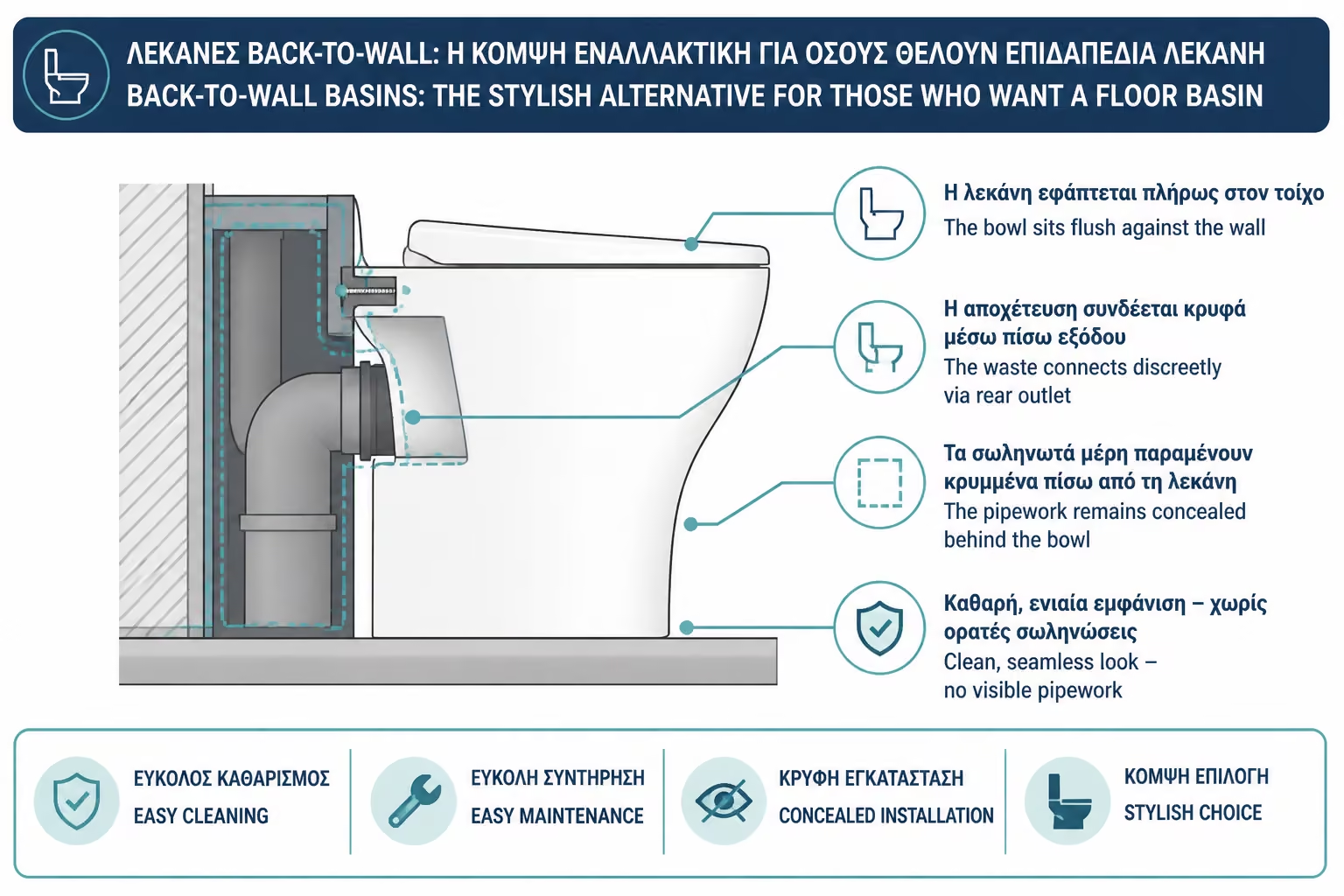
The term back-to-wall means that the back of the toilet sits directly against the wall. Unlike older toilets, where there is often a gap behind, an exposed waste pipe or awkward access for cleaning, a back-to-wall toilet has a closed rear body. That is why it looks much more integrated into the wall.
There are two main versions. The first is a back-to-wall toilet with an exposed low-level cistern, essentially a more modern version of the classic floor-mounted toilet. The second is a back-to-wall toilet with a concealed cistern, where the cistern is hidden in the wall or in a false wall and only the toilet and the flush plate remain visible.
The second solution is more elegant because it comes visually closer to a wall-hung toilet, while the toilet itself still rests on the floor. That gives you a cleaner image together with a more grounded sense of support.
A back-to-wall toilet sits between the classic floor-mounted toilet and the wall-hung toilet. From the classic toilet it keeps the simplicity of floor support. From the wall-hung model it borrows the cleaner look and the hidden pipework. That combination makes it especially useful in renovations where you want stronger aesthetics without excessive technical complexity.
In a bathroom that is not being fully stripped, a wall-hung toilet may require more work: support frame, concealed cistern, false wall and drain relocation. A back-to-wall toilet may be far more realistic. If it suits the existing drainage, it can deliver a strong visual upgrade without opening a much larger project.
In a full renovation, it can also be a deliberate choice. Some owners simply do not want a wall-hung toilet, even if it is technically possible. They want the toilet to meet the floor, but they do not want the old visual clutter of exposed pipework. For them, back-to-wall is an ideal compromise.
A back-to-wall toilet has a cleaner, more closed geometry at the rear. The drain and the connections are hidden inside the toilet body or behind it, depending on the model and the connection type. So you no longer see the classic exposed neck or the awkward curves behind the toilet.
This has a great aesthetic benefit. The bathroom looks cleaner and calmer. But it also has a practical benefit: there are fewer awkward places to clean. In older toilets, the area behind and around the base is one of the most annoying parts of the bathroom. Dust, hair, moisture and cleaning products collect there. With a back-to-wall toilet, that problem is significantly reduced.
Cleaning does not disappear completely, because the toilet still rests on the floor. But the shape is simpler and more closed, so maintenance is easier than with an older toilet that leaves the rear connections exposed.
If you choose a back-to-wall toilet with an exposed cistern, the solution is simpler and usually more economical. The cistern sits above the toilet, as in a classic setup, but the body of the toilet still reaches the wall and hides the connections. It is a good choice for straightforward replacement work, when you do not want to open the wall or build a false wall.
If you choose a back-to-wall toilet with a concealed cistern, the result is cleaner. The cistern is hidden, only the flush plate is visible and the toilet still rests on the floor. Visually, this solution comes closer to a wall-hung toilet, but without the sense that the pan is "floating".
The second solution is more expensive and requires more work, but can be excellent in a total renovation. The first is more practical for renewing an old bathroom.
The biggest technical issue with back-to-wall toilets is drainage. There are models with a horizontal outlet into the wall and others with vertical or adjustable floor connections, depending on the model and accessories. In older Greek bathrooms, the drain may be positioned in a way that does not easily suit a modern back-to-wall model.
If the existing drain is too far from the wall or at the wrong height, the toilet may not sit properly. It may leave a gap behind, need an awkward connector or project further out than expected. That cancels the main benefit of the solution.
That is why the drain position must be measured before buying the toilet. The model should be selected based on the actual bathroom conditions, not just on a photo or a design preference.
A back-to-wall toilet looks best when its rear edge sits cleanly against the wall. If the wall is crooked, bowed or tiled unevenly, a gap can appear. That can look messy and make sealing more difficult.
In a full renovation, this is easier to solve because the wall can be prepared from the start. In a simple replacement, the existing wall condition has to be checked carefully. If there are strong irregularities, silicone detailing, adjustment work or even a different model may be required. The goal is for the toilet to look as though it naturally belongs against the wall, not as if it has been forced in front of it.
This is a detail that is not visible in the store, but is immediately visible at home.
In terms of cleaning, the back-to-wall toilet is clearly better than an older classic floor-mounted toilet. It has cleaner lines, fewer recesses and hides the awkward areas behind. The drain and pipe connections are no longer exposed.
But it still does not match a wall-hung toilet, because it remains floor-mounted. That means there is still a base joint to clean. Silicone or a neat perimeter joint may be needed there, and over time that line will still require attention. A wall-hung toilet leaves the floor completely free, so it still wins on pure ease of cleaning.
But if someone does not want a wall-hung toilet, or cannot install one, back-to-wall is one of the best ways to make cleaning easier without leaving the logic of a floor-mounted toilet.
A back-to-wall toilet has a major aesthetic advantage: it looks unified. There are no visible rear gaps, pipes, curves or technical pieces. The body of the toilet has a clean outline and feels more architectural.
This helps a lot in small bathrooms. The fewer visual details there are, the cleaner the room appears. An older toilet with exposed pipework can make a bathroom look dated even when the tiles are new. A back-to-wall toilet immediately tidies that picture.
If it is combined with rimless technology and a slim soft-close seat, the result becomes even more contemporary. In that case, even a floor-mounted toilet can feel very close to a premium solution.
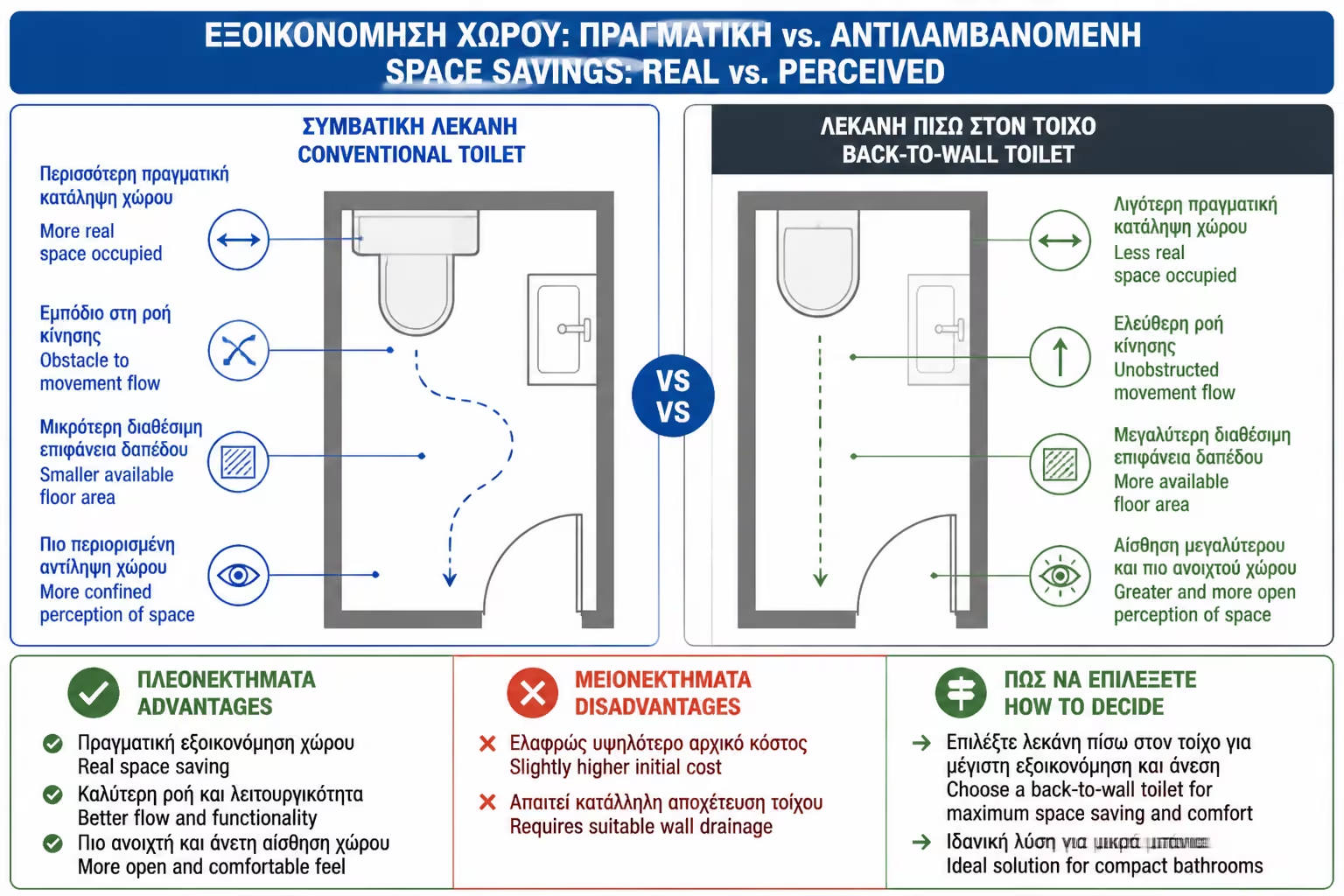
A back-to-wall toilet does not automatically save space compared with every classic toilet. It depends on the model. Some are compact, while others project further into the room. Their main advantage is that they organize the rear zone better by sitting against the wall and hiding the connections.
In small bathrooms, projection is critical. The distance from the wall to the front edge of the toilet must be measured. If the toilet is too deep, it can make movement difficult in front of the sink or across the room. Do not assume that back-to-wall automatically means compact.
The right choice is a model that "sticks" to the wall but does not protrude too much. In very small WCs, the compact series are of great value.
A back-to-wall toilet is usually more expensive than a very simple floor-mounted toilet, but cheaper or simpler than a full wall-hung framed solution, depending on whether it uses an exposed or concealed cistern.
| Selection | Indicative cost |
|---|---|
| Simple floor-mounted toilet | €100–€300 |
| Back-to-wall toilet with exposed cistern | 250–700€+ |
| Back-to-wall with built-in cistern | €300–€900+ for the toilet, plus cistern/flush plate |
| Built-in cistern | 180–500€+ |
| Flush plate | 40–250€+ |
| Installing a simple floor-mounted toilet | 80–200€+ |
| Back-to-wall installation | €120–€300+ if no major changes are needed |
| Hydraulic adjustments | additionally, on a case-by-case basis |
The prices are indicative for Greece 2026. The final cost depends on the brand, type of connection, drainage, cistern, VAT and labor. If a sewer transfer or false wall is needed, the cost increases.
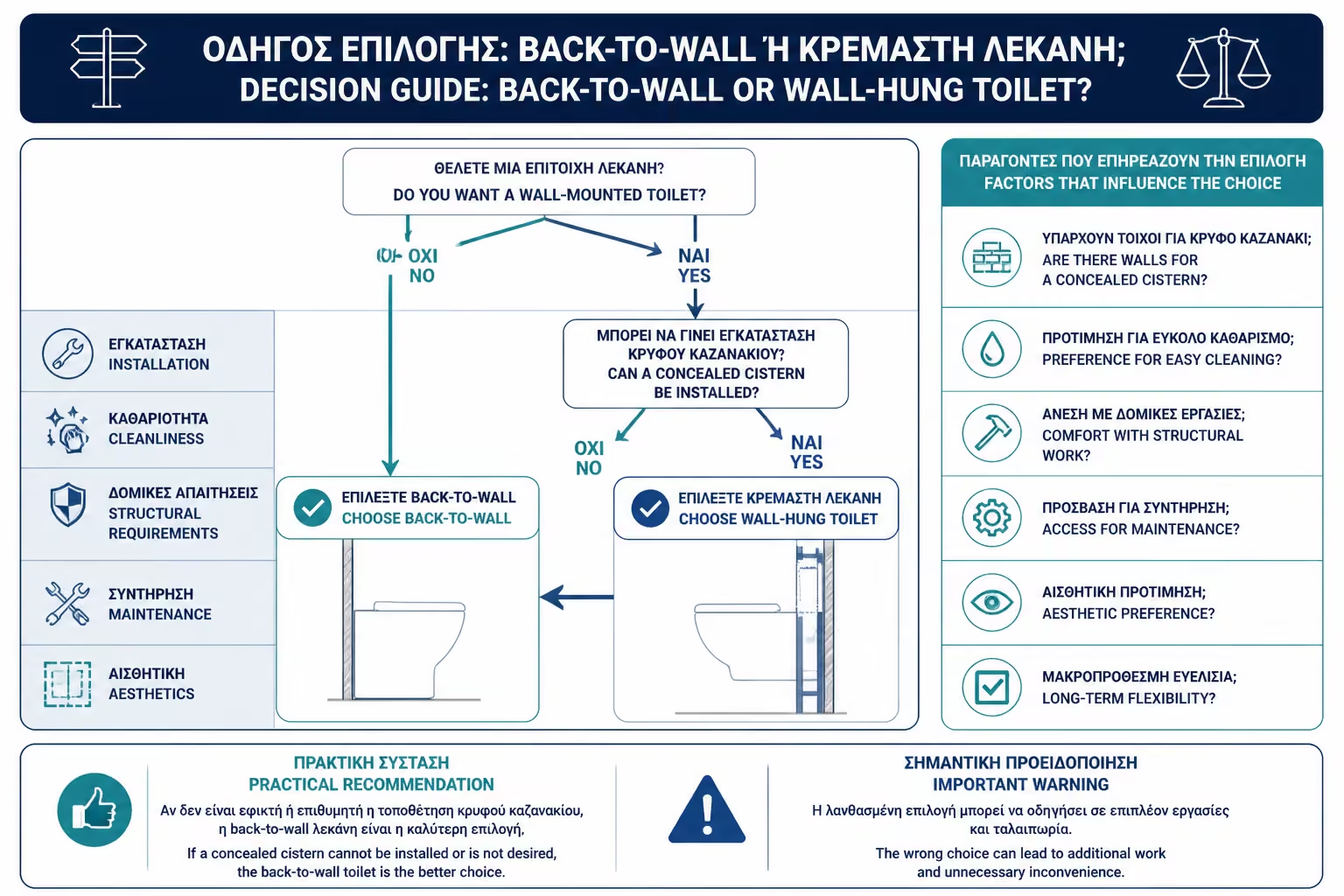
Back-to-wall is a better choice than hanging when we do not want to go into the complexity of the metal frame and built-in cistern, or when the existing installation does not favor such an intervention. It is also a good solution when we do a partial renovation and don't want to strip tiles.
It is also useful for owners who simply feel more comfortable with a toilet that rests on the floor. That may be partly psychological, but it is not trivial. If someone does not want a wall-hung toilet, back-to-wall gives them a more modern image without leaving the logic of floor support.
However, if a full renovation is being done and the budget allows it, the wall-hung toilet still remains the cleaner solution in terms of floor appearance and overall aesthetics.
It is not a good choice when the drainage does not fit and the necessary adjustments will end up ugly or expensive. If the toilet cannot sit properly against the wall, it loses its main advantage. It is also a poor choice if the wall is badly out of line and will not be corrected.
Extra care is also needed when there is an old cistern or an old supply point in the wrong position. Costly changes may be required. In such cases, a simple floor-mounted toilet may be more economical, or a full wall-hung solution may be cleaner if the wall is going to be opened anyway.
The important thing is not to buy before measuring the installation.
If you choose a back-to-wall toilet today, it is worth considering a rimless model. That gives you a cleaner external image and easier internal cleaning. The absence of an inner rim reduces hidden places where scale and residue collect.
The combination of back-to-wall, rimless bowl and soft-close quick-release seat is one of the most practical setups for owners who want a modern floor-mounted toilet. It does not reach the cleaning ease of a wall-hung toilet, but it offers very good day-to-day maintenance.
If the budget is limited, it may be smarter to choose a rimless back-to-wall toilet rather than a simpler old-style toilet with dated geometry.
The first mistake is to buy a back-to-wall toilet without measuring the drainage. If the outlet does not fit, the toilet may not reach the wall properly or may need an awkward connection. That ruins the aesthetics.
The second mistake is to assume that all back-to-walls are the same. Some are for built-in cisterns, others for visible ones. Some have horizontal output, others accept conversions. The technical specifications must be read.
The third mistake is to ignore the wall itself. If the tiles are crooked or the wall bows outward, the toilet will not sit cleanly. In a model that depends on contact with the wall, this becomes immediately obvious.
| Inquiry | Yes / No |
|---|---|
| Has the location of the drain been measured? | Yes / No |
| Is the toilet compatible with the existing outlet? | Yes / No |
| Is the wall straight enough for clean contact? | Yes / No |
| Do you want a visible or built-in cistern? | Yes / No |
| Does the toilet projection fit comfortably in the space? | Yes / No |
| Is the water supply hidden properly? | Yes / No |
| Is there service access to the cistern? | Yes / No |
| Is the model rimless? | Yes / No |
| Is the seat soft-close and quick-release? | Yes / No |
| Does the quote include possible hydraulic adjustments? | Yes / No |
In an older bathroom where the owner does not want a full renovation, a back-to-wall toilet with an exposed cistern can still upgrade the room significantly. If the drain position works, the change is relatively simple and the result is much cleaner than an old toilet with exposed rear pipework.
In a full renovation, a back-to-wall toilet with a concealed cistern can work as an alternative to a wall-hung one. The owner keeps the feel of a floor-mounted toilet, but still gets a clean wall, a concealed cistern and a more modern image.
In a very small WC, the choice must be made by measurement. If a back-to-wall model has a large projection, it can be difficult to use. There you need a compact model or a different solution.
A back-to-wall toilet is an excellent solution when you want the stability and simplicity of a floor-mounted toilet without visible pipework behind it. Do not buy one before checking the drain position carefully. Its whole logic depends on sitting properly against the wall. If you are carrying out a full renovation, a concealed cistern may be worth considering. If you are doing a simple replacement, a model with an exposed cistern may be more practical. For easier cleaning, a rimless back-to-wall toilet with a quick-release seat is usually one of the best upgrades.
A back-to-wall toilet is an ideal middle-ground solution for people who want a more elegant and contemporary bathroom but still prefer a floor-mounted toilet over a wall-hung one. It hides the pipework, sits neatly against the wall, cleans up the visual clutter and reduces the awkward cleaning spots behind the pan.
It is not as visually light as a wall-hung toilet, because it still meets the floor. But it is much cleaner and more modern than a classic floor-mounted toilet. Combined with a concealed cistern, rimless technology and a good seat, it can deliver an excellent result.
The crucial point is the installation. The toilet must suit the drain position and be able to sit properly against the wall. If those points are not checked, the final result can look improvised.
If you want elegance without the technical complexity of a pendant, back-to-wall is one of the most practical and balanced options.
Return to category.
Go to categoryReturn to the central guide.
Go to guide