
Bathroom Fixtures & Water Equipment
Return to category.
Go to categoryThe shower base is one of the bathroom elements that the owner often chooses quickly, almost at the end of the renovation. He looks at the dimension, the color, maybe even the height, and considers that the selection is over. But in practice, the shower base affects the feel of the bathroom every day: how you step, how safe you feel, how easy it cleans, how noisy it is, how well it withstands knocks and how well it cooperates with the faucet and the cabin.
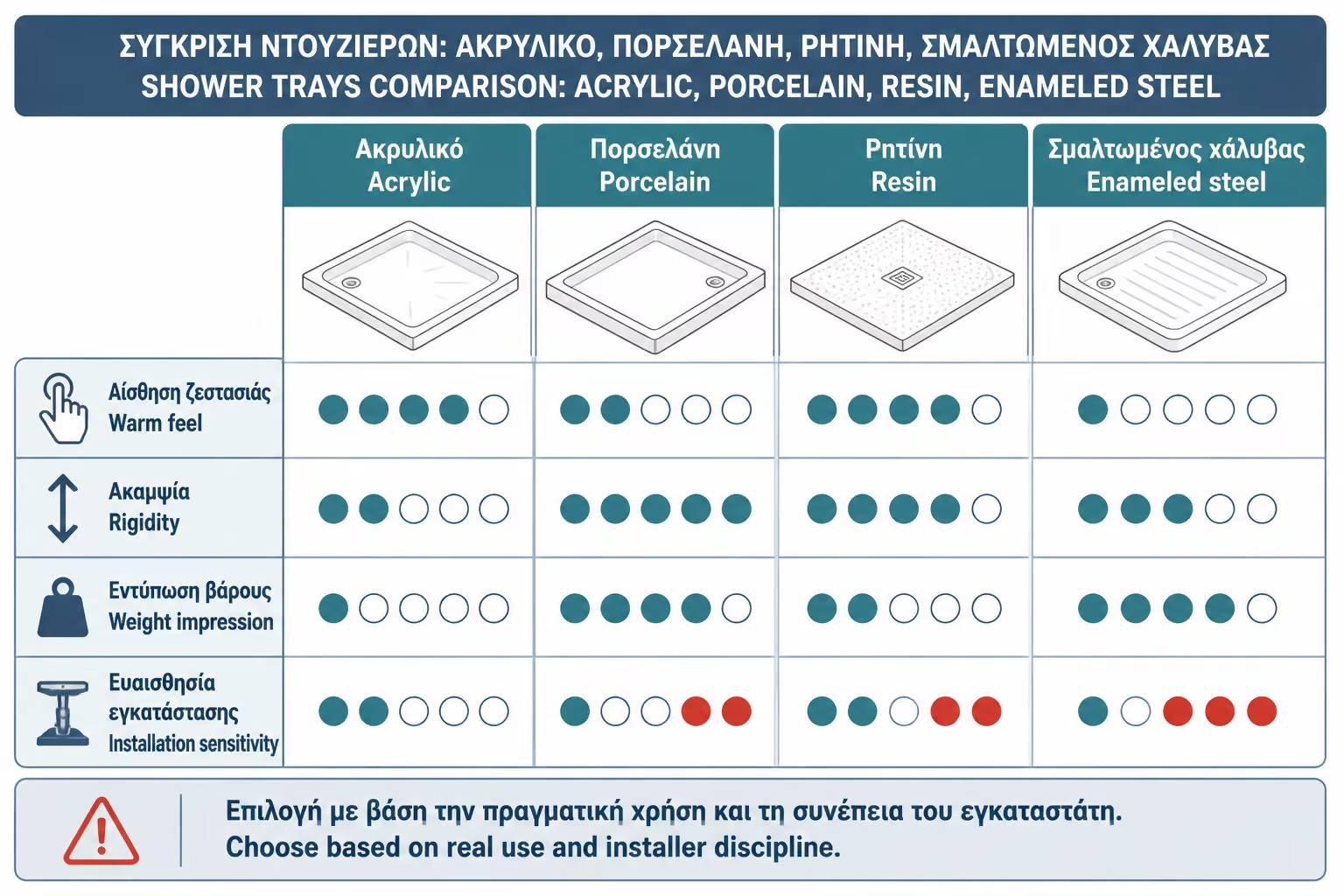
Not all bases are the same. An acrylic base can be more economical and warmer to the touch, but needs very good support underneath. A porcelain can give a feeling of solidity and purity, but it is heavier and colder on the foot. A resin or solid surface base may look premium and have a nice non-slip texture, but it drives up the cost. A steel enamel base can be very durable and delicate, but it needs proper placement and attention to knocks that injure the enamel.
The choice is not only aesthetic. It is a combination of material, dimensions, anti-slip, height, siphon, cleaning and method of use. If the bathroom is used by children, the elderly or people who want more safety, the anti-slip is not a decorative feature. If the base is placed in a small bathroom, the height and the feeling when pressed become more important. If we want a walk-in aesthetic without a built-in shower, a thin resin base can give a much better result than a classic tall acrylic.
So the right question is not "which base is the best in general?". The right question is "which base suits the use, the budget and the geometry of my bathroom?".
In the market you will often hear the word "plateau" for the shower base. In practice, this platform is a small technical system. It must collect the water, lead it to the siphon, step firmly, not bend, not slide, cooperate with the cabin and clean without wearing out.
If a base is beautiful but doesn't sit properly, it will make noise, move, or cause problems with the silicone and bonding to the tiles. If it is too smooth, it can be dangerous when wet. If it is too rough, it can hold soaps and salts. If it has a bad siphon, it will hold water or be difficult to clean. If it is too high, it spoils the comfort of access, especially in small or age-sensitive bathrooms.
That is why the base must be chosen together with the cabin, the faucet and the bathroom arrangement. Not in isolation.
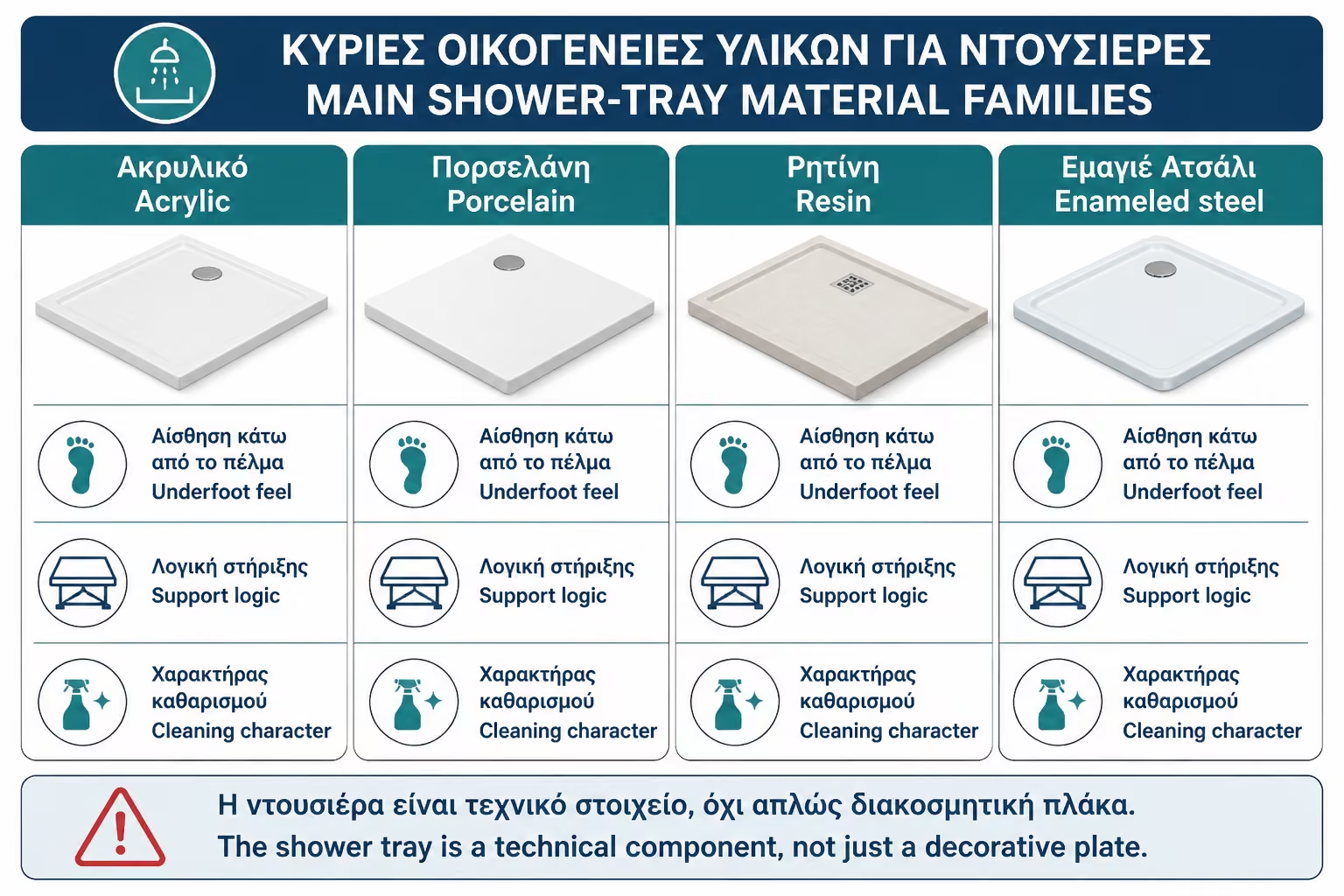
The acrylic base is one of the most popular solutions, mainly because it is economical, relatively light and easy to transport and install. It has a "warmer" feeling to the touch compared to porcelain or metal, which many appreciate in daily use. It doesn't feel like the cold stuff when you step into the shower.
Its main advantage is the relationship between price and practicality. For a simple bathroom, for a rental or for a budget renovation, a good acrylic base can be a perfectly reasonable choice. There are many sizes, several low profile and several that are easily combined with standard cabs.
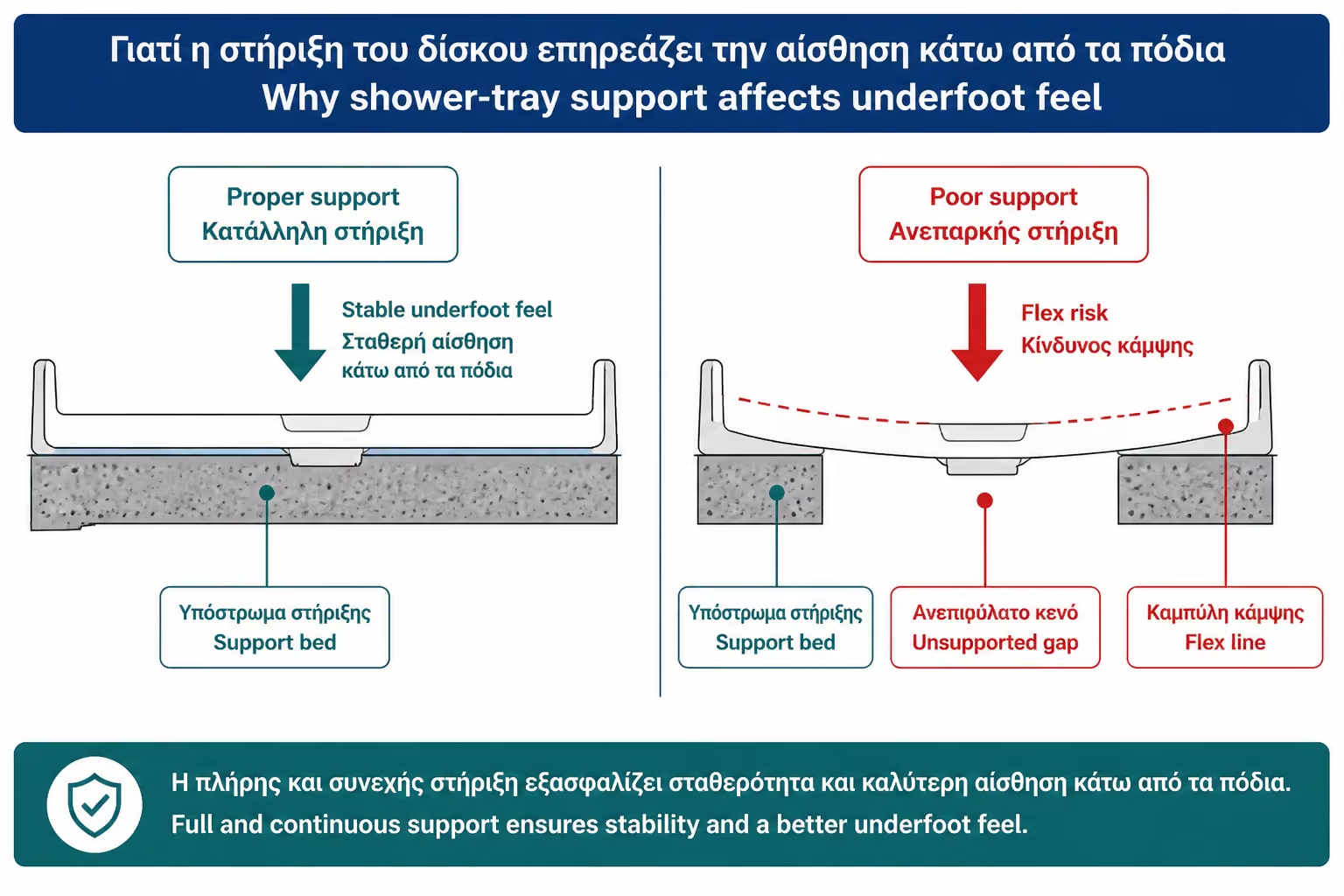
Her weak point is support. An acrylic base should not "play". If it is not properly supported underneath, it may bend slightly when stepped on. This over time can affect the silicone around the perimeter, creating small movements, noise or even cracks in low quality products. Correct positioning is more important than it seems.
Also, acrylic is easier to carve than harder materials. It doesn't need abrasive cleaners, wire sponges or rough use. If it is cleaned gently and has proper support, it can be a very good solution. But if it is entered lightly or heavily used, it will show its age faster.
Porcelain is a material that many associate with cleanliness and durability. A porcelain shower base has a hard, smooth, glassy surface and gives a sense of stability. It does not bend like a bad acrylic base and is easy to clean when the surface is of good quality.
Its great advantage is the feeling of "permanent" material. You step on it and you feel solidity. The surface doesn't look plastic, doesn't scratch so easily and goes well with classic white sanitary ware. For a bathroom that wants a clean, timeless image, porcelain remains a very safe choice.
But there are also disadvantages. Porcelain is heavy. This means that transport and placement need attention. If hit hard, it may break or chip. Also, the surface may be colder to the touch and, if it does not have an anti-slip texture, it may slip more when wet.
In terms of design, porcelain bases may look more classic. If you want an absolutely minimal walk-in aesthetic, a very thin profile and a natural stone texture, you may be more attracted to a resin base. But if you want a clean, robust and proven solution, porcelain remains a very strong choice.
Resin or solid surface bases have risen a lot in recent years, because they combine modern aesthetics, a low profile and often a very good feel to the touch. They can have a matte surface, a stone texture, a natural feel and a more "architectural" image than a classic acrylic or porcelain base.
Their big advantage is feeling. They don't look like cheap plastic, nor like cold porcelain. The surface is often visually warmer, more matte and more slip resistant. Combined with black or chrome profiles, large cabins and modern tiles, they can give a very premium effect.
Many resin bases come in a variety of colors, such as white, beige, gray, charcoal, or black. This helps them blend in better with modern bathrooms. A gray or beige solid surface base can look much more natural next to concrete look or stone look tiles.
The disadvantage is the cost and the need to choose the right quality. Not all resin bases are the same. Some have a better surface, better stain resistance and better structure. Others may stain more easily or be more demanding to clean. Also, matte and dark surfaces can show salts more strongly, especially in hard water.
If you want a modern effect, a low height and a good anti-slip feel, resin is one of the most interesting options. Just don't choose just by color. It wants quality control, cleaning and warranty.
Enameled steel bases consist of a steel body with an enamel coating. It is a solution that combines a thin profile, high hardness and a very clean surface. In countries where they are used the most, they are considered a reliable and long-lasting choice.
Their advantage is the durability of the surface and the feeling of quality. The enamel is hard, clear and resistant to many daily loads. It doesn't scratch like acrylic and doesn't have the same "plastic" feel. Also, enameled steel bases can be quite thin, which helps in more modern applications.
The downside is that if the enamel is hit hard and injured, the metal underneath can be exposed and there is a risk of rust. Also, the feeling to the touch can be colder and "harder" than an acrylic or solid surface base. If the placement is not done correctly, there can also be a more metallic acoustic feel.
It is a choice for anyone who wants a thin, sturdy, clean and durable product, but not necessarily for anyone who wants the warmest or softest touch.
In the showroom, the base can be seen with the eyes. At home, you judge her by her feet. Touch feel is important, especially if the bathroom is used daily.
The acrylic base is usually warmer and "softer" in feel, but if it is not well supported it can feel elastic. Porcelain is hard and firm, but colder. Resin or solid surface often offers the most pleasant balance: stable, matte, natural and less cold visually. Steel enamel is hard and clean, but can feel colder and stiffer.
This does not mean that there is an objectively "better" feeling. Some prefer the robustness of porcelain, others the warmth of acrylic and others the matte texture of resin. If possible, it's worth seeing the material up close before buying.
In the shower, pressing is done with water, soap and a bare foot. So slip resistance is a key criterion. A base can be beautiful, but if it slides, it's not the right choice.
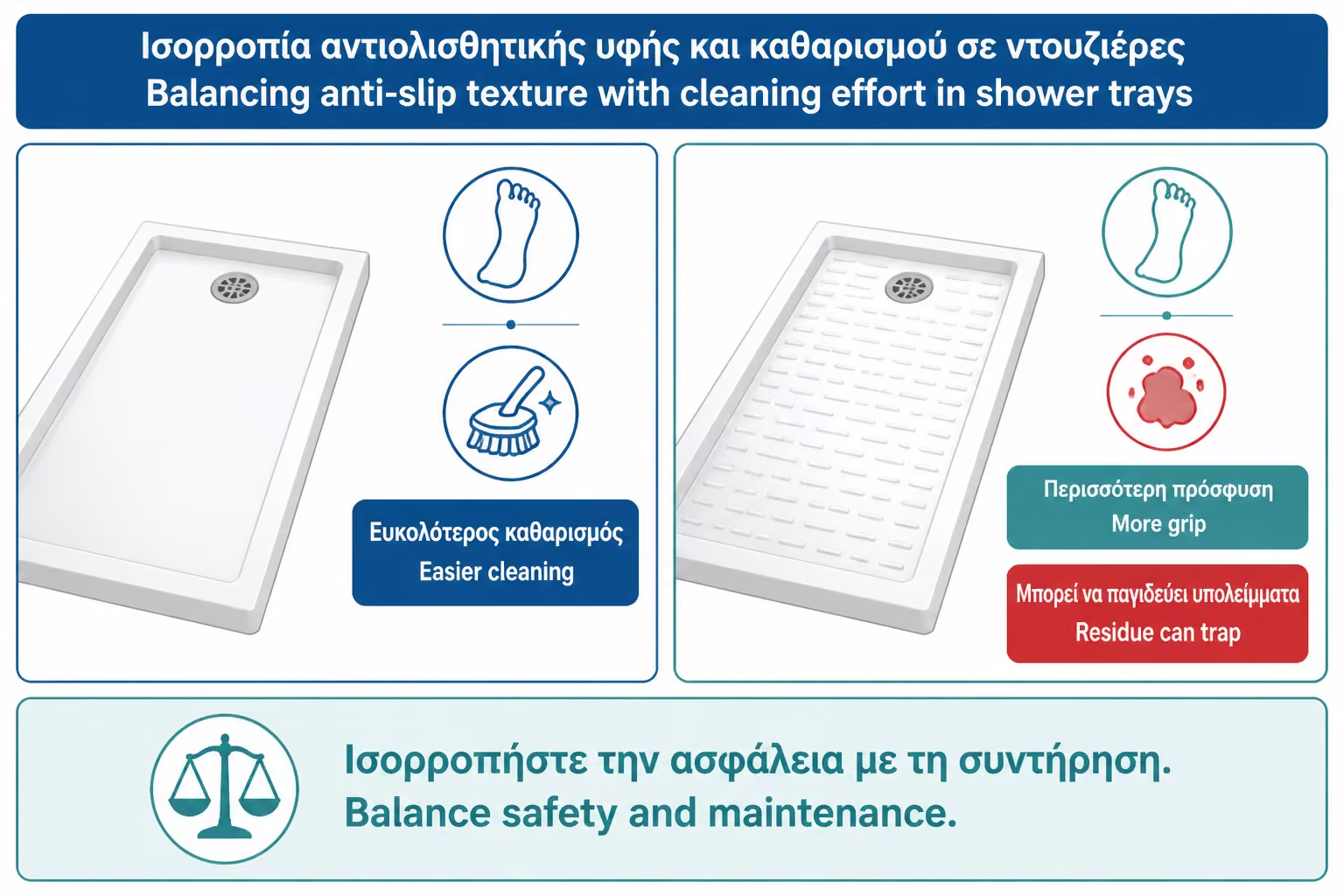
The anti-slip can result from the texture of the surface itself or from a special treatment. Resin bases often have a naturally more matte and textured texture, which helps. Porcelain and enamel bases may have a special non-slip surface or be smoother, depending on the model. Acrylics can also have a textured or anti-slip pattern.
But be careful: a very rough surface can be more difficult to clean. Holds soaps, salts and dirt. The ideal base should have sufficient grip without becoming a "sponge" of dirt. It is a balance between safety and cleanliness.
For a bathroom with the elderly, children or people with reduced mobility, anti-slip should be very high in the selection criteria. It is not an optional upgrade.
The shower base accepts daily soaps, shampoos, salts and cleaners. That is why the material must be easy to clean without requiring aggressive products.
Acrylic is easy to clean, but does not require abrasives. Porcelain is durable, but if it has a non-slip texture it can hold more debris. Resin needs gentle cleaning and attention to stains, especially in light or very dark colors. The enamelled surface cleans well, but must be protected from knocks and strong abrasives.
In all cases, the best maintenance is prevention. If the water and soaps are left on the base every day, the salts will show. If a quick rinse and occasional wipe is done after the shower, the base will hold a much better image.
The height of the base greatly affects comfort. Older showers often had taller bases, with steps. Today, many homeowners prefer low-profile mounts because they look more modern and are easier to access.
A low base is friendlier for the elderly and for those who want fewer obstacles. It also creates a closer aesthetic to a walk-in shower, without requiring a complete built-in solution. But the low height must cooperate with proper drainage. It is not enough that the base is beautiful. It must fit the siphon properly and have sufficient drainage.
In renovations of old bathrooms, the height available for drainage is often limited. There it must be checked whether a low base can be inserted without creating problems in the drainage slopes. If not, a different solution or small raised press may be needed.
| Base material | Sensation to pressure | Resistance | Cleaning | Anti-slip | Cost |
|---|---|---|---|---|---|
| Acrylic | Warm, slightly softer | Good if supported properly | Easy, but not abrasive | Per model | Low to medium |
| Porcelain | Hard, firm, colder | Very good, but can break on a strong impact | Very good | Per surface area | Medium |
| Resin / solid surface | Firm, matte, natural | Very good at quality products | It needs gentle care | Usually very good | Medium to high |
| Steel enamel | Hard, thin, colder | Very good, note nicks in the enamel | Very good | Per model | Medium to high |
The table gives an overview. Actual quality always depends on the specific product and placement.
Prices vary significantly by dimension, material, height, finish and brand. A simple acrylic base can be quite economical, while a large solid surface low profile base can cost many times more.
| Base type | Indicative purchase cost |
|---|---|
| Simple acrylic base | €120–€350 |
| Best low profile acrylic | 250–600€ |
| Porcelain base | 250–700€ |
| Resin base / solid surface | €400–€1,200+ |
| Enamelled steel base | €350–€1,000+ |
| Placement / adjustments / siphon | in addition, per project |
The prices are indicative for the Greek market. The final cost is affected by the dimension, access, floor, whether a drain change is needed, siphon, cubicle, waterproofing and whether floor or tile adjustments are required.
For a budget bathroom or a rental, a good acrylic base may be the most sensible choice. There is no need to go for premium hardware when what is required is a clean, functional and economical solution. It is enough to support it properly and not to choose the weakest product on the market.
For a classic residential bathroom, porcelain remains a very safe choice. It is clean, robust and timeless. If there is a need for a more modern look, low profile and better texture, the resin base is more attractive. In a modern bathroom with walk-in aesthetics, concrete look tiles or a frameless cabin, a solid surface base can bind much better aesthetically.
For those who want a hard, thin and clean surface, the enameled steel base is also a serious choice. It is not as common as acrylic, but can give a very high quality result when placed correctly.
The first mistake is to choose based solely on price. A very cheap base may seem reasonable at the checkout, but if it bends, yellows, scratches or slips, the cost will show in everyday life.
The second mistake is choosing a very beautiful base without drainage control. A low base needs a proper siphon and adequate slopes. If the old bathroom cannot easily accept it, the installation can become more difficult and expensive.
The third mistake is indifference to anti-slip. In the showroom the base is dry. At home she will be wet, with soap and bare feet. This is the real condition.
Another mistake is not connecting the base to the cabin. The cabin must sit properly on the base, seal properly and not allow water to escape. We do not buy base and cabin as two independent items.
| Inquiry | Yes / No |
|---|---|
| Is the base the right size for the bathroom? | Yes / No |
| Has the siphon been checked for fit? | Yes / No |
| Is there adequate drainage and slope? | Yes / No |
| Is the surface non-slip? | Yes / No |
| Is the material suitable for bathroom use? | Yes / No |
| Is the base properly supported underneath? | Yes / No |
| Does it work with the cabin it will be in? | Yes / No |
| Is it easy to clean with mild detergents? | Yes / No |
| Is it suitable for children or the elderly if needed? | Yes / No |
| Does the cost include fitting/siphon? | Yes / No |
In a small rental bathroom, a quality acrylic base 80x80 or 80x90 can make perfect sense. Properly propped up and paired with a good cabin, it will do the job without overspending. The mistake would be to choose the cheapest base without good support, because over time it can start to "play".
In a modern bathroom of 5 sq.m. with large format tiles and a black frameless cab, a white or gray low-profile resin base can give a much more complete look. It will not look like a foreign piece in the bathroom, but like part of the design.
In a bathroom that will be used by an elderly person, slip resistance and low height are more important than aesthetics. There base should be chosen based on safety, stability and easy access, not just based on color or material.
Do not choose a shower tray from a photo alone. Step on it, feel the texture, check the height, and ask how it is supported underneath.
An acrylic tray is budget-friendly and warm underfoot, but it needs proper support. Porcelain is solid and easy to keep clean, but it is colder and heavier. Resin gives you a premium look and a good anti-slip feel, but it raises the cost. Enameled steel is durable and slim, but it needs care around impacts.
If the bathroom is used by an older person, a child, or simply sees heavy daily use, put slip resistance very high on the list. A beautiful tray that feels slippery is a bad choice.
Before you order a low-profile tray, check the drainage first. Even the nicest model will not work properly if the trap does not fit or the waste line cannot drain correctly.
The shower base is not just the place where we step. It is a basic element of functionality, safety and aesthetics of the bathroom. The choice between an acrylic, porcelain, resin or steel enamel base should be made based on actual use and not just price.
Acrylic base is practical and economical, as long as it is of good quality and properly supported. Porcelain offers robustness and timeless purity. The resin or solid surface gives the most modern aesthetic, nice texture and often a better anti-slip feel. The enamelled steel base is thin, hard and durable, but needs attention to bumps and proper placement.
If the budget is tight, a good acrylic or porcelain base can be better than a cheap, premium-looking, low-quality solution. If you want a more modern effect and have the margin of cost, the resin base is one of the most complete options. If safety is a priority, slip resistance and low height should count more than looks.
The right base is the one that steps firmly, cleans reasonably, does not slip, cooperates with the siphon and cabin, and withstands daily use. If it achieves these, then the material has been chosen correctly.
Return to category.
Go to categoryReturn to the central guide.
Go to guide