
Bathroom Fixtures & Water Equipment
Return to category.
Go to categoryThe bidet is making a comeback, but not always in the form we remember it in the old bathrooms. For decades, the traditional freestanding bidet was almost a given in many Greek homes, especially in larger bathrooms. Then, as apartments got smaller, bathrooms became more compact and renovations began to chase every available inch, the bidet was one of the first items to be removed. In its place came larger showers, bathroom furniture, washing machines or simply more free space.
Today, however, the need for better personal hygiene has returned strongly. The owner wants the practicality of water cleaning, but often does not have the space for a second sanitary fixture next to the toilet. This is where alternative solutions come in: bidet sprayers, special toilet seats with washing, electronic shower toilets and combined systems that provide the same function with less space.
So the question is not simply "install a bidet or not?" It is which solution suits this specific bathroom. A large 7-8 sq.m. master bathroom that comfortably fits a toilet and bidet is one thing; a narrow 3.5 sq.m. apartment bathroom is another; a guest WC is another again; and a bathroom used by an elderly person or someone with limited mobility is different still. The right choice depends on the space, the plumbing, the drainage, the water pressure, the budget and how much maintenance the owner wants to take on.
The big mistake is to treat the bidet sprayer as a simple accessory that "fits anywhere". Yes, it is smaller and more economical than a traditional bidet. But it is still a pressurized plumbing fixture with a flexible hose, trigger, shut-off valve and a real leak risk if it is installed or used incorrectly. By contrast, the traditional bidet is more complete and more comfortable, but it needs space, drainage, plumbing and a proper layout.
In this guide we will see what each solution offers, how much space it takes, what amenities it requires, what to look out for in terms of safety and leaks, how it affects the cost of the renovation and which option fits best depending on the square footage of your bathroom.
The comeback of the bidet is not only a matter of fashion. It is associated with a more practical perception of hygiene, with the influence of hotels and residences abroad, but also with the search for more comfortable solutions in the daily bathroom. Many homeowners renovating today don't just want a pretty bathroom. They want a bathroom that better serves the use of the house.
The traditional bidet has one main advantage: it is a separate hygiene fixture. It has its own tap, its own drain, its own ceramic body and does not depend on the toilet bowl. Its use is comfortable, controlled and familiar to many older users. In large bathrooms, it remains a very complete and elegant solution.
On the other hand, modern bathrooms often do not have room for a second hygiene fixture. The need does not disappear; it simply changes form. The bidet sprayer next to the toilet, also known as a handheld bidet spray or shattaf, gives access to water without requiring a second ceramic fixture. It is more economical, easier to fit into small spaces and especially popular in bathrooms where every centimeter counts.
So the return of the bidet does not necessarily mean the return of the classic duo of "toilet + bidet". It means the return of the function. Whether that function will be served by a traditional bidet, a bidet sprayer or an electronic seat depends on the layout and the real needs of the space.
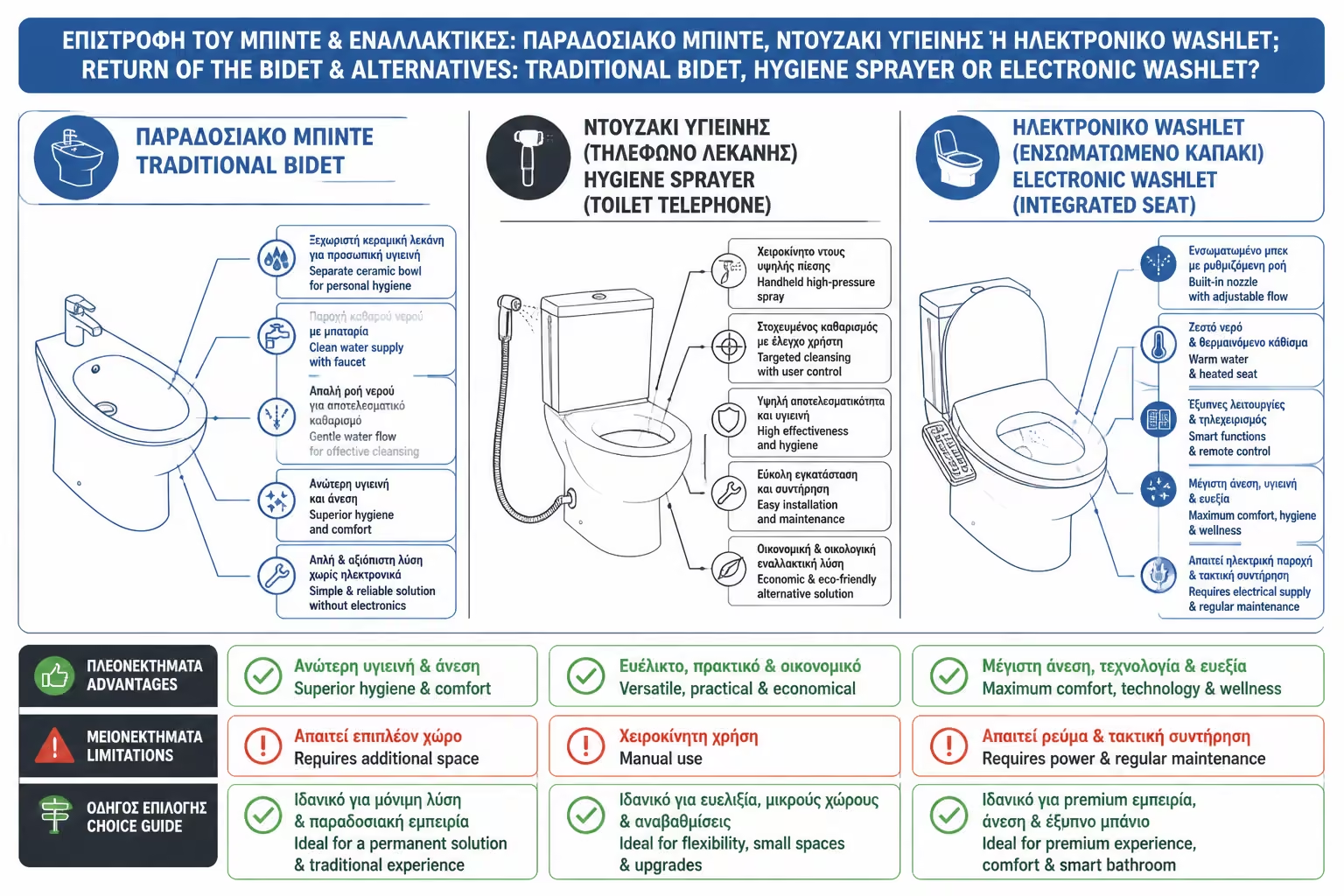
The traditional bidet is the most complete solution in terms of comfort. The user sits on a separate fixture, usually has hot and cold water, can adjust the temperature and flow, and can use it without wetting the area around the WC. In a large bathroom, especially when the bidet is in the same row as the toilet, the result feels balanced and comfortable.
The cost is space. A bidet does not only occupy the width of the ceramic. It also needs free space in front for use, side clearances, tap access and drainage. If it is placed too tightly, it turns from a comfort into an obstacle. In small bathrooms, that is often why it gets removed during renovation.
In practical terms, a standalone bidet only makes sense when the bathroom can fit two sanitary fixtures with comfortable circulation between them. If the toilet area is already cramped, if the door barely opens, or if the sink already squeezes the room, adding a bidet is usually the wrong move. You gain a function but lose everyday comfort throughout the bathroom.
In the Greek market, simple floor bidets can start at relatively low prices, while wall-hung or more branded models cost more. For example, in Greek stores, floor bidets can appear from around €60–130 for simple options, while wall-hung or branded models can cost around €190–300 and above, without always including the tap or additional accessories.
The bidet sprayer is a small hand shower that is usually installed next to the toilet. It has a hose, a trigger head and a shut-off valve or wall supply. The user operates it while seated on the toilet, without needing a second hygiene fixture.
The big advantage is the space. No second porcelain is needed, no additional footprint is required on the floor and it can be integrated even into very small WCs, as long as there is a correct supply and installation location. For many Greek bathrooms of 3–5 m2, this is the most realistic solution if the owner wants a bidet function without sacrificing circulation.
The second advantage is cost. In the Greek market there are simple bidet sprayers and trigger sprays at fairly low prices, from around €20-40 for basic solutions, while higher quality wall-mounted or built-in systems, especially with a better finish or thermostatic function, can exceed €100.
But the hygiene phone needs attention. It's not just "a shower". If it is left under constant pressure, if there is no proper switch, if the coil is cheap, or if the connection is made sloppily, it can drip or leak. In small bathrooms without a good floor drain, even a small leak can become a daily nuisance.
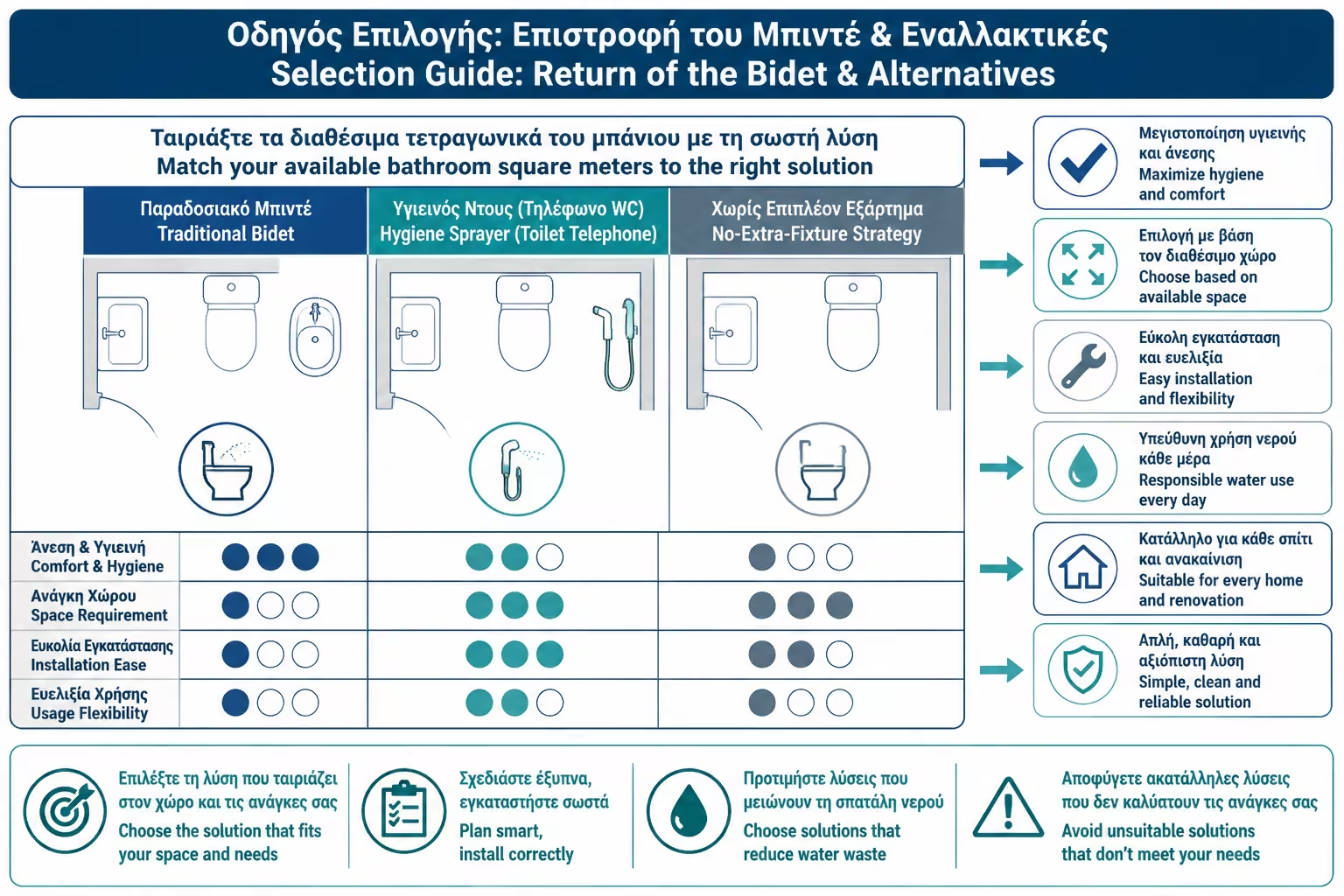
The choice between a bidet and a bidet sprayer must start from the floor plan. How big is the bathroom? Where is the toilet located? Where is the door? Is there a free wall next to the toilet? Is there room for a second sanitary fixture without shrinking the shower or the furniture?
In a bathroom of 6–8 m2, the traditional bidet can be an excellent solution, especially if the bathroom is designed from scratch. In a 4–5 m2 bathroom, the decision becomes more difficult. It might fit a bidet, but maybe that means a smaller shower, a narrow passageway, or a smaller piece of furniture. In a WC of 1.5–2 m2, the traditional bidet is usually not realistic. There the bidet sprayer or a special seat are more reasonable solutions.
A practical example: in a 1.70 × 2.20 m bathroom, the owner wants a toilet, a sink, an 80 × 120 shower and a bidet. On paper everything may "fit", but in practice the clearances become tight. If the bidet is removed and a bidet sprayer is installed next to the toilet, the shower can be enlarged, circulation can improve and the hygiene function can still remain.
Space should not be evaluated in square footage alone. Must be evaluated at clear usage distances. A bathroom of 5 sq.m. with a bad layout it can be more difficult than a 4 sq.m. bathroom. with proper arrangement.
The table below does not replace a bathroom study, but helps the owner understand which solution is usually more realistic.
| Space size | A more practical solution | Comment |
|---|---|---|
| WC 1–2 sq.m. | Hygiene telephone or special seat | The stand-alone bidet usually does not fit functionally |
| Bathroom 3–4 sq.m. | Bidet sprayer, compact toilet, maybe an electronic seat | Traffic and shower priority |
| Bathroom 4–5.5 sq.m. | It depends on the layout | It can accommodate bidets, but not always without sacrifices |
| Bathroom 6–8 sq.m. | Traditional bidet or hanging bidet | A more comfortable and aesthetically complete solution |
| Large master bathroom | Bidet, shower toilet or a combination of solutions | The choice is made mainly based on comfort and budget |
| Airbnb / rental | Simple bidet sprayer with a good valve and durable hose | It wants easy use and little risk of leaks |
In practice, for most small Greek bathrooms, the bidet sprayer is the most efficient solution in terms of space and cost. The traditional bidet is worth it when there is genuinely comfortable space and when the function will be used often.
The traditional bidet needs a water supply, usually hot and cold, a mixer tap and a drain. If it is included in a new renovation, these can be planned properly. If it is added to an existing bathroom, demolition, new piping and drain adjustments may be required. This increases the cost.
The bidet sprayer needs a water supply next to the toilet. It can be cold-only or, in more elaborate solutions, mixed through a standard mixer or a thermostatic mixer. A cold-only connection is cheaper, but in winter it can be uncomfortable. A thermostatic solution is more pleasant, but costs more and requires proper planning.
The electronic seat or shower toilet needs water and usually electricity. Geberit states that the installation of a shower toilet requires a water supply and an electrical connection, while in modern systems hidden supplies can be provided from the installation stage to avoid future construction interventions.
This is critical in renovations. If you do not want an electronic seat today but might want one later, it is worth asking the technician whether water and electricity can be provided near the toilet. That foresight is far cheaper while the wall is open than after the bathroom is finished.
Simple bidet sprayers are often connected to cold water only. This makes installation simpler and cheaper. In mild climates or in a WC used occasionally, that may be acceptable. In a main bathroom, especially in winter, cold water can make the experience unpleasant.
The solution with hot and cold water is more comfortable, but it needs a mixer. If the adjustment is made casually or if there is no thermostatic control, there may be sudden changes in temperature. For reasons of comfort and safety, especially when children or the elderly use the bathroom, a thermostatic solution may be better if the budget and facilities allow.
The traditional bidet has an advantage here, because it works like a small washbasin: with a normal tap, temperature regulation and more controlled use. The bidet sprayer is more direct, but its comfort depends heavily on the way it is connected.
In a complete renovation, it is good that the decision is made before the pipes are laid. If you say "we'll put in a shower later" but don't provide a proper supply, then you can end up with exposed piping or sloppy connections that spoil both aesthetics and safety.
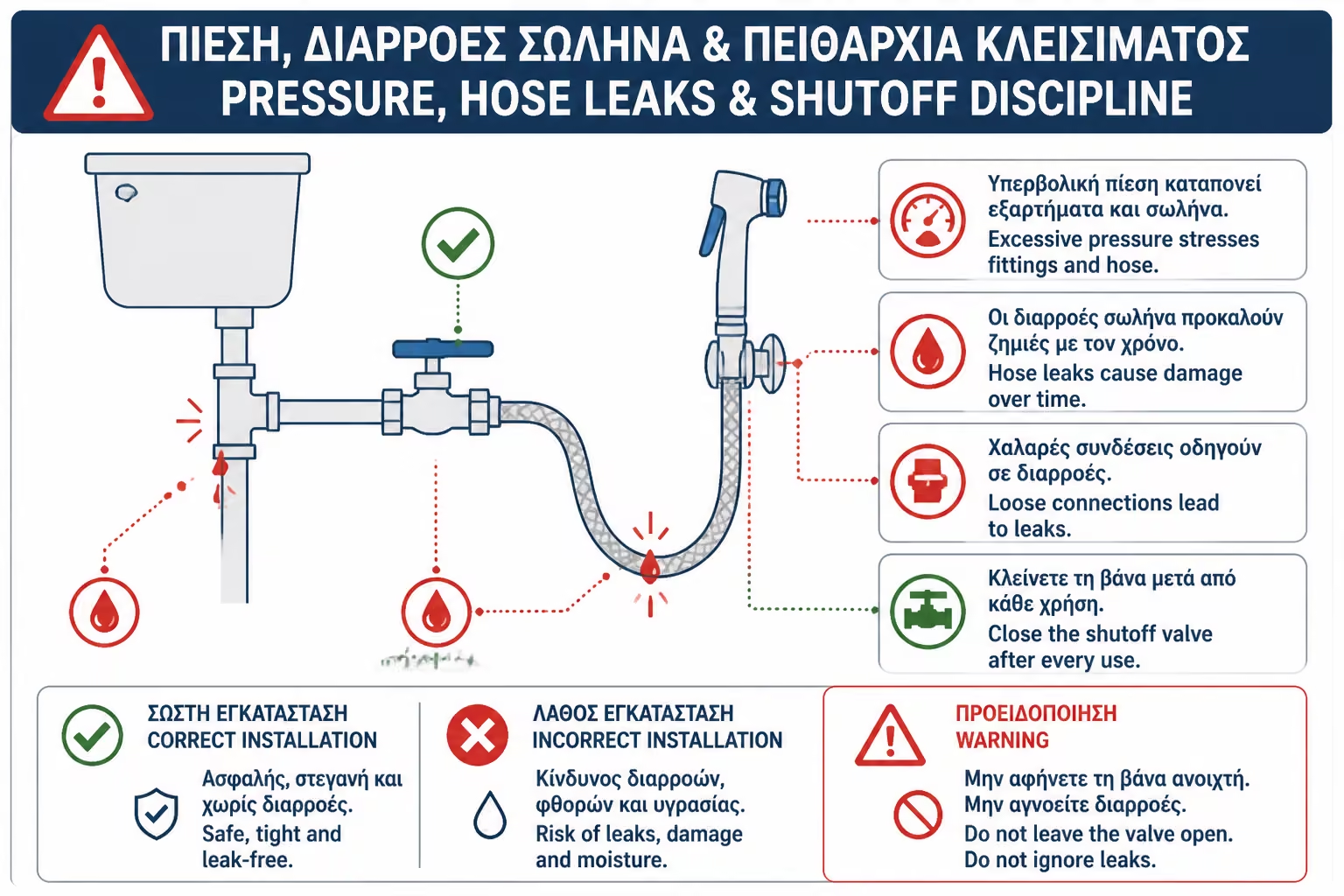
The bidet sprayer has one practical risk: it stays under pressure. If there is only a trigger on the head and the shut-off valve never closes, the hose and spray head remain constantly stressed. If the component is poor quality or wears out, it may leak or fail.
Good practice is to have a supply switch, ideally within easy reach, and for the user to turn off the supply after use. In higher quality installations, spirals, shut-off heads and systems designed for this use are better chosen. In areas with high water pressure, the plumber should check if a pressure reducer or other adjustment is needed.
A common scenario is this: an inexpensive bidet sprayer is installed in a WC without a floor drain. The head starts leaking after a few months, but because the leak is small, the owner ignores it. Water runs behind the toilet or collects in a corner, creating moisture, limescale and possible damage to furniture or skirting boards. The problem is not the concept of the sprayer itself, but the quality and the installation method.
With bidet sprayers, the cheapest option is not always the most economical in the long run. A quality kit with a proper shut-off valve, durable hose and correct placement greatly reduces the risk of micro-leaks.
The hygiene telephone is a component that can come close to a pollution zone. In several countries, regulations treat bidet sprays as installations that need attention for possible backflow of water to the mains and require appropriate protection against backflow. For example, NSW guidelines state that handheld bidet hoses and trigger sprays must be potable water-fed and protected with an appropriate high hazard device such as an RPZD, while UK installation guides state the need for appropriate backflow prevention devices.
For the Greek reality, the owner should not make arbitrary technical assumptions. It is not correct to treat the sanitary shower as a simple accessory that everyone screws in wherever they find a supply. The plumber should check the connection method, the need for a non-return valve or other protection, the pressure, the position of the head and how to avoid contacting or submerging the head in dirty water.
This does not mean that the solution is dangerous in itself. It means it must be installed properly. As with any plumbing job, detail makes all the difference. A cheap sprayer haphazardly screwed into an old supply is not the same as a well thought out installation with proper components, switch, protection and easy access.
In renovations, ask the plumber to explain how the supply is shut off, what protection the system has and what to do in case of a leak. This discussion is more important than head color.
Between the traditional bidet and the simple bidet sprayer there is also a third category: special toilet seats with washing or complete shower toilets. These integrate a water-cleaning function into the toilet itself, often with control over temperature, pressure, nozzle position, self-cleaning and even drying in more advanced models.
The big advantage is that there is no need for a second hygiene fixture and the use is more controlled than with a manual sprayer. The disadvantages are the cost, the need for water and electricity, compatibility with the toilet and the more complex maintenance. Geberit, in its AquaClean installation information, states that both a water supply and an electrical connection are required for a shower toilet, so they must be planned in advance.
In new renovations, this category is worth considering if the owner wants a higher level of comfort and has the budget. In older bathrooms, installation may be harder if there is no power supply near the toilet or if the toilet is not compatible with the seat.
In small bathrooms, an electronic seat can be an excellent solution because it does not take up additional space. But it is not the most economical solution. If the question is simply a practical hygiene function at a low cost, the hygiene telephone remains more affordable.
In a small guest WC, the traditional bidet usually makes no sense. The space is small, the use is brief and the priority is comfortable access to the toilet and the sink. A bidet sprayer can be added without ruining the layout, as long as there is a proper place for it next to the toilet.
Here, however, attention needs to be paid to the aesthetics and the use by visitors. The visitor must easily understand how the system works, where the supply opens and closes. If the sprayer is difficult to use, if the valve is hidden or if the water is thrown with great pressure, accidents and water on the floor can be created.
For guest WCs, a discreet, good-quality set in a finish that matches the other taps is often worth it: chrome, black, brushed or inox. If the WC is very small, the hose should not get in the way of the user's legs or drop messily onto the floor. A correctly positioned hook or bracket matters.
If there is no floor drain, the need for proper quality and supply shut-off is even greater. In a small WC, a leak is quickly seen, but it can also damage furniture, cases or skirting boards if it goes unnoticed.
In the main bathroom, the choice should be based on daily use. If the room is large, the traditional bidet is a comfortable and timeless solution. If there is space for a toilet and bidet from the same series, with proper clearances, the result is both practical and visually coherent.
If the bathroom is medium-sized or small, the bidet sprayer usually makes more sense. It allows for a larger shower, better furniture or more free space. In a family bathroom, however, the sprayer must be durable, easy to use and safe, because it will likely be used often and possibly by children.
For families, it is worth paying attention to the water temperature. Only cold water may be acceptable as an economical solution, but not always comfortable. If a complete renovation is being carried out, it is good to consider a solution with a mixer or thermostatic regulation. If there are small children, the temperature and pressure must be controlled.
In the main bathroom, do not underestimate cleanliness around the toilet. A bidet sprayer can splash more water if it is used carelessly. If the floor does not drain well, or if there is no nearby floor trap, even more attention is needed.
In bathrooms used by elderly people or users with limited mobility, the solution must be comfortable, safe and simple to use. A traditional bidet may not always be practical because it requires moving from the toilet to a separate fixture. That movement can be difficult or even dangerous.
In such cases, a bidet sprayer or, even better, a seat with a built-in washing function may be more practical. The user stays on the toilet and does not have to move elsewhere. If there is an electronic seat with adjustable functions, comfort increases significantly.
But care must be taken in handling. The sprayer must be within easy reach of the user, without bending too far or turning dangerously. The pressure must be controlled. The valve should be easy but not so exposed that it opens accidentally.
In such bathrooms, the choice should be made together with a technician who understands the use of the space. It's not just a plumbing issue. It's a matter of ergonomics and safety.
The cost depends on whether we are talking about a simple component or a complete plumbing installation. A bidet sprayer may look very economical at first, but if it needs a new supply, tile repairs or a thermostatic mixer, the total cost rises. By comparison, a traditional bidet may be reasonably priced as a ceramic product, but it still requires a tap, drainage, plumbing connections and labour.
| Solution | Indicative product cost 2026 | What you should not forget |
|---|---|---|
| Simple hygiene phone / trigger spray | 20–60€ | It needs proper valve, spiral, connection and pressure control |
| Quality wall-mounted or built-in bidet sprayer | 80–180€+ | Better aesthetics, possibly more complex placement |
| Thermostatic sanitary system | 120–300€+ | It needs hot/cold water and proper design |
| Floor bidet | 60–250€ | Usually does not include the tap and labour |
| Hanging bidet | 150–400€+ | It needs framework/support or proper infrastructure |
| Electronic seat / shower toilet | 300–1,500€+ | It needs water, electricity, compatibility and service |
| Full high class shower toilet | 1,500–4,000€+ | Premium solution, not a simple cover replacement |
The prices are indicative for Greece in 2026 and depend on region, store, VAT, transport, brand, finish, quality of components, whether it is a complete renovation or a single addition, as well as the condition of the existing plumbing.
In a full renovation, the cost of planning the water supply correctly next to the toilet is usually far lower than trying to add it later. If you are even considering a future sprayer or electronic seat, it is worth discussing it from the start.
The first mistake is choosing a traditional bidet in a room that does not really support it. If the bidet narrows the passage, shrinks the shower too much or forces the toilet into an awkward position, then the result is not functional. A bathroom with a bidet but without comfortable circulation is not a better bathroom.
The second mistake is to install a bidet sprayer without a proper valve and without thinking about leaks. The sprayer must be shut off, properly supported and the hose must not be left in a position where it gets pulled, kinked or hit.
The third mistake is the casual connection to an existing supply without pressure, backflow and safety control. Installation should be done by a plumber, not as a simple bathroom accessory.
The fourth mistake is not taking into account the temperature of the water. A cold water only solution can be economical, but not always pleasant in everyday use. If the owner uses it twice and then abandons it because it's uncomfortable, the economy didn't make sense.
The fifth mistake is failing to provide an electrical connection when there is even a possibility of an electronic seat. Once the bathroom is finished, adding power or a proper supply next to the toilet can be difficult, unattractive or expensive.
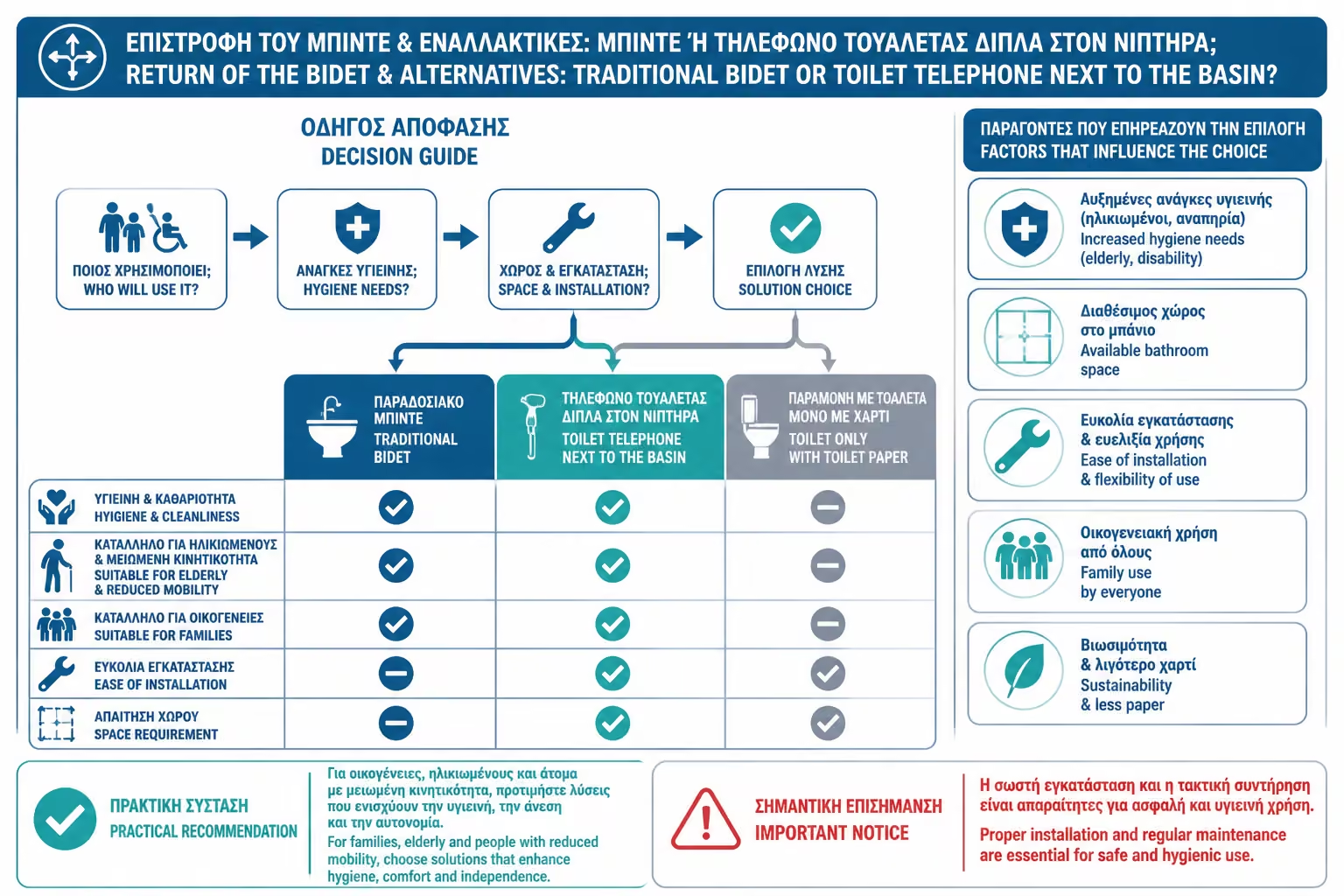
The decision should start from a simple question: what problem are you trying to solve? If you want maximum comfort and have enough space, the traditional bidet remains an excellent solution. If you want a personal hygiene function in a small bathroom, the bidet sprayer is more realistic. If you want high comfort without a second hygiene fixture and you have the budget, an electronic seat or shower toilet is worth considering.
Then comes space. Measure the toilet, the distance from the side wall, the door, the sink, the shower and the points where the supply can enter. Do not judge from a photo. A fitting that looks small can still feel awkward if it is placed badly.
Third step is the benefits. Is there water? Only cold or hot too? Is there a mixer available? Is there a floor drain? Is there an electrical supply if you are considering an electronic seat? These answers determine what is reasonable and what will become expensive.
Finally, consider maintenance. Do you want a simple mechanical solution or do you accept a more complex system? Will you remember to close the sprayer valve? Are there children or elderly people? Is the bathroom owned or rented? The best solution is the one that fits the use, not the one that looks best in the store.
| Inquiry | Yes / No |
|---|---|
| Can a stand-alone bidet really fit without constricting circulation? | Yes / No |
| Have you measured the clear distances around the toilet? | Yes / No |
| Is there a water supply available next to the toilet? | Yes / No |
| Do you only want cold water or do you need a hot/thermostat solution? | Yes / No |
| Is there a drain if a traditional bidet is chosen? | Yes / No |
| Is there an electrical supply if you are considering an electronic seat? | Yes / No |
| Is there a valve that easily shuts off the bidet sprayer? | Yes / No |
| Has the need for backflow or other hydraulic protection been checked? | Yes / No |
| Are the coil and head of good quality and suitable for continuous use? | Yes / No |
| Is there a floor drain or a way to quickly spot a potential leak? | Yes / No |
| Is the solution easy to use for children, the elderly or visitors? | Yes / No |
| Does the cost you are comparing include product, parts, VAT and labour? | Yes / No |
If most of the answers are “no”, the choice is not ready yet. Before buying a product, you need to check both the available space and the plumbing conditions. That is especially true for bidet sprayers, which look simple but are still pressurised plumbing fixtures.
Do not decide only by whether something seems to fit on the drawing. A traditional bidet needs enough space, plumbing, and drainage, while a bidet sprayer needs a proper shut-off valve, a secure connection, pressure control, and attention to leaks.
In small bathrooms, the sprayer is usually the more practical solution, but only when it is installed correctly by a plumber. In larger bathrooms, the stand-alone bidet remains the most comfortable and complete option.
The right choice is not about fashion. It is about square meters, available services, and how the bathroom will be used every day.
The return of the bidet does not mean every bathroom needs a second ceramic fixture next to the toilet again. It means that water-based personal hygiene is returning as a basic need in bathroom design. How that need is met depends on the space and the plumbing possibilities.
The traditional bidet is the most comfortable and complete solution when there is enough space. It suits large bathrooms, master bathrooms and renovations where the layout is designed from scratch. But it needs plumbing, drainage, a tap and proper clearances. If it is forced into a small room, it can make the bathroom less functional.
The bidet sprayer is the most practical solution for small Greek bathrooms and WCs. It offers the bidet function without a second sanitary fixture, has a lower product cost and can fit into limited square footage. But it must be installed correctly, with quality components, a shut-off valve, pressure control and proper provision for leaks and safety.
Electronic seats and shower toilets are the most modern solution, especially when there is no space for a bidet but there is a budget and the possibility of water and electricity supply. They are not necessary for everyone, but in new renovations it is worth at least providing the infrastructure so that the owner has options in the future.
The best decision is one that respects the bathroom as it really is: its square footage, its amenities, its users and the maintenance it can support. A properly chosen hygiene system improves everyday life. A hastily chosen accessory, even if it is cheap or fashionable, can bring water, leaks and practical inconvenience.
Return to category.
Go to categoryReturn to the central guide.
Go to guide