
Bathroom Fixtures & Water Equipment
Return to category.
Go to categoryBlack, matte and colored porcelains have changed the way we see the bathroom. For many years, the logic was almost self-evident: white basin, white sink, chrome faucets, neutral tiles. White had practical and aesthetic advantages. It looked clean, went with everything, was easy to find in every row and didn't pose a particular risk to the selection. Today, however, more and more owners want a bathroom with a stronger identity: matte black basin, charcoal washbasin, beige or greige porcelain, earth tones, even colored sanitary ware in a more architectural style.
This trend is not accidental. Bathrooms are no longer treated only as utility spaces. In a modern renovation, especially when the house is intended for owner-occupancy, Airbnb or more careful exploitation, the bathroom becomes part of the overall aesthetic. A black or matte wash basin on a wooden piece of furniture, a hanging basin in an anthracite finish or a wash basin in a warm beige shade can give a boutique hotel feeling, not just a "new bathroom".
But there is a catch here. Dark and matte surfaces are more demanding in the everyday image. Water salts, drips, soap scum and fingerprints show up more strongly on a black, charcoal or dark matte finish than on classic white. That doesn't mean you should avoid them. It means you have to choose them knowing what they require.
A bathroom with black porcelain can be impressive on the first day. The question is how it will look after six months of use, when the sink receives daily water, toothpaste and soap, when the basin fills with salts from the faucet, when cleaning is done in a hurry and when the water in the area is hard. The real success is not the photo after placement. It is the image of the bathroom after daily use.
In this guide we will see when black, matte and colored porcelains are worth it, what are their aesthetic advantages, what to look out for in salts, which finishes are more practical, how they affect the cost of the renovation and how to avoid the choice that looks impressive in the catalog but is tiring in everyday life.
In practice, when we talk about black or colored porcelain in the bathroom, we are mainly referring to sanitary ware such as basins, bidets, washbasins, standing washbasins, wall-mounted washbasins and sometimes special showers or bathtubs made of ceramic or ceramic-type materials. The most common category is the sinks and basins, because they are the points that "write" the most in the space.
Shades are no longer limited to black. There are charcoal, gray, beige, greige, green, terracotta, brown, blue and even more special shades depending on the series. Roca, for example, presents collections with matte textures, black versions and colored options in basins and washbasins, showing that the trend has passed from the "special design product" to regular lines of sanitary ware.
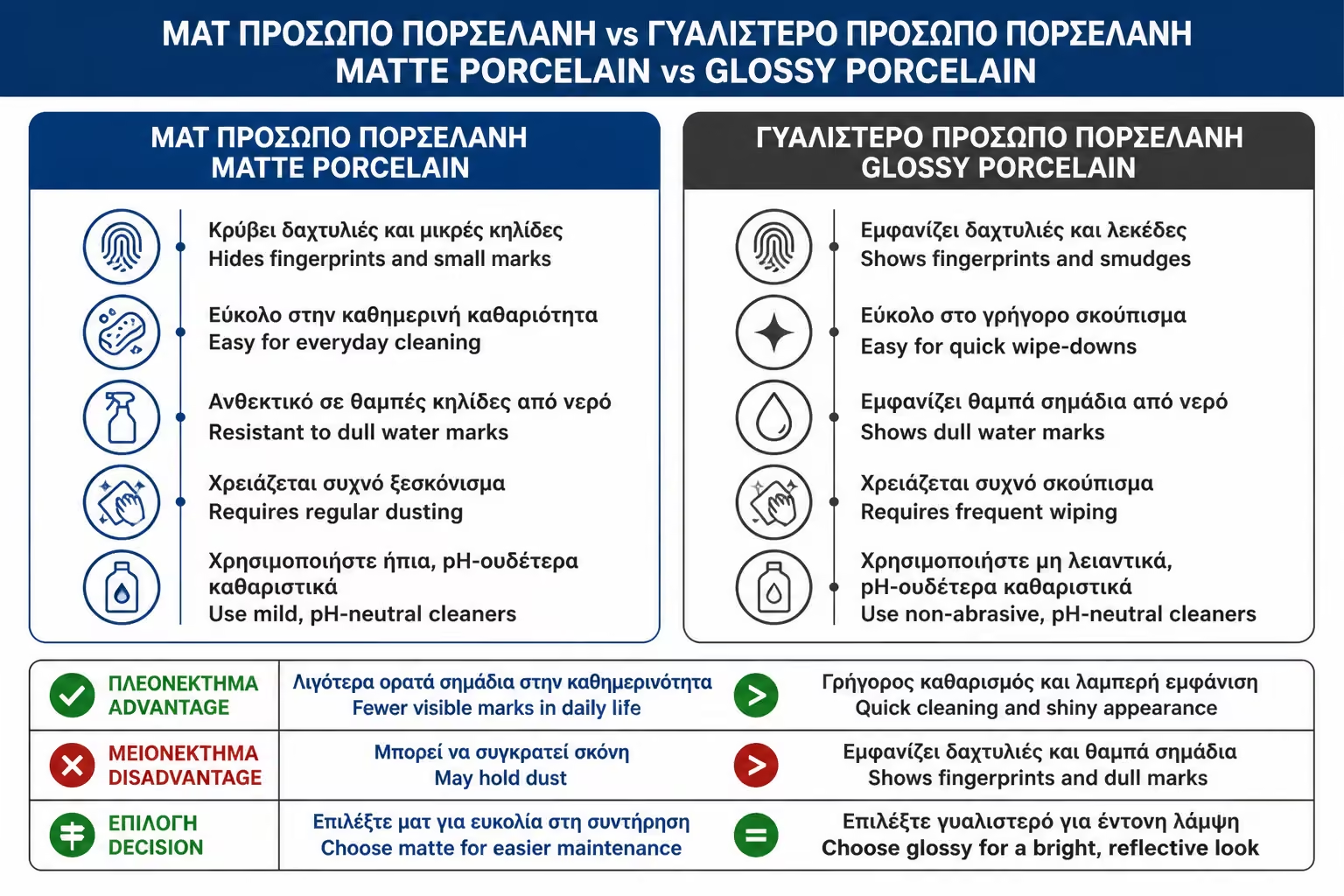
The matte finish is in a class of its own. It can be white matte, black matte or colored matte. It has a calmer, velvety feel and avoids the sheen of classic porcelain. In a modern bathroom, the mat can look more architectural and more "quiet". On the other hand, because it doesn't reflect light in the same way, water or soap stains can look different and often more intense.
We must also distinguish porcelain from other visually similar materials. There are sinks made of solid surface, stone, resin, mineral cast or natural materials in dark shades. These may have different behavior in cleaning, different resistance to chemicals and different sensitivity to scratches. The owner should not only choose a "black sink", but should know what material it is made of and what maintenance instructions the manufacturer gives.
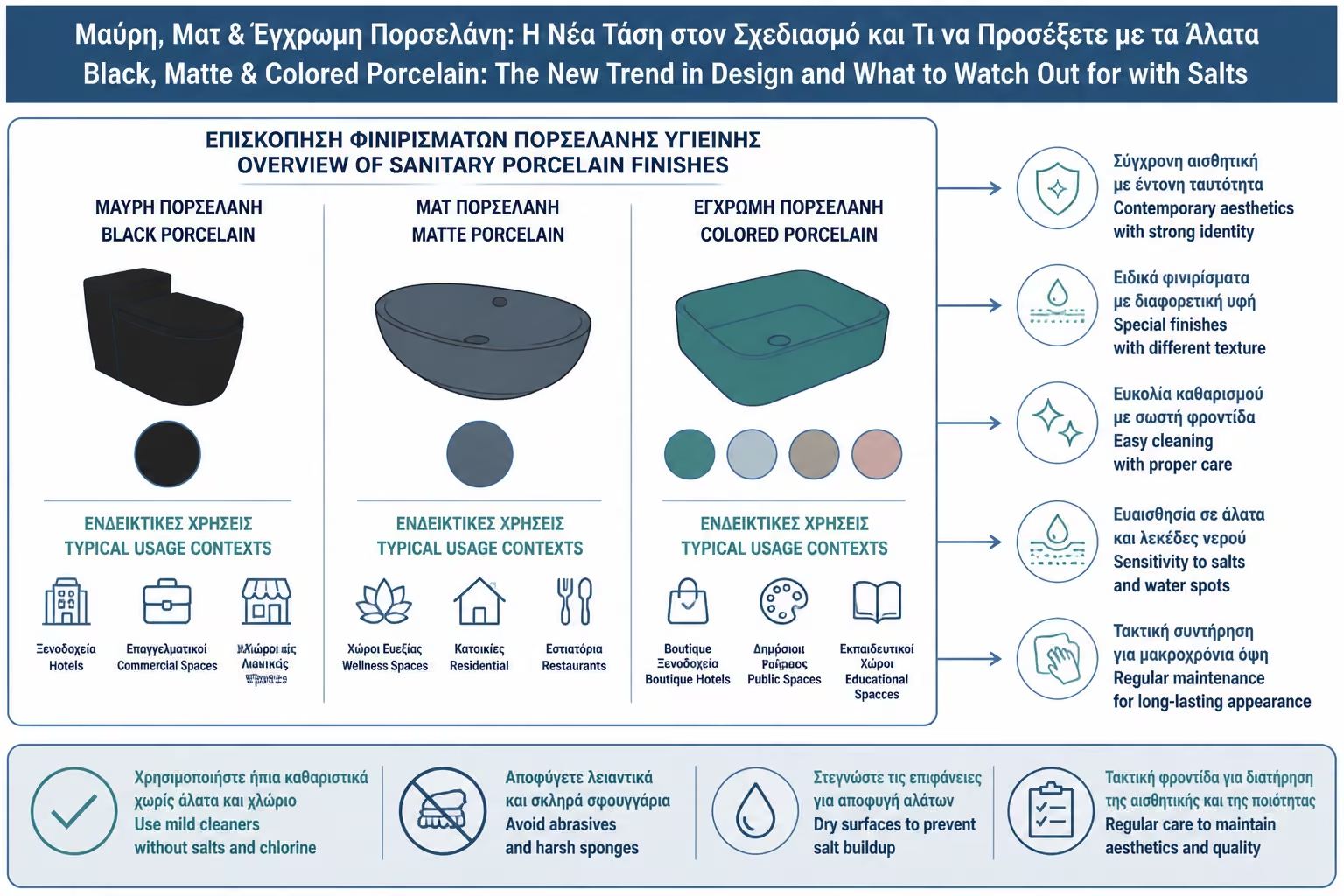
The popularity of black and matte porcelain is linked to the general change in bathroom decoration. In recent years, many bathrooms are being designed with large tiles, hidden lighting, hanging furniture, black faucets, slim shower profiles and more natural textures. Within this context, the classic white sanitary ware sometimes seems too "safe" or common.
The black basin or black sink creates contrast. In a bathroom with beige tiles and wooden furniture, a black countertop sink becomes the centerpiece. In a minimal gray bathroom, a charcoal hanging basin can make the composition more unified. In a small guest WC, a colored wash basin can add character without the need for expensive decorations.
There is also the influence of hotels, architectural photography and social media. Many striking bathrooms in pictures have dark sanitary ware, matte finishes and special combinations. This creates desire. The owner does not just want to change the old tiles. He wants a bathroom that looks thoughtful.
The point is that the photo does not show the maintenance. It doesn't show the hard water, the drips after washing hands, the child who leaves toothpaste in the sink, the faucet that leaves a thin line of limescale, or the cleaner that is used in haste. There it is judged whether the trend really suits the lifestyle of the house.
The key advantage is identity. A bathroom with a black or colored sink immediately escapes the image of the typical white bathroom. It doesn't have to be over the top. Even a single element, such as a matte gray wash basin on a wooden piece of furniture, can add style without overwhelming the space.
The second advantage is contrast. Black or charcoal sanitary ware can highlight light tiles, natural textures, wood and lighting. In a bathroom with white marble or marble-look tile, a black detail can act as a graphic element. In a bathroom with warm tones, a beige or greige sink can give a softer and more harmonious image than bright white.
The third advantage is that colored sanitary ware helps create concepts. If the bathroom has black faucets, a black cistern and a black shower profile, a black or charcoal porcelain can complete the line. Accordingly, in a softer bathroom with earth tones, a beige, sand or stone colored wash basin can look more natural.
But there is also a limit. When everything goes black—basin, sink, faucets, countertop, piece of furniture, mirror, profile—the space can become heavy, especially if it's small and without natural light. Aesthetic success is not always found in completely copying a trend, but in the right dose.
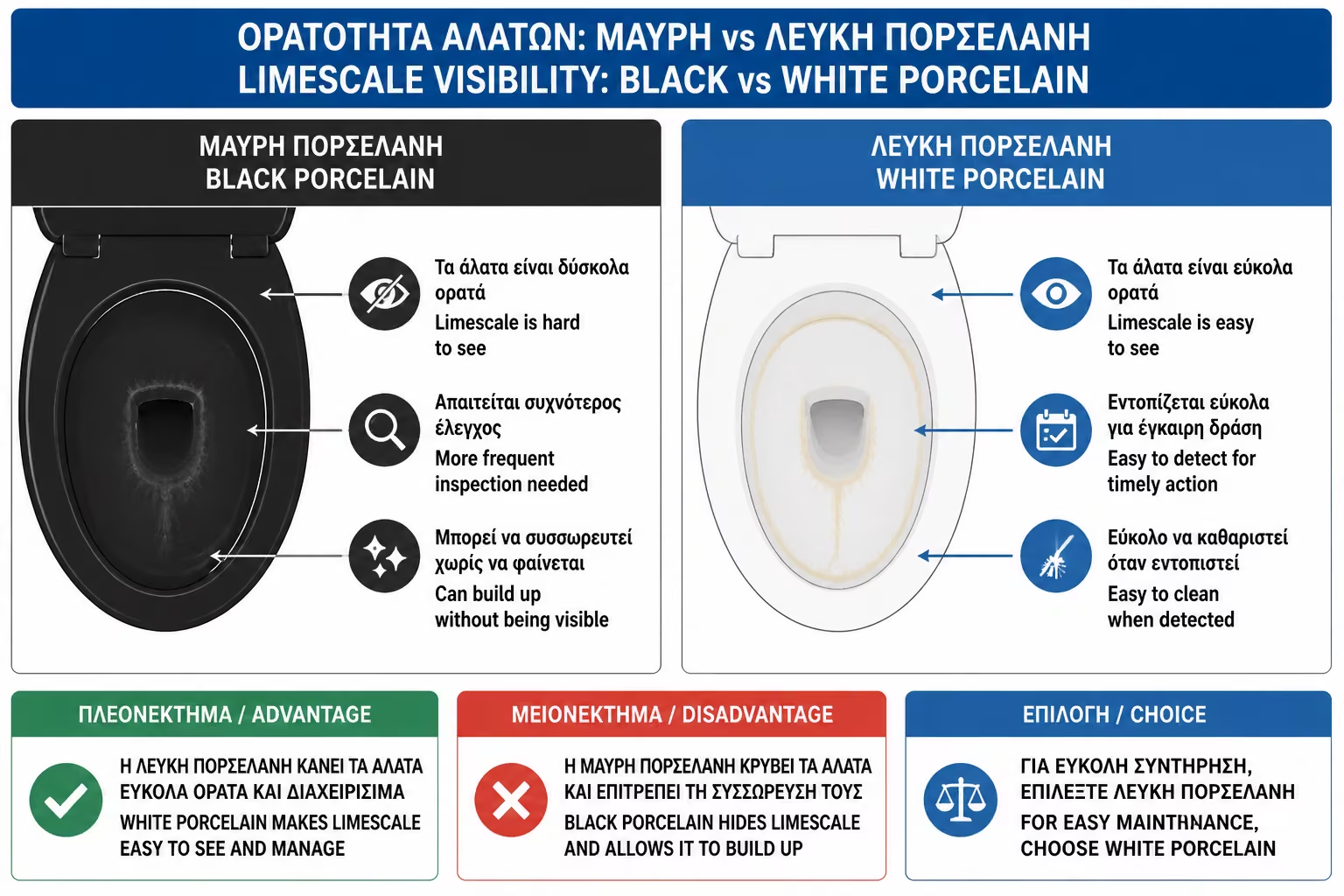
Water salts are light-colored deposits, usually white or grayish, that are left when water evaporates and mineral salts remain on the surface. On a white porcelain, these marks are present, but are often visually lost in the color. On a black or charcoal surface, the contrast is much greater. That's why they look faster and more intense.
The same goes for drops. On a matte black sink, a drying drop can leave a ring. On a white glossy porcelain, the same mark may not attract attention. This does not mean that black porcelain stains more. It means it shows more of what's already there.
Bathroom manufacturers often recommend gentle cleaning, soft cloths and avoiding harsh or abrasive materials, especially on matte and dark finishes. Roca, in instructions for black finishes, states that warm water with mild soap is suitable for general cleaning, while warning that strong cleaners, abrasive sponges and aggressive descaling products can affect the finish.
In areas with hard water, the problem becomes more pronounced. If the water quickly leaves salts on the battery, the shower glass and the cistern, then it will also leave marks on the dark porcelain. Choosing a black or matte surface in such an area is not prohibitive, but requires more regular care.
The black basin is one of the strongest aesthetic choices in the bathroom. In hanging form, with a built-in cistern and a black or metal plate, it can give a very modern effect. Especially in small guest WCs, where we want a strong impression on a small surface, the black basin can work exceptionally well.
In daily use, however, the basin receives a continuous flow of water. If the faucet has a thin leak or if the water in the area has a lot of salt, a white line may appear inside the basin. On white porcelain, this mark often appears later. In black, it shows up almost immediately.
Here, special attention is needed to the quality of the cistern and flushing. If the outlet valve is leaking a little water, if the float is not adjusted correctly, or if the basin is not cleaned regularly, the black surface will show it. That is why, in black basins, the correct service of the boiler has a greater aesthetic importance than in white ones.
A practical example: the owner chooses a matt black hanging basin for an impressive WC. In the first two months everything looks perfect. Then an almost invisible run from the cistern begins. It doesn't sound loud, but leaves a thin white line on the back of the bowl. If treated immediately, the mechanism is cleaned and adjusted. If left for months, the salts "write" much more and cleaning becomes more difficult.
The sink is often an easier choice for those who want color without committing to a black basin. A black, grey, beige or terracotta countertop washbasin can give a strong design effect, while the basin remains white and practical. This combination is often more balanced for residences.
The sink, however, has its own issue with salts and soap residue. Especially around the battery, the valve and the places where drops stay, the marks are clearly visible on the dark surfaces. If the battery is also matte black, then the entire area needs daily wiping to maintain the image.
Unlike the basin, the wash basin is easier to wipe after use. This is an advantage. If the owner is in the habit of quickly passing a soft cloth or washing off the soap residue, the black sink can be preserved much better. But if at home the sink is used by children, toothpaste, soap and water remain all day, then the dark surface will need more frequent care.
For a main family bathroom, it is often more practical to choose a colored wash basin in a medium or earth tone rather than pure black. Beige, greige, light gray or stone look more special than white, but they don't show the salts as hard as black.
The matte finish has become particularly popular because it looks more modern and quieter than glossy porcelain. It does not have strong reflections, does not "shout" and matches natural materials, wood, stone, cement mortar and large tiles. In many cases, a matte porcelain looks more expensive than a simple glossy one.
But matte does not automatically mean easier cleaning. In some finishes, because the surface is not as optically glossy, water or soap marks appear as dullness. If the owner uses the wrong cleaner or rough sponge, it can create unevenness in the image.
Manufacturers' care instructions usually insist on soft cloths, mild detergents and a good rinse. Villeroy & Boch, for bathroom ceramics, states that clean water and a fresh cloth are often sufficient for daily care, while water marks, grease and soap residue can be removed with a bathroom cleaner or a vinegar-based product, depending on the surface and the instructions for use.
In matte and dark porcelains, consistency is more important than strength. Better frequent gentle cleaning than infrequent aggressive scrubbing. Aggressive sanding can make the finish look uneven, especially if it is used on a specific spot over and over again.
When someone wants to get away from white but is afraid of black, earth tones are often the best solution. Beige, sand, greige, light gray, clay, taupe and similar shades give a different image without the strong contrast of black with salts.
These shades go well with modern tiles imitating stone, travertine, marble, pressed cement mortar or natural textures. A sink in a warm beige shade can look more "tied" to the furniture and the tile than a white sink that makes a strong contrast.
In practice, earth porcelains are more forgiving. They do not eliminate the salts, but show them less than black. Also, they don't weigh down the space that much. In small bathrooms without natural light, this is important. A small WC with a black basin, black sink and dark tile can look impressive, but also very closed. A WC with an earthen basin, open tile and black details can be more balanced.
The trend of colored sanitary ware does not mean that we have to choose the most intense solution. Sometimes the most successful choice is the one that looks different without being tiring.
Glossy porcelain has the advantage that its smooth surface is easy to clean and reflects light. This is why classic sanitary ware has lasted so many years on the market. They look bright, are practical and quite forgiving of everyday use.
The matte finish is more modern, but needs more careful use. It should not be scrubbed with abrasive sponges and should not receive strong cleaners without control. If the mat is dark in color, the maintenance requirement increases. If it's a light earth color, the everyday look can be easier.
There is no absolute answer. For a guest WC, a matte black or colored sanitary ware can be an excellent choice, because the use is limited and aesthetics play a big role. For a family bathroom with heavy daily use, it might make more sense to use color on the sink rather than the basin, or choose an earthy matte instead of black.
If one absolutely wants black, it's a good idea to choose a quality product from a known line, check the cleaning instructions, and accept that more regular wiping will be needed. Aesthetics has a cost not only in purchase, but also in maintenance.
Some manufacturers offer special coatings that make the surface easier to clean or more resistant to dirt accumulation. Villeroy & Boch, for example, describes CeramicPlus technology as a finish in which water and residue form droplets and are removed more easily, reducing scale build-up and keeping surfaces cleaner for longer.
Duravit, on the other hand, presents HygieneGlaze as a special ceramic glaze that is integrated during baking and aims at hygiene, with versions that combine antibacterial action and easier surface care.
These technologies can help, but they should not be misinterpreted. They do not mean that the surface never gets dirty. They do not mean that the salts disappear without cleaning. They mean that the surface is designed to make dirt more difficult to adhere to or easier to clean if used and maintained properly.
On dark porcelain, such coatings may be more valuable, because each mark is more visible. If the budget allows, they are worth considering. But you should always check if the specific coating is offered in the color and model you want, because not all technologies are available in all ranges and shades.
With black, matte or colored porcelain, cleaning should be gentler but more frequent. It is not a good strategy to let salt and soap build up and then try to remove it with a strong cleaner. This is exactly what can tire or dull a sensitive surface.
The best practice is simple: after use that leaves a lot of water, especially in the sink, wipe the surface with a soft microfiber cloth. It doesn't need a complete cleaning every time. As long as the water does not constantly dry on the dark surface. For more regular cleaning, we use mild detergent, soft sponge or cloth, good rinsing and drying.
Ideal Standard, in its maintenance instructions for bathroom products, recommends regular cleaning to prevent dirt and salt build-up, use of warm water with a few drops of mild detergent, good rinsing and drying with a soft cloth, while stating that mild descalers can be used occasionally as directed and with immediate rinsing.
What should be avoided are wire sponges, harsh abrasives, very strong acids, the uncontrolled use of bleach on finishes that do not allow it, and products that stay on the surface for a long time without rinsing. The instructions of the manufacturer of the specific product always prevail.
Before choosing black or dark matte porcelain, it is worth considering the water in your area. If today your batteries fill with salts in a few days, if the shower glass turns white quickly or if the basin often has white lines, then hard water will affect dark surfaces much more.
This does not mean that you should cancel the selection. It means you have to honestly decide if you want the maintenance it requires. For a guest WC that is less used, this might not be much of a problem. For a master bathroom with daily use, it can become tiresome if there is no cleaning routine.
In areas with very hard water, a filter or water treatment system can help, depending on the installation and needs. But it should not be presented as a magic solution. Filters have costs, maintenance, replacement parts and technical limitations. In many cases, the most simple and realistic solution is the right choice of color and frequent gentle care.
A rule of thumb is the following: the darker and more matte the surface, the more the water in your area will "talk" to you. If the water is hard, maybe a medium earth tone is smarter than pure black.
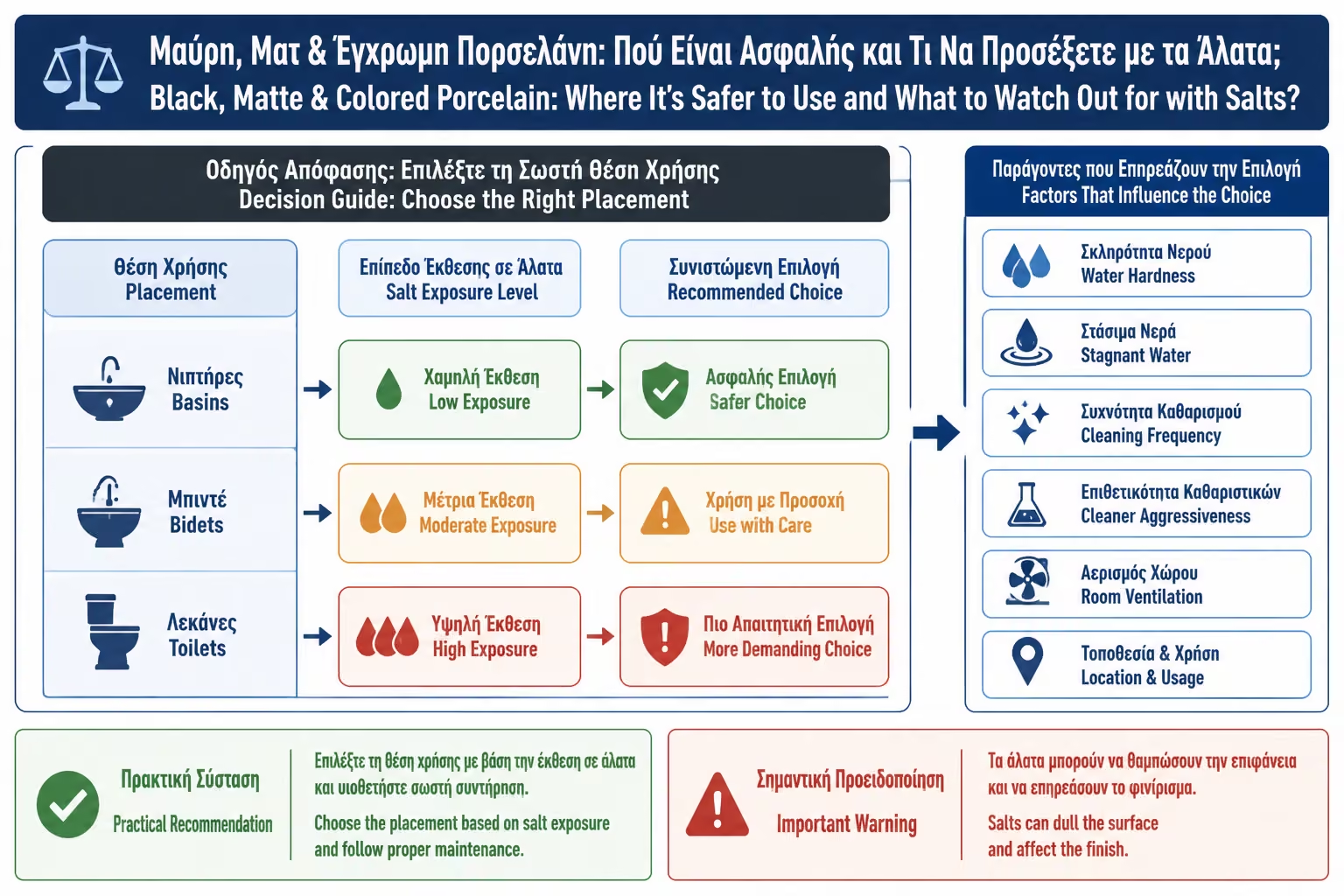
Black porcelain is worth more in places where aesthetics play a big role and the use is not too heavy. A guest WC is an ideal field. There you can create a strong image with a black sink, black board, special mirror and lighting, without the space accepting the daily wear and tear of a master bathroom.
In a master bathroom, the black basin is a more demanding choice. It's not wrong, but it takes a conscious decision. If the house has hard water, children or is not in the mood for frequent cleaning, it may be better to keep the basin white and add color to the sink, faucets or baseboard.
The black sink is a more controlled option, because it is easier to wipe and maintain. Even more practical are the earthy colored options, which give design without such a strong salt problem.
In bathrooms without natural light, pay attention to the many dark surfaces. A black sink can look nice. A black sink, black basin, black furniture and dark tiles can make the space visually heavy and smaller. Balance is more important than trend.
The black and colored porcelains must be combined with the rest of the metal elements in the bathroom. If the sink is black, a chrome faucet can create a strong contrast. This can be nice, but it has to be conscious. If the goal is a more uniform effect, a black, gunmetal, brushed nickel or brushed bronze battery is usually chosen.
But be careful: the more matte or dark elements you put in, the more spots will show salt and rings. A black faucet, a black sink and a black sink is a striking combination, but it needs care. In hard water areas, it may be more practical to use black porcelain with brushed metal elements that are more forgiving of marks.
The sump board is also important. If the basin is black or charcoal, a white plate may look disjointed unless there is a specific contrast in the design. A black, gunmetal or brushed board may bond better as long as it is compatible with the mechanism of the tank.
Accessories—paper case, towel rack, hooks, mirror—should follow the same logic. Not everything needs to be the same, but there needs to be consistency. The design fails when each item looks like it was selected individually from a different list.
Black, matte and colored porcelains usually cost more than their white basic options. The difference depends on the brand, the material, the finish, the availability, whether it is simple coloring or a special coating, and whether we are talking about a basin, a washbasin or a complete series.
In the Greek market, a simple white porcelain sink can start at relatively low levels, while black, matte, stone or colored sinks often move into higher categories. Indicatively, Greek stores display black or dark wash basins and special surfaces at levels of around €100–180 for several options, while more special ranges go up more.
| Selection | Indicative cost of Greece 2026 | Practical observation |
|---|---|---|
| White simple porcelain sink | €50–€150 | The most economical and easy option |
| Black or matt countertop washbasin | €100–€300 | Gives a strong design, needs regular wiping |
| Colored earth basin | €120–€350 | A more special but often more practical choice than black |
| White hanging basin | €120–€300 | Wide availability and easy spare parts |
| Black or matt hanging basin | 250–600€+ | Higher cost, more demanding maintenance |
| Complete line of colored sanitary ware | Wide variation | He wants to check availability and spare parts |
The prices are indicative. They are affected by the region, the store, whether VAT is included, transport, the basin lid, whether the basin is rimless, whether it is wall-hung or floor-standing, and whether additional accessories such as a built-in cistern, plate or special cover are needed.
The higher price is justified when you really get a better range, better finish, warranty, available parts and proper aesthetic integration in the bathroom. It doesn't make sense when you're just paying for a paint without knowing how it cleans, if there's a replacement cap, or if the finish holds up to the use it's going to get.
The first mistake is choosing only from a photo. The black and matte surfaces look impressive in professional lighting, clean, without drips and without daily use. In the real bathroom, with water, soaps and salts, the picture changes.
The second mistake is exaggeration. If all the elements turn black, the space can feel heavy. In small bathrooms, it is often better to use black as an accent and not as absolute dominance.
The third mistake is underestimating the area's water. If the house has strong salts, black porcelain will show it. It is not a product defect. It is a natural consequence of the contrast between the dark surface and the white salts.
The fourth mistake is using the wrong cleaners. Many see salts and use too strong a product or a hard sponge. They may remove the stain but affect the finish. On matte surfaces, this is especially noticeable.
The fifth mistake is not checking spare parts. For a black basin, the lid is often special in color and shape. If it breaks or wears out, it may be more expensive or harder to find than a plain white cap.
| Inquiry | Yes / No |
|---|---|
| Have you checked whether the water in your area leaves strong salts? | Yes / No |
| Have you seen the product in person and not just in a photo? | Yes / No |
| Do you know if the material is porcelain, solid surface, stone or another material? | Yes / No |
| Have you read the manufacturer's cleaning instructions? | Yes / No |
| Does the option match batteries, sump board and accessories? | Yes / No |
| Is the color practical for a master bathroom or is it more suited to a guest WC? | Yes / No |
| Is there a replacement lid available if it is a basin? | Yes / No |
| Have you accepted that dark surfaces need more frequent wiping? | Yes / No |
| Have you avoided too dark a set in a small bathroom without natural light? | Yes / No |
| Does the price include VAT, shipping, cap or necessary accessories? | Yes / No |
| Have you compared the colored option with an earthy intermediate solution? | Yes / No |
| Has the technician confirmed compatibility with cistern, board and installation? | Yes / No |
If most of the answers are "yes", then the choice is made consciously. If there are a lot of "no's", there is a risk of buying something that looks great in the exhibition but tires you in everyday use.
Black and matte sanitary porcelain is not a bad choice, but it is a demanding one. Do not reject it out of fear, but do not choose it only because it is fashionable. If your water leaves a lot of limescale and you do not want regular wiping, softer colours or earthy tones may be more practical than a black toilet. If you do choose black, invest in good quality, a reliable cistern, mild cleaners and a little consistent care. Dark porcelain looks best when it is maintained properly.
Black, matte and colored porcelain can transform a bathroom. They give character, depth, contrast and a sense of careful design. In a small WC they can act as an impressive centerpiece. In a master bathroom they can create a more personal and contemporary aesthetic, especially when properly combined with tiles, furniture, fixtures and lighting.
But the choice must be made realistically. Dark surfaces show more salt, drips and soap scum. The matte finish needs gentle care and avoidance of aggressive cleaners. A black basin is more demanding than a black sink because it receives constant contact with water and can develop white scale lines more quickly if there is a small leak or hard water.
For most homeowners, the most balanced solution is to use color where it gives the most aesthetic value with the least practical inconvenience. This often means a colored or matte washbasin, black or brushed details, and a more careful choice if it is a basin. Earth tones are an excellent intermediate solution for those who want design without the strict maintenance of black.
The right bathroom is not the one that copies the most impressive photo. It is what remains beautiful, clean and practical after months of daily use. If you choose black or matte porcelain with proper information, appropriate quality and realistic care, they can give an excellent result. If you choose them only as a trend, without considering salts, cleaning and use, they can become a daily nuisance.
Return to category.
Go to categoryReturn to the central guide.
Go to guide