
Bathroom Fixtures & Water Equipment
Return to category.
Go to categoryThe flush plate of a concealed cistern is one of the few parts of the mechanism that remains visible after the bathroom is completed. Everything else, the cistern, frame, pipework and flushing mechanism, is hidden inside the wall. What remains visible is a relatively small part of the wall finish, usually above the toilet, but it still has a major effect on the final look of the room.
That is why many owners choose a flush plate as if they were choosing a decorative accessory: matte black for a modern bathroom, chrome for a more classic solution, glass for a premium look, stainless steel for a more technical or minimal effect. Aesthetics really do matter. The wrong plate can look out of place in an otherwise expensive bathroom, while the right one can tie the whole design together quietly.
The problem is that the flush plate is not just a decorative cover. It is a control element. It works with a specific mechanism inside the concealed cistern. That means not every plate fits every cistern, even if the dimensions look similar or the photo looks close. Compatibility comes first; aesthetics comes right after.
In practice, this is one of the most common misunderstandings in bathroom renovations. The owner finds a flush plate they like, perhaps in matte black or brushed metal, and assumes it will fit because "it is for a concealed cistern". But when installation time comes, it turns out to belong to a different series, frame or mechanism. Then it has to be returned, the whole selection has to change, or, in the worst cases, ugly improvised solutions are attempted.
In this guide we will look at how to choose a concealed-cistern flush plate correctly: what role it plays, which materials and finishes are available, what dual flush means, what you must check for compatibility, how much the different options cost in the Greek market and which mistakes can cost time, money or future service trouble.
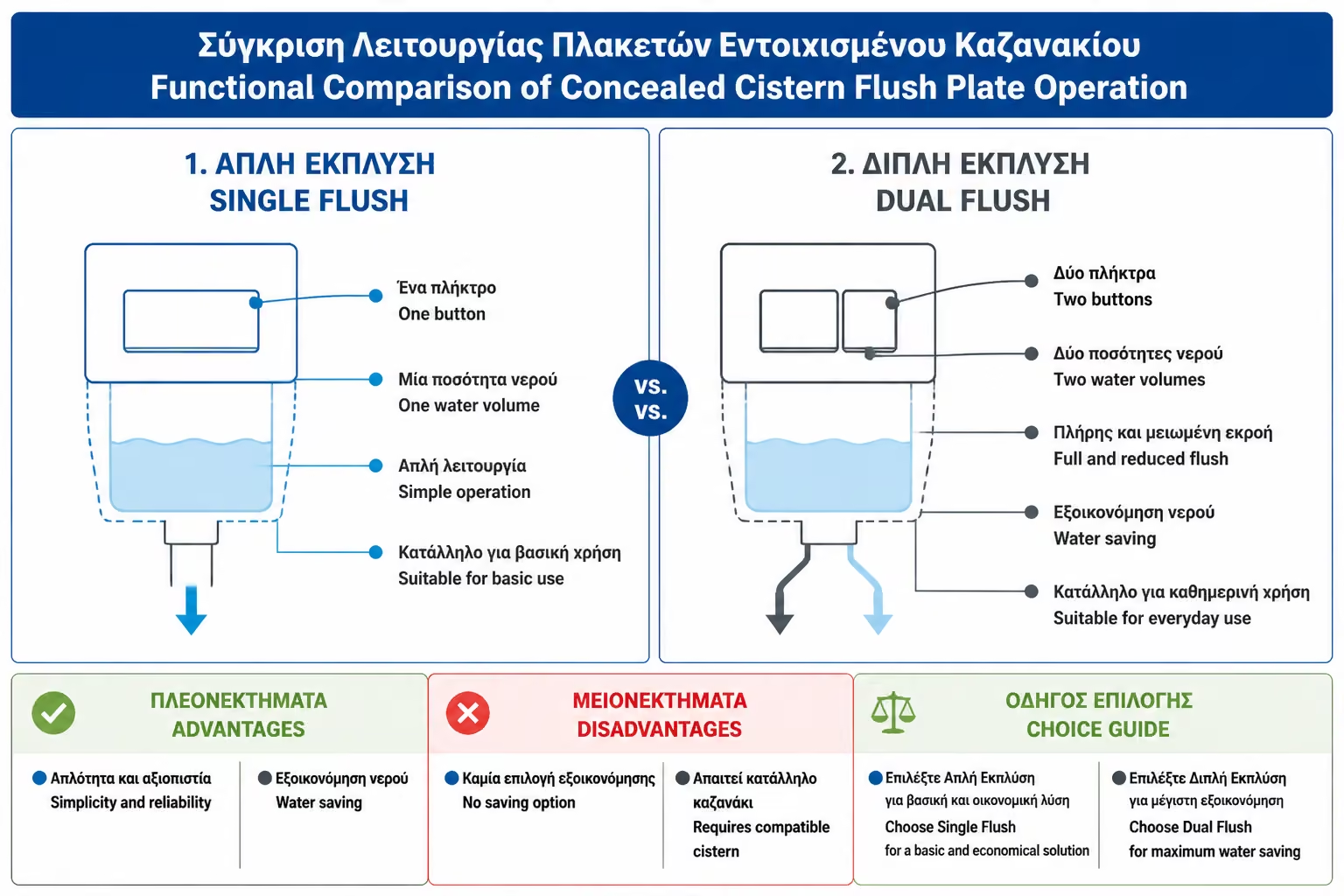
The flush plate, or button panel, is the external control of the concealed cistern. By pressing it, the flushing mechanism inside the cistern is activated. In most modern systems, the plate has two buttons for dual flush: a smaller one for a reduced amount of water and a larger one for a full flush.
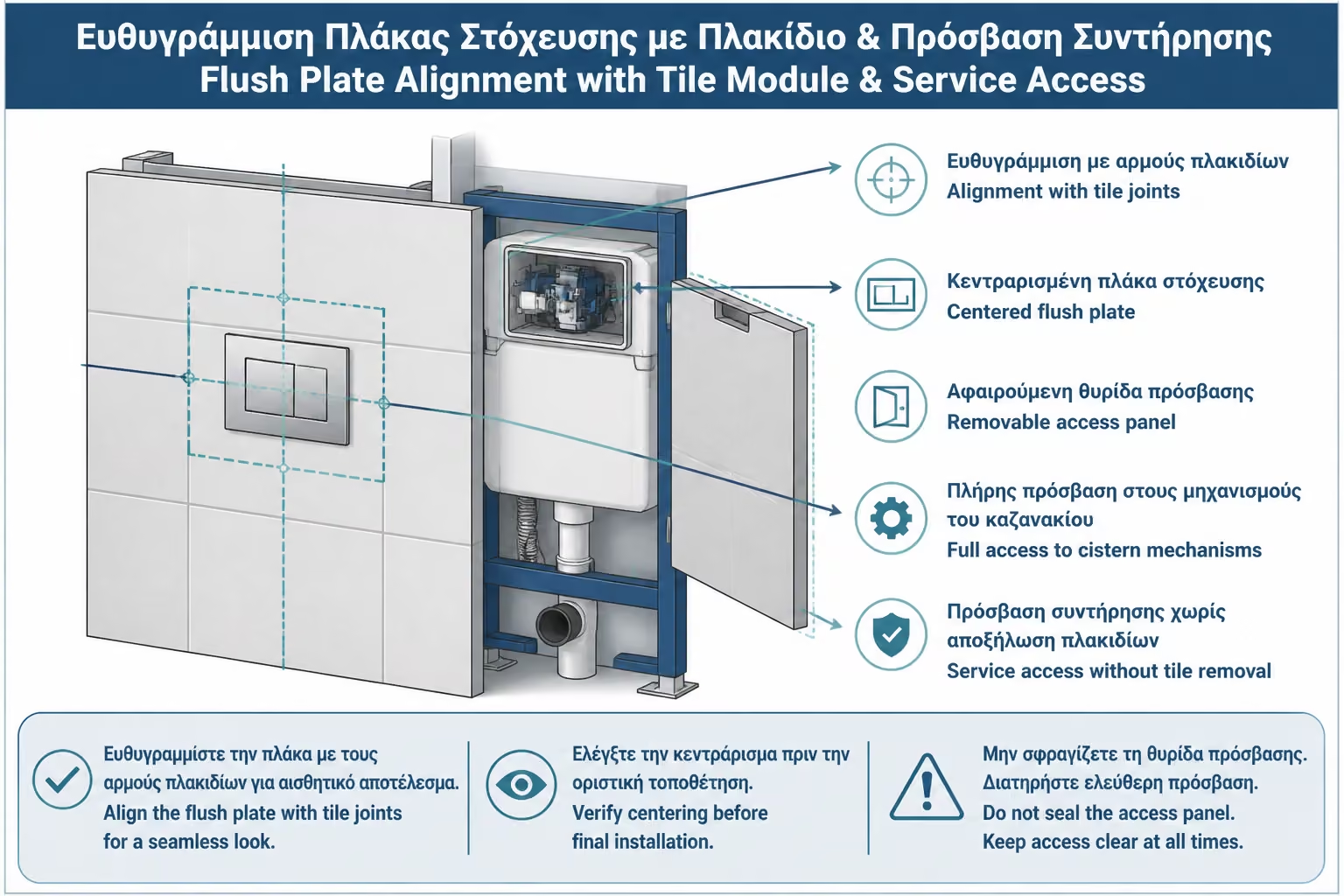
Its role does not stop at flushing. In many systems, the flush plate also serves as the main service-access point. Behind it is the opening through which the technician reaches parts of the mechanism, such as valves, the fill valve and the actuation parts. That is why the plate must be removed and reinstalled correctly, without damaging the finish and without creating looseness.
In a newly renovated bathroom, a well-chosen flush plate helps the whole composition feel complete. In a bathroom with large-format tiles, thin joints and minimal lines, a cheap glossy plastic plate can look out of proportion. On the other hand, in a simple bathroom or guest WC, a very expensive glass or metal panel may be unnecessary if the rest of the project does not support that level of finish.
The real criterion is balance: correct compatibility, reliable operation, easy service and a finish that suits the bathroom. The flush plate is not the place to save blindly, but neither is it always the place where the most premium option is needed.
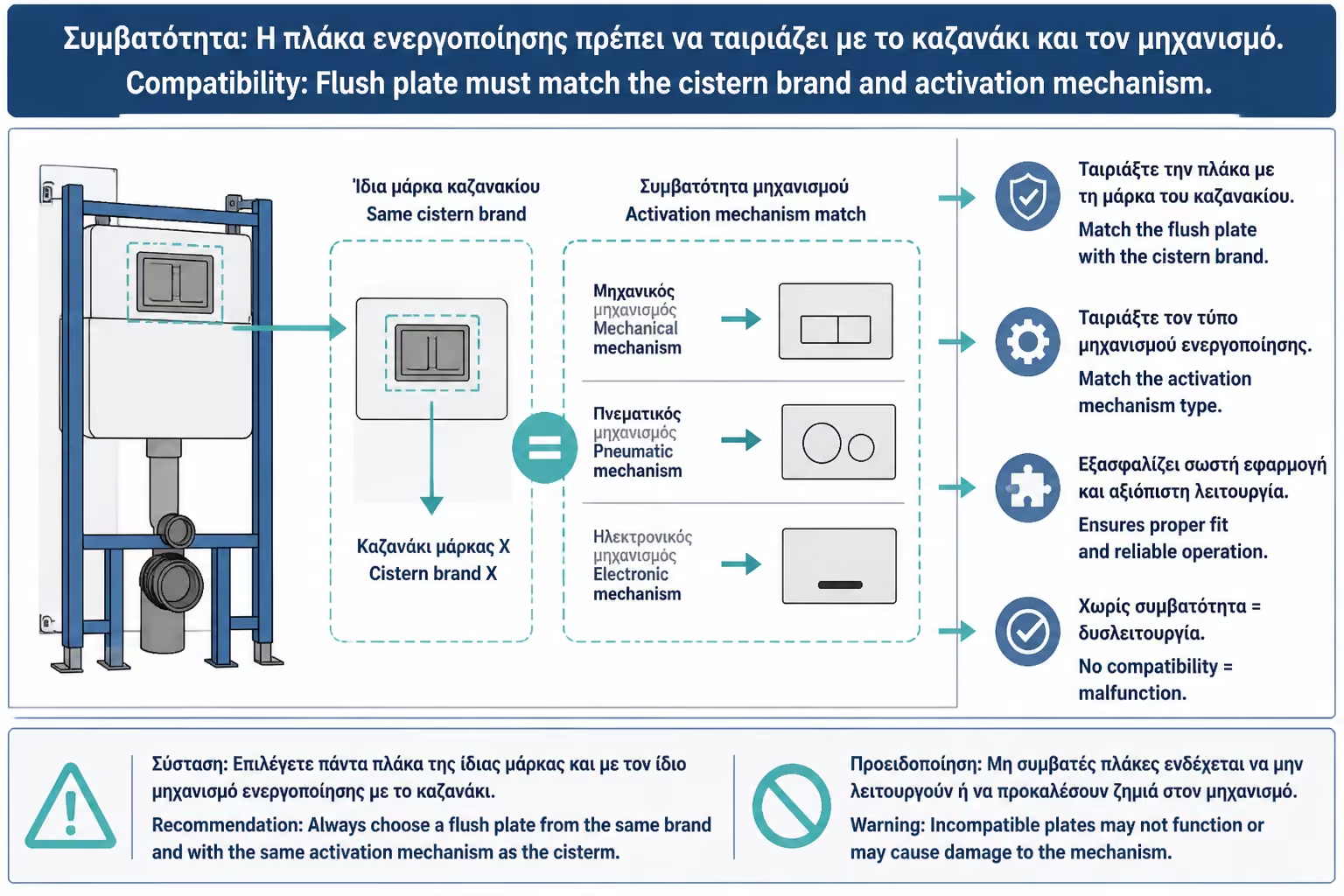
The first thing a homeowner needs to know is that the flush plate must be compatible with the specific concealed cistern and its series. It is not enough for both parts to be from the same brand. Many manufacturers have different mechanism series and different plate families. For example, Geberit states that Omega plates are designed for Omega cisterns, while Sigma plates are compatible with Sigma cisterns. The same logic applies elsewhere too: the plate must match the correct frame or cistern family.
This becomes critical in renovations where the homeowner chooses the cistern from one supplier and later looks for a flush plate in another shop. If they have not kept the cistern model, trouble starts immediately. The plate may look almost identical, yet fail to click into place, fail to activate the mechanism correctly, or sit at the wrong distance from the wall.
A practical example: a concealed cistern of a specific series is installed in a bathroom. Later, after the tiles are chosen, the owner decides they want a matte black flush plate. They find one online from the same brand, but from another series. When the plumber tries to install it, the guides and actuators do not match. The problem is not the quality of the plate. The problem is that it was bought without checking the cistern series.
Therefore, before choosing a color or material, you must know:
| What you need to know | Because it matters |
|---|---|
| Cistern brand | The flush plate usually needs to come from the same manufacturer or be specifically approved as compatible |
| Frame / system series | Many manufacturers have multiple flush-plate families that are not interchangeable |
| Activation method | Mechanical, pneumatic, electronic or photocell |
| Finished wall thickness | It affects how the plate sits and how the actuation parts align |
| Activation position | Usually in front, but there are also special provisions |
| Single or dual flush | The flush plate must work with the correct internal mechanism |
If you do not know these details, the safest option is to photograph the inside behind the existing flush plate or find the concealed-cistern model in the renovation documents.
Dual flush is one of the most useful features in modern concealed cisterns. Instead of releasing the same amount of water every time, the flush plate offers two options: a reduced flush and a full flush. Usually the smaller button is used for less water and the larger button for the full flush.
This has practical value because it reduces unnecessary water consumption in everyday use. In a household of three or four people, the toilet is used many times a day. If the full flush is used every time when it is not needed, consumption rises unnecessarily. Dual flush does not solve water saving by itself, but it helps substantially when used properly.
GROHE, for example, presents dual-flush and start/stop plates as water-saving solutions for concealed cisterns, and similar dual-flush systems are available from other major manufacturers too.
A common mistake is that dual flush exists but is never really used. People always press the larger button, either out of habit or because the difference is unclear. That is why the flush plate must have clear ergonomics. The buttons should be easy to distinguish, comfortable to press and intuitive in daily use.
In a guest WC, clarity matters even more. A visitor will not stop to think about how the mechanism works. They will press whichever button seems most obvious. A well-designed dual-flush plate encourages correct use without explanation.
Older or simpler solutions may be single flush. You press the button and the cistern releases a predetermined amount of water. It is a simple system, but less flexible. In modern bathrooms, especially with concealed cisterns, dual flush is now more common and usually a more sensible choice.
The start/stop function is different. In such systems, the user can start the flush and stop it with a second press, depending on the mechanism. It is useful as a logic of economy, but in practice it is not always as understandable to all users as the two pure keys of small and large flow.
For a domestic bathroom, the most practical option is usually the double flow with two clear keys. It is easy to use, understandable and compatible with everyday logic. In business areas or areas with many users, the choice should be made based on durability, ease of use and service, not just theoretical savings.
The flush plate must work with the internal cistern mechanism. You cannot turn a system into dual flush just by changing the external plate if the internal mechanism does not support it. That is important: the flush plate is a controller, not the whole mechanism.
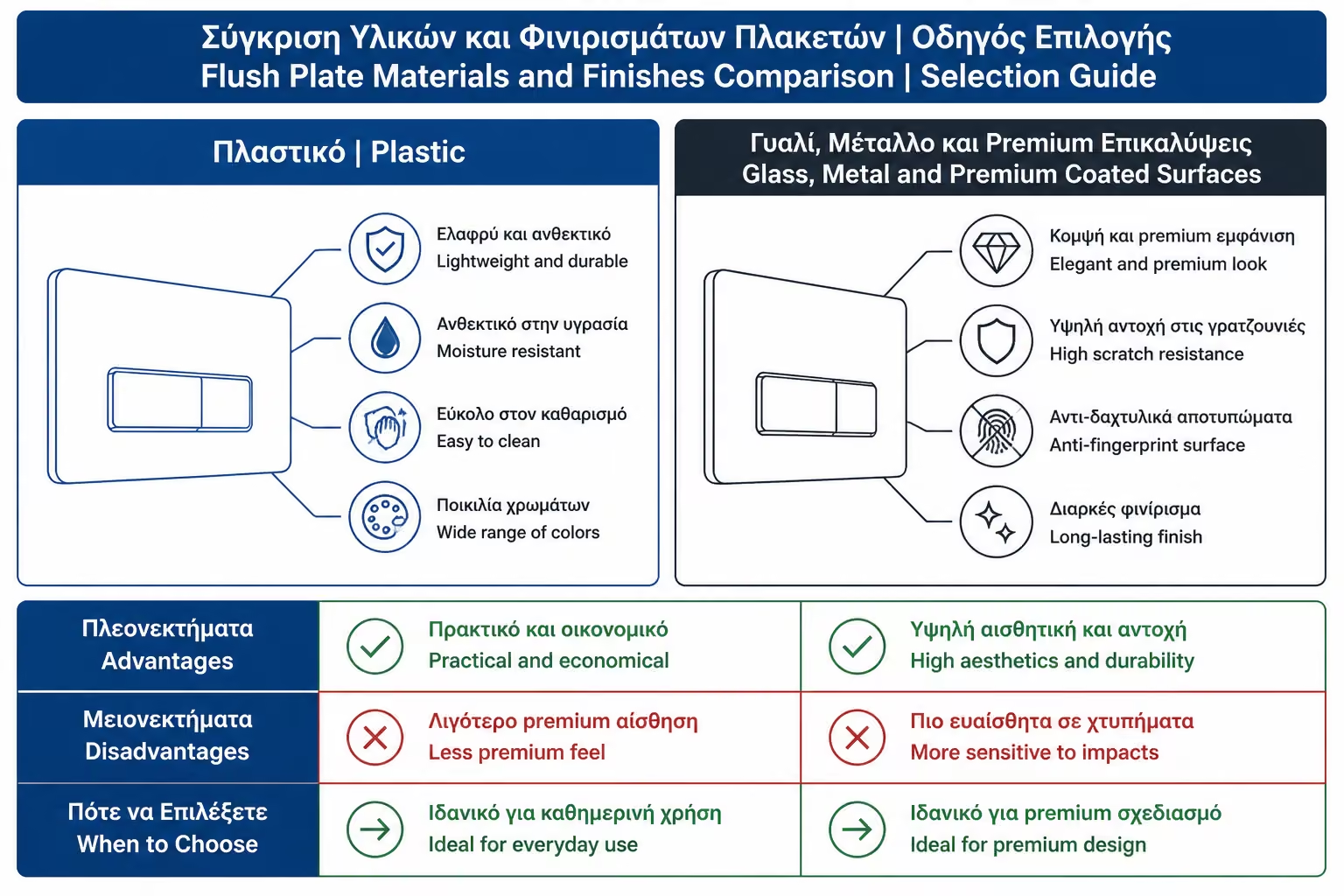
Concealed-cistern flush plates are available in many materials and finishes. The most economical versions are usually plastic, with chrome, white, black or matte finishes. The more expensive ones may be glass, metal, inox, brushed, anti-fingerprint or other special finishes.
Plastic is not necessarily a poor choice. In good branded products, a plastic flush plate can fit well, clean easily and last for years. It is usually the most economical option and often perfectly adequate for simple bathrooms or guest WCs. The goal is simply to avoid a finish that looks cheap relative to the rest of the room.
Glass gives a more premium image, especially in minimal bathrooms with large tile surfaces. It has a clean shine, a nice feel and can act as a subtle decorative element. On the other hand, it shows rings and drips more easily, especially on dark colors or glossy surfaces. In a family bathroom with children, this must be taken into account.
Metal or inox gives a more robust, technical and durable feel. It suits modern, industrial or professional bathrooms. The brushed and anti-fingerprint finishes reduce the visibility of fingers and small smudges, which is very practical in daily use. It doesn't mean they don't need cleaning. It means they are more forgiving of everyday contact.
Viega, for example, offers panels in materials such as wood veneer, brushed stainless steel, glass and high-quality plastic, which shows how broad the range of aesthetic options has become around concealed-cistern systems.
Finish selection should not be made from a catalog photo alone. A shiny chrome knob may look impressive on the shelf, but in a frequently used bathroom it can show fingerprints and water very quickly. If the bathroom is brightly lit, glossy surfaces highlight every mark.
Matte finishes are calmer and suit modern bathrooms very well. Matte black, for example, can look excellent when paired with black taps, a black shower profile or other dark details. But it needs consistency. If the flush plate is the only black element in an otherwise white-and-chrome bathroom, it may look out of place.
Brushed finishes, such as brushed inox, brushed nickel or brushed gunmetal, are often more practical than gloss. They better hide small scratches and fingerprints, while giving a better quality image. In a bathroom with natural shades, stone, beige tile or wooden elements, brushed metals can tie in better than intense chrome.
An anti-fingerprint finish makes sense when the flush plate is touched frequently and sits in a prominent visual position. In a main family bathroom, it can eliminate a lot of visual annoyance. In a small guest WC, where use is lighter, it may not always justify the extra cost.
The plaque is usually on top of the tile, so it acts as a visual point within the cladding. In small bathrooms, the eye immediately falls there. If the plaque is too big, too shiny or the wrong color, it can interrupt the peace of the wall. If it is correctly selected, it is integrated into the whole.
On white or light-colored tiles, a white or chrome tile is a safe bet. In bathrooms with dark tiles, a black or gunmetal tile can give a uniform effect. In bathrooms with marble or imitation marble, chrome, white glass or brushed nickel usually work more discreetly than intense black, unless there is an overall concept with black details.
A practical mistake is choosing a tile too late, when the tiles have already been installed and the owner is trying to match what is available. Ideally, the tile should be chosen together with the cistern and before finalizing the aesthetics of the bathroom. In this way, incompatibilities and aesthetic compromises are avoided.
With large-format tiles, the relationship between the flush plate and the grout lines is also important. If a joint runs awkwardly too close to the plate, or the cut around it is poor, even an expensive plate will look clumsy. The final image depends not only on the product, but also on the accuracy of the installation.
The prices for built-in cisterns have a wide range. In the Greek market, one can find simple plastic boards from around €30–60, more quality or branded boards around €60–120, while glass, metal, special matte or anti-fingerprint options can range from €120 to €250 and quite a bit higher for special series, electronic functions or photocells. In Greek stores even special anti-fingerprint or electronic boards with a photocell appear at much higher price levels, which shows how big the deviation can become depending on the technology and material.
| Board class | Indicative cost of Greece 2026 | When does it make sense? |
|---|---|---|
| Simple white/chrome plastic | 30–70€ | Simple bathroom, guest WC, economical solution |
| Branded plastic with a better design | €60–€120 | Master bathroom with an emphasis on reliability and image |
| Matt black or special color | 80–160€ | Bathrooms with matching black/colored details |
| Glass plate | 120–250€ | Premium aesthetics, minimal bathrooms, careful lining |
| Metallic or inox/brushed | €130–€300 | Modern, industrial or demanding bathrooms |
| Special series anti-fingerprint | 150–350€+ | Frequent use, high aesthetic requirements |
| Electronics/photocell | 300–800€+ | Professional areas, special hygiene requirements |
The prices are indicative and depend on the brand, the cistern series, the material, availability, whether VAT is included, transport and whether the system uses mechanical, pneumatic or electronic actuation. A simple plastic flush plate should not be compared directly with a glass or metal anti-fingerprint option as if they were the same product.
In a typical mid-budget bathroom renovation, a €60-120 flush plate is often a balanced choice. If the bathroom uses more expensive tiles, black taps or a more deliberate design language, a €120-200 plate may be aesthetically justified. But in a simple WC or a budget renovation, there is no need to stretch for a premium finish as long as the flush plate is compatible and reliable.
There are boards with an electronic function, a sensor or a photocell, which allow flushing without direct pressure. These solutions make sense mainly in business premises, healthcare facilities, offices, hotels or WCs with many users. They offer better contact hygiene and a more modern user experience.
In a home bathroom, however, they are not always necessary. They cost more, may require a battery or electrical supply, and if they fail the service work is more specialised. If the goal is a simple, reliable and easy-to-maintain bathroom, a classic mechanical dual-flush plate often makes more sense.
It doesn't mean that electronic boards are a bad choice. It means that they should be chosen when there is a real need, not because they look "smarter". In residences, simplicity is often an advantage. The more technology that goes into a component, the more we have to think about power, maintenance and spare parts.
One of the most important technical points is that the flush plate must remain a real access point. It should not be glued, sealed or trapped by poor tiling. If there is a problem with the mechanism, the technician must be able to remove it without breaking tiles.
In some renovations, especially when large tiles or special overlays are used, the installer tries to create a very crisp visual result around the plate. That is aesthetically fine, but it must never block disassembly. The plate must press properly, remove as intended and not bind because of glue, grout or incorrect lining thickness.
The thickness of the finished wall also matters. A concealed cistern has specific limits for the total lining thickness. If double plasterboard, thick tiles, stone or special claddings are added without planning for them, the flush plate may not snap into place properly or may require special parts. Some manufacturers give precise technical limits for lining thickness in front of the cistern.
That is why the flush plate should not be chosen only at the very end. The technician needs to know which cistern and which finish are going in so the depth, opening and final detailing can be planned properly.
Not all boards activate the mechanism in the same way. In many domestic installations we have mechanical actuation, where pressure is transferred by rods or components to the mechanism. But there are also pneumatic solutions, where the command is transferred with air through tubes, as well as electronic solutions with sensors or motors.
For the owner, the important thing is not to know every technical detail, but to understand that the flush plate must match the way the cistern is actuated. You do not buy a pneumatic plate for a mechanical system, nor an electronic plate without the necessary infrastructure.
In simple homes, a standard dual-flush mechanical solution is usually adequate and reliable. If the plate needs to be placed differently or there is a special architectural requirement, a pneumatic or other solution may be appropriate. But those decisions must be made before the wall is closed, not after.
A common problem appears when the owner sees a minimal remote flush plate or an electronic option and requests it after the basic cistern is already installed. Then it may turn out that the system does not support it or that a different mechanism is required. In concealed systems, the decisions hidden inside the wall have to come before the visual styling.
Black tiles have become very popular, especially in bathrooms with black faucets, black shower profiles and modern tiles. They can give a clean, architectural effect, especially when the rest of the composition is considered.
But black does not always forgive. In hard-water areas, droplets and mineral residue are more visible, especially on matte or satin surfaces. If the flush plate is near a sink or in a place that gets wet often, it will need regular wiping. The finish can also suffer if the wrong cleaners are used.
Blackboard makes sense when there is an overall design line. If everything in the bathroom is chrome and white, a black plate can look like a foreign body. But if black is repeated in batteries, accessories, profiles or lamps, then it works as part of the composition.
On a practical level, it is good to prefer a good quality black finish, ideally in a range that offers spare parts and consistent availability. Very affordable black finishes can show wear more quickly, especially if cleaned frequently with inappropriate materials.
Glass tiles can aesthetically upgrade a bathroom. They suit minimal spaces, large clean surfaces and bathrooms where detail is important. Glass gives depth, shine and a more sophisticated look than a simple plastic button.
But the glass shows fingerprints. On white or light glass this may be less bothersome. On black glass or dark glossy surfaces, every touch is more easily seen. If the owner wants a bathroom that always looks clean with minimal maintenance, perhaps a brushed or anti-fingerprint finish is more practical.
Care must also be taken in the placement. The glass plate must press properly and not be distorted. It should not wedge into tiles or be pressed by the wrong thickness of cladding. Although these tiles are designed for use in the bathroom, they remain products that require proper application.
In a high-end master bathroom, glass paneling can be justified. In a WC used by children or in a high-use area, it may be worth considering whether appearance trumps practicality.
The anti-fingerprint finish aims to reduce the visibility of fingerprints and greasy marks from daily contact. It does not mean that the flush plate stays clean by itself. It means the marks are less visible and easier to remove with suitable mild cleaners.
It is especially worth it on dark, metallic or brushed surfaces, where fingerprints can quickly spoil the image. In family bathrooms, high-end guest WCs or Airbnb properties, it can be a practical choice. The space looks cleaner between cleanings.
But it is not necessary in every bathroom. If the flush plate is plain white plastic or simple chrome in a lower-budget room, the extra cost may not be justified. The choice should be based on the way the bathroom is used and the overall level of the project.
The critical thing is not to pay for the label alone. Check the hardware, the brand, compatibility, warranty and parts availability. An anti-fingerprint finish on an incompatible or hard-to-find flush plate solves no real problem.
If you already have a concealed cistern and the mechanism works properly, changing only the flush plate can refresh the bathroom with relatively little intervention. That is especially true when the old plate is yellowed, scratched, aesthetically dated or no longer matches the newer accessories.
But the change only makes sense if you find a compatible plate for the existing system. If the cistern is old or belongs to an unknown series, the options may be limited. Sometimes an older series no longer offers many finishes. In that case, you either stay with one of the compatible options that still exists or, in a full renovation, replace the whole concealed system.
In a simple bathroom refresh, changing the plate from old chrome to matte white, black or brushed metal can make a major difference. But it should not be rushed. Remove the old plate, find the code, photograph the mechanism and ask a supplier or technician to confirm compatibility.
Ideally, the tile is decided together with the built-in cistern, not at the end. This does not mean that you have to know from day one whether it will be glass or brushed. But it does mean choosing a system that offers the aesthetic options you're interested in.
If you want a matte black flush plate, make sure the cistern series you are installing actually offers one. If you want inox anti-fingerprint, check that the corresponding series exists. If you want an electronic plate or a photocell solution, the power supply and the required infrastructure must be planned in time.
Many times, in an effort to reduce costs, an economical built-in cistern is chosen without checking the range of tiles. Then, when the owner wants a more special design, he discovers that there are only two or three simple options. This is not a fault of the product. It's a series of decisions wrong.
In a serious renovation, the flush plate should enter the discussion as early as the sanitary-ware selection stage. That way, the technical and aesthetic decisions move together.
The most common mistake is buying an incompatible flush plate. It is so common that it is worth repeating: the plate must match the brand, series and mechanism of the cistern. The same manufacturer can have different families that are not interchangeable.
The second mistake is choosing based on color alone. A matte black button may look beautiful, but if it gets scale or fingerprints and the owner doesn't want frequent cleaning, it might not be the most practical solution.
The third mistake is the underestimation of service. The plaque should not be inserted as if it were a permanently affixed decoration. It must be properly removed, accessed and repositioned.
The fourth mistake is choosing a very premium flush plate in an otherwise very economical system for no real reason. If the rest of the bathroom is simple, the money may be better spent on better taps, proper lighting or a better toilet seat.
The fifth mistake is forgetting ergonomics. The buttons should be easy to press. A visually striking flush plate that feels awkward to use or makes the dual-flush logic unclear is not a good everyday choice.
| Inquiry | Yes / No |
|---|---|
| Do you know the brand of the built-in cistern? | Yes / No |
| Do you know the series or model of the mechanism? | Yes / No |
| Have you confirmed that the flush plate is compatible with this cistern? | Yes / No |
| Does the plate support the mechanism correctly, for example dual flush? | Yes / No |
| Have you checked if it is mechanical, pneumatic or electronic? | Yes / No |
| Does the finish match faucets, accessories and shower profiles? | Yes / No |
| Is the material practical for bathroom use? | Yes / No |
| Is the flush plate easy to clean without special care? | Yes / No |
| Is there access for future service behind the flush plate? | Yes / No |
| Is the end wall thickness within system requirements? | Yes / No |
| Does the price include VAT, and is it clear whether the plate is genuine or compatible? | Yes / No |
| Has the plumber or supplier confirmed compatibility prior to purchase? | Yes / No |
If you can't confidently answer the first four questions, don't buy yet. The aesthetic choice only makes sense when technical compatibility is a given.
The flush plate is not an independent accessory; it is part of the concealed cistern mechanism. First confirm the brand, series and compatibility, and only then choose the material and colour. For most homes, a branded dual-flush plate that presses easily and matches the mechanism is a better choice than an expensive design piece that is awkward to clean or difficult to service. Design should support function, not undermine it.
The concealed-cistern flush plate is small, but important. It is the visible point of a hidden mechanism, the control of the flush and often the main access point for service. That is why it should never be chosen hastily or from a photo alone.
The right choice starts with compatibility. You need to know the brand and series of the well, the type of activation and the operation of the mechanism. After these are confirmed, you can choose aesthetics: white, chrome, matte black, glass, metal, brushed or anti-fingerprint. Each option has advantages and practical requirements.
Dual flow is usually the most sensible solution for homes, because it helps save water and is easy to use. Premium materials make sense when they match the overall level of the bathroom and when they do not make cleaning or maintenance difficult. Electronic solutions and photocells are useful in special cases, but not necessary for every home.
In a bathroom renovation, the flush plate should be decided early. That avoids incompatibilities, weak aesthetic choices and future service problems. The best flush plate is not always the most expensive one. It is the one that fits the mechanism, suits the bathroom, feels good to use, stays easy to clean and can be removed properly when maintenance is needed.
Return to category.
Go to categoryReturn to the central guide.
Go to guide