
Bathroom Fixtures & Water Equipment
Return to category.
Go to categoryBathroom furniture is judged first by its image. The color, the texture, the gloss, whether it looks wooden, matte, minimal or luxurious. That's why most owners start their selection from the look: "I want white matt", "I want wood", "I want lacquer", "I want something that won't get damaged by water". But in the bathroom, looks are only half the story. The other half is how this surface protects the core of the furniture from moisture, drips, cleaners and steam.
The coating or finish is the first line of defense. Keeps water out of MDF, plywood or chipboard. If the surface is good but the edges are bad, water will seep through the joints. If the core is sensitive and the lacquer is hit at a corner, the swelling can start there. If the melamine is economical but the edges are not properly glued, the furniture can open at the edges. If the veneer is beautiful but doesn't have the right varnish, water vapor and drips will leave marks.
In practice, bathroom furniture is usually not damaged by a bucket of water falling on it. It breaks down from minor repetitive stresses: water left around the sink, steam after showering, drips on the base of the faucet, cleaner running around the edges, mopping the bottom, a small spigot leak, kids leaving wet hands on the drawers. The right finish must withstand not only the first contact, but the routine.
That is why the comparison between lacquer, melamine and veneer does not have one answer for everyone. Lacquer gives great aesthetics, a clean surface and many color options, but application quality and edge protection are critical. Melamine is economical, practical and quite durable in everyday use, but edges and joints are its weak point. Natural veneer gives the warmth of real wood, but needs proper moisture protection and more careful maintenance.
There are also intermediate and more durable solutions such as HPL/laminate, PET, PVC, acrylic finishes and Bakelite surfaces. In many modern bathroom furniture, the real question is not only "lacquer or melamine?", but "what surface goes in, on what core, with what edge and for what use?". Geberit, for example, describes melamine as a laminate of resin, decor paper and transparent surface layer, with resistance to moisture and scratches, while pointing out that the natural veneer must be protected from moisture with a varnish or similar coating.
In this guide, we'll look at what each finish means in practice, what it withstands water and steam, where damage occurs, when lacquer is worth it, when melamine makes sense, when veneer is the right choice and what you should ask before buying bathroom furniture that you want to last for years.
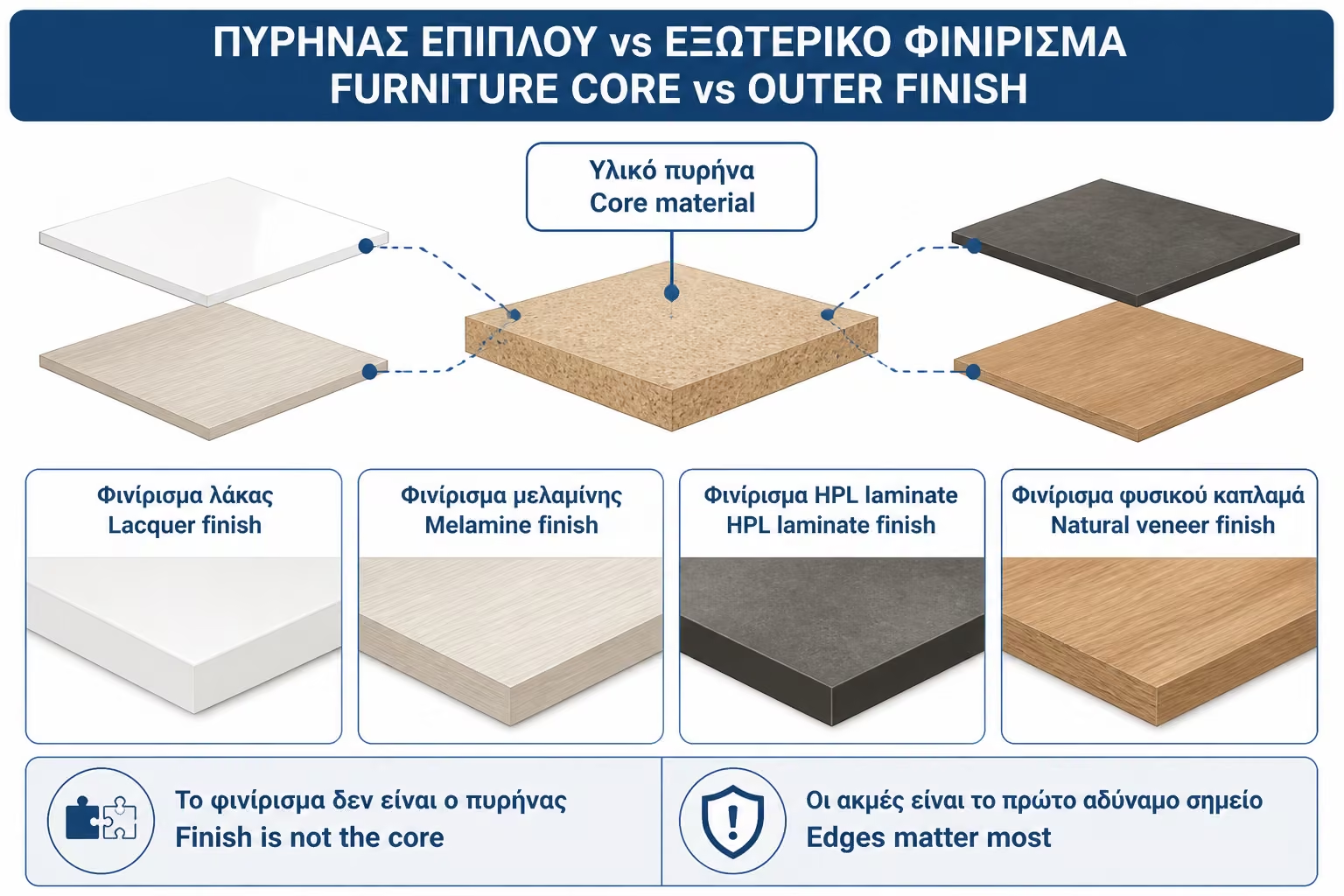
Before we compare lacquer, melamine and veneer, we need to make something basic clear: the finish is not the core. The finish is the outer layer. The core is the material underneath: MDF, anhydrous MDF, plywood, marine plywood, particle board or other composite material. A piece of furniture can be beautifully lacquered over plain MDF. May have melamine over chipboard. It can have a natural veneer over MDF or plywood. The same external image can hide a very different quality.
In the bathroom, this distinction is critical. A good finish protects, but does not invalidate, the boundaries of the core. If the water goes through an edge or hole, the core will determine how quickly the furniture will inflate. If there is marine plywood underneath, the furniture has a better chance of lasting. If there is simple chipboard, the risk is greater. If there is MDF, the behavior depends on whether it is anhydrous and how well it has been protected.
A common mistake is to say "I got furniture lacquer, so it's good". Lacquer describes the surface, not necessarily the strength of the frame. If the lacquer is good but applied on the wrong material, or if the cuts are not properly covered, the furniture may show swelling. Accordingly, a simple melamine over a good core with proper edges can hold up better than a more premium finish with poor construction.
So the right question is not only "what finish does it have?". It is "what finish does it have, on what material, with what edge, in what places and with what guarantee for use in a bathroom?".
Large flat surfaces are usually not the first problem. Furniture rarely bulges in the middle of a door that hasn't been hit. Problems start at the edges, corners, joints, around the faucet, around the sink, the bottom that rests close to the floor and where holes have been made for siphons, supplies or mechanisms.
The edge is the weak point of almost every piece of furniture. There the finish is interrupted or turned. If the margin tape peels off, if the lacquer cracks in the corner or if the veneer opens, water finds an entrance. At first it may seem like a small lift. Then the core begins to swell and the finish cannot be restored.
Very often wear starts from the top of the furniture. An undermount sink leaves water around the base. An inset sink has a joint with the counter. A bench battery leaves scale around the base. If these areas are not cleaned and dried, the finish is constantly stressed.
The bottom is also critical, especially in floor furniture. If the bathroom is mopped with a lot of water or if water comes out of the shower, the base of the furniture can be charged with moisture. That's why hanging furniture often has an advantage: it moves away from the water on the floor, as long as it has proper support.
Lacquer is one of the most popular choices for high-end bathroom furniture. It gives a smooth, clean surface, can be matte, satin or glossy, and offers almost unlimited color options. For modern bathrooms, where we want minimal drawers without wood grain or visible strips, lacquer is a very strong aesthetic solution.
Its great advantage is that it can "dress" the furniture evenly, without obvious leaves or patterns. If applied correctly, it has a premium image. It also allows custom coloring, which is useful when we want the furniture to match tiles, a counter, a wall or a specific palette.
The disadvantage is that the lacquer is very dependent on the quality of application. Another resistance has a properly applied polyurethane or special paint on a properly prepared substrate, and another cheap paint that has not protected the edges well. Also, the lacquer can be knocked off. If a corner is broken or deeply scratched, the core underneath can be exposed to moisture.
Compared to melamine, lacquer can give a more luxurious effect and better aesthetic continuity. But it should not automatically be considered more resistant to water. Finish comparisons state that lacquered panels often have better resistance to scratches, stains and fading than plain melamine panels, but can be more susceptible to knocks or cracks if subjected to heavy stress.
Lacquer is worth it when you want high aesthetics, clean surface and custom color, and when you are willing to pay a little more attention to edges and bumps. It is ideal for master bathrooms, careful renovations, adult bathrooms and areas where the furniture does not receive daily hard use by children.
In a bathroom with a large mirror, hanging furniture, thin bench and minimal batteries, lacquer can give an excellent result. Especially in a matte or satin finish, it looks more architectural and less "kitchen furniture". In glossy form, it can show bright and clear, but shows fingerprints and micro-scratches more easily.
However, it is not the most carefree solution for every family bathroom. If children knock over the drawers, if hard objects fall, if the bathroom is small and the sink constantly splashes, the lacquer must be of high quality and the furniture properly designed. An economical lacquer over a sensitive core can fail sooner than the owner expects.
Practically speaking, lacquer is a very good choice when combined with a good substrate, properly sealed edges and hanging. It is more risky when used on cheap floor furniture, next to a shower without a cabin or in a bathroom with poor ventilation.
Melamine is one of the most common coatings on bathroom furniture. It is a surface material with decorative paper and a resinous layer, usually on chipboard or MDF. It is economical, offers many colors and textures, is easy to clean and can have good resistance to daily use.
Its advantage is practicality. In good quality panels, the surface resists stains, scratches and moisture better than many expect. Geberit describes melamine as a moisture and scratch resistant laminate suitable for bathroom furniture. But this is true when the surface and edges are properly constructed and when use does not involve prolonged exposure to water.
The weak point is the edges and joins. Melamine as a surface can withstand, but water must not pass into the core. If the margin tape comes off, if the adhesion is poor, or if the edge is bumped, moisture can enter. If there is a simple chipboard underneath, the inflation can be done quickly.
Compared to HPL/high pressure laminate, plain melamine is usually more economical but less durable in heavy use. Comparison sources say that melamine is suitable for lighter applications, while HPL performs better in more demanding environments where durability and abrasion resistance are critical.
Melamine is worth it when you want economical and practical furniture, with a good price-performance ratio, especially in guest toilets, second bathrooms or renovations where the budget is limited. It is a good choice when the furniture will not directly receive water, when the bathroom is well ventilated and when the edges are qualitatively finished.
In rental or budget projects, melamine can be a reasonable solution because it is easier to replace and offers many designs. But if we are talking about a main family bathroom with daily use, children and humidity, it must be chosen very carefully. The type of core, the thickness, the edge strips and whether the piece of furniture is hanging or floor-standing matter there.
A good melamine on a durable core and with ABS edges can hold up decently. A thin budget melamine over chipboard with bad edges can swell quickly if it gets wet. Therefore, the word "melamine" alone is not enough. We need to know the construction.
Melamine is more practical on surfaces that do not need complex curves or special colors. If you want a completely custom shade, lacquer is superior. If you want a wood look with lower cost and easy maintenance, a good wood melamine may be more realistic than natural veneer.
Many times the owner hears "melamine" and "laminate" as if they are the same thing. It's not exactly the same. HPL, i.e. High Pressure Laminate, is a more durable surface layer, made with layers of resinous materials under pressure and heat. It is usually thicker and more durable than plain melamine.
HPL behaves better against scratches, wear, moisture and cleaning, so it is used on more demanding surfaces, such as counters, commercial areas, kitchens and bathrooms. Materials sources point out that HPL is highly scratch resistant, easy to clean and suitable for bathrooms and kitchens due to its resistance to chemicals and use.
For bathroom furniture, HPL is often a better choice than plain melamine when talking about countertops, surfaces near a sink, or furniture that will receive heavy use. It's not necessarily as "luxurious" in feel as a good lacquer or natural veneer, but it's very practical.
The downside is cost and aesthetic detail. If you want a specific matt lacquer or a very special finish, HPL may not give quite the same look. However, if durability and durability are a priority, especially in a family bathroom, it is worth considering seriously.
Natural veneer is a thin layer of real wood glued to a core, usually MDF, chipboard or plywood. It gives the image of natural wood without making the entire piece of furniture out of solid wood. The feel is warmer, more natural and more premium than a simple wooden melamine.
The advantage is aesthetics. Natural wood has depth, grain and subtle nuances that are not perfectly replicated by artificial finishes. In a bathroom with stone, beige tiles, marble or natural textures, veneer can give a very nice effect.
The downside is humidity and maintenance. The veneer should be protected with varnish or other suitable finish. Geberit states that natural veneer is a thin layer of real wood on chipboard or MDF and must be protected from moisture, for example with a layer of varnish. If this protection wears away or if water seeps into the edges, the wood can lift, stain or change its appearance.
Veneer is not the most carefree solution for a bathroom with children, lots of water or poor ventilation. It is a very good solution for a master bathroom, a guest WC or a neat adult bathroom, where the use is more controlled and the owner wants a natural effect.
Wooden melamine imitates the look of wood. The veneer is real wood. The first is more practical and economical. The second is more natural and often more luxurious. The choice depends on what you are asking for.
If you want easy maintenance, a consistent look and lower moisture risk, a good wood melamine or wood look HPL might make more sense. If you want a real wood feel and are willing to take care of the furniture, veneer gives a better aesthetic result.
In a small family bathroom where the sink splashes around, the veneer next to the sink can get tired. In a master with a large bench and good ventilation, it can be great. In a guest WC, where use is light, it can also work very well.
The key is protection. Ask what polish it has, if it is suitable for bathing, how it is cleaned, what happens if it is scratched and if the edges are sealed. Don't buy veneer just because "it's wood". Natural wood in the bathroom needs respect.
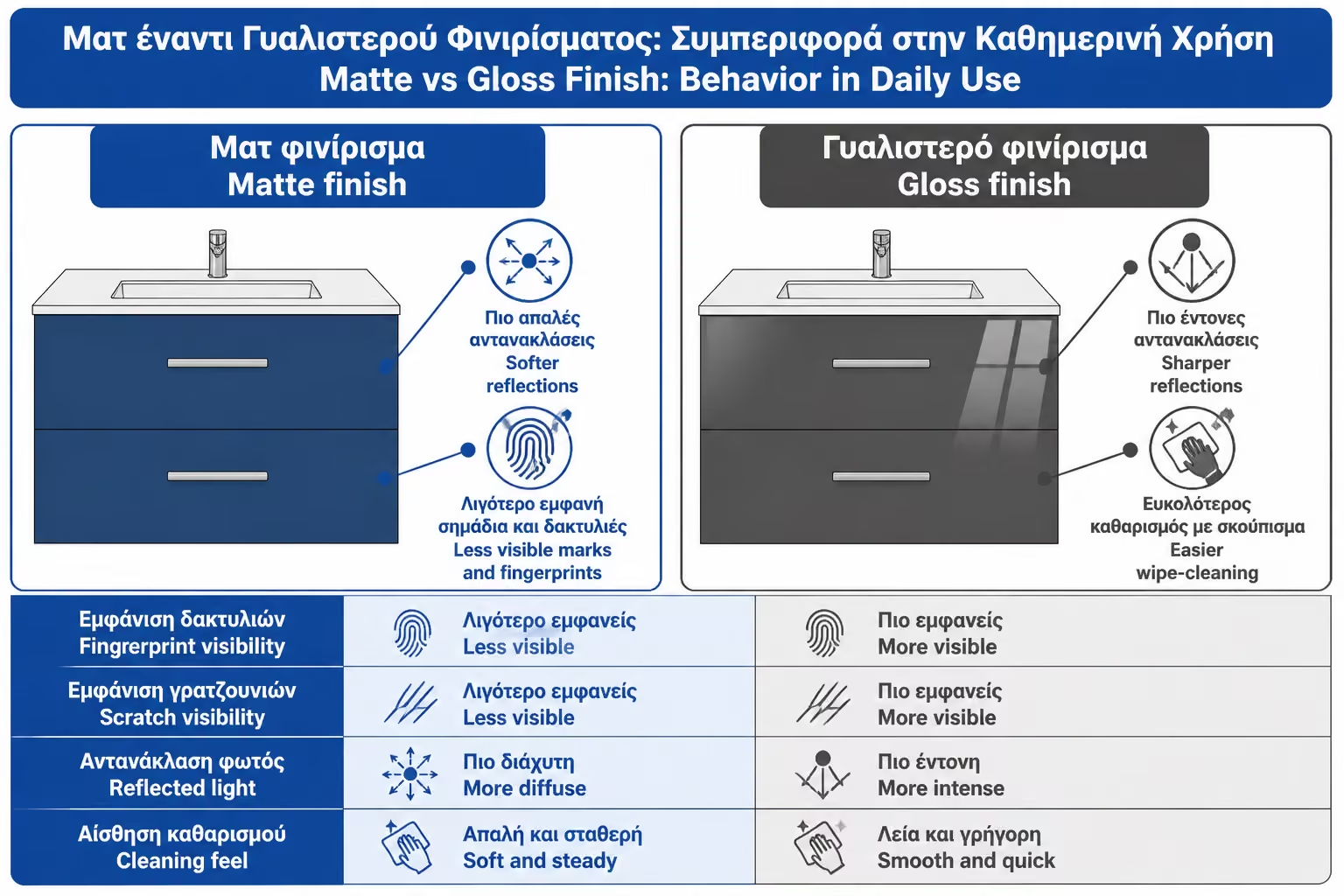
The gloss is not only aesthetic. It also affects the everyday image. Glossy finishes reflect light, look clearer from a distance, and often wipe easily, but show nicks, scratches, and marks more prominently in certain lighting. Matte finishes are more modern and calm, but can visually hold oily fingers more or shine locally if rubbed incorrectly.
In lacquer, the matte finish looks very beautiful, but it must be of good quality. Inexpensive matte surfaces can be easily marked or shiny at the points of frequent contact. In melamine or HPL, there are matte surfaces with better durability and anti-fingerprint character, but not all are the same. In veneer, matte varnish gives a more natural look, but it must protect adequately from moisture.
For a bathroom, too glossy a finish can show salt and water, while too matte can show fingerprints. The satin or soft-mat option is often more balanced. It is not as optically sensitive as full gloss, nor as demanding as some ultra-matte finishes.
In practice, before choosing, ask for a sample. Touch it, lightly wet the surface, wipe it, see if marks remain. The feeling in the exhibition is not enough.
If we talk about pure resistance to water and water vapor, the series is not absolute because it depends on quality and construction. Generally though, HPL/laminate and good melamines with proper edges have very practical behavior. Lacquer can hold up well when properly applied, but is more vulnerable to knocks that expose the core. Veneer needs the most care, because it is natural wood and depends on the varnish.
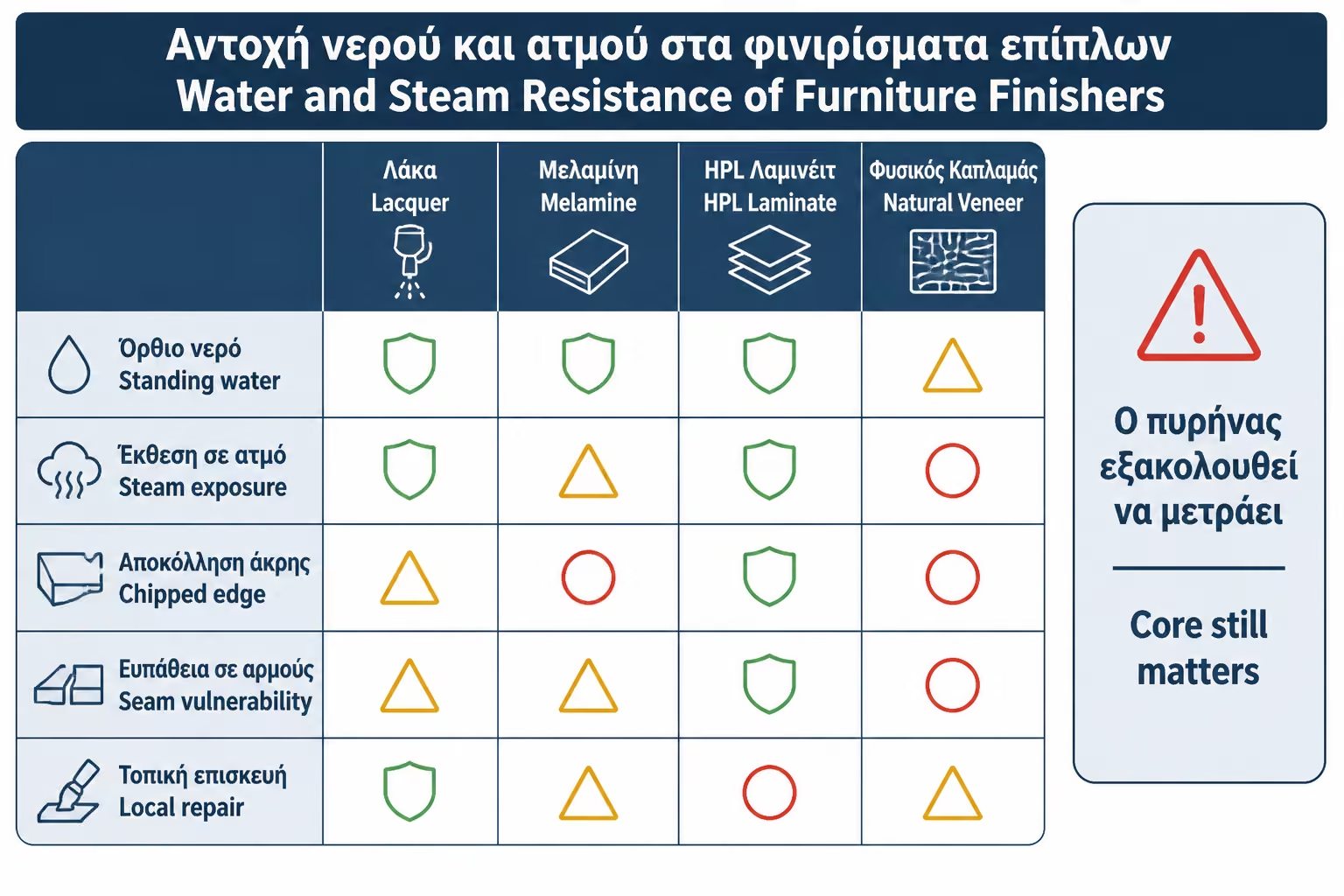
| Finish | Resistance to water / water vapour | Crucial point |
|---|---|---|
| HPL / high pressure laminate | Very good | Quality of edges and joints |
| Good melamine | Good for daily use | Edges, bands, core |
| Good quality lacquer | Good if not hit | Corners, scratches, fit quality |
| Natural veneer with varnish | Moderate to good with proper protection | Moisture, acne, reconditioning |
| Cheap melamine / bad edges | Low in heavy use | Core inflation |
| Veneer without adequate protection | Low for bathroom | Stains, creases, moisture |
If the goal is a piece of furniture that will withstand a daily family bathroom with water, HPL or quality melamine over a good core are very practical choices. If premium aesthetics are the goal, lacquer and veneer have their place, but need better construction and more care in use.
The worst choice is a finish that looks good but has bad edges. In the bathroom, the edges often determine life more than the center of the surface.
For scratches and everyday wear and tear, HPL is usually one of the most durable solutions. Melamine holds up well to simple use, but can be chipped around the edges. Lacquer can be scratched or chipped, especially in corners. Veneer can be stained like wood, depending on the varnish.
In family bathrooms, chipped edges are a common occurrence. Children open drawers, knock over toys, drop bottles, touch hair dryers. If the piece of furniture has sensitive lacquer in a bright color, the damage is visible. If it has HPL or quality melamine, it can be more forgiving.
Gloss black or dark finish shows scratches more. The very dark matte shows rings and polishes from friction. Wood patterns and medium tones often hide minor wear and tear better. This is a practical reason why many families choose wood look or earth tones instead of pure black or white gloss.
Durability is not just a technical feature. It is also a matter of color, texture and lighting. A small mark on white satin may not be visible. The same mark on black gloss lacquer can be seen immediately.
Cleaners for salts, soaps, stains and mold are often used in the bathroom. But furniture should not be cleaned with the same products used for tiles, basins or faucets. Strong defoamers, bleach, acidic products and abrasives can affect finishes, dull lacquers, open varnishes or wear edges.
Melamine and HPL are usually easy to clean with a mild detergent and cloth. Lacquer requires a soft cloth and avoidance of aggressive products. Veneer needs even more care, because varnish and wood can be affected by chemicals or prolonged moisture.
The general rule is: the bathroom furniture is cleaned like a piece of furniture, not like a tile. Soft cloth, mild detergent, good drying. If degreaser from the battery falls on the furniture, wipe it immediately. We do not allow products to act on doors and drawers.
A common example: the owner sprays defoamer on the battery and the product runs onto the furniture. If left, it can dull the lacquer or affect the veneer varnish. The problem was not the material itself, but using the cleaner on the wrong surface.
Prices on bathroom furniture are not only determined by the finish. They are affected by core, thickness, mechanisms, dimensions, sink, countertop, custom construction and brand. Nevertheless, we can give a practical insight into the Greek market in 2026.
| Finish / solution | Indicative cost category | Practical interpretation |
|---|---|---|
| Plain melamine | Low | Economical solution, needs attention to edges and core |
| Quality melamine / ABS bezels | Low to medium | Good value for money for many bathrooms |
| HPL / high pressure laminate | Medium to higher | More durable option for heavy use |
| MDF lacquer | Medium to high | Very good aesthetics, depends on quality of application |
| Lacquer in a better core / custom construction | High | Premium solution when done right |
| Natural veneer | Medium to high | Warm aesthetics, needs protection and care |
| Plywood veneer / premium construction | High | Best base for demanding bathrooms |
In small and medium-sized off-the-shelf bathroom furniture, melamine and laminate finishes keep costs down. Lacquer raises the price, mainly due to labor and finish. Veneer can increase the cost depending on the wood, quality, varnish and core.
Prices depend on the area, whether VAT is included, transport, washbasin, counter, mirror, soft-close mechanisms and installation. It doesn't make sense to compare a piece of furniture with plain melamine on chipboard to a custom piece of lacquer on marine plywood. They may be similar in size, but they are not the same product.
For a main family bathroom, durability and easy maintenance are a priority. Here a good HPL or quality melamine over a proper core is a very reasonable choice. If you want lacquer, choose good quality and avoid very delicate colors or glossy surfaces that show every mark.
For an adult master bathroom, lacquer and veneer make more sense. The use is usually more careful, the space better ventilated and the design more important. There you can choose a more premium finish as long as there is a proper core and protection.
For guest toilets, you can put more emphasis on aesthetics, because the use is less. A brightly colored lacquer or veneer can work very well. However, if the WC is small and without ventilation, you must remain cautious.
For Airbnb or rental, practicality is more important than sensitive design. Guests are not aware of the maintenance instructions. There HPL, good melamine or other durable surface is often better than natural veneer or sensitive lacquer.
The first mistake is to choose a finish only from a photo. Photo shows no edges, texture, durability, dings, scratches and build quality.
The second mistake is confusing finish and core. "Laquer" does not automatically mean moisture resistance. "Melamine" does not automatically mean poor quality. "Veneer" does not mean solid wood. You always have to know what's underneath.
The third mistake is underestimating the edges. The edges are where the damage starts. If they are not properly sealed, the best finish loses its value.
The fourth mistake is the choice of natural veneer in a very wet, small bathroom without ventilation. It may look great, but use can tire it out quickly.
The fifth mistake is using the wrong cleaners. Many pieces of furniture are damaged not by water, but by repeated use of harsh chemicals on surfaces not designed for them.
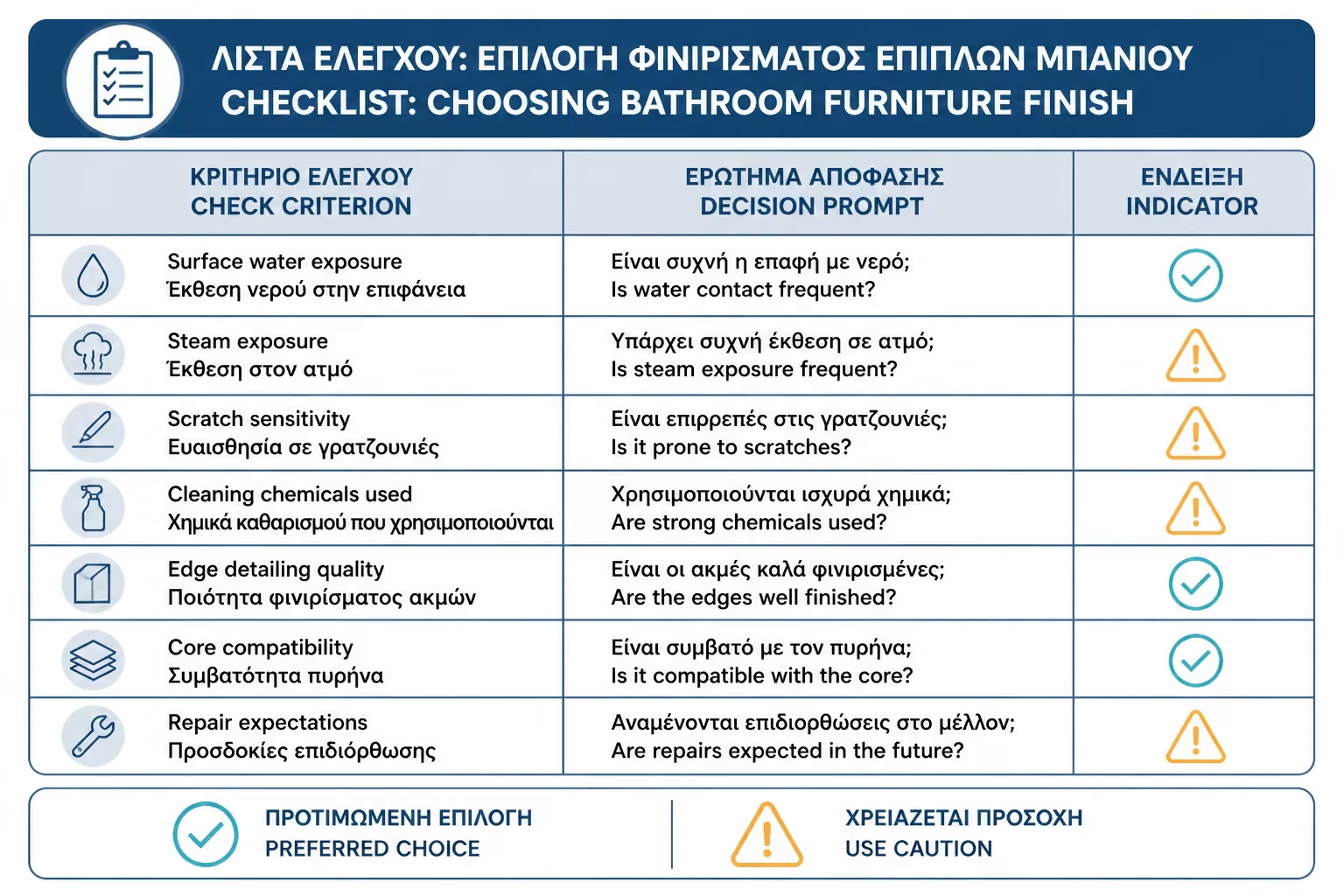
| Inquiry | Yes / No |
|---|---|
| Do you know if the finish is lacquer, melamine, HPL or natural veneer? | Yes / No |
| Do you know the core beneath the finish? | Yes / No |
| Are the edges protected with a quality tape, lacquer or other suitable finish? | Yes / No |
| Is the finish suitable for a bathroom and not just an interior piece of furniture? | Yes / No |
| Is the bathroom well ventilated? | Yes / No |
| Will the piece of furniture be near a shower or splash area? | Yes / No |
| Do you know how to clean this particular finish? | Yes / No |
| Have you avoided a highly sensitive finish in a heavy-use family bathroom? | Yes / No |
| If veneer, does it have a protective varnish suitable for moisture? | Yes / No |
| If it's a lacquer, do you know if it's matte, satin or gloss and how much it shows marks? | Yes / No |
| If it is melamine, have the edges and margins been quality checked? | Yes / No |
| Does the warranty cover use in a bathroom and under what conditions? | Yes / No |
If you can't answer the core, edge and cleanup questions, the selection is mostly based on appearance. In bathroom furniture this is a risk.
If you keep only one idea from this article, make it this: in bathroom furniture, the “beautiful surface” is rarely the first thing to fail. Water usually attacks the edges, the joints, and then the core.
Lacquer can look excellent, but it needs proper application and some care around impacts. Melamine is practical and economical as long as the edging is well done and the core is sound. Veneer gives the richest natural feel, but it needs varnish protection, gentler use, and decent ventilation.
For hard family use, prioritize durability and edge protection. In a master bathroom or guest WC, you can afford to give aesthetics a little more weight.
The choice of coating on the bathroom furniture is not a simple matter of color. It is a technical choice that determines how well the furniture will withstand water, steam, cleaning agents and daily use. Lacquer offers the cleanest and most custom aesthetic, but depends on the quality of application and edge protection. Melamine is economical and practical, but its life is judged on the joints and the core. Veneer gives the warmth of natural wood, but does not forgive negligence in moisture and cleaning.
For a main family bathroom, the most sensible priority is durability: quality laminate/HPL or good melamine over a proper core, or high quality lacquer in a build really designed for a bathroom. For master bathrooms and guest WCs, lacquer and veneer can give a much more special effect, as long as they are supported by proper construction and maintenance.
The most important thing is not to choose the most expensive finish. It is to choose a finish that suits the use of the space. A bathroom without a window, with daily showers and children, needs different material than a guest WC that is used a few times a week. If the choice is made based on the actual use and not just the image, the furniture will have a much greater chance of lasting over time.
Return to category.
Go to categoryReturn to the central guide.
Go to guide