
Bathroom Fixtures & Water Equipment
Return to category.
Go to categoryBathroom furniture is not just the place where the sink goes. It is storage space, visual weight, surface that receives water and one of the first elements that show whether the bathroom has been designed correctly or roughly. In a small bathroom, the same piece of furniture can make the space seem more open or more stuffy. In a wet bath, it can last for years or start to swell underneath. That is why the choice between hanging furniture and floor furniture is not only aesthetic.
Wall-hung or floating vanities have become very popular in modern renovations. They leave the floor visible, give a lighter image, help with mopping and protect the bottom of the furniture from water that may collect on the floor. In small bathrooms, this feeling of "air" under the piece of furniture can dramatically change the perception of the space.
On the other hand, floor furniture has not disappeared without reason. They usually offer more storage space, are more intimate as a solution, can be simpler to install and suit classic or heavier bathrooms. In large spaces, a properly designed floor piece of furniture can appear sturdy, rich and practical. It is not an "old" solution in itself. It's a different logic.
The mistake that is often made is that the owner chooses hanging furniture just because it is more modern, without checking the wall, weight, sink, counter and amenities. Or he chooses floor furniture because "it has more space", without thinking that the lower part will receive water from the shower or from mopping. In both cases, success depends on space, materials and installation.
In this guide we will see when hanging furniture is worth it, when floor furniture is preferable, what happens with stagnant water, how cleanliness is affected, what you should pay attention to in the support, how much storage space you lose or gain and which solution best fits the Greek reality of a small or medium bathroom.
The hanging furniture is fixed to the wall and leaves space below. The floor furniture rests on the floor, either with legs, or with a base, or with a full body all the way down. This difference changes the way we perceive the bathroom.
In the hanging furniture we see more floor. The eye continues under the furniture and the space appears more open. This is especially important in small bathrooms, where any visual interruption makes the space seem smaller. The same piece of furniture, if pushed all the way down, can appear heavier, even if it has the same dimensions.
On the floor piece of furniture, the eye stops at the base. The volume appears larger, but often also gives a sense of stability. In a large bathroom or a more classic design, this can be an advantage. In a narrow bathroom of 3–4 m2, it can be a disadvantage.
So the choice starts from the floor plan and the feeling of the space. It is not enough to look at what is more fashionable. We need to see how the floor will read, where the shower is, how close the basin is, if there is a window, if the bathroom has natural light and if the storage space can be organized elsewhere.
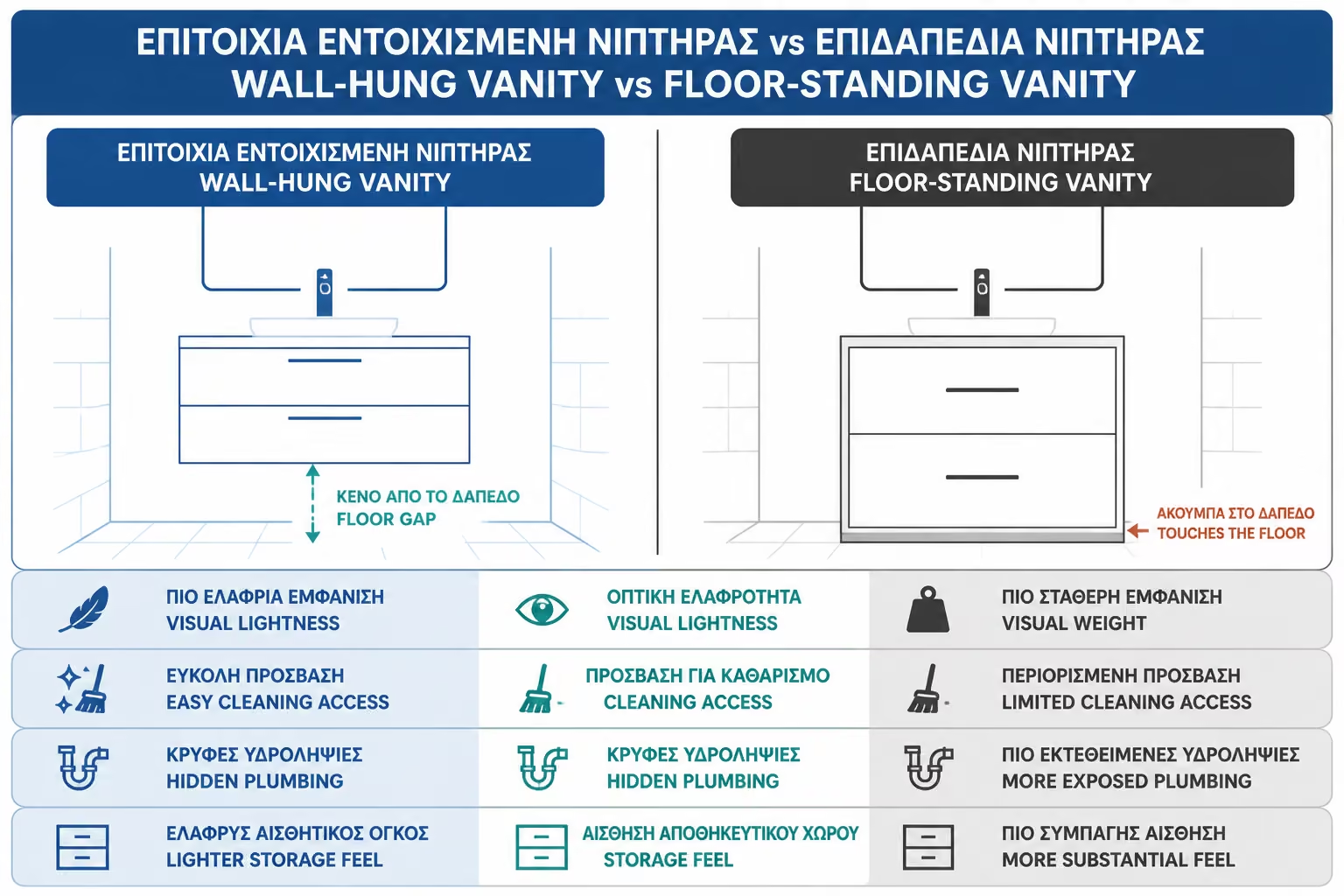
Hanging furniture creates the feeling that the floor continues. This is perhaps their greatest aesthetic advantage. The more floor is visible, the more open the space looks. In small bathrooms, this feeling is very important, because the bathroom does not really grow, but it becomes easier to read visually.
International design guides point out that wall-mounted vanity units are particularly helpful in small bathrooms, because they "open up" the sense of space and create a lighter image, while floor furniture has a greater visual weight and can make a small bathroom appear fuller.
A practical example: in a 1.70 x 2.20 m bathroom, an 80 cm floor piece of furniture can cut into the floor and make the space appear narrower. If the same piece of furniture is hung, with 20–25 cm of space underneath, the floor appears to be continuous. If there is also a hanging basin, the overall image becomes lighter.
Visual enlargement does not mean that we have to fill the space with hanging elements without measure. If the piece of furniture is too big, too deep or too dark, even if it is hanging, it can be heavy. But, with the same dimensions, the hanging piece of furniture almost always looks lighter than the floor piece.
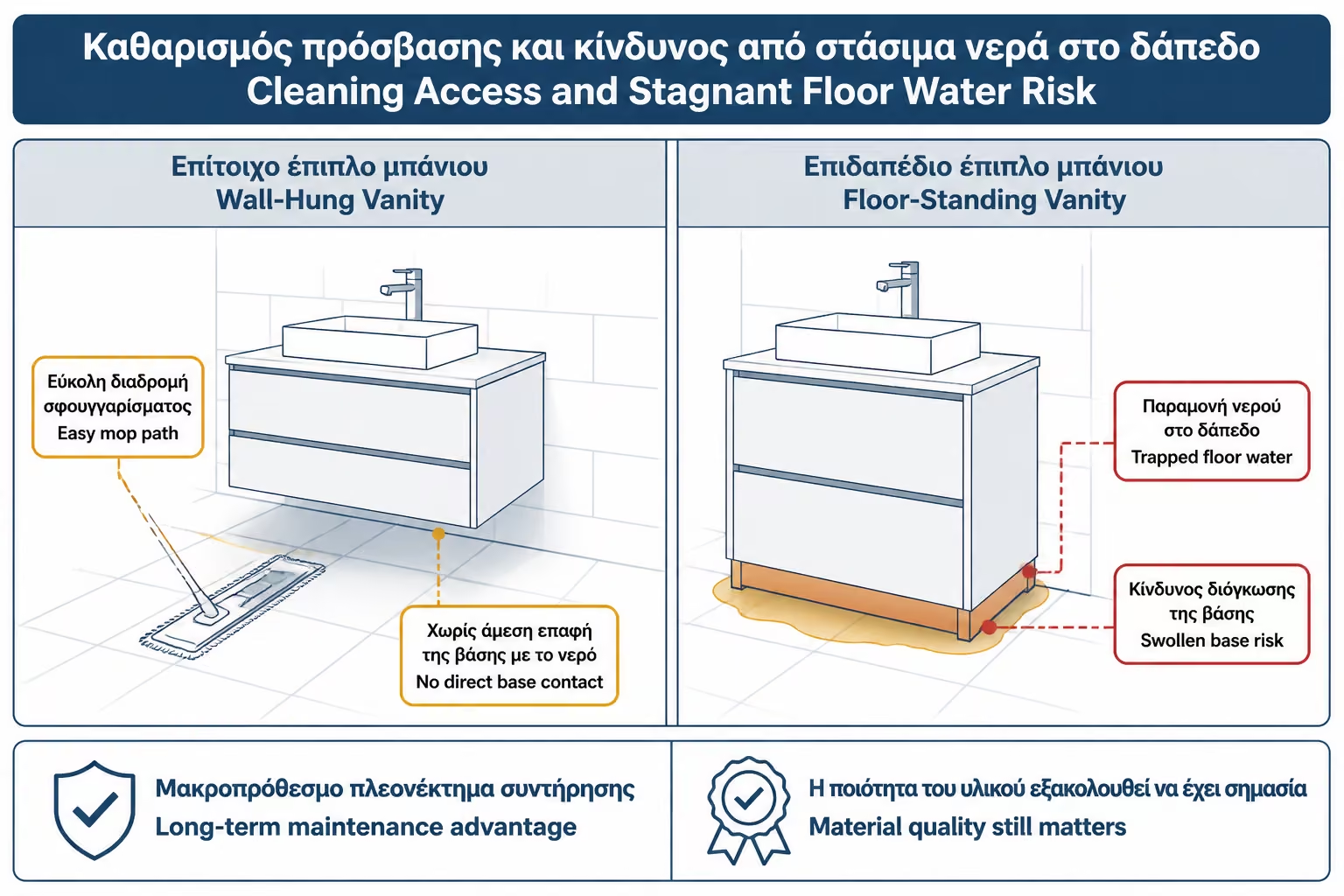
The bathroom has water on the floor. Even if the shower is correct, there are always drips, mops, condensing steam, children wetting the floor, small leaks or water running from towels. A floor piece of furniture is right in this danger zone.
The underside of a furnished floor can swell from standing water on the base. This is especially true if the core is MDF, chipboard or other sensitive material, if the edges are not well protected or if the furniture rests directly on the floor without quality feet. In small bathrooms with a shower without a good cabin, the risk increases greatly.
Hanging furniture reduces this problem because it does not touch the floor. If water falls, it can pass underneath and be mopped up, without staying in contact with the bottom of the furniture. Wall-hung and floor-mounted vanities comparison guides report that the free base makes cleaning easier and prevents water from pooling at the base of the cabinet, which can lead to moisture wear over time.
This does not mean that the hanging furniture is never at risk from water. It is at risk from water on the counter, around the sink, from leaks in the siphon or from poor ventilation. But an important risk is removed: the permanent contact of the base with a wet floor.
The second great practical advantage of hanging furniture is mopping. Anyone who has cleaned around floor furniture knows the problem: legs, corners, hidden spots, dust, hair, water left behind by the base. If the furniture has low legs or a full base, cleaning underneath can be difficult or impossible.
With hanging furniture, the cloth or mop passes underneath. This makes cleaning faster and more complete. You don't have to bend over to clean around little feet or get dirt out of dark corners. In a bathroom that is used every day, this difference can be seen.
Recent market guides for floating vanities point out exactly this: the free area under the cabinet reduces the places where water, dust and hair collect, and makes mopping much simpler.
In homes with children, pets or frequent use, this is no small detail. The bathroom is cleaned often and any spot that makes cleaning difficult ends up collecting moisture and dirt. The hanging furniture gives a practical advantage that is not only visible in the photo, but mainly in the routine.
Floor furniture still has a place, and an important one at that. Their main advantage is storage space. Because they reach all the way down, they can offer more internal volume. In bathrooms where towels, cleaners, hair dryers, cosmetics and stationery are needed, this can be decisive.
They are also simpler to install in many cases. They don't require as strong masonry for suspension, they don't stress the wall entirely, and they can be installed more easily in old bathrooms as long as the fixtures and drains match. This makes them attractive in renovations where we don't want to open up walls or reinforce substrates.
In large bathrooms, a floor piece of furniture can give a feeling of solidity and luxury. It doesn't necessarily look heavy when there is enough space around it. On the contrary, it can look more "furnished" and complete, especially in classic, transitional or warmer designs.
Comparison guides note that wall-mounted units offer a modern look, adjustable height and easier cleaning, while freestanding/floor-standing vanities usually offer more storage space, a more traditional feel and easier installation.
So floor furniture is not a wrong choice. It is a mistake when it goes into a wet, small bathroom without water protection, just because it offers a little more space.
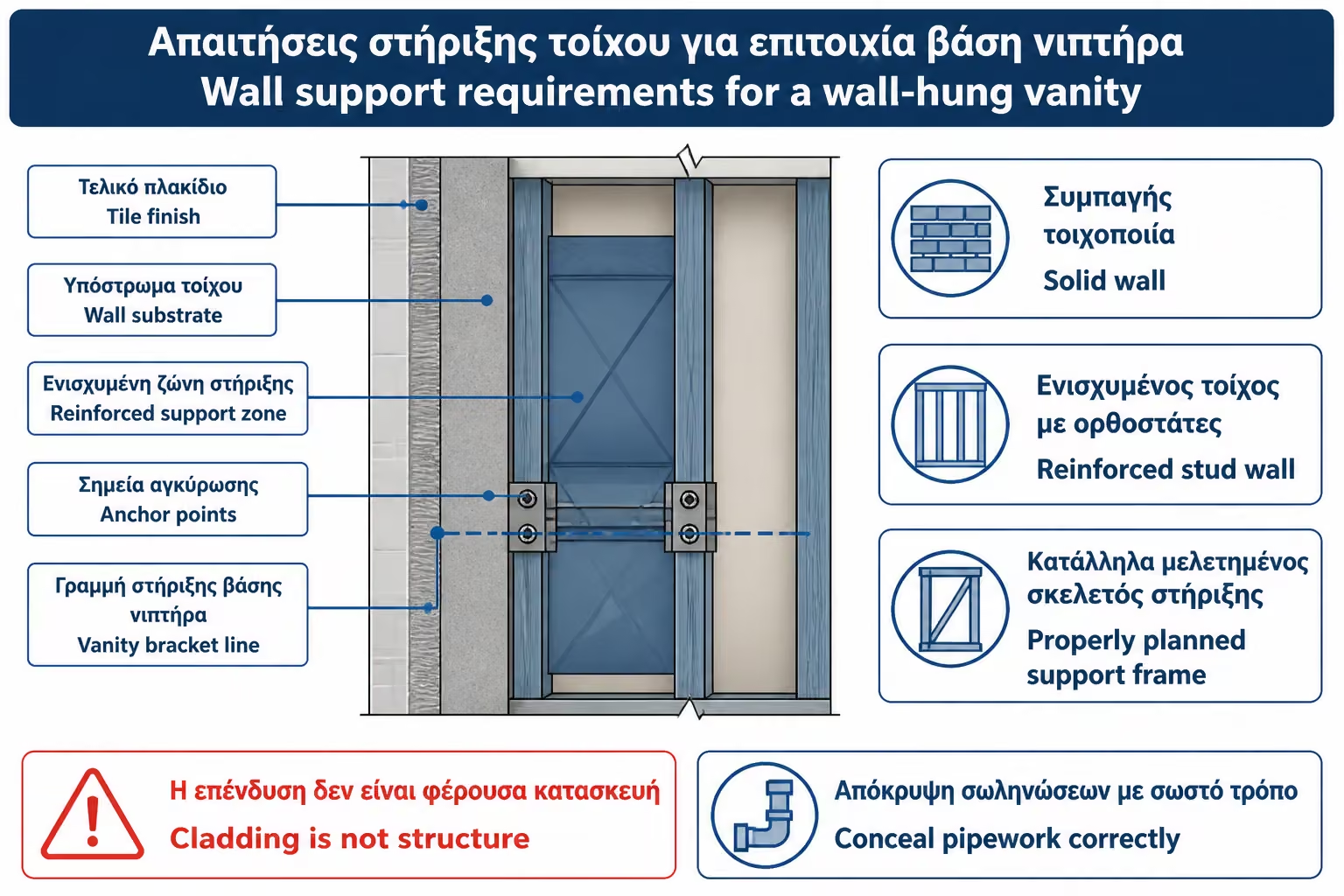
The hanging furniture does not touch the floor, so all its weight is transferred to the wall. This means that support is critical. It is not enough to screw it to any wall. The masonry, the weight of the furniture, the counter, the sink, the contents of the drawers and the method of hanging must be checked.
On a concrete or solid masonry wall, installation is simpler as long as proper plugs and supports are used. In plasterboard, reinforcement is needed before the wall is closed. Old walls with loose plaster or weak bricks should be checked. It is not right to hang heavy furniture with a stone bench and a large sink without being sure that the wall can withstand it.
The problem is not only to keep the furniture from falling. It is not to loosen over time, not to create a vacuum in the wall, not to warp and not to transfer pressure to the hydraulic connections. A hanging piece of furniture that has not been properly supported can begin to "sit" or create creaks and unevenness.
Therefore, before choosing wall-hung furniture, the technician must see the wall. If it is a complete renovation, it is an ideal time to provide reinforcement. If it is a simple replacement, a more careful evaluation should be done.
A big advantage of hanging furniture is that its height can be adjusted more freely. In floor furniture, the height is determined by the product and the legs. In hanging, the technician can place the piece of furniture so that the final height of the washbasin is ergonomic for the users.
This is especially important with countertop sinks. If the sink sits on the counter and is 12–16 cm high, the cabinet should be placed lower so that the end lip does not protrude too high. With hanging furniture, this adjustment is easier, as long as it is calculated before the wall is drilled.
The height also affects the cleanliness below. If the furniture goes in too low, the vacuum doesn't really help with mopping. If it goes in too high, it can become uncomfortable to use. We usually want enough space to mop and see the floor, but without the sink rising too high.
The correct study is: finished sink height, countertop height, furniture height, space below. Not "we hang it about where it looks good". In a bathroom, beauty must also be ergonomic.
The argument in favor of floor furniture is usually storage. And in many cases it is correct. A piece of furniture that reaches all the way down can have larger drawers, more shelves or deeper interior space. For a family bathroom, this is important.
But hanging furniture doesn't necessarily mean little storage. There are hanging furniture with two large drawers, wide compositions, side columns and mirror-cabinets. The storage space just needs to be designed more intelligently. The space under the furniture provides air and cleanliness, but takes away height from the body of the furniture.
In small bathrooms, a hanging piece of furniture with less but organized space is often preferable, rather than a large piece of floor furniture that makes the space seem heavy. In family bathrooms with many needs, a wall-hung vanity unit can be combined with a tall wall-mounted column or wall cabinet.
The mistake is to compare only the storage liters. We must also look at the quality of the storage. A deep floor cabinet where everything gets lost in the back can be less practical than two well-organized hanging furniture drawers.
Floor furniture becomes more vulnerable when the bathroom often has water on the floor. This can happen in small bathrooms with an open shower, in bathrooms where the shower does not have a proper cabin, in areas with poor drainage, in children's bathrooms or in homes where mopping is done with a lot of water.
If the furniture steps directly on the floor, the problem is bigger. If it has legs, it decreases but does not disappear. The feet must be durable, adjustable and not retain moisture. The base must be protected. If the core is chipboard or plain MDF and the bottom stays wet, the inflation can start from the bottom.
In such spaces, hanging furniture is clearly a safer solution. Not because it is "waterproof", but because it removes sensitive material from the floor zone. Especially if the shower is close to the furniture, this has great practical value.
A common occurrence is floor furniture next to a shower with a curtain or a small fixed crystal. The water comes out on the floor, the owner wipes it "when he has time" and after two years the bottom of the furniture has opened. In such a bathroom, the pendant would have a much better chance of lasting.
A hanging piece of furniture leaves the underside visible, so the piping and siphon must be carefully designed. In a piece of floor furniture, several things are hidden. In a wall-hung, if the siphon is low, if the supplies come out in the wrong place or if the pipes are visible under the furniture, the clear image is spoiled.
The correct solution is for the supplies and drainage to be inside the furniture zone, so that they are hidden by the drawer or body. In hanging furniture with drawers, space-saving siphons or special notches in the drawers are often used. This should be anticipated before purchase.
If you are replacing an old vanity with a vanity, check where the old fixtures come out. In old bathrooms, the pipes may be low or in an asymmetrical position. If the new furniture is open underneath, they can be seen. Then you need either a transfer of benefits or a different piece of furniture.
The aesthetic of the hanging furniture is based on the clean bottom zone. If this is filled with visible pipes, much of the advantage is lost.
Cost depends on dimensions, materials, mechanisms, sink, countertop, finish and brand. In the Greek market there are floor and wall bathroom furniture in a very wide price range. In stores, simple furniture is displayed for around €275–290, while hanging solutions of 80 cm with a composition can range from around €390 and above, depending on the components and the composition.
| Category | Indicative cost of Greece 2026 | Practical observation |
|---|---|---|
| Simple floor furniture of small width | €150–€400 | Economical solution, attention to core and lower base |
| Simple hanging furniture 60–80 cm. | 250–600€ | More modern image, needs proper support |
| Medium hanging furniture with drawers | 500–1,200€ | Good solution for master bathroom, depending on materials |
| Floor furniture with more storage | 500–1,500€ | More space, more visual weight |
| Custom hanging furniture | 1,000–3,000€+ | Depends on Plywood, Bench, Lacquer/HPL, Mechanisms |
| Placement / transfer of benefits | Wide variation | Depends on wall, plumbing and existing waits |
Prices are indicative and may vary significantly by region, VAT, transport, materials, basin, battery, mirror and labour. Don't just compare the price of the furniture. A cheaper piece of floor furniture that will blow out from under you in a few years can be more expensive in the long run than a better pendant.
In pendants, also calculate the support. If the wall needs reinforcement or if utilities need to be moved to be properly concealed, the cost goes up. But if the renovation is complete and the walls are open, this prediction is much easier.
Hanging furniture is usually the best choice in small and medium-sized bathrooms, in spaces where we want visual lightness, in bathrooms with frequent water on the floor and in modern renovations where we seek a clean line. It is also very practical when we want easy mopping and fewer spots that collect moisture.
It is especially worthwhile in bathrooms without a lot of natural light, because it helps to show more of the floor and not weigh down the space. If combined with a hanging basin, a large mirror and bright tiles, it can make even a small bathroom look more open.
It is also a good solution when the washbasin is counter-top and the height needs to be adjusted carefully. The piece of furniture can be hung in the right place so that the final edge of the sink is ergonomic.
But it should not be selected without wall control. If the wall is not suitable, if there is no possibility of good support or if the facilities will look bad, either a technical adjustment or a different solution is needed.
Floor furniture is a good choice when you need maximum storage, when the space is large enough not to be visually heavy, when the design is more classic or when the wall is not suitable for hanging support. It is also practical in simple replacements, where you don't want to interfere too much with the infrastructure.
In a large bathroom, a piece of floor furniture can look rich and solid. If it has quality feet, a protected bottom and good material, it can work perfectly. Not all modern bathrooms need to have hanging furniture.
But it should be avoided when the bathroom often has water on the floor, when it is very close to a shower without full protection or when the core is sensitive. If floor furniture is chosen, prefer a model with proper base protection, feet that do not retain water and material suitable for the bathroom.
For family bathrooms, floor furniture only makes sense if the storage it provides is really needed and the space can support it without becoming stuffy.
Because the hanging furniture does not touch the floor, many people think that such good material is not needed. This is wrong. The pendant is better protected from standing water, but still receives water vapor, counter splashes, faucet leaks and cleaners. If the core is bad or the edges are unprotected, it can also swell.
Hanging furniture with a good core, such as marine plywood or quality MDF depending on the use, and a finish suitable for a bathroom, is ideal. In floor furniture, the need for a durable core is even greater, because there is also the danger from the bottom.
Finishes also matter. Lacquer, melamine, HPL and veneer behave differently. In a small wet bathroom, HPL or quality melamine over a good core may be more practical than sensitive veneer. In a master bathroom, a good lacquer or natural veneer may be more justified.
The form of the furniture is only one level of decision. Hardware remains critical.
The first mistake is choosing hanging furniture without wall control. If the wall does not hold properly, the furniture can become dangerous or develop problems over time.
The second mistake is the choice of floor furniture in a bathroom with water on the floor. If the base gets wet often, swelling is a matter of time, especially in economical materials.
The third mistake is to underestimate storage. A hanging piece of furniture can look great, but if it doesn't hold the essentials, the counter will be cluttered with objects and the image will be lost.
The fourth mistake is the obvious piping. In hanging furniture, the supplies and siphon must be properly hidden inside the body. If they appear below, the result looks sketchy.
The fifth mistake is the wrong height. If the pendant is inserted too high or too low, use becomes uncomfortable or mopping is not facilitated. The position must be calculated based on the final height of the washbasin.
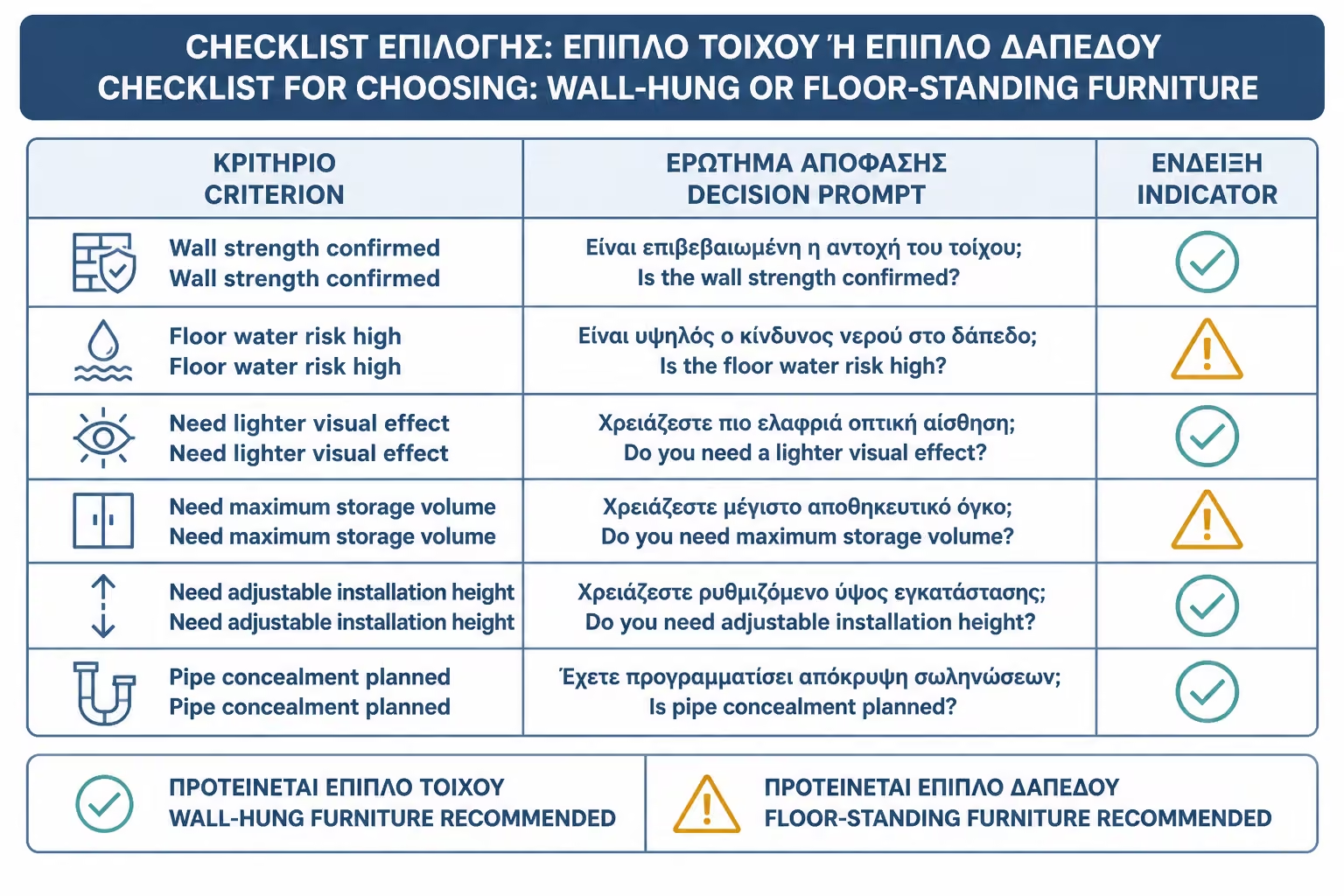
| Inquiry | Yes / No |
|---|---|
| Is the bathroom small and in need of visual relief? | Yes / No |
| Is there water often on the floor from the shower or children's use? | Yes / No |
| Do you want to mop easily under the furniture? | Yes / No |
| Is the wall suitable for securely supporting hanging furniture? | Yes / No |
| If there is plasterboard, is reinforcement provided? | Yes / No |
| Will the supply and drainage be hidden inside the furniture? | Yes / No |
| Has the final height of the washbasin been calculated? | Yes / No |
| Do you need more storage space than a pendant offers? | Yes / No |
| Does the floor furniture, if selected, have a protected base and correct feet? | Yes / No |
| Is the furniture core suitable for moisture? | Yes / No |
| Is there good ventilation in the bathroom? | Yes / No |
| Does the total cost include furniture, sink, support, plumbing and fitting? | Yes / No |
If the answers indicate small space, water on the floor and the need for easy cleaning, hanging furniture is usually a strong candidate. If they indicate a need for large storage, a large bathroom and an unsuitable wall, floor furniture may make more sense.
If you keep only one idea from this article, make it this: a wall-hung vanity is not just a design choice.
It is often a practical solution for small or humid bathrooms because it keeps more floor visible, protects the underside from standing water, and makes cleaning easier. It does, however, need a suitable wall and careful planning of the plumbing connections.
A floor-standing unit makes sense when you need more storage or when the wall cannot safely take the load, but the base needs real protection from water. Do not choose from photos alone. Choose based on moisture, wall condition, storage needs, and everyday cleaning.
The choice between hanging furniture and floor furniture affects much more than the image of the bathroom. It affects wipeability, moisture resistance, sense of size, storage and ease of maintenance. Hanging furniture has clear advantages in small bathrooms, because it leaves the floor visible and creates a more open feeling. They are also better protected from water pooling on the floor and facilitate daily cleaning.
Floor furniture remains useful when more storage is needed, when the space is large enough or when the wall does not allow for secure hanging. In such cases, the quality of the base, legs, core and moisture protection are crucial. Not a bad choice as long as it goes into the right bathroom.
For most small and medium-sized Greek bathrooms, hanging furniture is often the most balanced solution. It gives visual lightness, is easier to clean and reduces the risk of wear from the floor. But it must be installed correctly: on a suitable wall, at the right height, with concealed supplies and with moisture-resistant material.
The best decision is not "hanging because it's modern" or "floor because it holds more". It's about seeing how your bathroom lives: how small it is, how wet it gets, how much storage it needs, what walls it has and how easy you want it to be cleaned. Therein lies the right choice.
Return to category.
Go to categoryReturn to the central guide.
Go to guide